

Pruning Sargent Crabapple Trees
I'm getting a lot of excellent wintertime pruning done at my farm.
Proper pruning is so important - it improves the health of the plants, prevents disease, and encourages better flowering. There are different pruning strategies for different times of the year, but overall the goals are the same - to control the height and shape, develop good limb structure, encourage growth, remove damaged or diseased branches, and to allow for better air circulation. Right now, my outdoor grounds crew is tackling four of my Sargent crabapples along the carriage road to my home.
Enjoy these photos.
-

- The best time to prune is during the dormant season which is typically winter to early spring before new growth emerges.
-
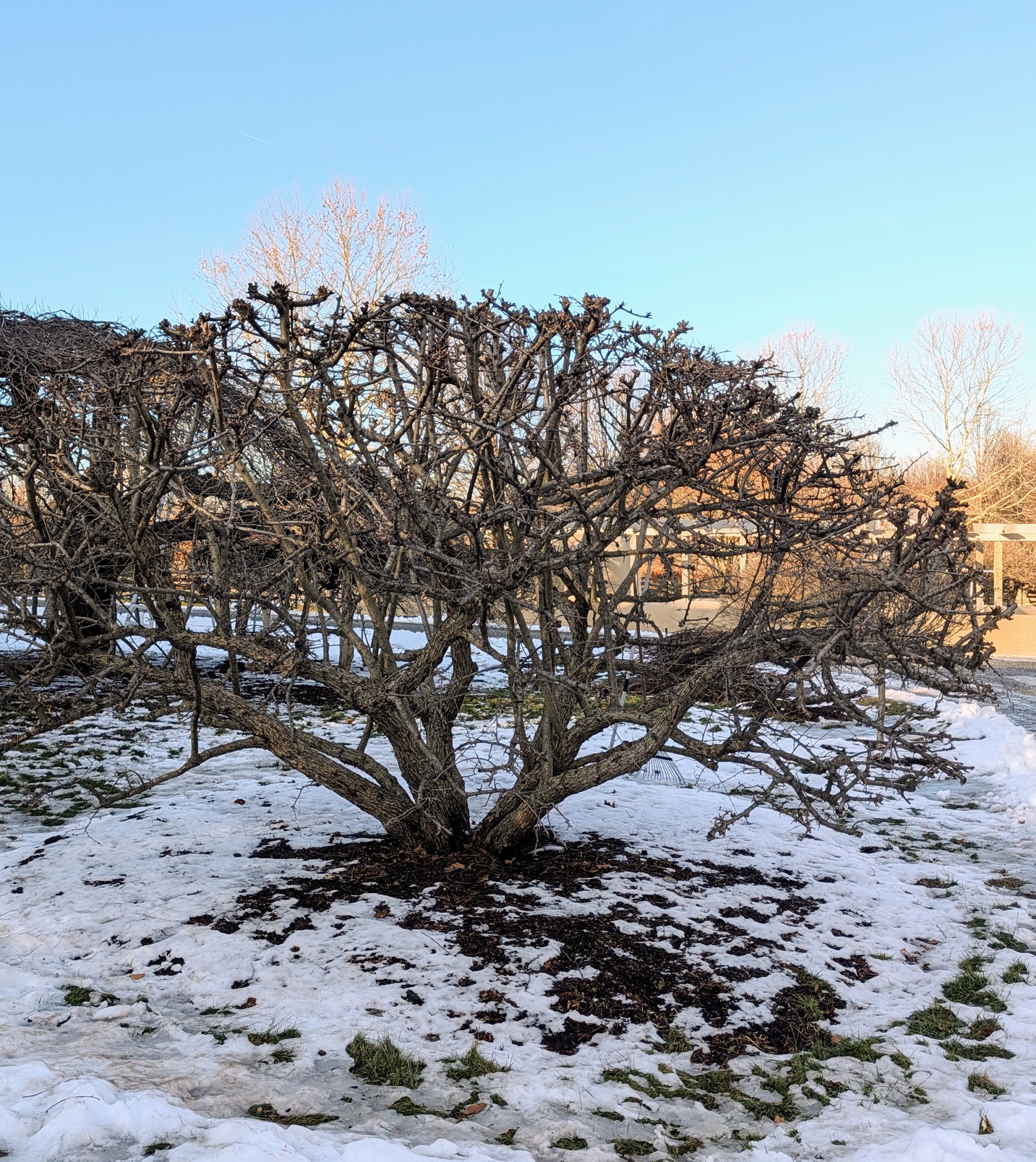
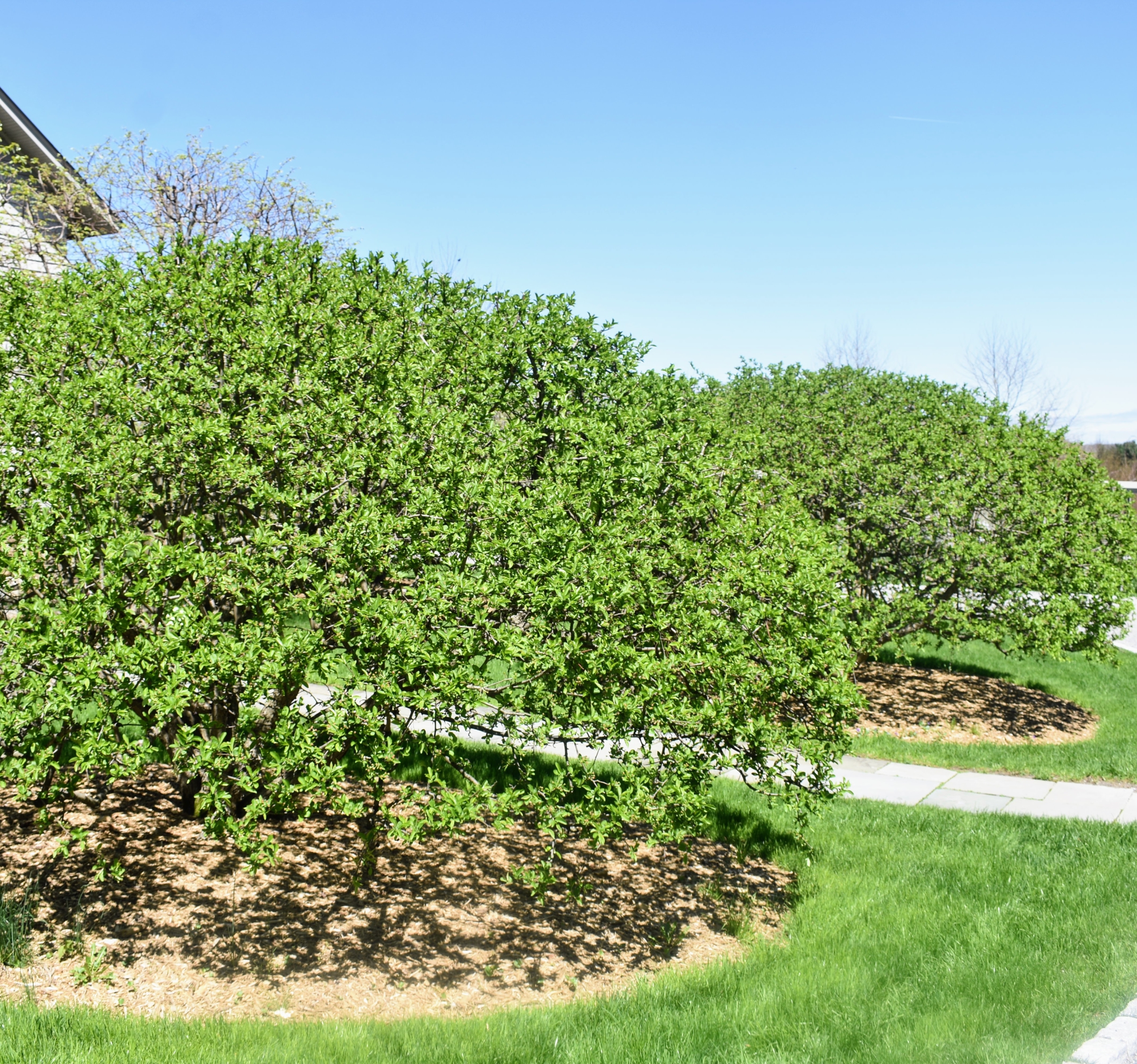
- These are two of four Sargent crabapple, Malus sargentii, in early April. The name of this species comes from the man who introduced it from its native Japan in 1892, C.S. Sargent. These are good trees for many different landscapes. It has a unique size and form, growing as a dense, mounded shrub rather than a tree.
-
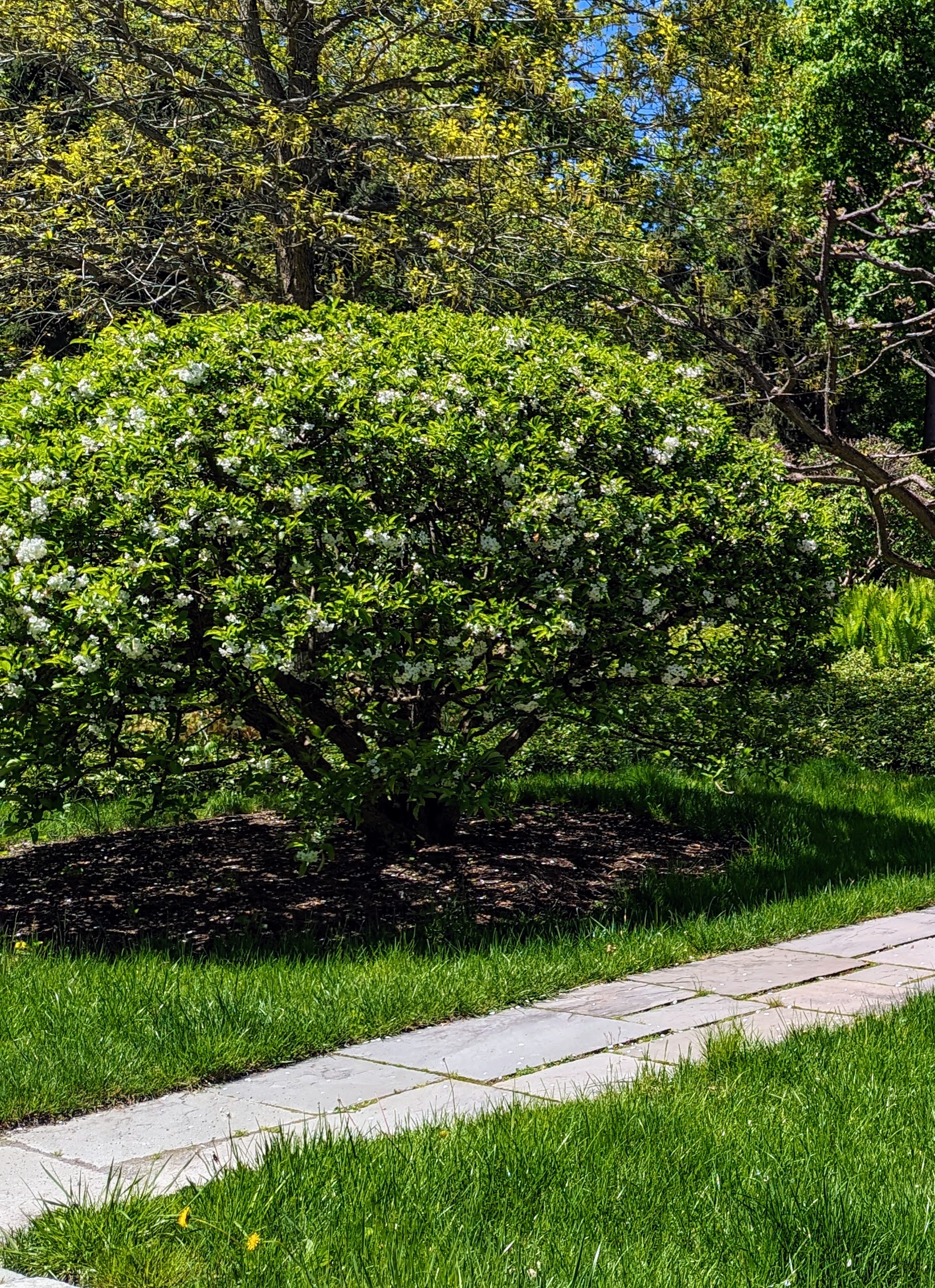
- Later in spring, they display fragrant white flowers.
-
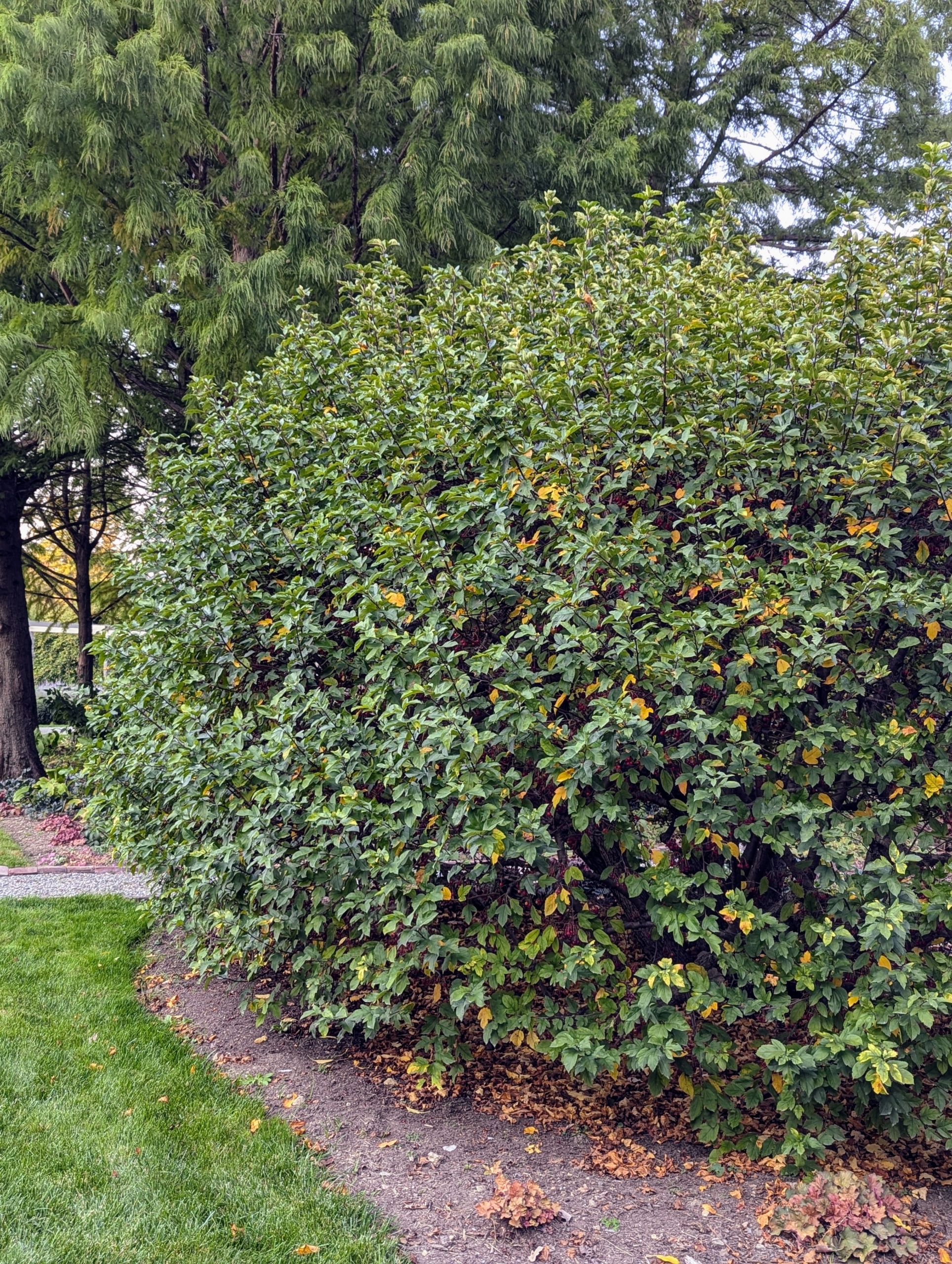
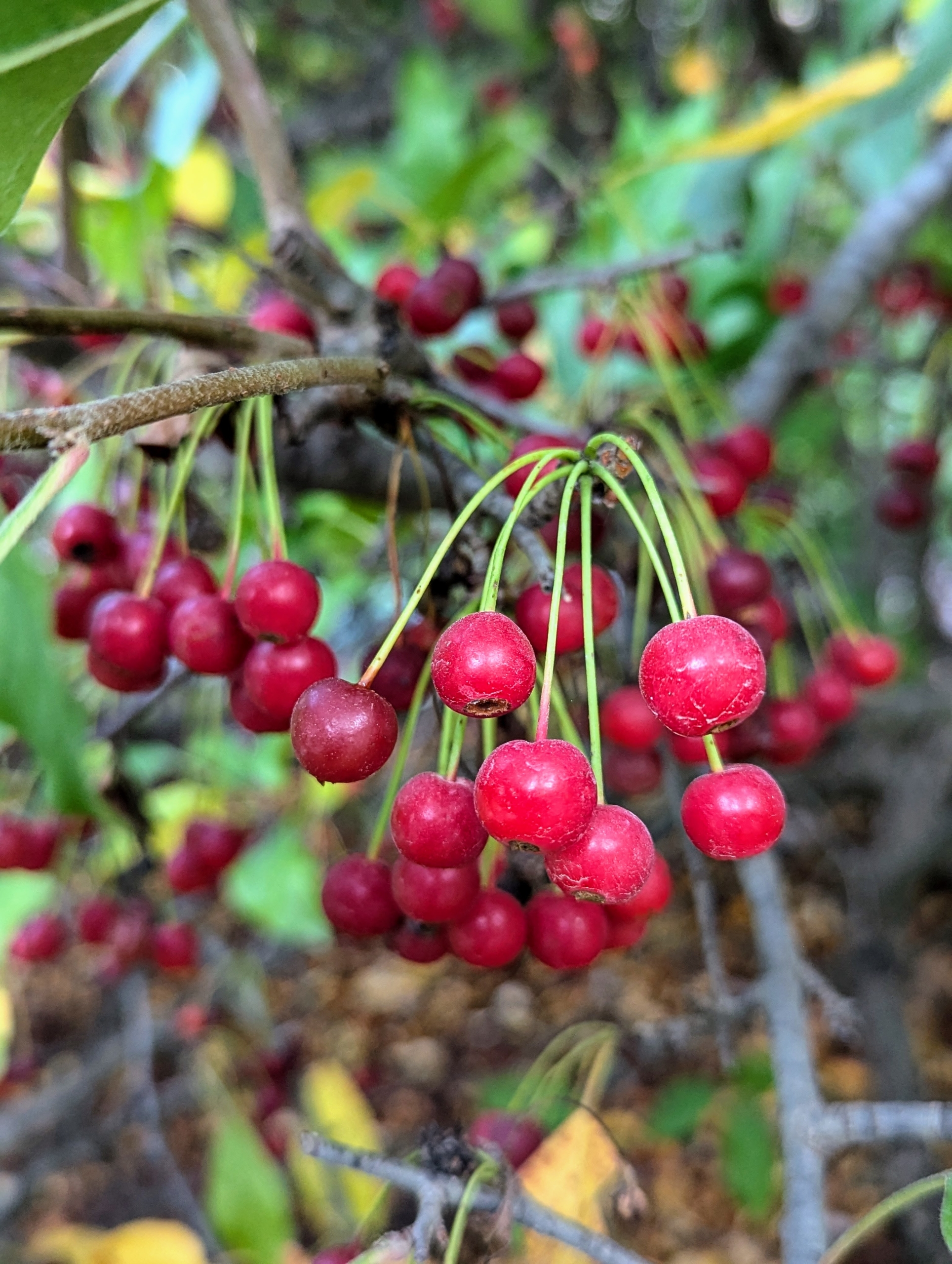
- In autumn, bright red to dark fruit can be seen among the leaves. They stay through the season and into winter.
-
- The fruits are about a half-inch in diameter and are known to be tart and astringent in taste, attracting many birds, especially cedar waxwings, robins, grosbeaks, and mockingbirds.
-
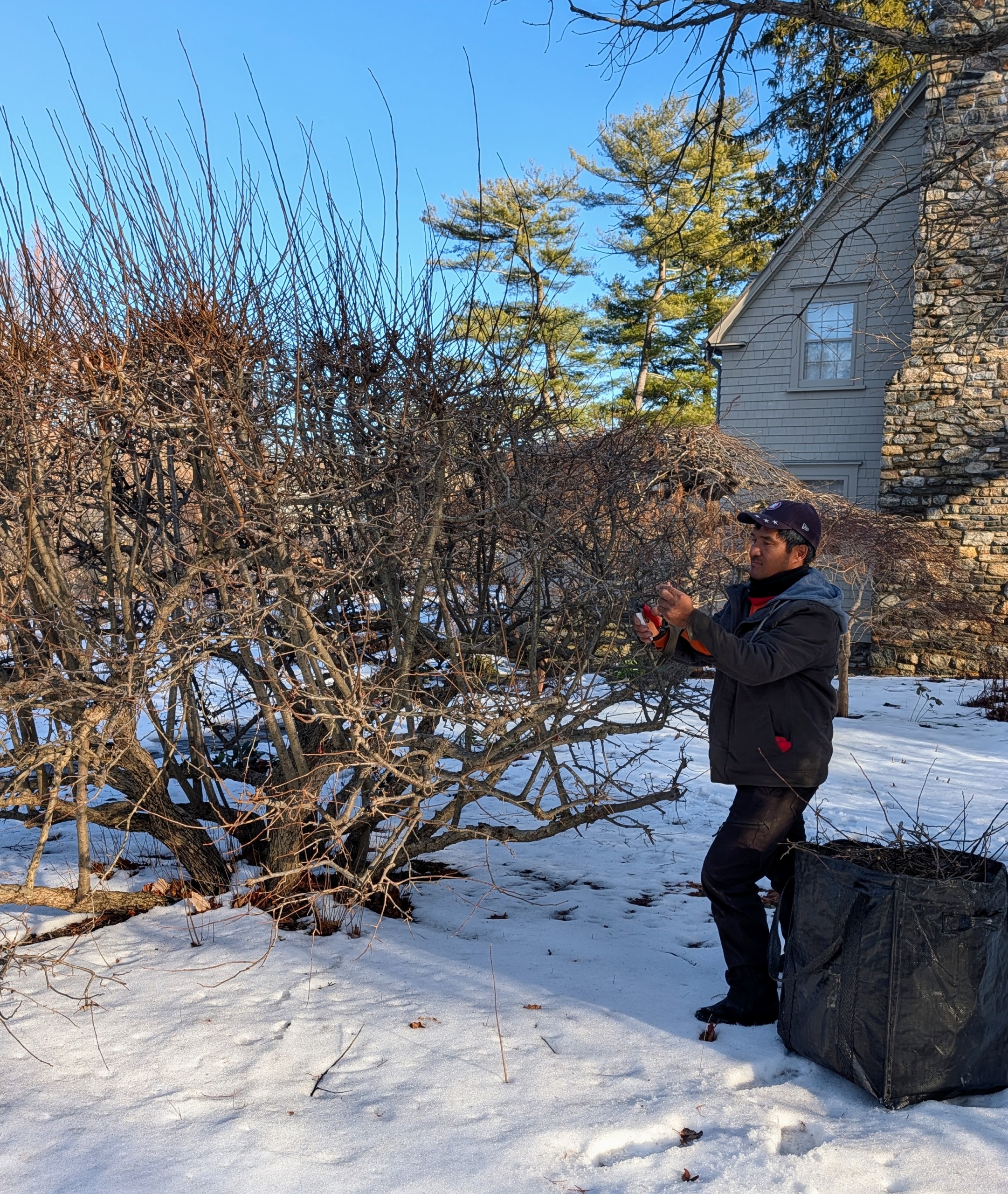
- Pasang Sherpa is an excellent pruner and oversees many of the smaller pruning projects around the farm. He focuses on the Ds of pruning and removes any dead, diseased, damaged, defective, or deranged branches.
-
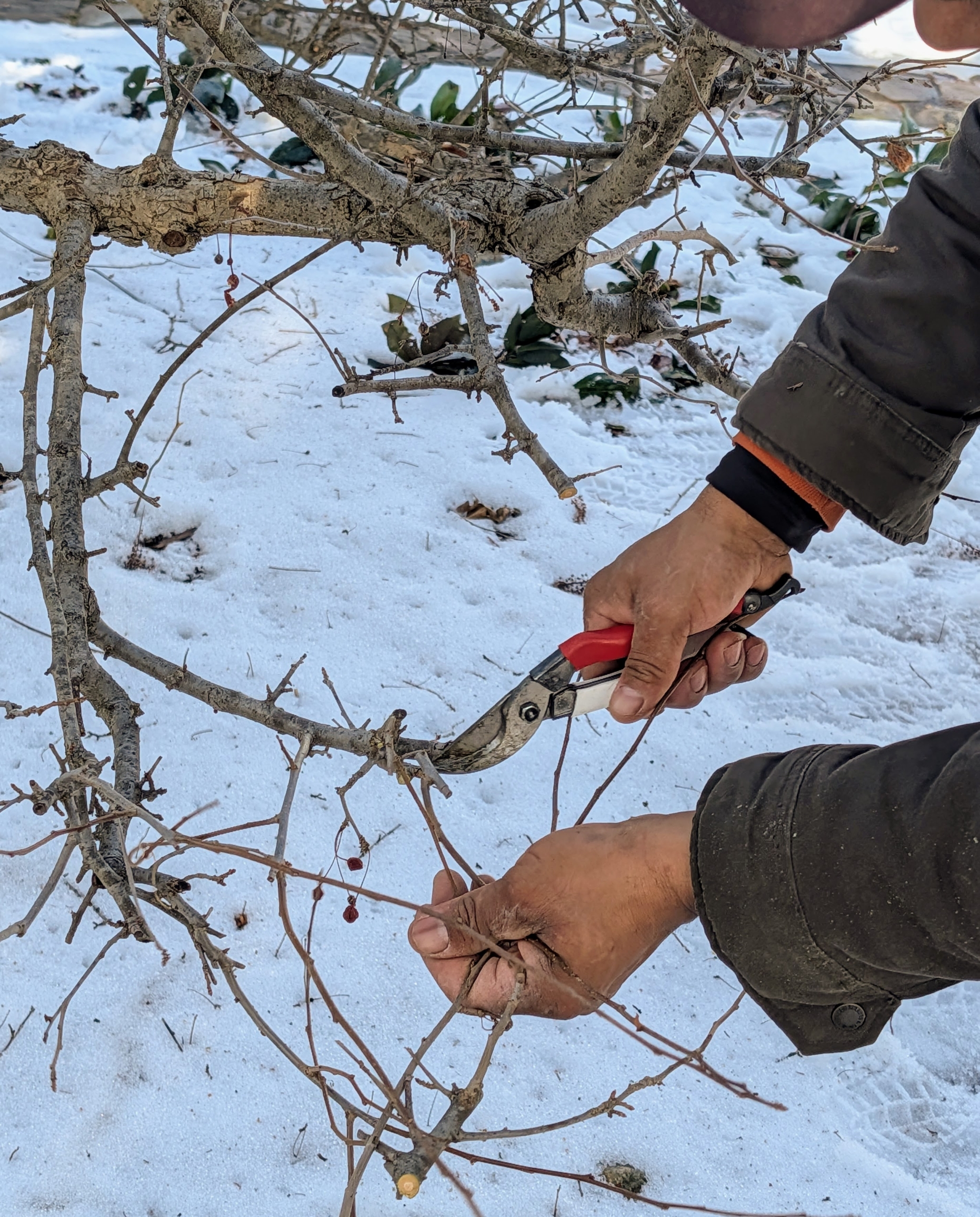
- All the pruning is done by hand. Pasang uses sharp hand pruners to cut low branches. It is crucial to use sharp blades to make clean, smooth cuts to reduce the risk of disease and infection.
-
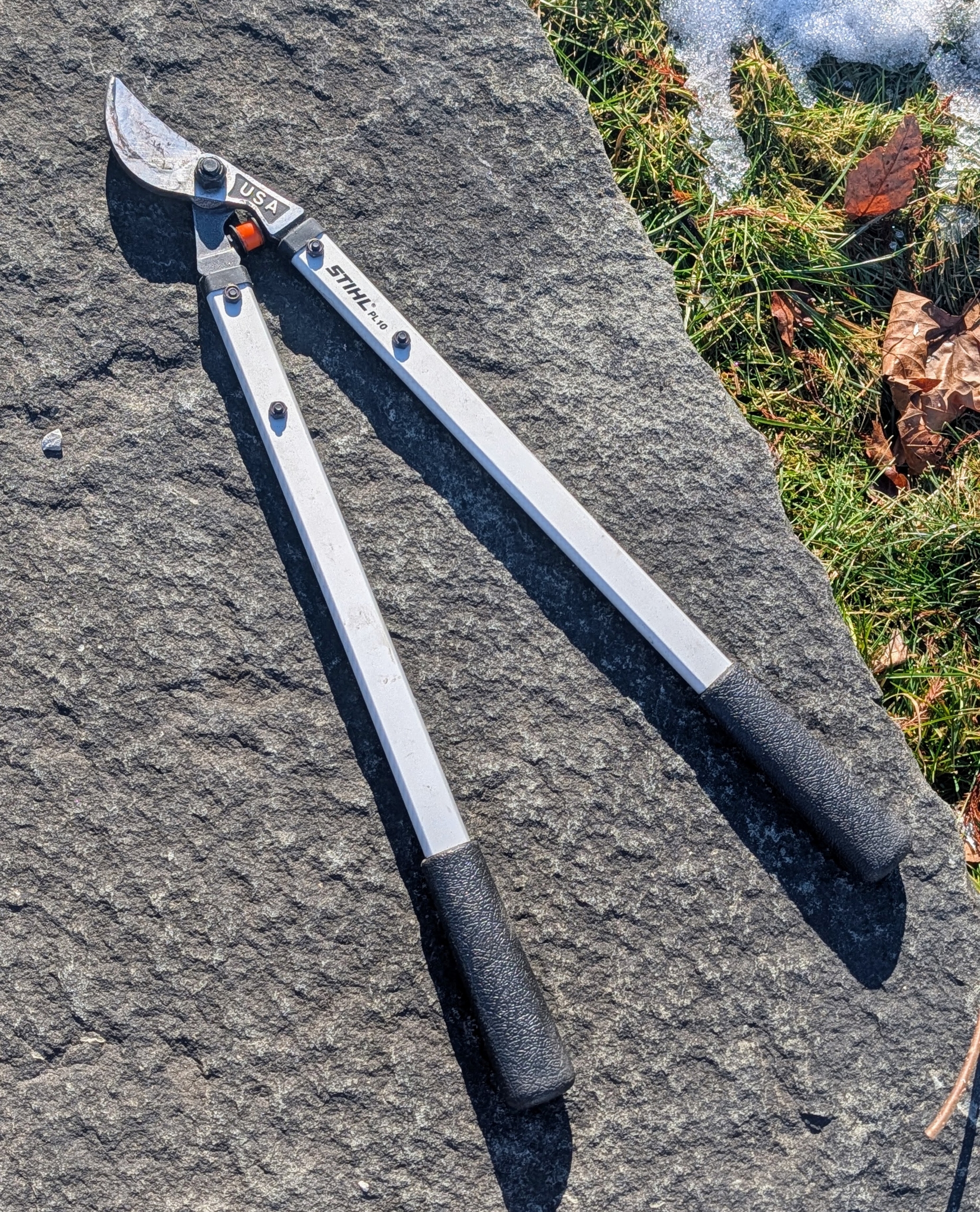
- When needed, my team also uses these STIHL loppers which feature a longer 28-inch handle made from lightweight aluminum. It is idea for cutting any tree branches up to two inches in diameter.
-
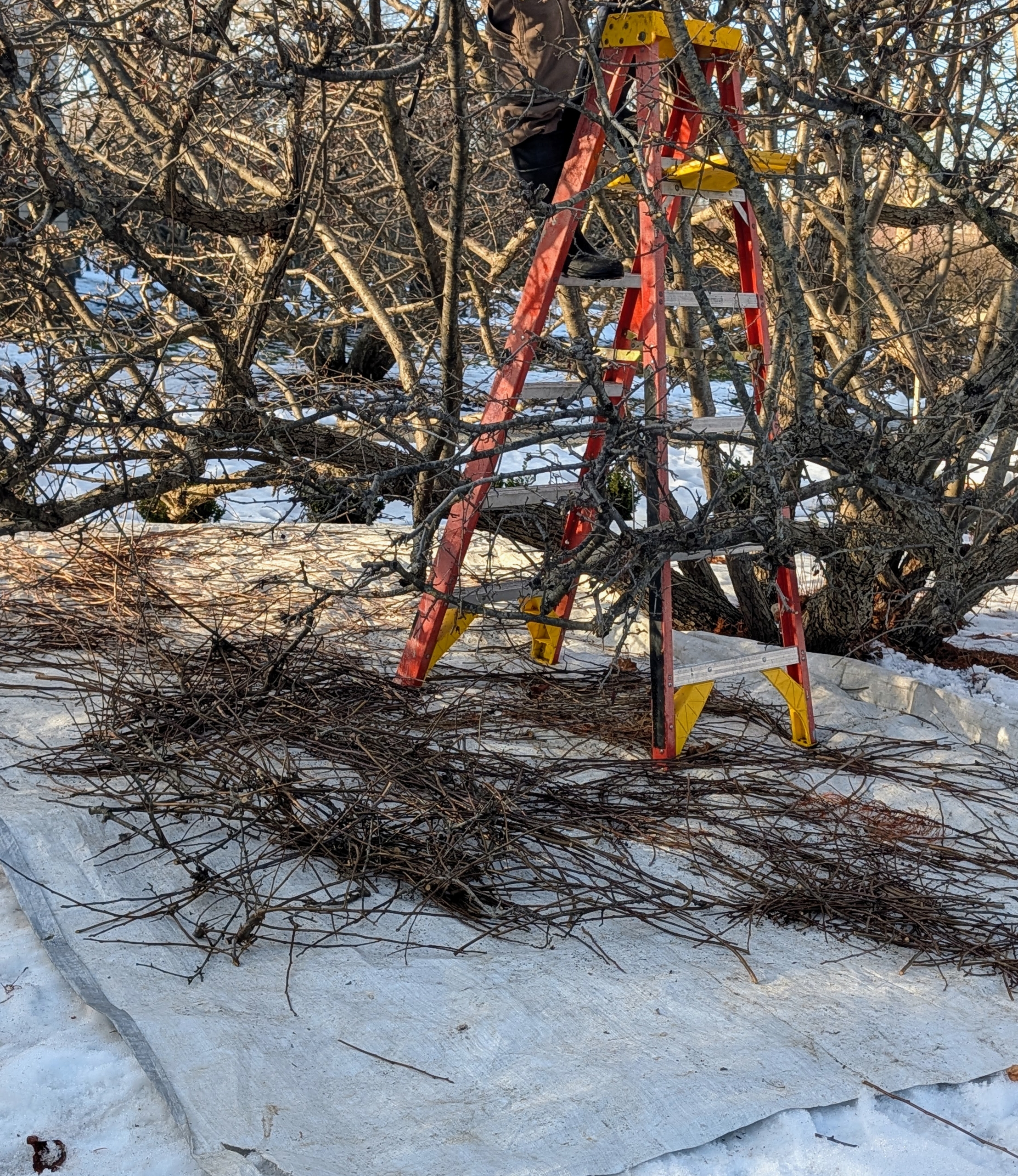
- It is also smart and efficient to place a tarp under the work area to catch all the falling branches – it makes cleanup much faster later.
-
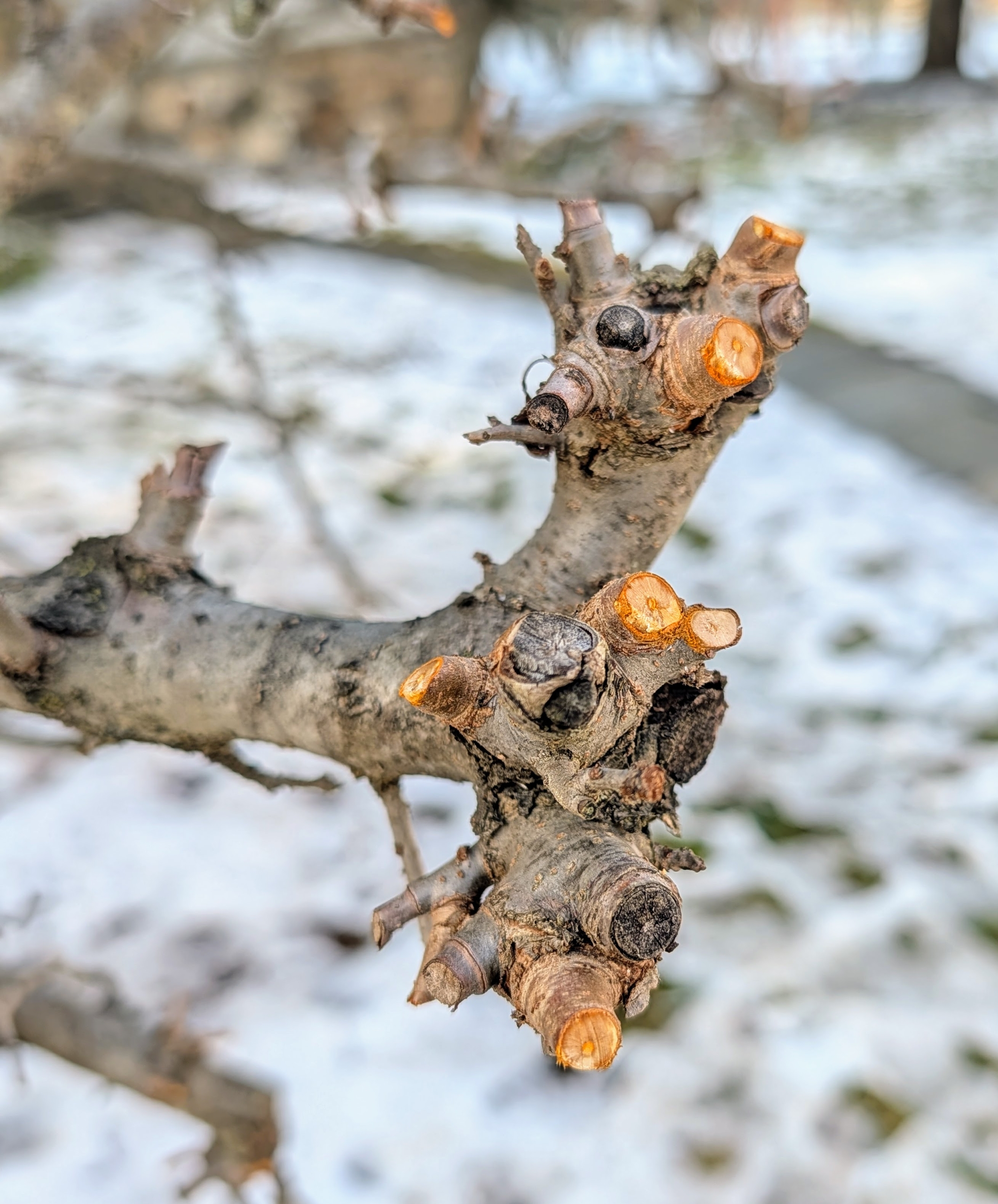
- Here, one can see where the cuts were made. When pruning, the branches are always cut just above the bud or branch. This encourages new growth and helps the wounds heal more quickly.
-
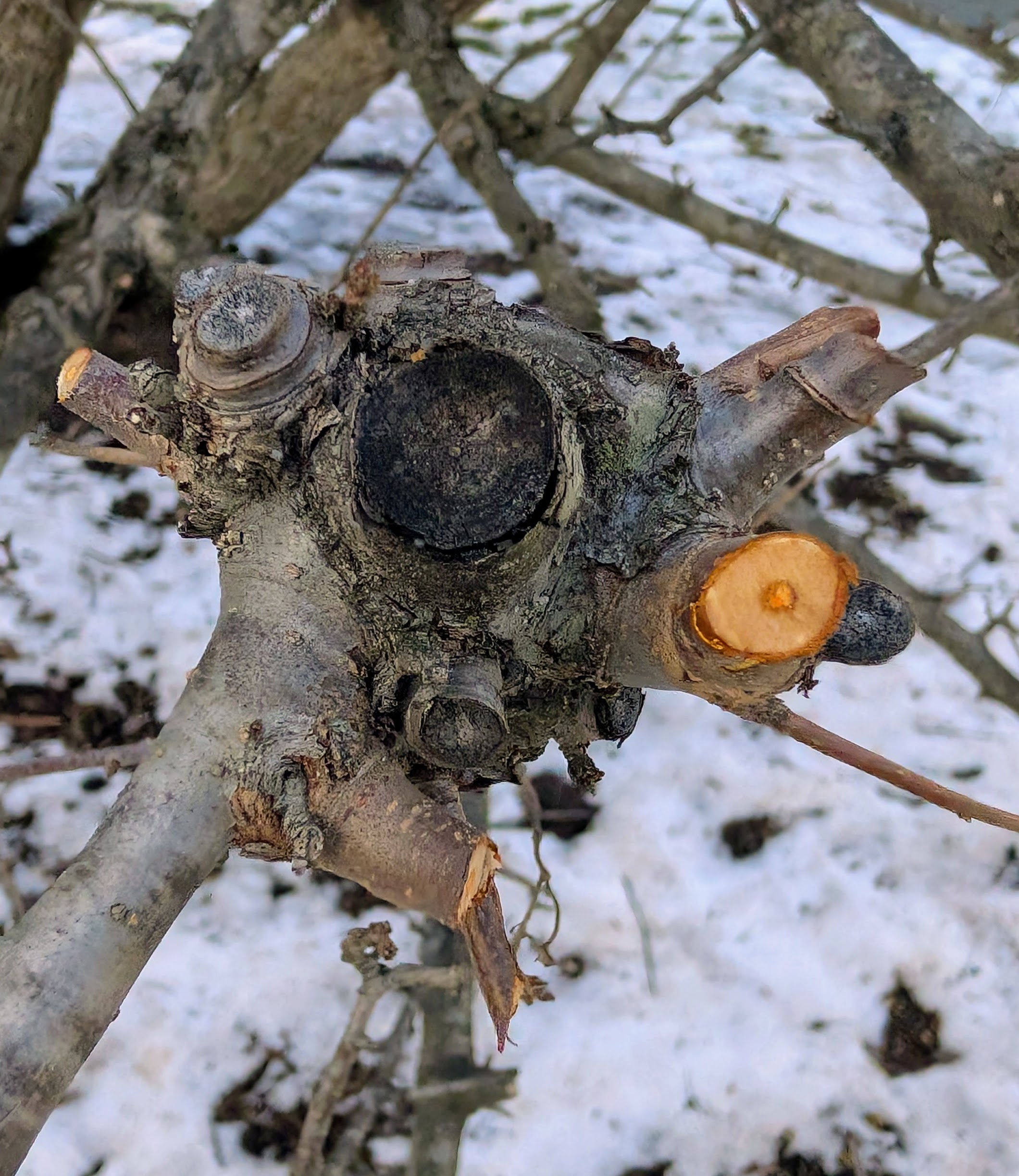
- These crabapples are pruned every year. Here are some older cuts.
-
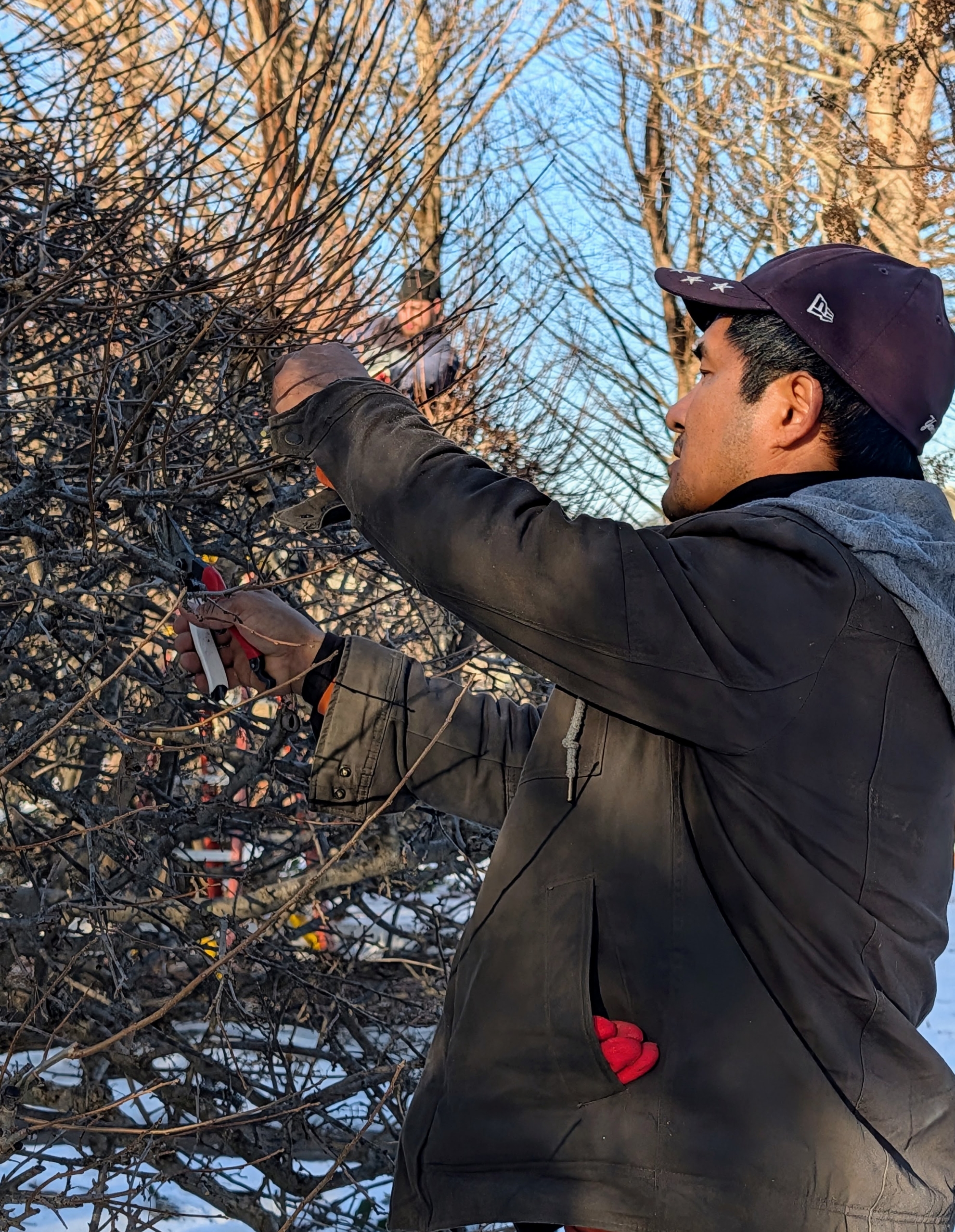
- Pasang also thins out crowded areas and works to maintain its balanced shape.
-
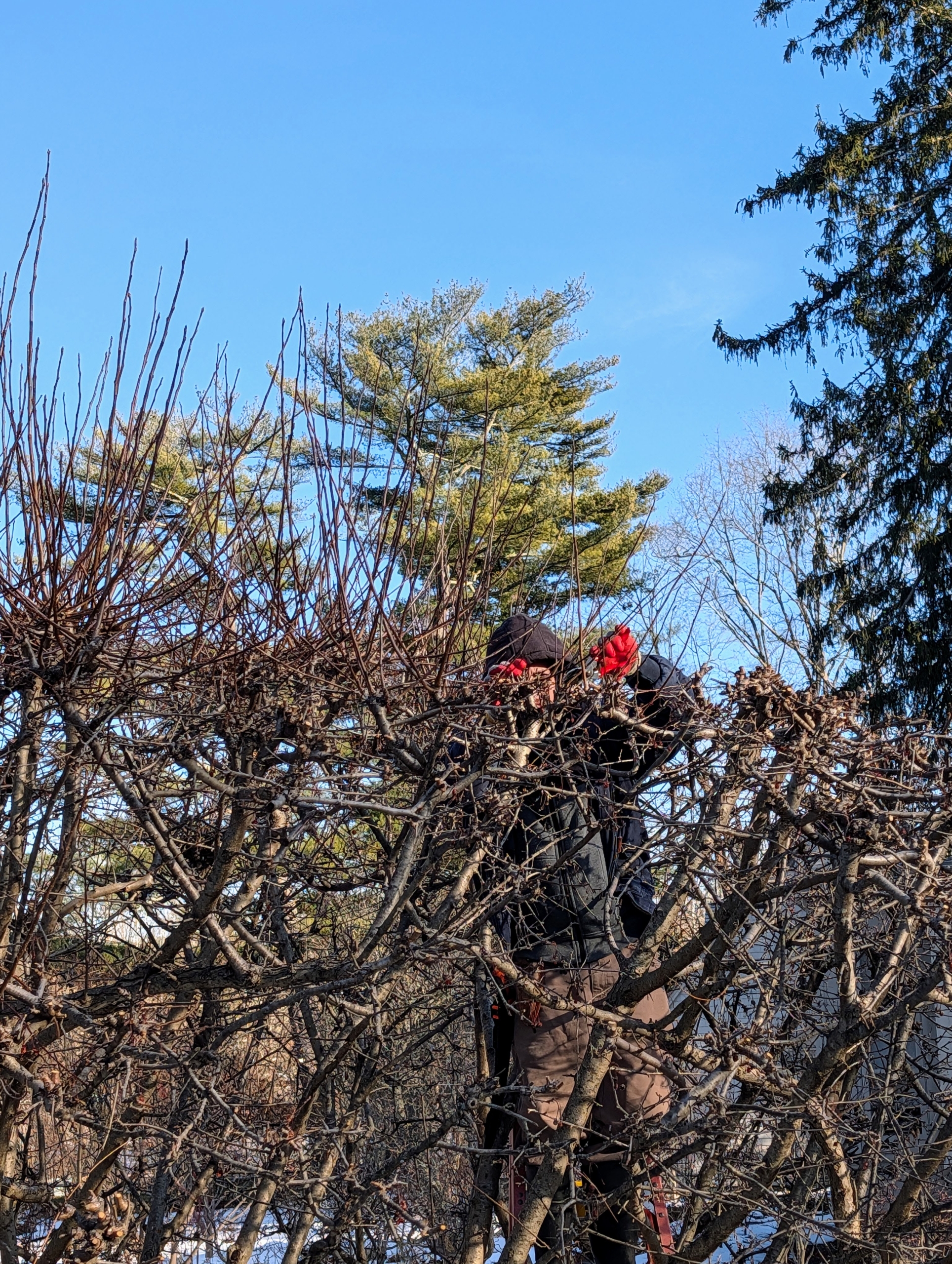
- Alex works from the top making sure adequate light and circulation can move through the center of the specimen.
-
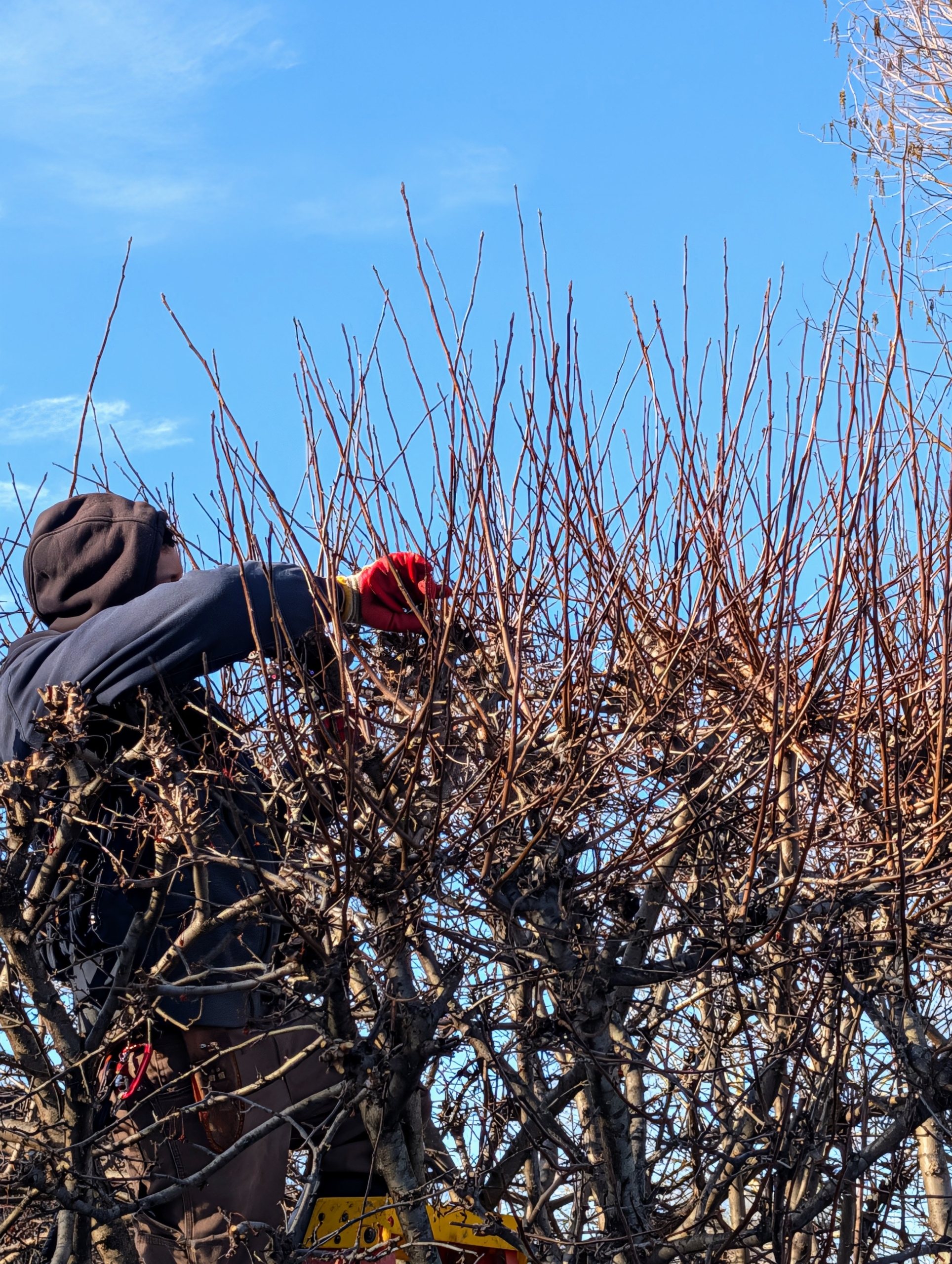
- He also removes the upward growing branches called water sprouts. These are similar to root suckers that grow up from the ground – both draw nutrients and strength away from the plant and need removing.
-
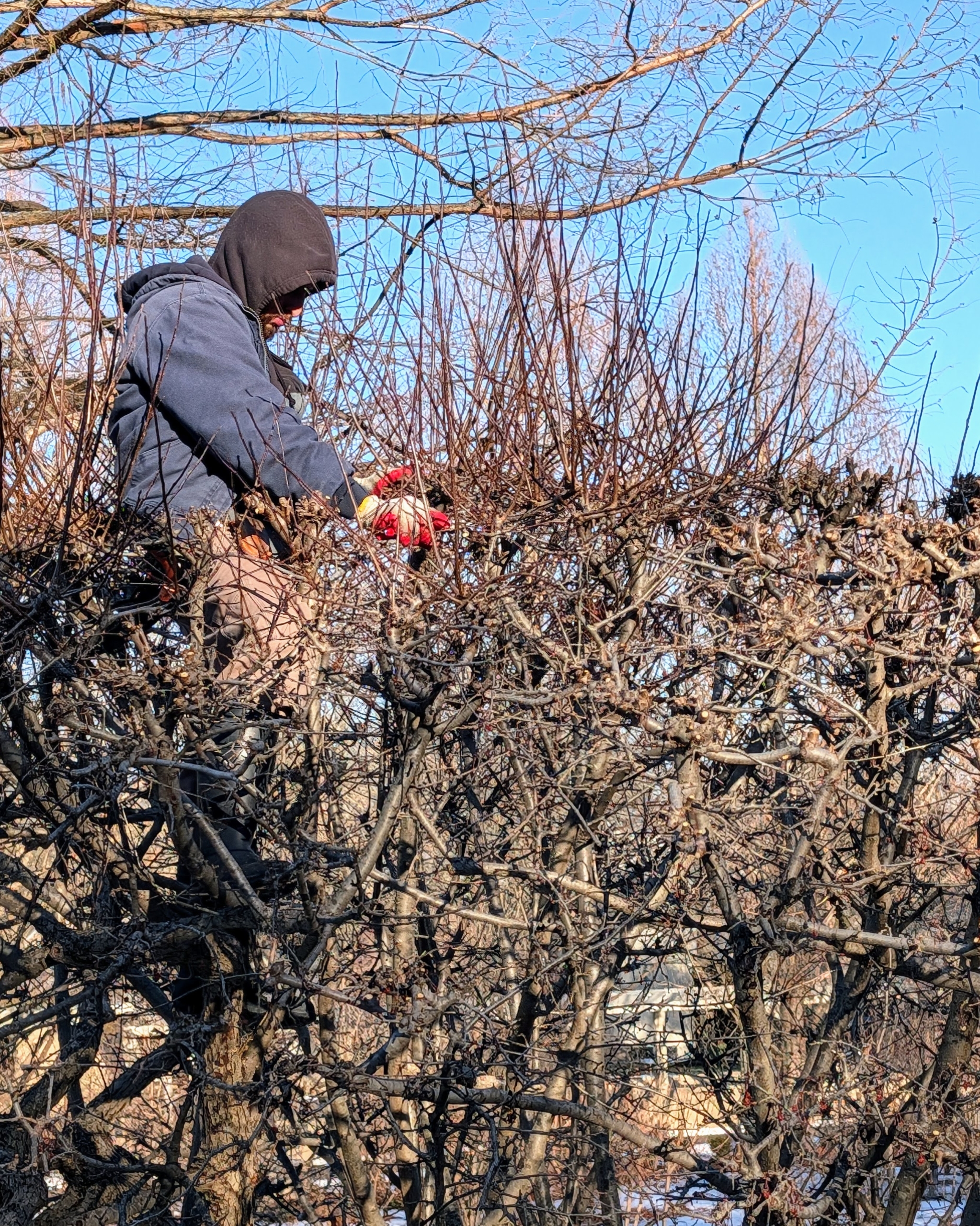
- As Alex works from the top, Pasang works from the bottom of the crabapples – it’s efficient and fast.
-
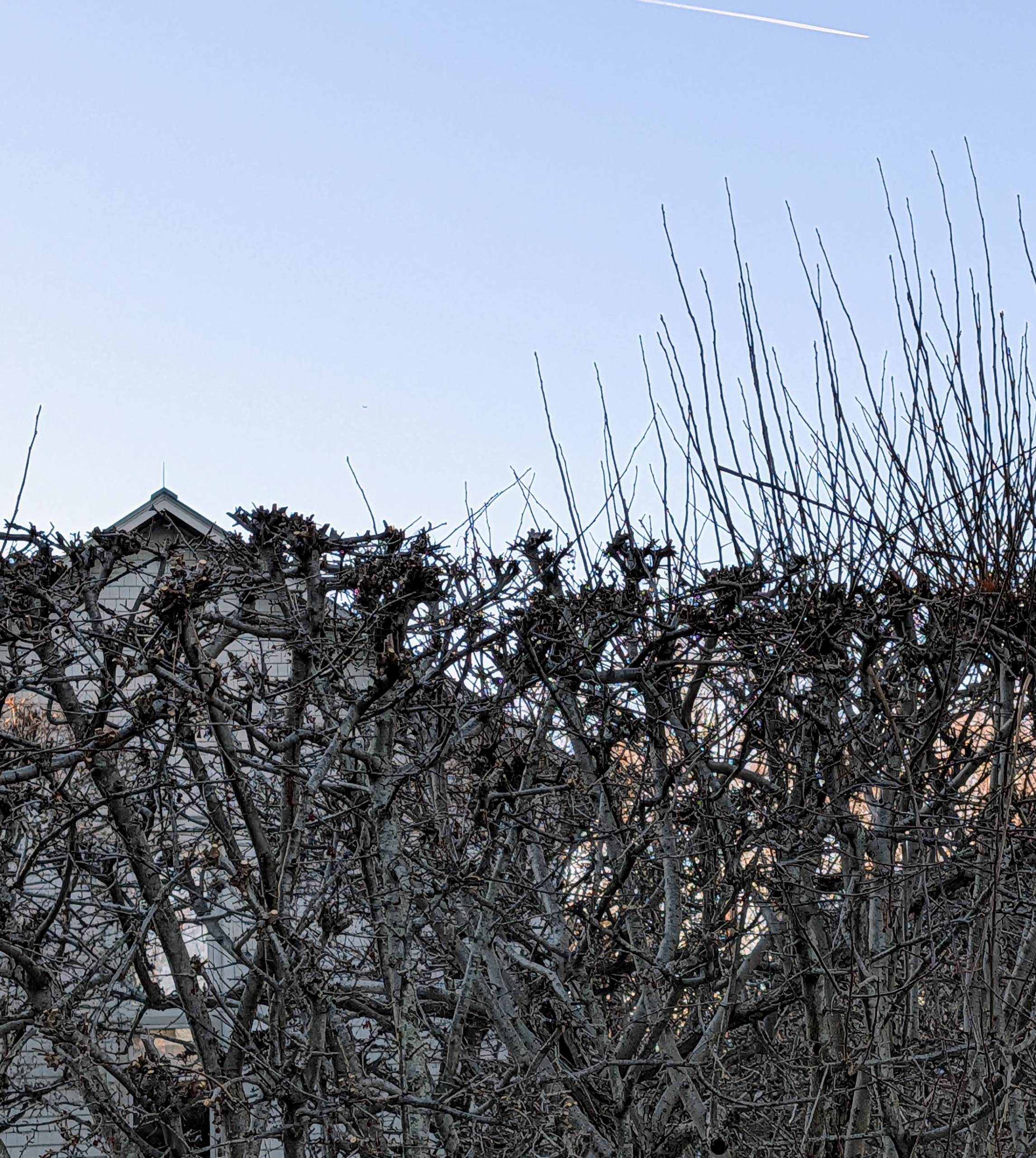
- Look closely to see which side Alex pruned and which side he has yet to do.
-
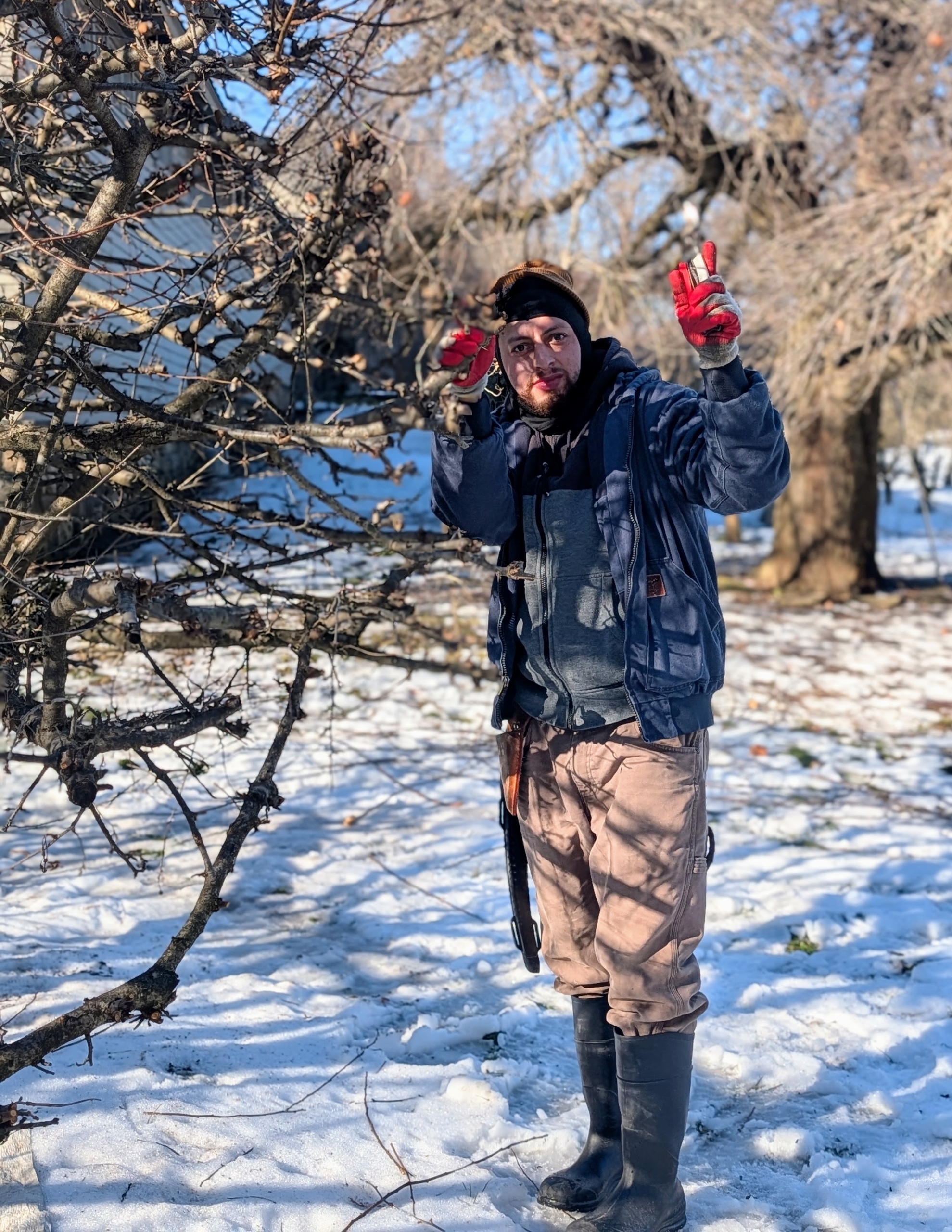
- Alex enjoys working with the trees and shrubs and does a great job. He and Pasang have already pruned more than a dozen different trees this week.
-
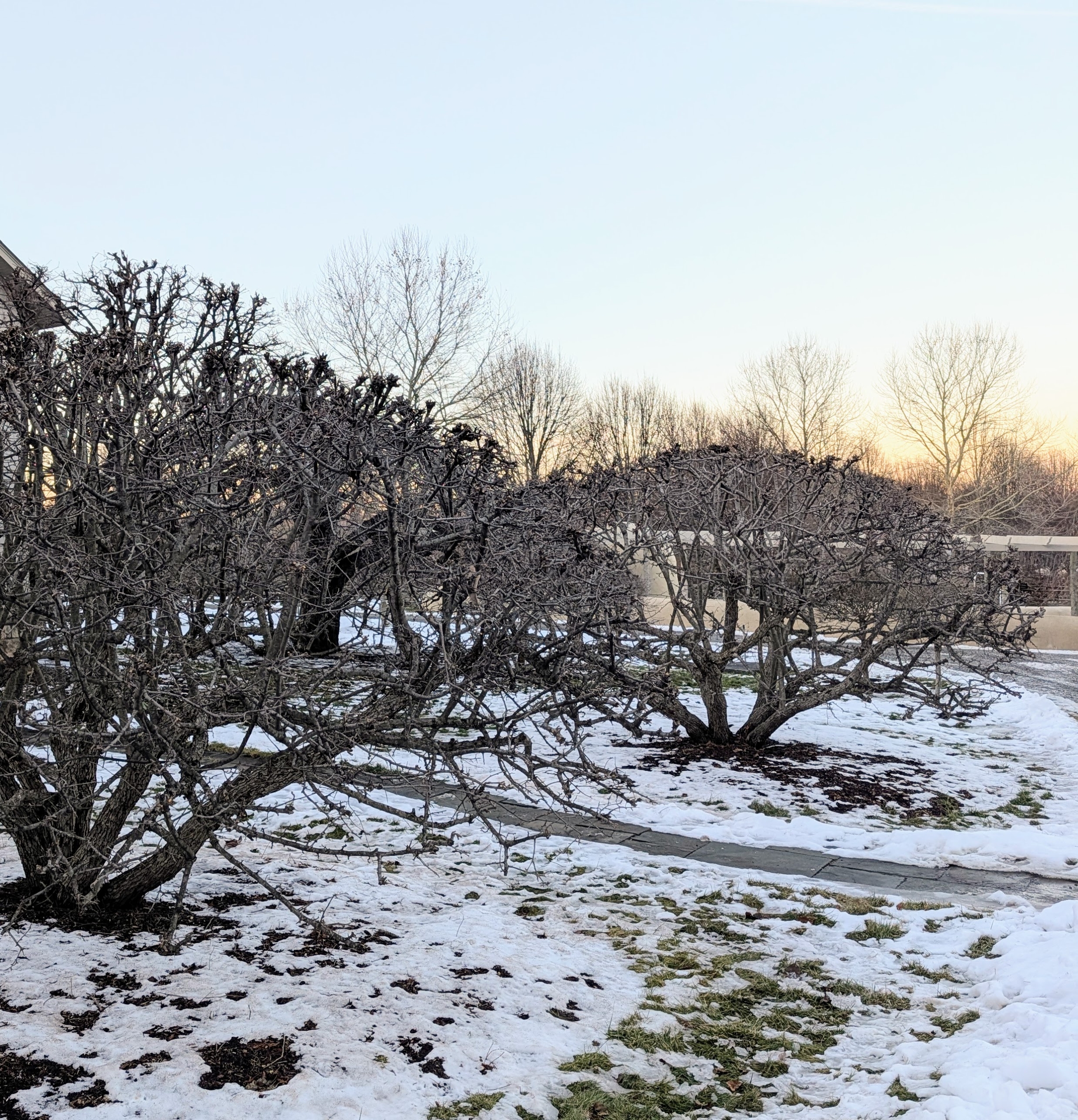
- These Sargent crabapples have horizontal branching which helps create the dense mounded habit. Pruning them correctly will ensure they will continue to be healthy, productive, and beautiful.
 Martha Pins


 Martha Tweets

