

Repotting Orchids from White Plains Orchids
On cold winter days when it’s more productive to work indoors, my head gardener Ryan McCallister keeps busy seed starting and tending to the many plant maintenance tasks inside the greenhouse.
Recently, I purchased four new orchid plants from White Plains Orchids, a family-operated nursery not far from my farm. Once home, they went straight to the head house for repotting. Caring for orchids can be daunting for many, but if one takes the time to understand their basic needs and get all the proper orchid care supplies, there’s no reason why they won’t continue to thrive and bloom.
Here are some photos, enjoy.
-

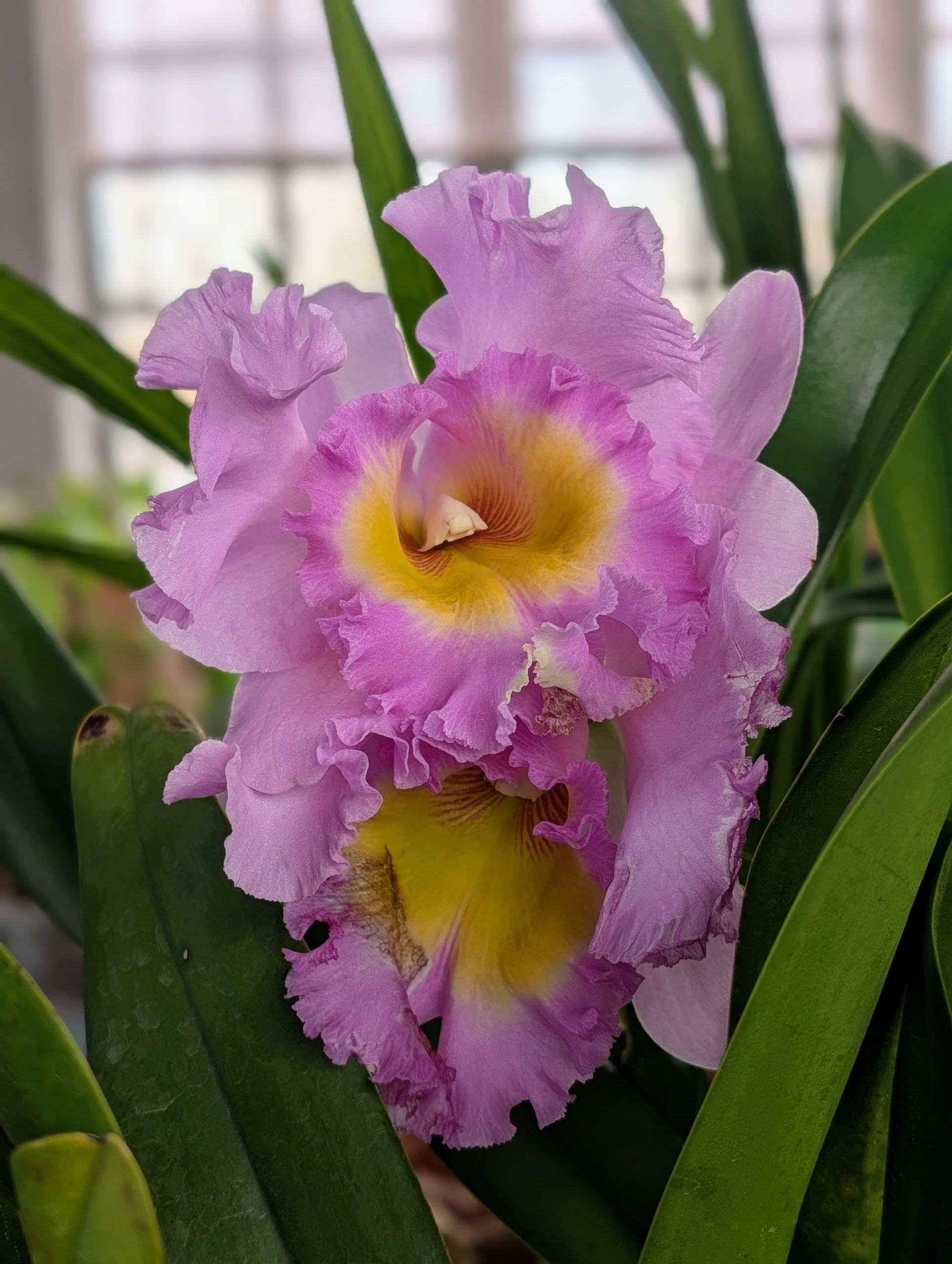
- This is one of my new specimens from White Plains Orchids. Optimum temperatures for orchids in winter are 45 to 55-degrees Fahrenheit at night and 65 to 75-degrees Fahrenheit during the day. When plants are in bud, temperatures must be as constant as possible. I am fortunate to have greenhouses, where temperatures and humidity levels can be closely monitored.
-
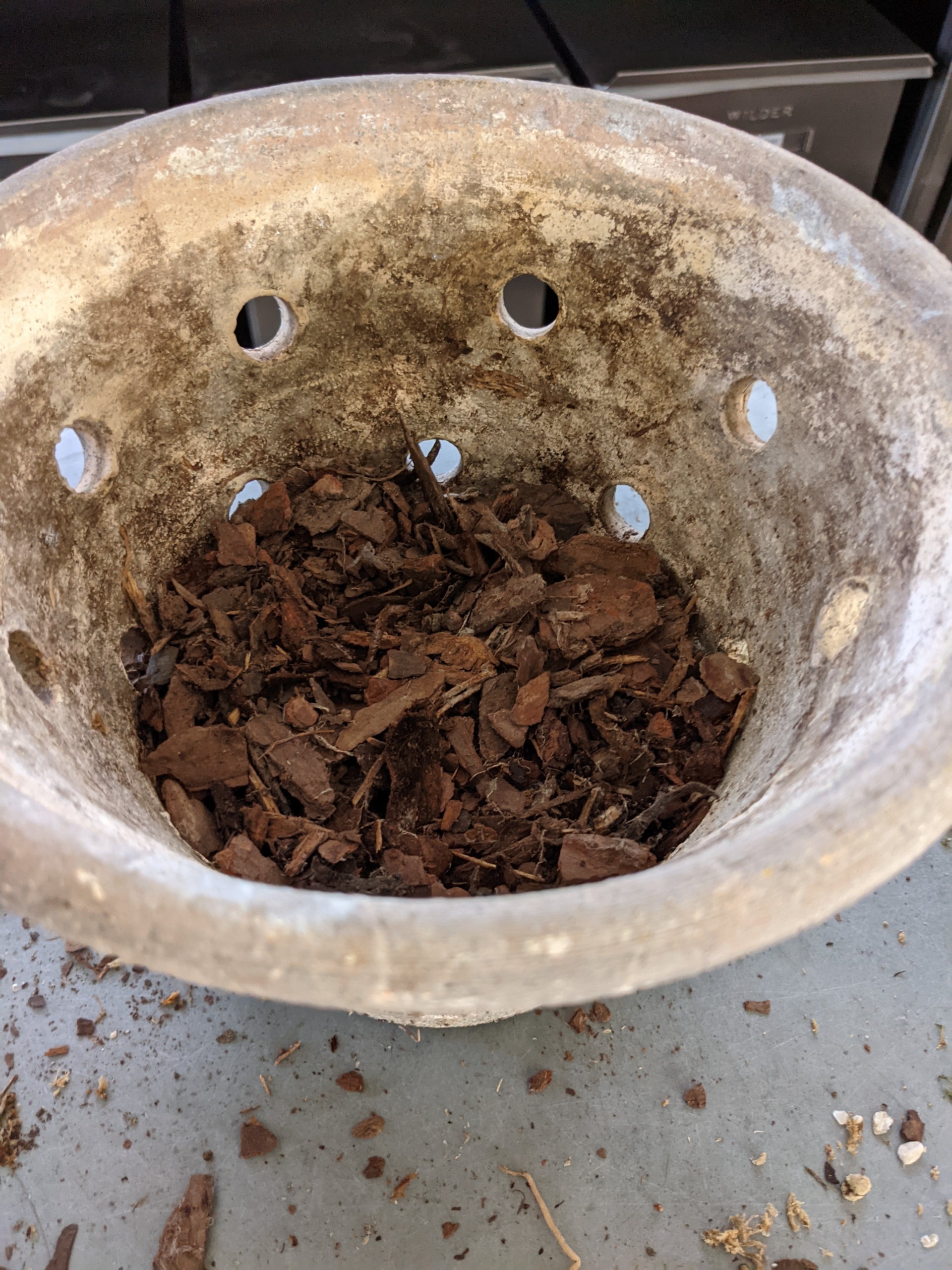
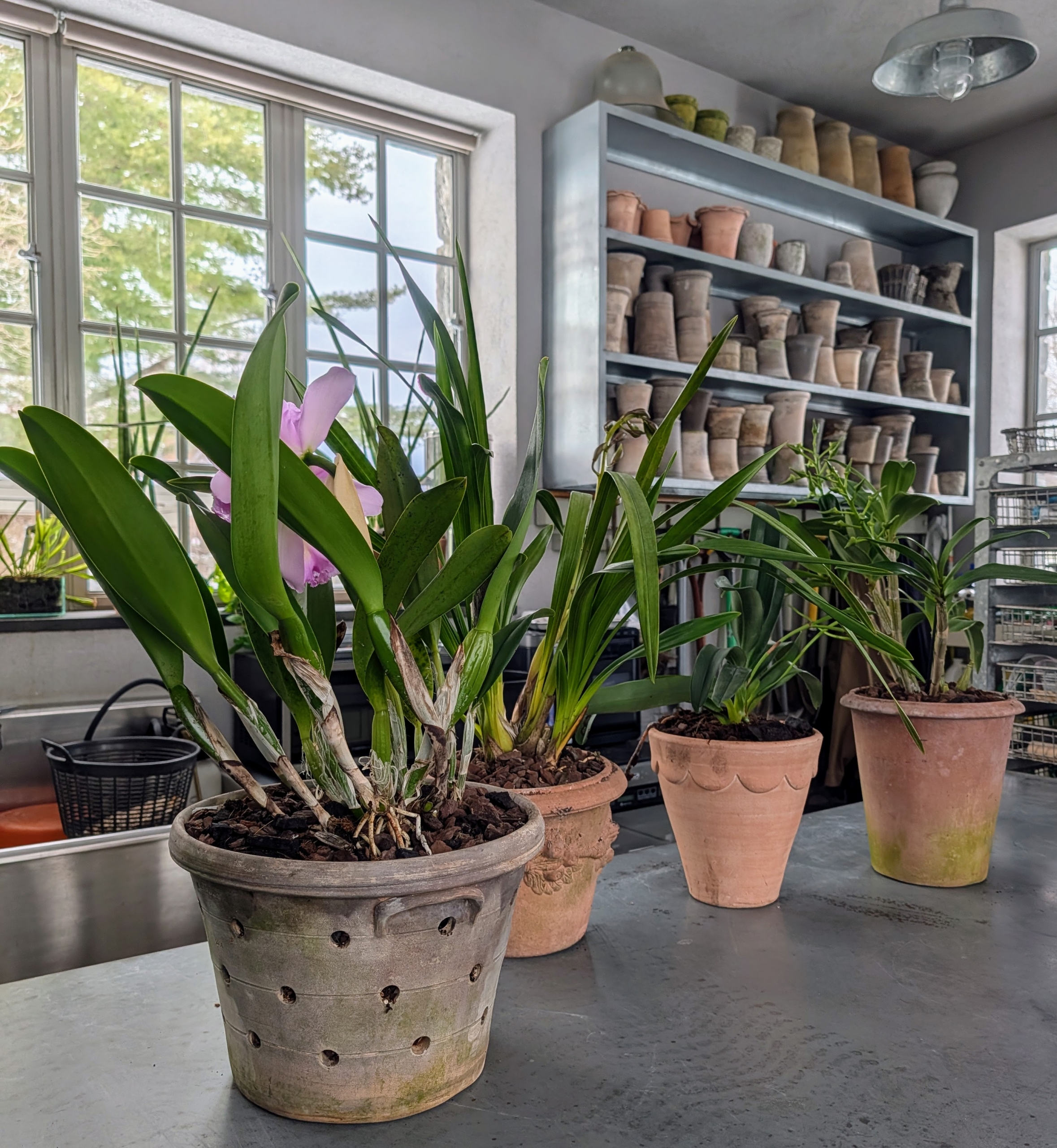
- When potting orchids, choose a pot that can accommodate two years of growth, or about two inches larger than the one before. Specialized orchid containers have holes all around the surface to increase the air circulation in the roots – these are the best.
-
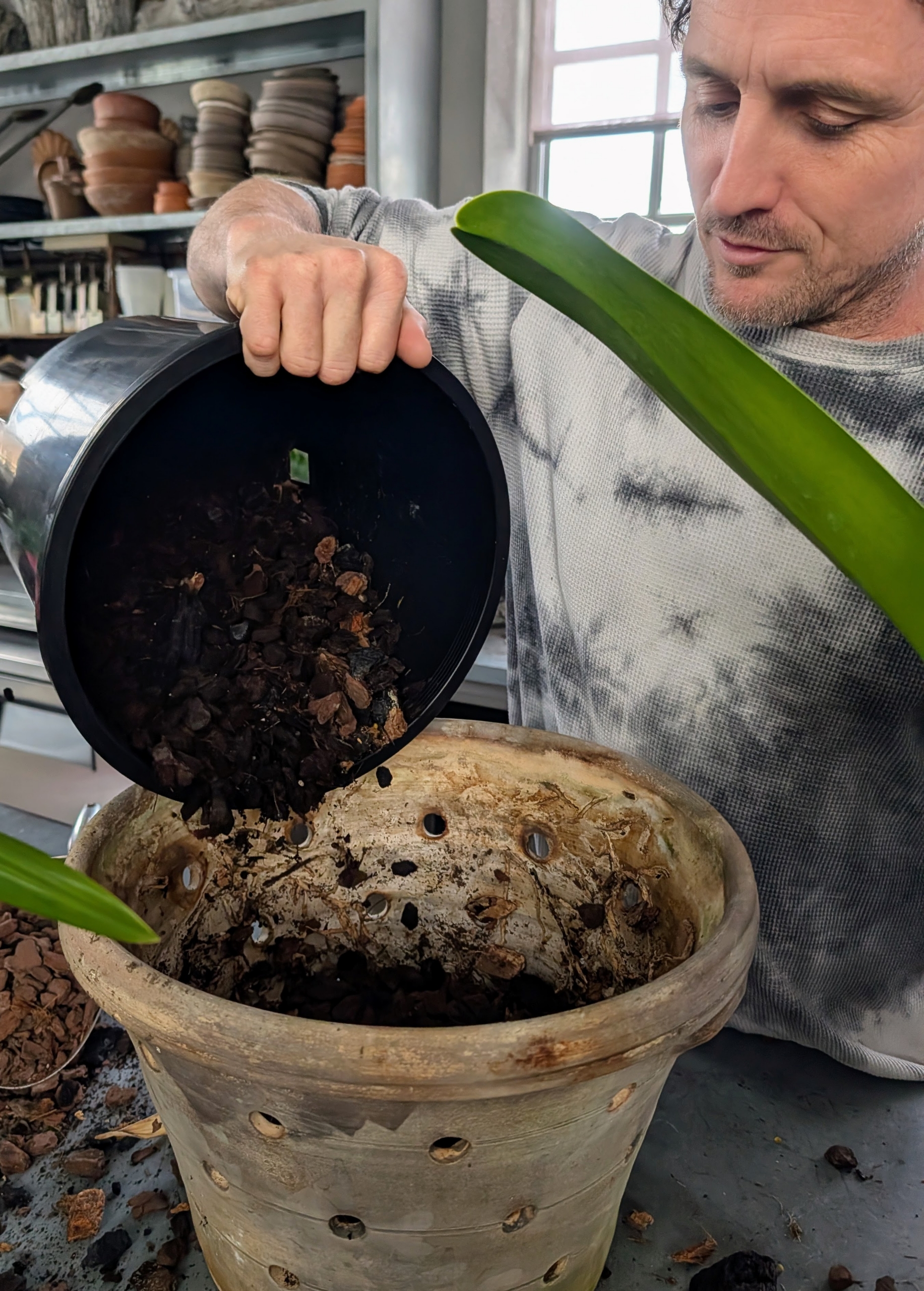
- Ryan is able to use some of the orchid medium from the plant’s original pot. Orchids don’t grow like other houseplants. Instead, they exist in a container of loose materials such as bark, charcoal, and moss.
-
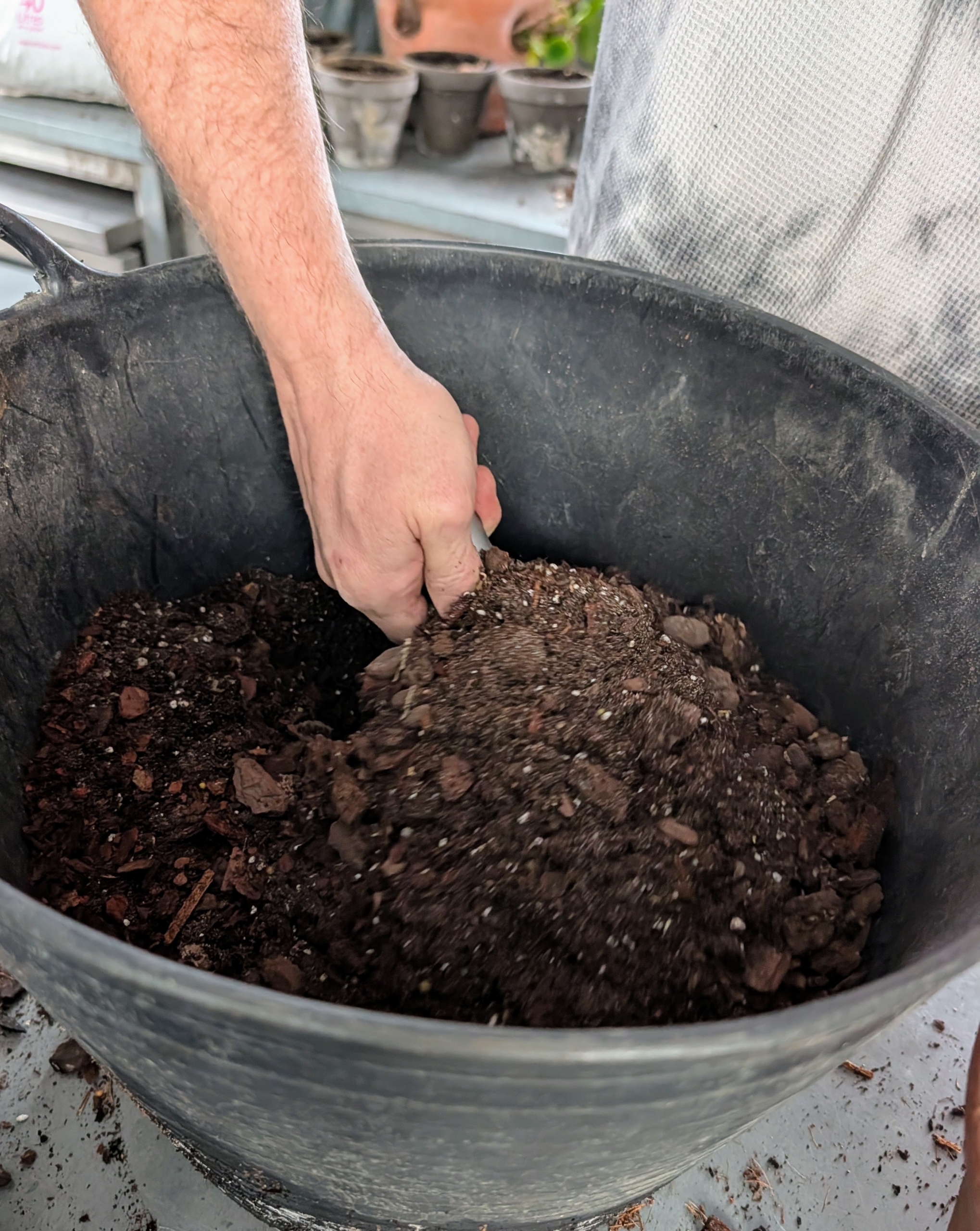
- I also like to create my own mix, but there are pre-made orchid mixes available at garden supply stores. Ryan combines materials and mixes them all together in a gardening trug bucket.
-
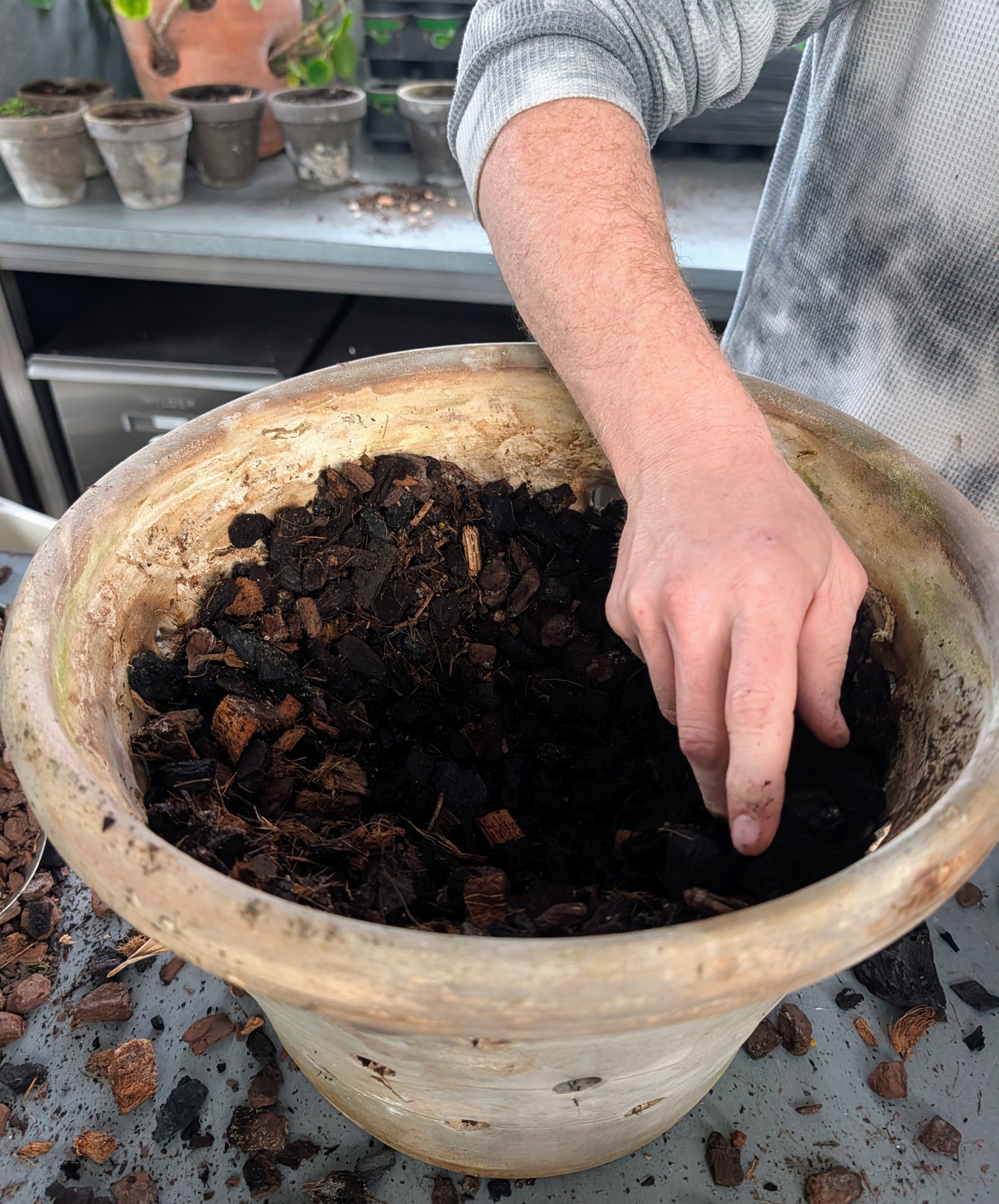
- Then he adds more mix to the pot. He uses a coarse orchid bark, which allows air to circulate naturally around the roots of the plant.
-
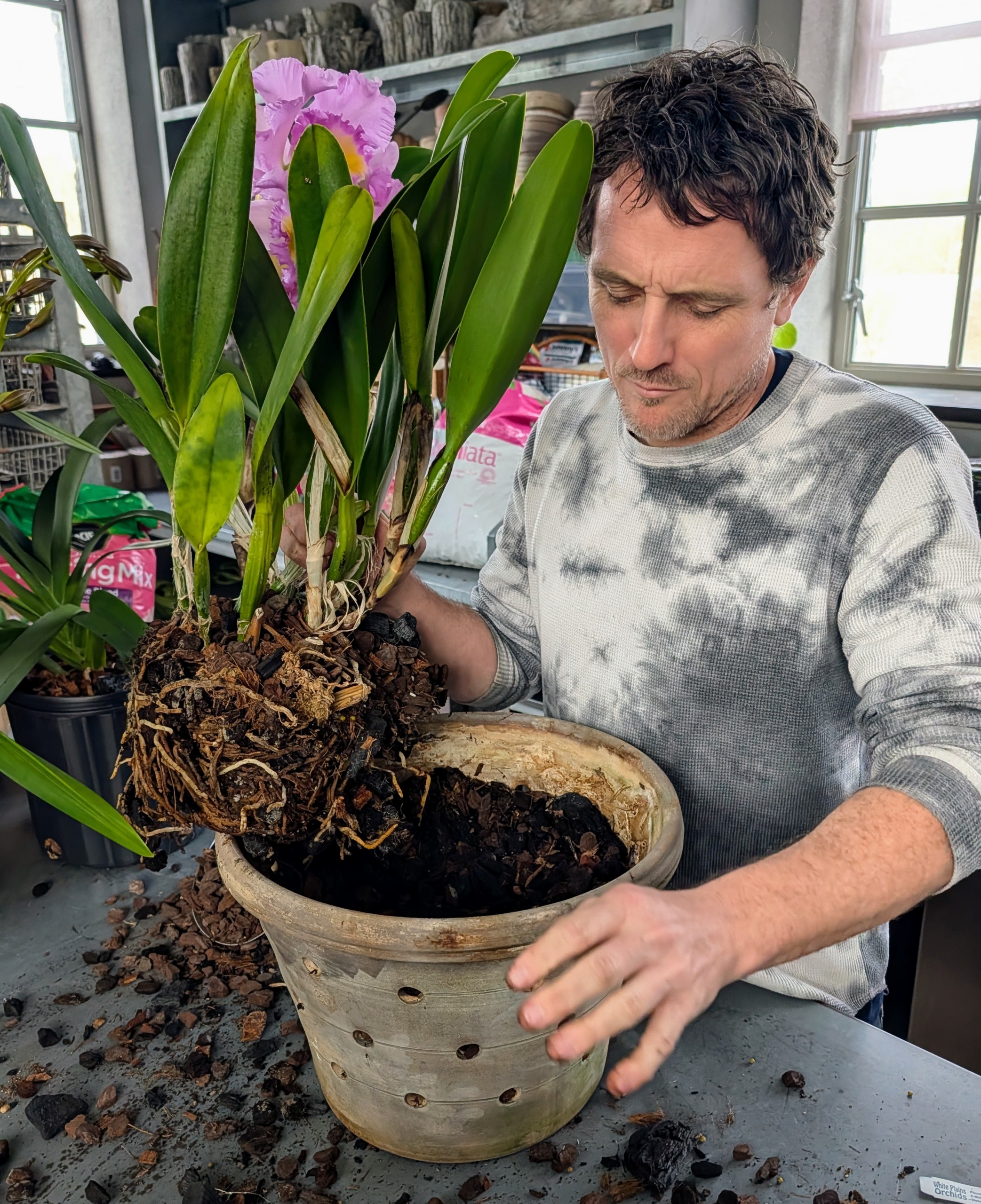
- Next, Ryan places the orchid inside the pot to see if it is sitting properly – it should be at the same height as it was in the original container. If it is too high, he takes some of the medium out from underneath the plant.
-
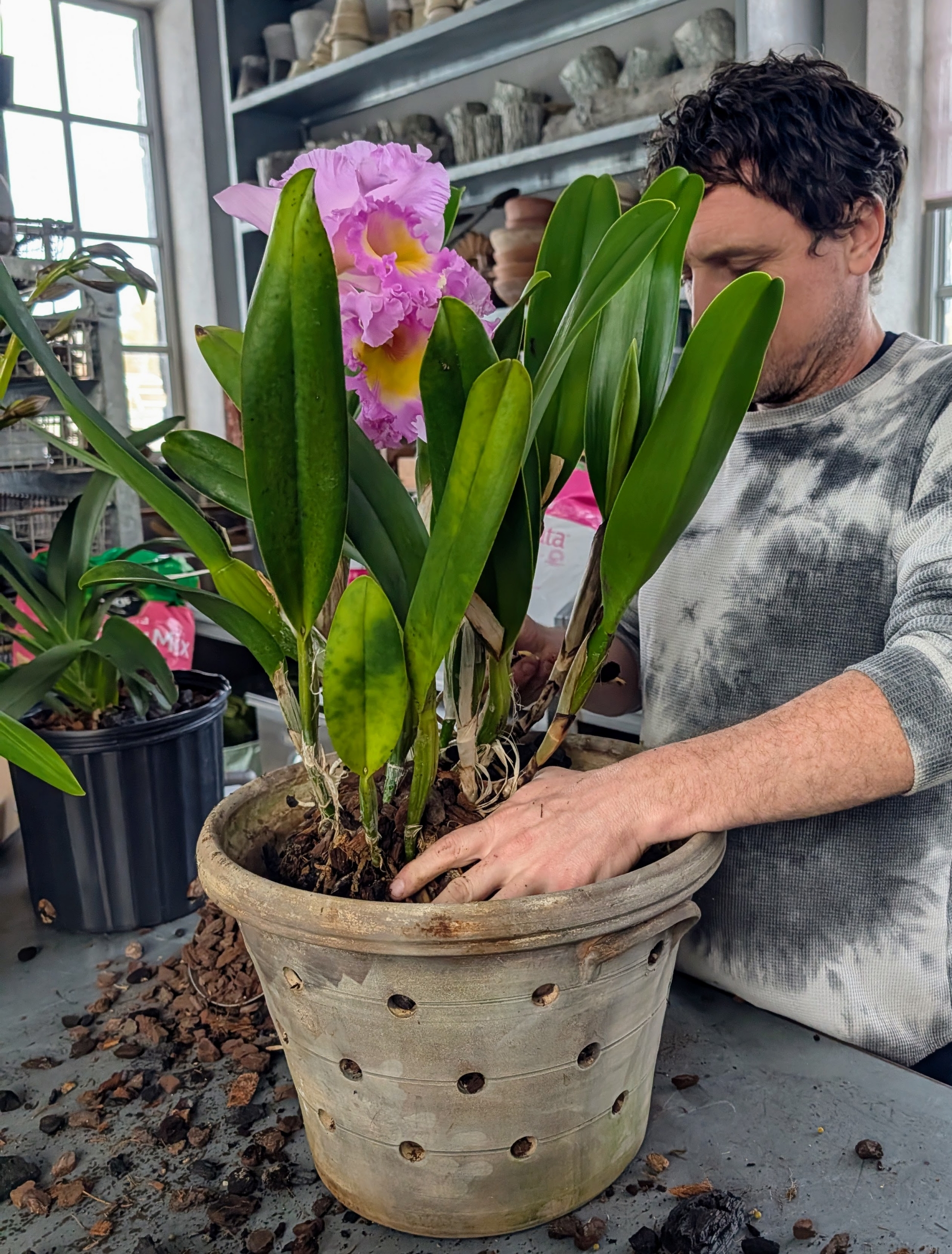
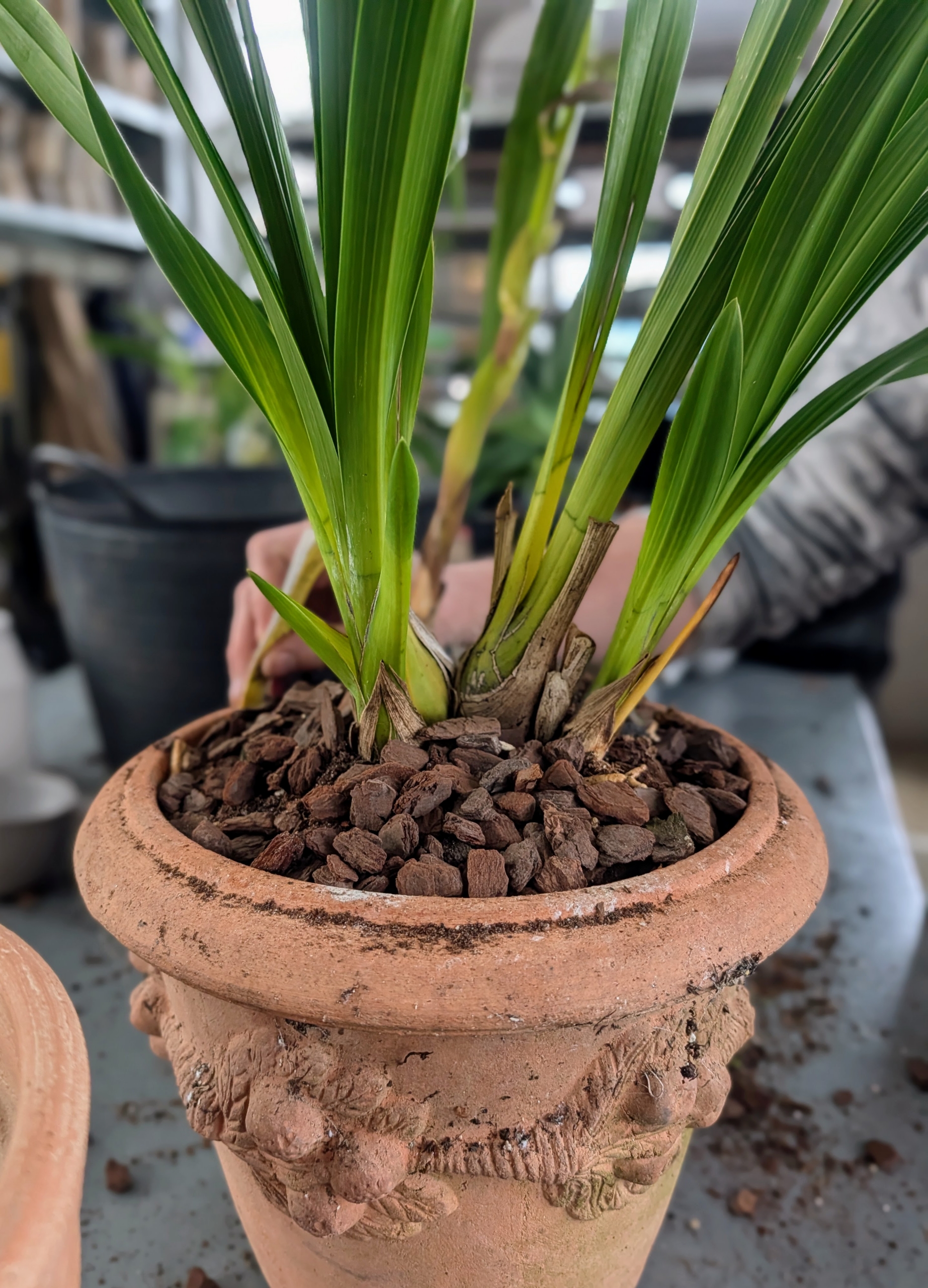
- Ryan moves the bark mix around the roots and firms the bark down, making sure the orchid rhizome or crown of the plant is flush with the top of the bark.
-
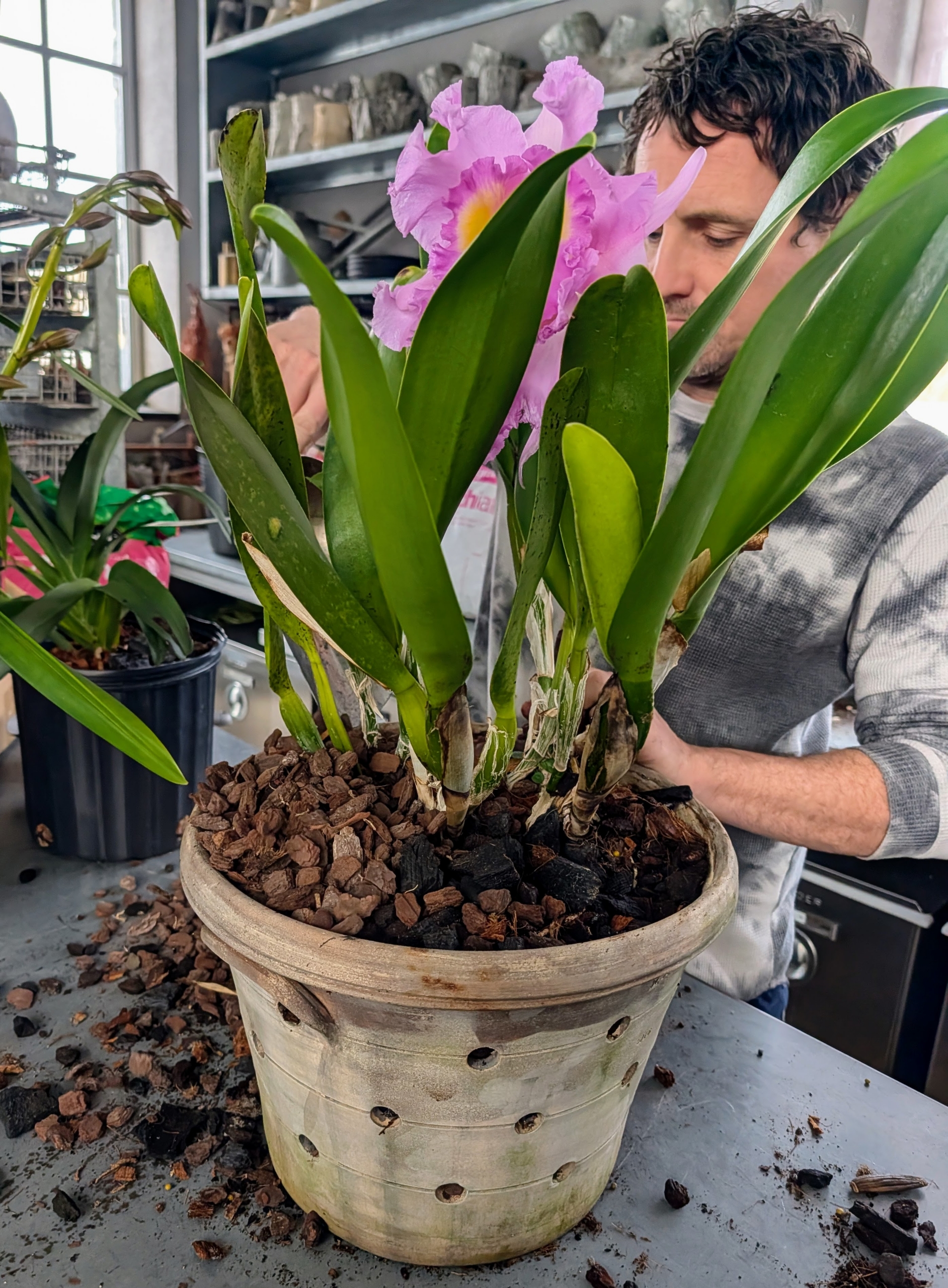
- Then Ryan fills the rest of the pot with orchid bark and charcoal until it is well secured.
-
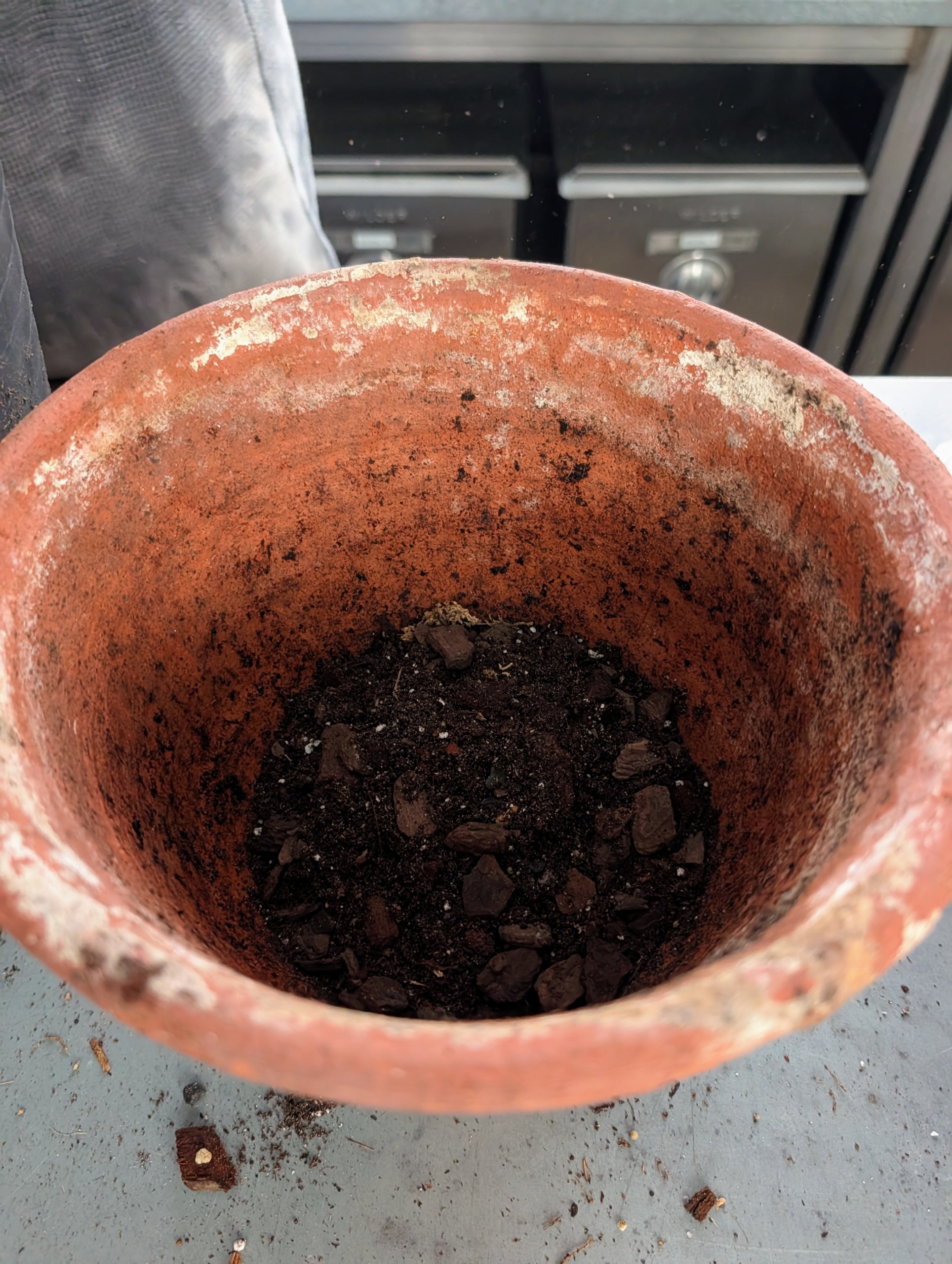
- In this pot, Ryan fills about a third of the pot with orchid mix. Whenever potting any plant don’t forget to place a shard or stone over the hole at the bottom for good drainage.
-
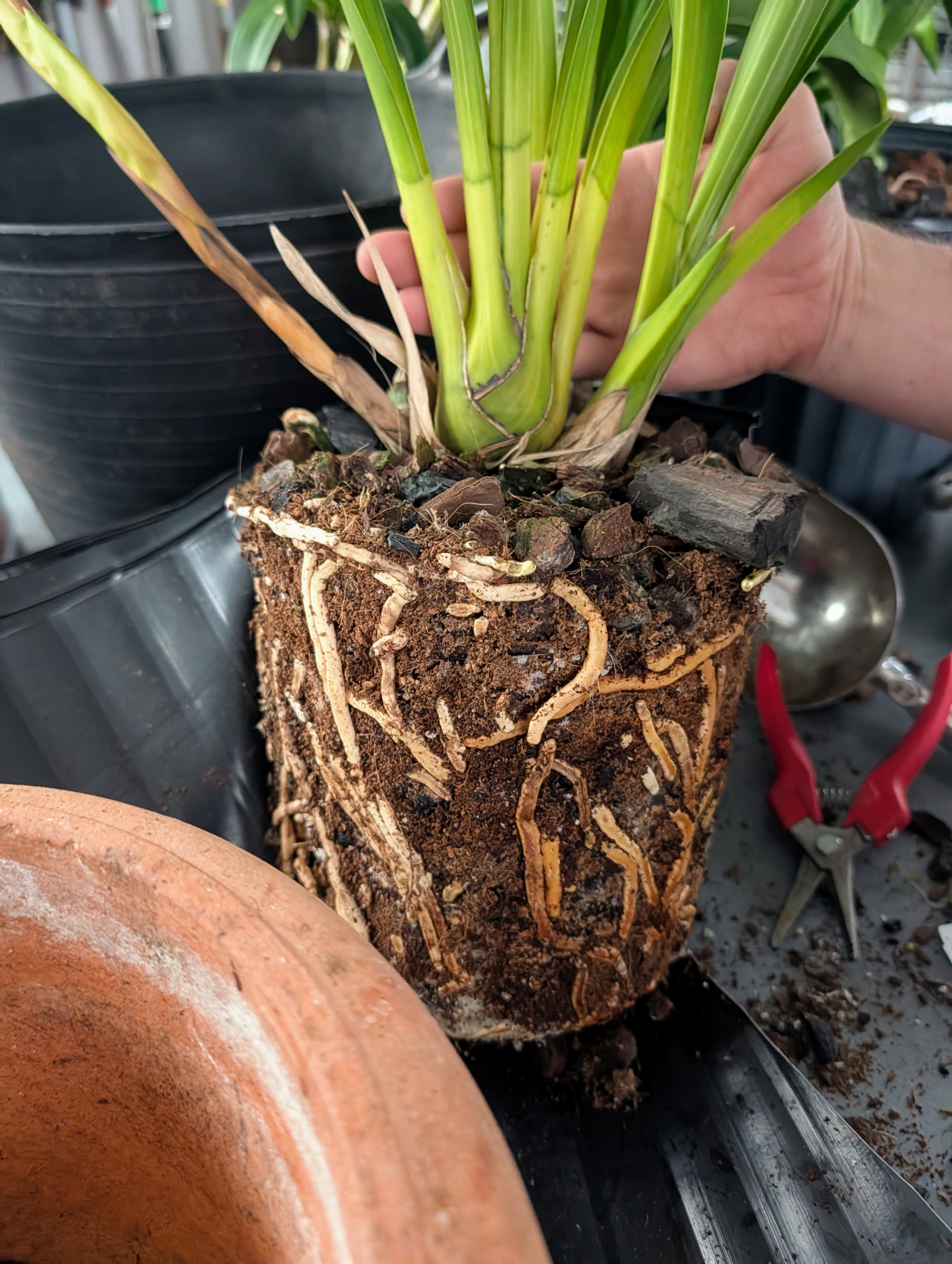
- It is not unusual to see orchid roots growing in so many directions. In the wild, epiphytes are able to extend their roots looking for moisture. Managing the roots and the repotting process will ensure your orchid is healthy and strong.
-
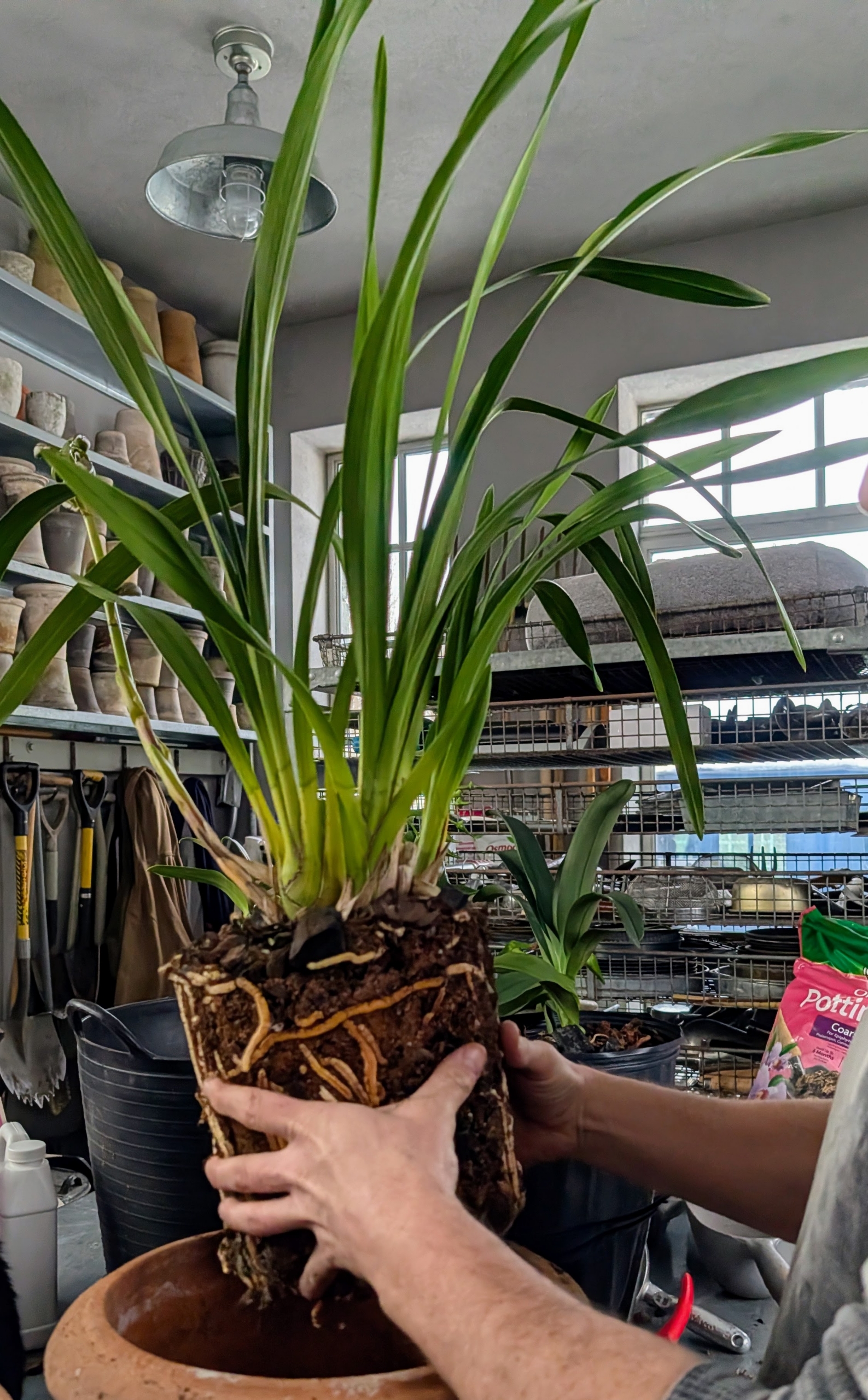
- Ryan places this Cymbidium Patricia Kerwood ‘Paso Robles’ orchid into its new pot. Orchids can be pot-bound, which encourages the plant to produce more roots and blooms and become more self-sufficient.
-
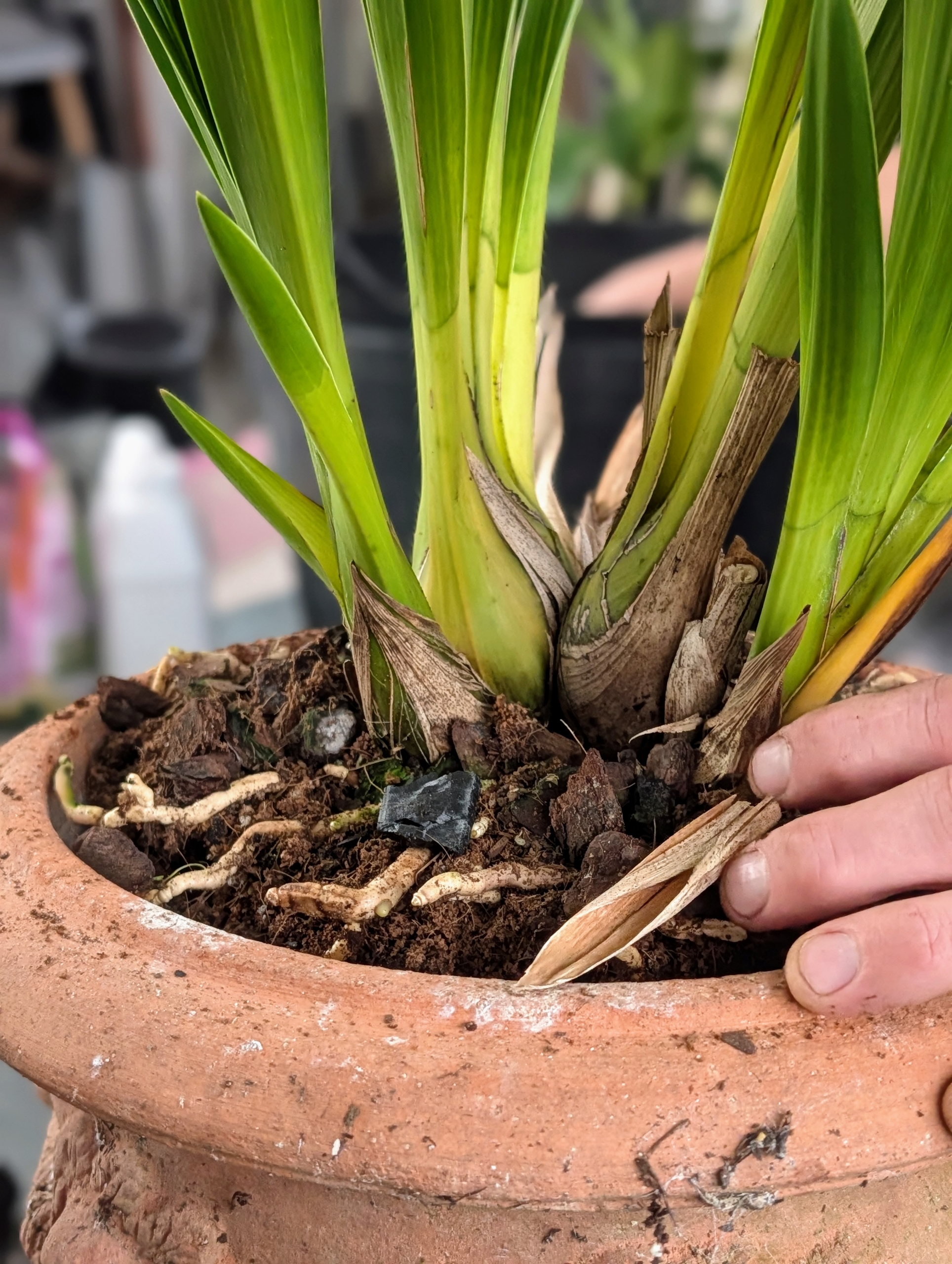
- Ryan gently presses the medium into the pot to ensure it is well packed, adding more potting mix if needed.
-
- The potting mix should be about a half-inch below the top of the pot, so none of it overflows when watering.
-
- Orchids are such gorgeous plants. These new ones will be added to my giant greenhouse collection of interesting plant specimens.
-
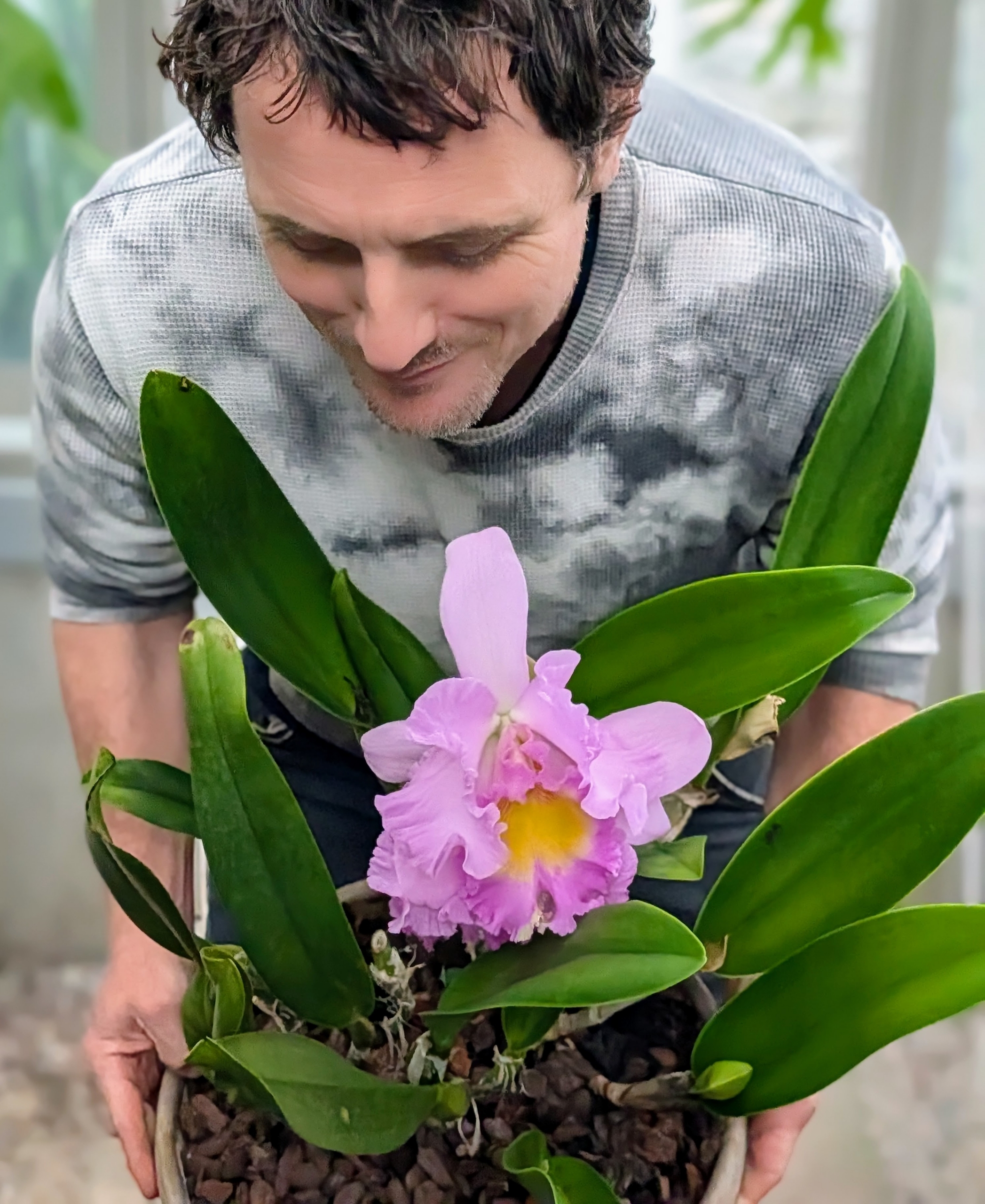
- Here, Ryan carries the potted Brassolaeliocattleya Mahina Yahiro Ullii AM/AOS into the greenhouse. These cattleyas are loved for their large, showy blooms.
-
- When placing potted plants near each other, make the best use of vertical space where possible. Turn an extra and empty pot upside down and raise the potted plants. This consolidates space while also giving the plants room.
-
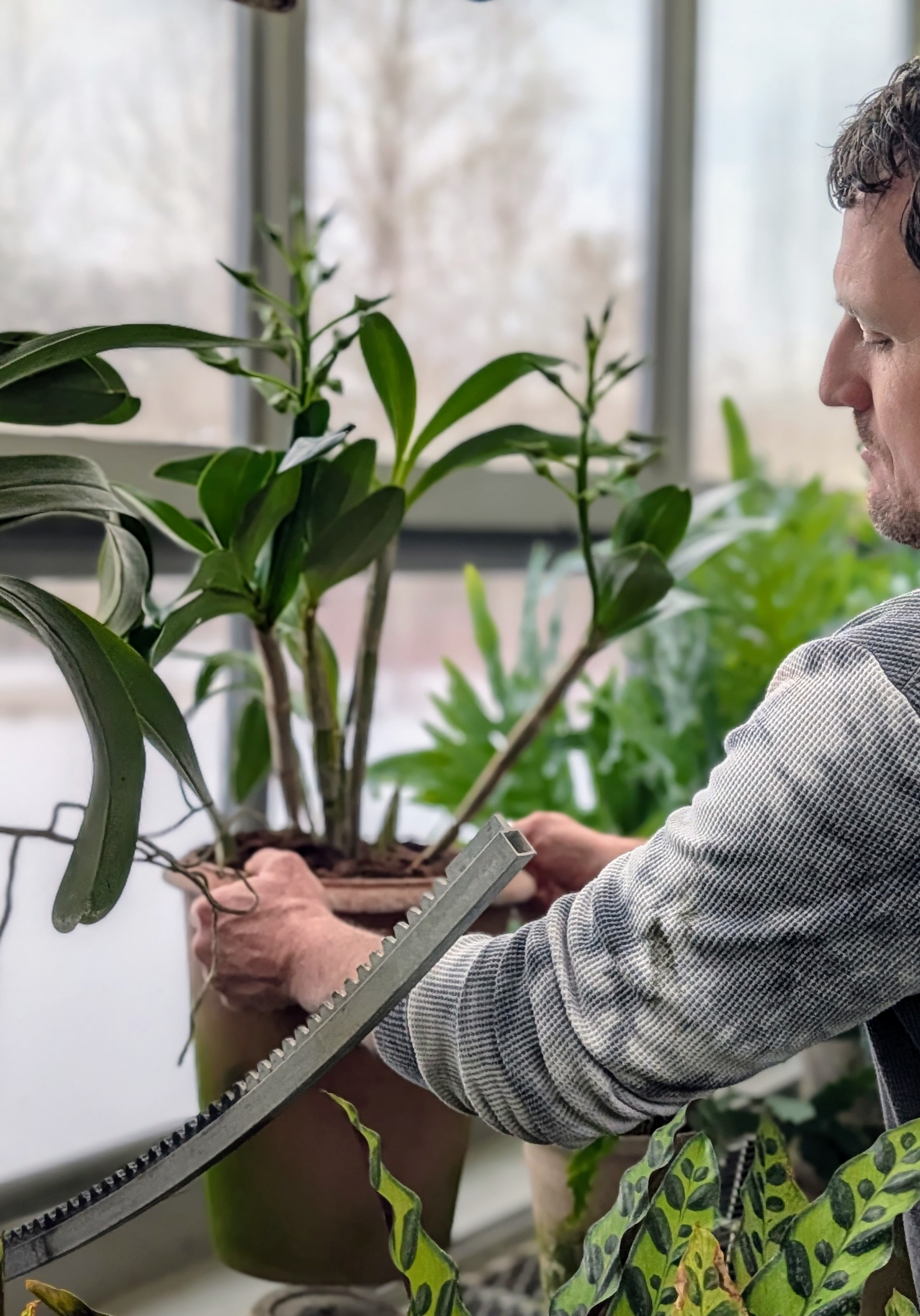
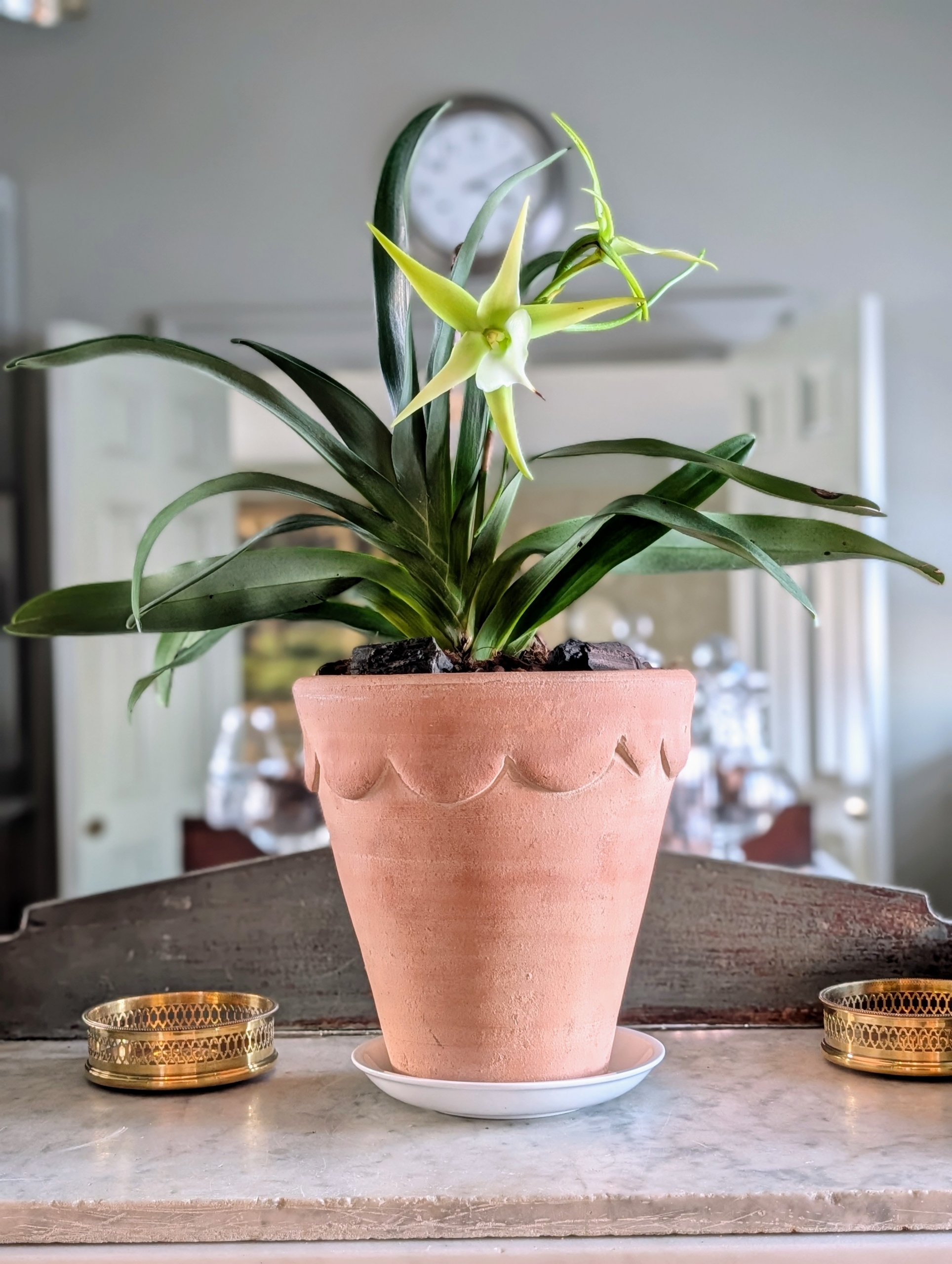
- When this Angraecum orchid started to bloom, Ryan brought it in to display in my servery. These orchids have unique large, star-shaped flowers.
-
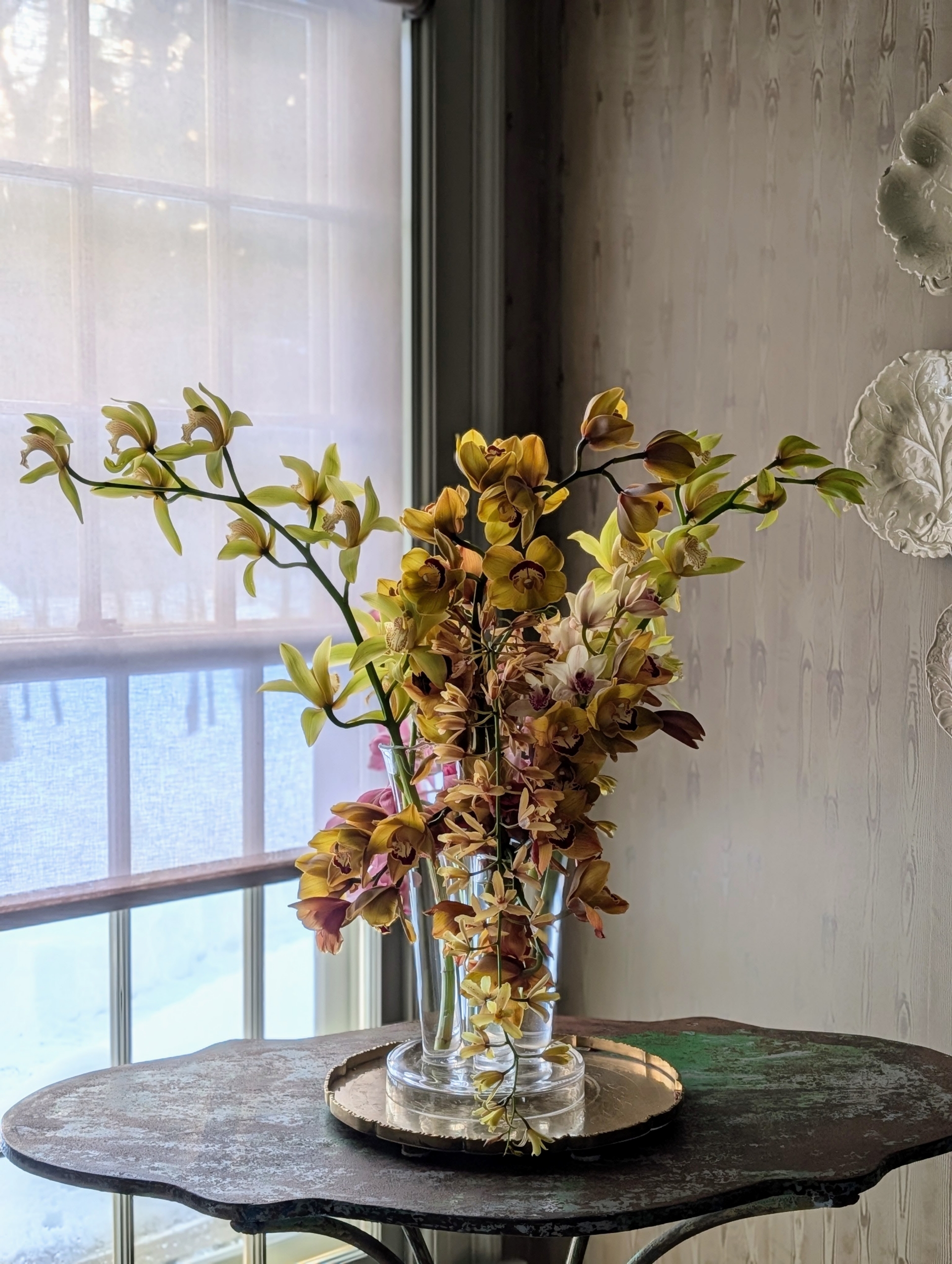
- Cut orchids are also displayed in my sitting room – one of the first rooms I walk through in the morning.
-
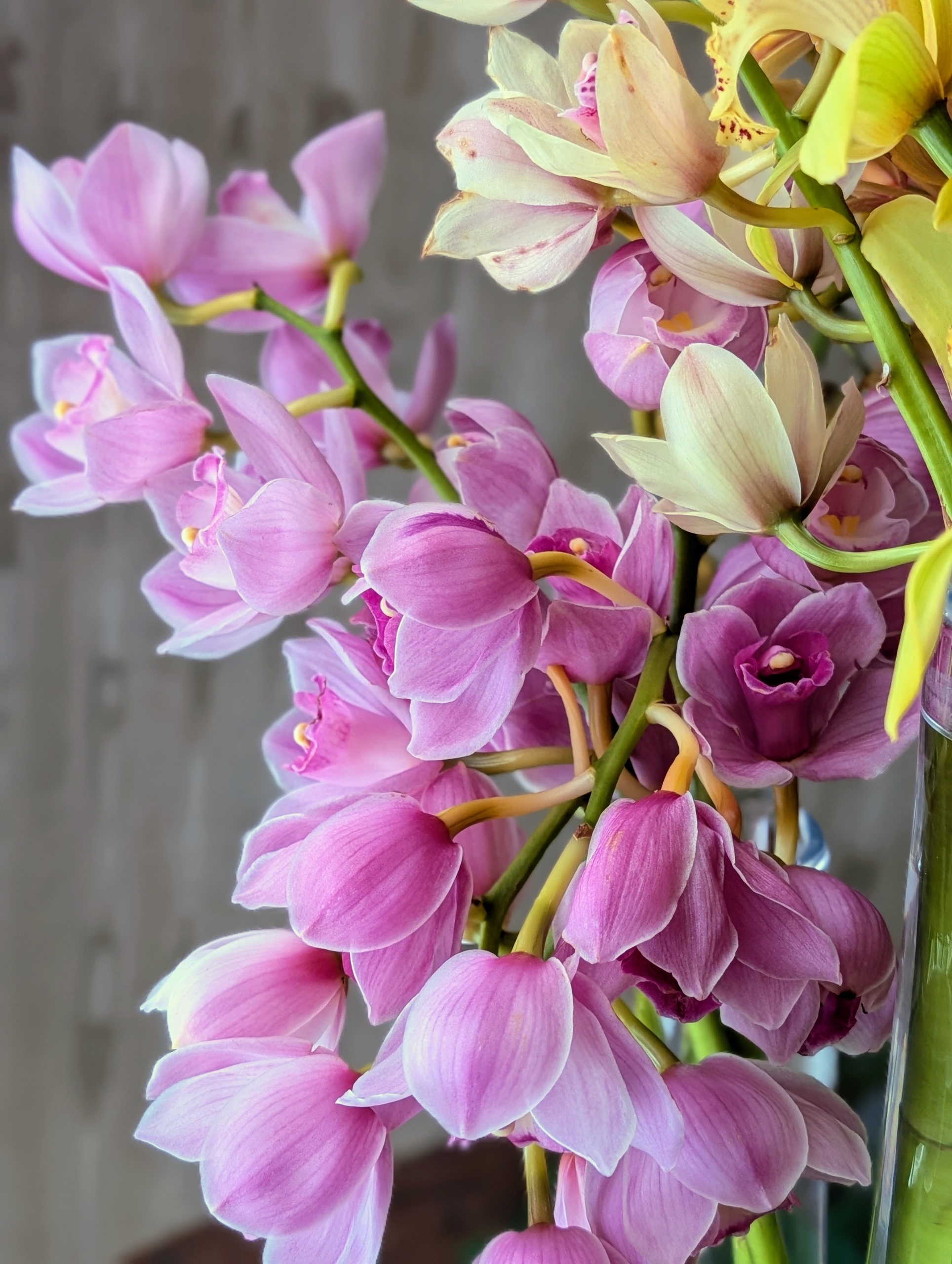
- These long-lasting sprays are so beautiful. Depending on the variety, some cymbidium orchids can bloom for several weeks. Some are also quite fragrant.
-
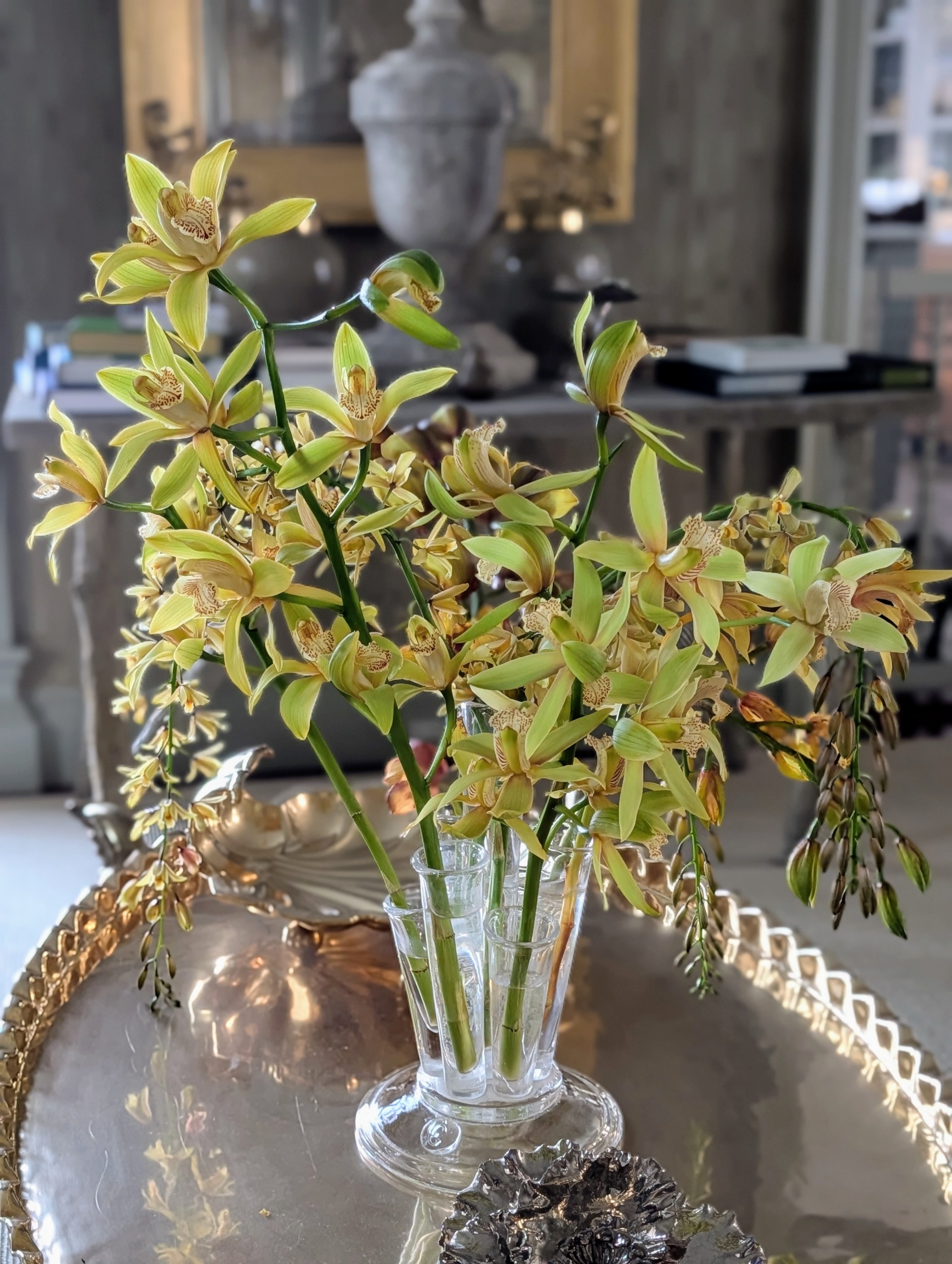
- I love to bring in as many of these gorgeous flowers indoors whenever possible, so they can be enjoyed by me and my guests. I hope this inspires you to bring some pretty flowers and plants into your home this weekend.
 Martha Pins


 Martha Tweets

