

Potting Up Small Ferns
I love container plants and over the years have amassed quite a collection of potted specimens.
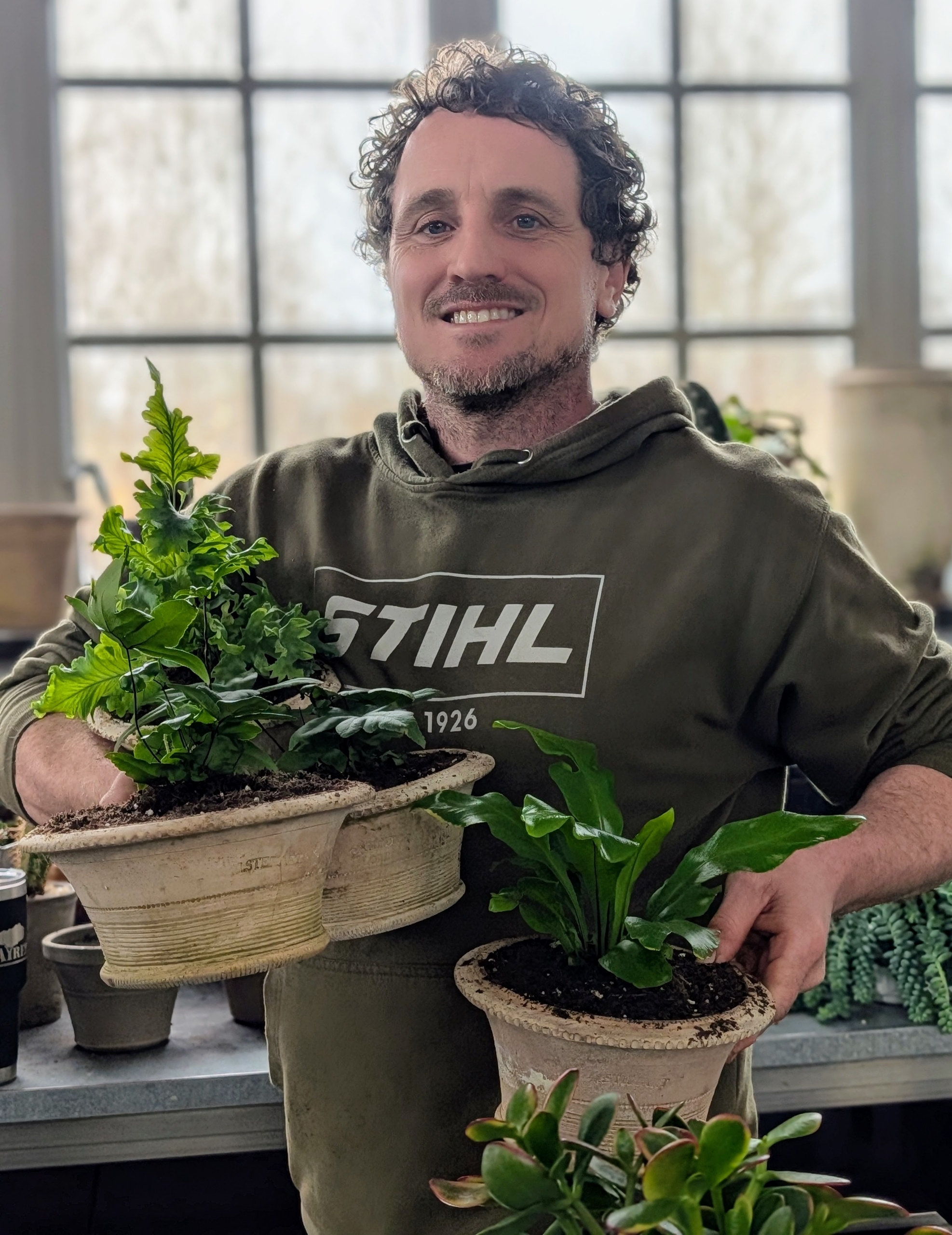
Walking through my greenhouses, one sees potted plants of all sizes - gorgeous giant agaves, palms, and other tropicals that I display outdoors during summer. And smaller tabletop container plants that I bring into my home whenever I entertain. These plants look beautiful arranged in my enclosed porch, set on various surfaces in my sitting room, or lined up as centerpieces on my dining room table. Among them - lush ferns with their interesting frond shapes and textures. My head gardener, Ryan McCallister, just potted up some new additions.
Here are some photos, enjoy.
-

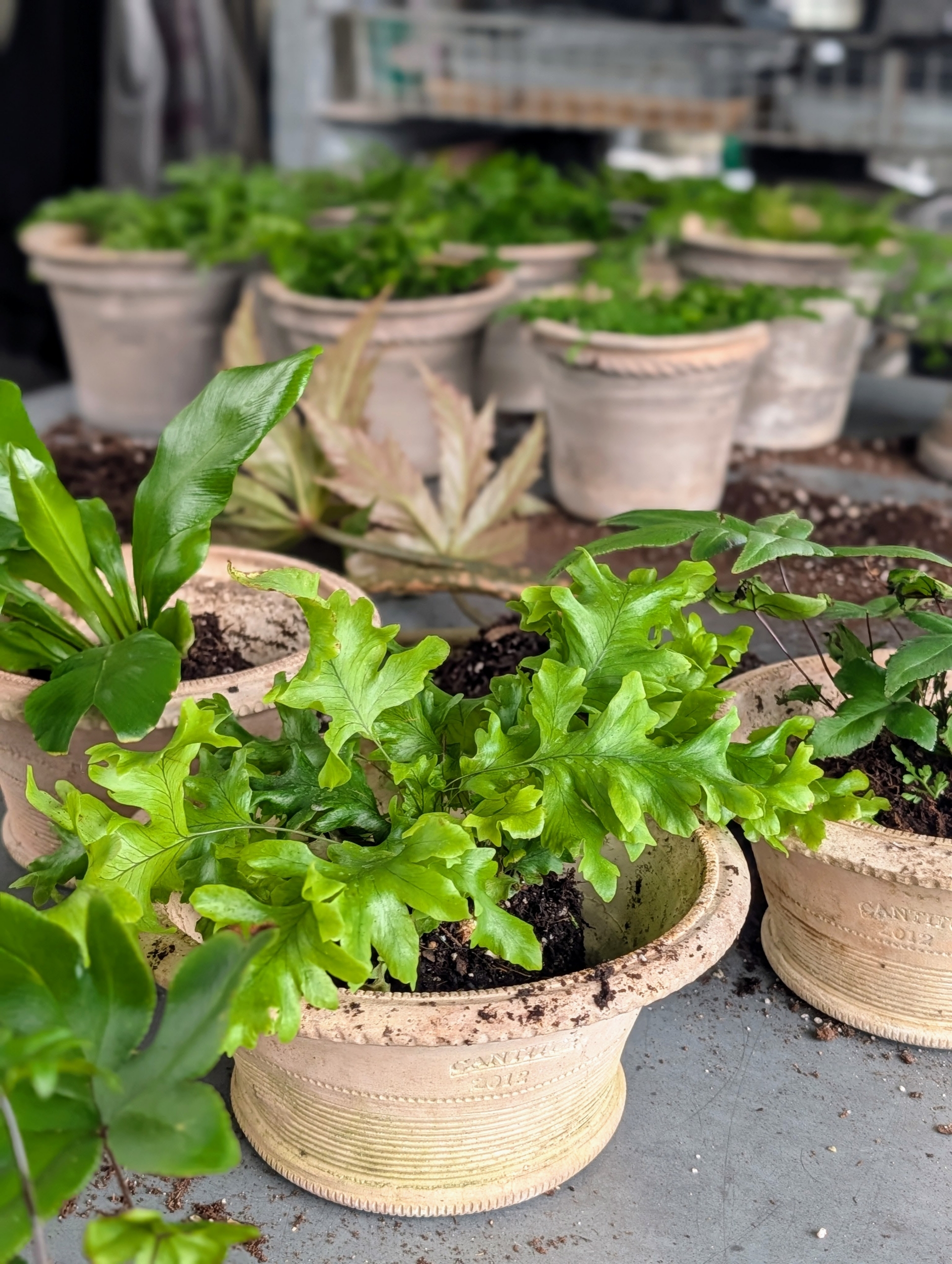
- I never turn away from small plants. They are inexpensive and can be very useful in multiples when decorating. And then in time, they grow to be large, lush specimens that can be displayed outdoors during summer.
-
- These small plants are sized up in appropriate pots. I’ve been using Guy Wolff pots for many years – he makes every one of these by hand.
-
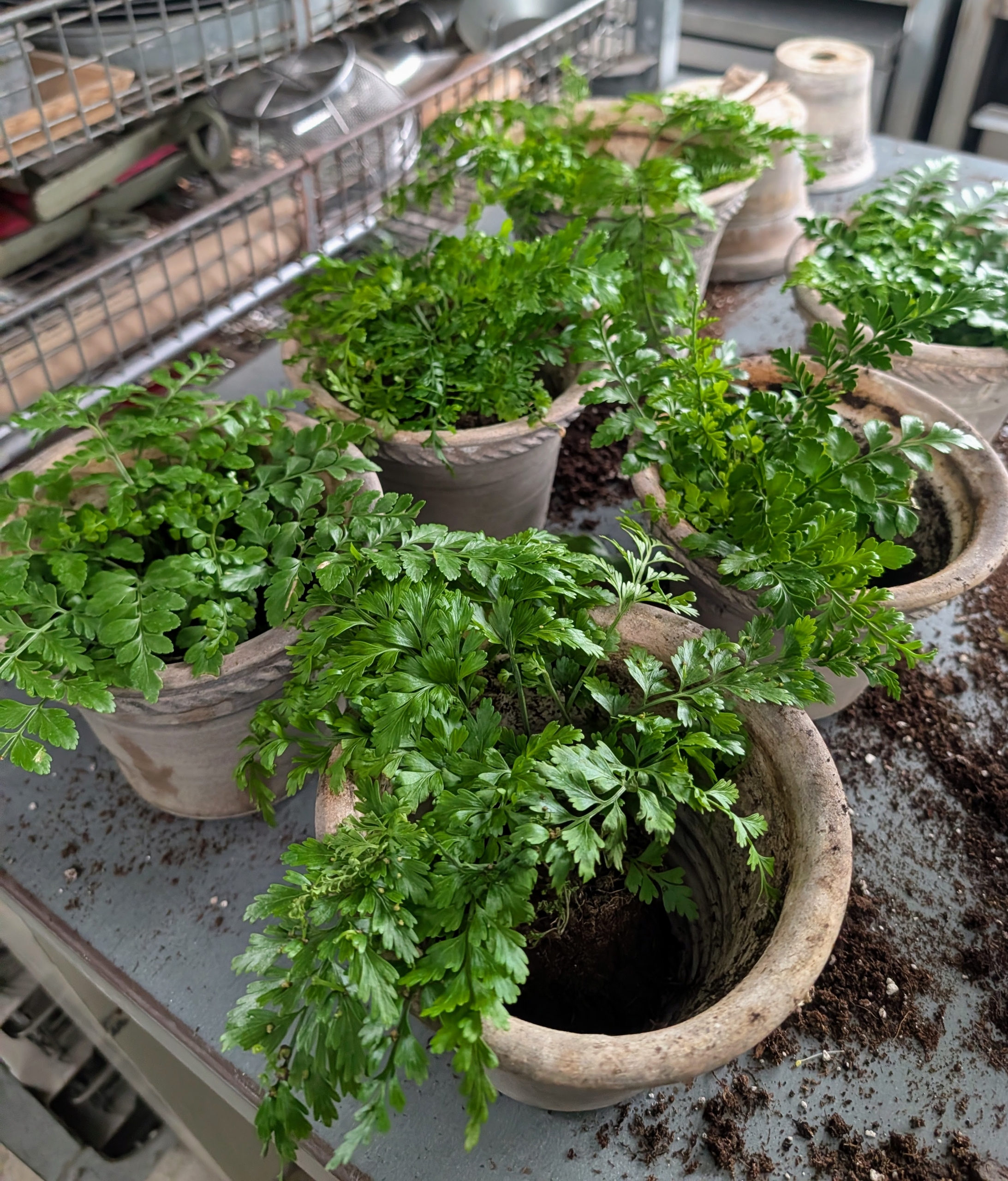
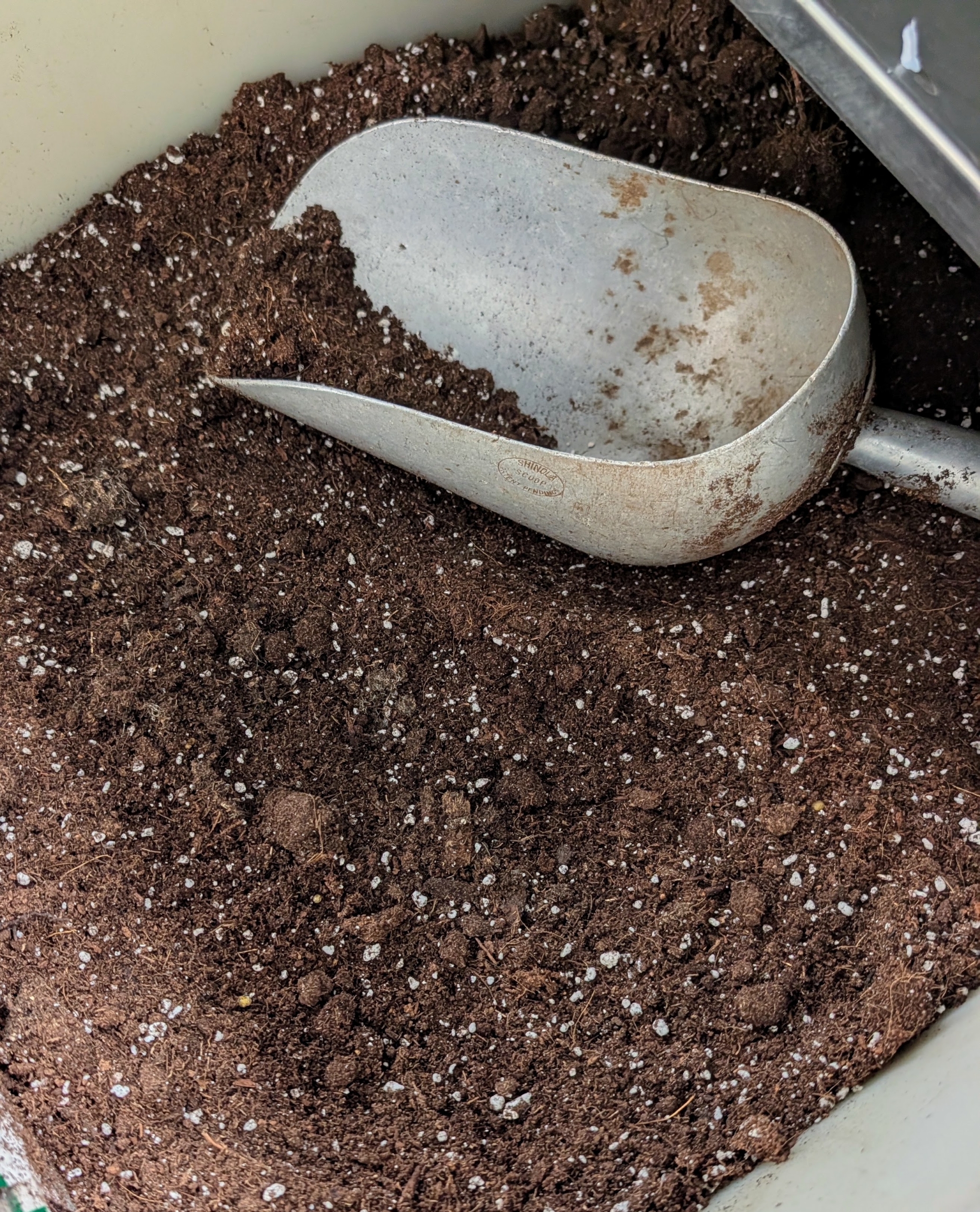
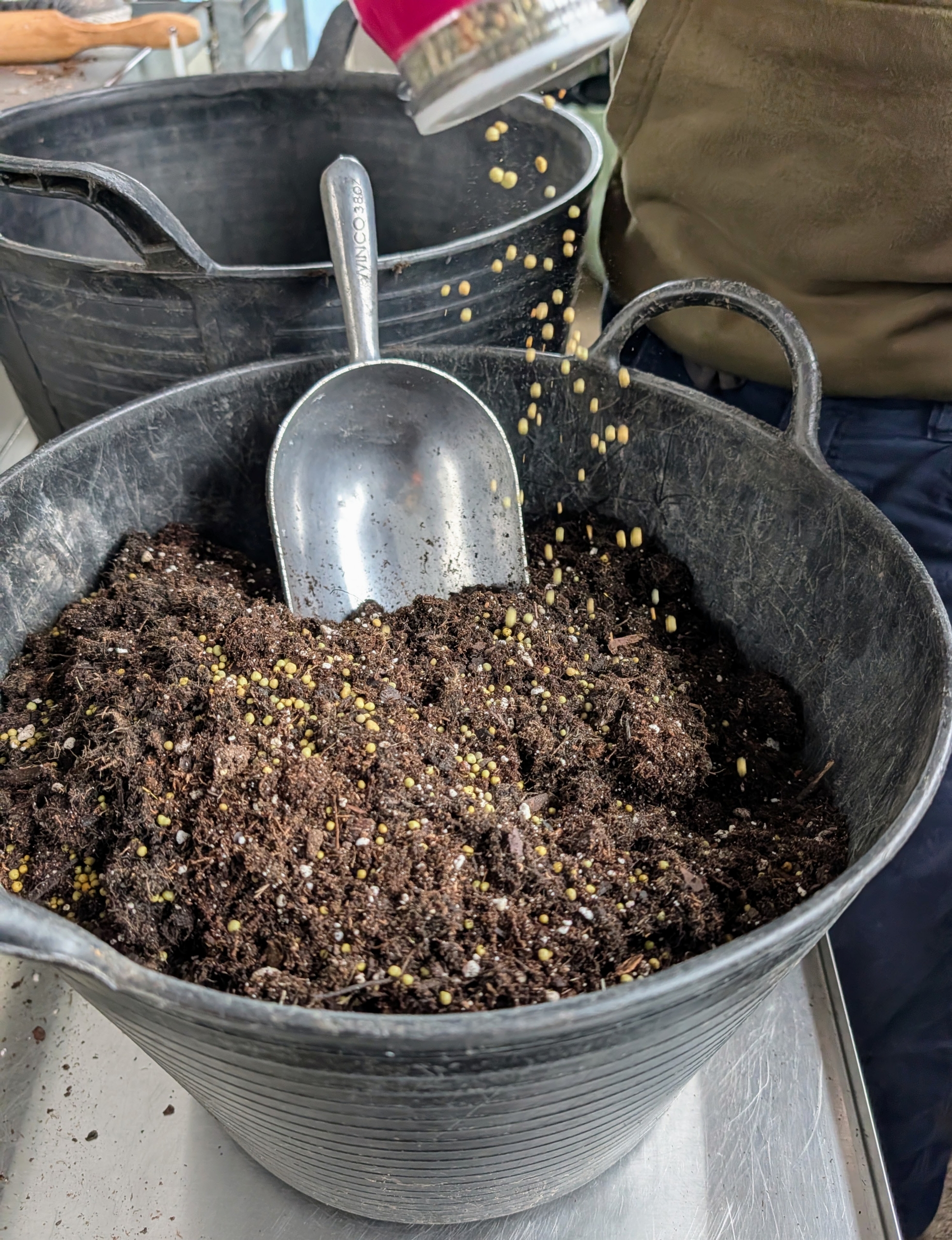
- Before potting, Ryan puts together a suitable soil mix. The right soil mix will help to promote faster root growth and provide quick anchorage to young roots. I use Miracle-Gro potting mixes.
-
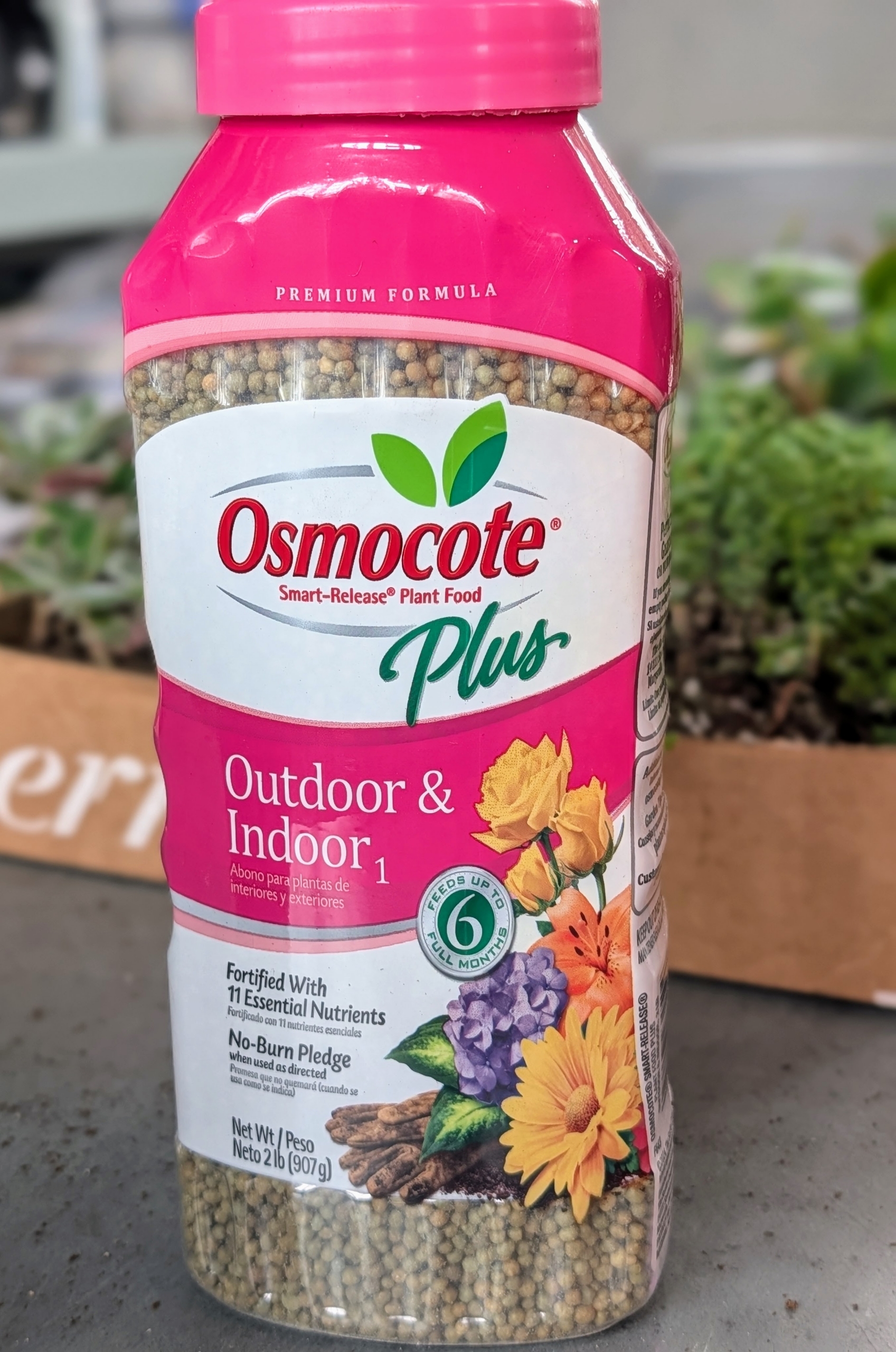
- I also add Osmocote Plus, a controlled-release fertilizer designed to feed and support plant growth.
-
- Ryan thoroughly combines enough of the elements in a trug bucket, so he can fill all the pots.
-
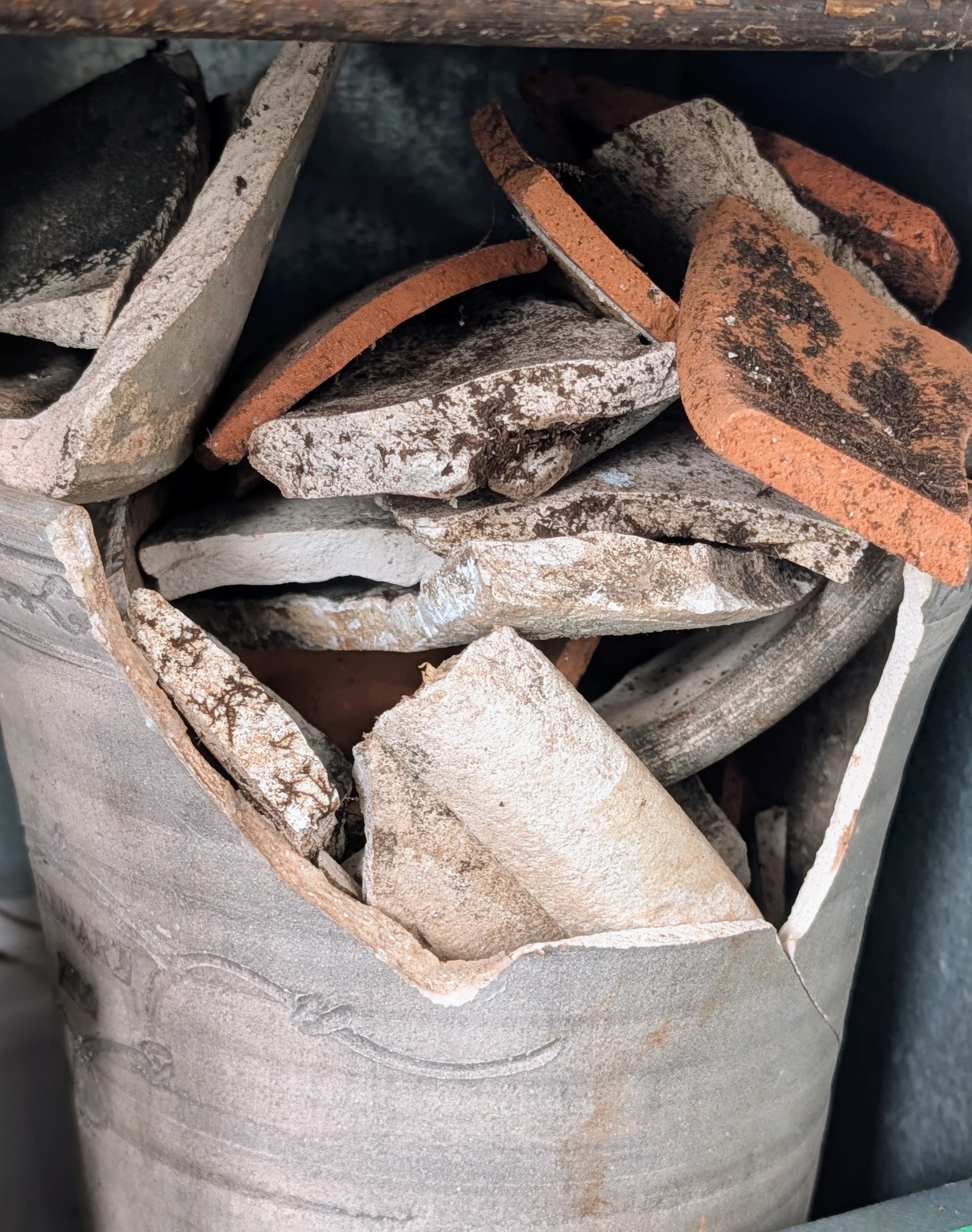
- Unfortunately, sometimes pots do break, but don’t throw away those shards – save them and repurpose them.
-
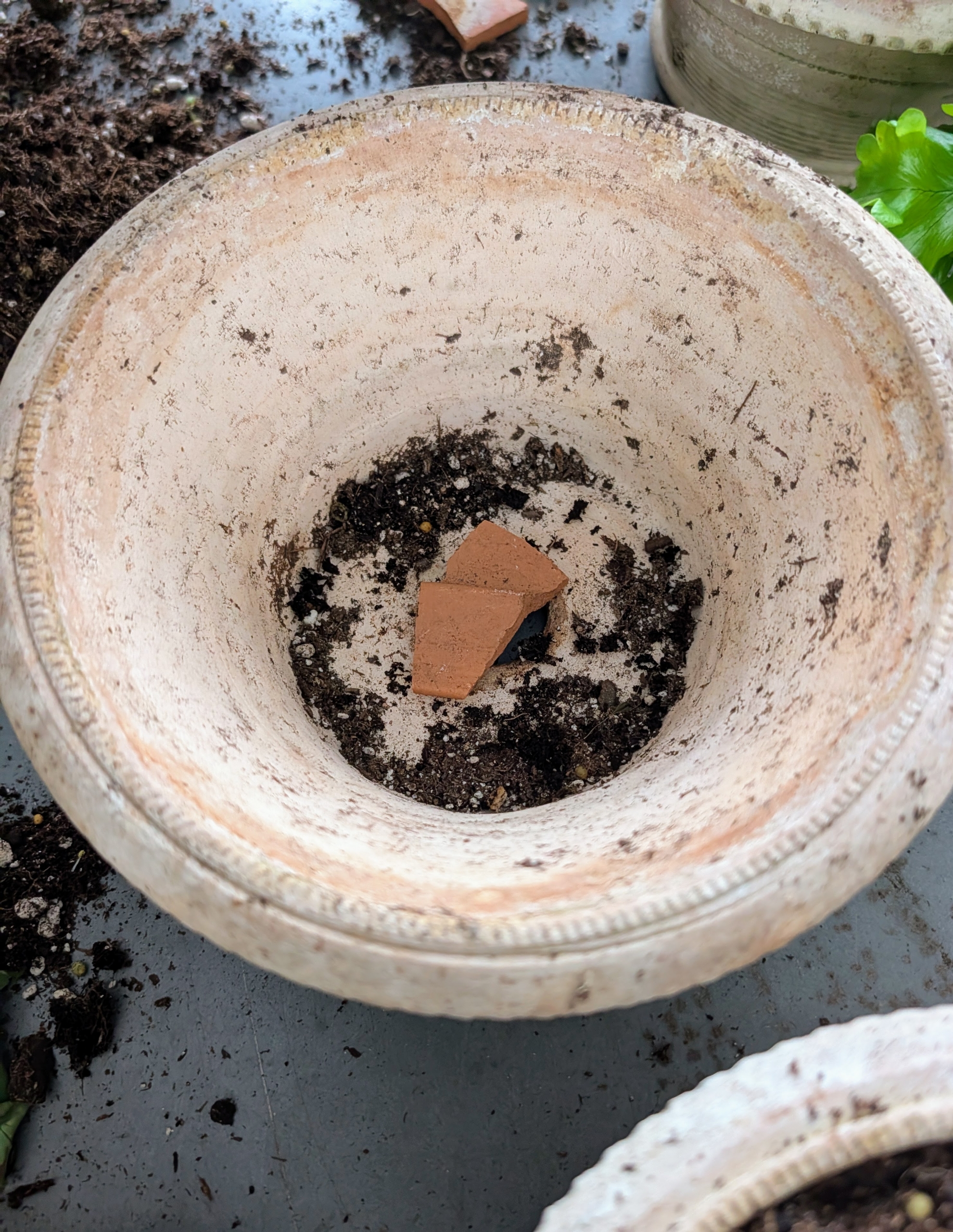
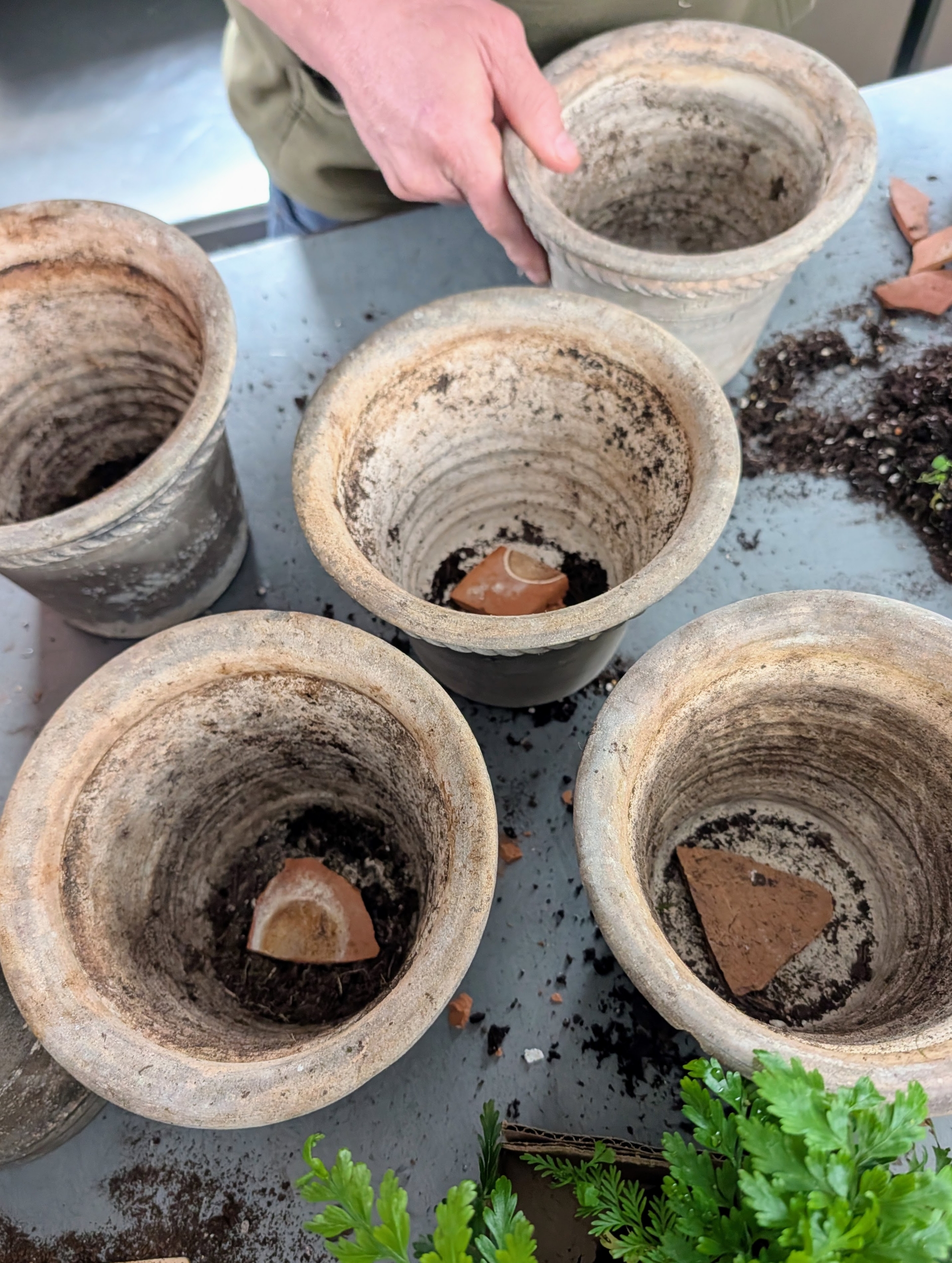
- Each pot has a drainage hole. A clay shard is placed over the hole to help with drainage. I also like to use clay pots because they allow proper aeration and moisture to penetrate through the sides and to the plant.
-
- I always encourage my team to work in a production line process – it is fast and efficient.
-
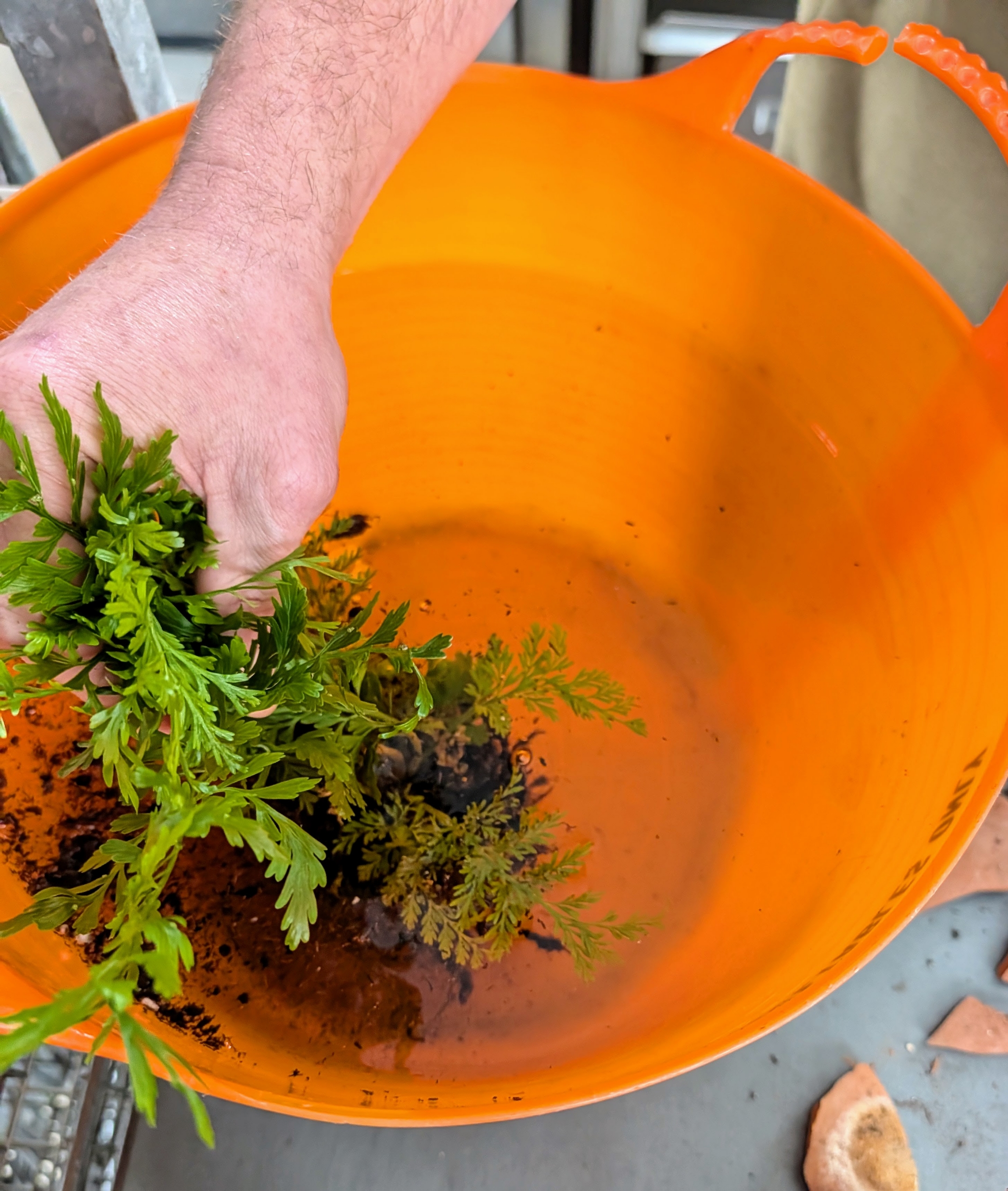
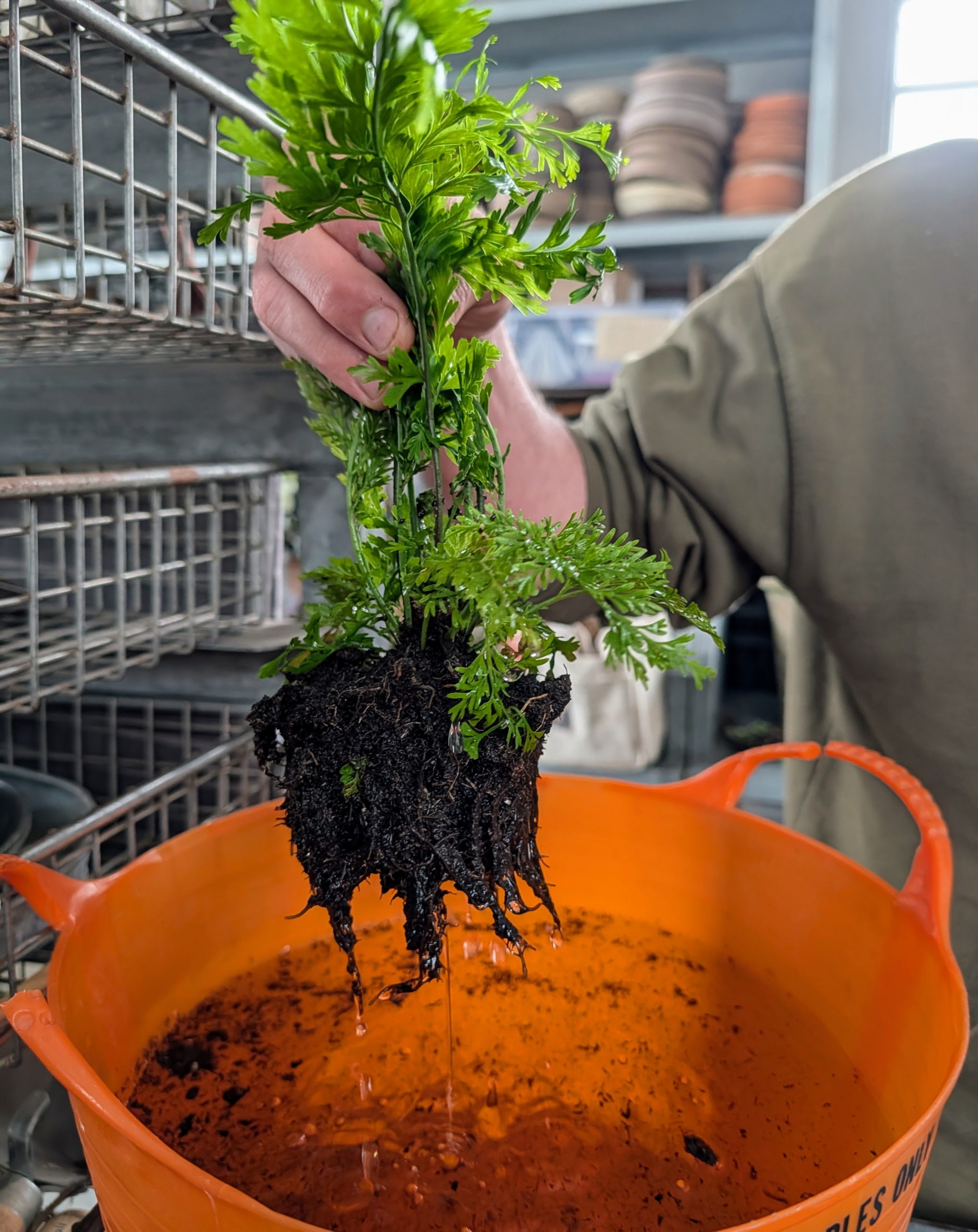
- Meanwhile, Ryan carefully dips each plant root ball into a bucket of water so it is well hydrated. The plants were quite dry, so this gives them a nice boost before planting. They will also be watered again later.
-
- Just a few seconds in the water is all it needs. The water bath will help in the absorption of more water and nutrients. It will also help the plant become more resilient and better prepared for its new environment.
-
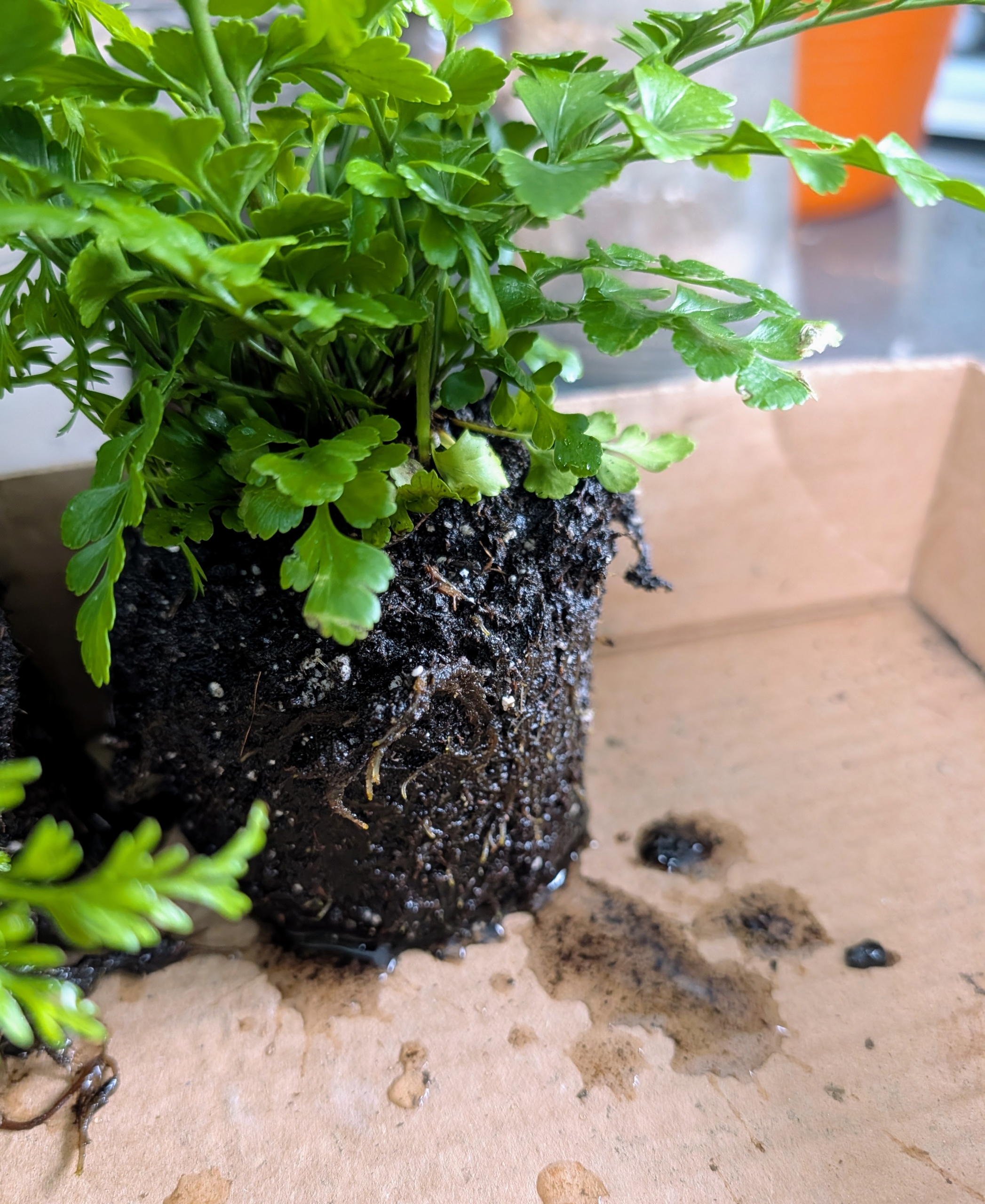
- Then each root ball is placed into a cardboard box to drain slightly until it is potted.
-
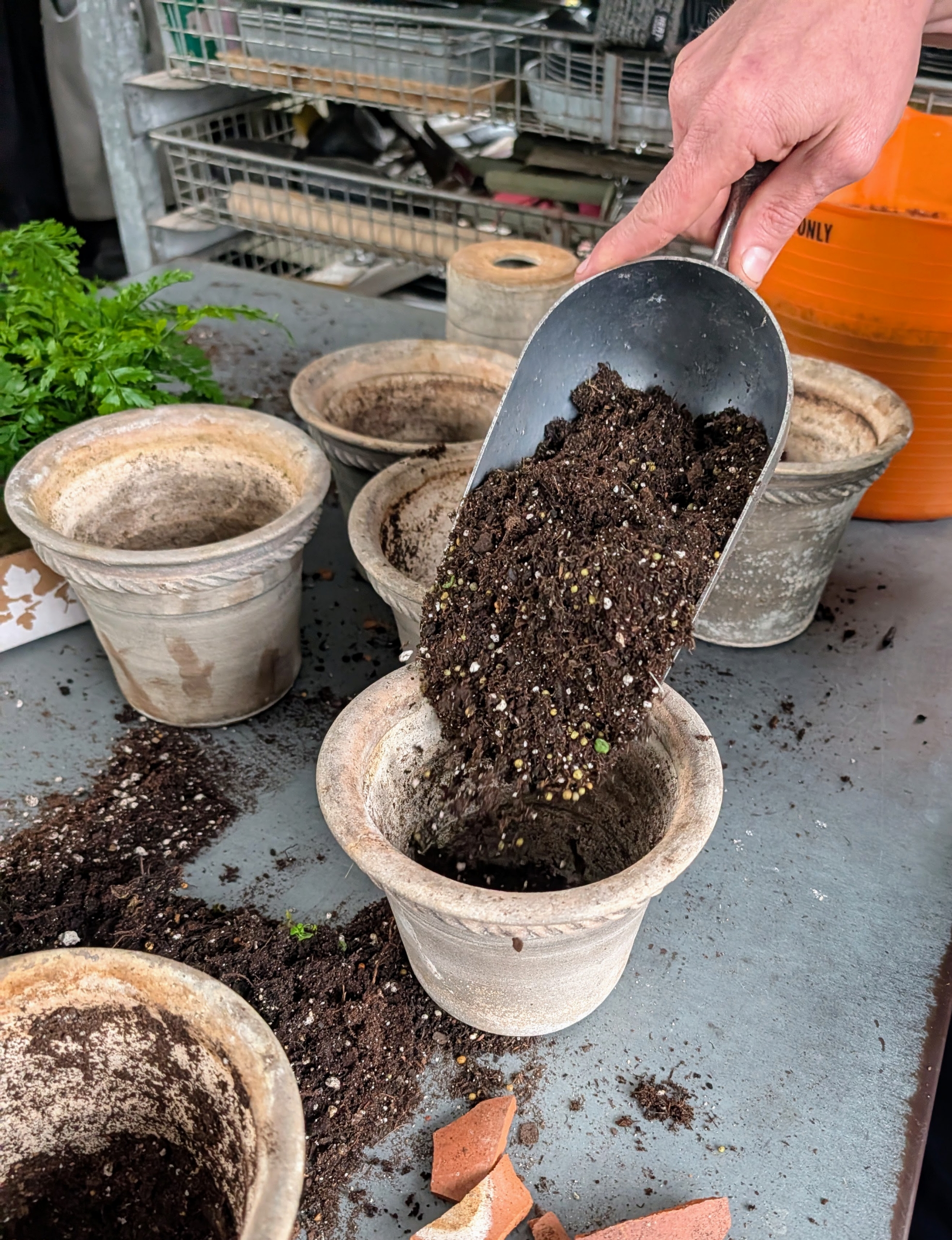
- Ryan fills the pots with the soil mix, adding just enough so it is filled just below the top rim of the pot.
-
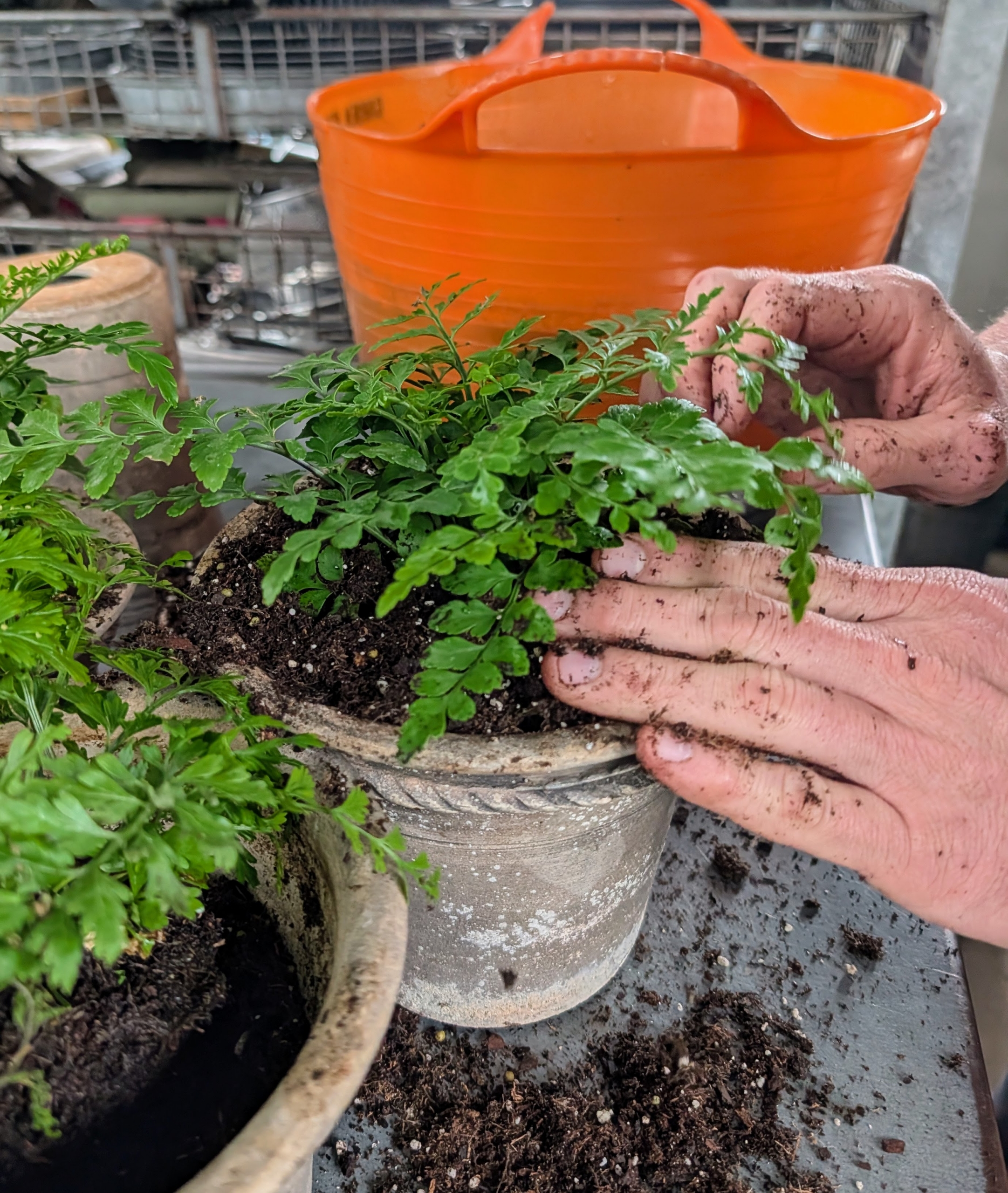
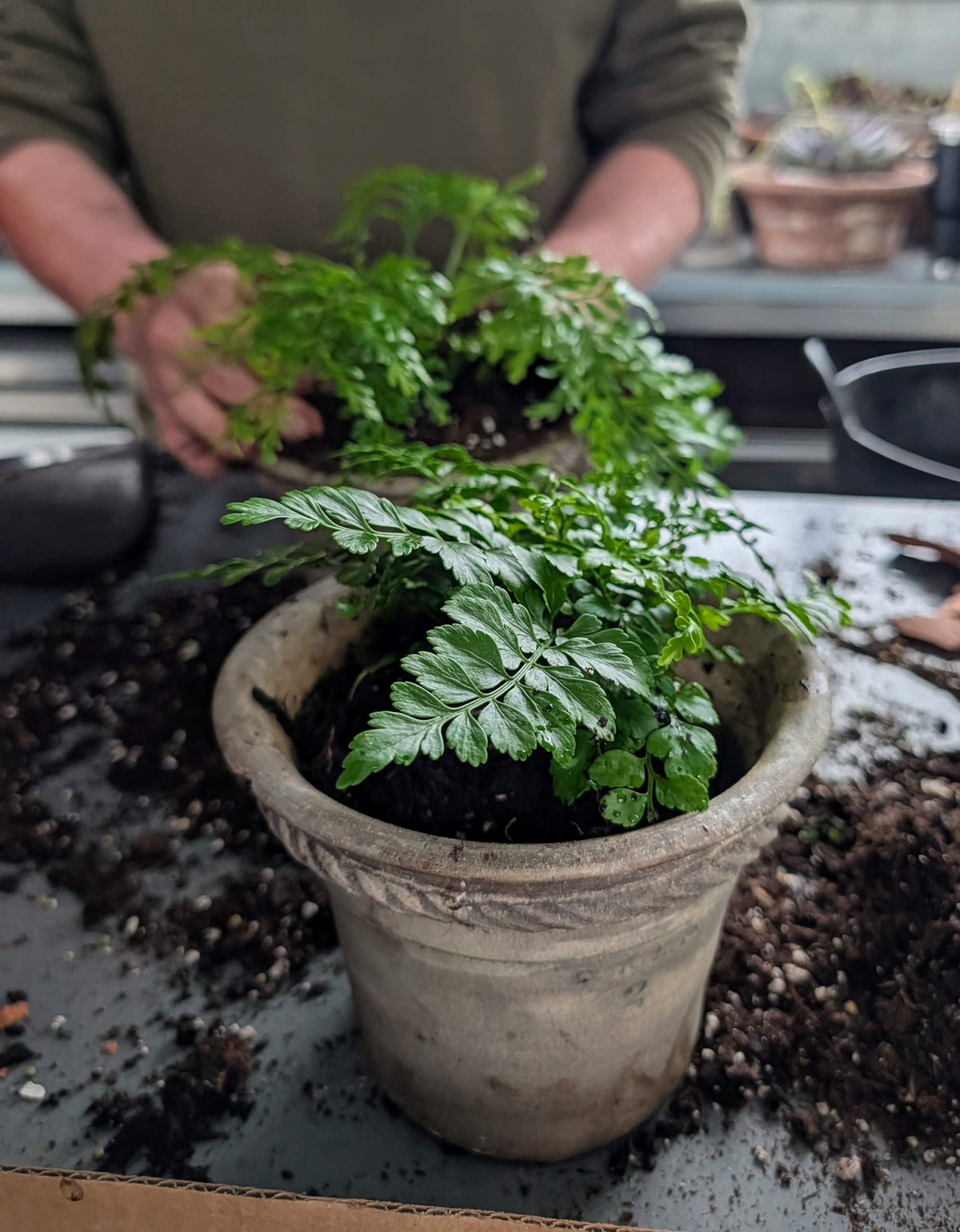
- Ryan places the plant in the pot at the same height it was previously.
-
- Potted ferns are considered easy-to-care-for plants when given the right environment – well-draining soil, dappled light, and regular but light fertilization to keep them strong and healthy.
-
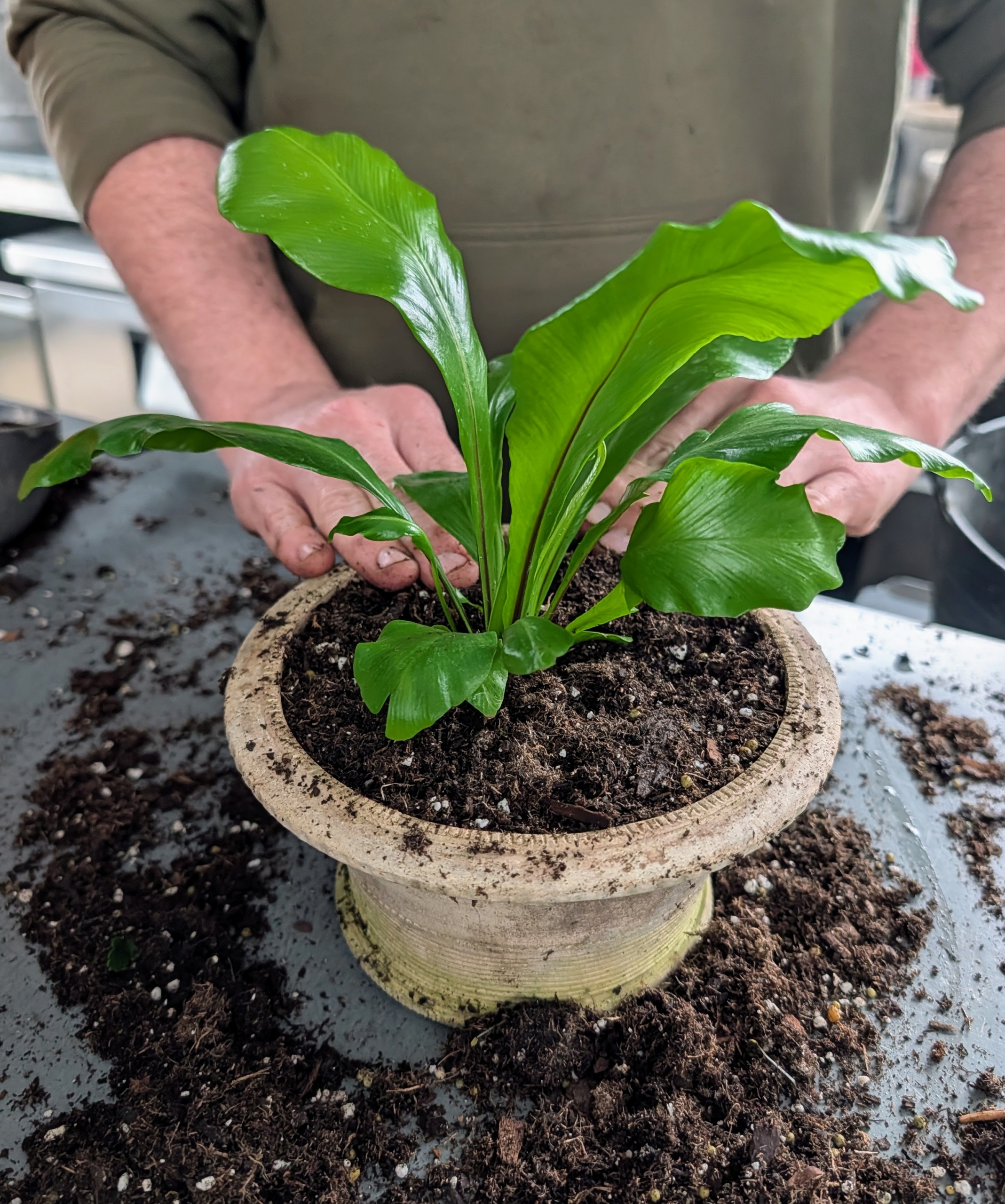
- This is a baby bird’s nest fern. These are slow growers, but under optimal conditions such as warm temperatures, high humidity and bright, indirect light, these plants can unfurl new fronds every few weeks during the growing season.
-
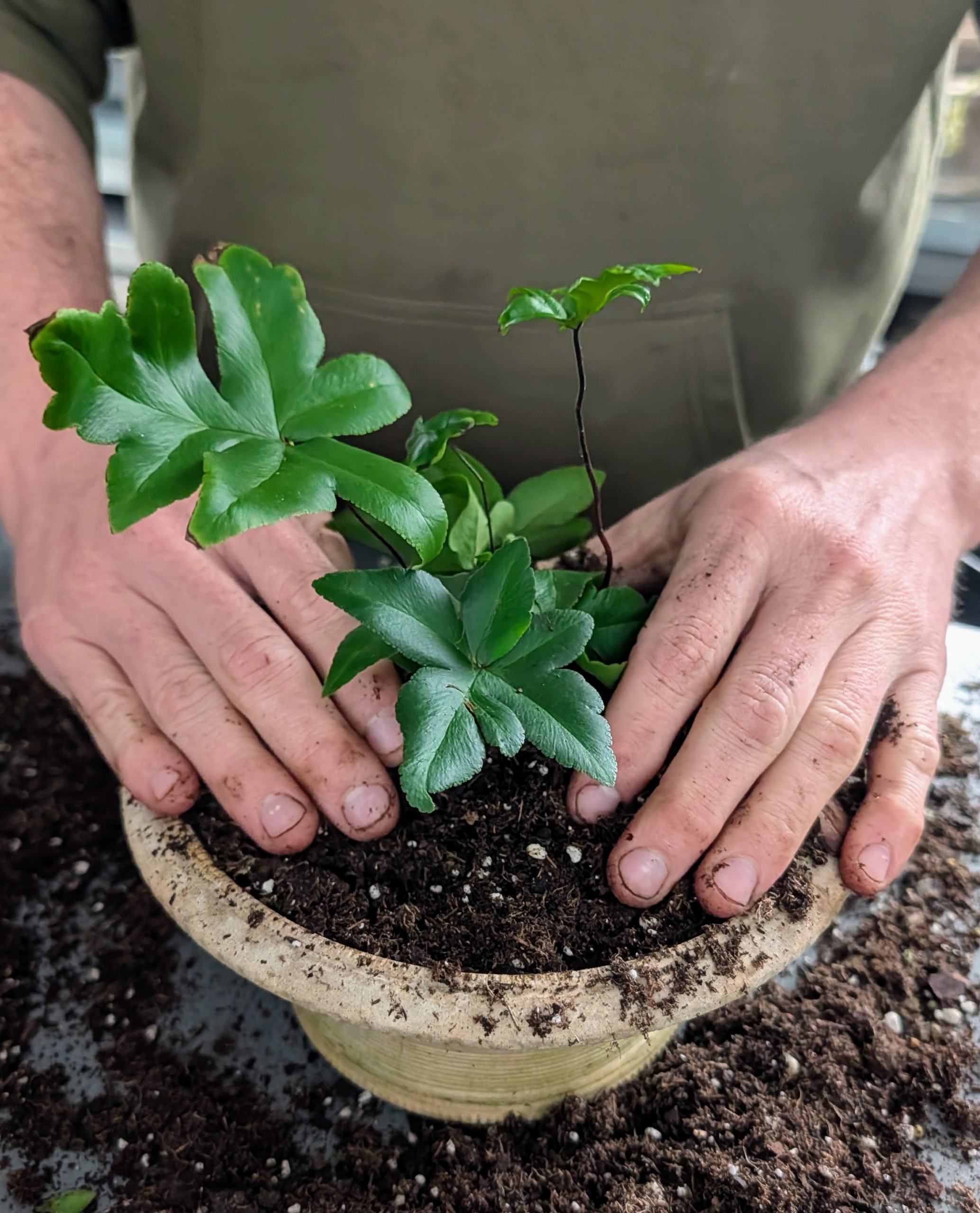
- Once potted and backfilled, Ryan presses down slightly on the soil to ensure there is good contact between the plant and the potting mix.
-
- Ryan gathers finished potted plants and takes them to the greenhouse for another thorough drink.
-
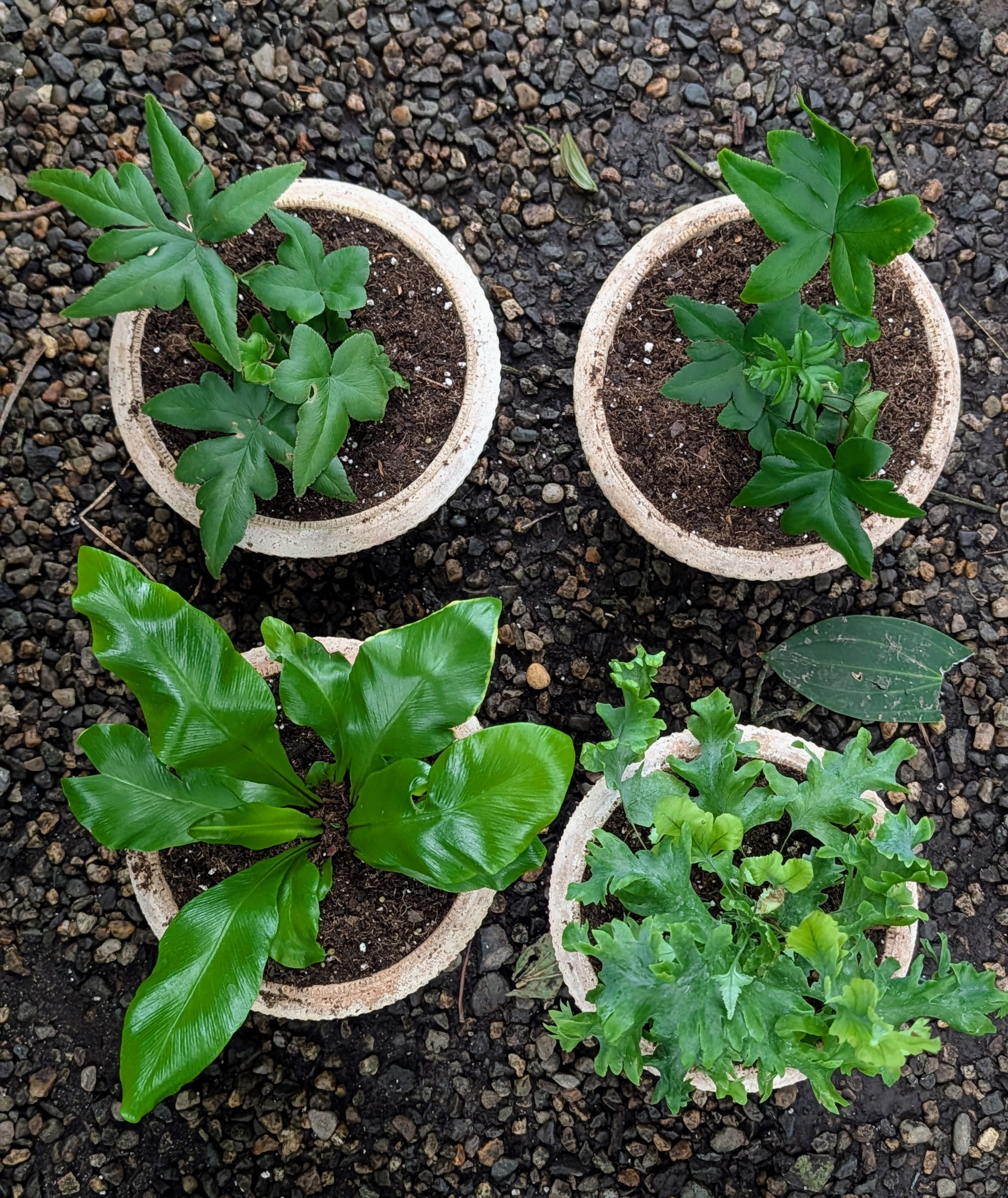
- Ferns look beautiful when grouped together. Try to pot them in similar pots, so they look best when displayed in multiples.
-
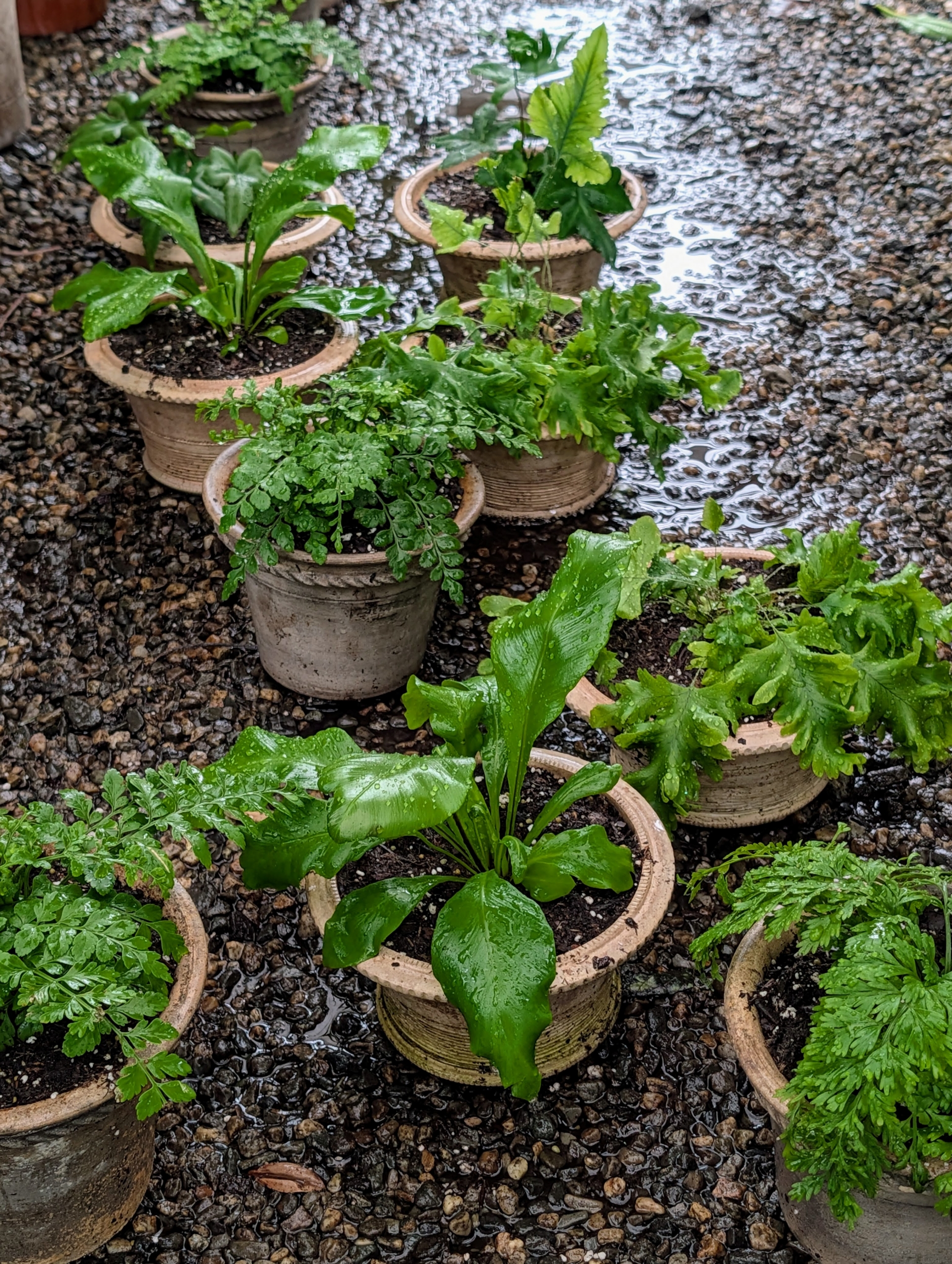
- These newly potted ferns will do very well inside the greenhouse where they can be monitored regularly along with the other plants.
-
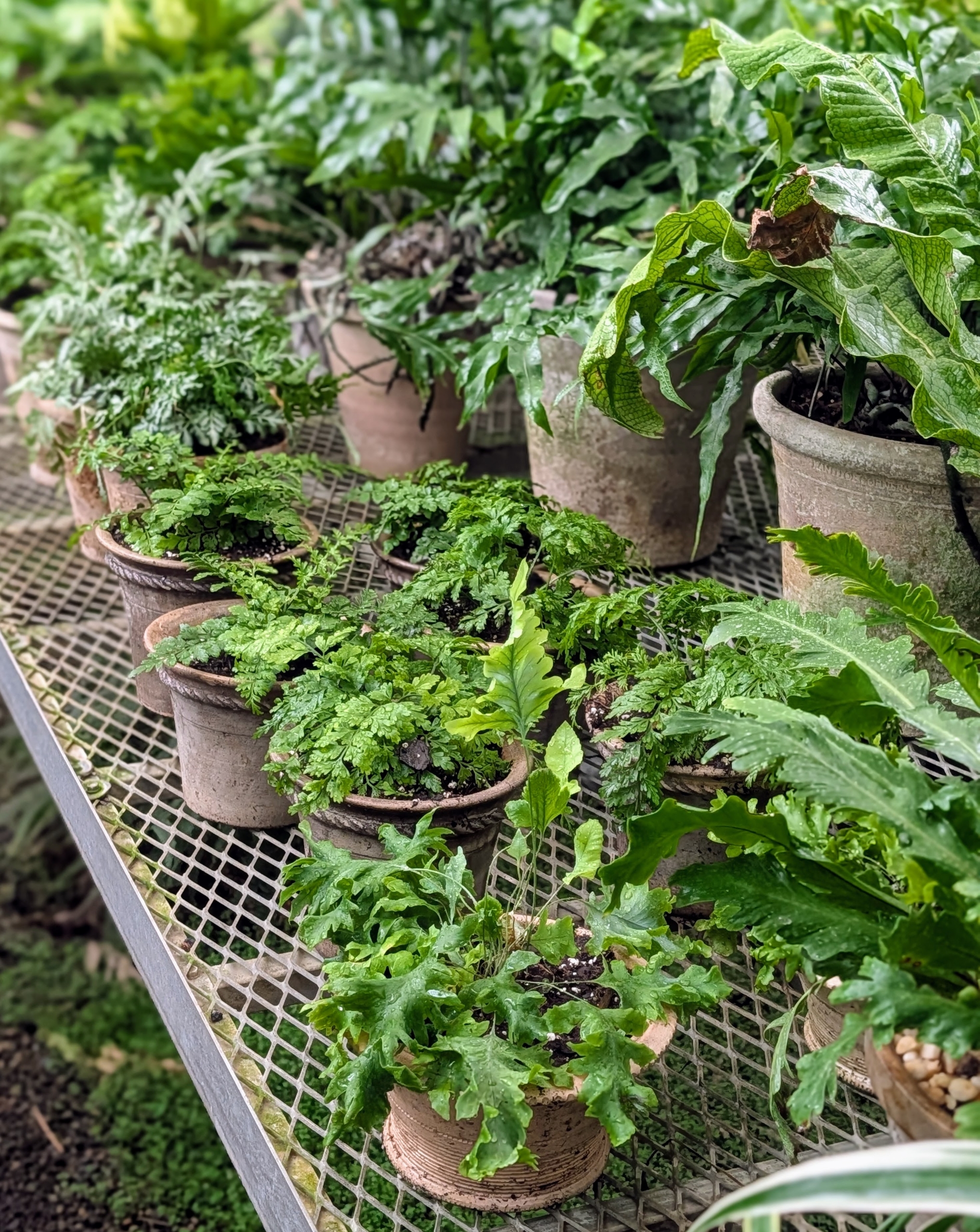
- And remember, potted plants don’t have to be large to look remarkable. Small container specimens can add a touch of vibrancy to any space.
 Martha Pins


 Martha Tweets

