

Potting Up Hundreds of Boxwood Bare-Root Cuttings
Our spring gardening season is always extremely busy.
Among our annual tasks this time of year - potting up thousands of bare-root trees, shrubs, and other small seedlings. Yesterday, my outdoor grounds crew and gardeners potted up a large collection of boxwood from Musser Forests, Inc., a Pennsylvania-based company specializing in conifer and hardwood seedlings and transplants. The young evergreens are still too small to plant in the garden beds, so they are placed in an enclosure designated for these developing specimens, where they can be carefully maintained until they are large enough to transplant.
Here are some photos, enjoy.
-

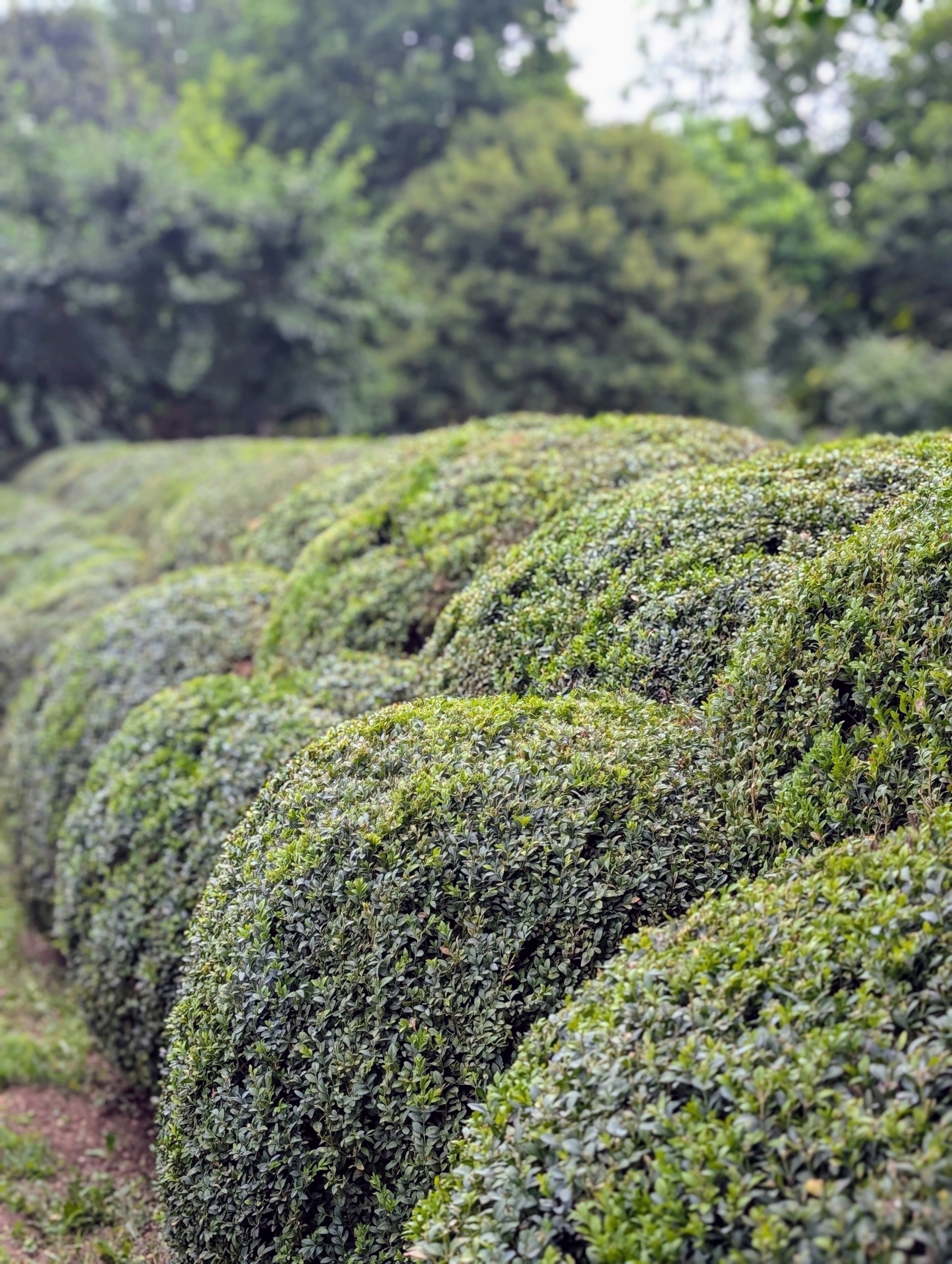
- I love boxwood, Buxus, and have hundreds of these bold green shrubs growing all over my farm. I take very special care of these specimens. In winter, they are covered in a layer of protective burlap. In summer, they are carefully pruned and groomed.
-
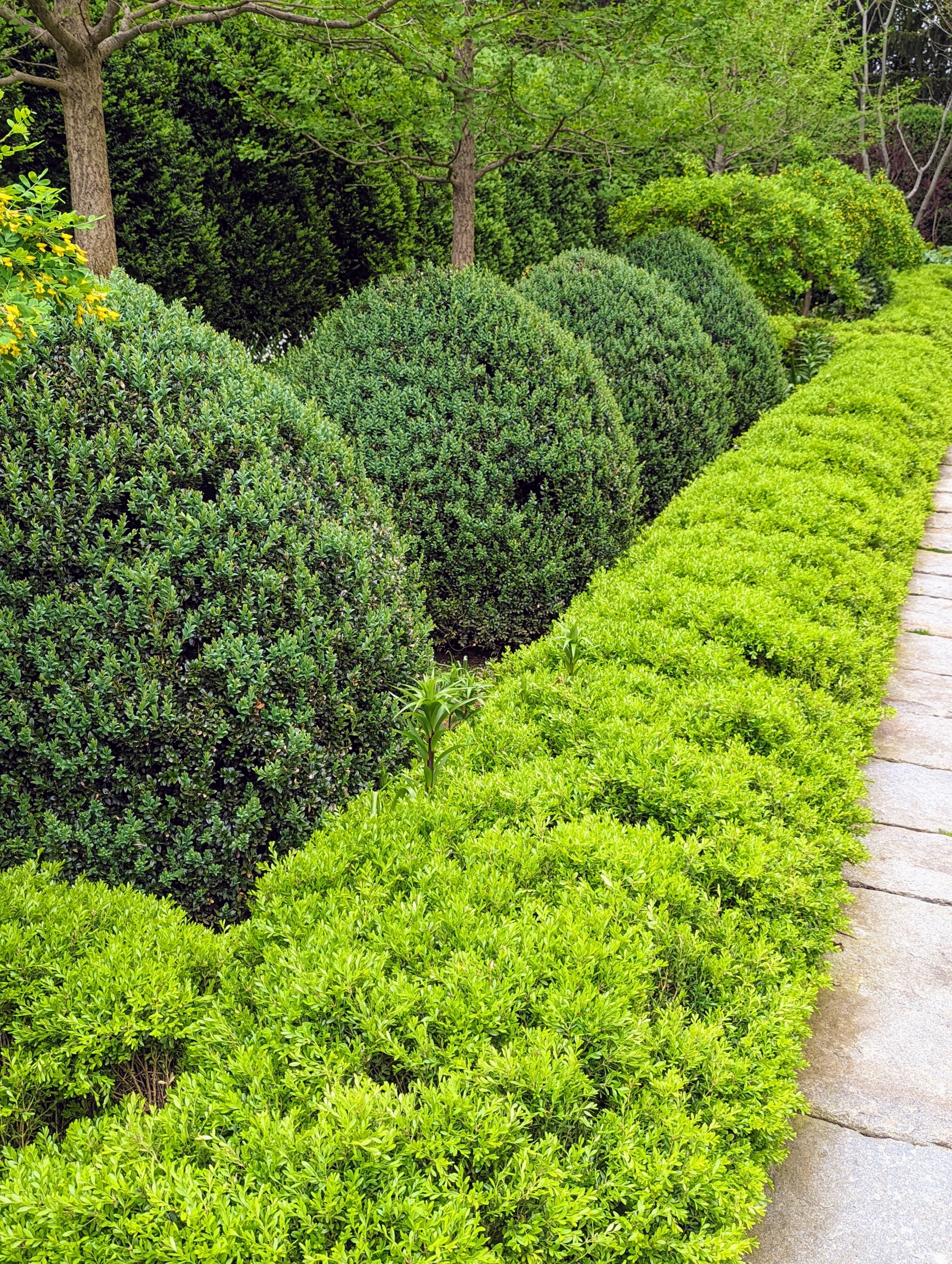
- These boxwood hedges and shrubs are in my sunken Summer House garden. I grow several varieties of boxwood and plant them in formal garden beds, in allées, as borders or in large groupings.
-
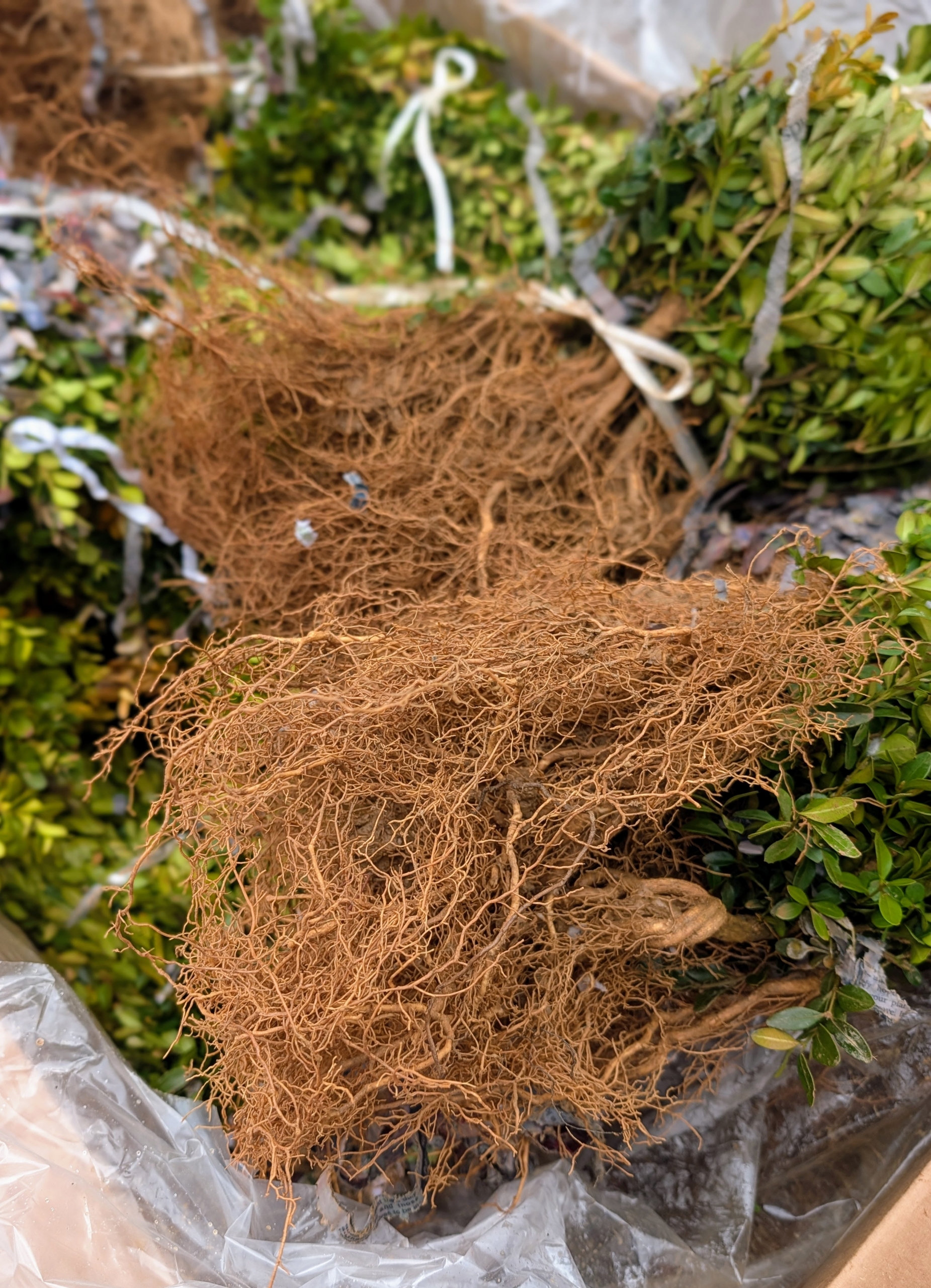
- When I can, I like to grow my boxwood shrubs from bare-root cuttings. This process takes time and patience, but seeing them mature is very rewarding. I recently ordered hundreds from Musser Forests, Inc.
-
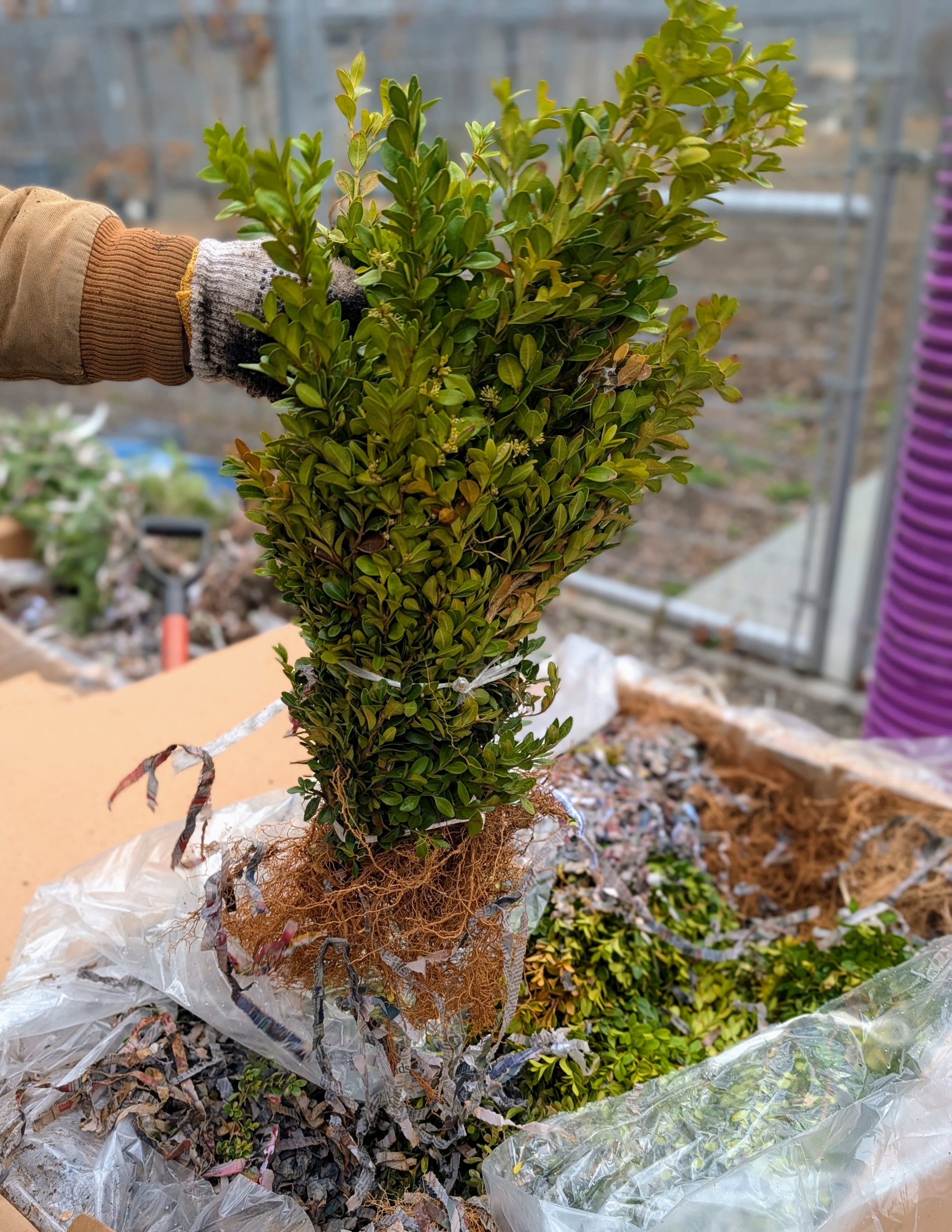
- Musser’s bare-root cuttings are healthy and ready to plant. I’ve bought many from Musser’s over the years and have always been very pleased with their specimens.
-
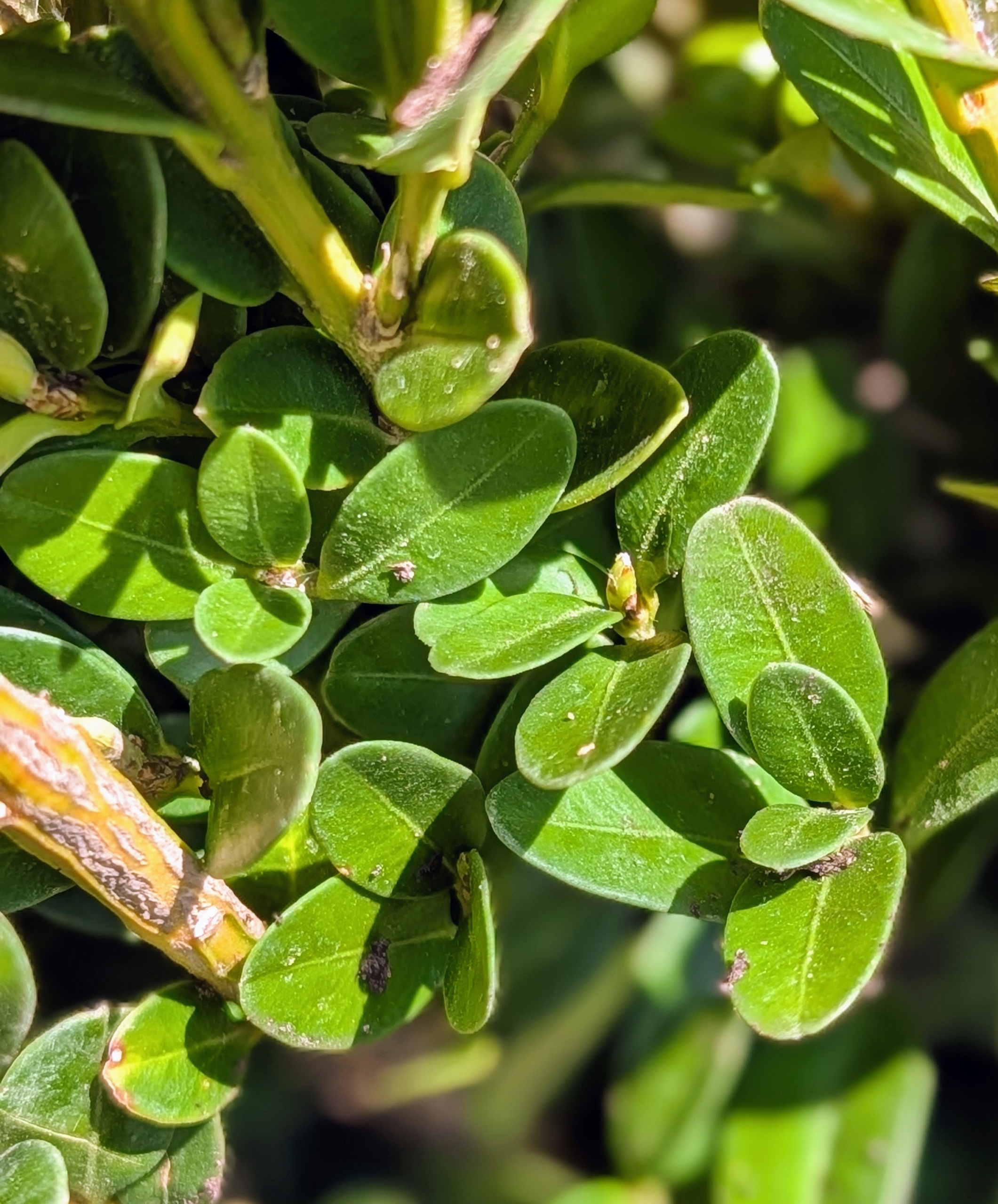
- These bare-roots are all Winter Beauty Boxwood, Buxus sinica var. insularis ‘Winter Beauty’ – a variety of Korean boxwood with glossy, green leaves. It is slow growing and matures to two feet tall and four to six feet wide. Compared to other types, ‘Winter Beauty’ boxwood is more tolerant of sunlight.
-
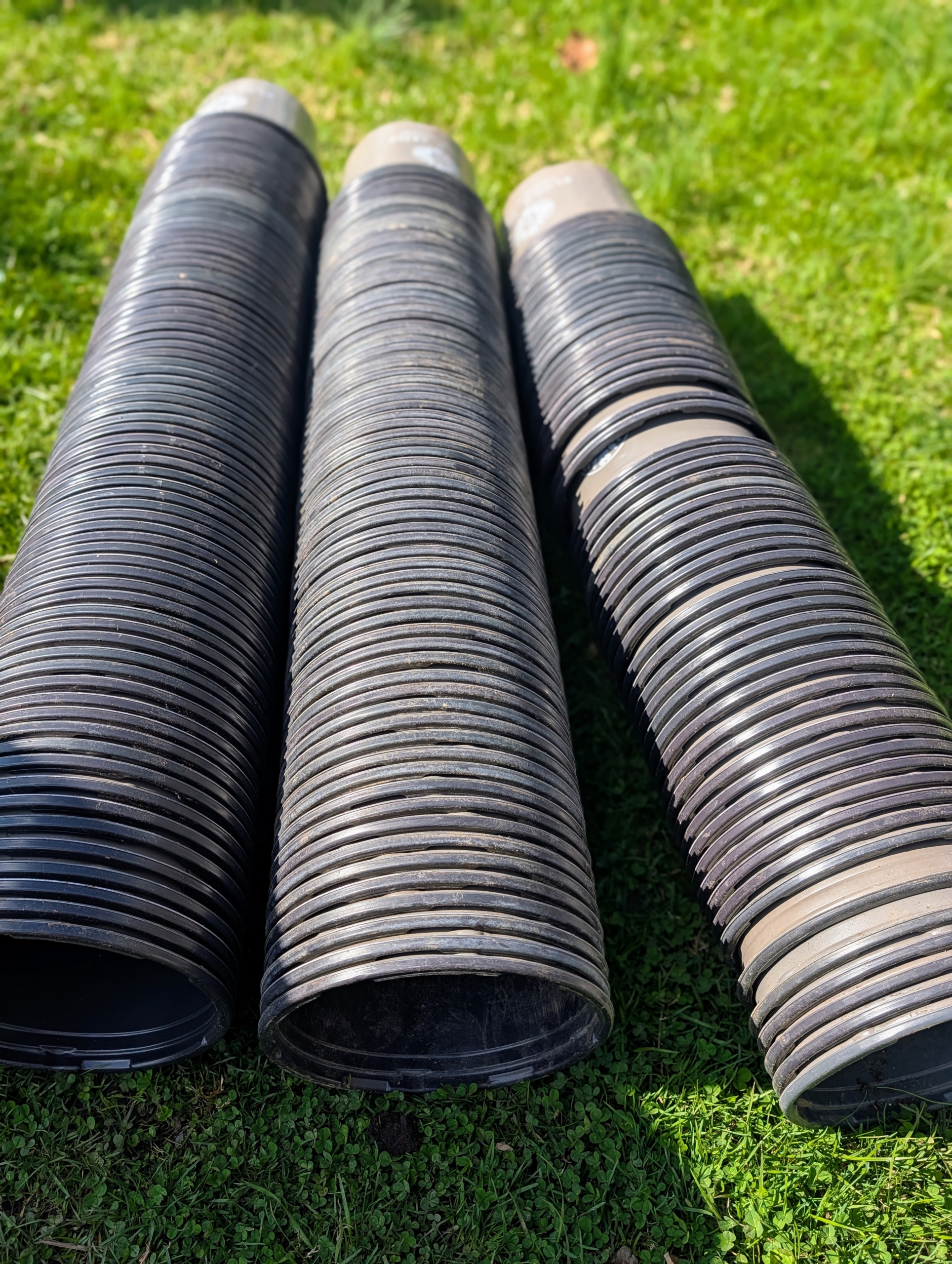
- We always pot bare-root cuttings in individual containers. Eventually, they will be transplanted in various locations around the farm. We save pots whenever we can – they always come in handy for projects like this, and I always encourage the crew to reuse supplies whenever possible.
-
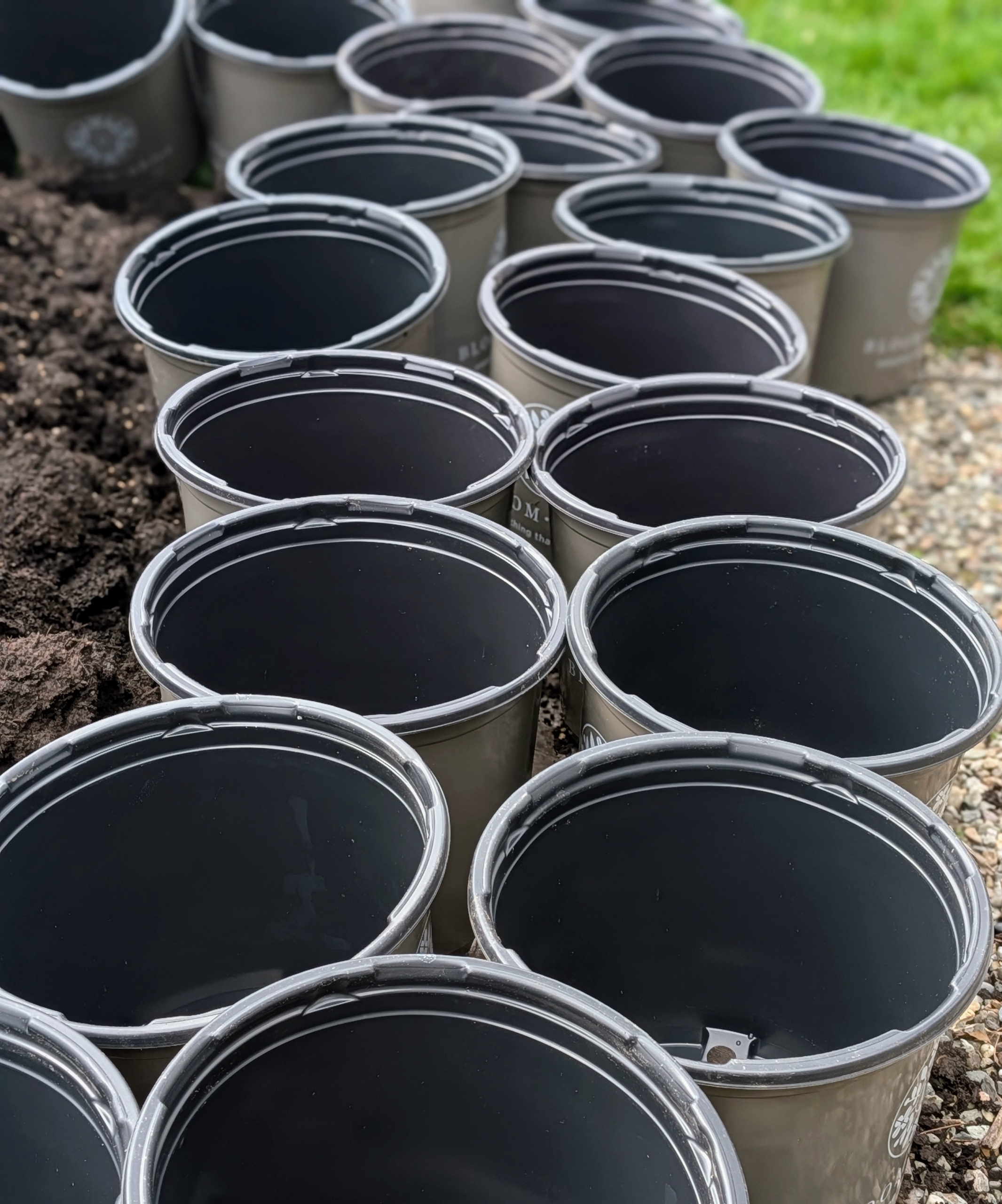
- The process of potting up all these bare-root cuttings is time-consuming, but my crew has devised an efficient system that starts with separating and lining up the pots for soil.
-
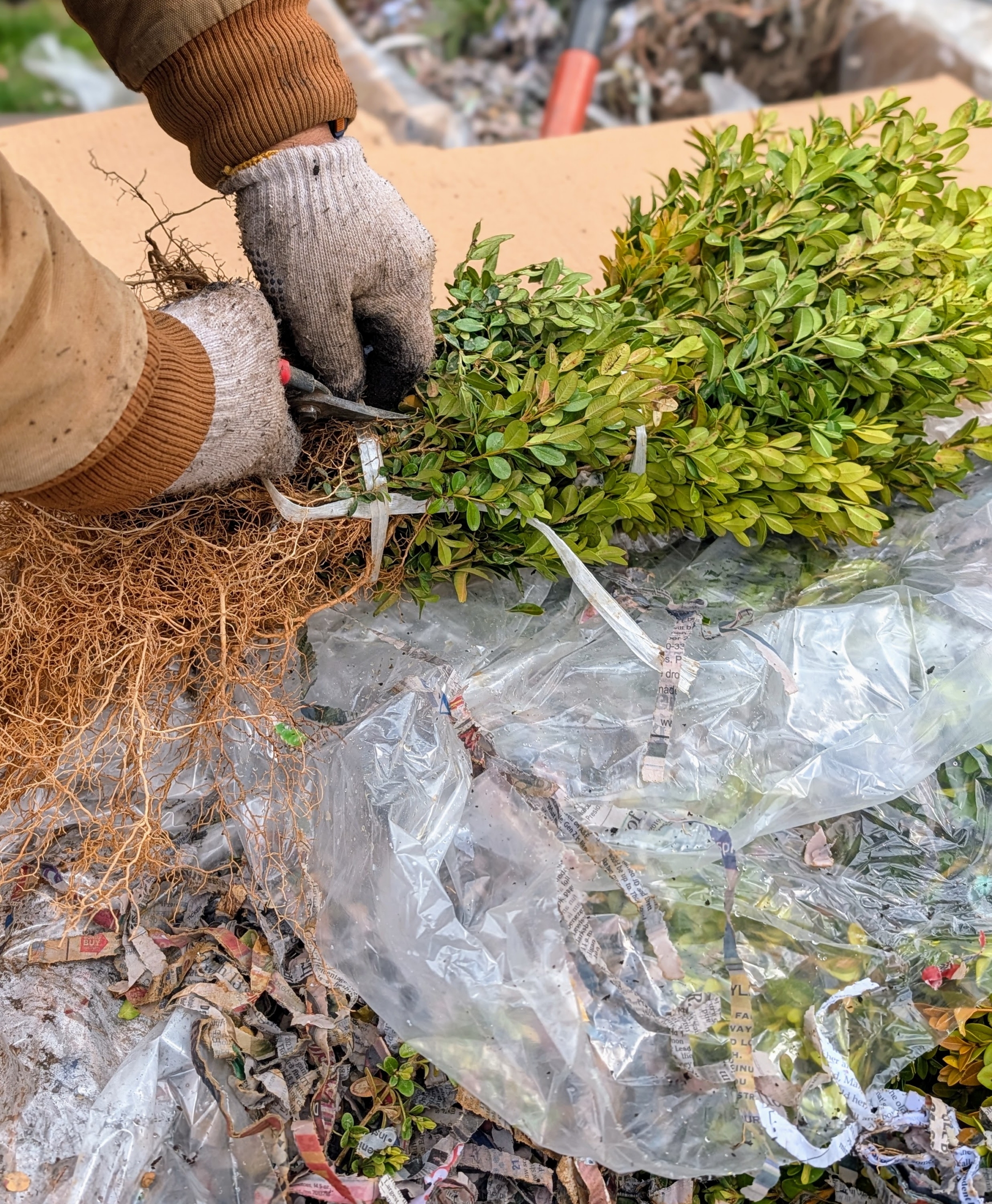
- Meanwhile, Phurba gets a bunch of cuttings ready for potting.
-
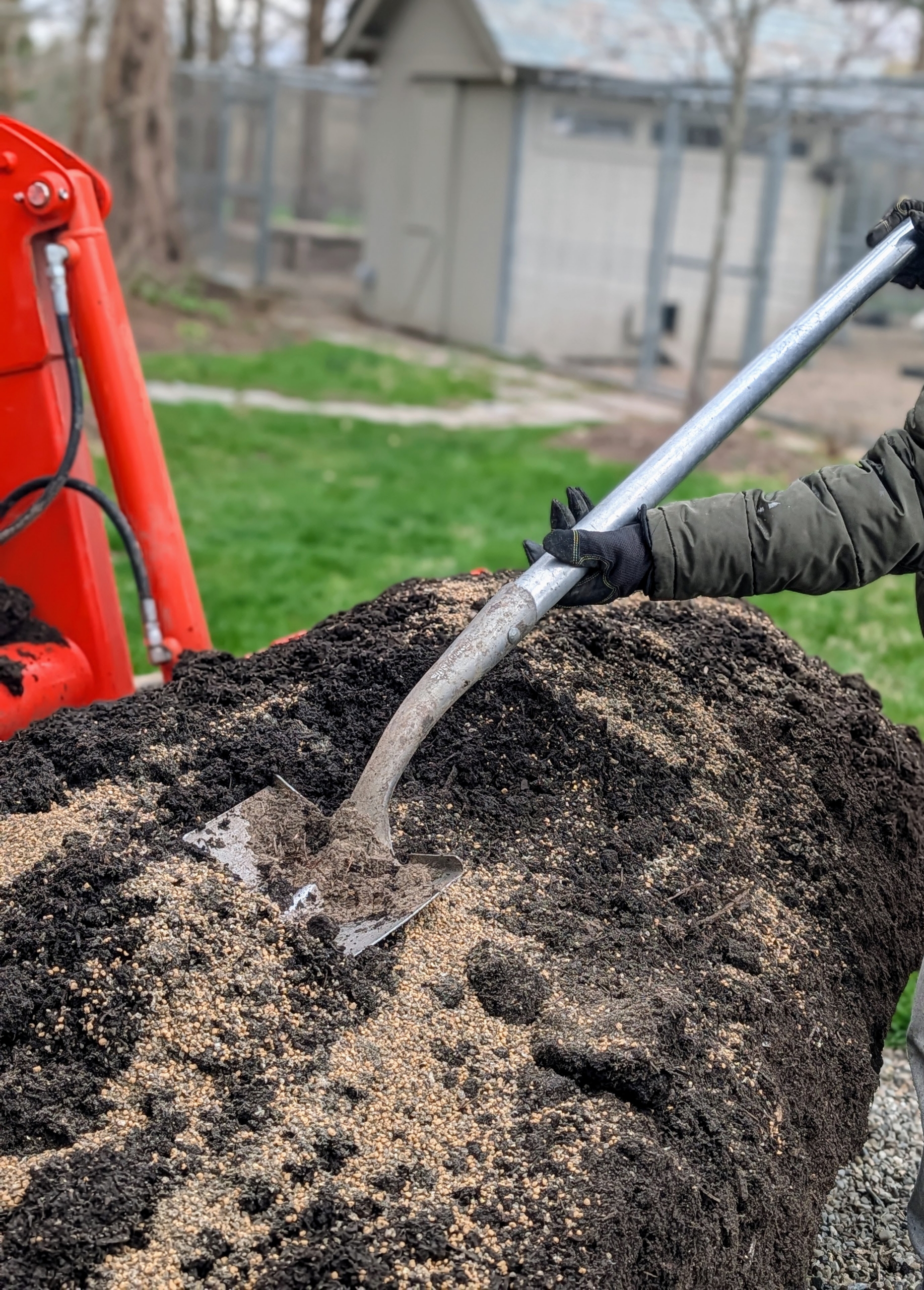
- Fertilizer is added and mixed with the composted soil made right here at my farm.
-
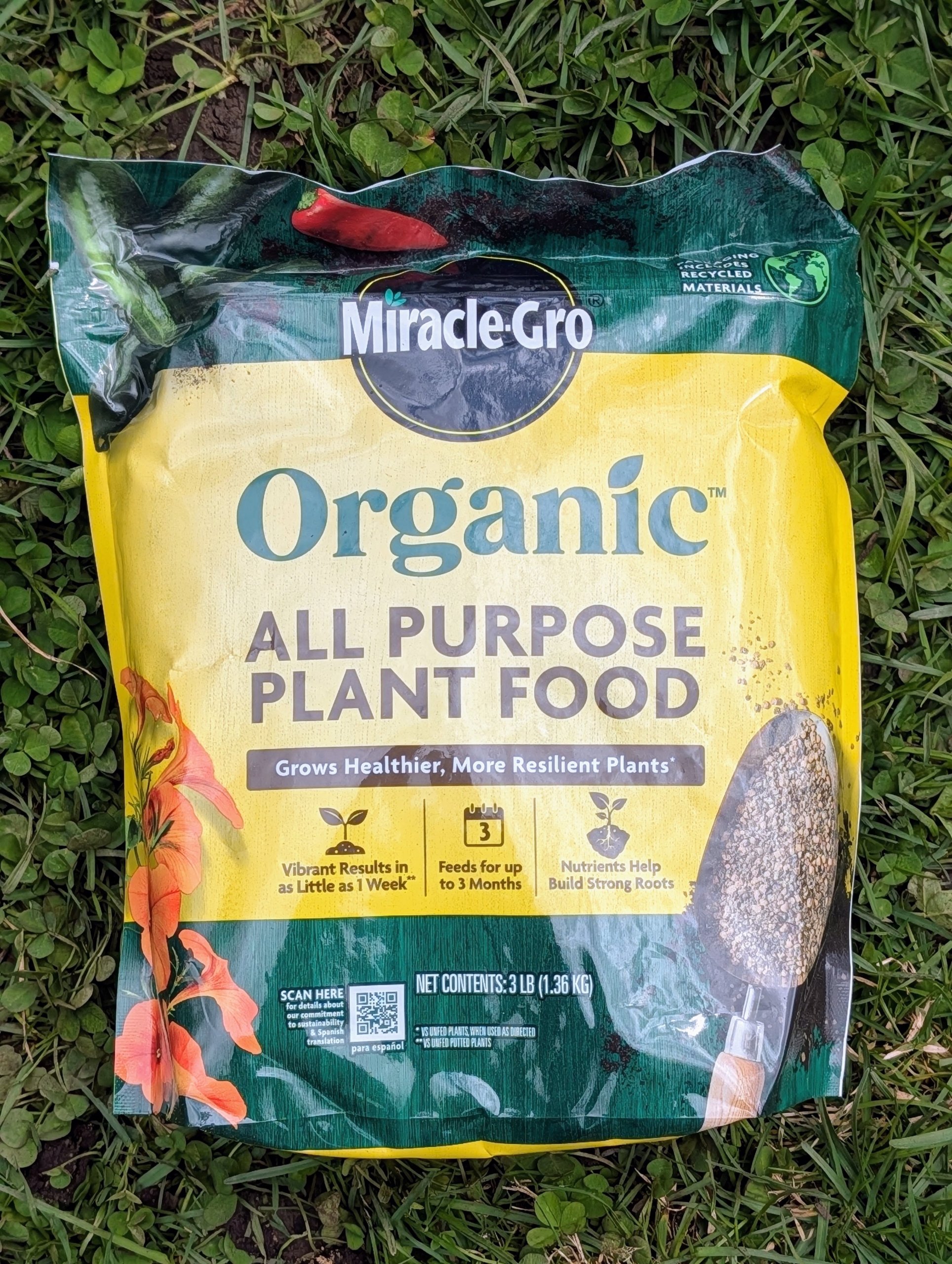
- I use Organic All-Purpose Plant Food from Miracle-Gro.
-
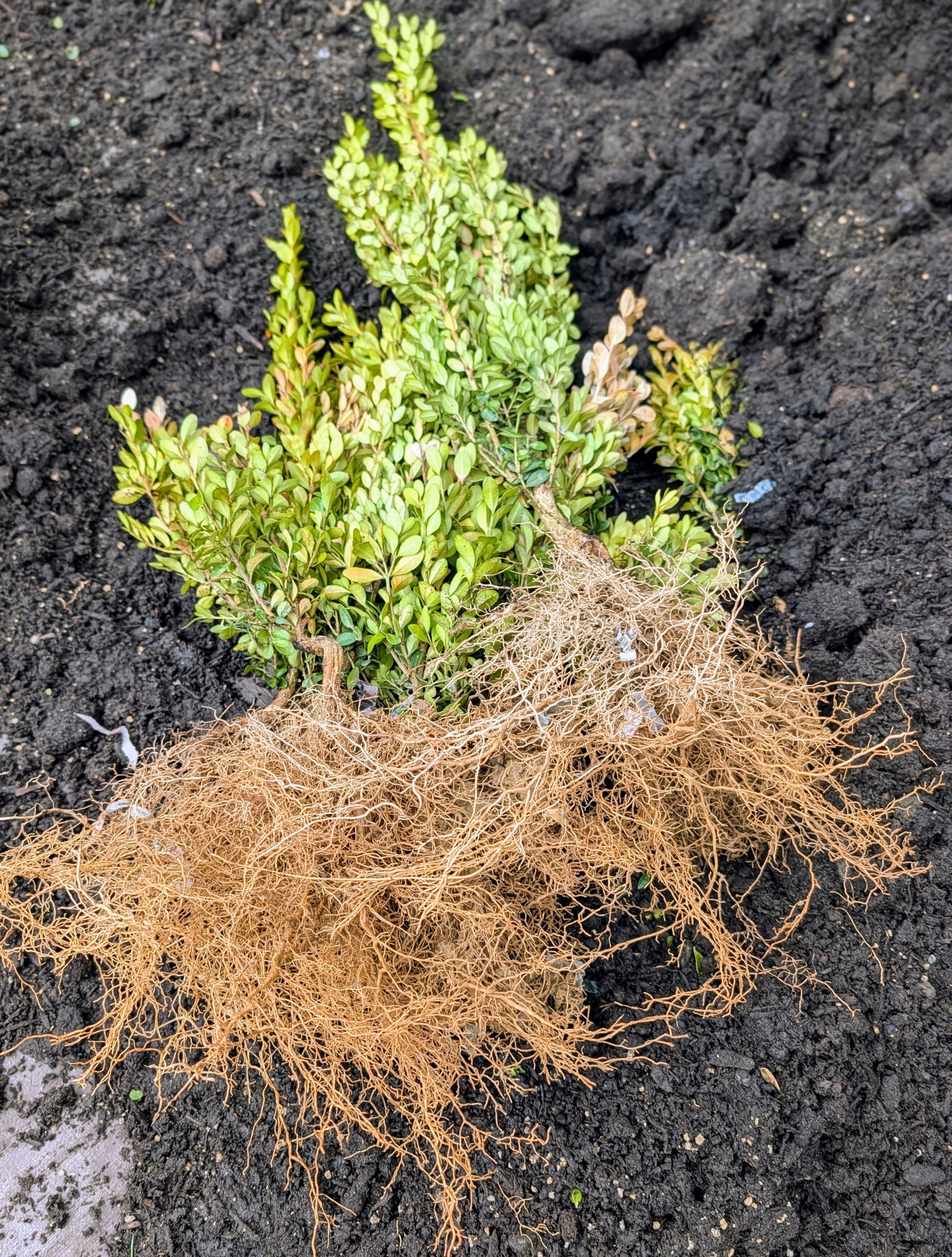
- Each cutting is carefully separated from the bunch. Boxwood plants have shallow, fibrous roots that spread widely near the soil surface. It’s important to get them planted and watered right away.
-
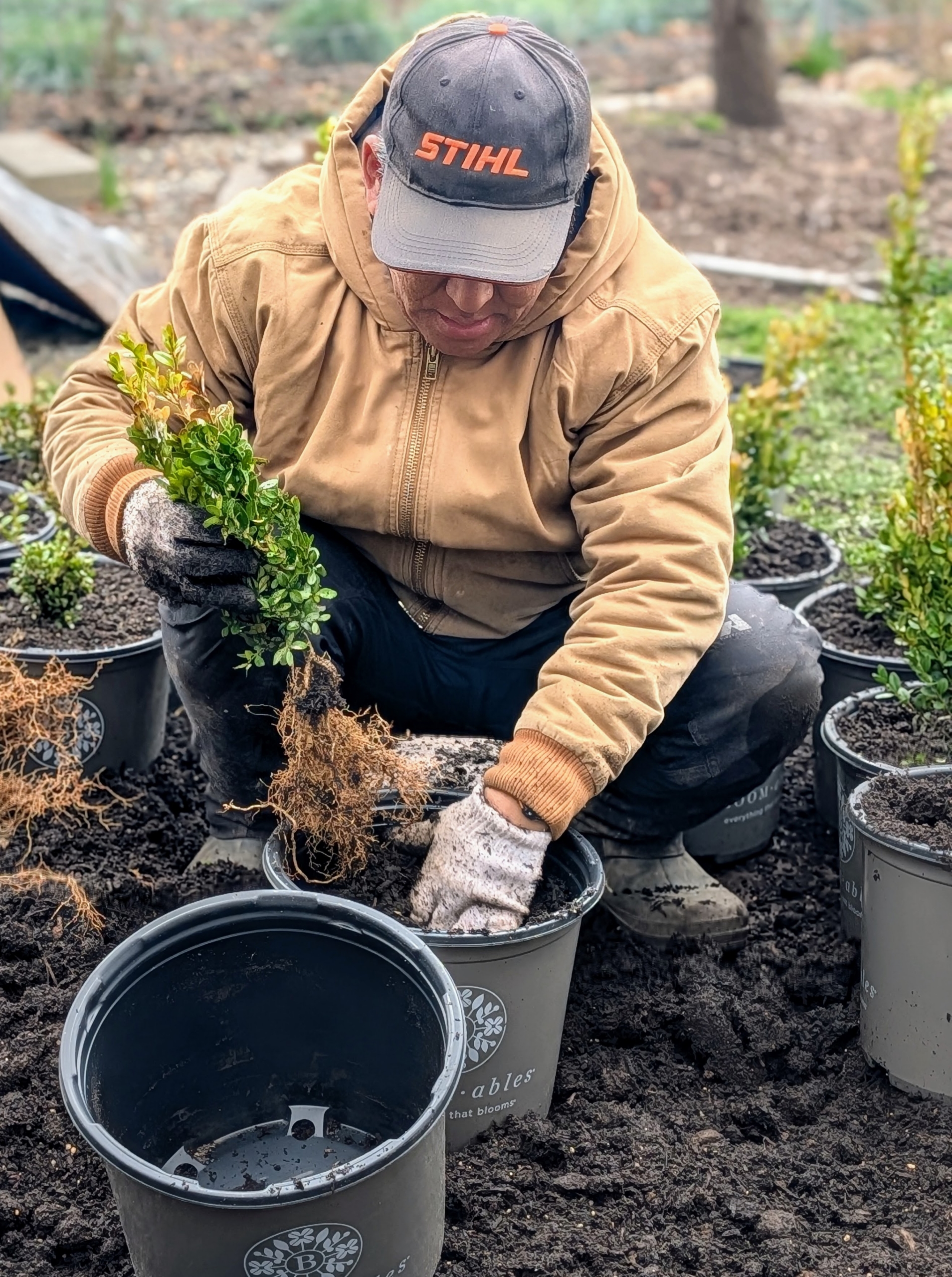
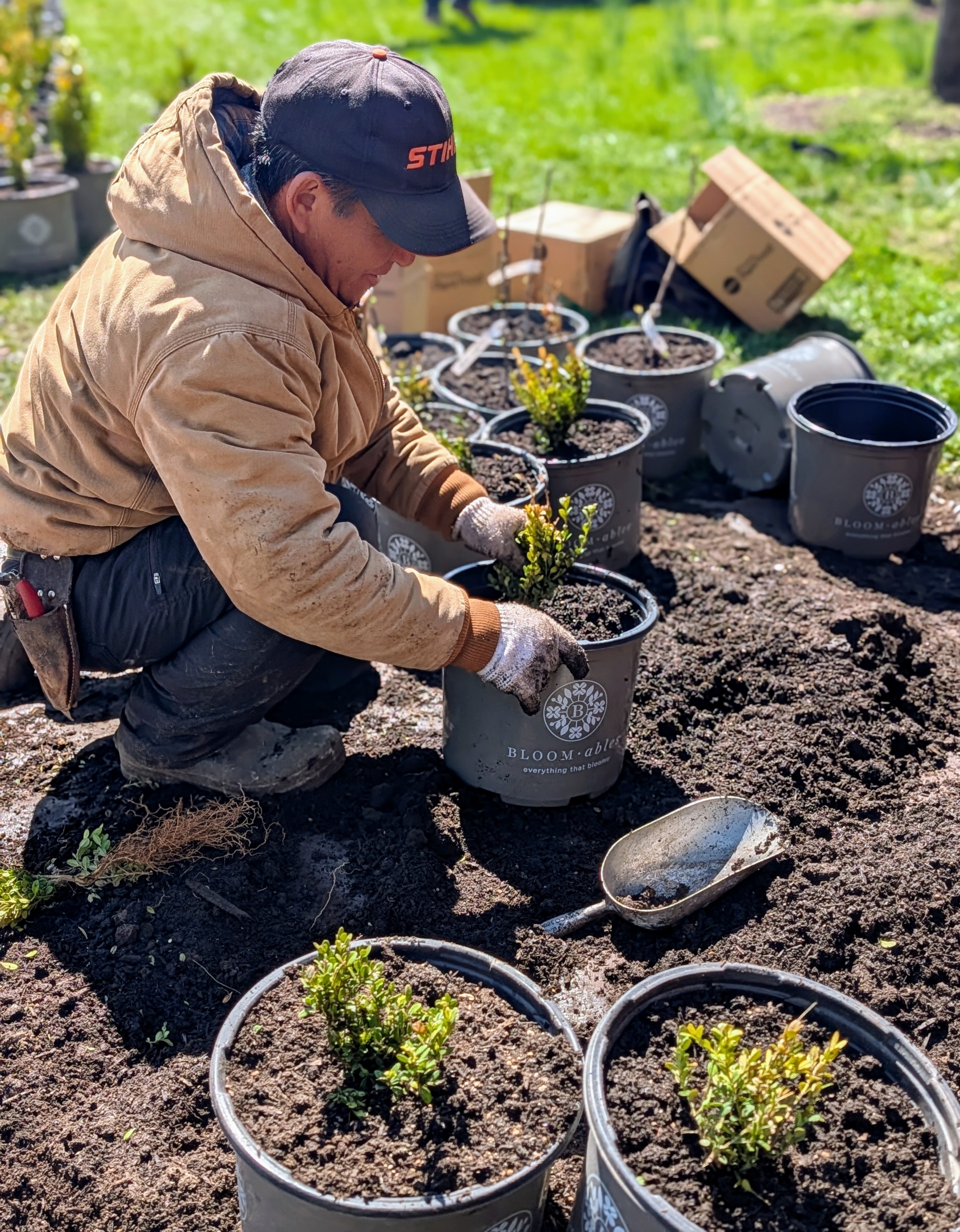
- The bare-root specimen is placed straight in the center of the pot.
-
- And then the pot is backfilled just to the bottom of the rim’s pot.
-
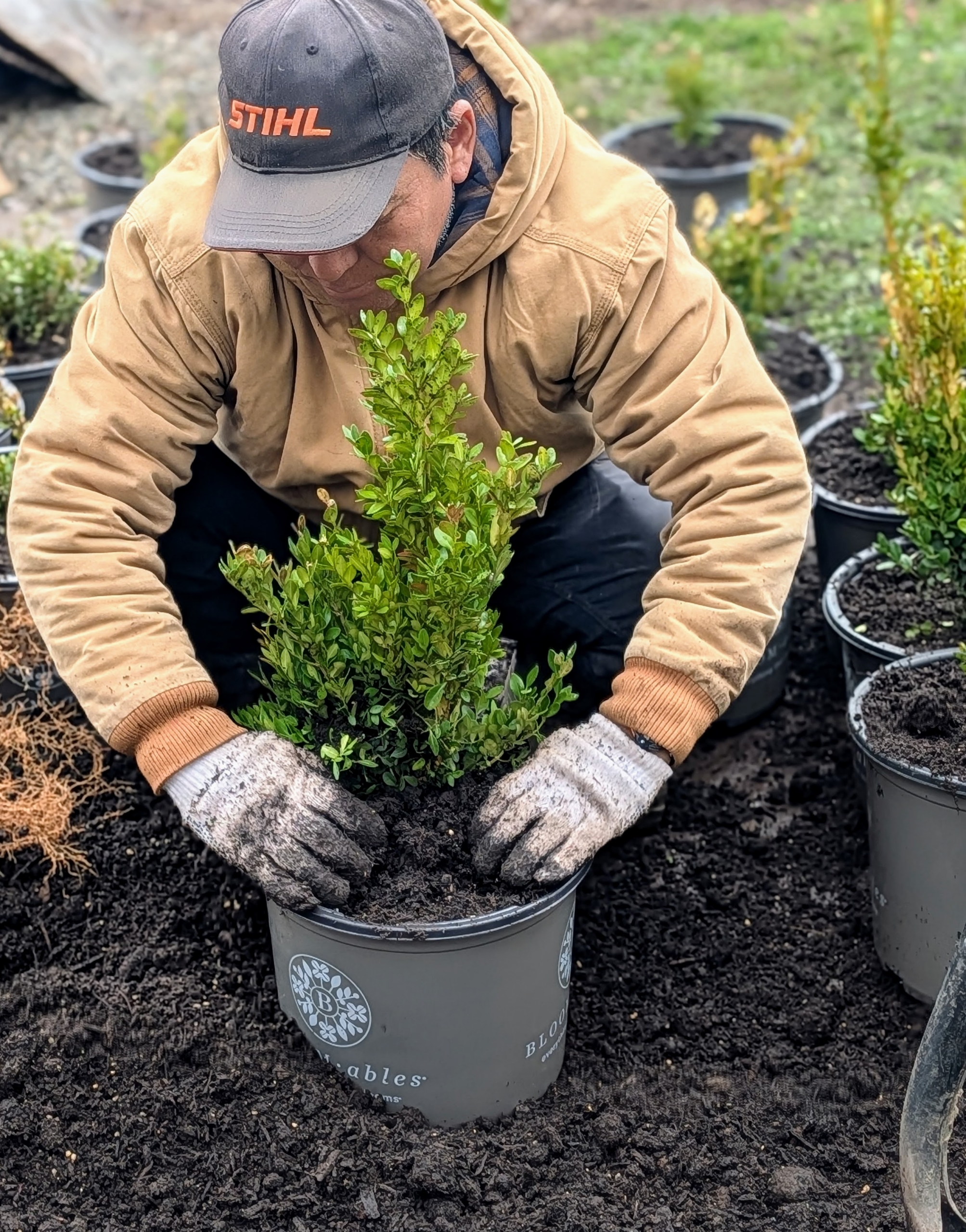
- It is also tamped down lightly so there is good contact between the plant roots and the surrounding soil.
-
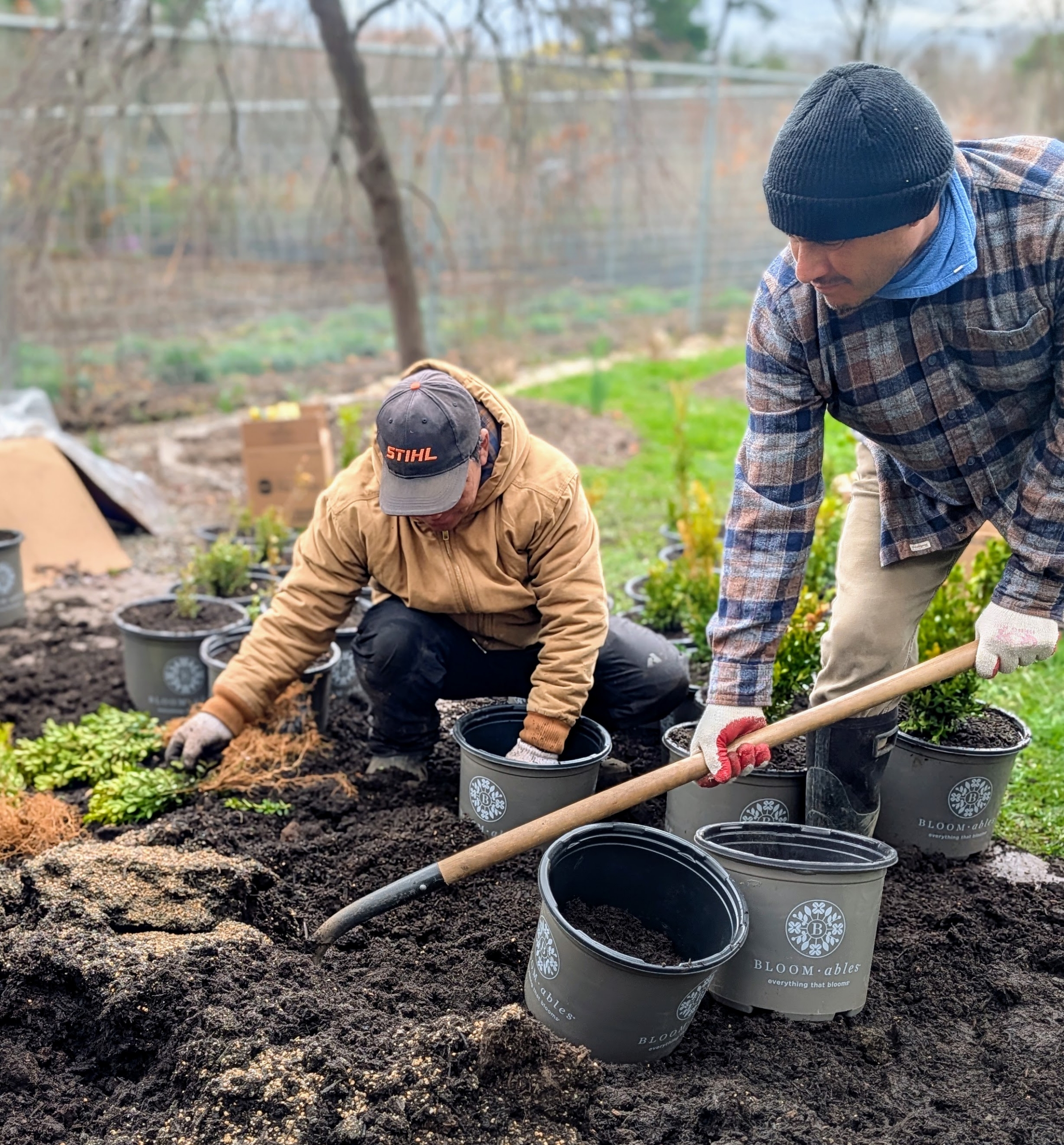
- As Phurba pots it up, Cesar fills – all in a production line process.
-
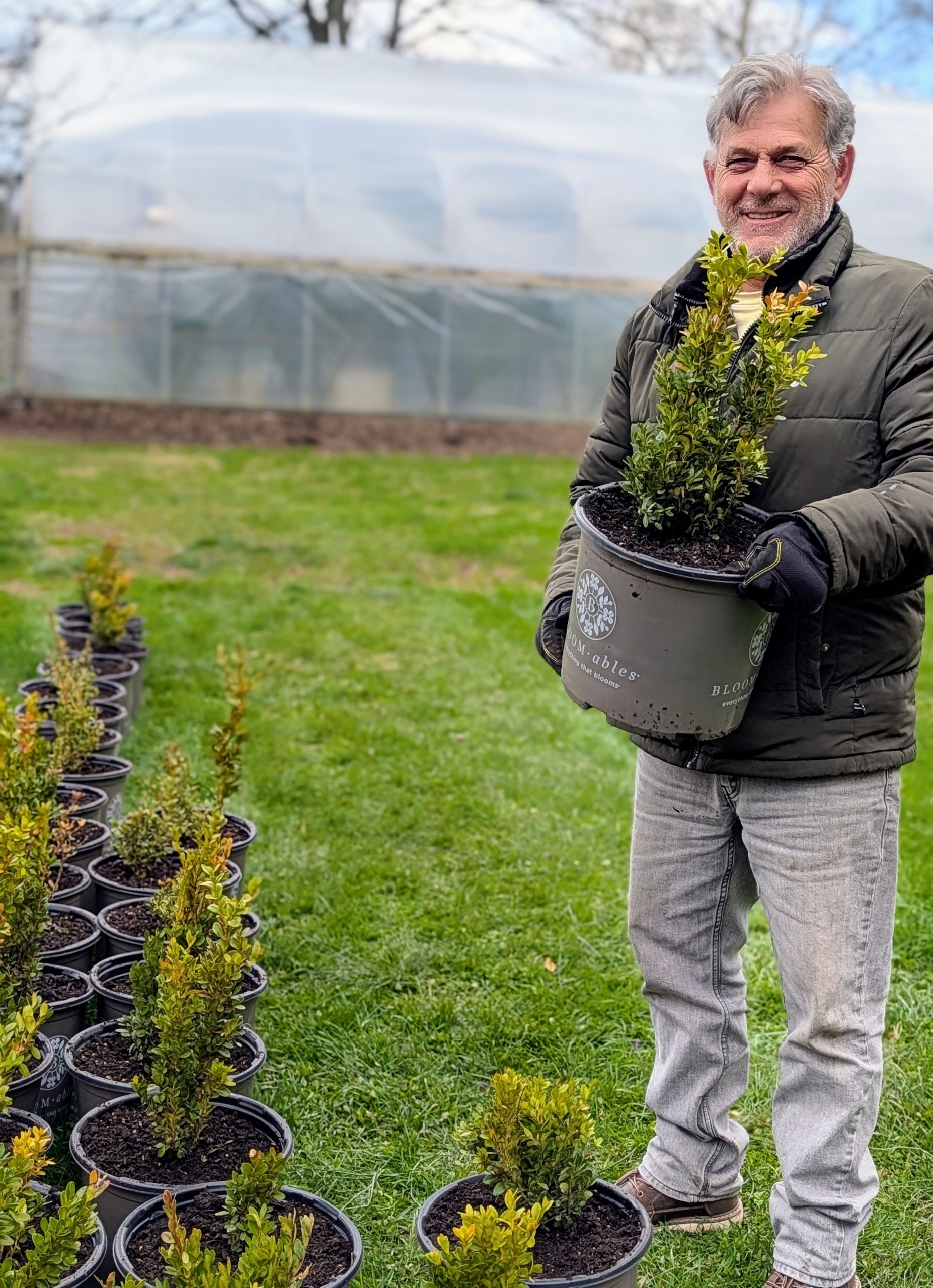
- Next, Fernando takes the potted boxwood to a waiting cart that will transport it to the designated nursery.
-
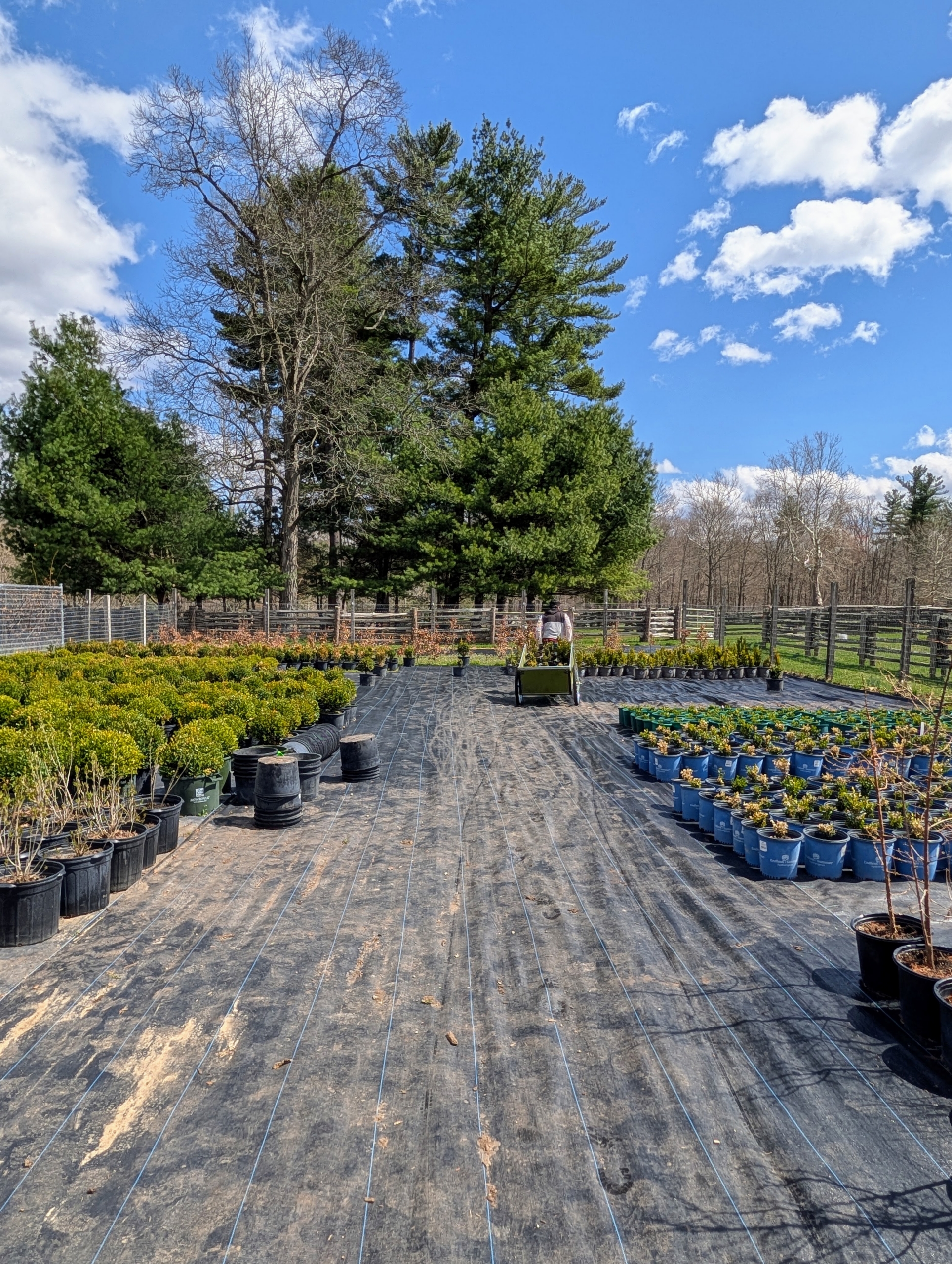
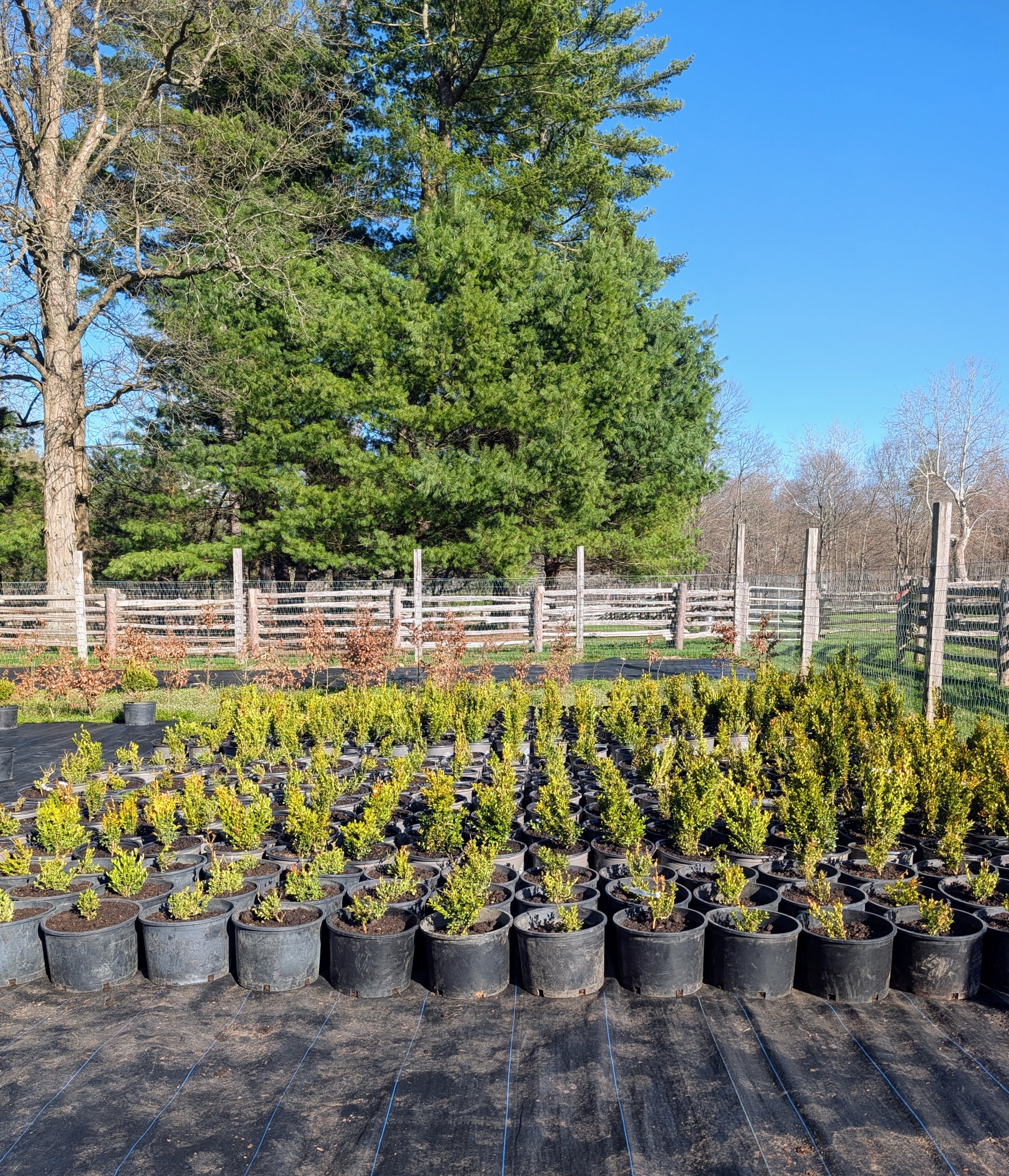
- This space was once used for growing vegetables. It also served as a pumpkin patch. Now it is covered with weed cloth and used for nurturing my potted boxwood shrubs.
-
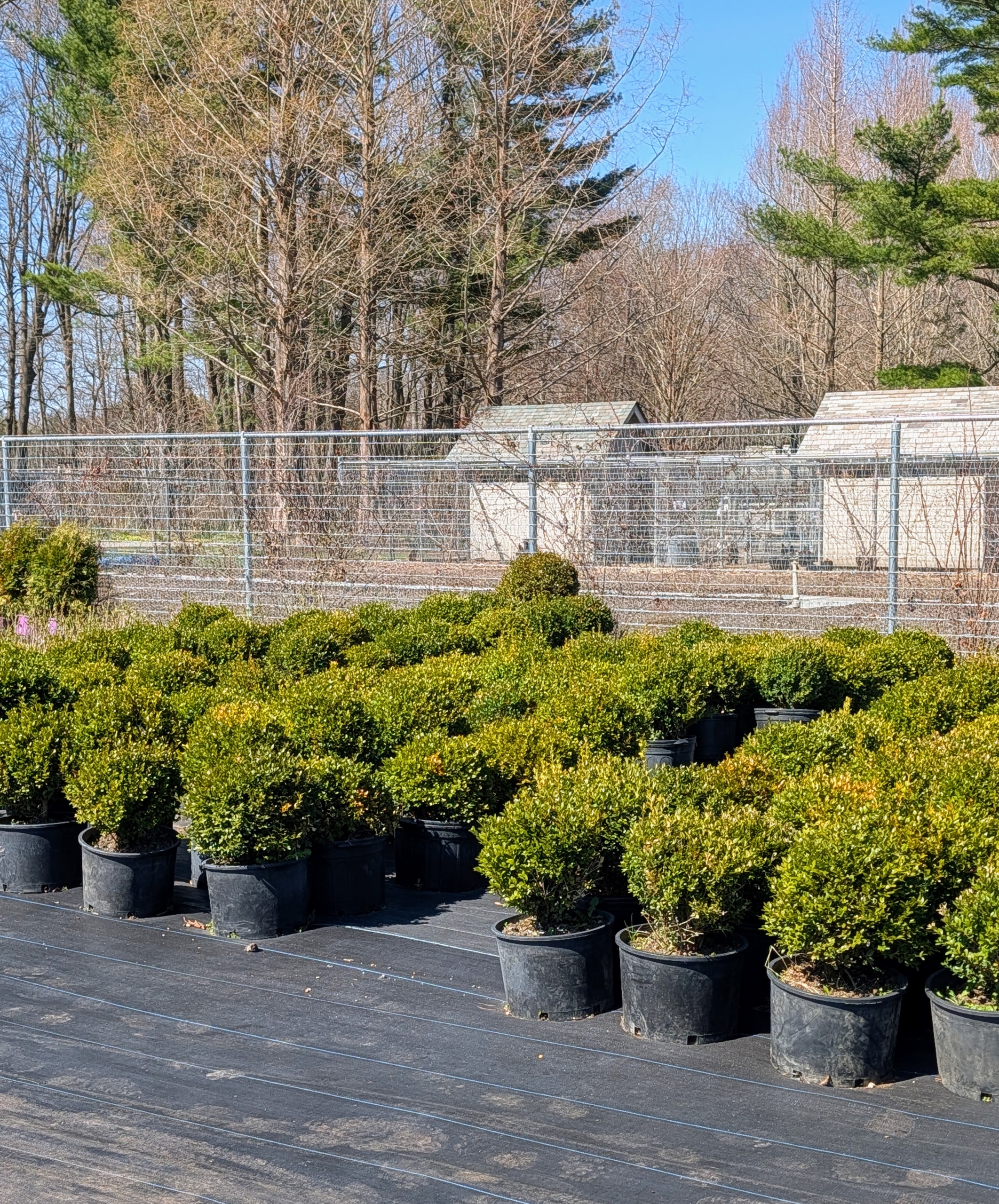
- I have boxwood growing at different stages in this enclosure. These are all a few years old.
-
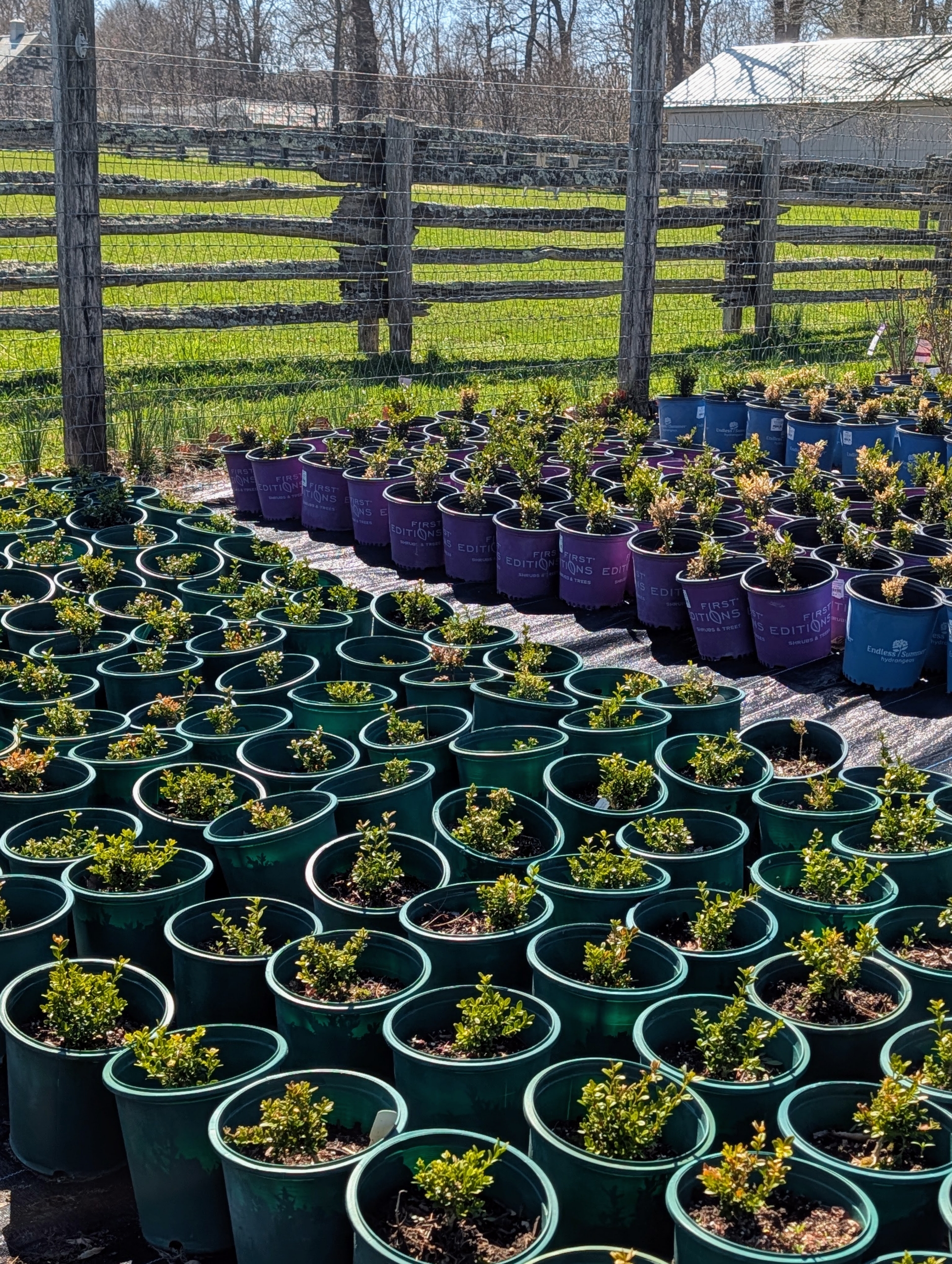
- This section of boxwood was potted up last year.
-
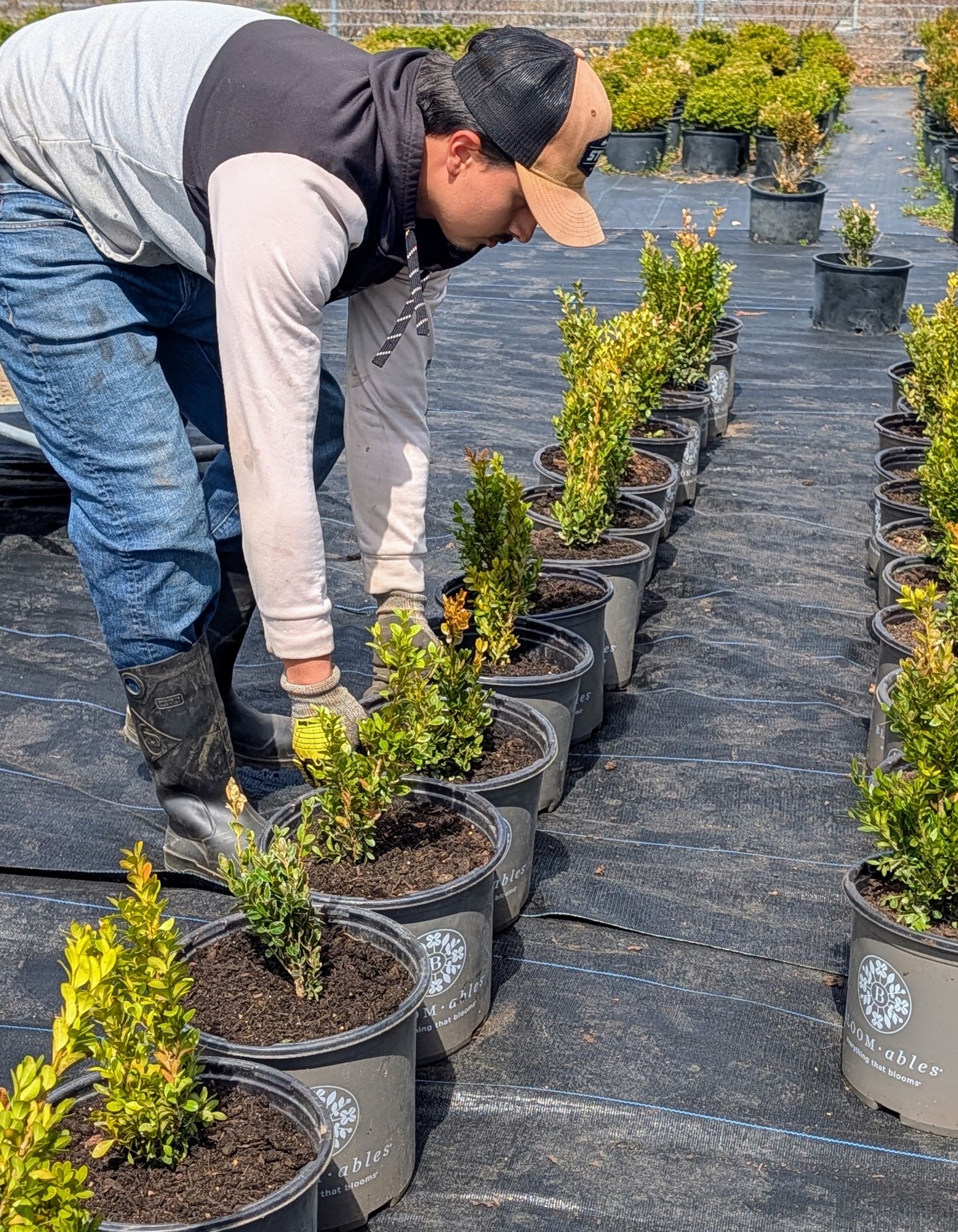
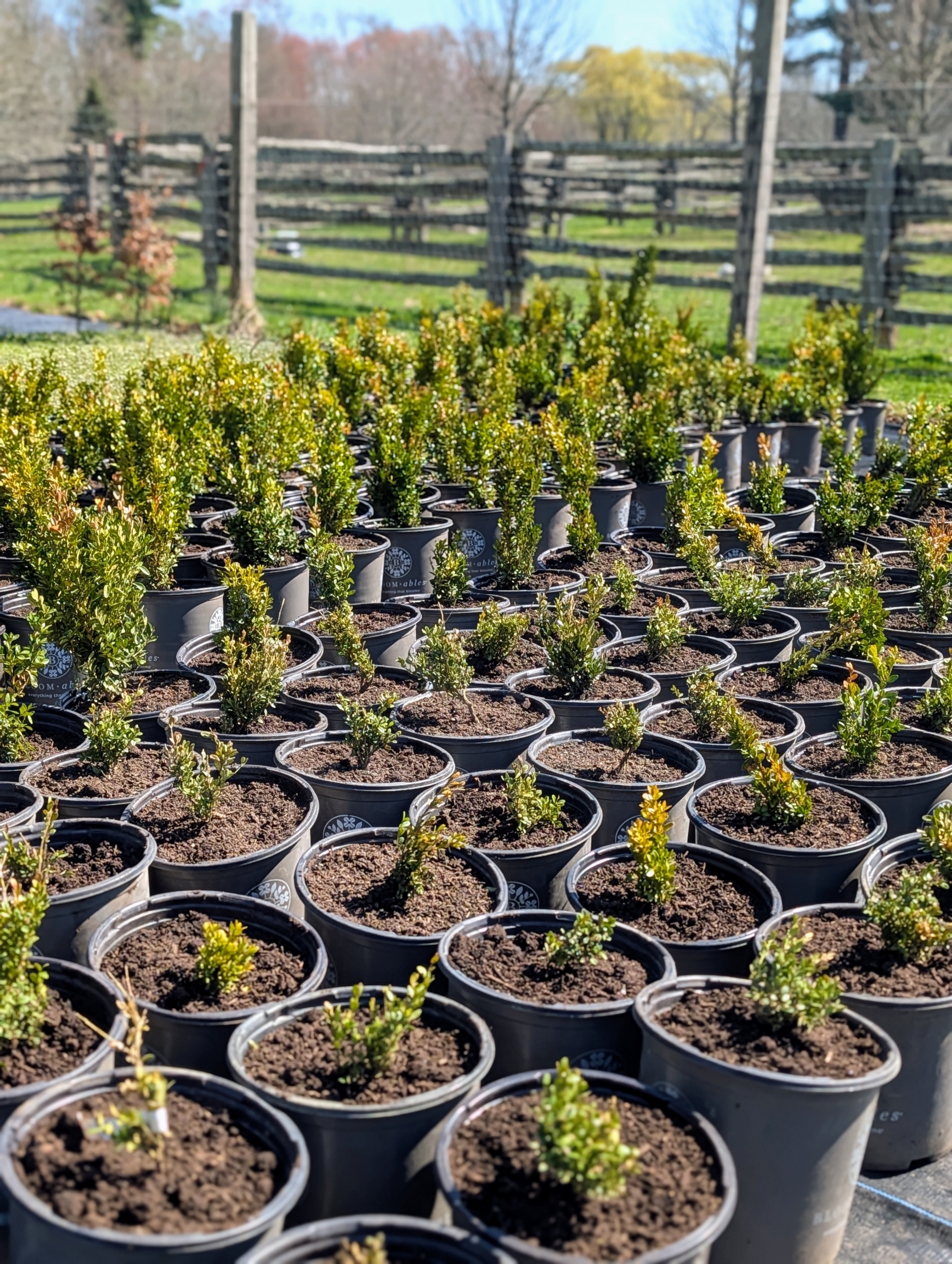
- And now Matthew is lining up this year’s potted bare-root boxwood cuttings.
-
- It is important to keep them separated by cultivar and always properly marked.
-
- Once all of them are lined up, they will get a good and thorough drink. I always look forward to watching these plants grow and then selecting where to place them in the gardens. I am confident these trees will thrive in these pots and be in excellent condition when it is time to plant them in their permanent locations around the farm.
 Martha Pins


 Martha Tweets

