

Caring for My Beech Trees
Maintaining and caring for the many trees here at my farm is so important. My mature grove of American and European beech trees, Fagus grandifolia and Fagus sylvatica, and some of the other beeches on the property, are now part of a treatment program designed to help them stay healthy and continue to thrive.
A few years ago, I noticed something was wrong with my beech trees. They did not look as vibrant or as full as they once had. Unfortunately, beech leaf disease is a serious and rapidly spreading condition affecting beeches across much of the eastern United States and Ontario. It is caused by the invasive nematode Litylenchus crenatae mccannii, which can severely damage and, in some cases, kill the trees. To help, I called on Bartlett Tree Experts to evaluate the trees and begin treatment. I am hopeful these magnificent beeches will remain strong and beautiful for many more years.
Enjoy these photos.
-

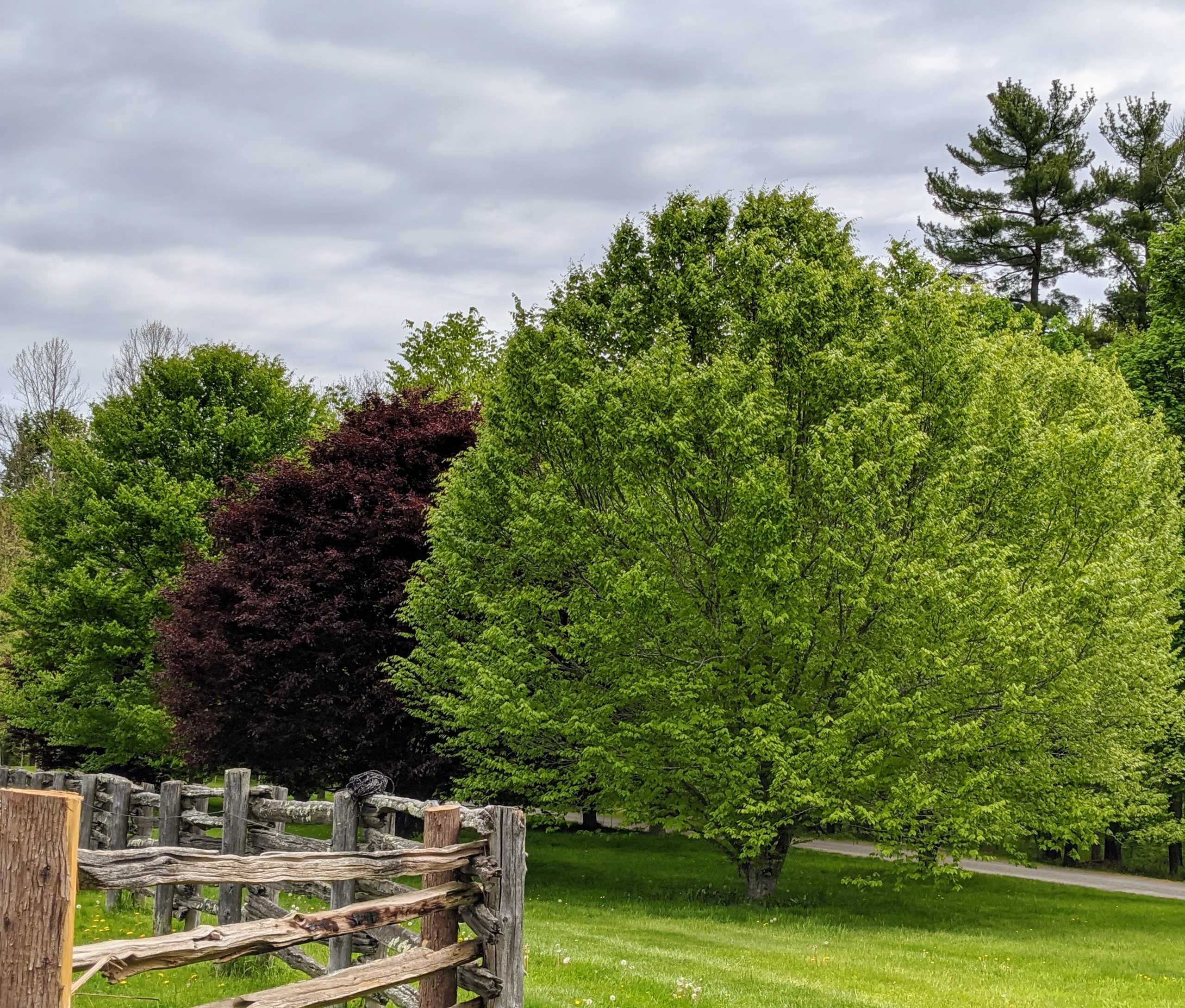
- The beech tree is considered both a shade tree and an ornamental tree. They can grow to a height of 50 to 70 feet and a spread of around 40 feet at maturity. This is my beech tree grove in the spring of 2020 when the trees were lush and bold in color.
-
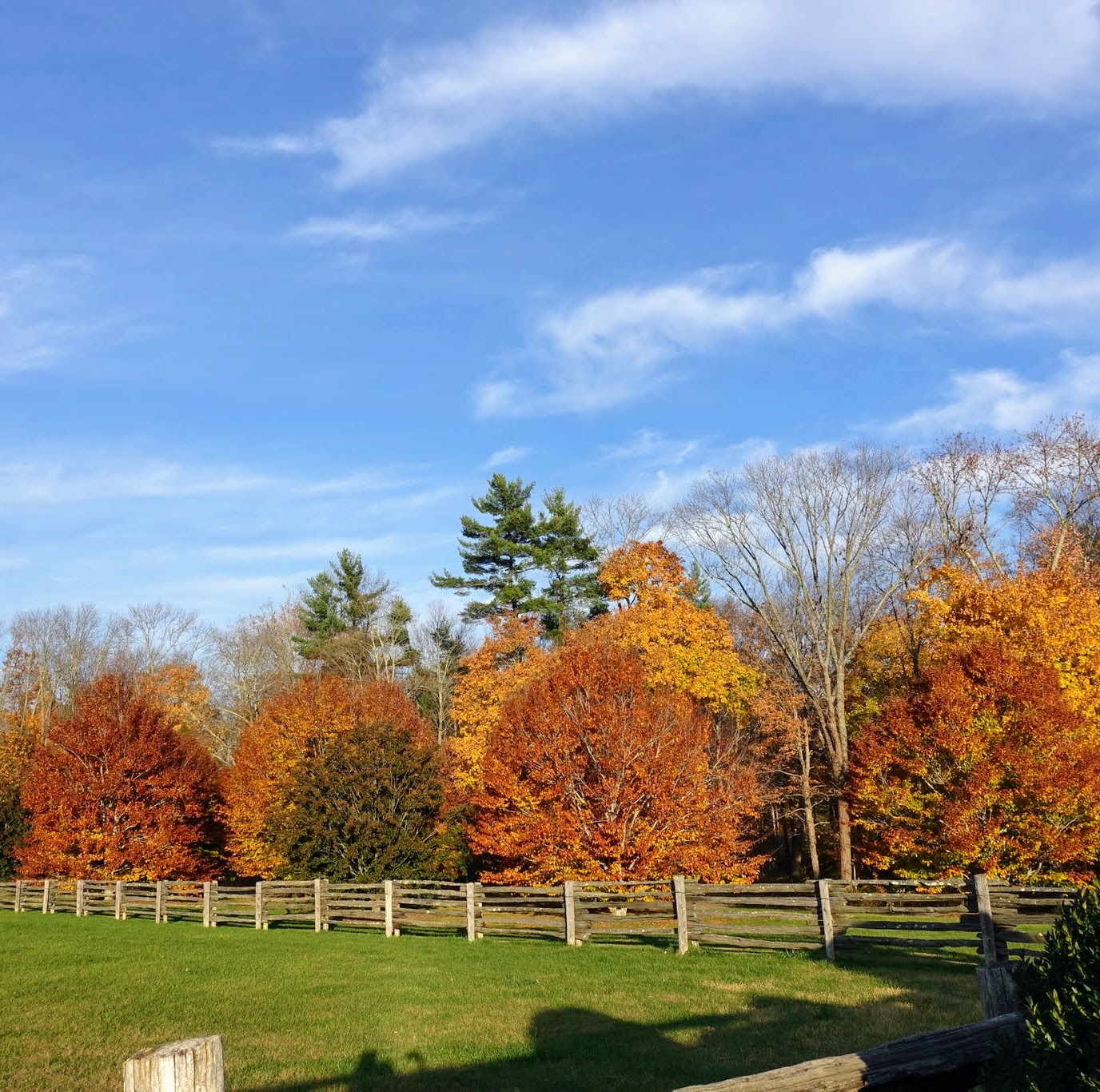
- This is an autumn photo of my beech tree grove. These beech trees show gorgeous golden-bronze fall foliage. The leaves persist into winter, after turning a pleasing tan color.
-
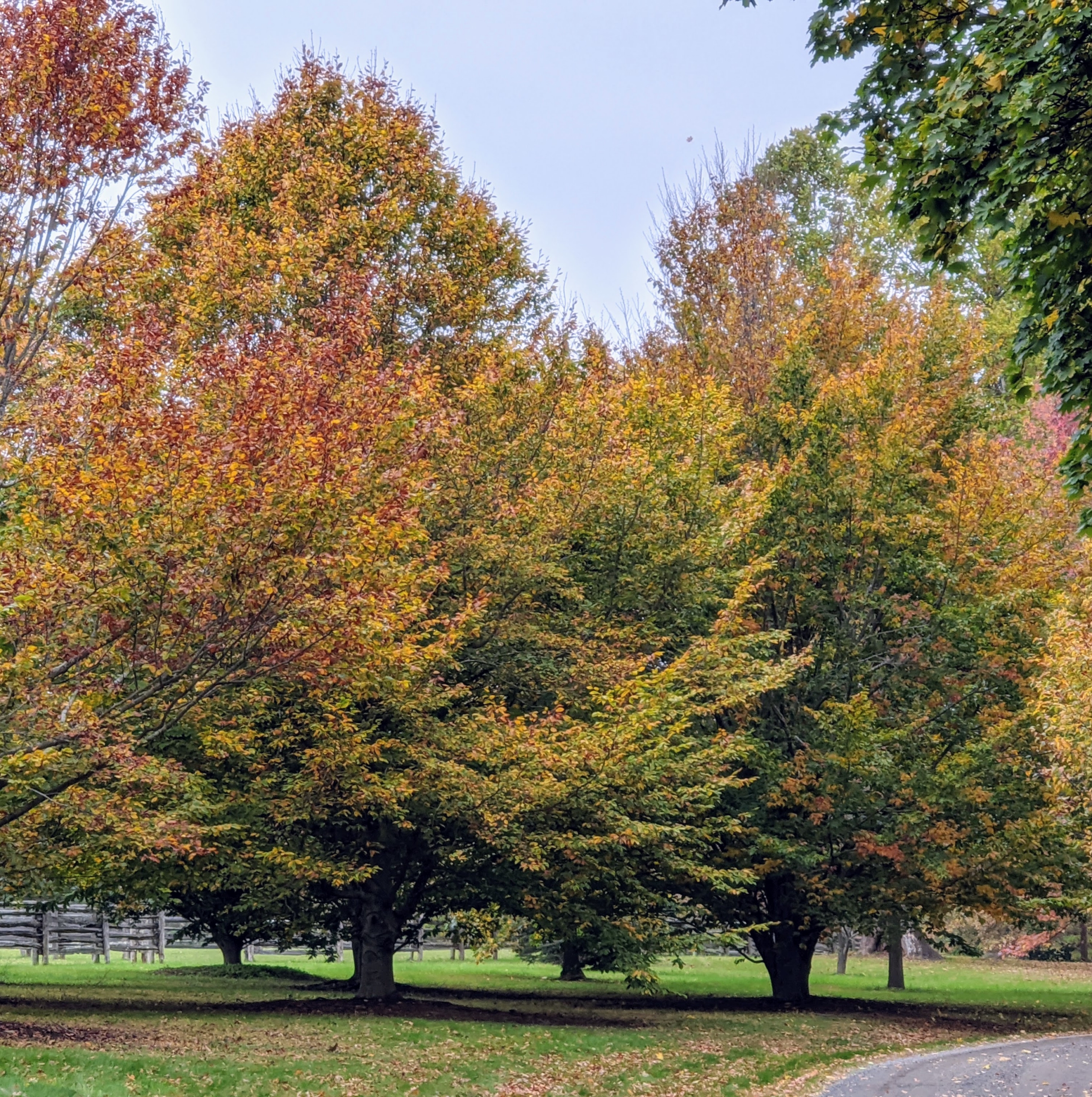
- Here’s another photo showing the trees just beginning to change. This grove is located just east of my long Boxwood Allée. Guests always comment on their color and form.
-
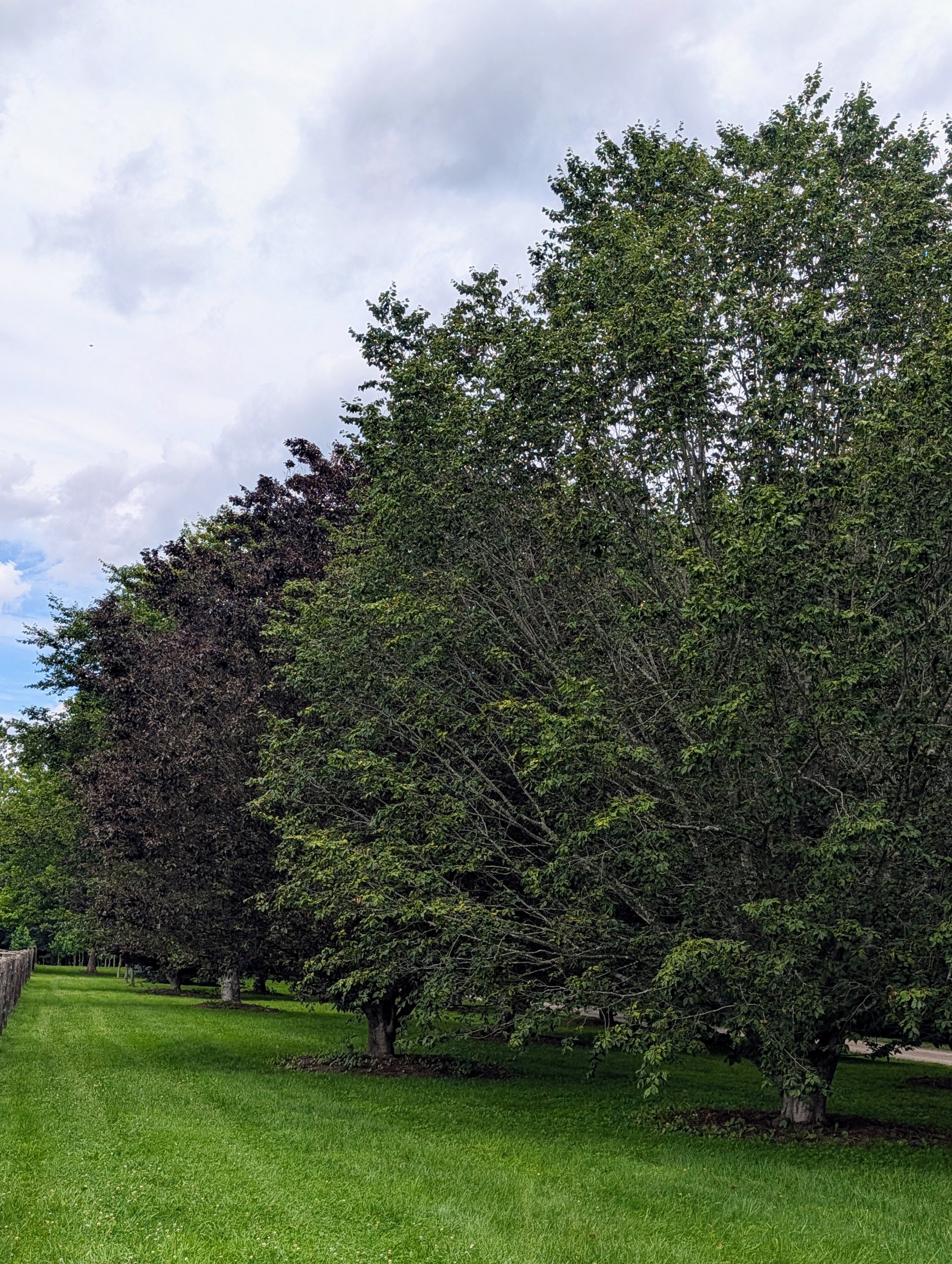
- In more recent years, I noticed they didn’t look as lush. I also knew of the beech leaf disease that is killing both mature beeches and saplings. These are my trees now – dull in color and with less growth.
-
- The disease, which was first spotted in northeastern Ohio, causes parts of leaves to turn leathery and branches to wither and then kill a tree within six to 10 years. I definitely needed to help my trees and make sure these beautiful specimens survived.
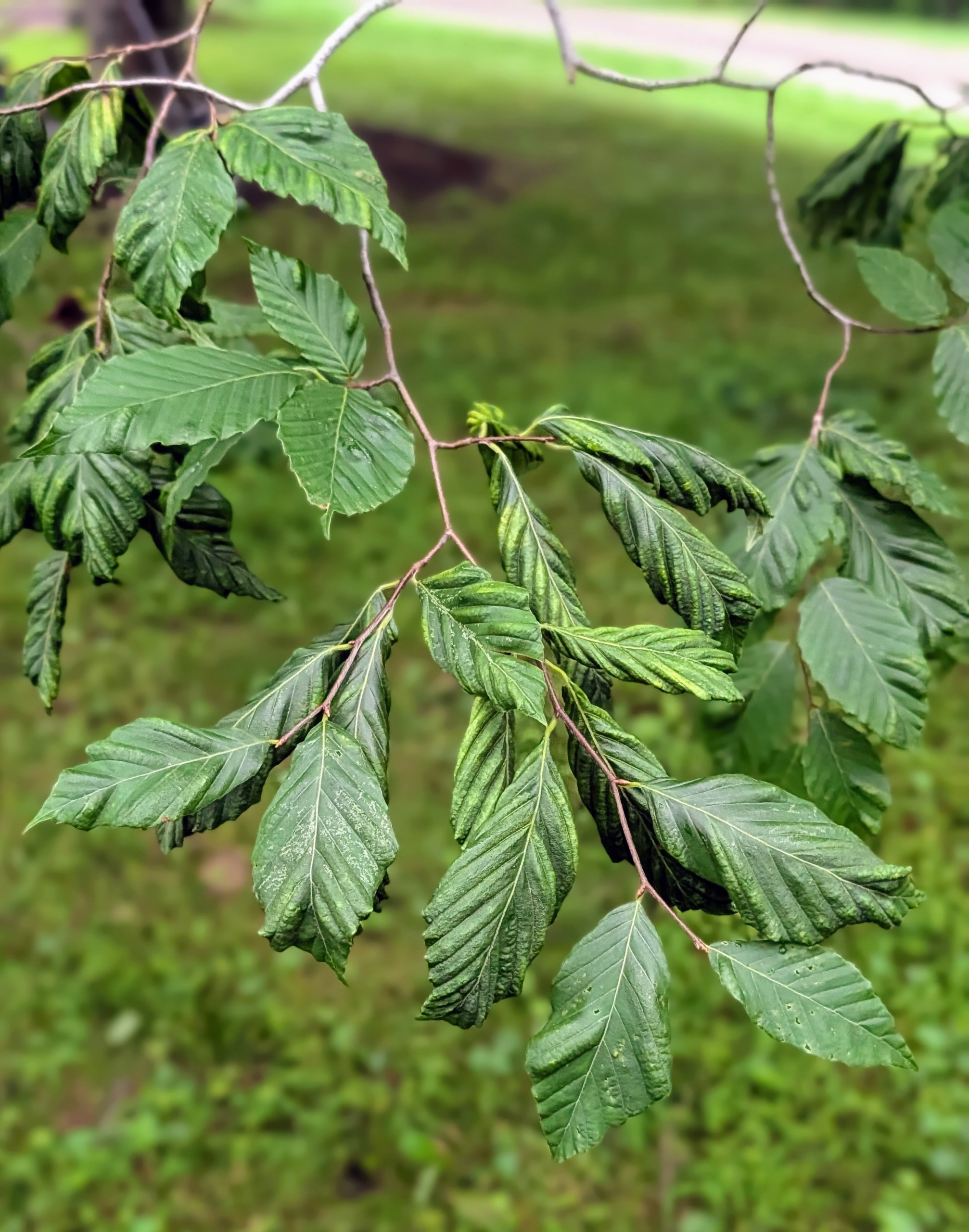
-
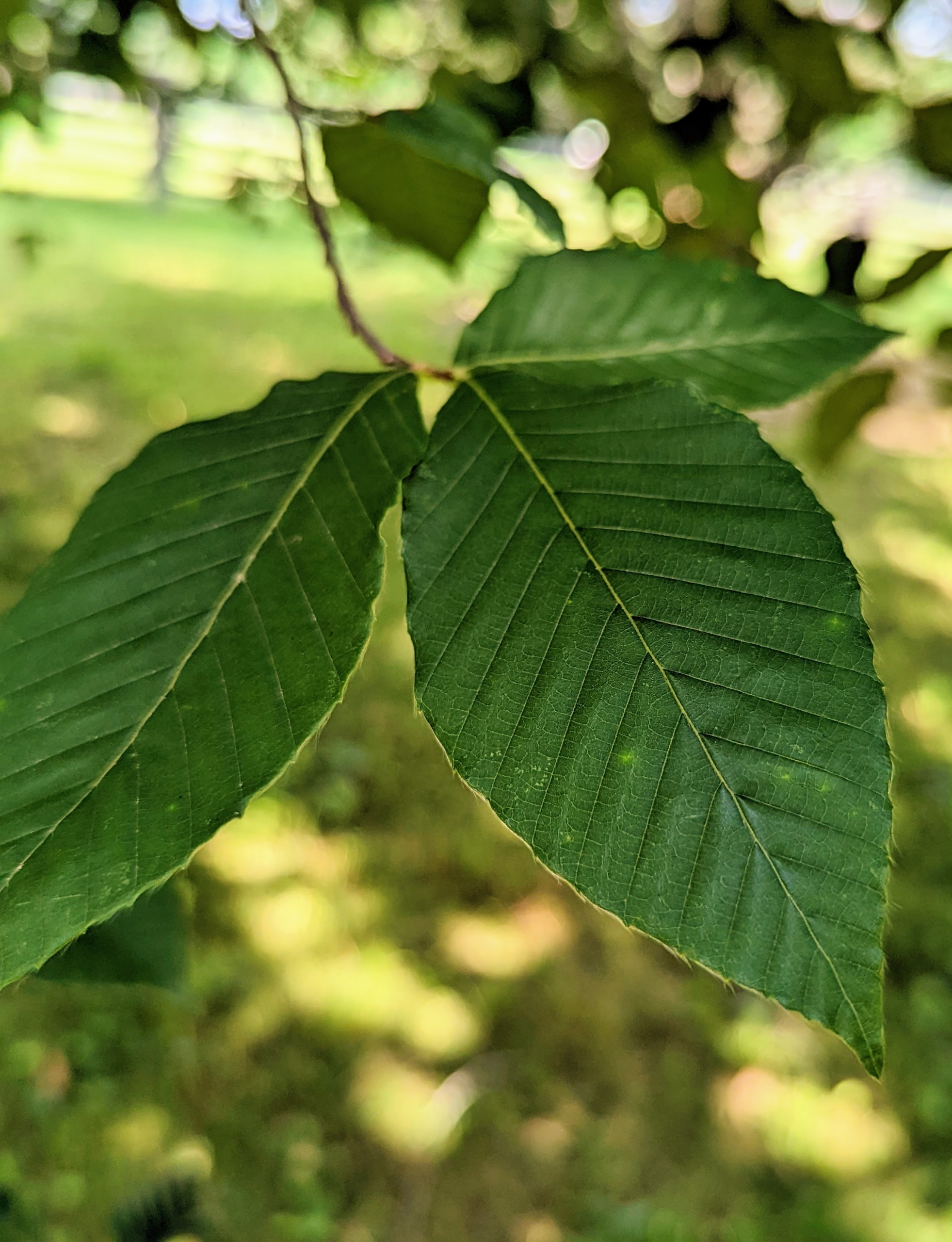
- Here is healthy new growth – the leaves are flat and glossy green.
-
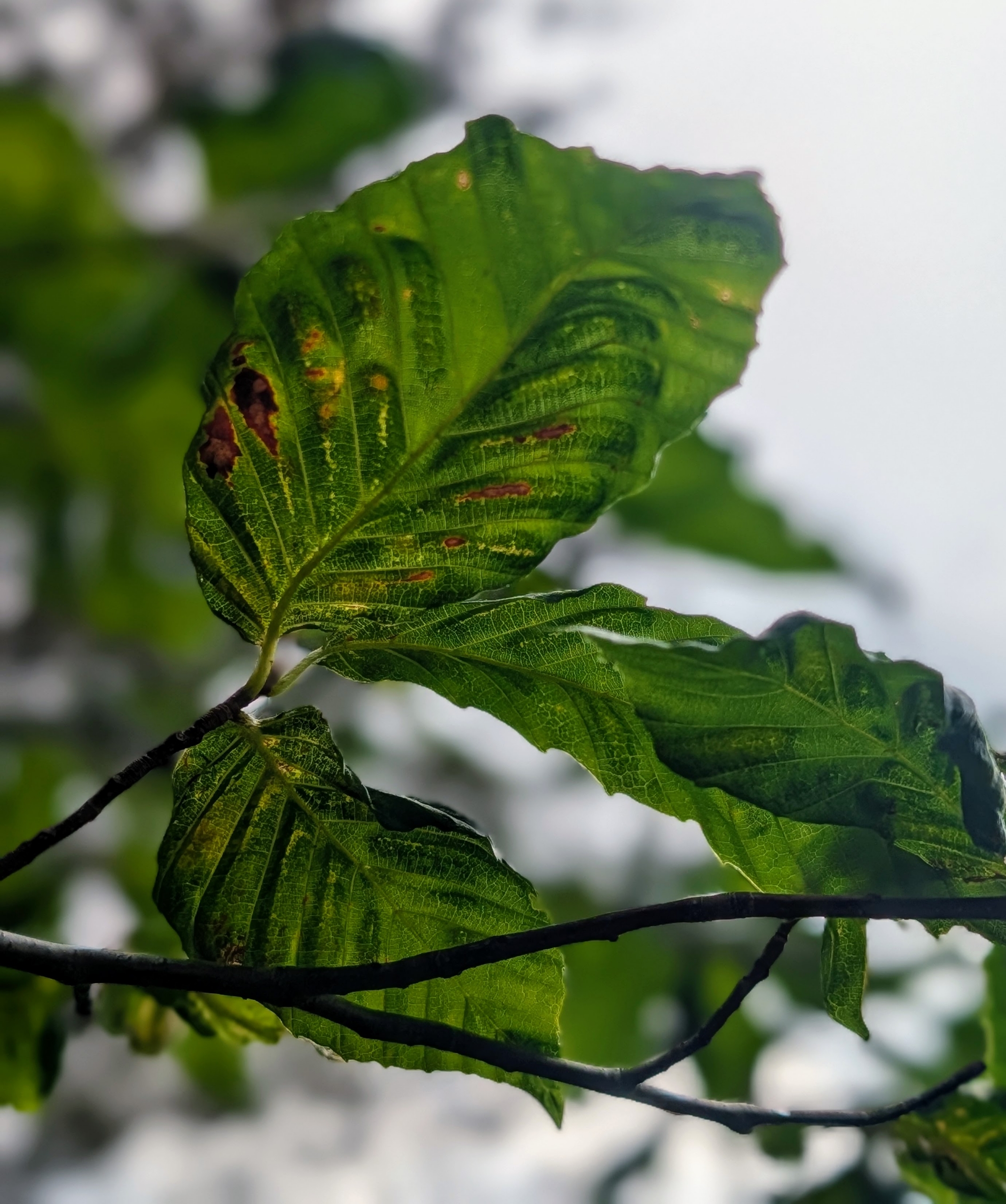
- Held up to the sunlight, diseased leaves show dark bands. It typically progresses from the lower canopy upward.
-
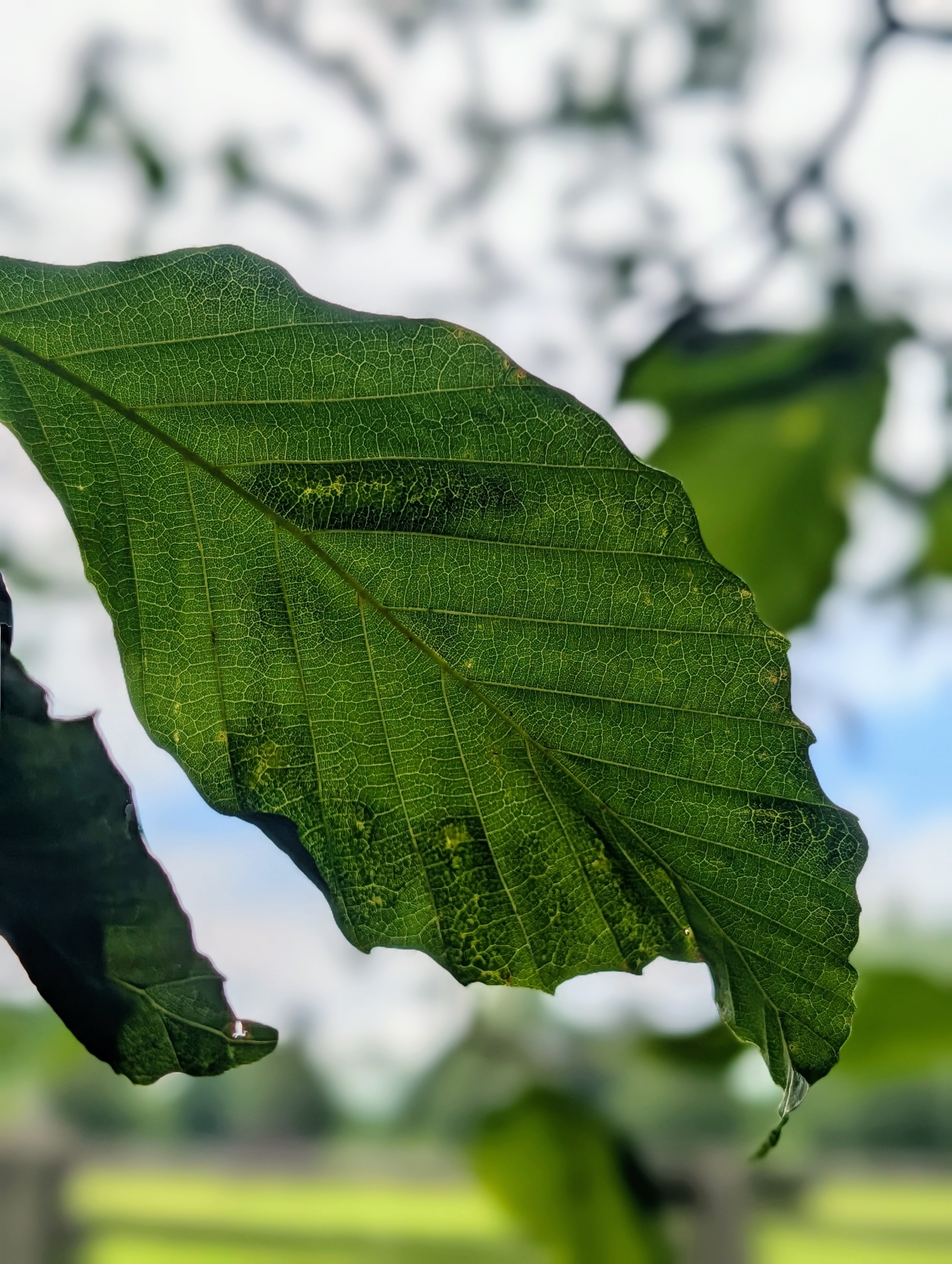
- An invasive nematode is believed to be responsible for beech leaf disease. These microscopic worms are present in the leaves and buds of infected beech trees.
-
- Bartlett Tree Experts was founded by Francis A. Bartlett in 1907 and is the world’s leading scientific tree and shrub care company with more than 125 offices worldwide. The Bartlett Tree Research Laboratories evaluates plant samples and cultures, identifies disease-causing organisms and insects, and performs complete soil analysis services.

-
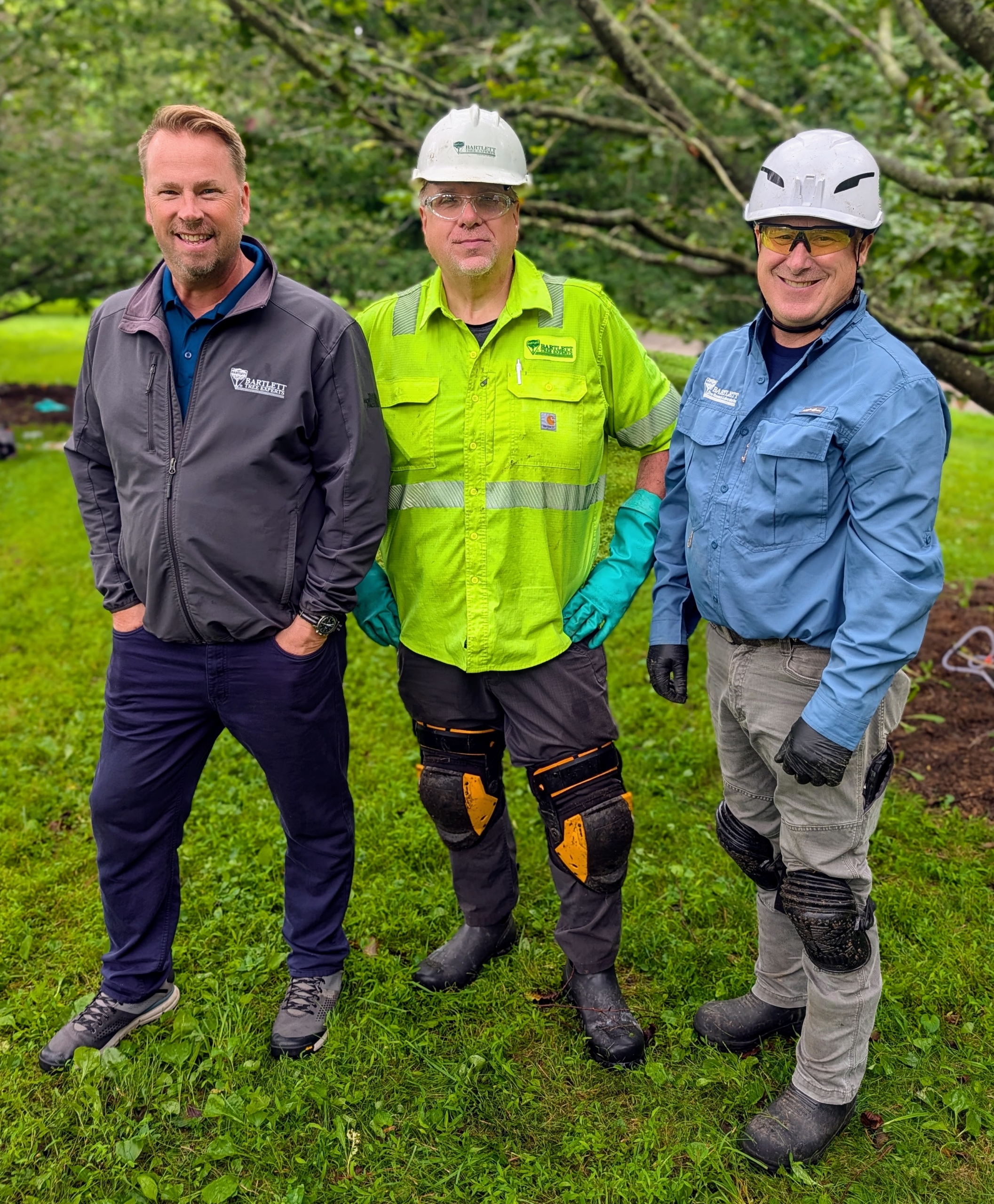
- A team of Bartlett’s expert arborists came to asses my trees and create a specific treatment program. On this day, they are ready to inject the trees.
-
- The Bartlett service truck is equipped with all the necessary solutions for treating a variety of tree issues.

-
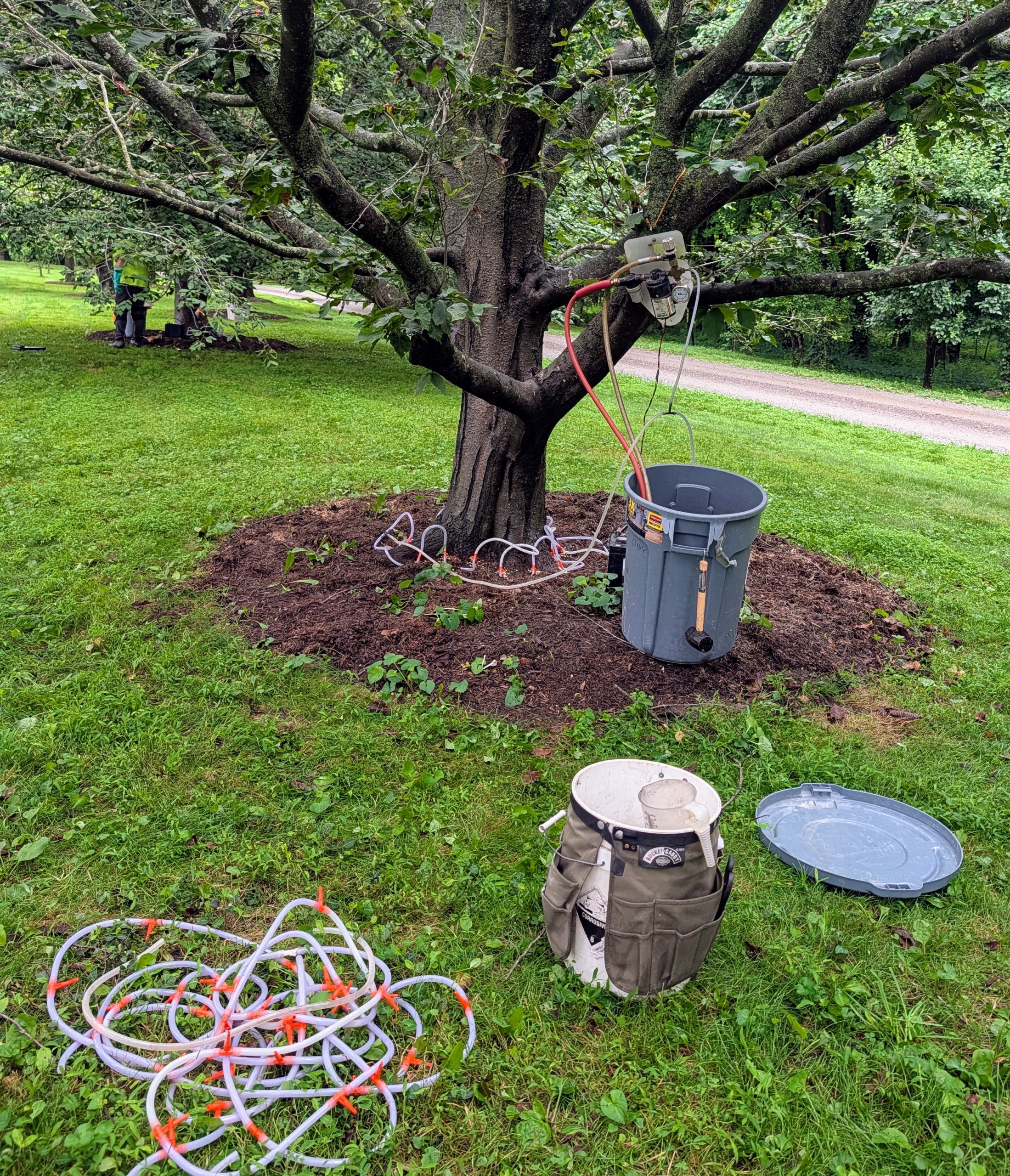
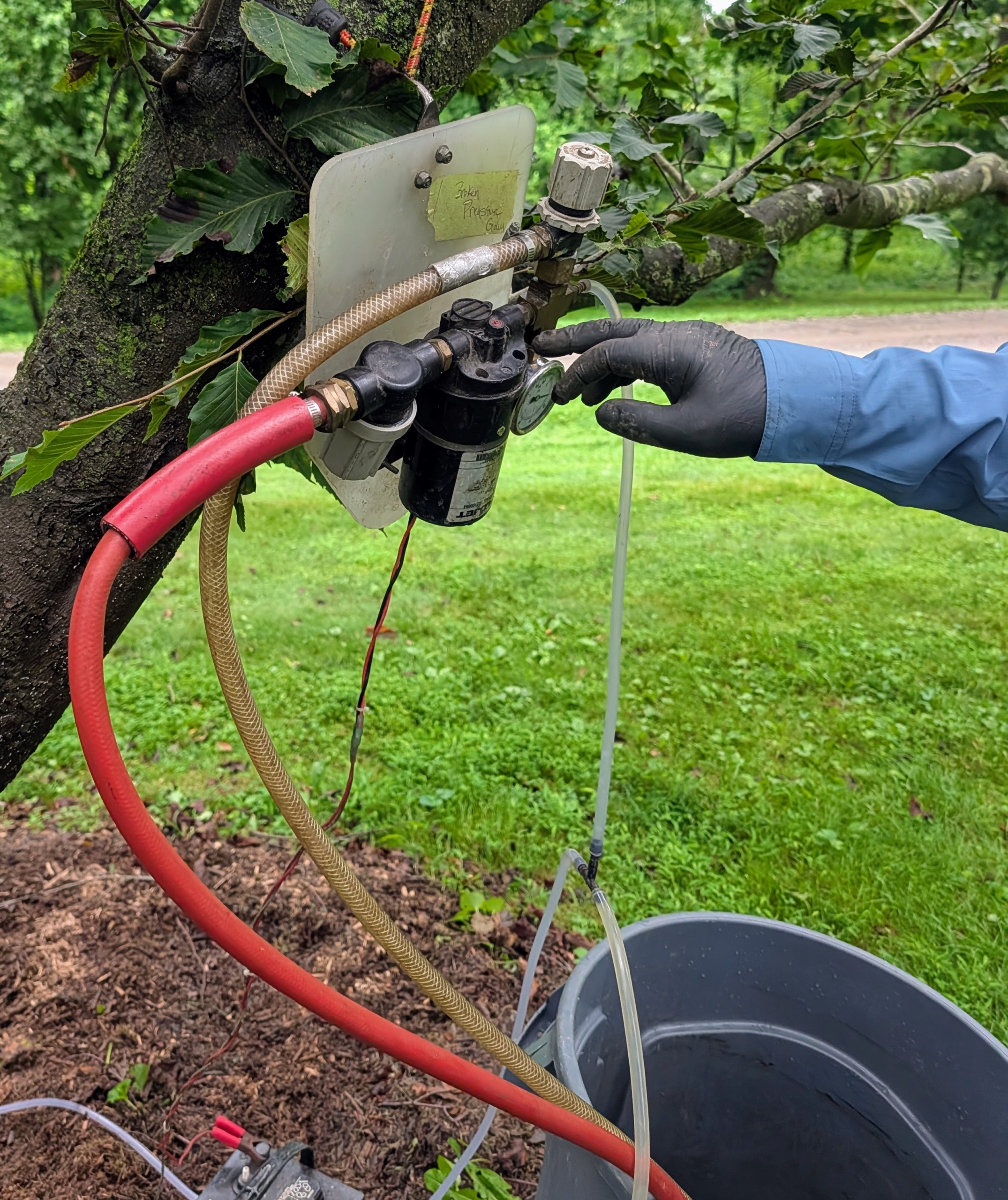
- The program utilizes a macro injection treatment plan to help reduce the foliar-feeding nematode populations and minimize migration into developing vegetative buds. Research shows that one injection application can suppress the leaf disease for at least two seasons.
-
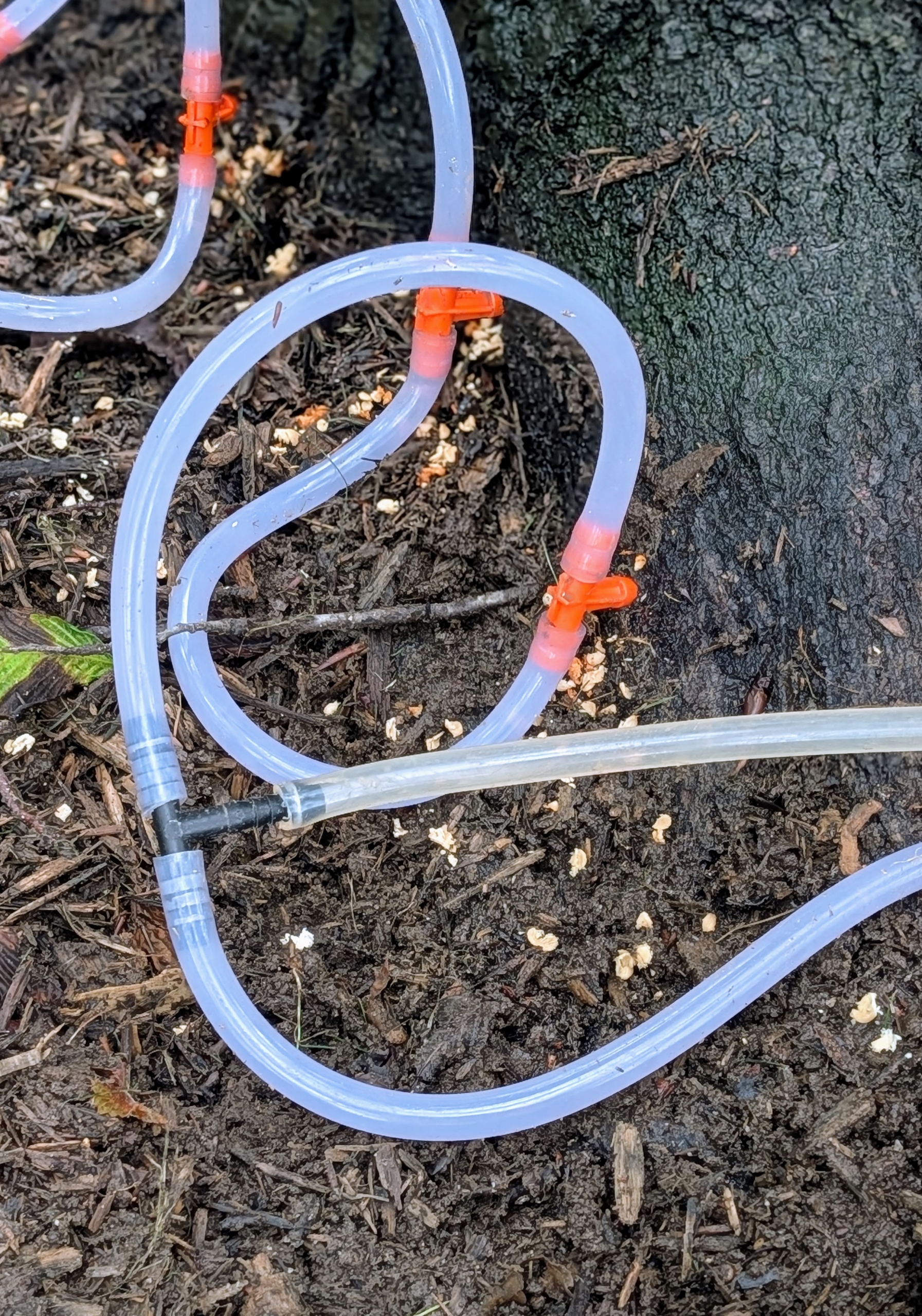
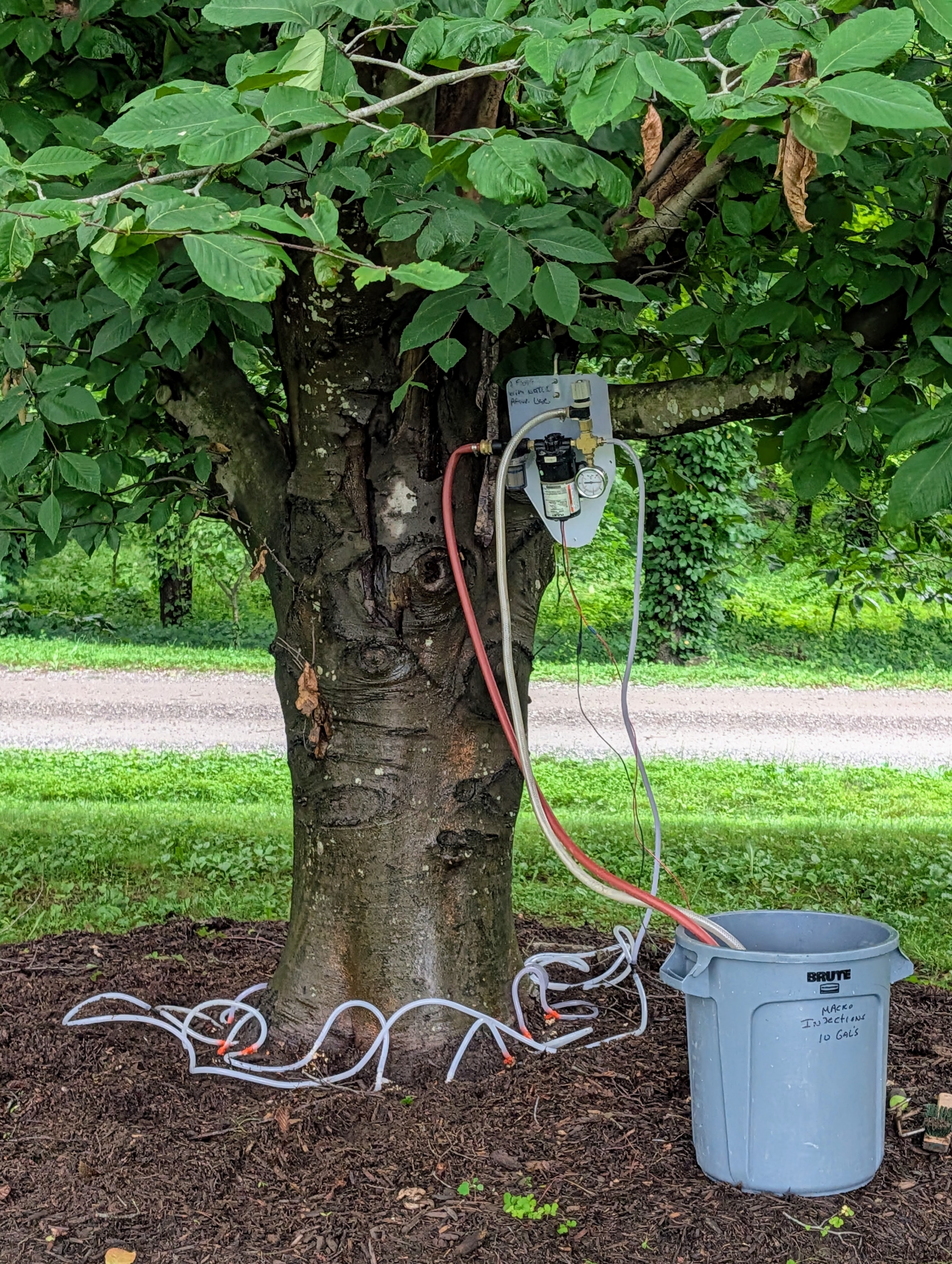
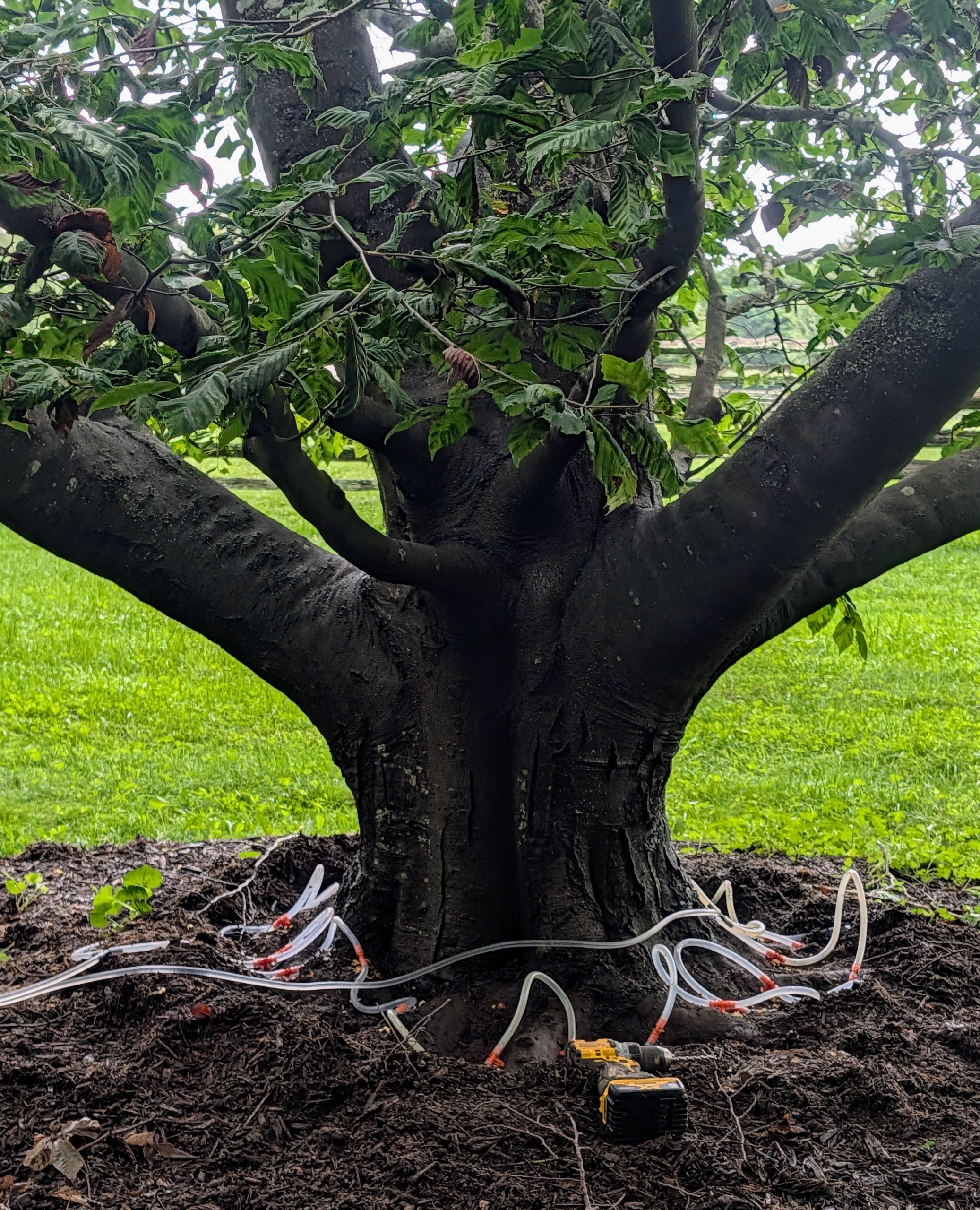
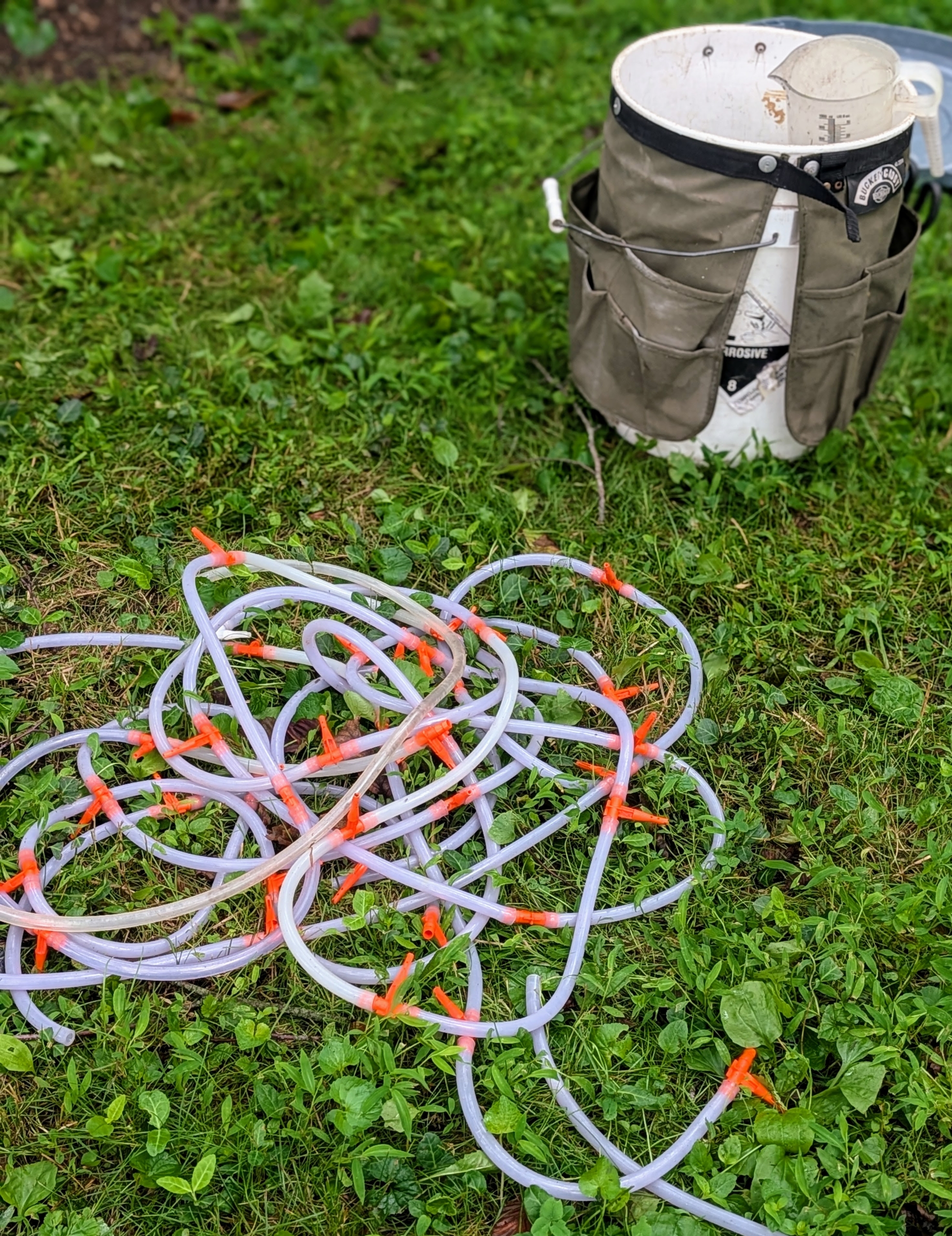
- The solution is injected into the root system through small hoses.
-
- My farm got some good rain during the week before this application, so the uptake is faster than usual – the soil is already well hydrated.
-
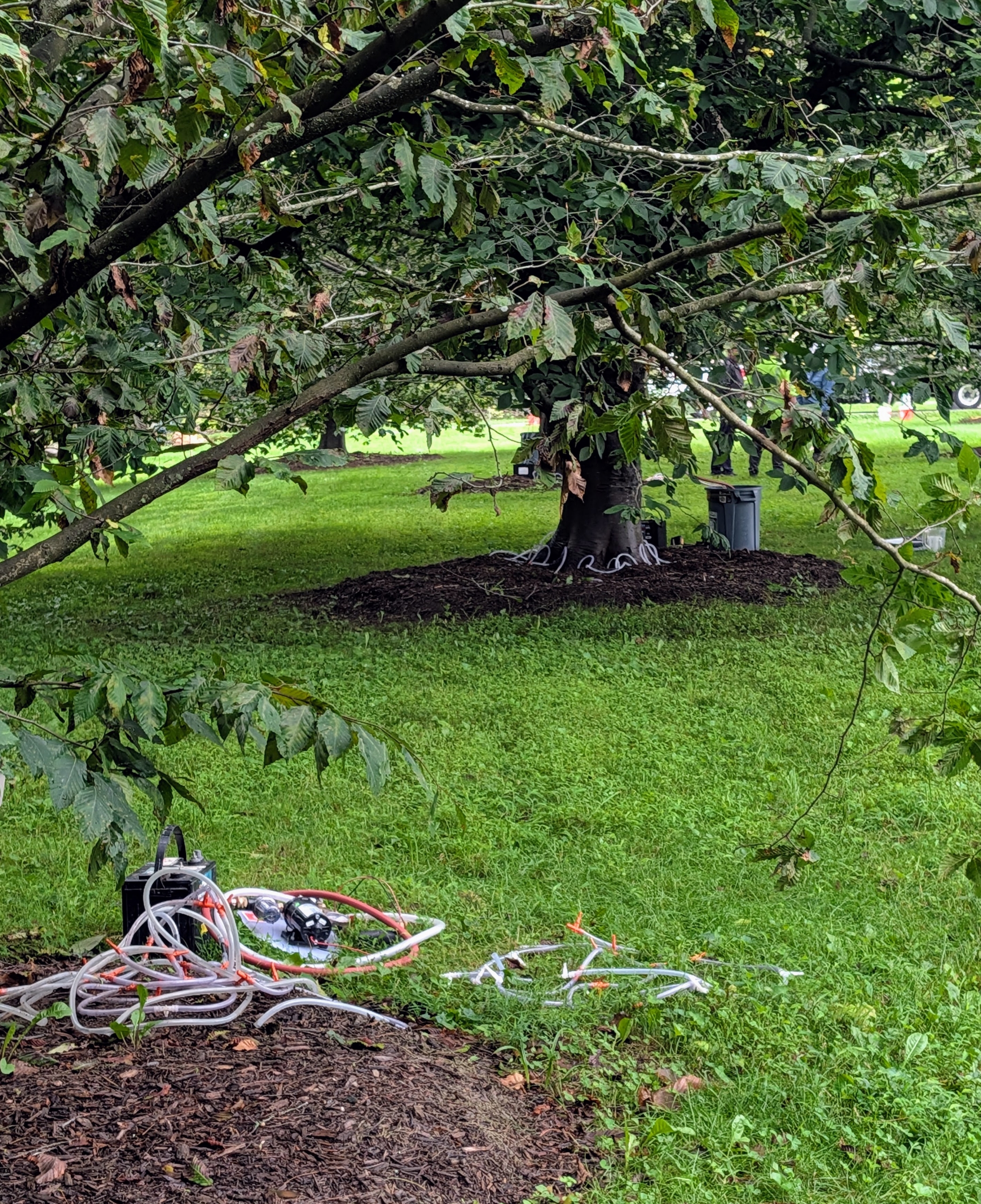
- The team is able to do several trees at once, keeping a close eye on all the systems.
-
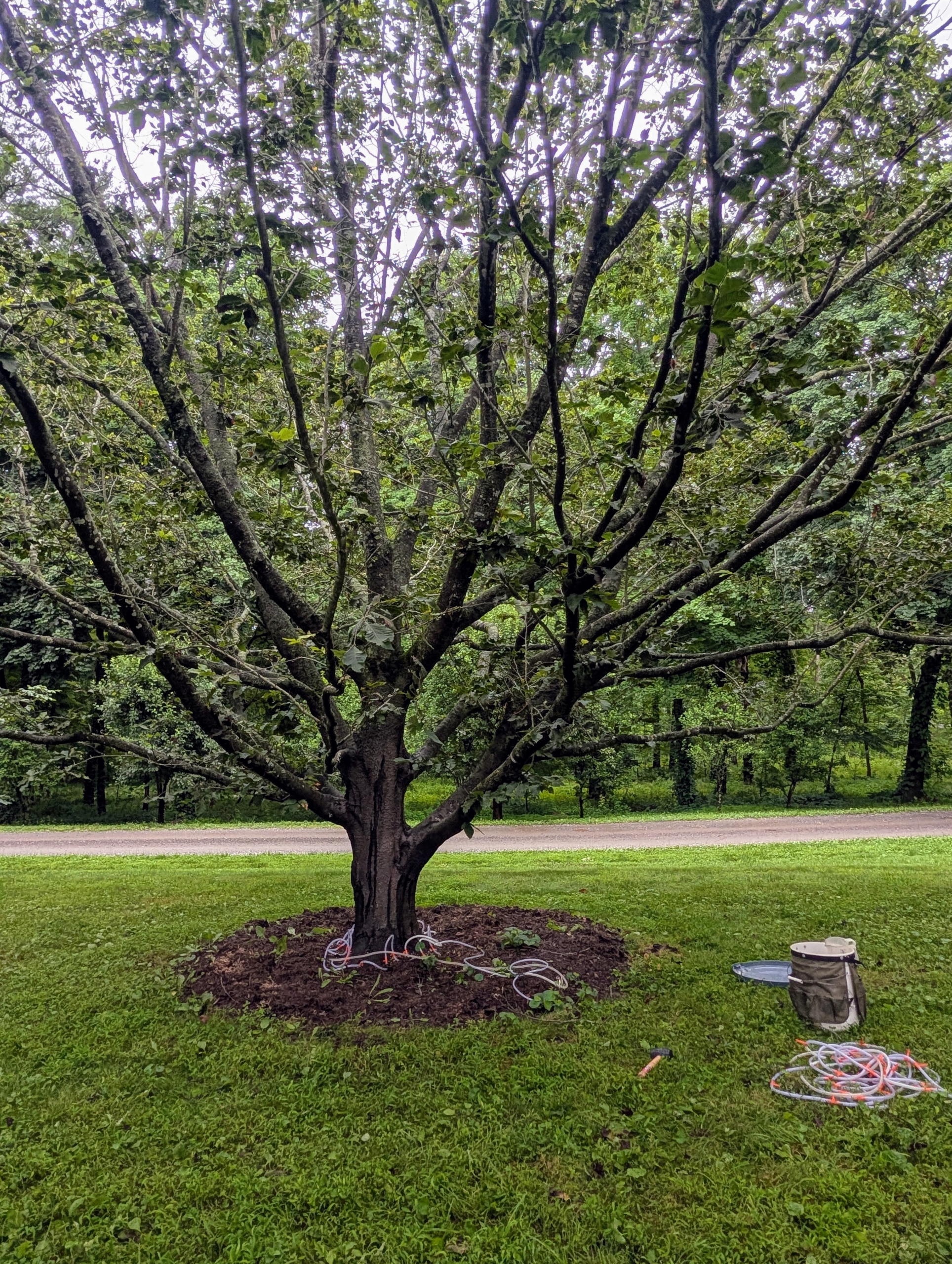
- Here is a view of a tree going through its injection treatment. This process takes about an hour per tree.
-
- And here is another tree going through the same process. The uptake distributes the solution throughout the trunk and canopy and then to the leaf structures.
-
- The injection plugs are not big. They are pushed into the soil less than an inch deep.
-
- And program timing is crucial to catch the nematodes at the best stage of life development for significant suppression. It’s important to use the macro root flare injection program by mid-summer. If timing is missed, it’s advised to wait until the following season.
-
- I do my very best to take care of all my trees – feeding them regularly and providing nutrient-rich soil. I’m hopeful this, along with the Bartlett macro root flare injection program, will help my affected beech trees heal and thrive here at the farm. If you’re unsure about the beech trees in your yard, look for the Bartlett Tree Experts.
 Martha Pins


 Martha Tweets

