
Supporting My Garden Dahlias
Bright, beautiful dahlias are beginning to bloom in my garden.
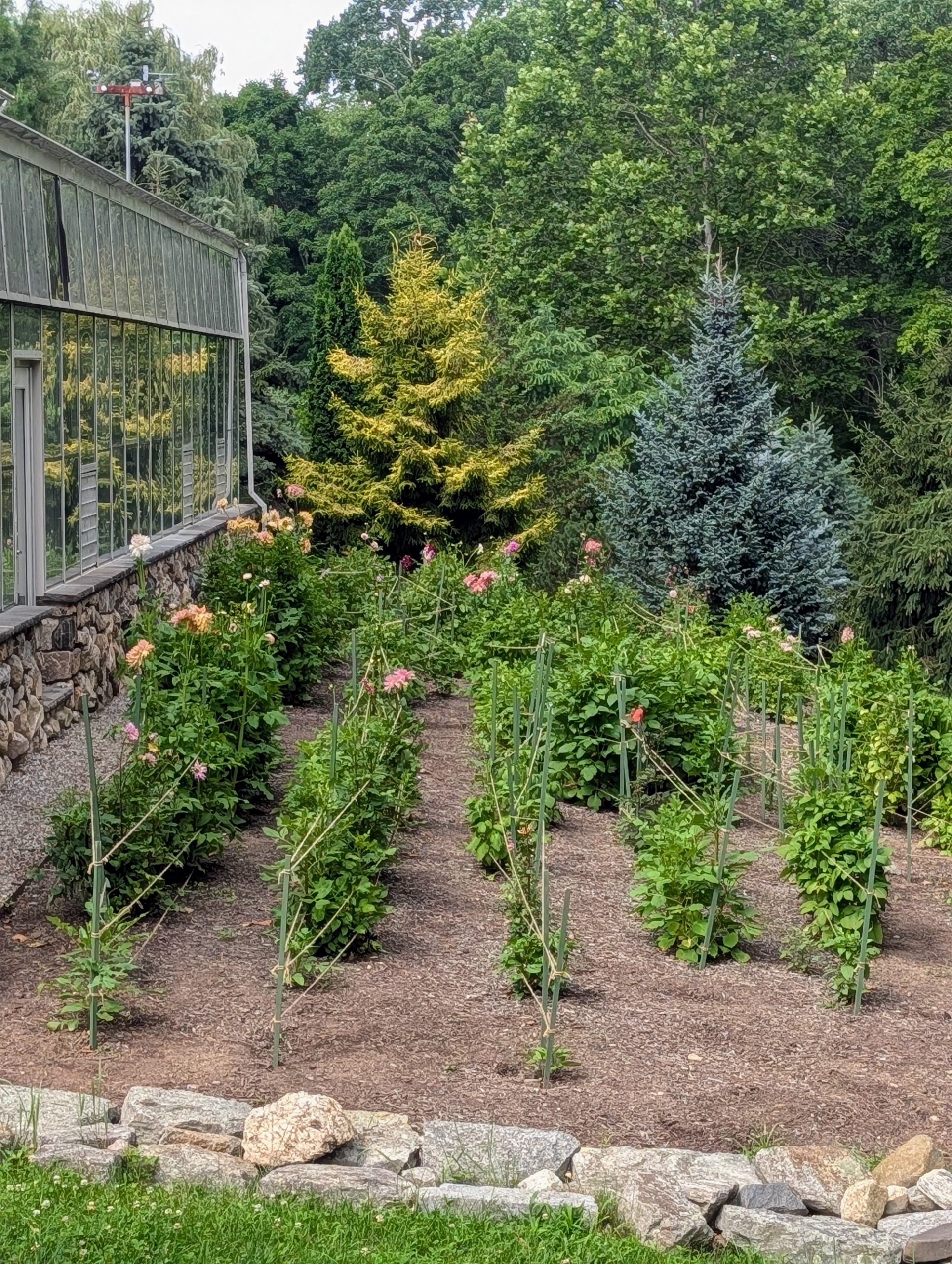
Dahlias start to come into their own around this time, producing an abundance of spectacular blooms that continue until the first frost. My dahlia garden is tucked behind my vegetable greenhouse, where the plants are exposed to full sun and shelter from strong winds. However, as the plants grow taller, their hollow stems need support to keep the blossoms upright. My crew carefully stakes the plants every year using wood and jute twine, ensuring the flowers remain strong, healthy, and beautiful throughout the season.
Here are some photos, enjoy.
-

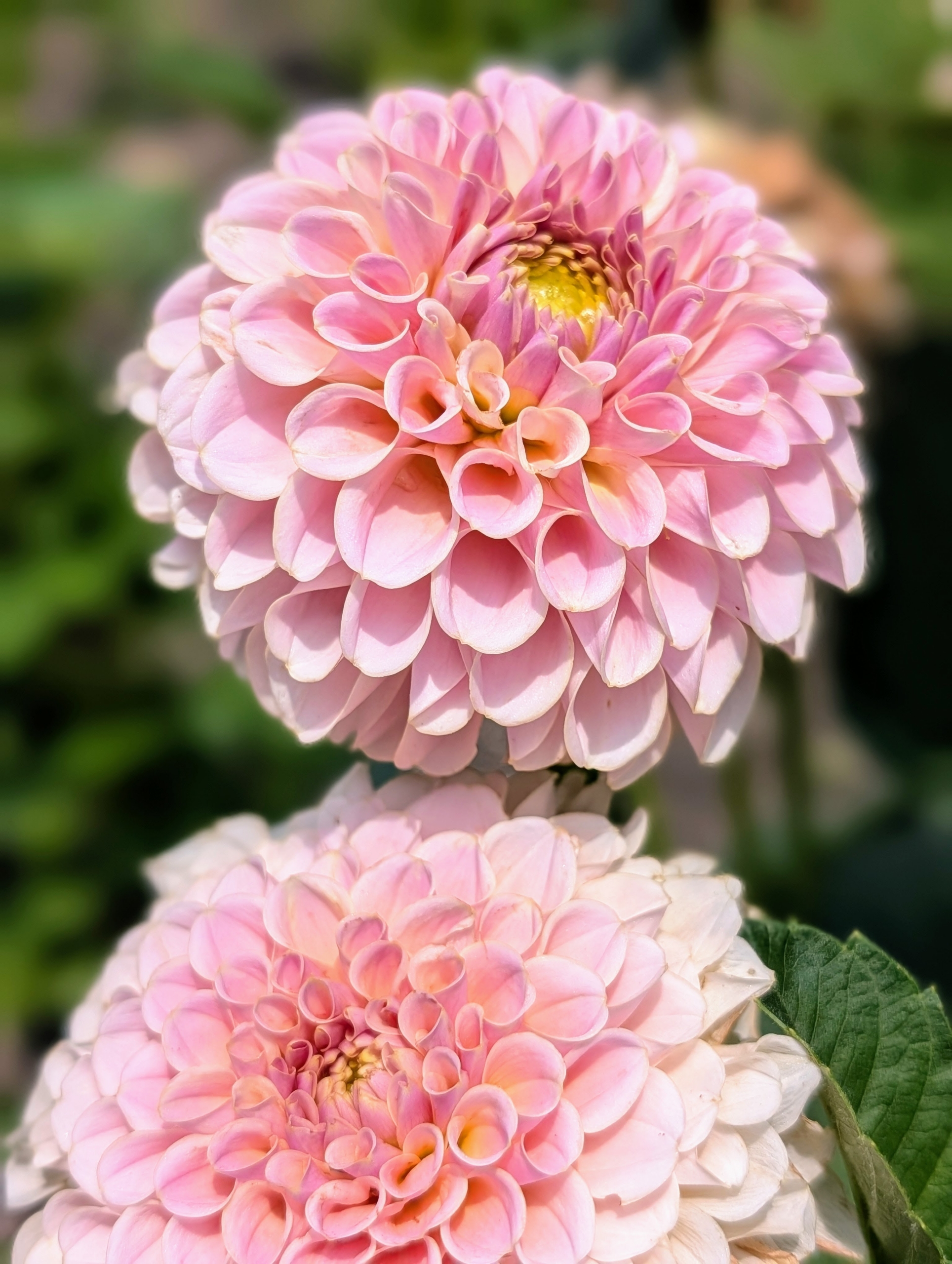
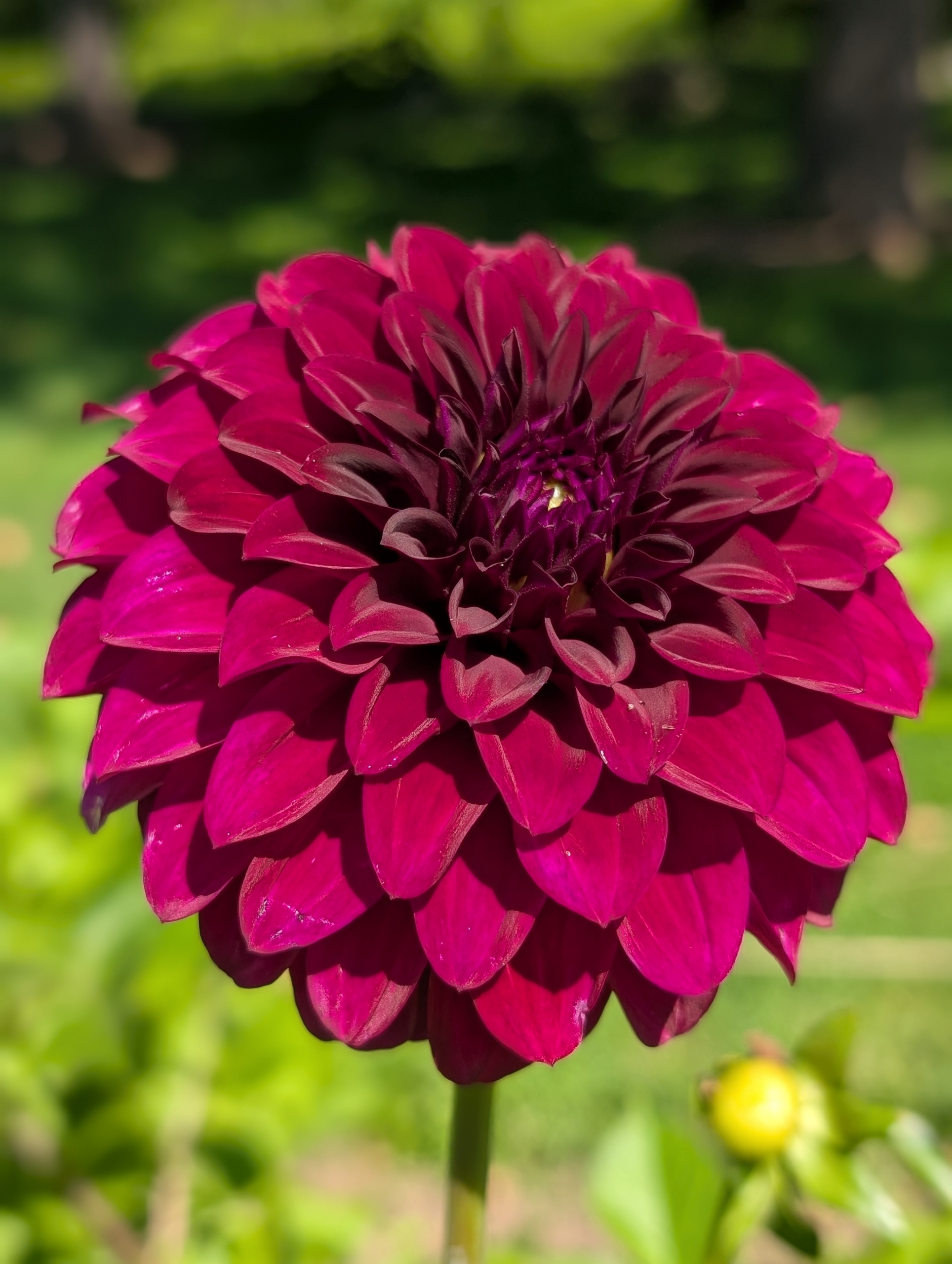
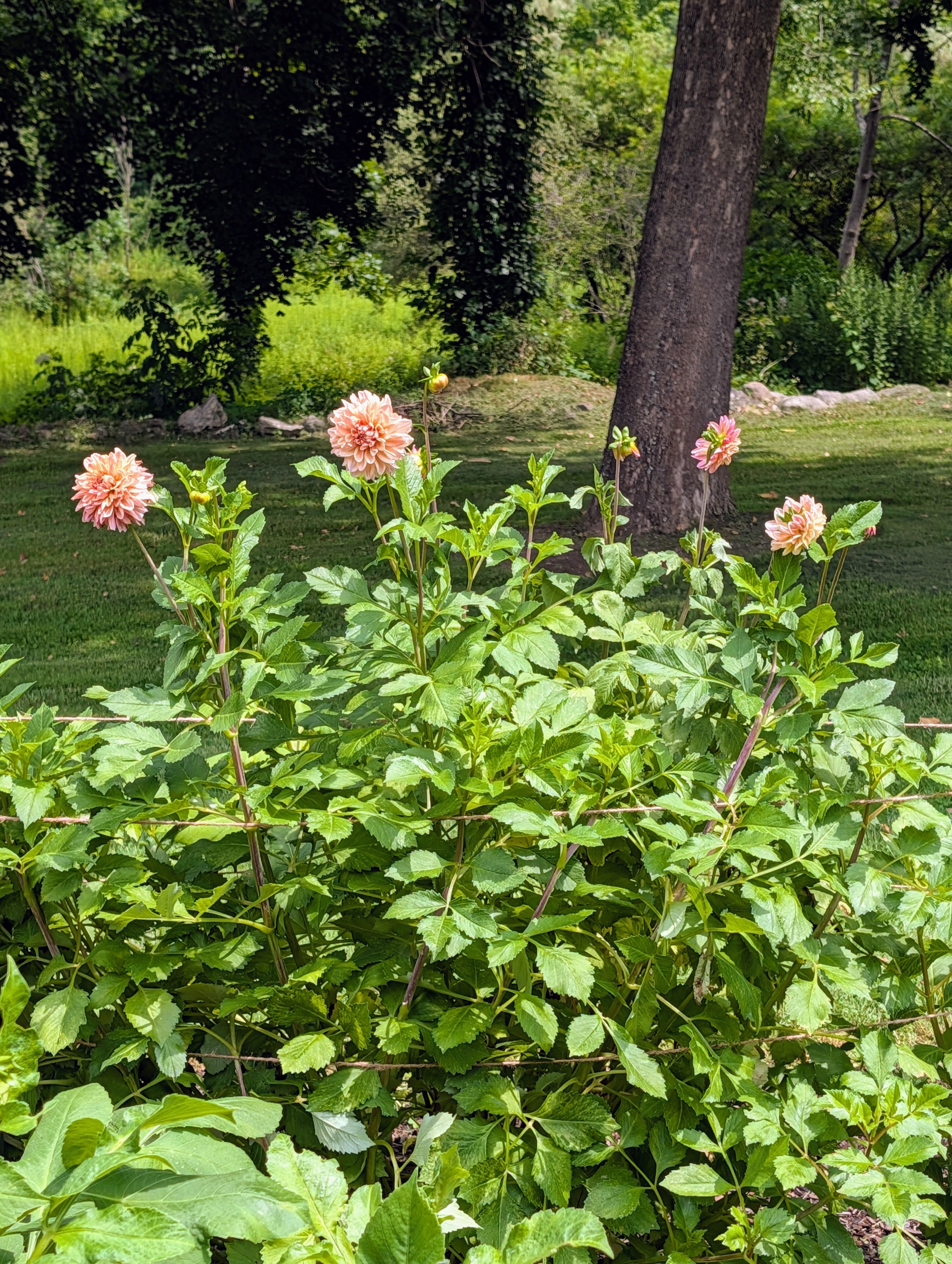
- Well-maintained plants will never disappoint -here are two of the first dahlias to bloom this season. Dahlias grow more blooms when they get at least six to eight hours of direct sunlight per day.
-
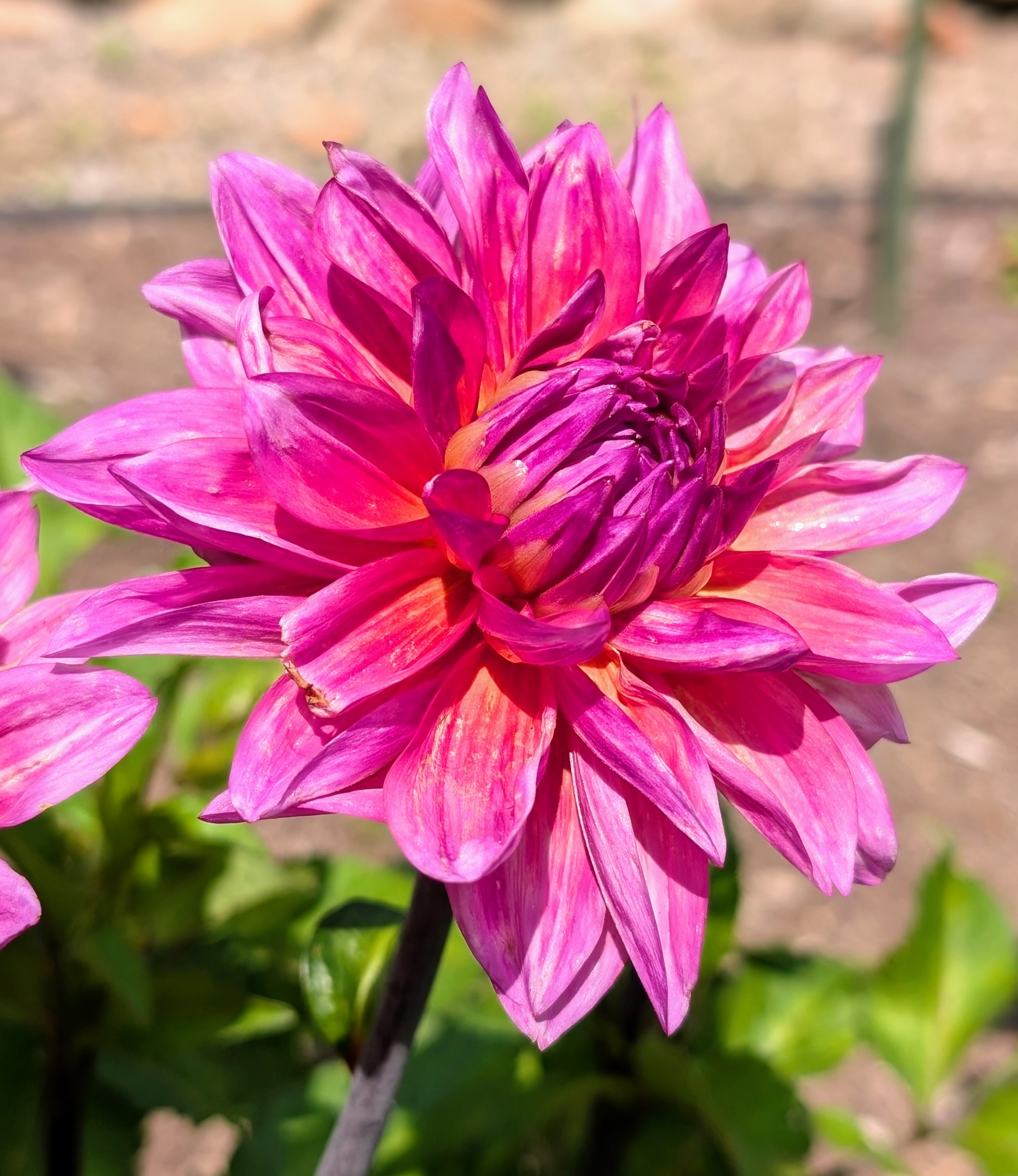
- Currently, there are more than 40 species of dahlia, with hybrids commonly grown as garden plants. A member of the Asteraceae family of dicotyledonous plants, some of its relatives include the sunflower, daisy, chrysanthemum, and zinnia.
-
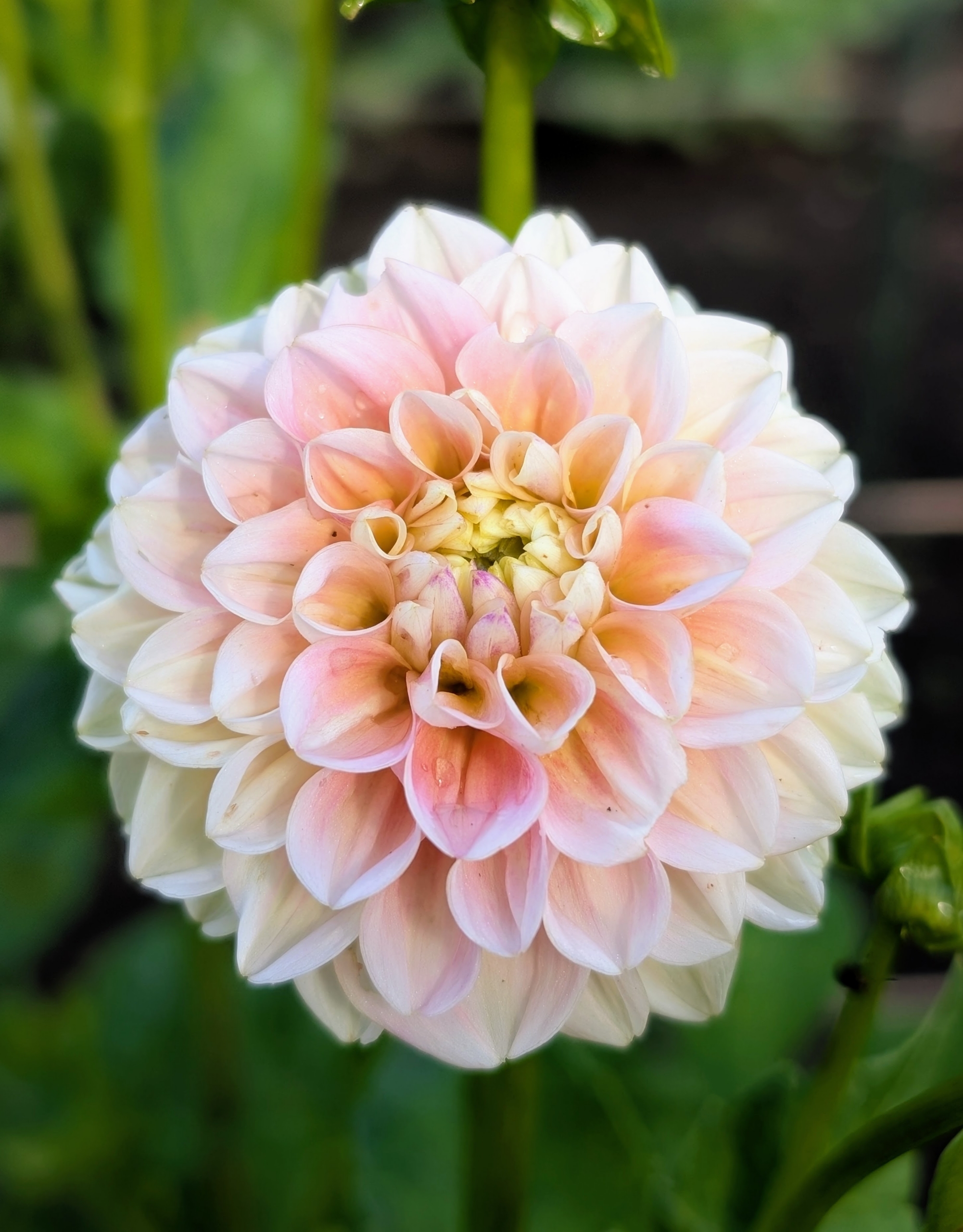
- The majority of dahlia species do not produce scented flowers or cultivars, but they are brightly colored to attract pollinating insects.
-
- The genus Dahlia is native to the high plains of Mexico. Some species can be found in Guatemala, Honduras, Nicaragua, El Salvador, and Costa Rica as well as parts of South America where it was introduced.
-
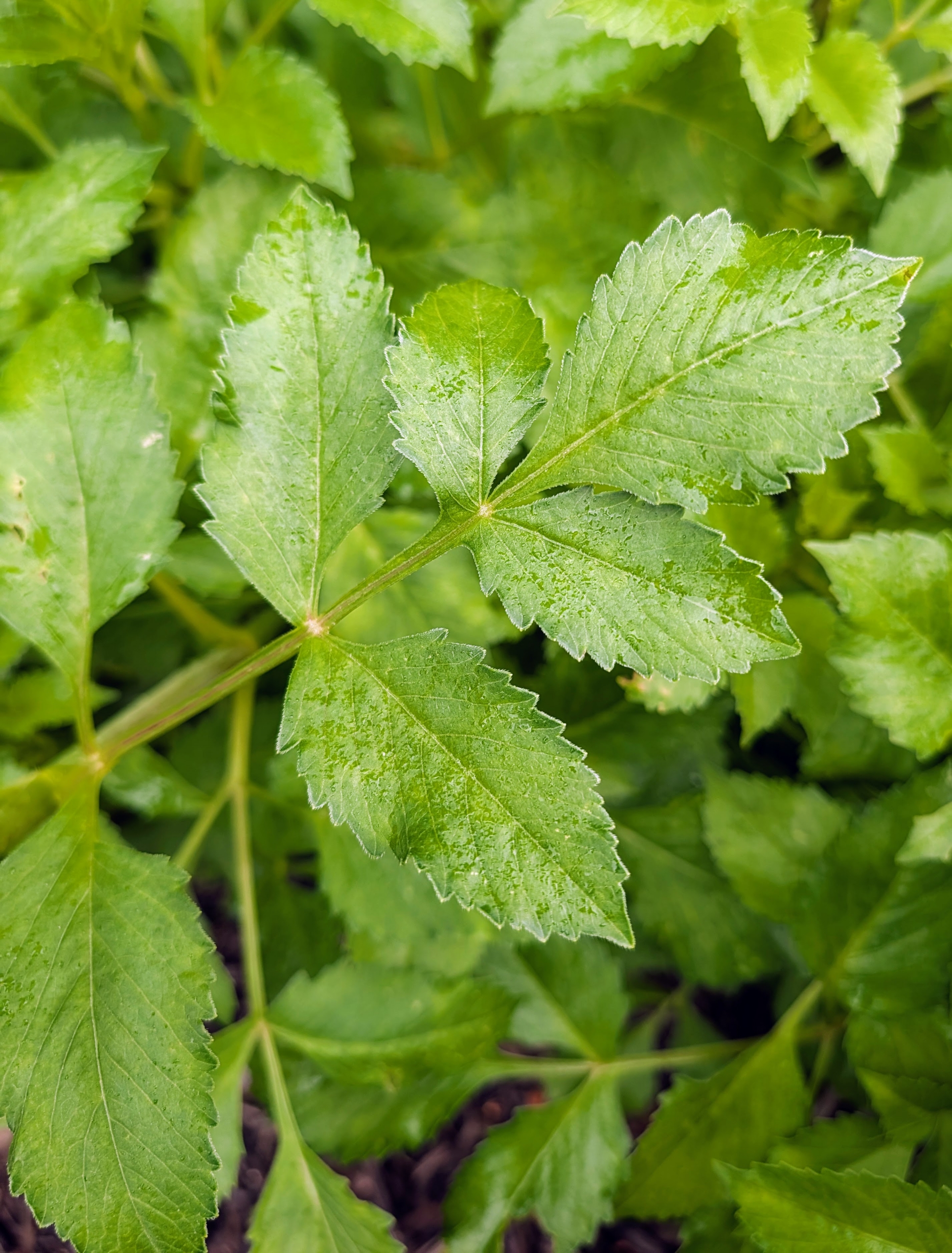
- Dahlia leaves are divided into leaflets that range from ovate and oblong to lanceolate in shape. Their margins may be lobed or toothed. Depending on the variety, the foliage can be green, reddish-purple, or nearly black-purple.
-
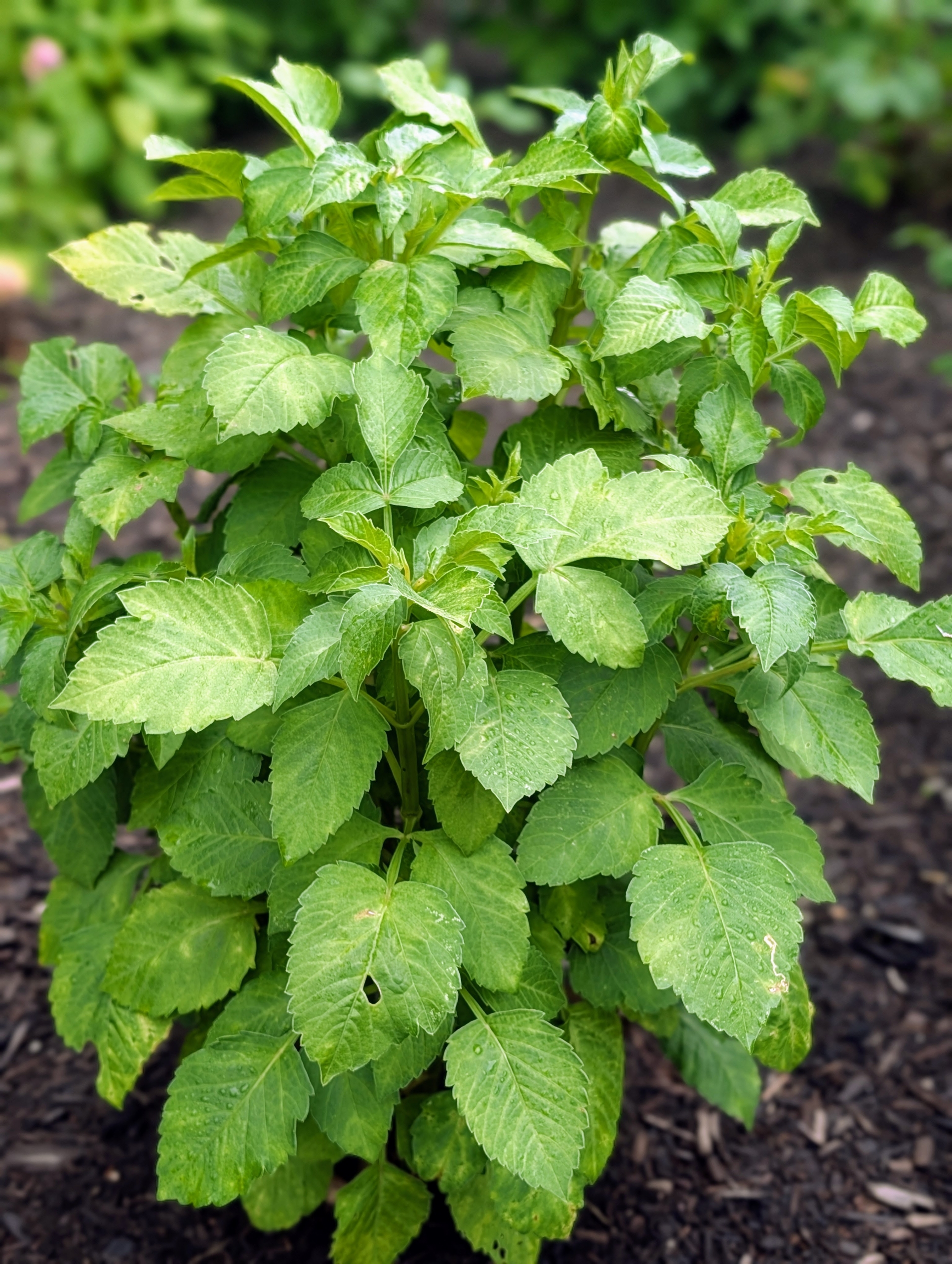
- Most of these dahlia plants are about knee to waist high already – some even taller. It’s important to make sure they are properly supported as they grow, especially those that produce larger, heavier blooms.
-
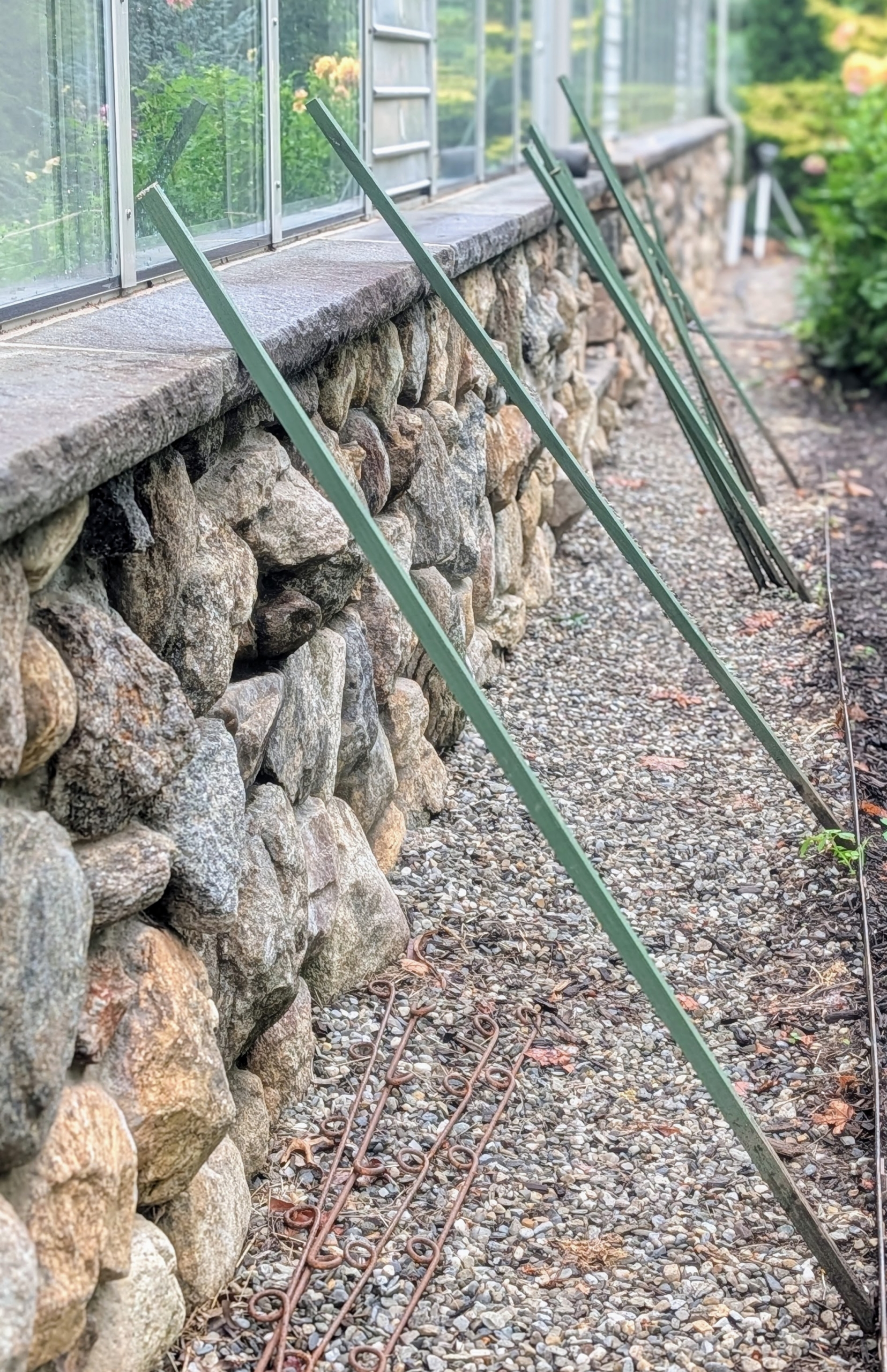
- Matthew starts by placing stakes along the garden edge, so they are ready to access and install.
-
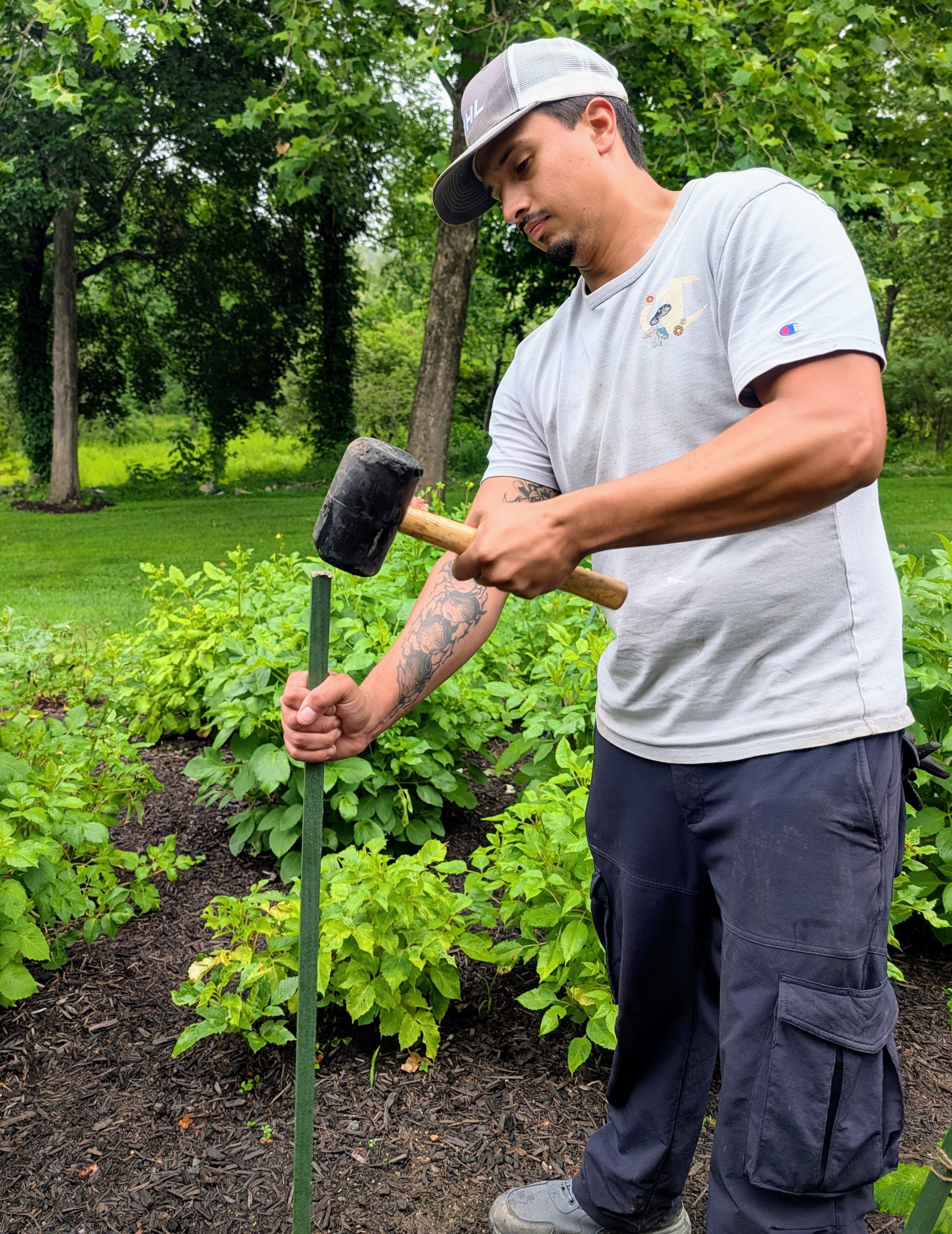
- Then he pounds in strong stakes one by one about a foot deep along the plant rows.
-
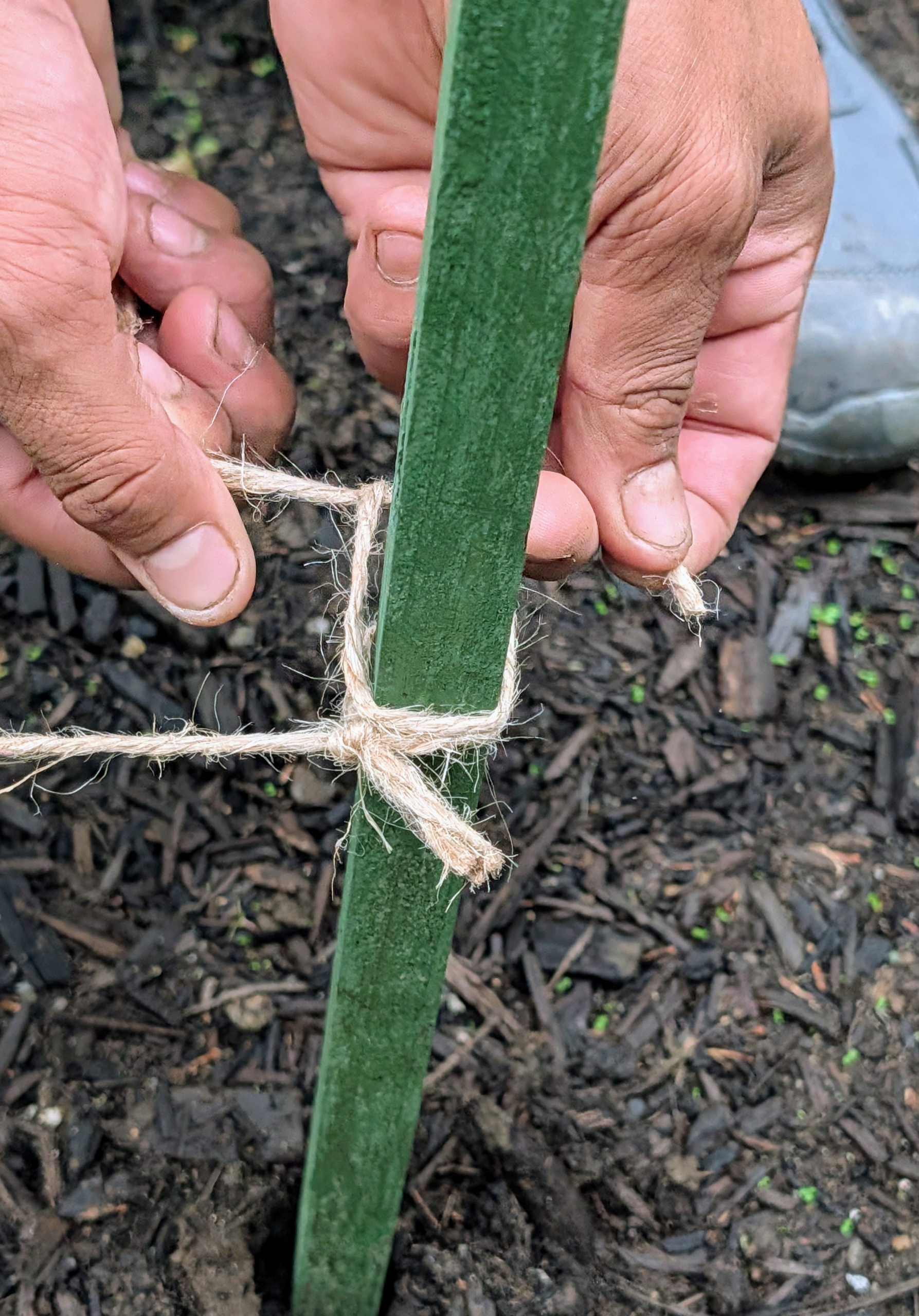
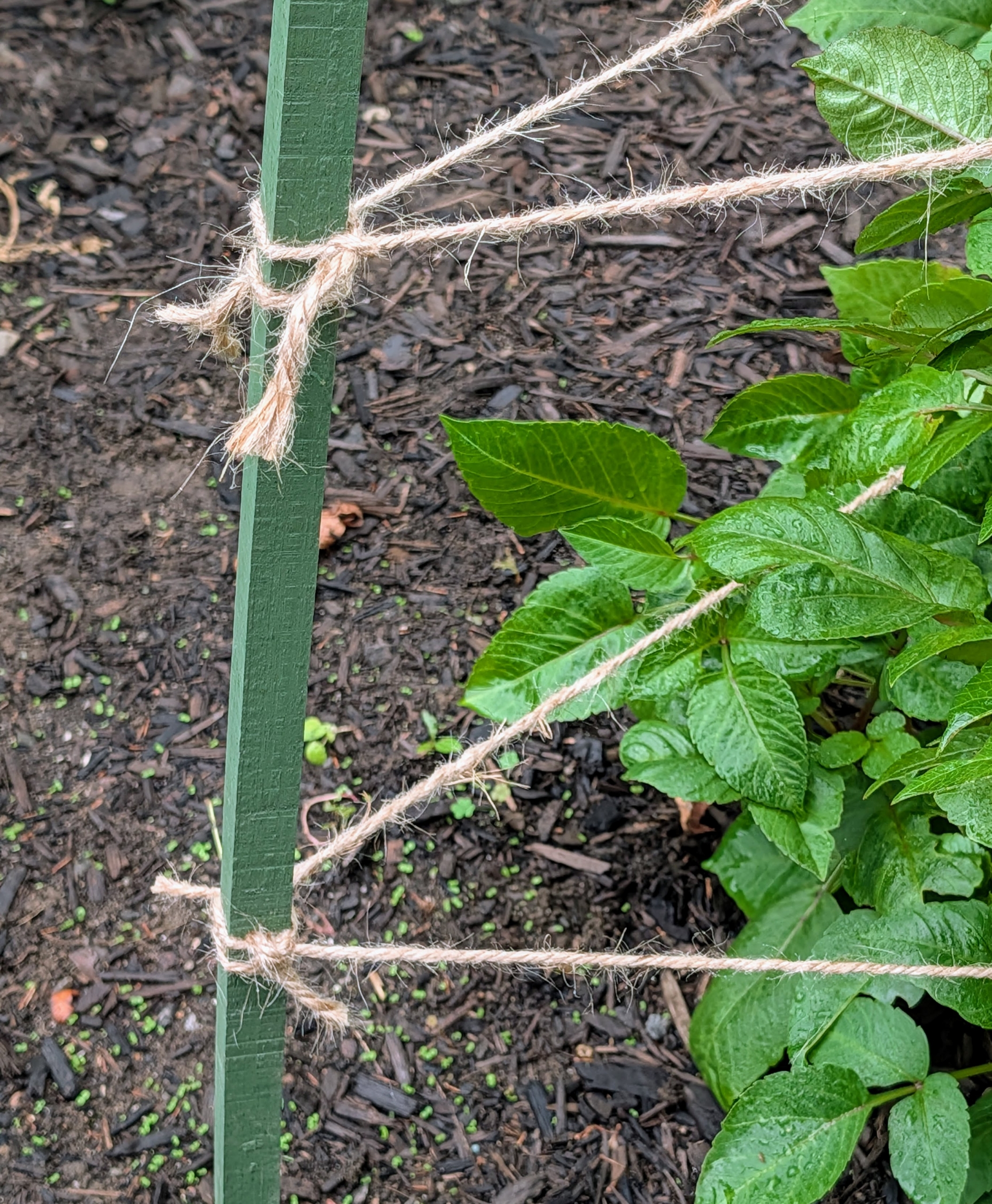
- Matthew secures a lower length of twine on the stake making a gap in between two strands for the plant stems.
-
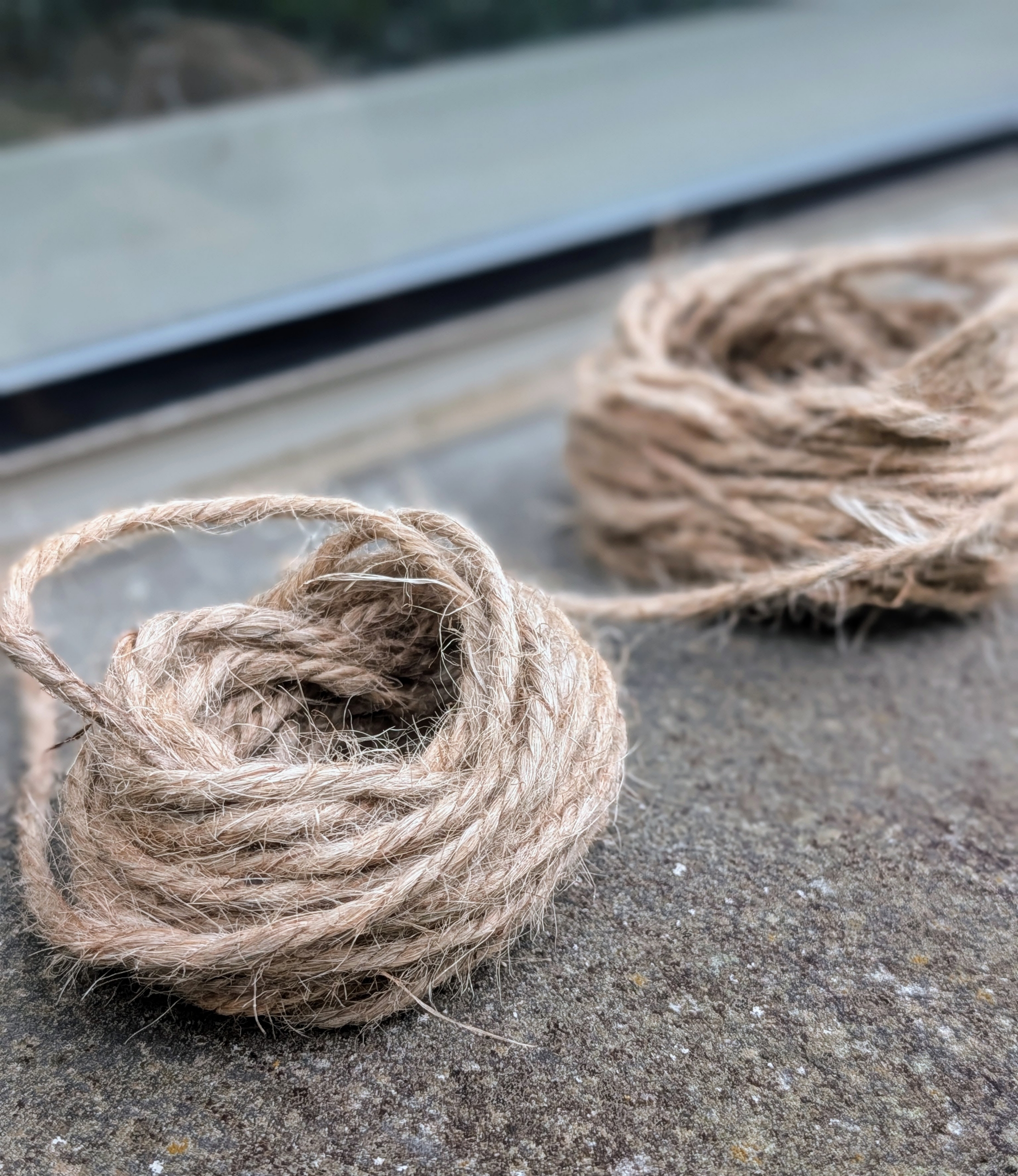
- Jute twine is a good choice for staking plants because it combines softness, strength, and biodegradability while being environmentally friendly. I use jute twine for many garden projects around the farm.
-
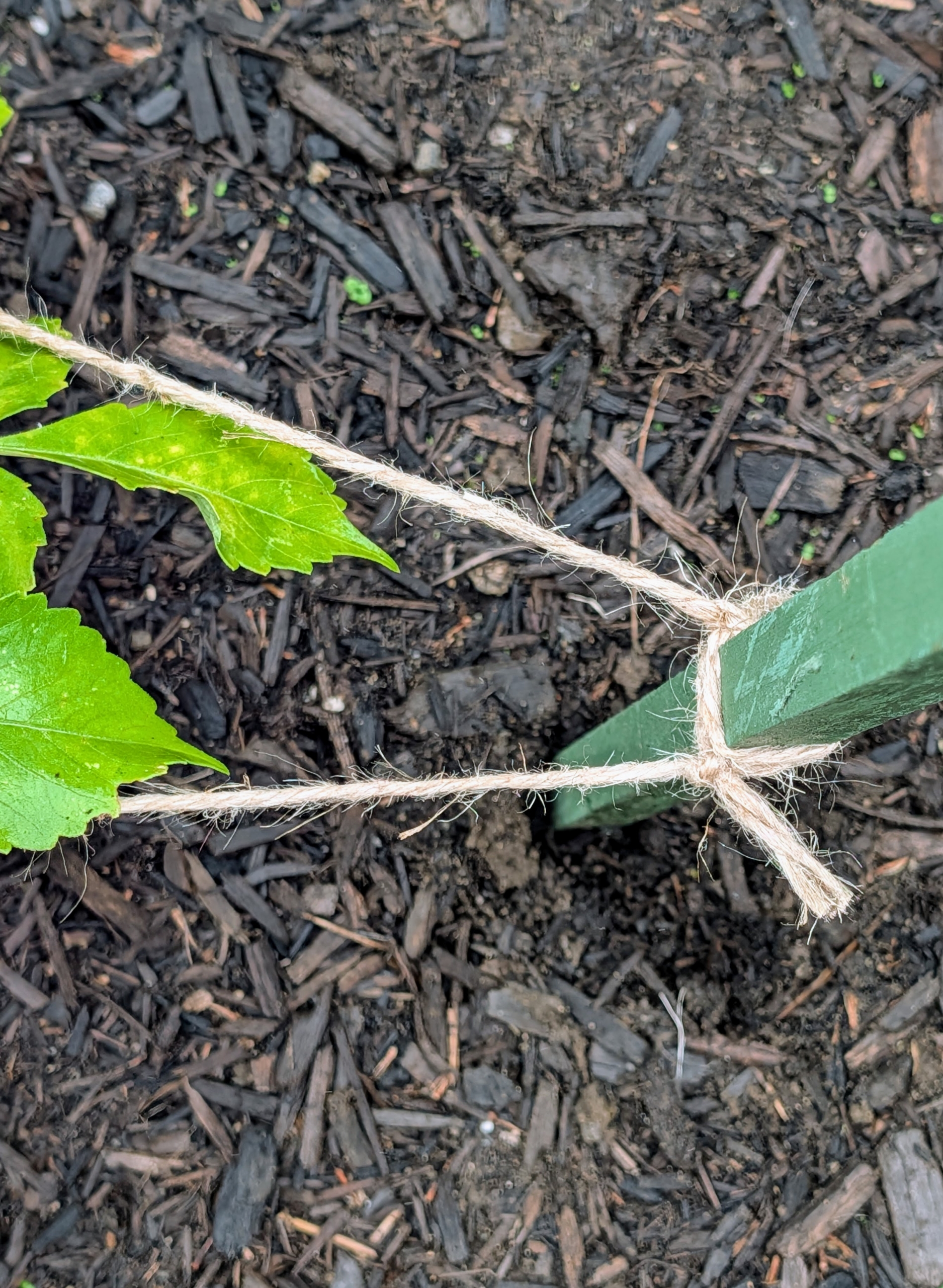
- This is what it looks like from above. It’s ideal to have the gap in between the strands, so stems are not crushed.
-
- Matthew secures another length of twine about a foot and a half higher on the stake. This gives growing plants support from two places.
-
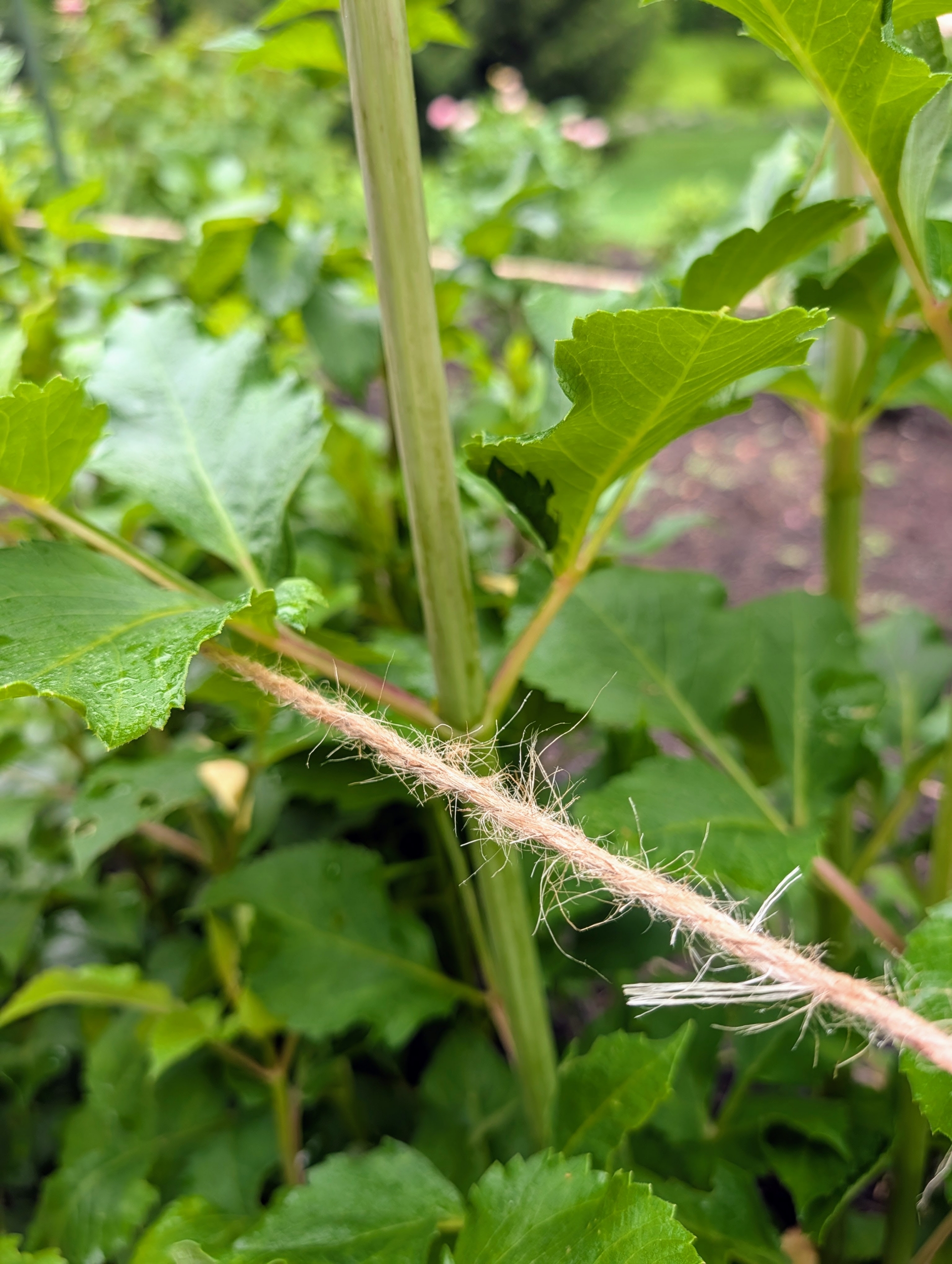
- The twine is positioned to gently hold the stems up as they lean.
-
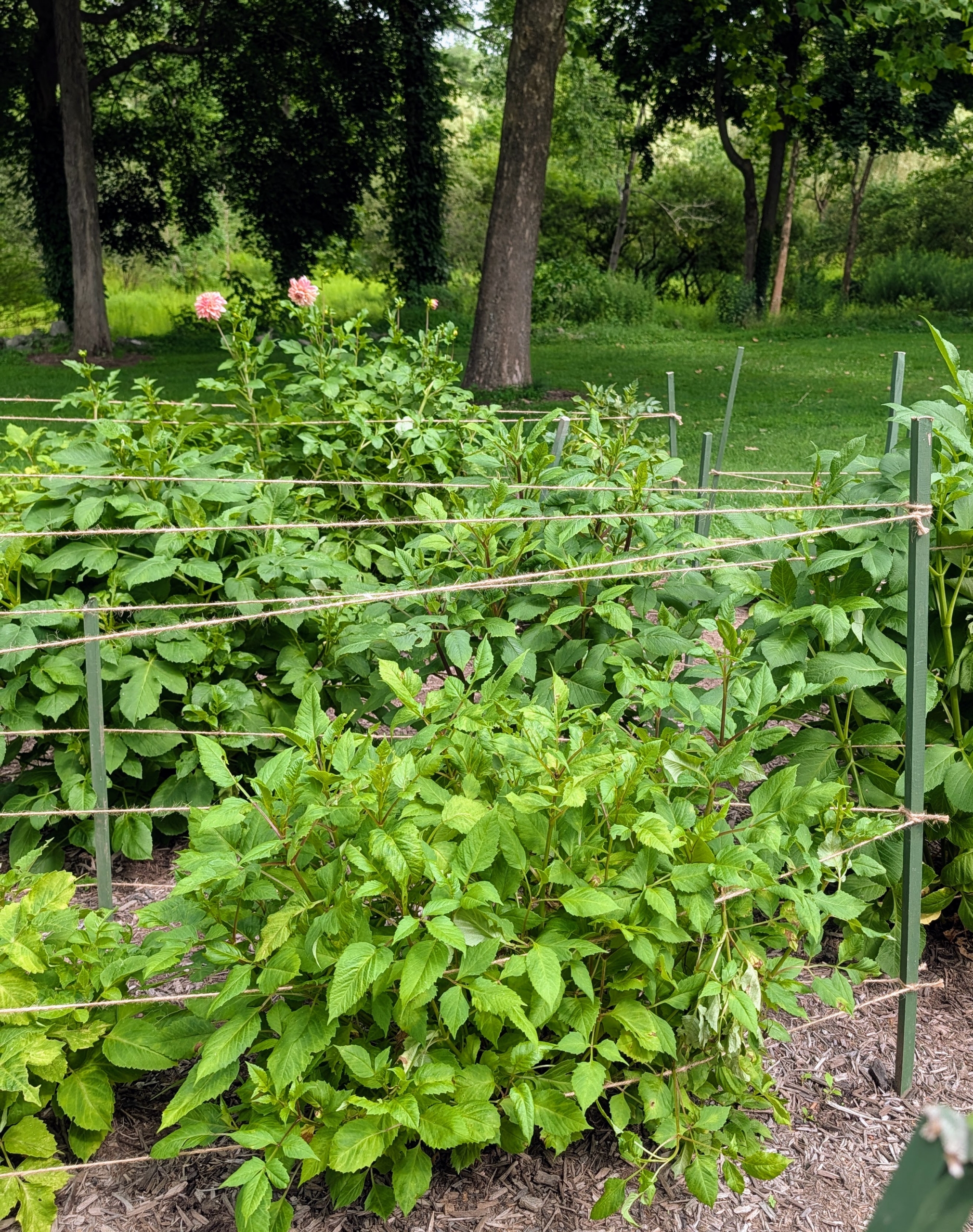
- Here are several plants now well-supported.
-
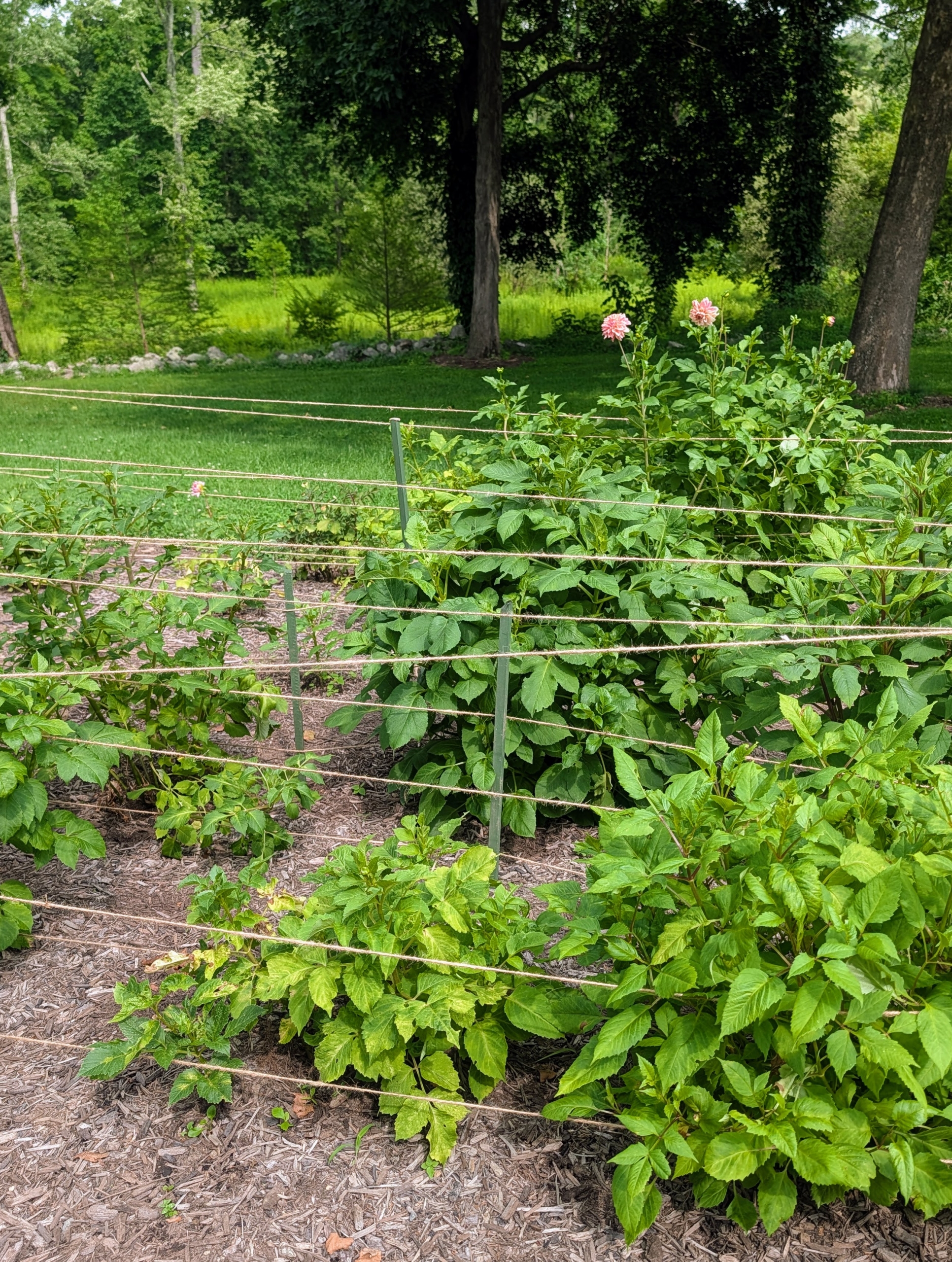
- The stakes and twine are positioned in rows, so flowers are still easy to reach when cut.
-
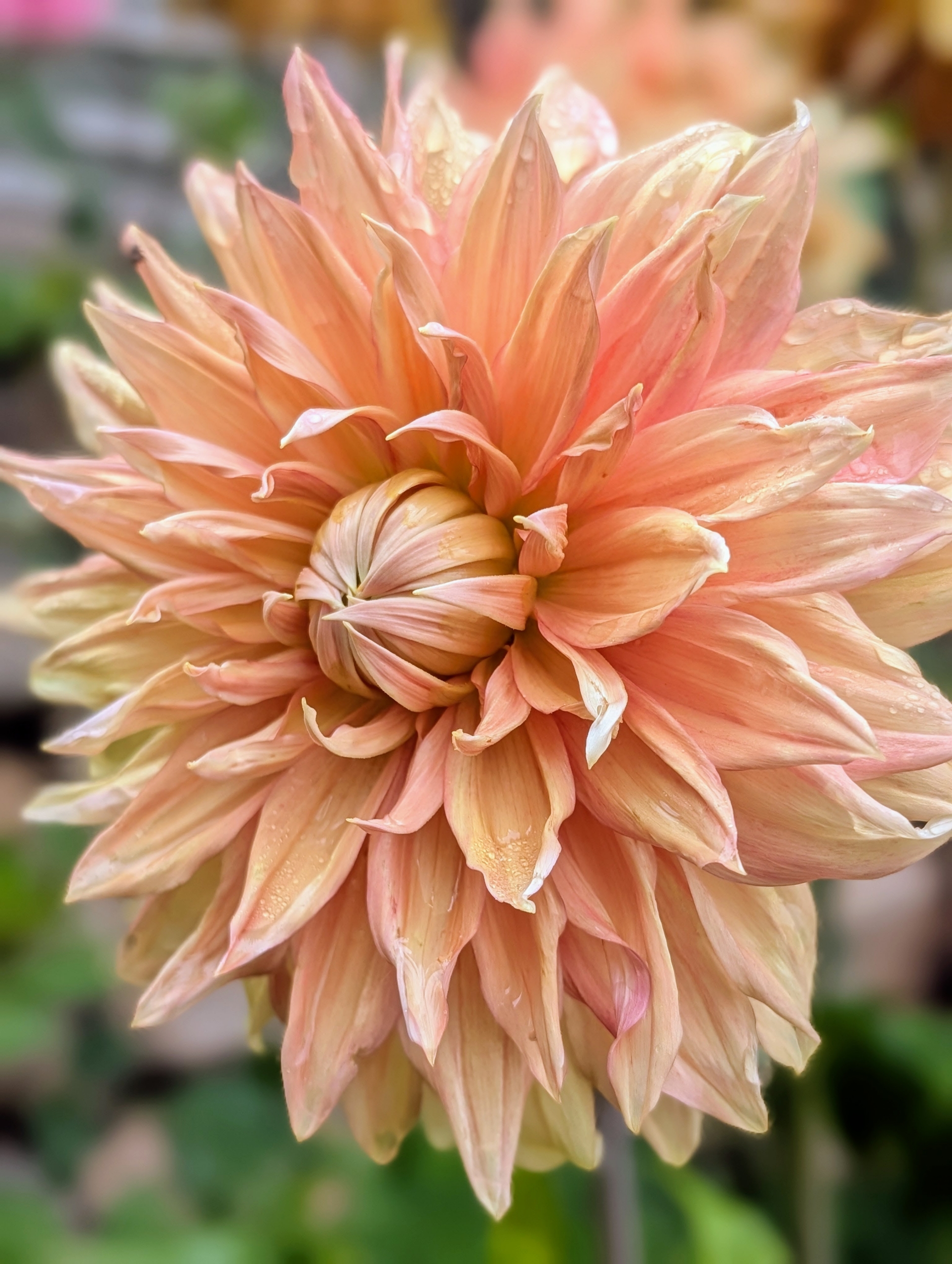
- Dahlias are classified according to flower shape and petal arrangement.
-
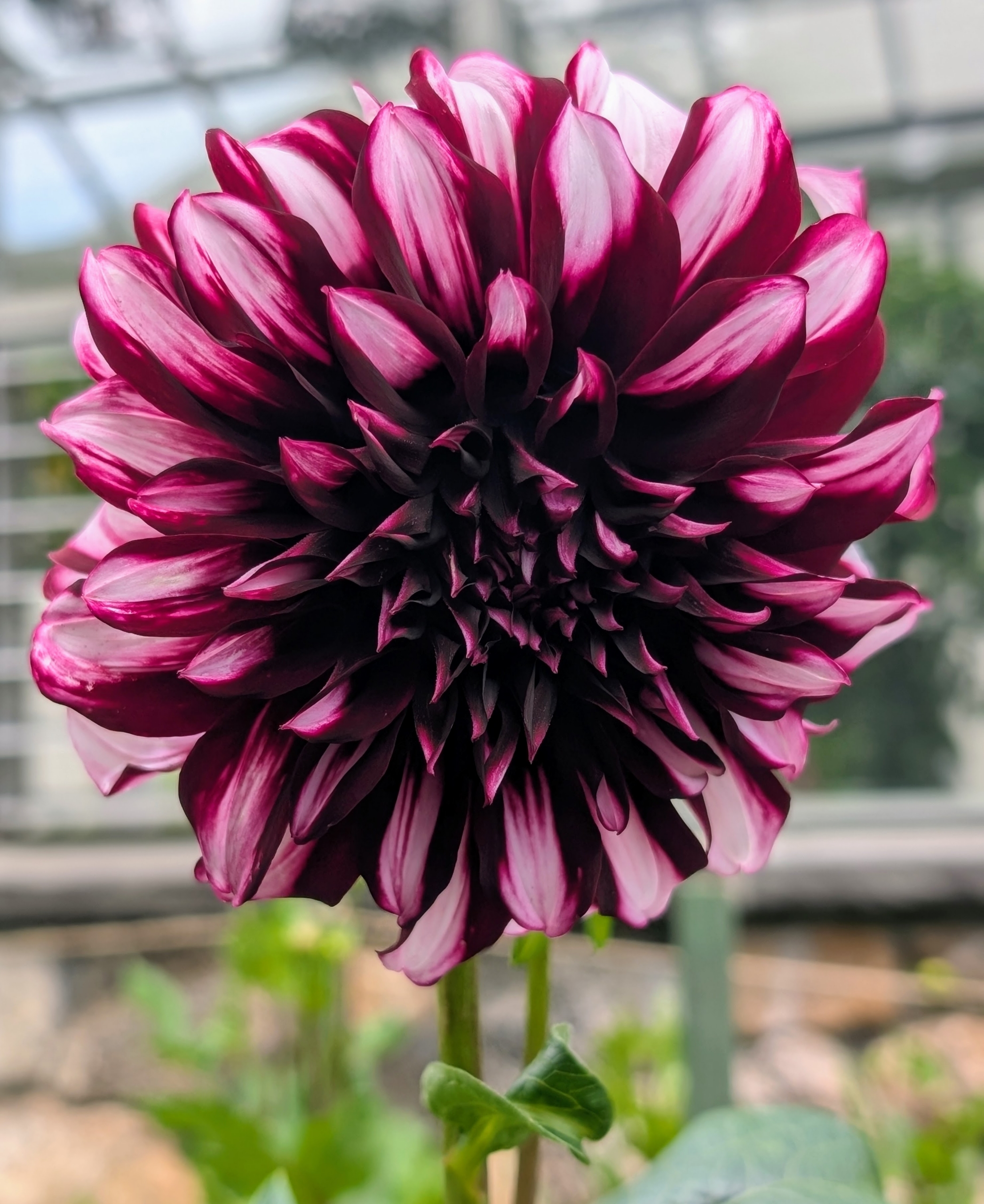
- They range from a charming single, daisy-like flower to the popular double varieties which can be two-inch-pompons to 12-inch dinner plate size. They are divided into 10 groups: single, anemone, collarette, waterlily, decorative, fall, pompon, cactus, semi-cactus, and miscellaneous.
-
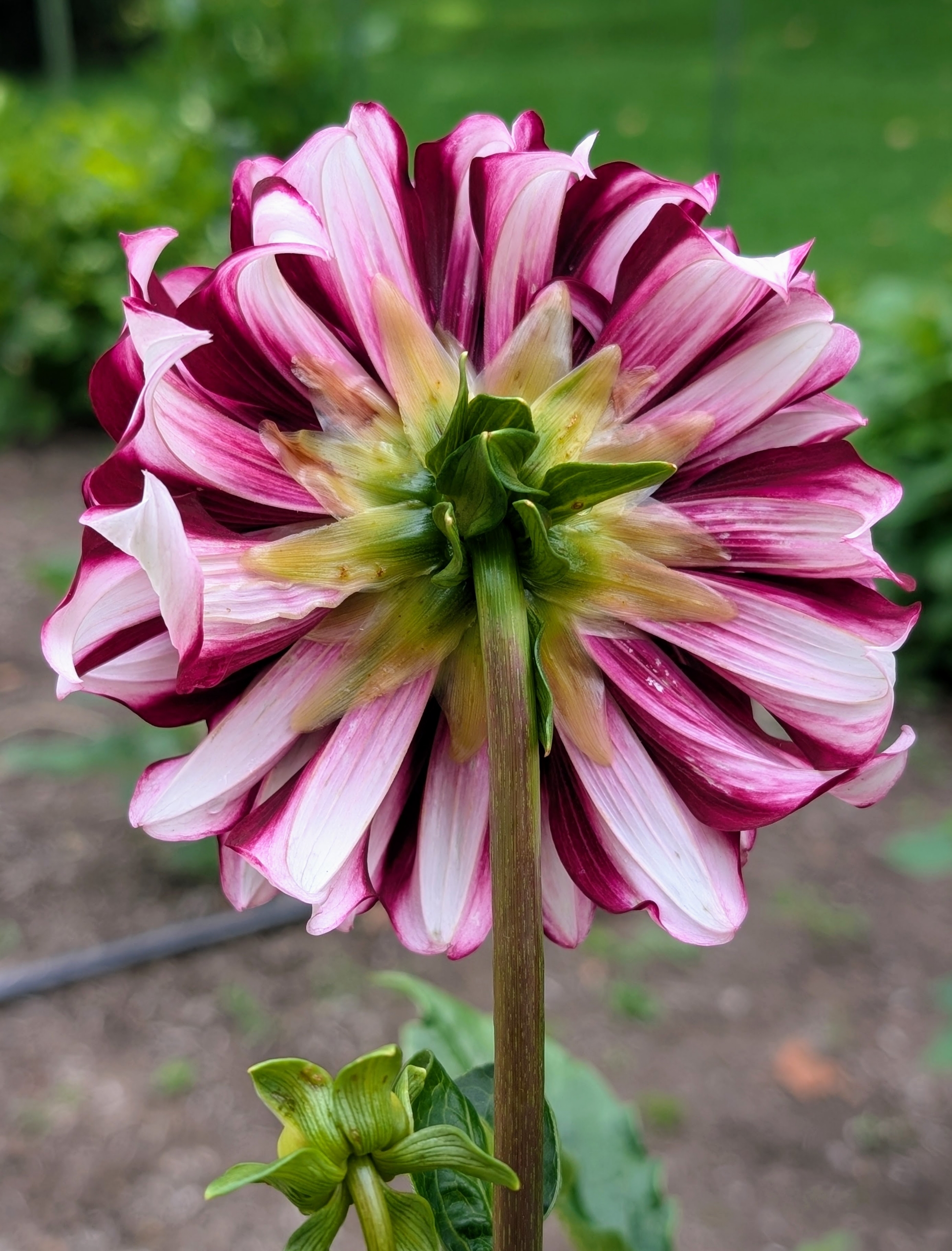
- Here is the back of the same bloom.
-
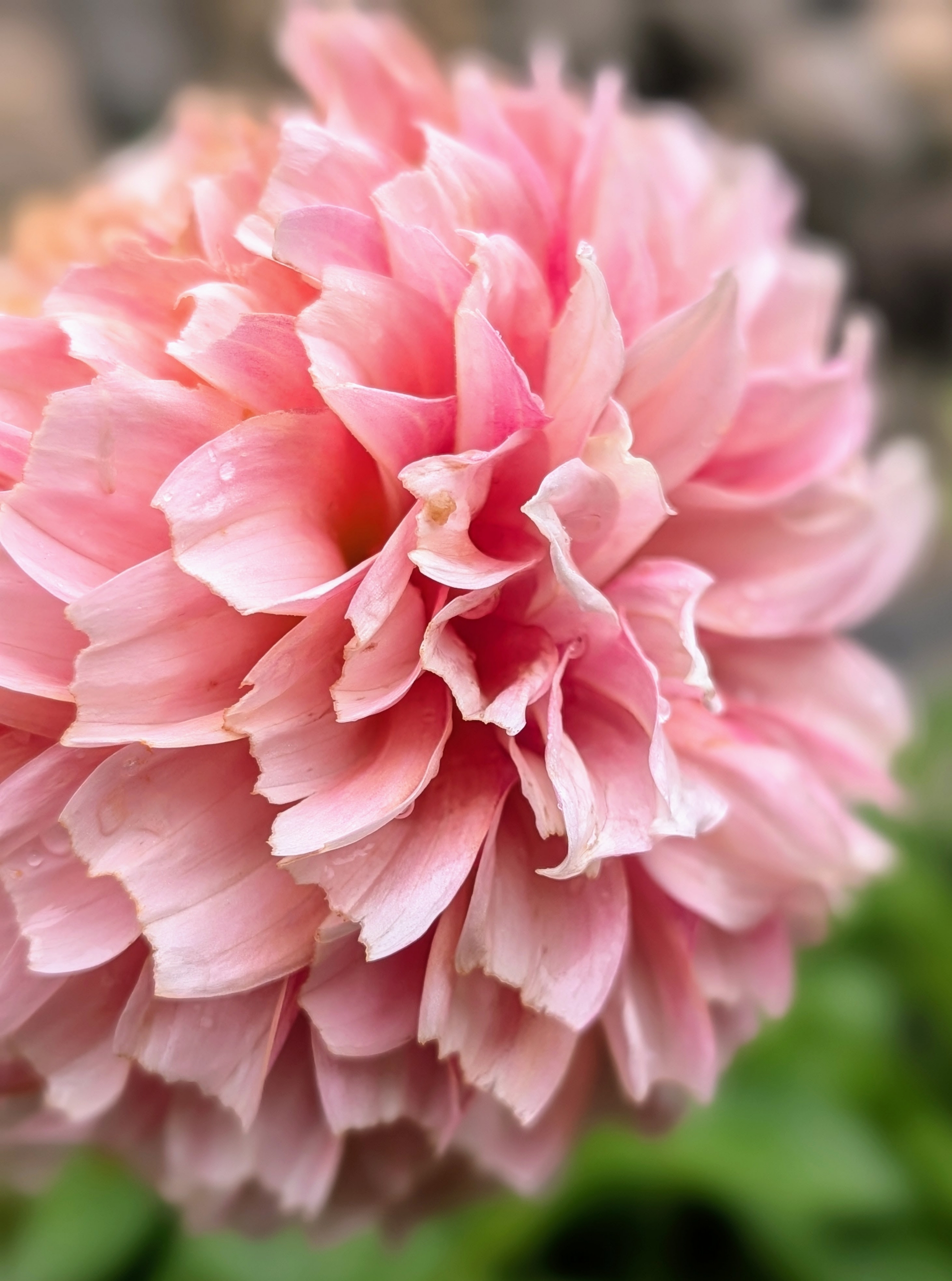
- Dahlias are named after 18th-century Swedish botanist Anders Dahl. He actually categorized dahlias as a vegetable because of their edible tubers. The tubers are said to taste like a mix between potatoes and radishes.
-
- This area was once used for growing grapes. Now, it’s proven excellent for growing dahlias. I am looking forward to seeing more and more of the gorgeous blooms in the weeks ahead.
-
- Dahlias are one of the most rewarding plants to grow in the garden because they are easy to care for, have so many different colors and forms, and have long-lasting blooms.
 Martha Pins


 Martha Tweets

