

My Trip to Logee's
I am always on the lookout for new and unusual houseplants to add to my collection.
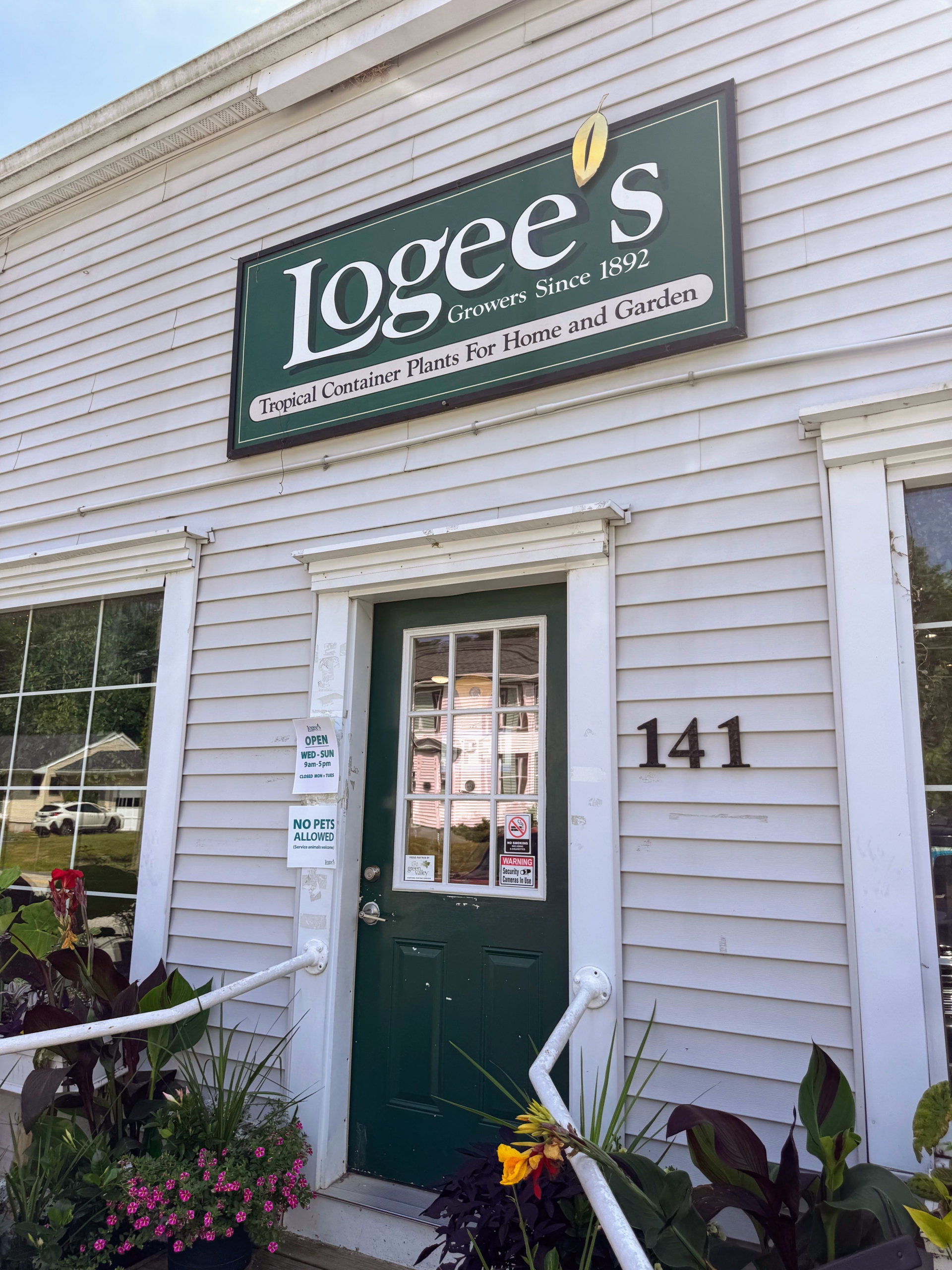
Earlier this week, during a business day trip to Northeastern Connecticut, I made a stop at Logee’s Tropical Container Plants for Home & Garden in Danielson - one of my favorite sources for tropical specimens. Logee’s was founded in 1892 by William D. Logee. He started the business as a cut-flower shop and then expanded it to include tropical container plants. Over time, Logee’s became well known for its hybridizing achievements in the world of begonias. Today, Logee’s is owned and operated by Williams’s grandson, Byron Martin, and his business partner, Laurelynn Martin. The nursery's extensive inventory offers more than 500 types of fruiting, rare, and tropical specimens.
Here are some photos of the newest additions to my begonia collection, enjoy.
-

- Logee’s is a great source for all kinds of plants – orchids, succulents, fruit trees, exotics, etc. It offers hundreds of unusual tropical flowering and fragrant specimens that perform well in pots.
-
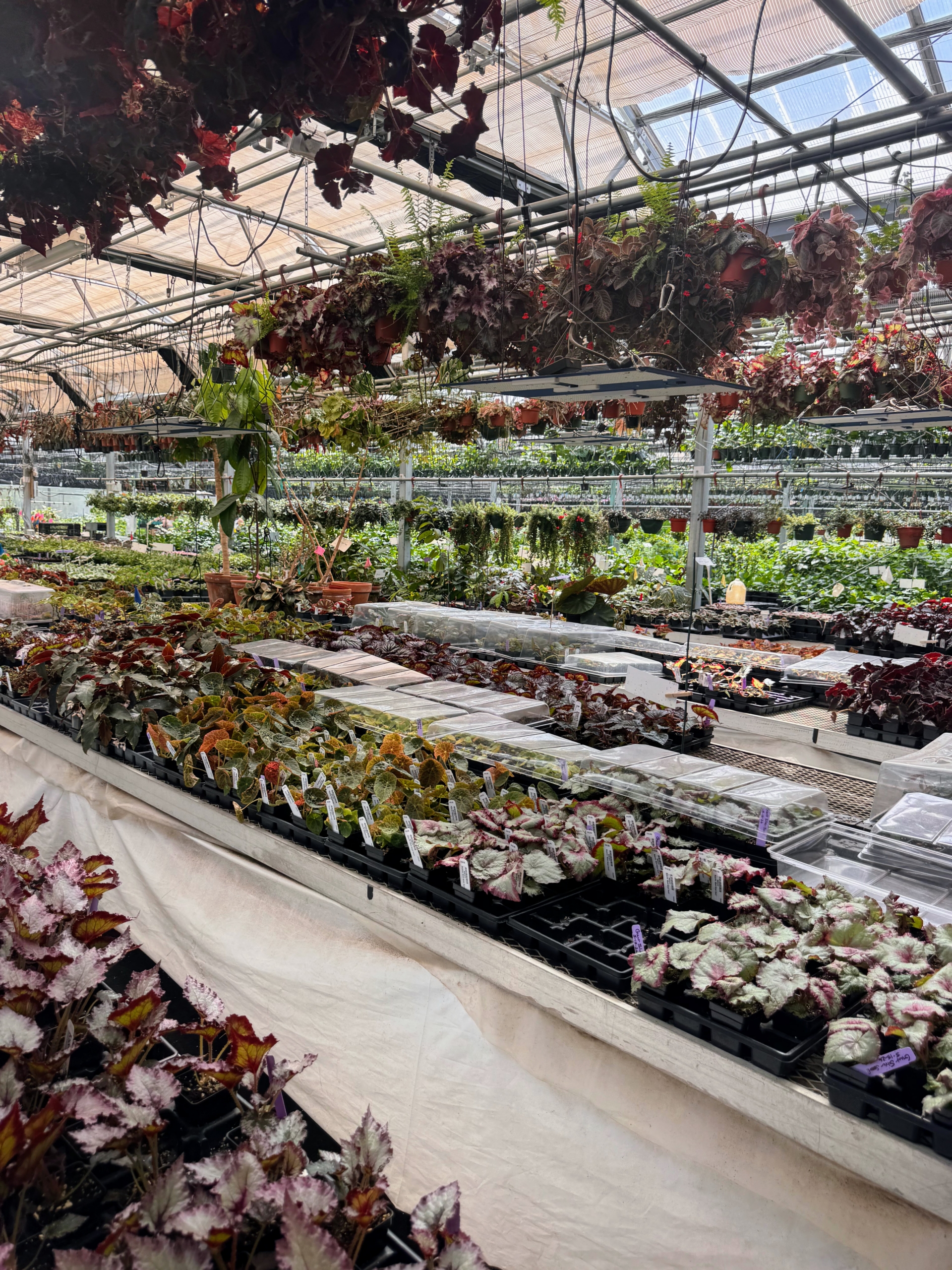
- The greenhouses are packed and neatly arranged and organized. One can learn about new varieties or find old favorites while browsing through the extensive inventory.
-
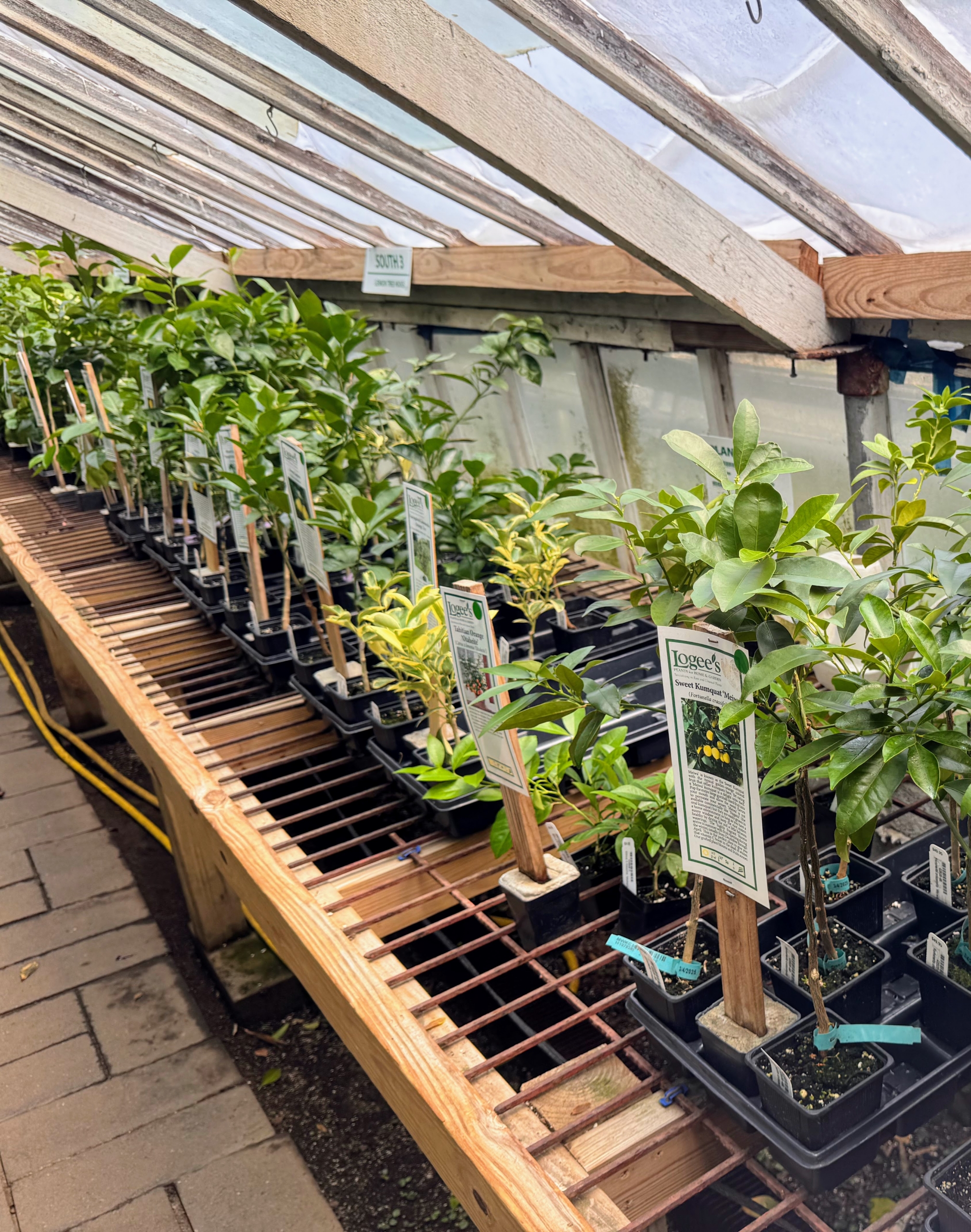
- One of Byron and Laurelynn’s major interests is citrus which can be found throughout their greenhouses. Many of my citrus come from Logee’s.
-
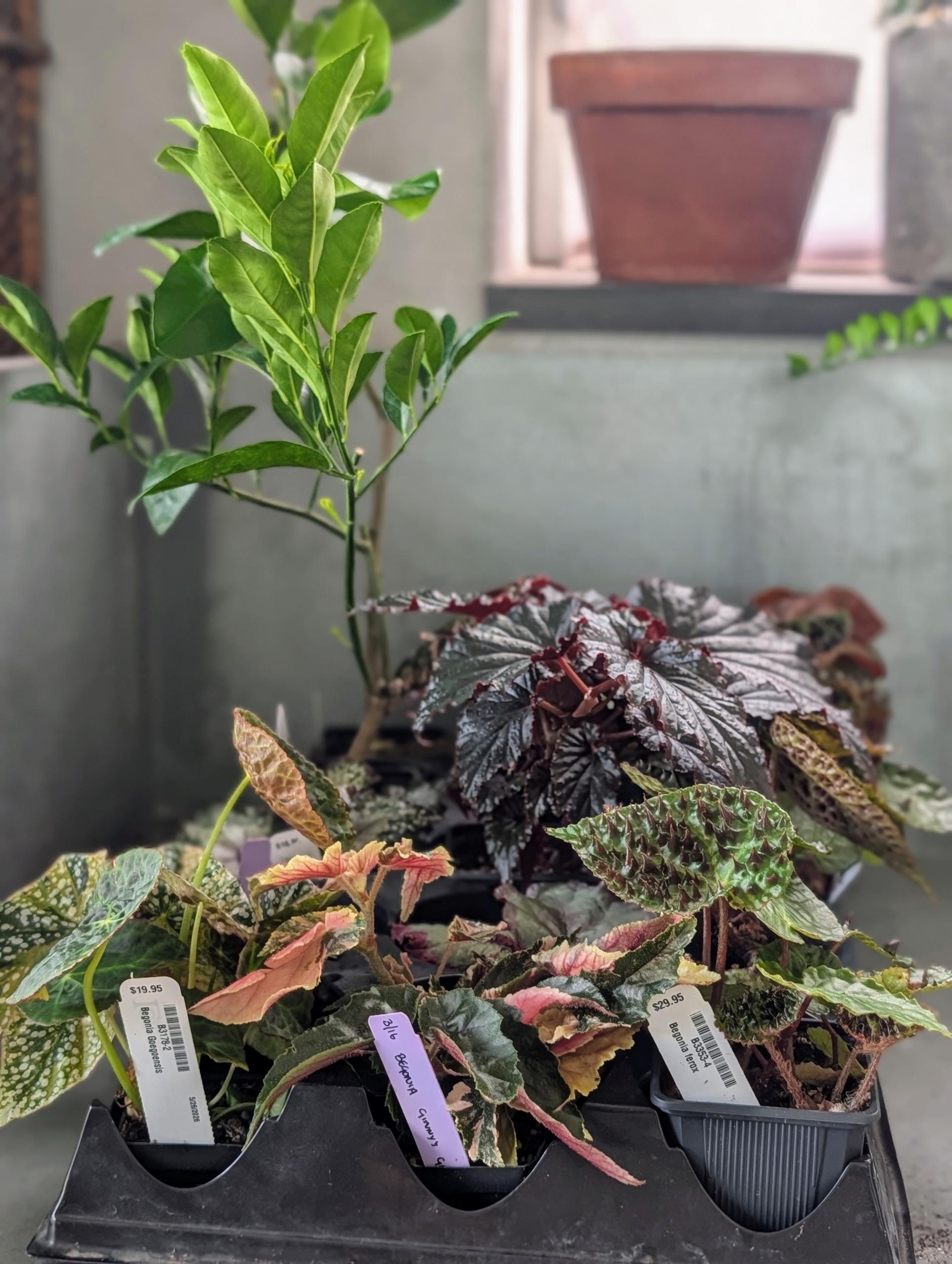
- I brought home a selection of rare and interesting begonias and citrus specimens.
-
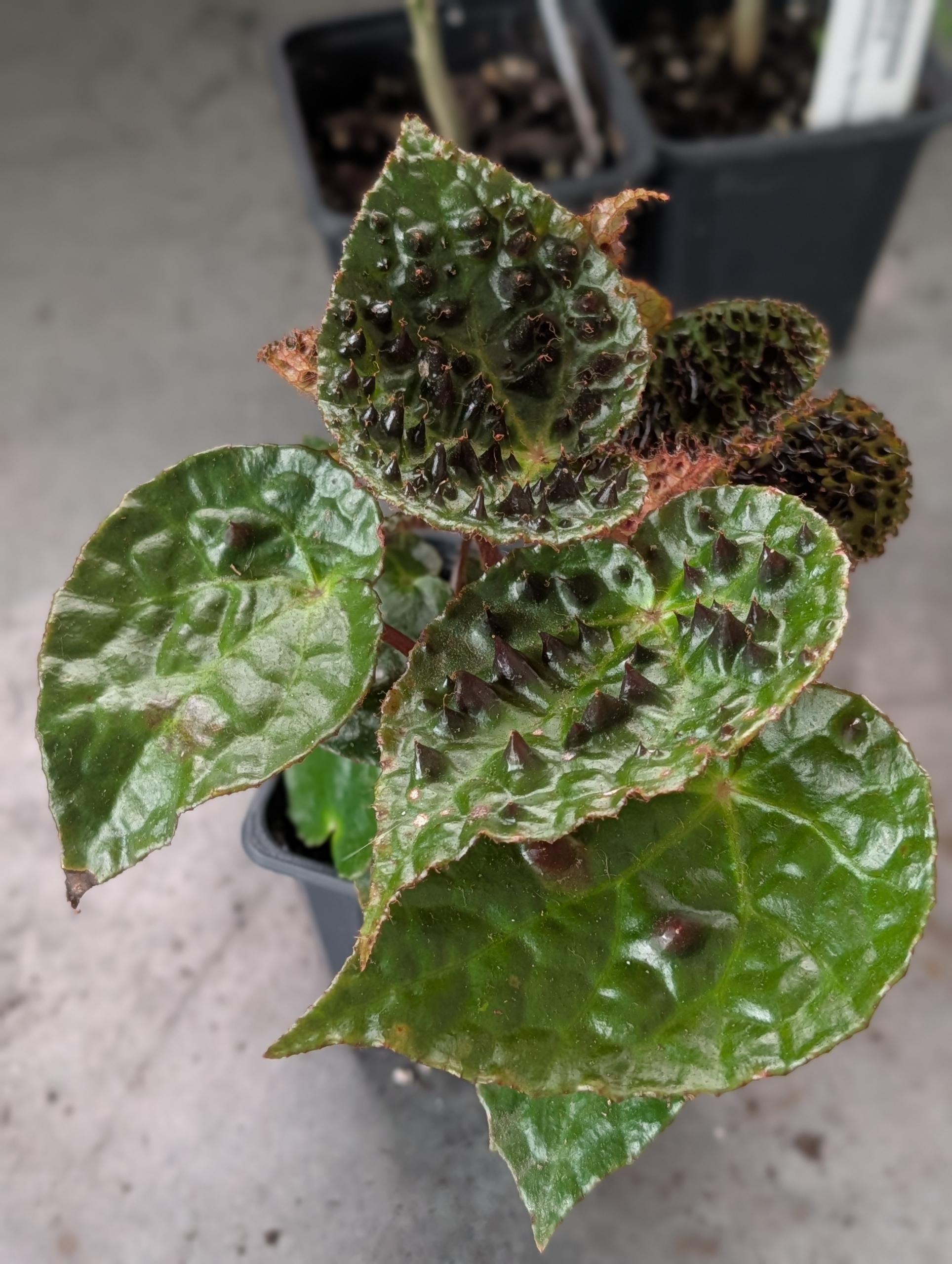
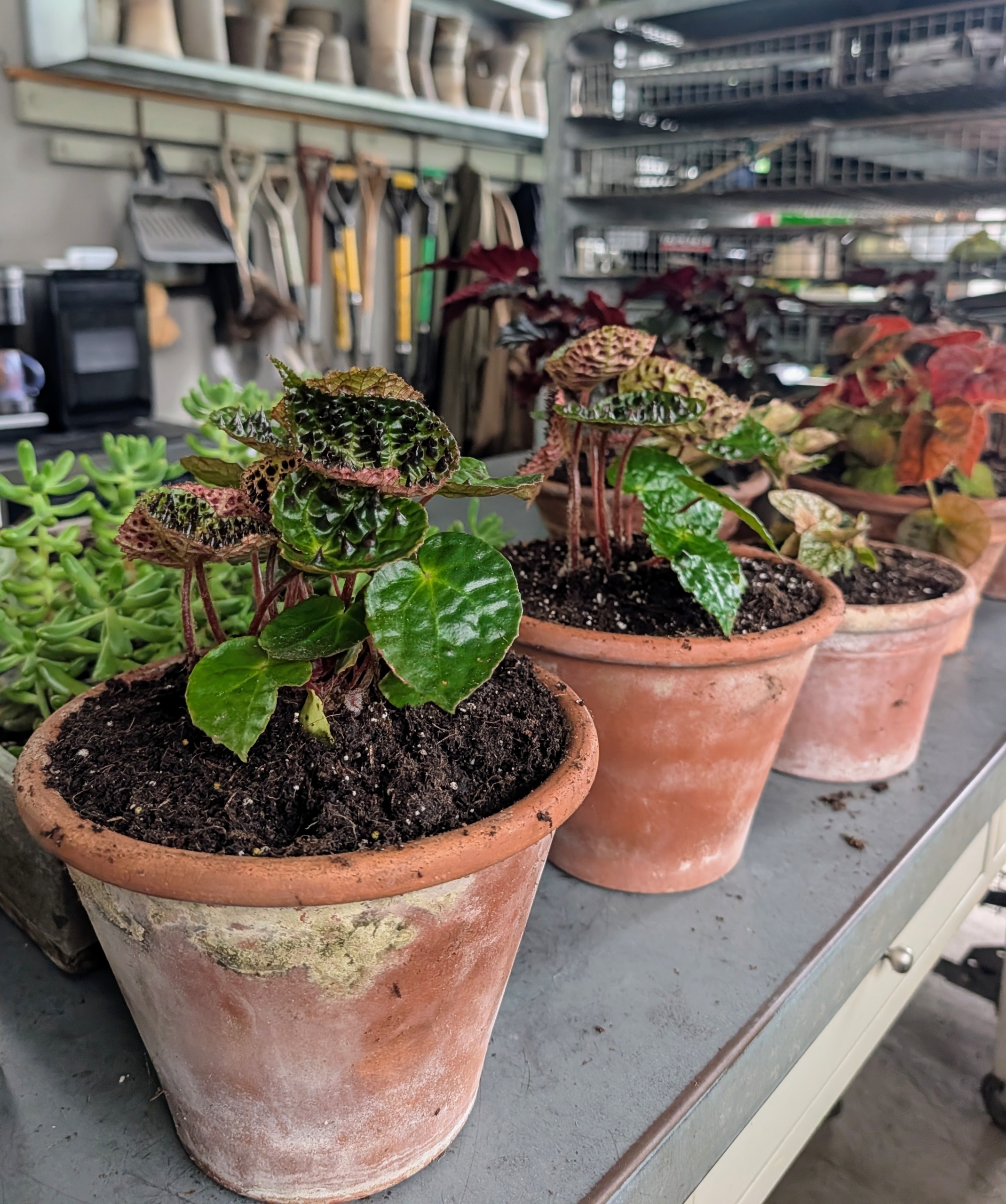
- Among my new plants – this very rare Begonia ferox, which has one of the most dramatic leaves in the world of begonias. It has spiky raised cones on the leaves, known as bullae, that develop as the leaves mature.
-
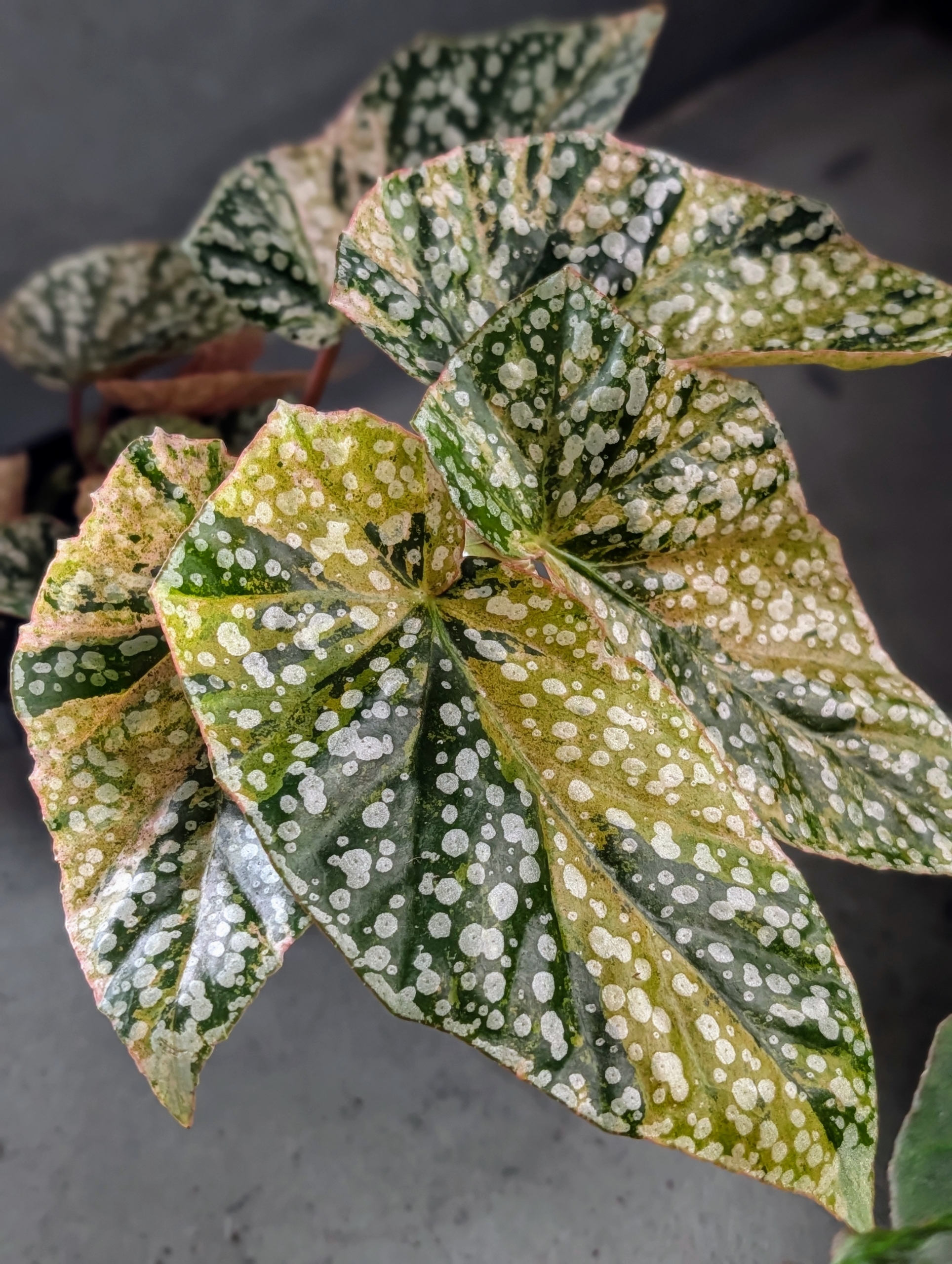
- This is the foliage of Begonia ‘Snow Capped’ with angel wing shaped leaves and intense silver spotting.
-
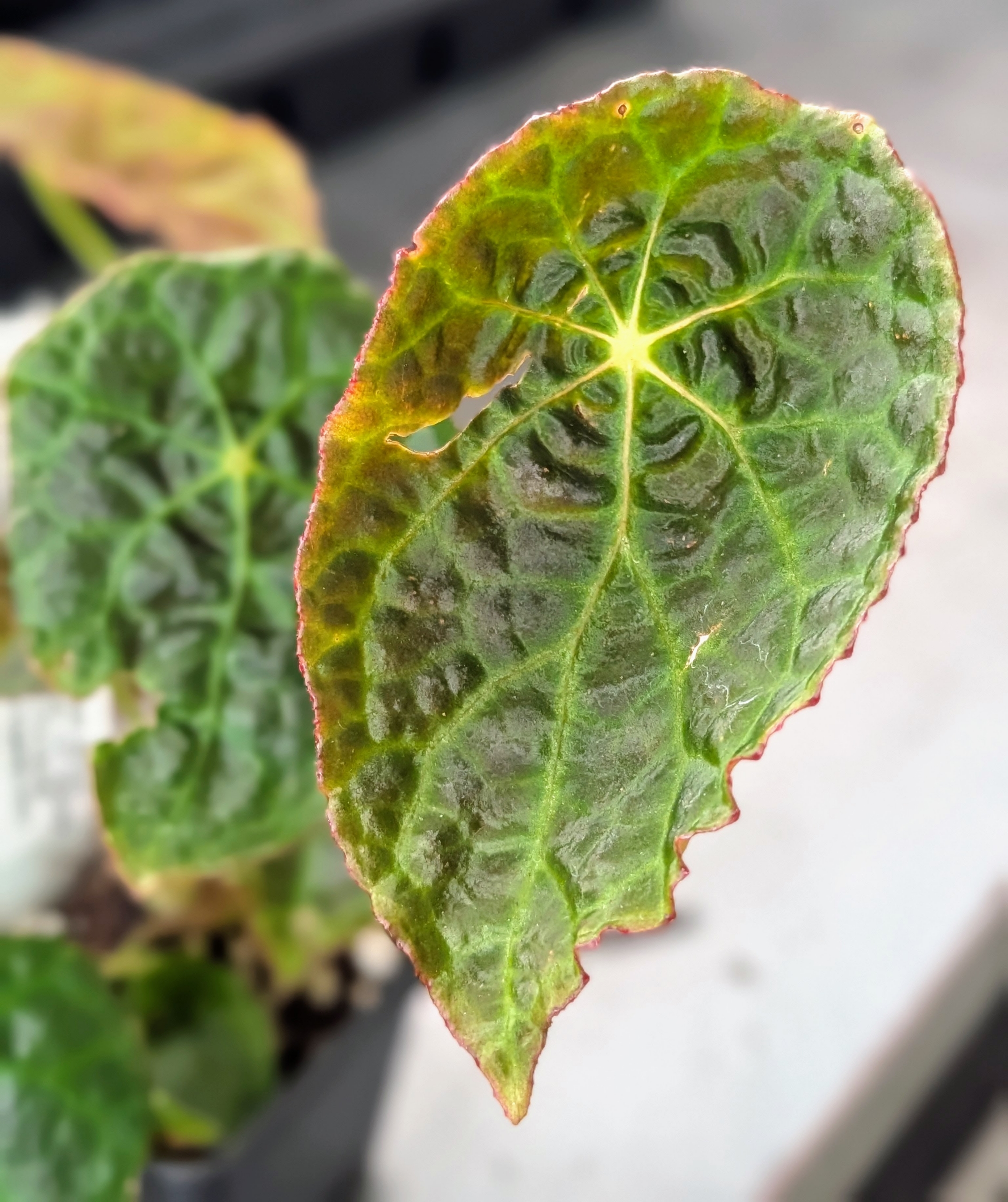
- Begonia goegoensis is another rare and hardy species. Brought into cultivation in the late 1800s, it has been part of the Logee’s collection for years. The peltate leaves have an interesting texture and a copper tone on the edges of younger leaves that mature to mottled shades of green. This rhizomatous species can tolerate low humidity, periods of dryness, and low light.
-
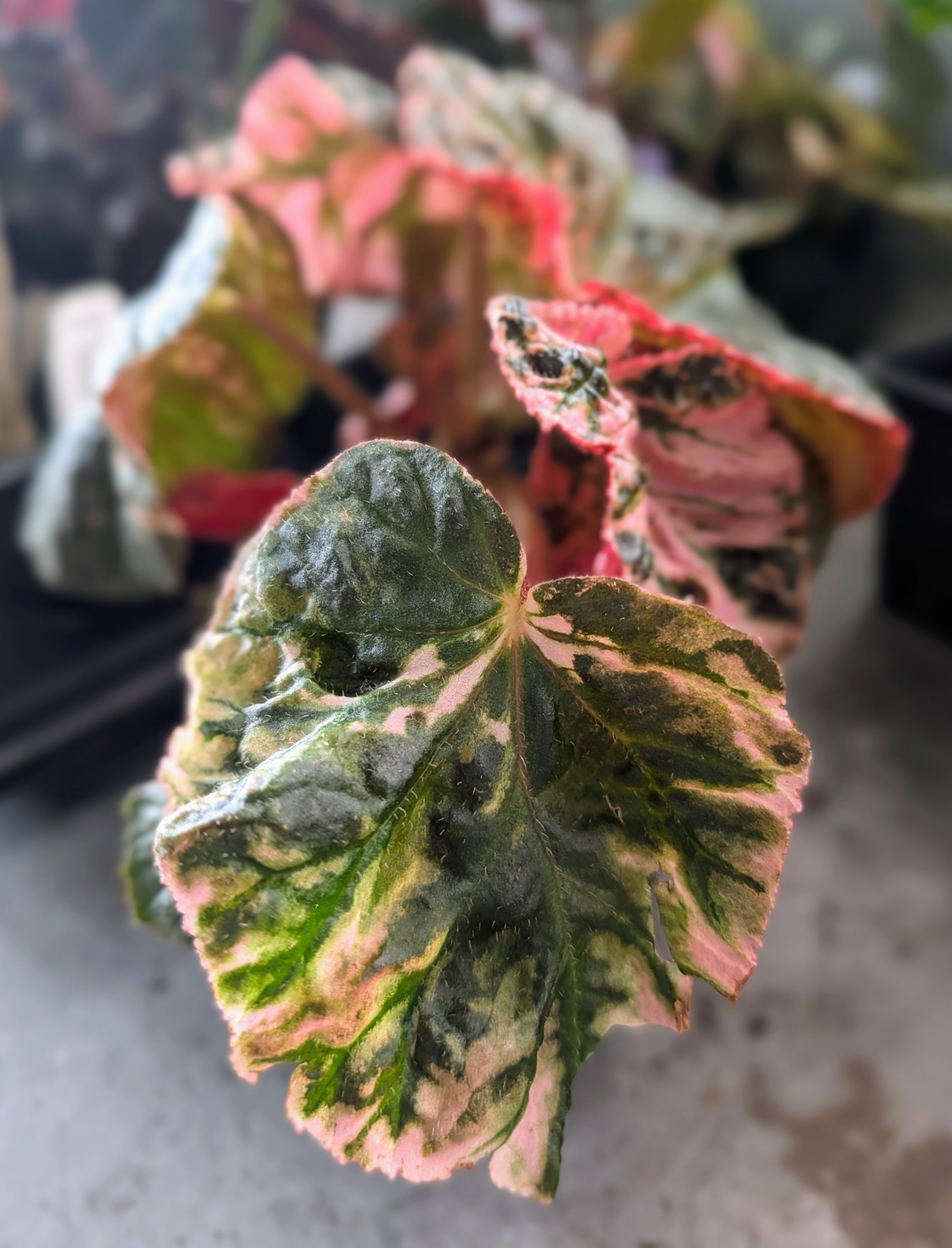
- Begonia ‘Midnight Sun’ was hybridized by Byron. It won the Best New Hybrid Introduction in 1980. The variegated foliage has shades of red, pink, and off-white to complement the moss green.
-
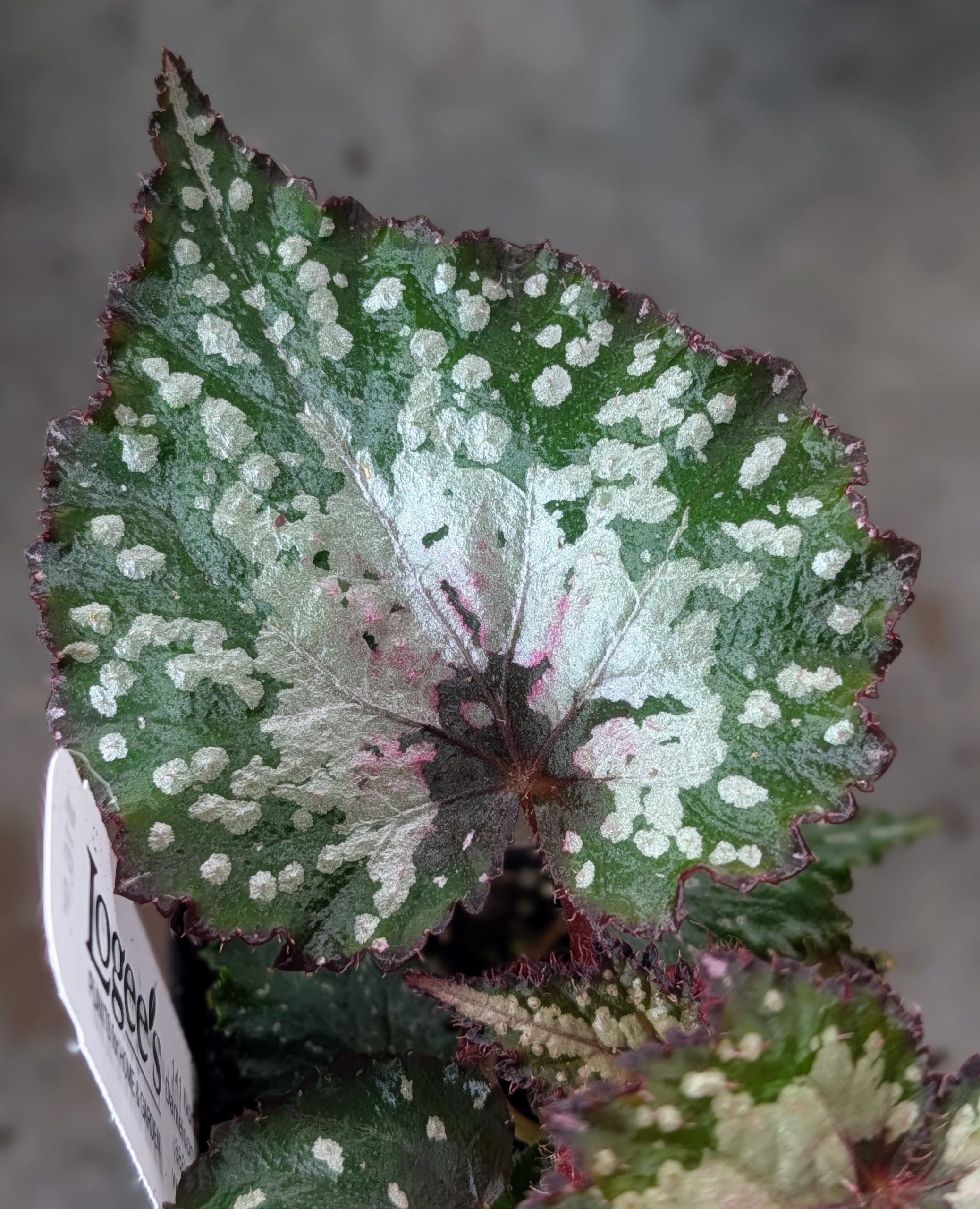
- This new compact rex Begonia hybrid is called ‘Watermelon Party.’ Its vibrant reddish-pink center contrasts with the silver and deep green veining. ‘Watermelon Party’ also has sharply pointed leaves with dark green borders and white dots. It is a medium-sized grower with intermittent blooming throughout the year.
-
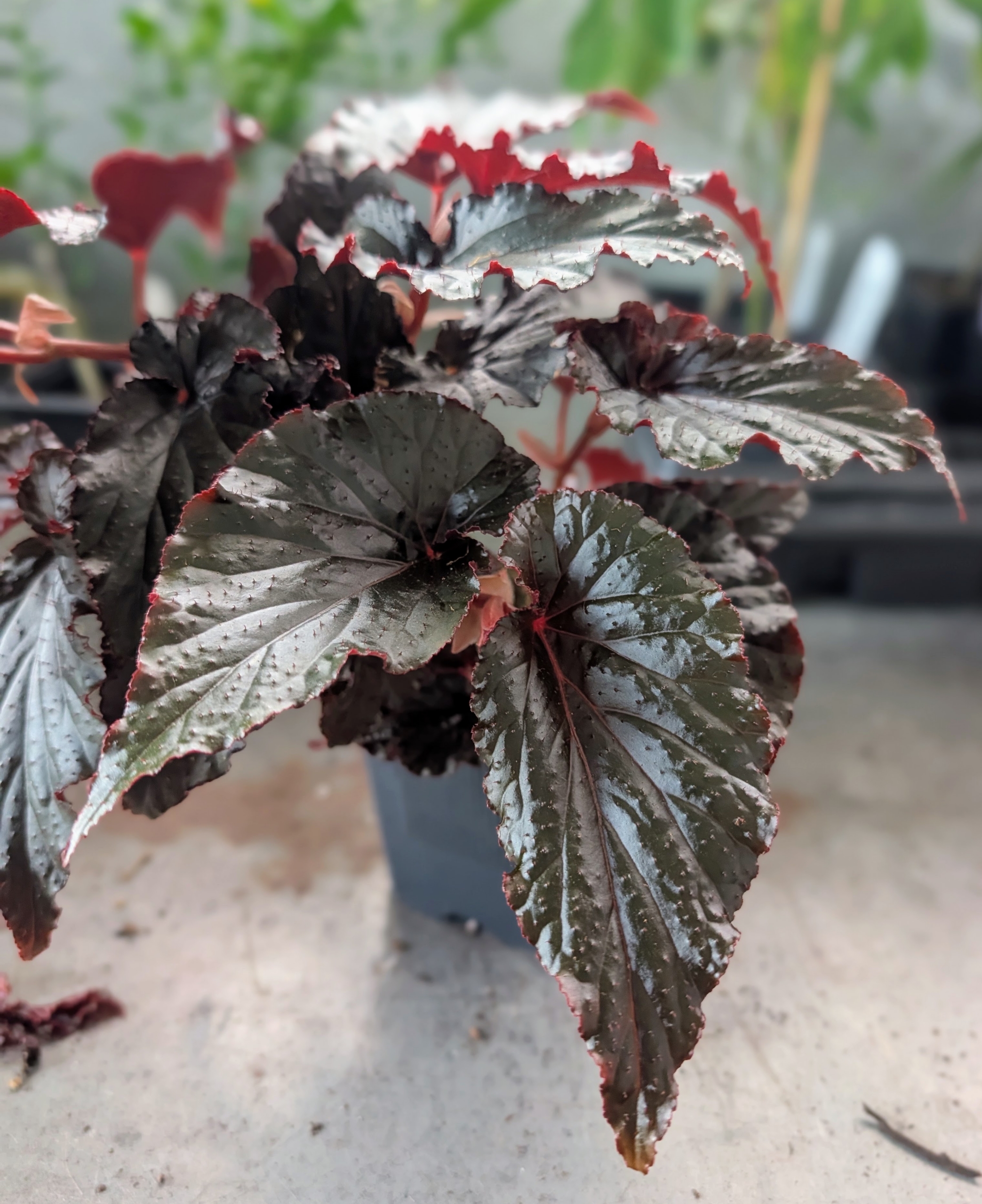
- Begonia ‘Black Magic’ is a striking plant admired for its dramatic dark foliage and richly colored red emergent leaves.
-
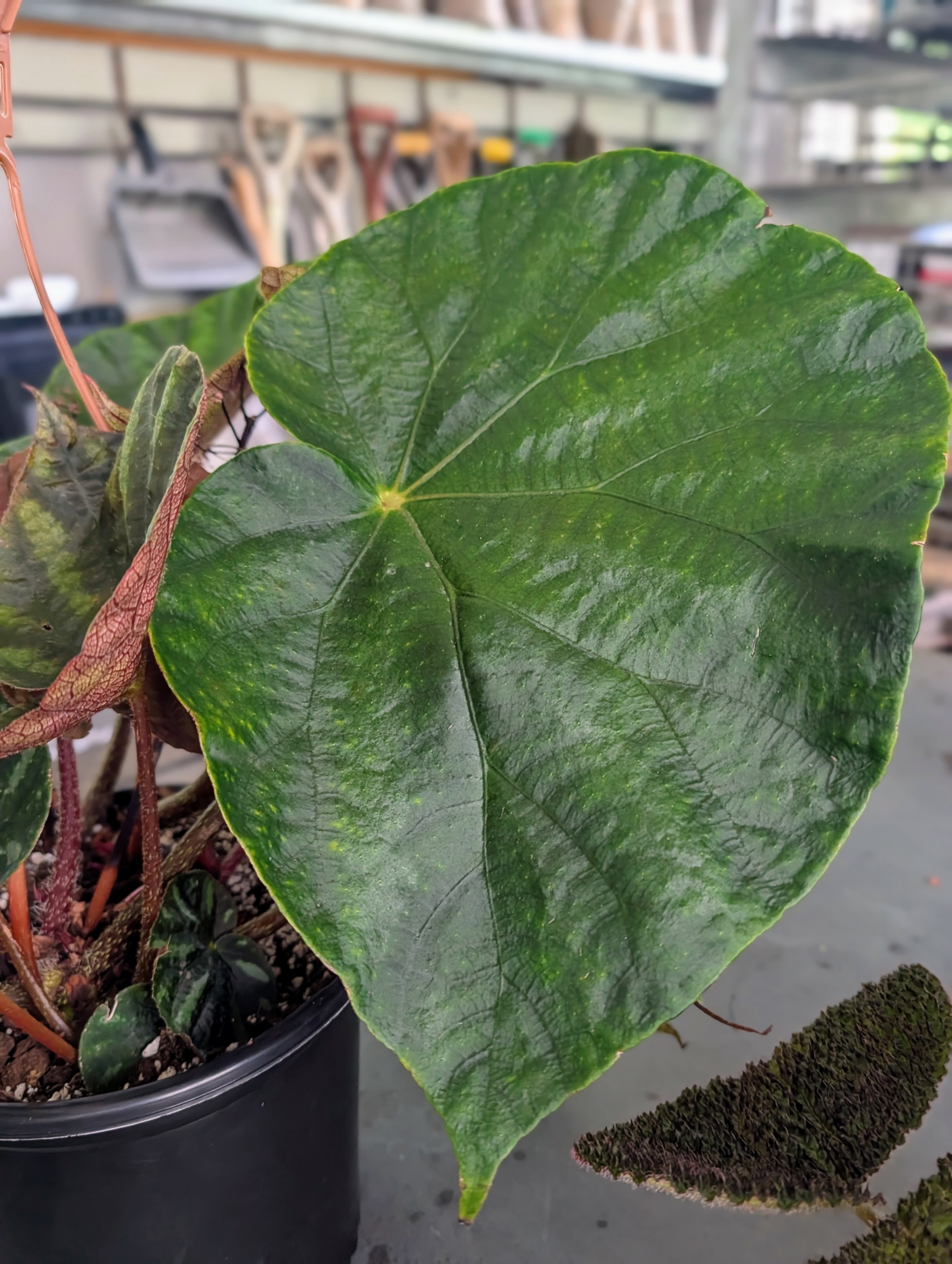
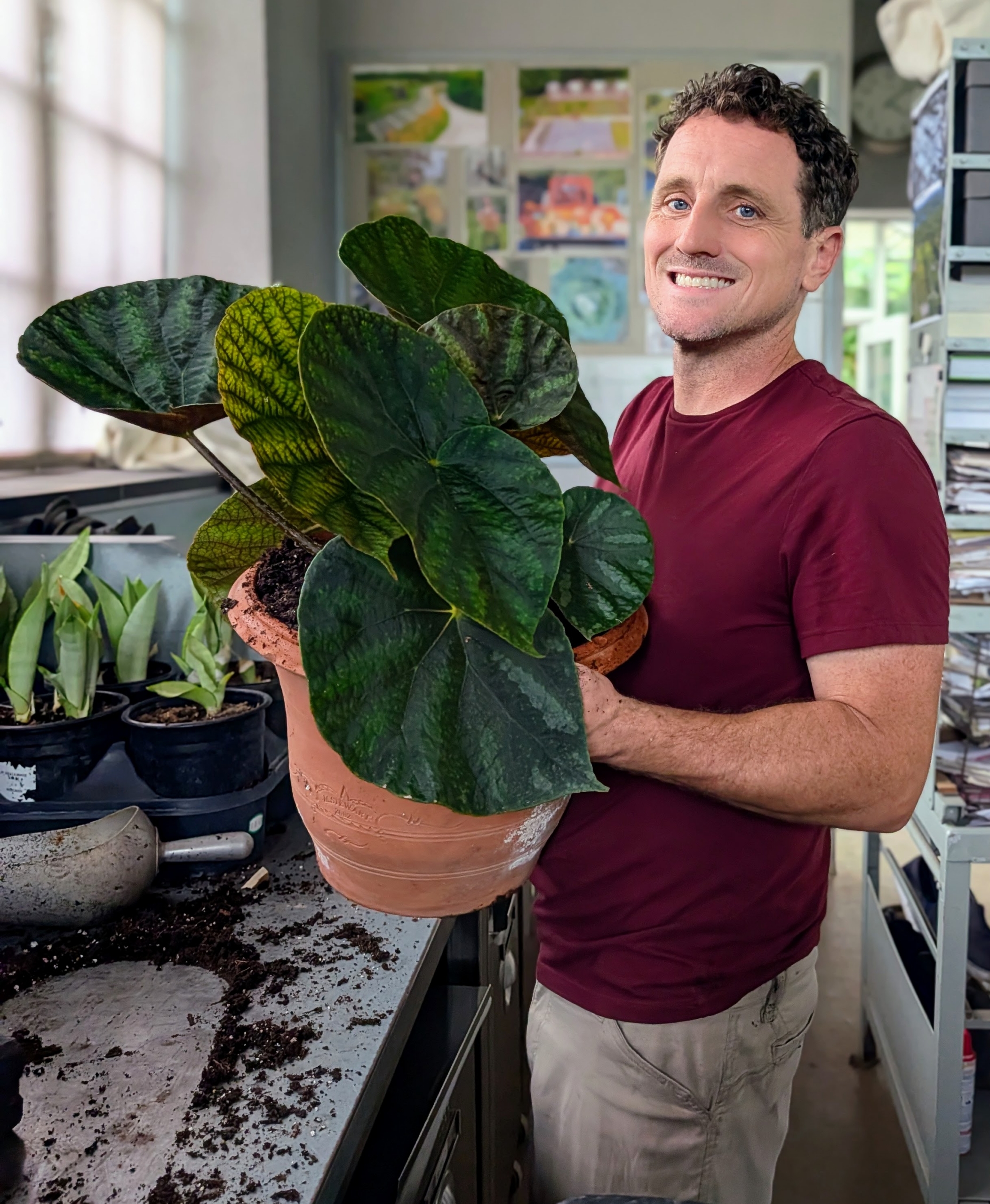
- I saw this one and had to take it. This begonia has giant bold green leaves – each one bigger than one’s hand.
-
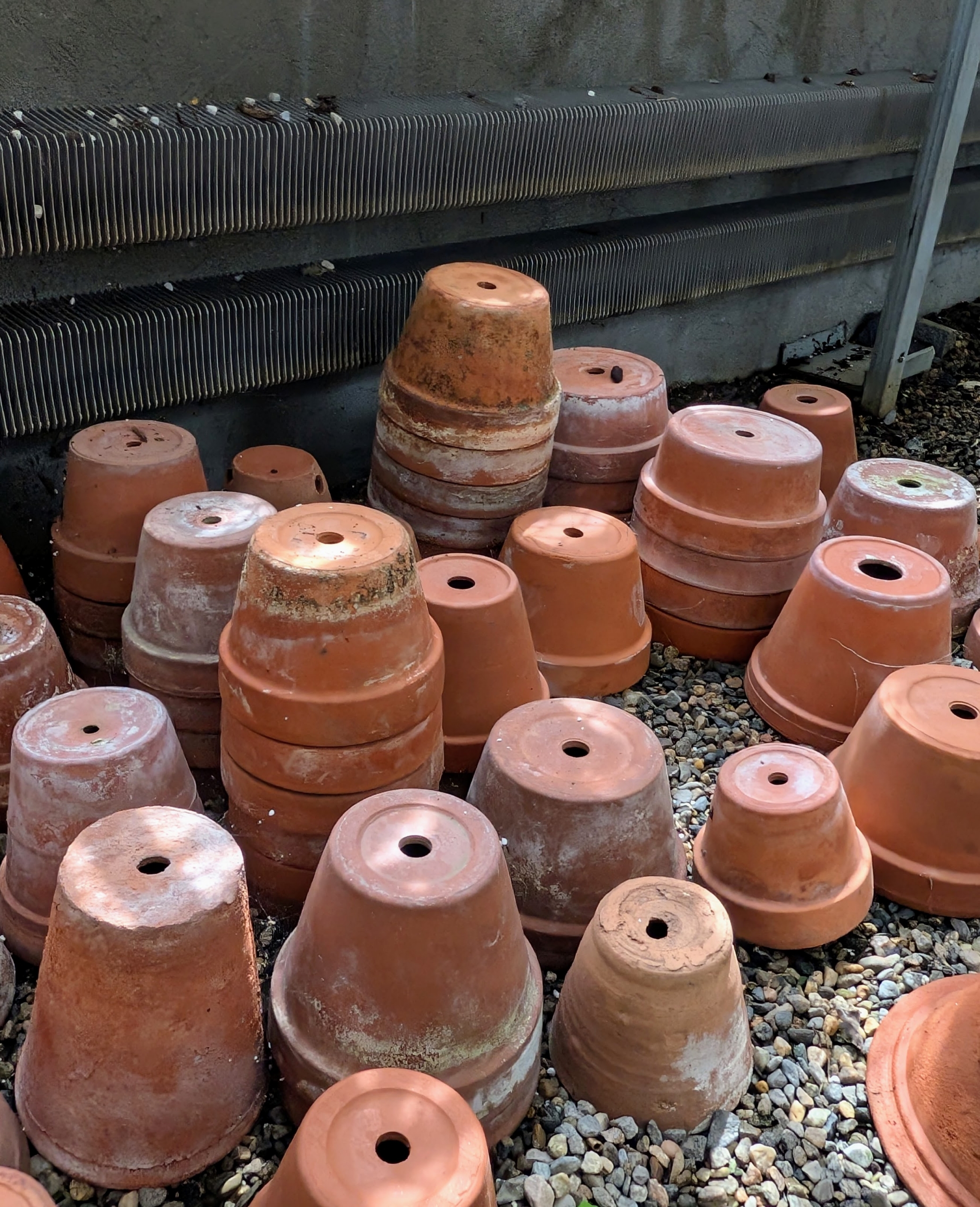
- I store many of the empty pots underneath the greenhouse tables where they can be accessed quickly. To successfully grow rhizomatous begonias, It’s a good idea to use clay pots, such as terracotta, as they are more porous and allow the roots to breathe.
-
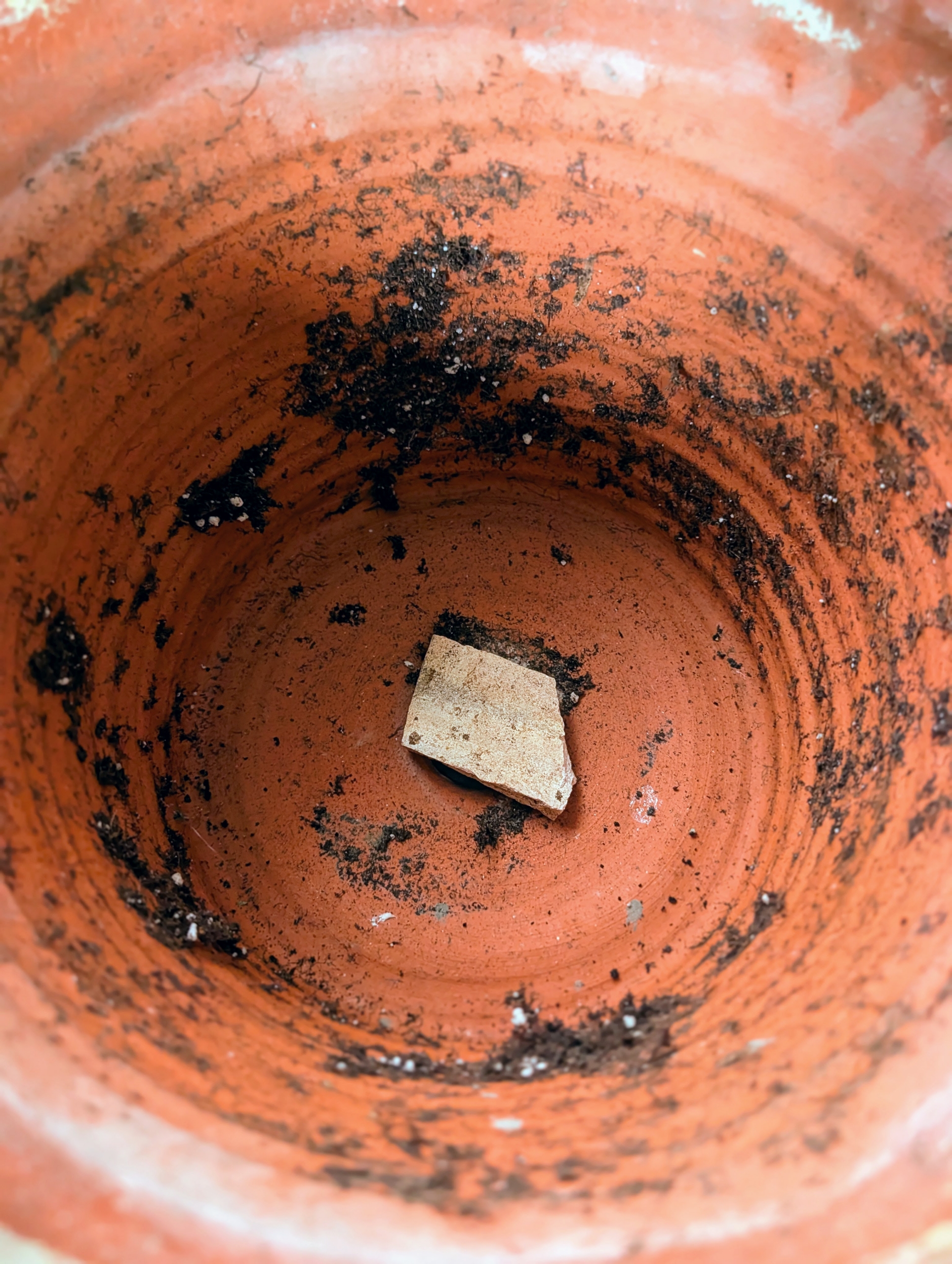
- When potting any plant, always place a clay shard or stone over the drainage hole in the bottom of the pot to help with drainage and to prevent any soil from falling out.
-
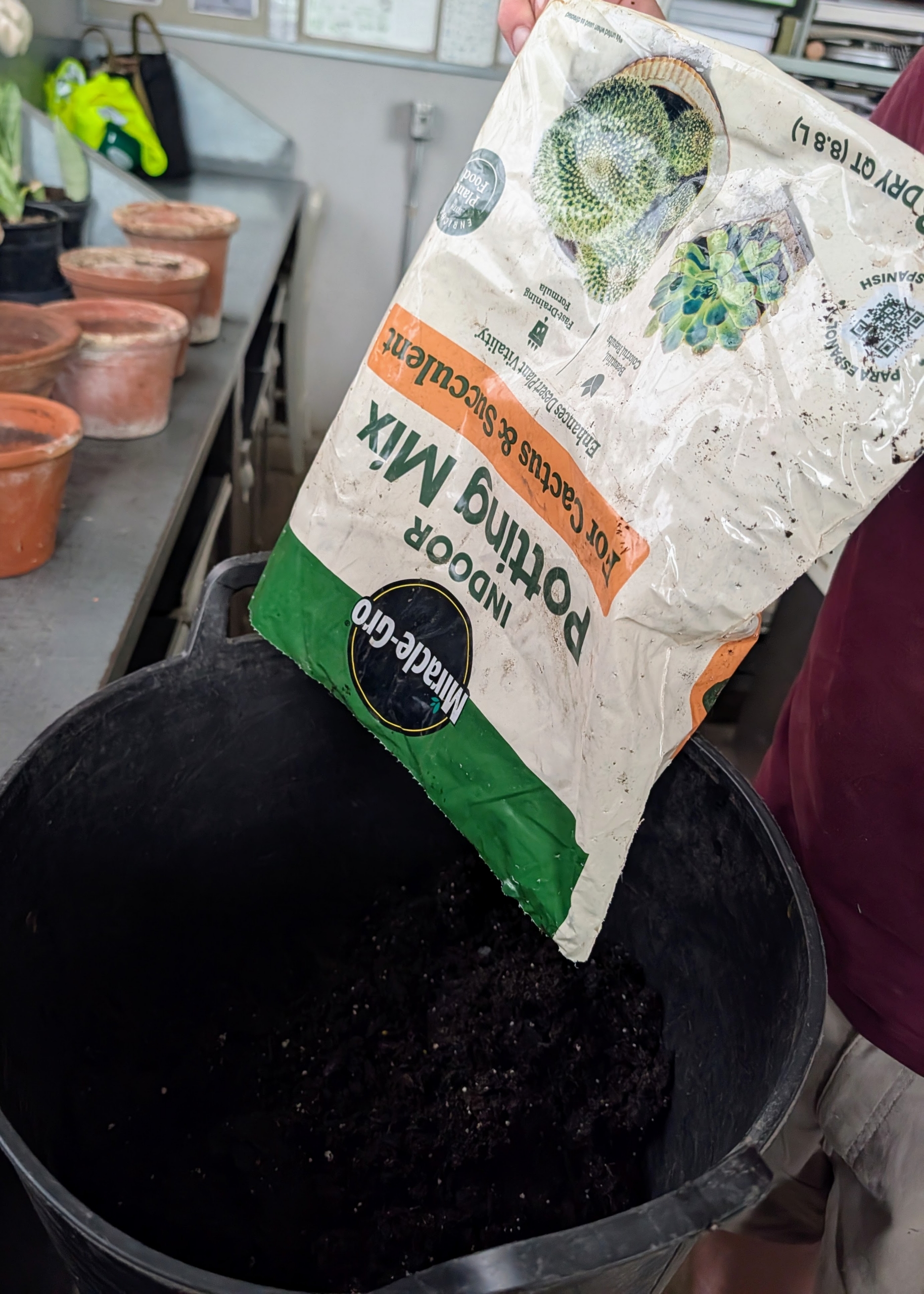
- Begonias grow best in light, well-drained soil. Ryan empties a bag of Miracle-Gro Indoor Potting Mix for Cactus & Succulent into a trug bucket.
-
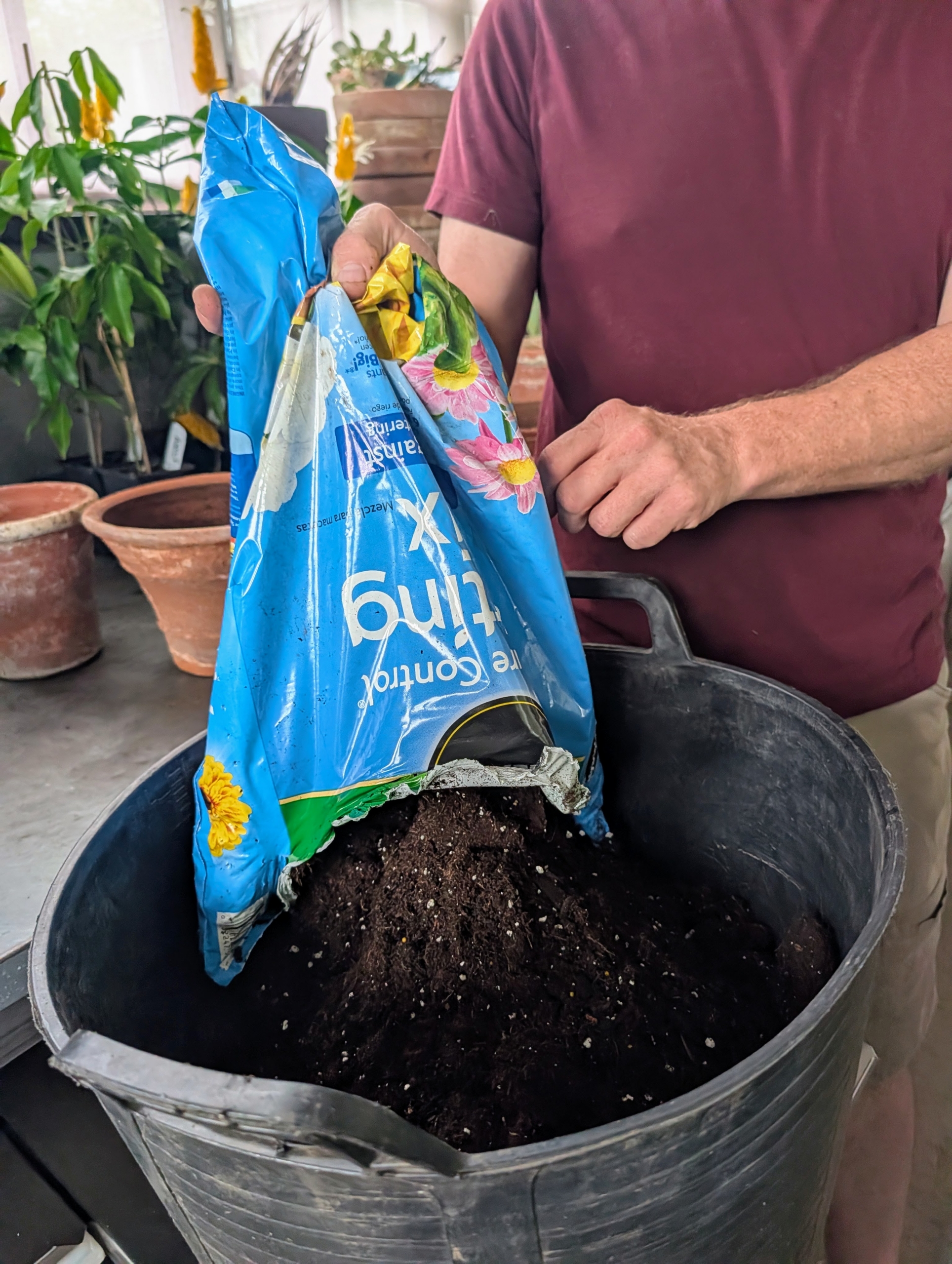
- And then he adds a bag of Miracle-Gro Moisture Control Potting Mix into the same container.
-
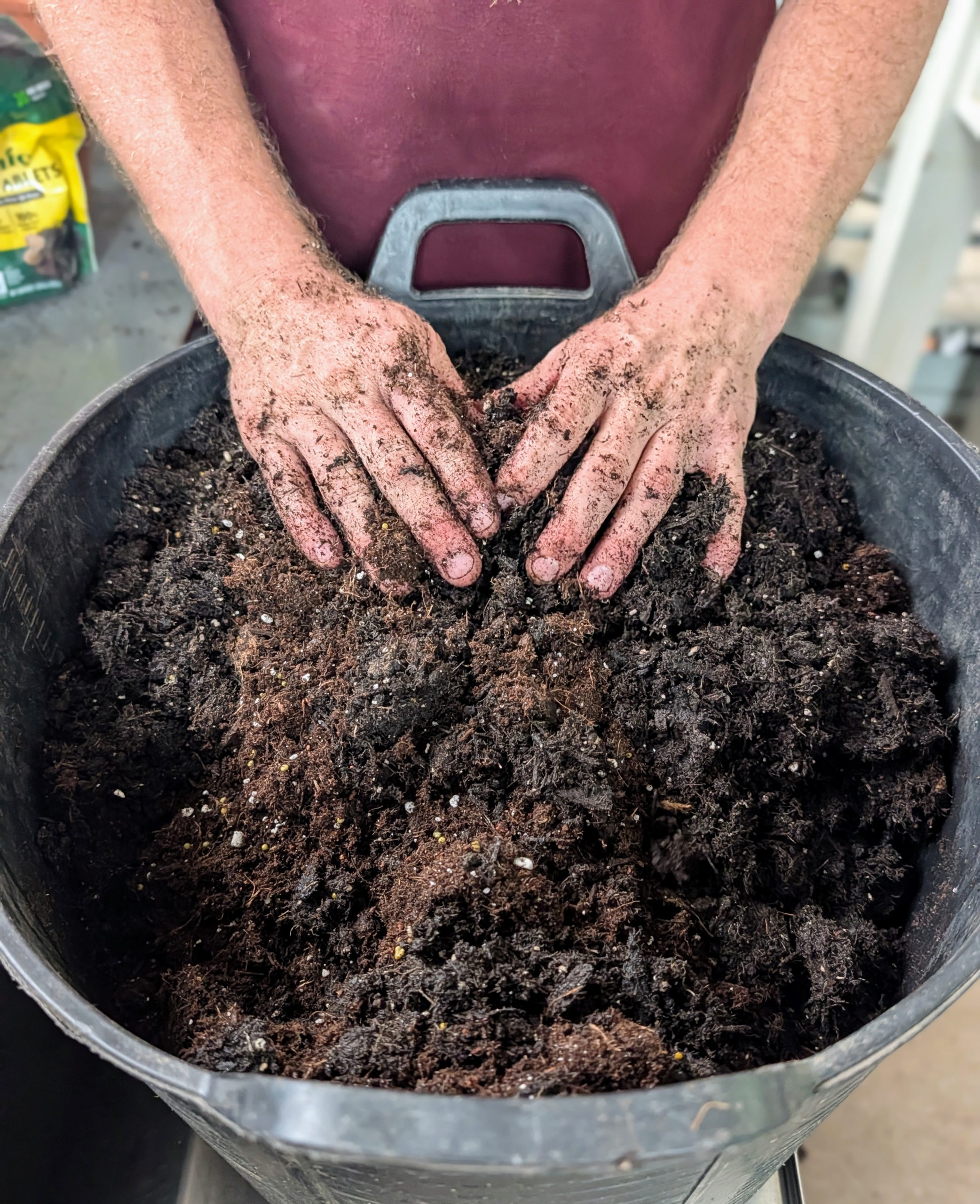
- After adding a generous amount of Osmocote fertilizer, which will provide a good supply of nutrients to the plant for several months. using his hands, Ryan mixes everything together.
-
- Ryan begins to fill the pots with the appropriate mixed medium.
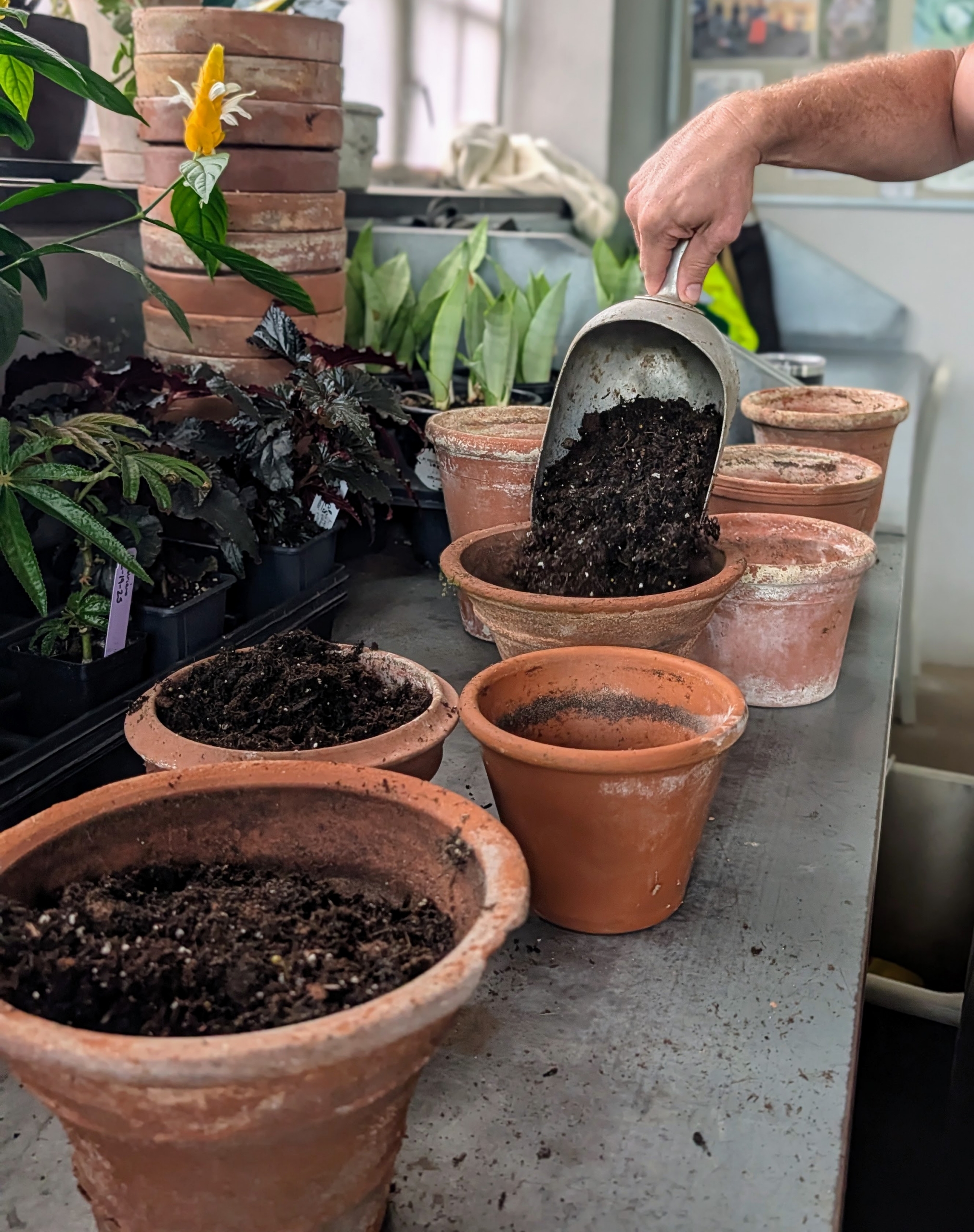
-
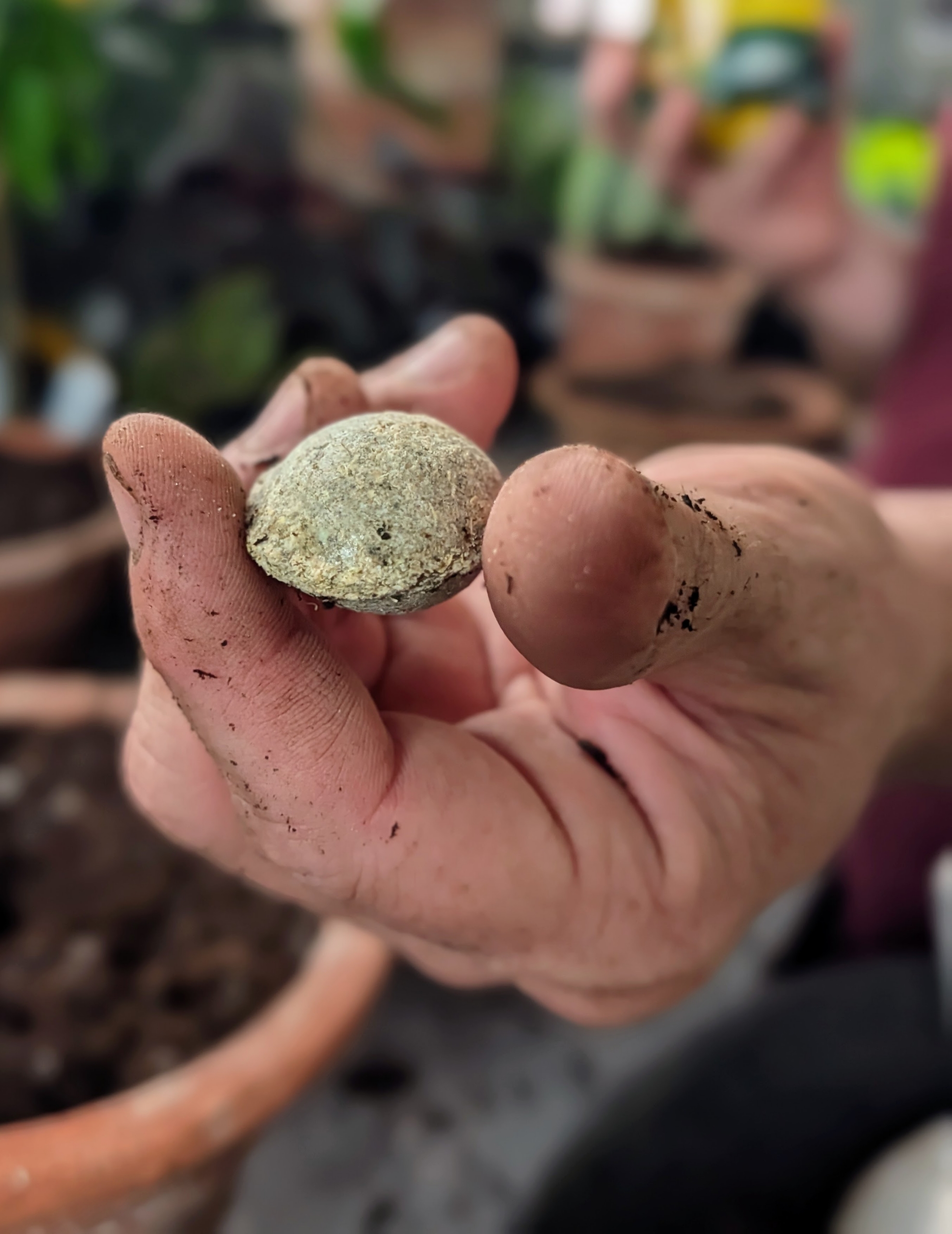
- He also adds one Miracle-Gro Organic Planting Tablet into each pot. Each water soluble tablet is great for both transplants and starter plants.
-
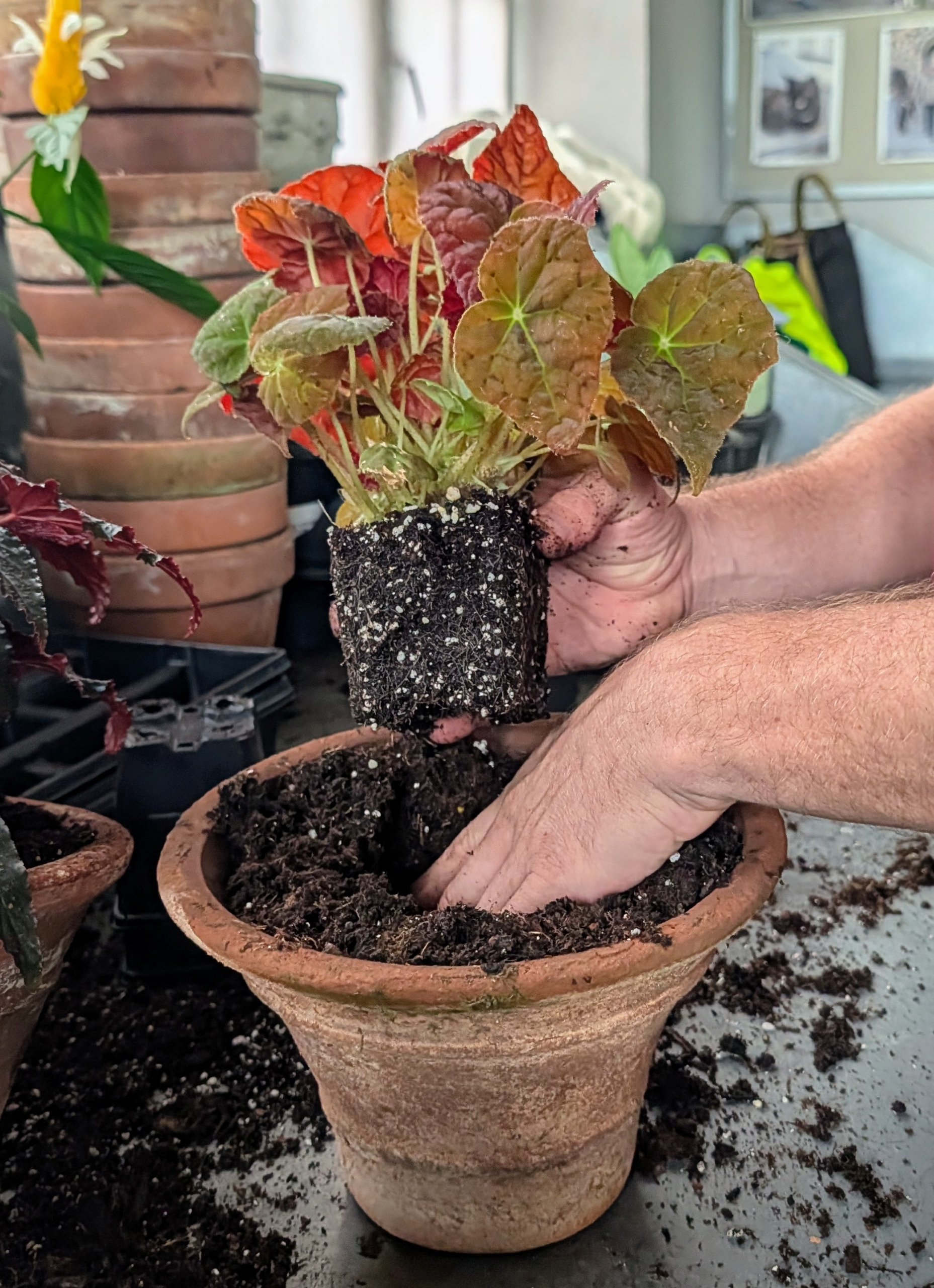
- Ryan gently removes the begonia from its previous pot. This is a good root ball – neither rotted nor root bound. He puts it into a pot that’s only one or two inches larger in diameter than the old one. This pot is a good size for this plant.
-
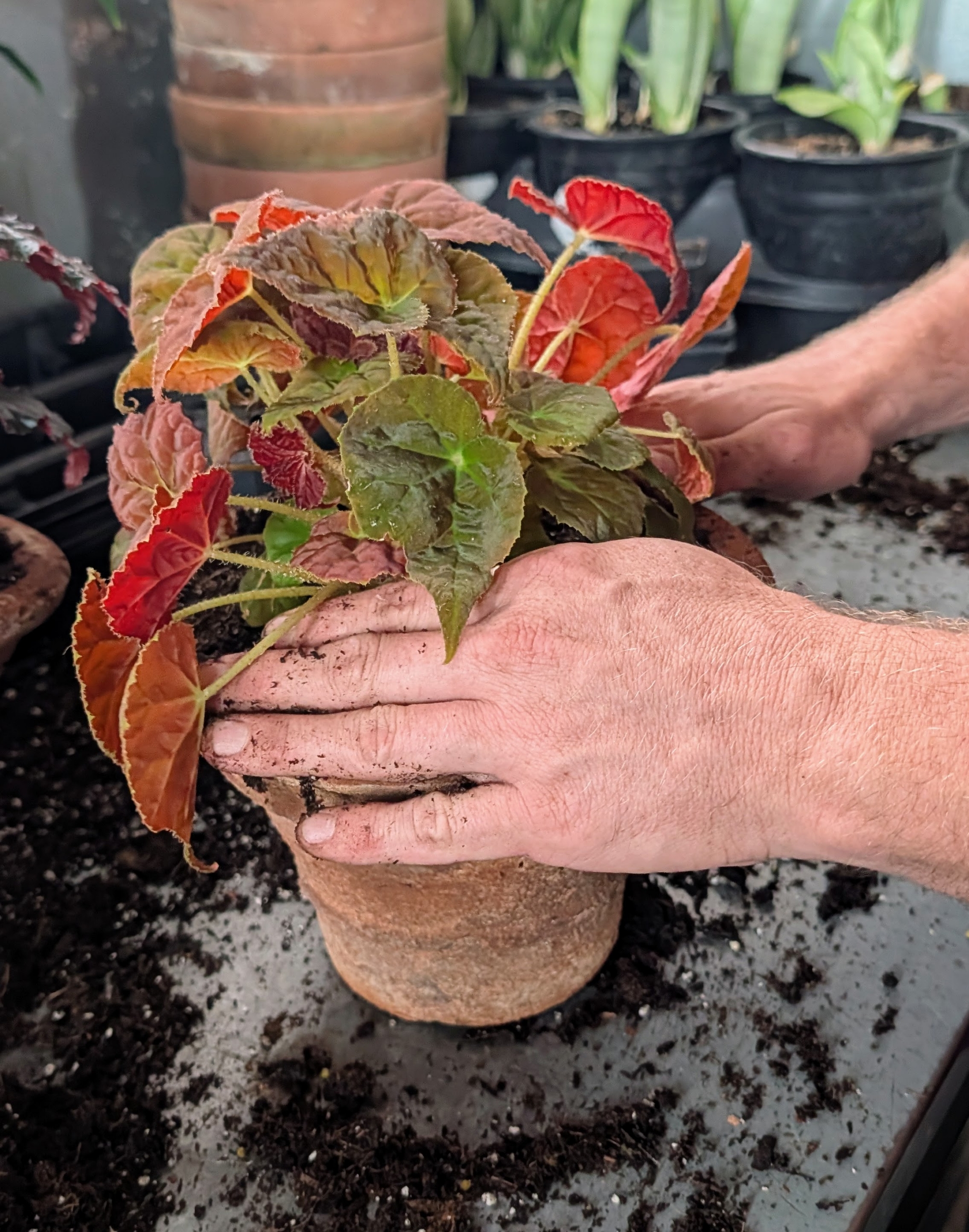
- Ryan plants it at the same depth it was in its original pot, backfills to just under the lip of the vessel, and then presses down slightly on the soil to ensure there is good contact between the plant and the potting mix.
-
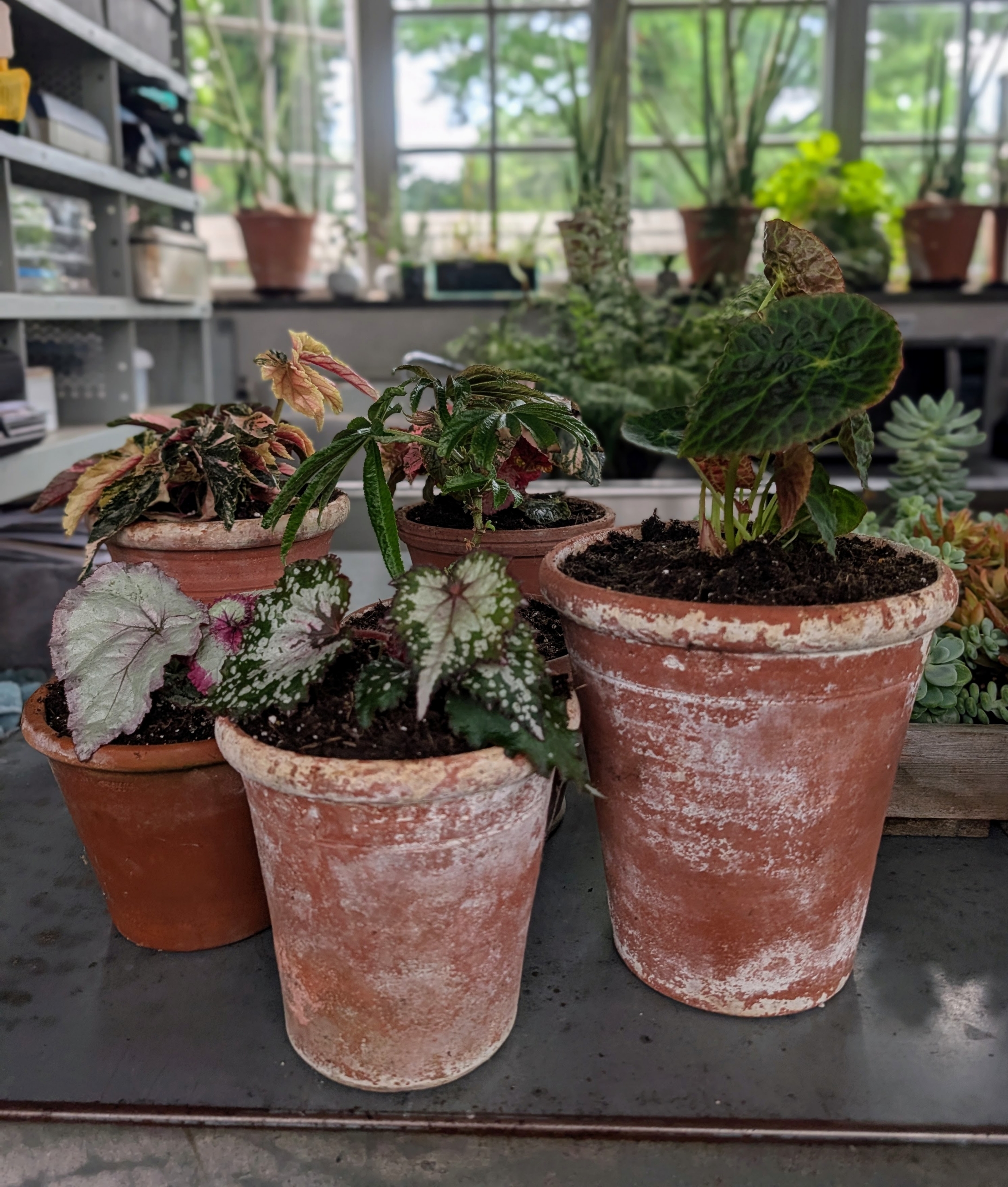
- Here are several of the begonias all potted up in their new containers.
-
- Begonias are happy in their pots for some time, but it is a good idea to repot them every couple of years to provide fresh potting mix elements and new well-draining soil.
-
- Here’s Ryan after potting up the big leaf begonia. Once all are potted, he takes the plants into the greenhouse where I have countless others thriving.
-
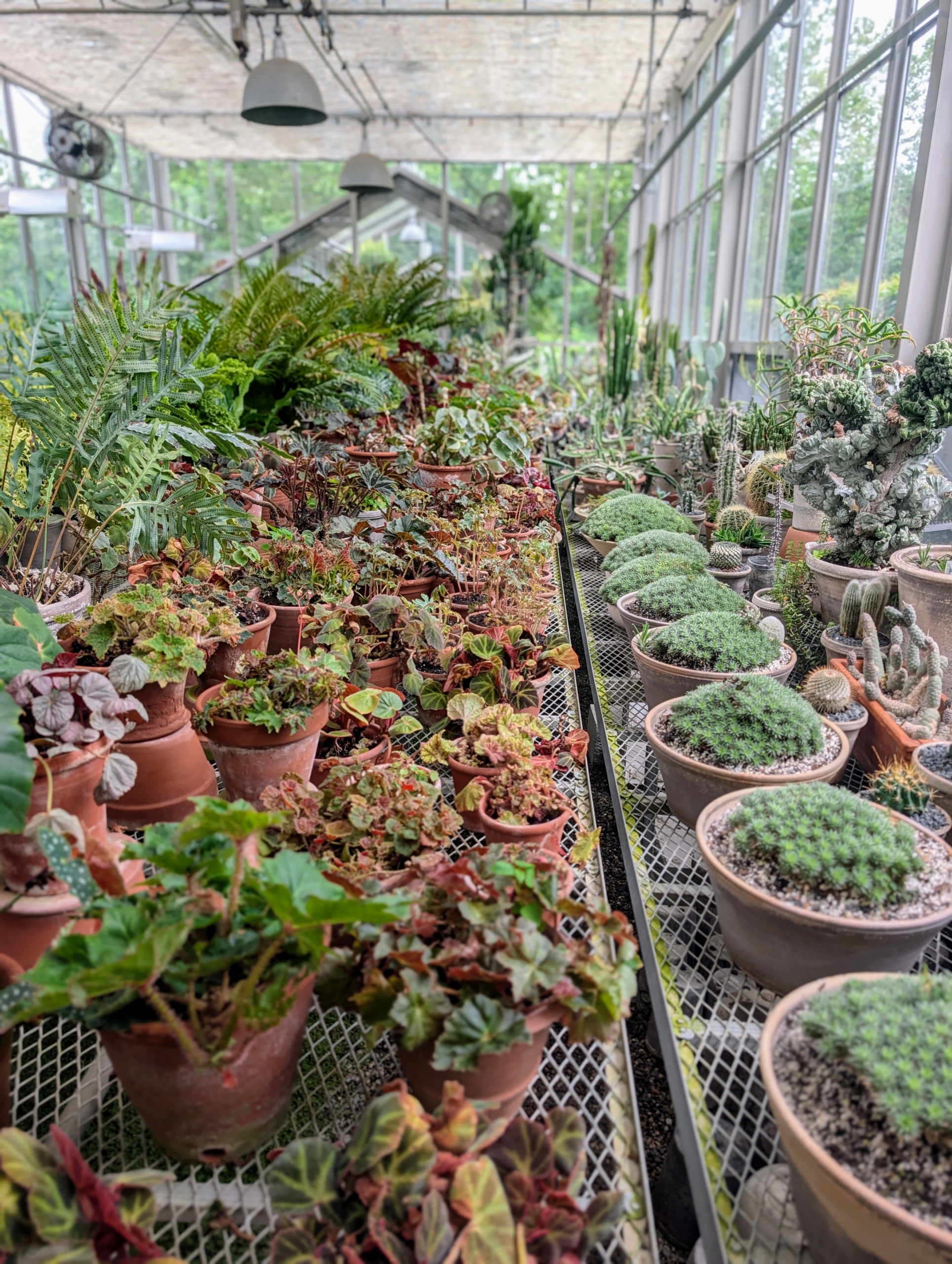
- For potted begonias, the most ideal light is bright, indirect sunlight — mimicking their natural tropical, dappled-light habitat. My greenhouse is perfect for begonias – my new additions will be so happy here.
 Martha Pins


 Martha Tweets

