

Putting Up Frames for Burlap Covers
Every year around this time my farm undergoes a great transformation. It's when all the precious boxwood shrubs and hedges are covered with burlap.
I am a big supporter of "burlapping" shrubbery for the cold season. Burlap casings protect the tender branches from splaying and breaking under heavy ice and snow while shielding the foliage from strong winds. Burlap is more effective than plastic because it allows air to circulate through the plants. It is a practice I've followed for many years, and I think it also provides a cozy and pretty look to the winter landscape. Last week, the crew built the framing for the biggest part of this project - my long Boxwood Allée.
Here are some photos, enjoy.
-

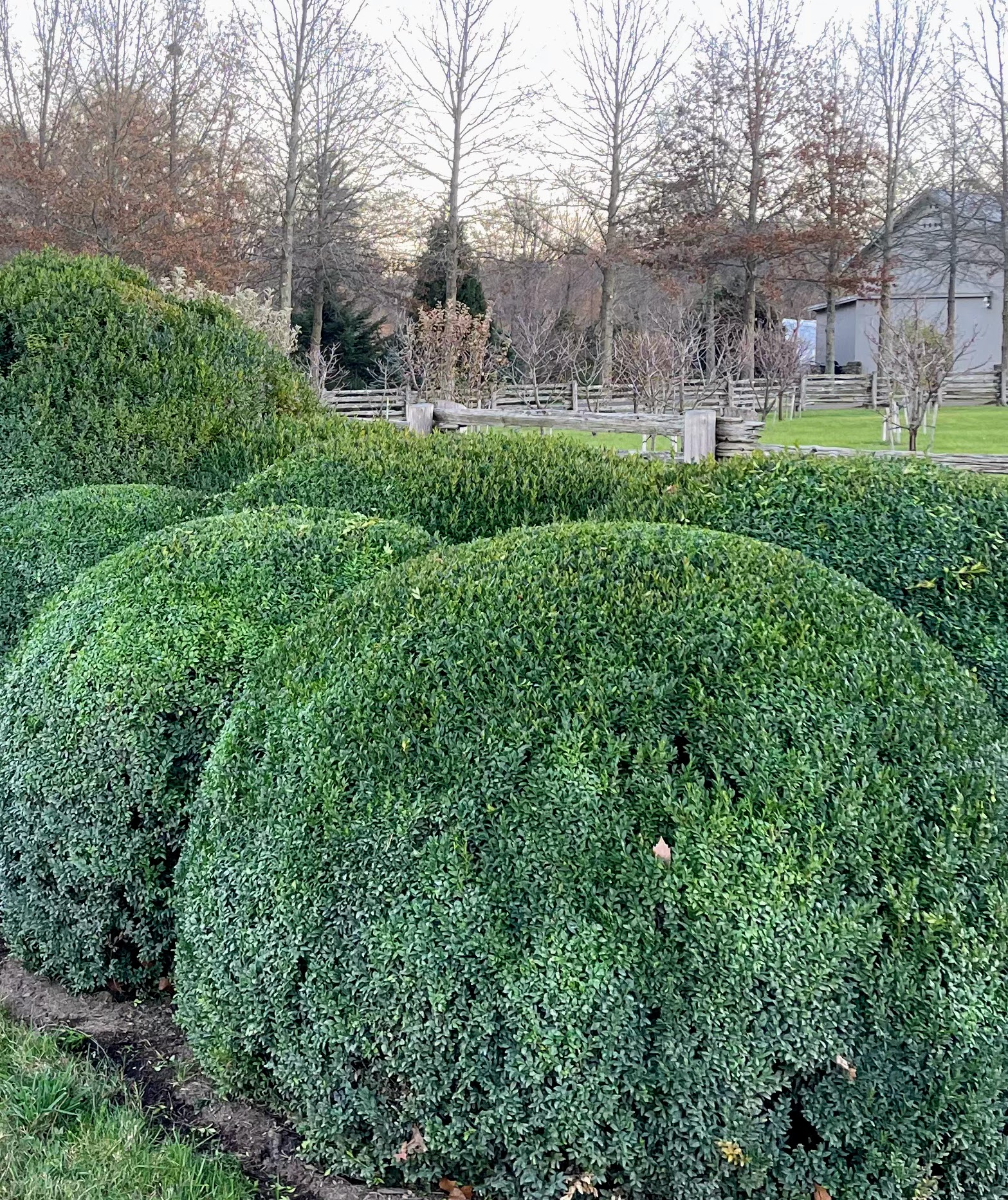
- I have hundreds of boxwood shrubs, Buxus, growing on my property. I use boxwood in borders and hedges, as privacy screens, as accent plants in my formal gardens, and of course in the long allée to my stable. Just before it gets really cold, my outdoor grounds crew begins the process of covering all the boxwood with burlap to protect them from the winter elements.
-
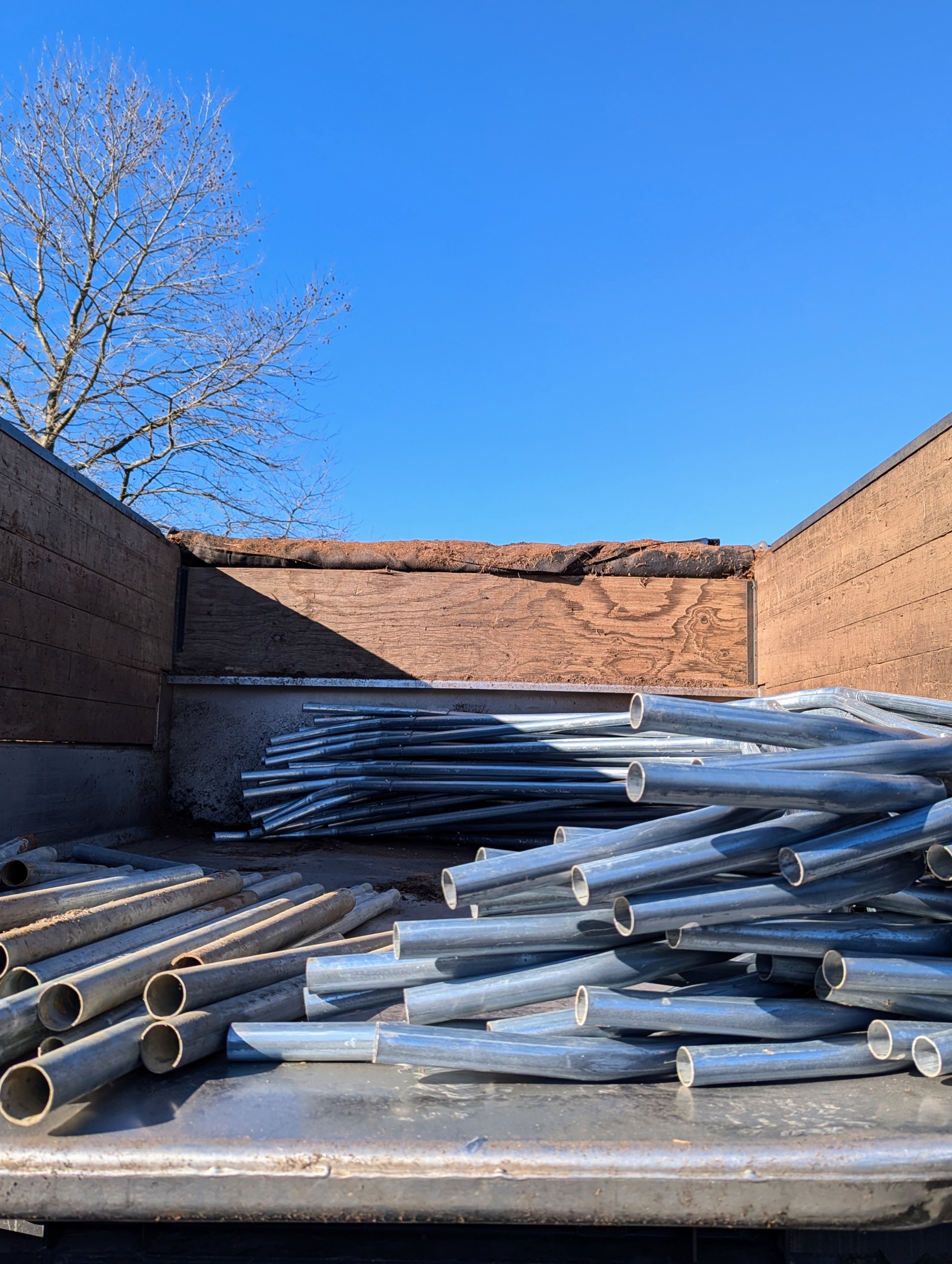
- These pipes, which I keep organized in a back field where I store other supplies, are made from rolled galvanized 16 gauge industrial tubing. They are actually the metal parts of greenhouse hoop houses.
-
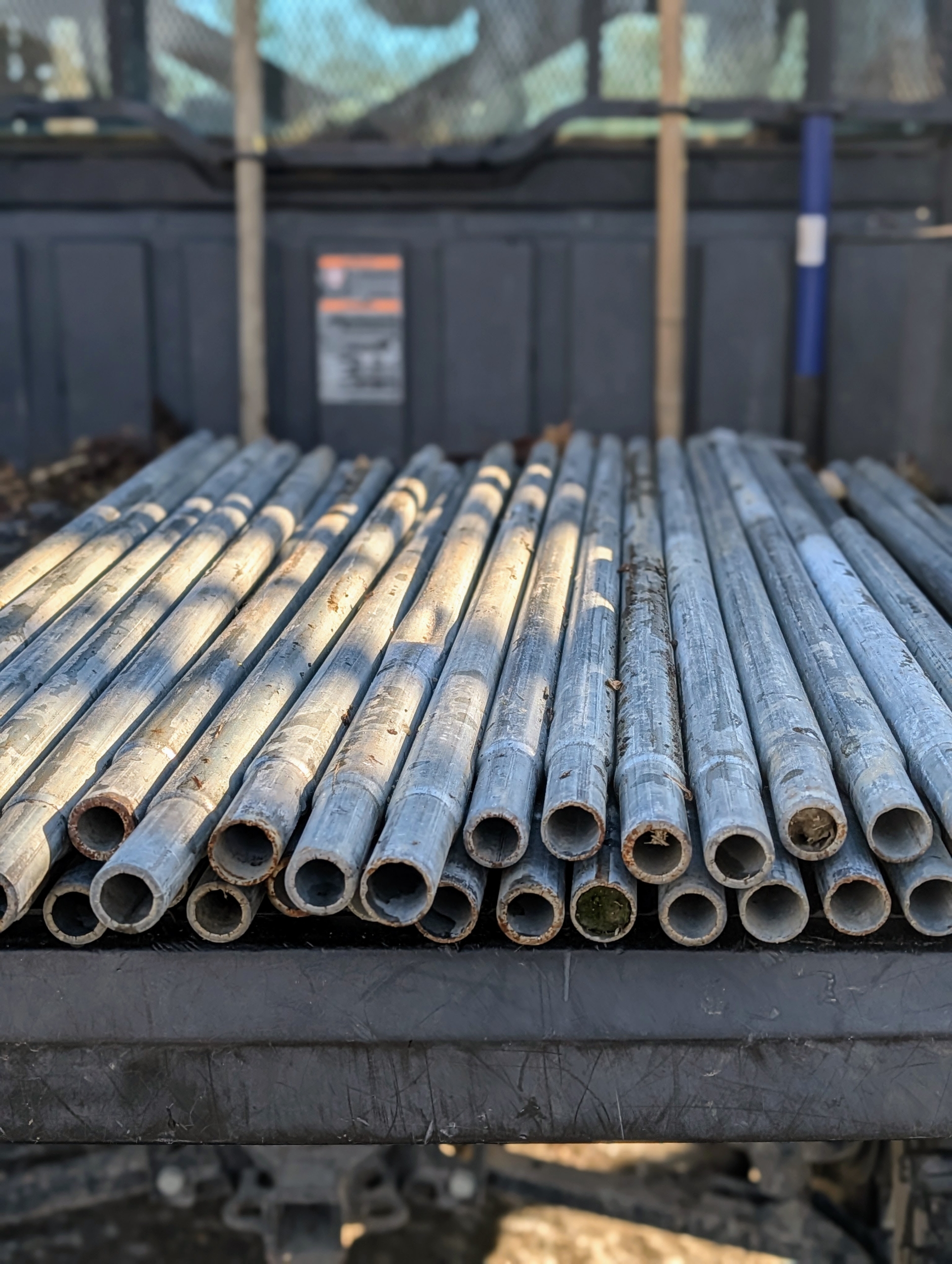
- A few years ago, I came up with the idea to also use them for the burlap framing. In all, hundreds of ground stakes, purlin pipes, connectors, nuts, and bolts are used for the project.
-
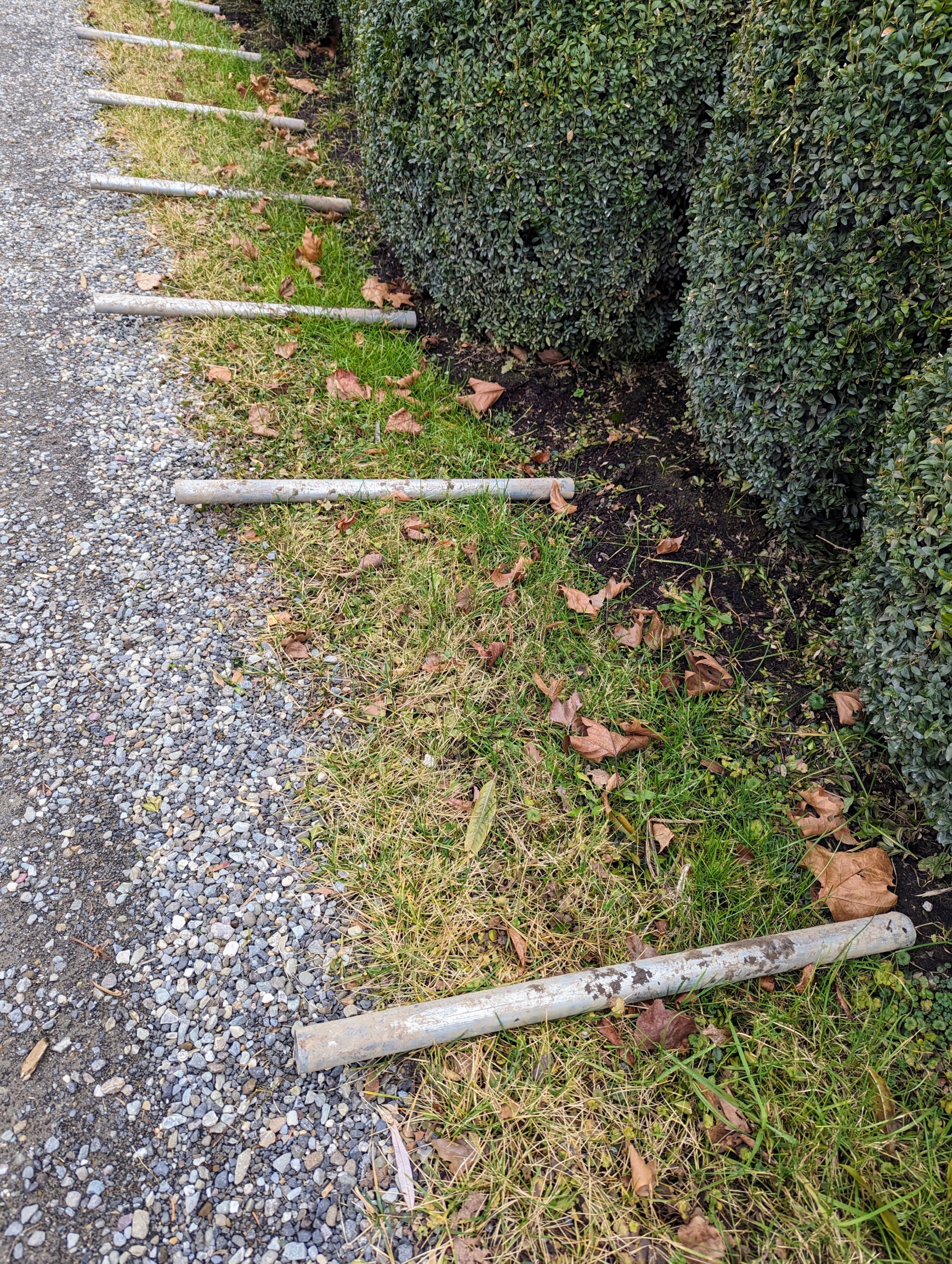
- To start, pieces are placed along the allée in a production line process.
-
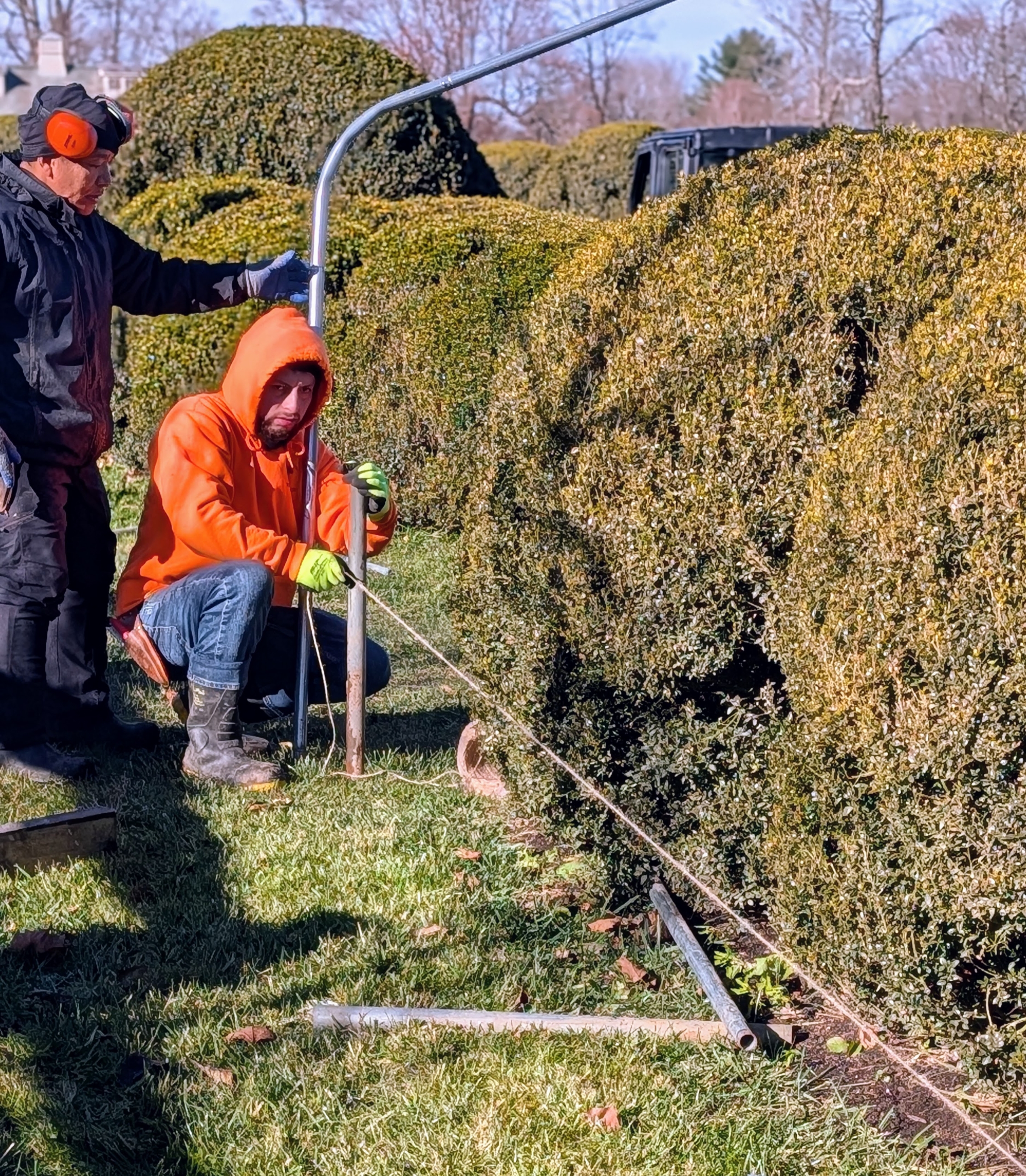
- As with many projects at the farm, preparation is key. Here, Alex and Phurba secure twine at one end to provide a straight guide for the pipe placement.
-
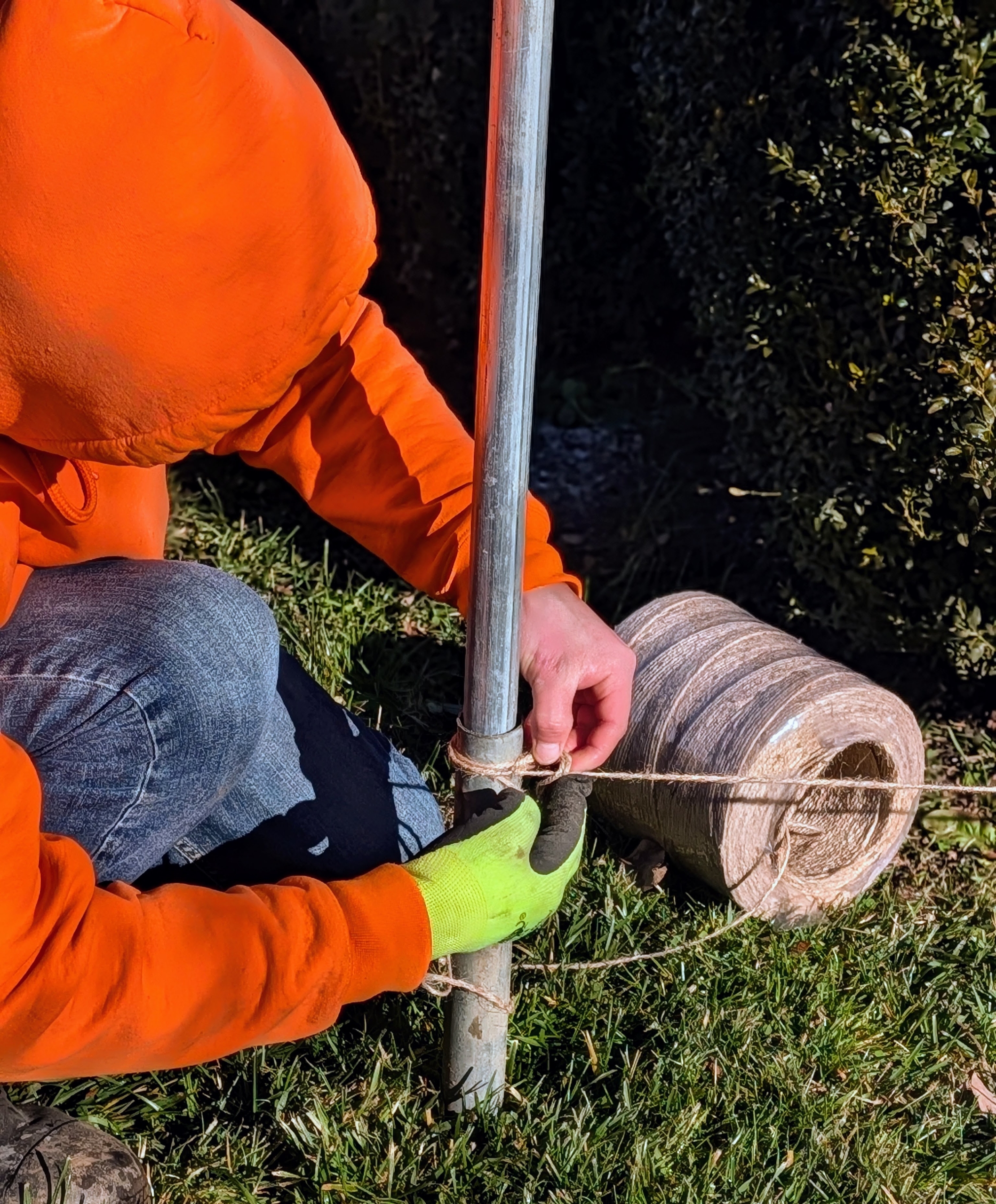
- Alex checks several times to make sure the twine runs straight down the allée. These boxwood shrubs grow a lot every year, so the measurement and placement are always different.
-
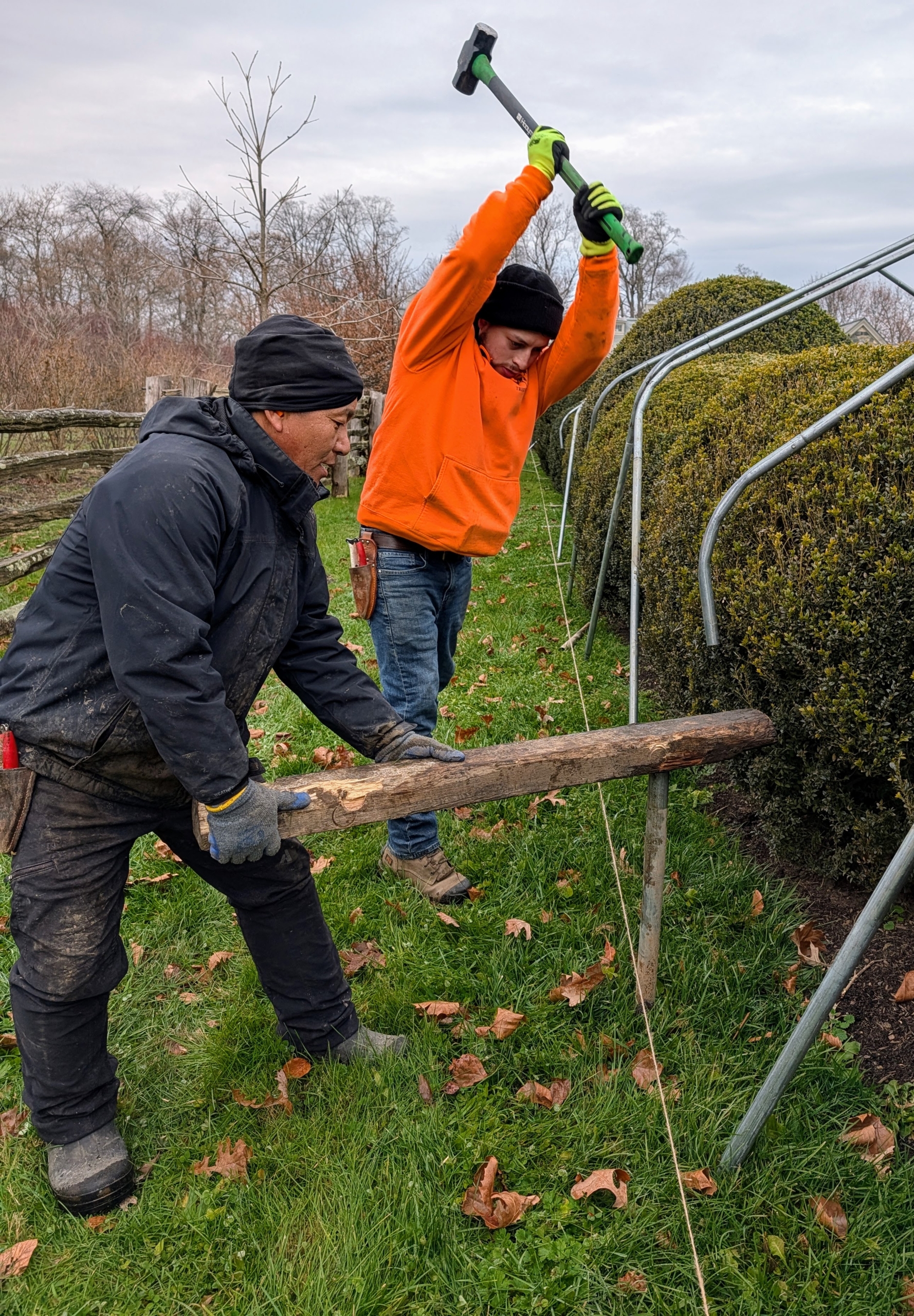
- Next, Alex pounds the ground pipes into the soil as Phurba holds the wood to protect the pipe from any damage.
-
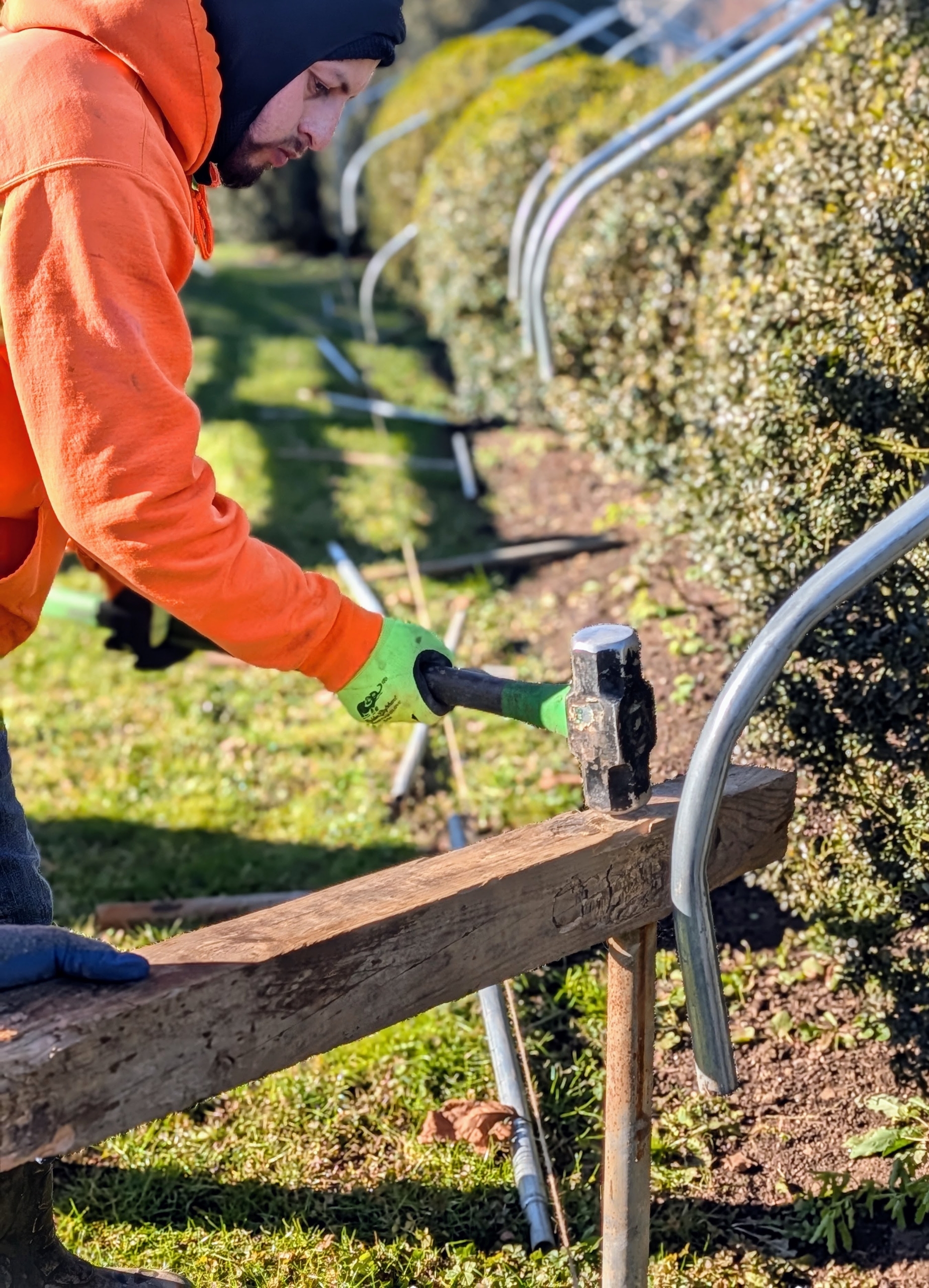
- Alex is young and strong – it only takes a few hits to get it about a foot deep into the ground.
-
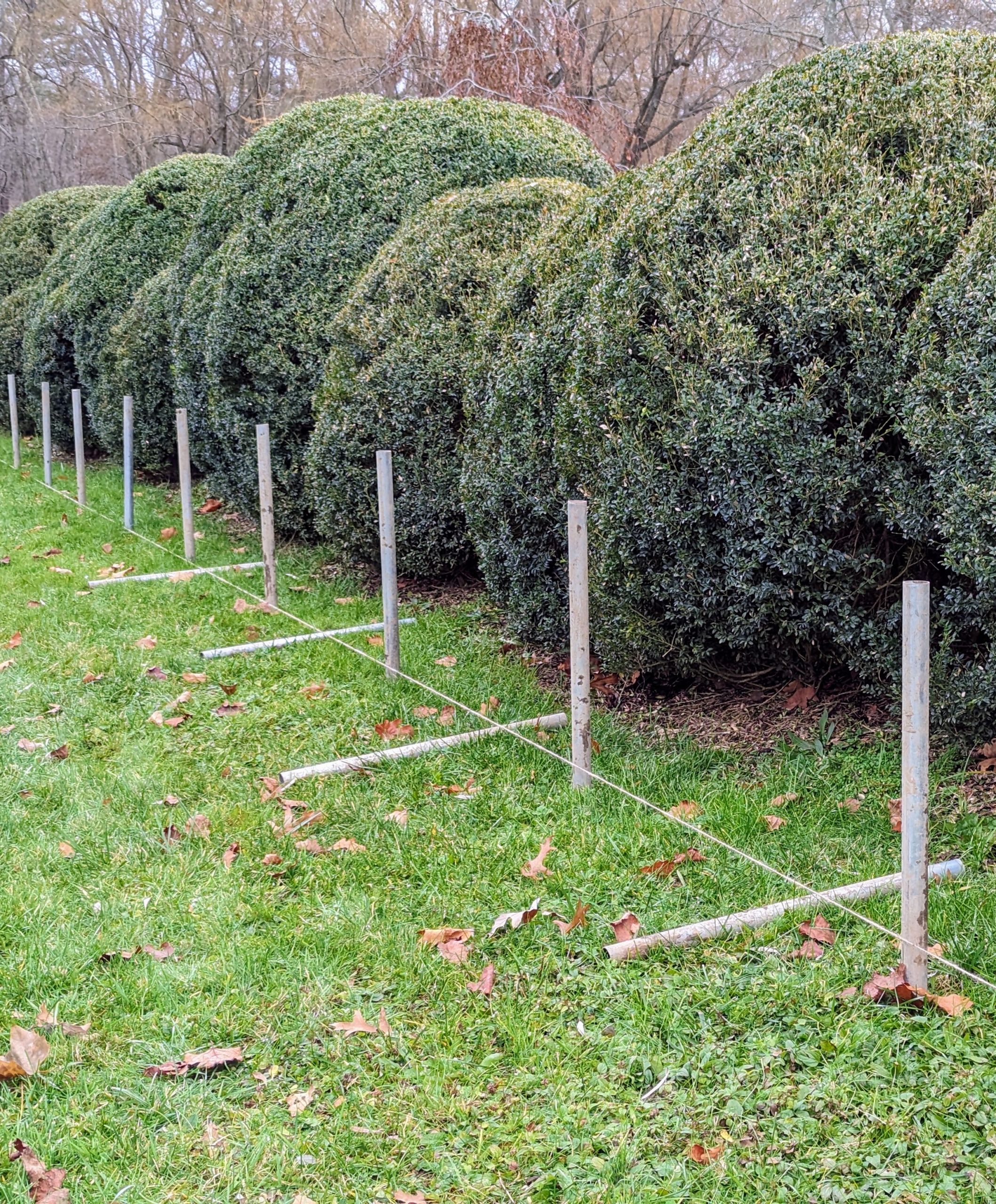
- The ground pipes are installed every four feet along the allée. These hollow pipes will anchor the supports.
-
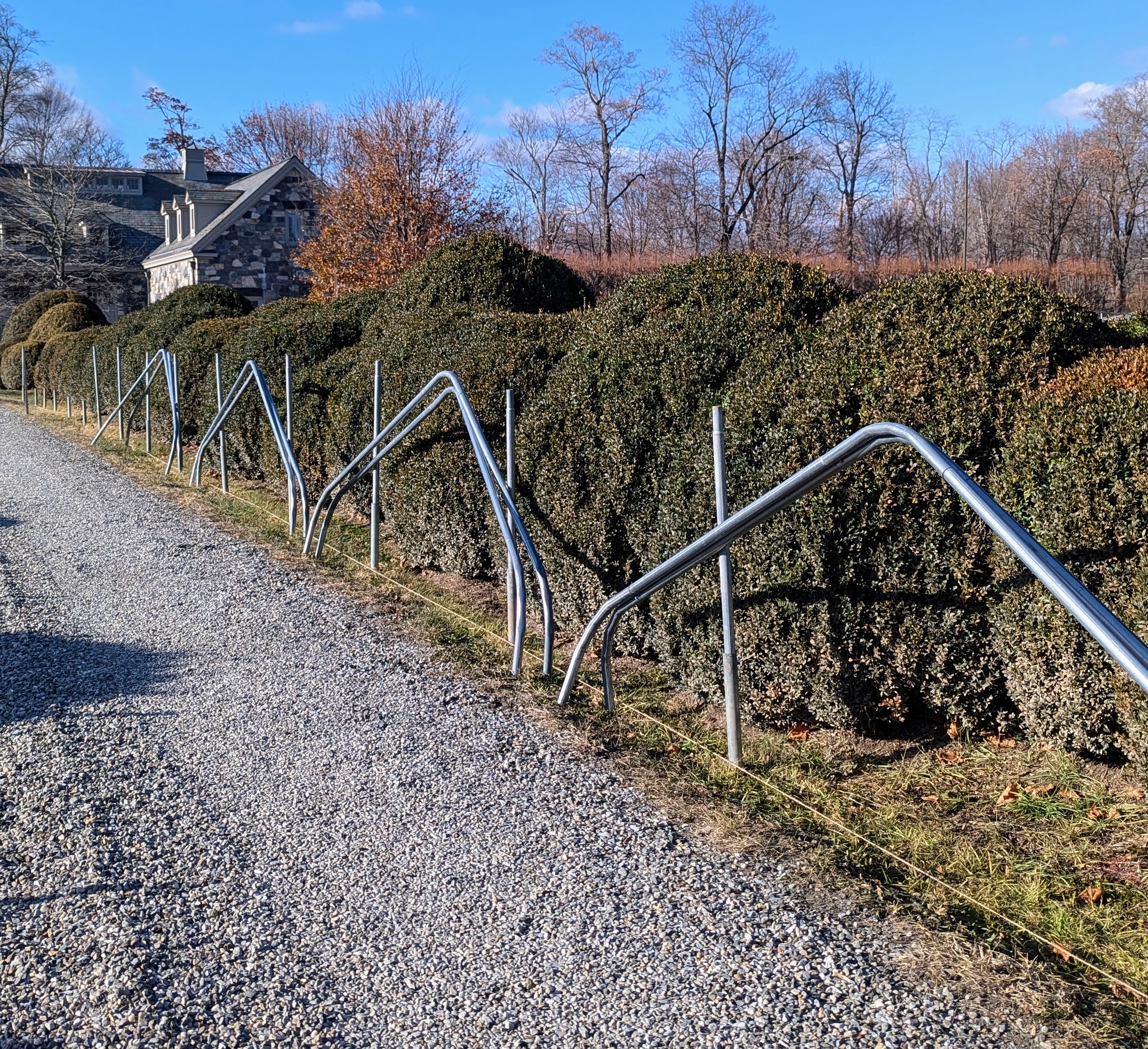
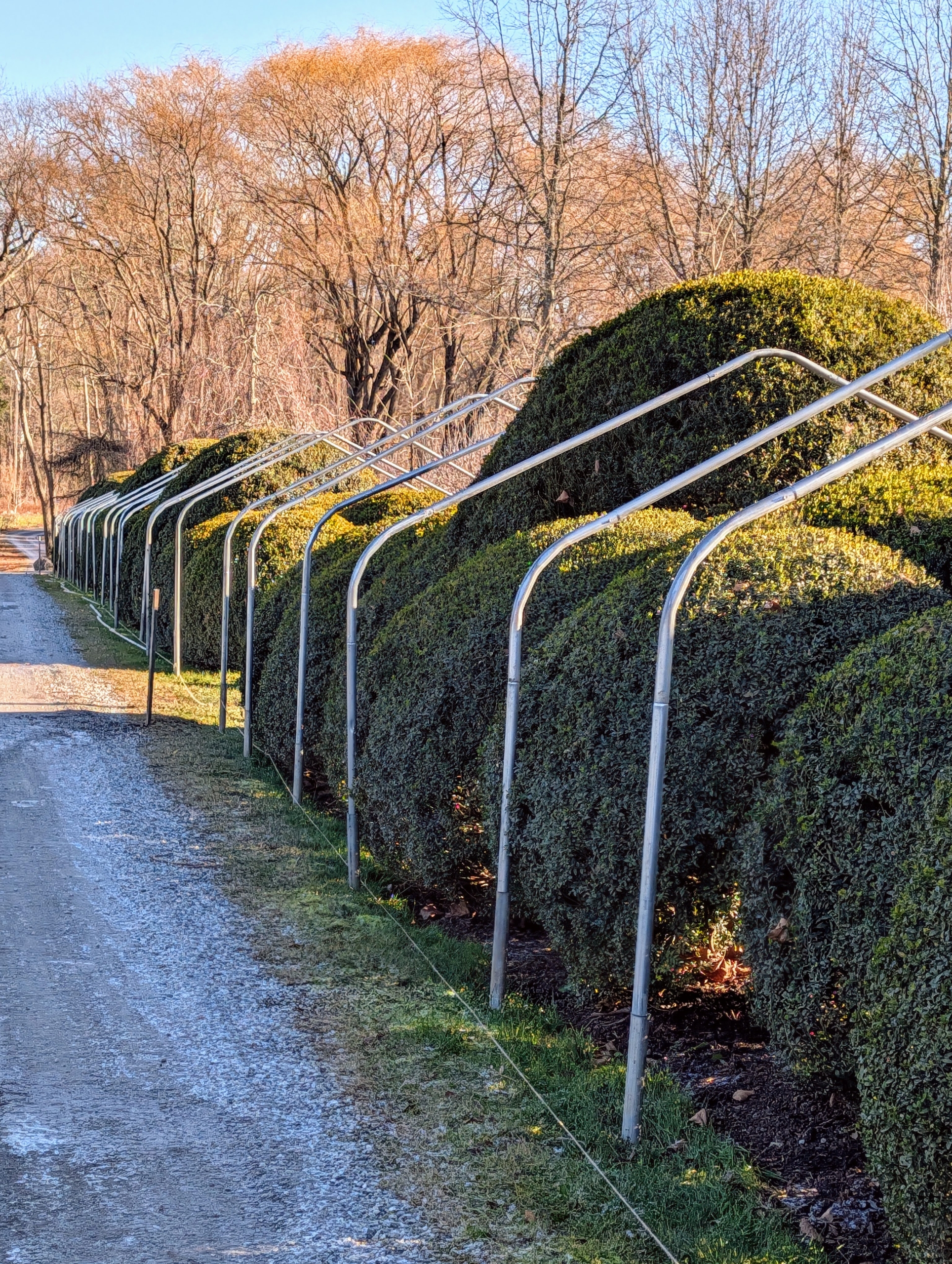
- These are 10-foot wide bow sections – they will last quite a while and give the boxwood a lot of room to grow. Building the frame at least a foot taller than the majority of the boxwood protects any heavy snow from weighing down onto the tender foliage.
-
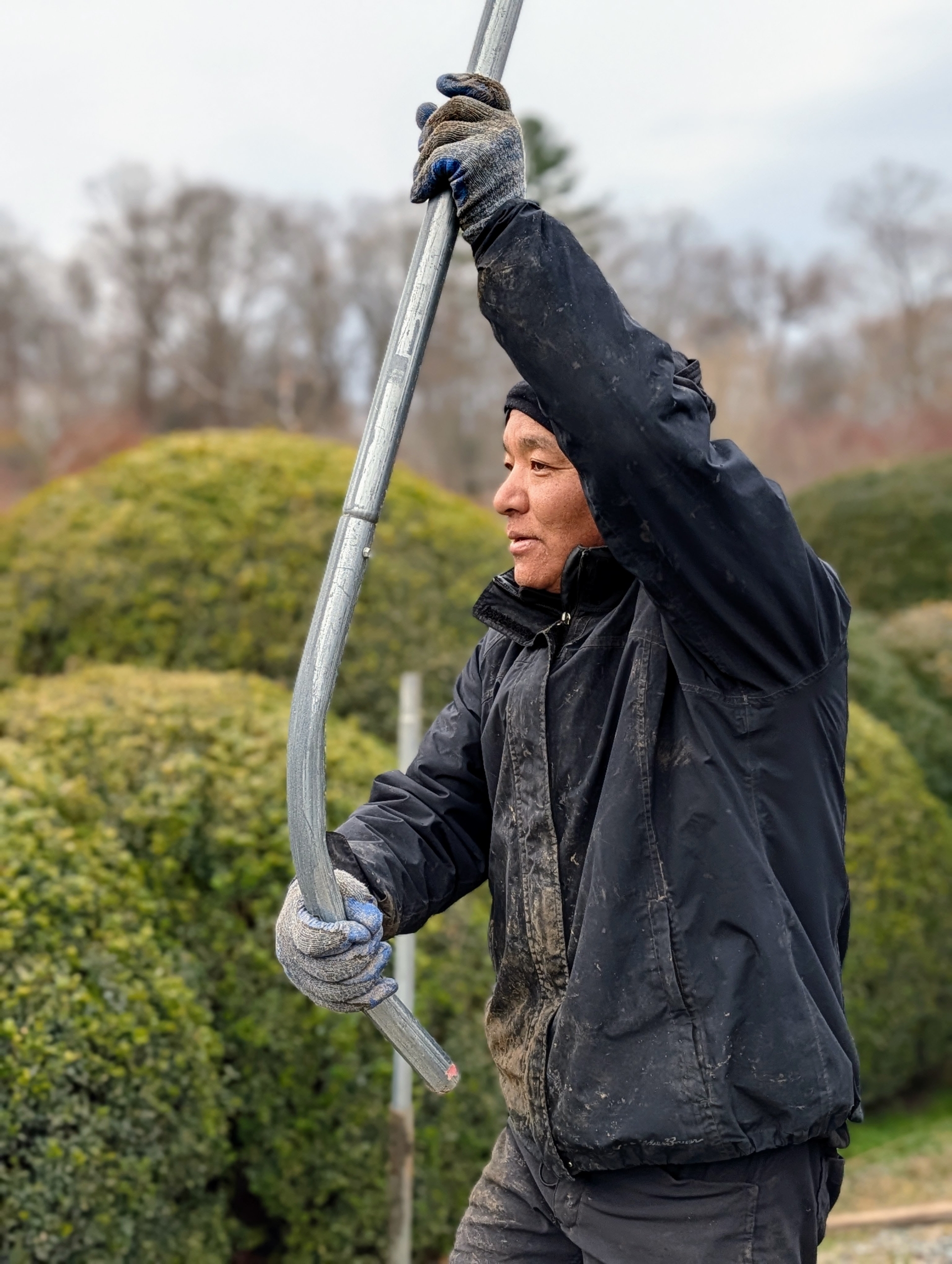
- Phurba carries one of the bow sections to its designated location.
-
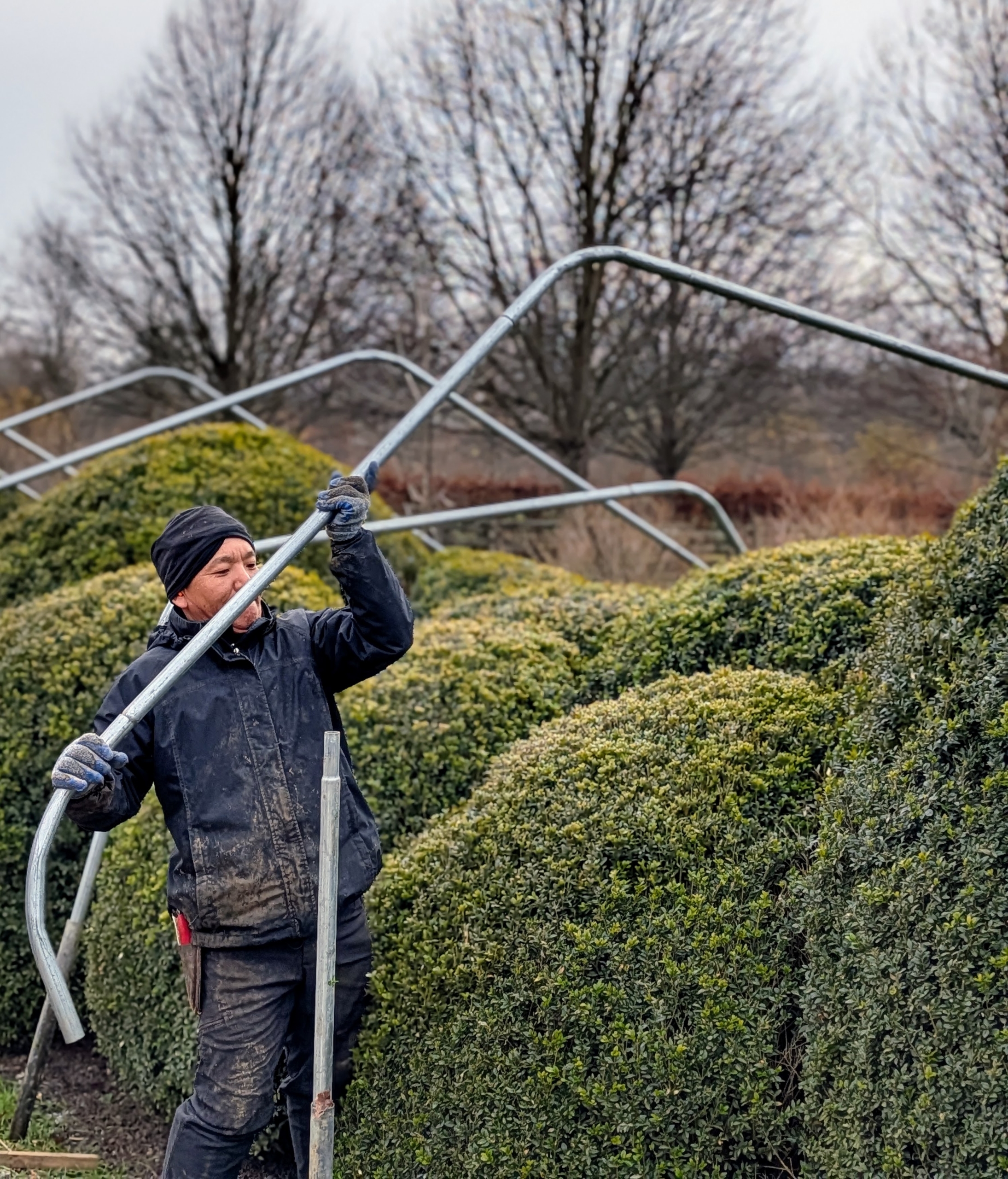
- Working in pairs, these bow sections are positioned on both sides of the boxwood.
-
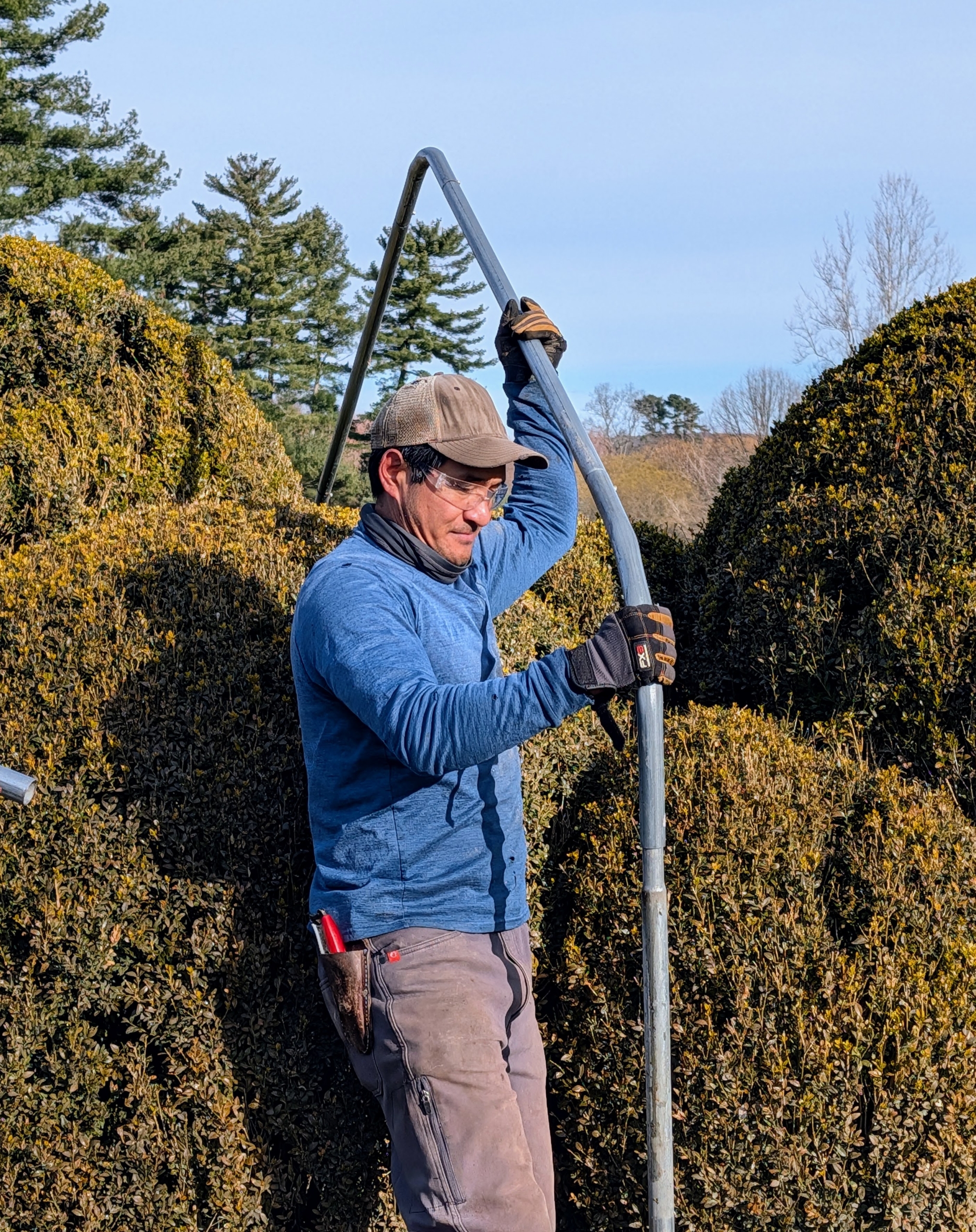
- Here’s Pasang on the pother side securing the end of the bow pipe section.
-
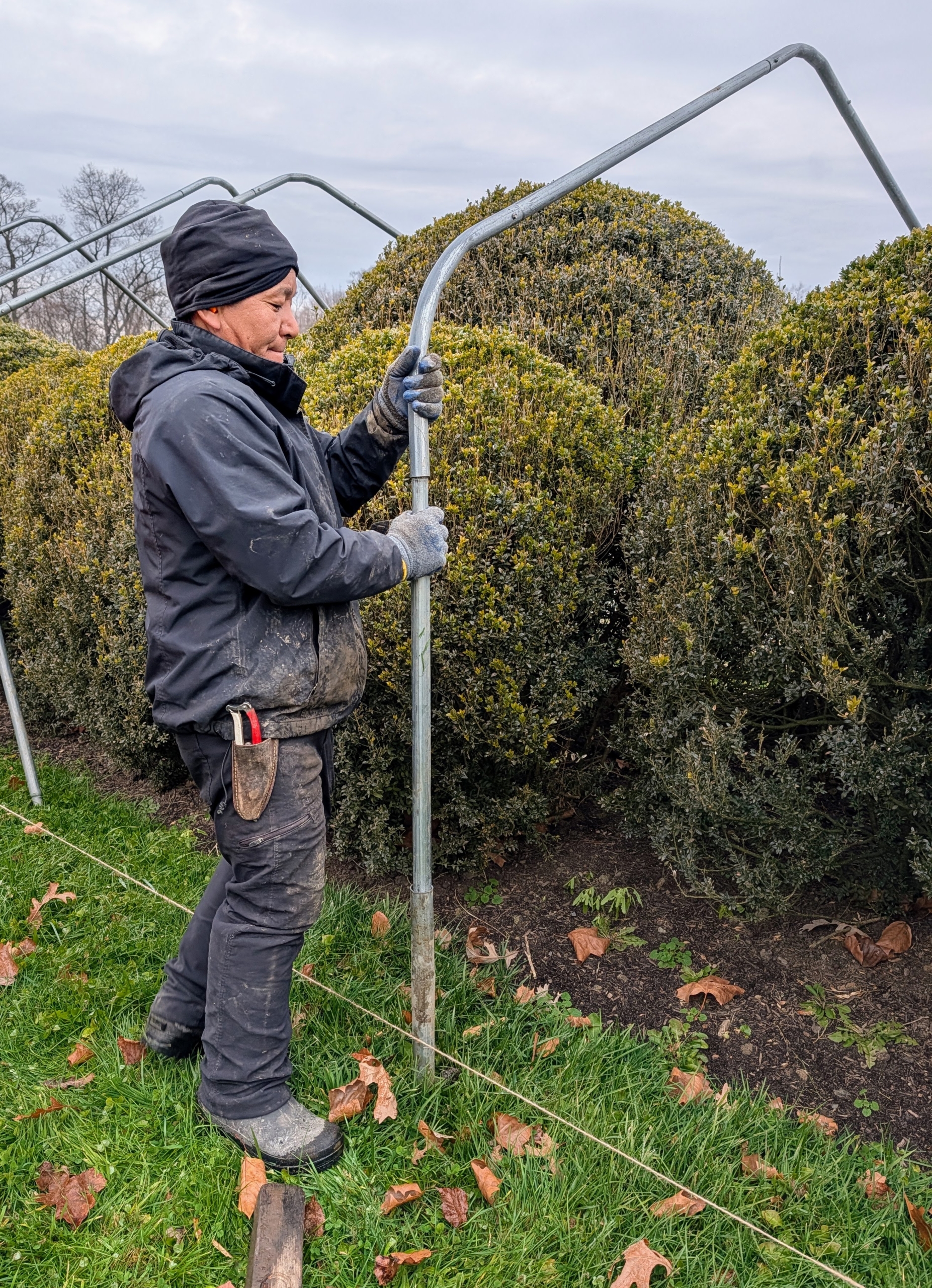
- Each end of the bow piece is then checked to make sure they are secure and straight.
-
- The boxwood has grown quite a bit in the last couple of years, but there is still room under the framing to accommodate more growth.
-
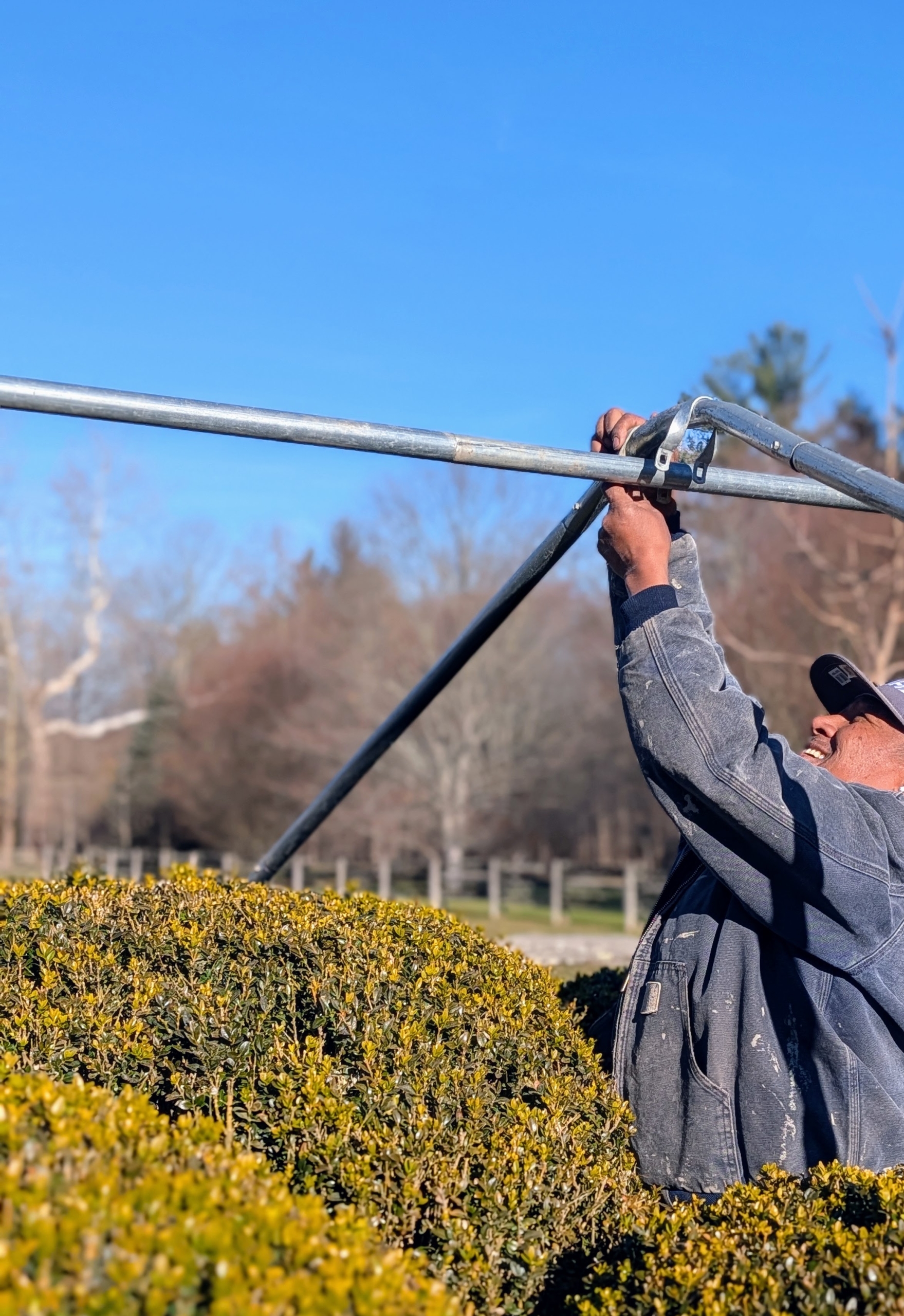
- Long center pieces support the perpendicular bow sections.
-
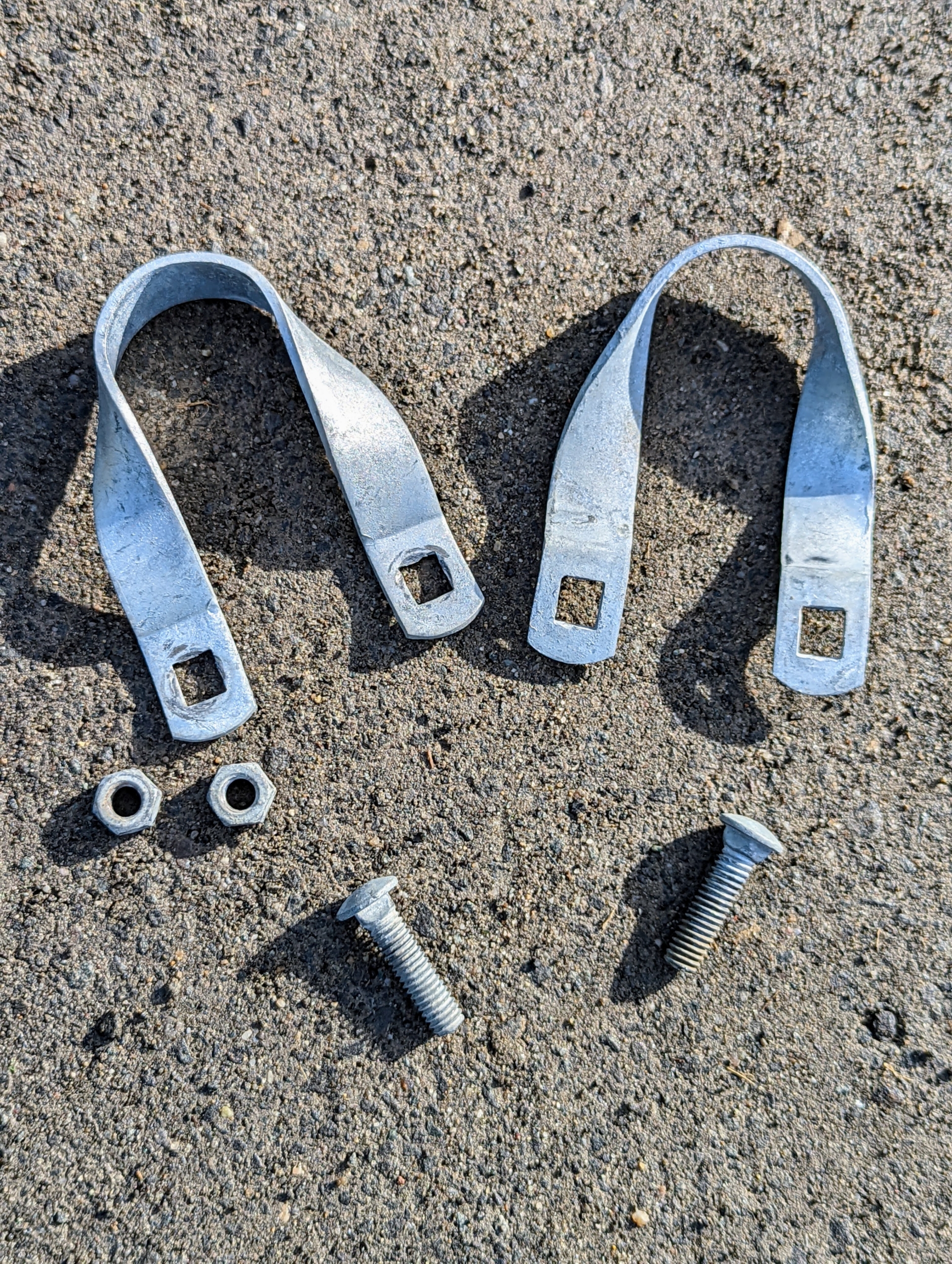
- Holding the center piece in place are these tension purlin brackets. They connect the center piping to the bow sections.
-
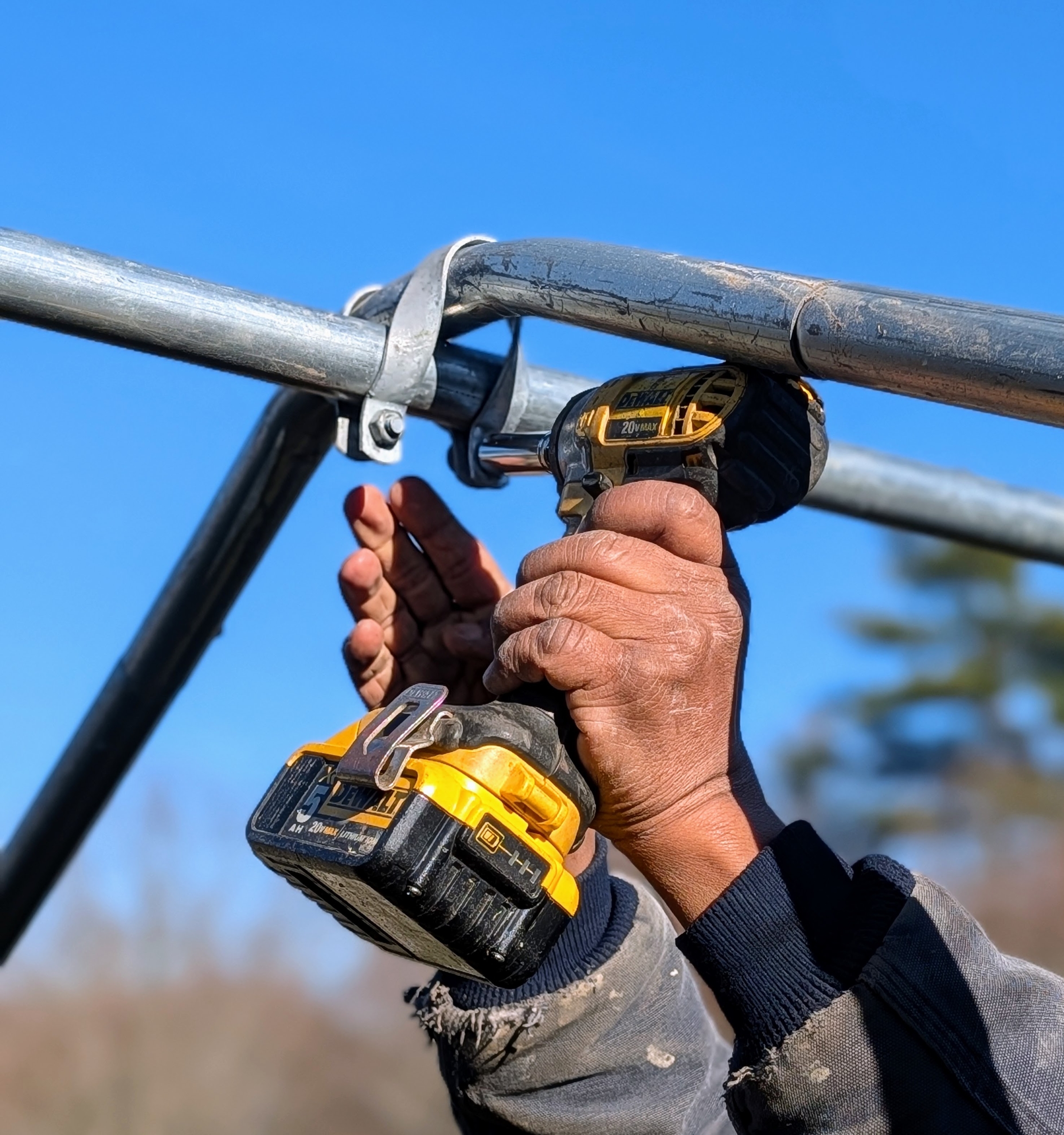
- Pete fastens one pair of purlins to the bow section at the center peak.
-
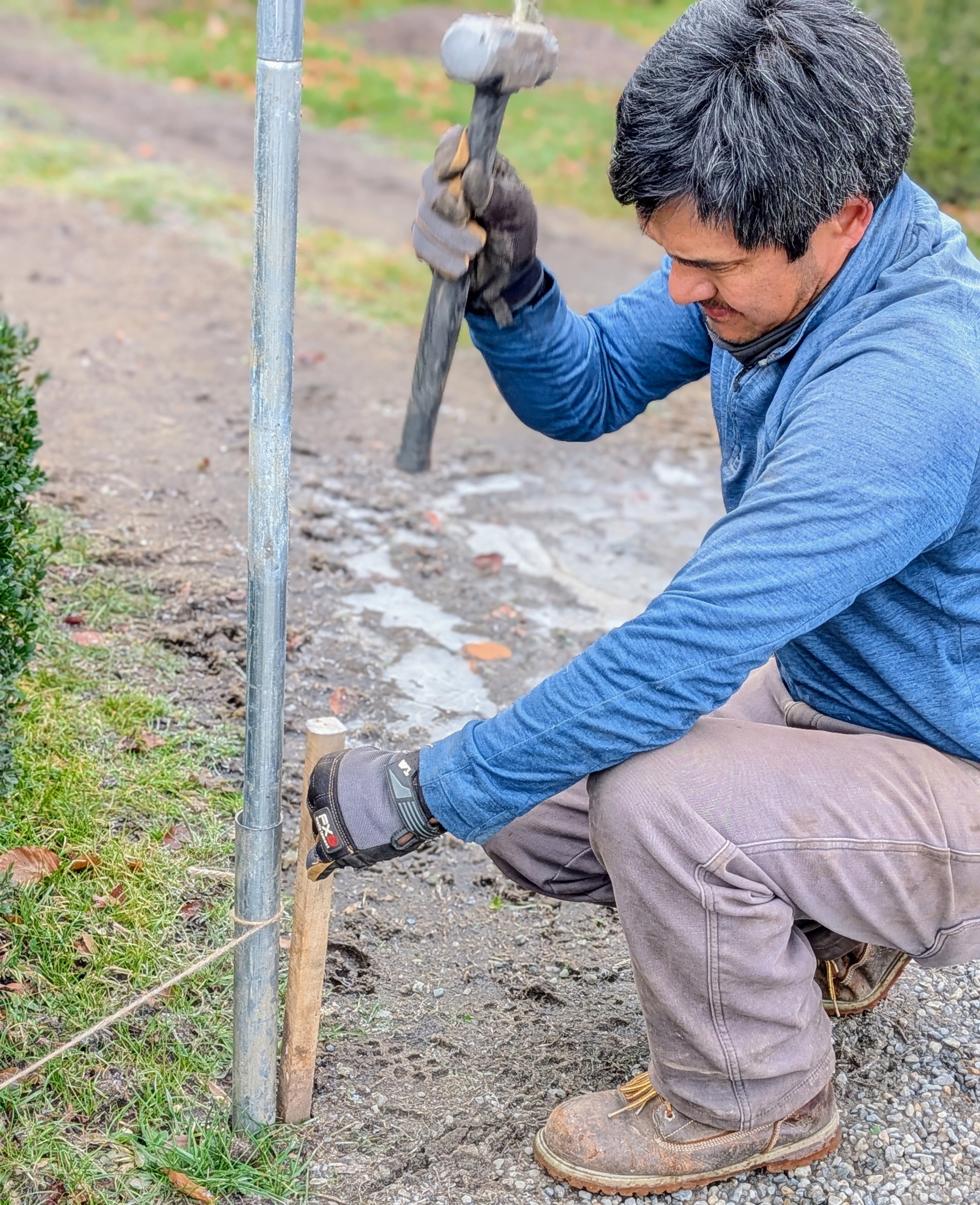
- And then small pieces of wood are pounded into the ground next to each steel ground stake. These short wooden pieces provide points at which the burlap can be secured.
-
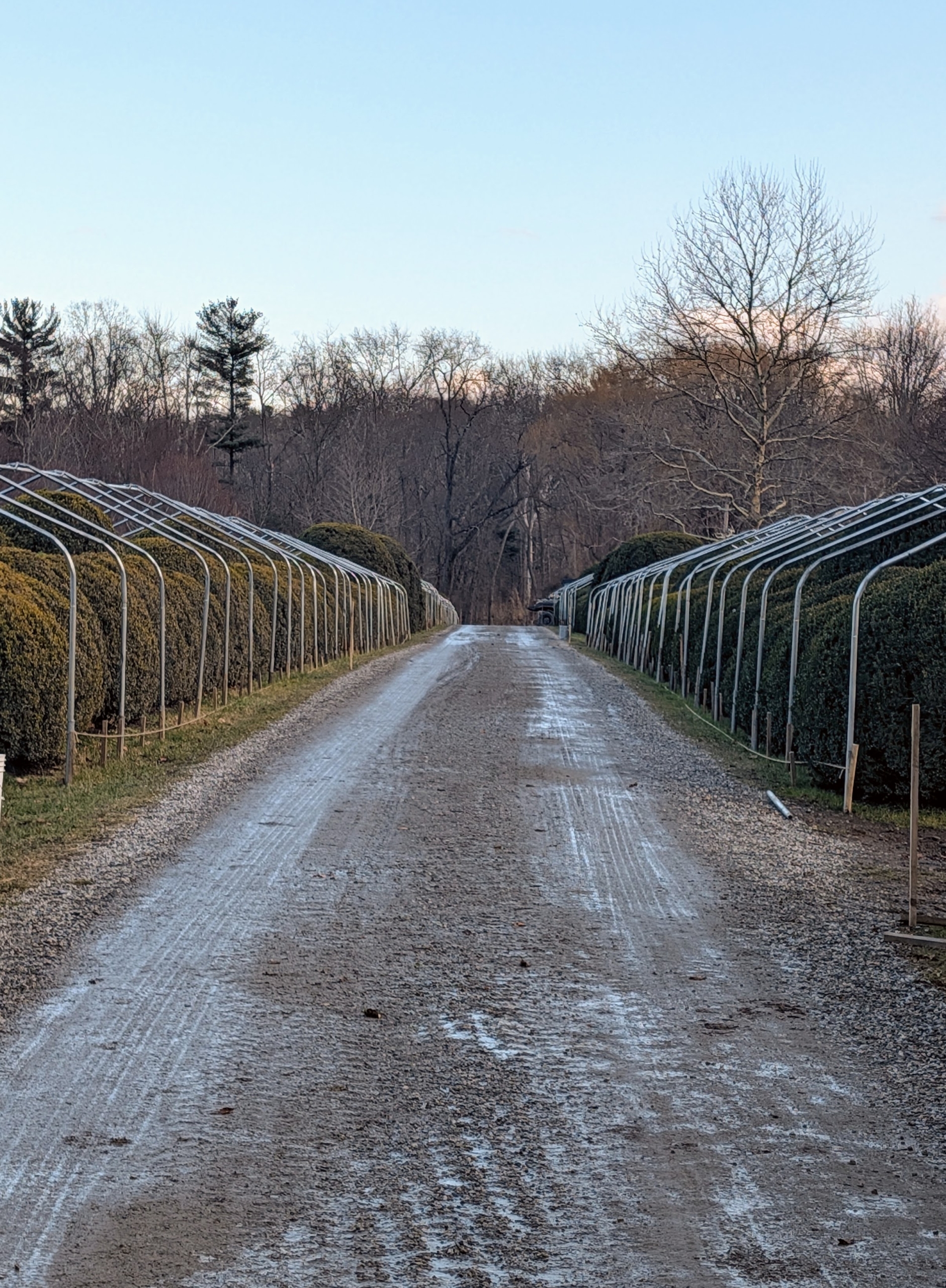
- Constructing the frame for the burlap takes several days, but the process is well worth the effort. Any snow that accumulates on top of the finished structures will slide down the sides. This boxwood allée will be fed one more time and then enveloped in burlap for the season.
 Martha Pins


 Martha Tweets

