

Starting Flower Seeds in My Greenhouse
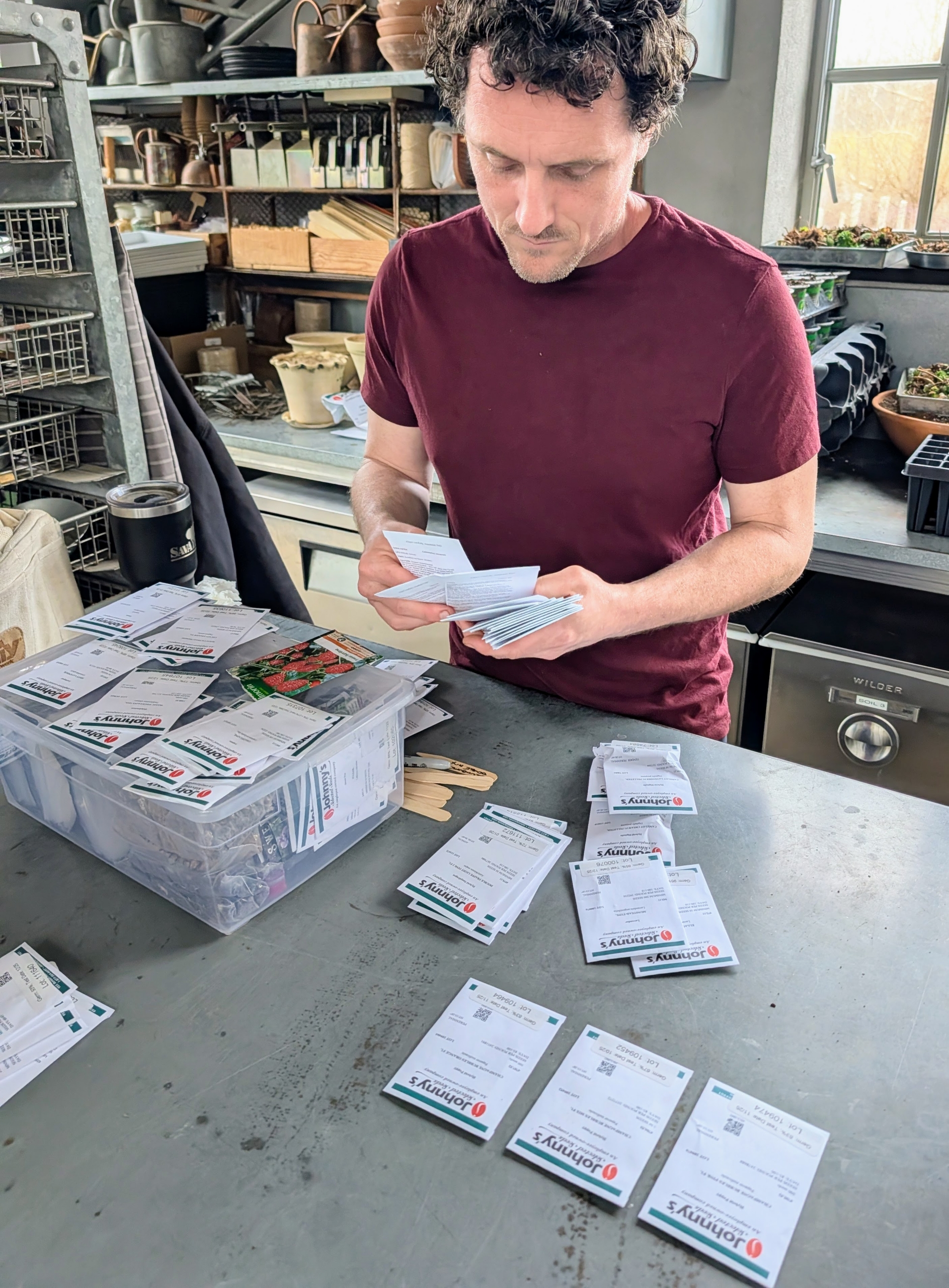
Here at my farm a mix of rain and snow are expected today, but inside my greenhouse there's a flurry of spring activity. My head gardener, Ryan McCallister, is starting flower seeds in preparation for the coming growing season.
We sow thousands of seeds every year - all those wonderful seeds I enjoy purchasing during my travels and seeds we order from our favorite sources. Our first trays include a selection of poppies, foxgloves, and violas.
Enjoy these photos.
-

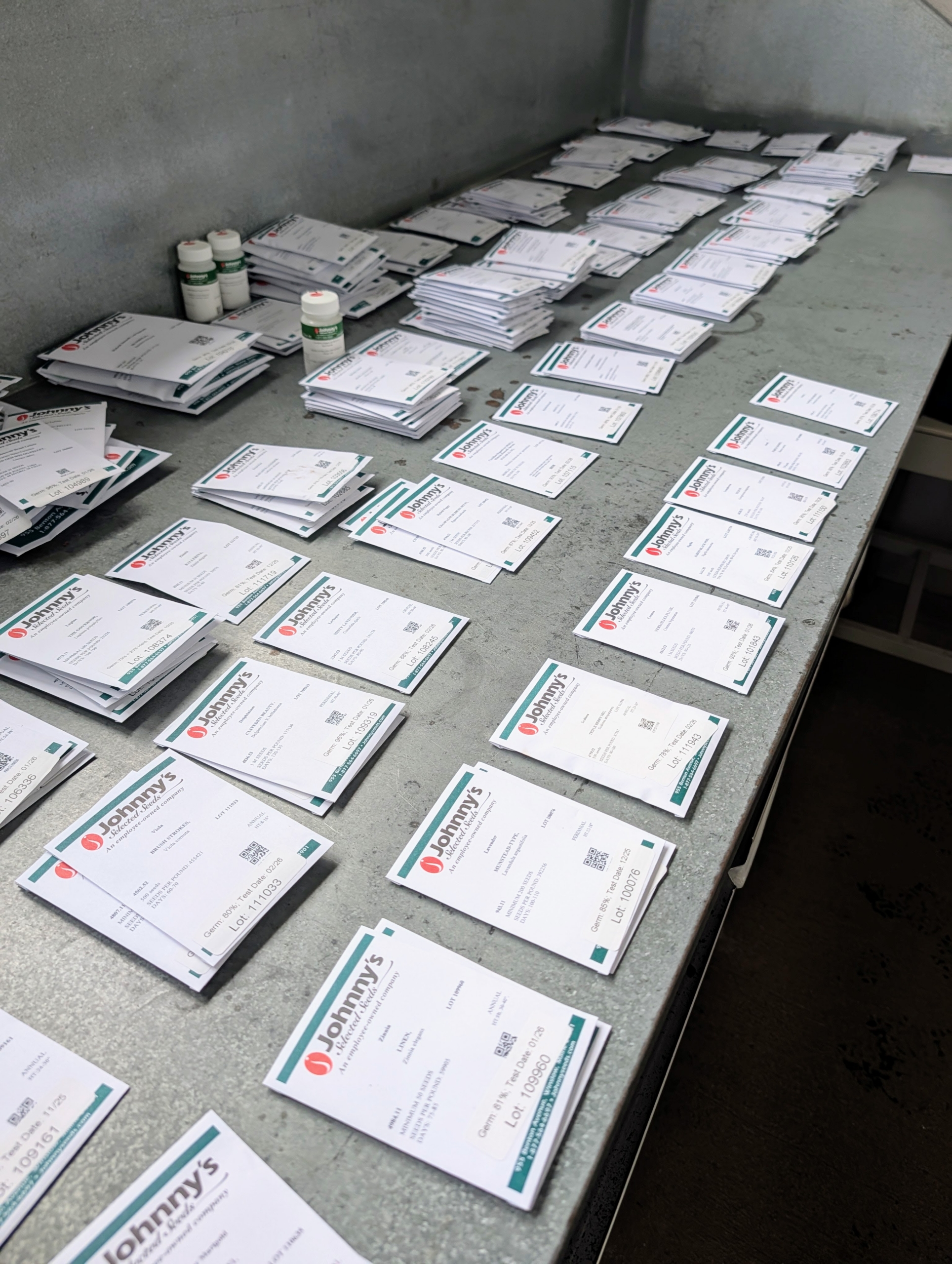
- This time of year my head house tables are often filled with seeds ready to be planted in trays. Seeds are available online, at garden centers, and through friends and family. One of my favorite seed sources is Johnny’s Selected Seeds in central Maine – a company I’ve been using for quite some time.
-
- Johnny’s Selected Seeds offers hundreds of varieties of organic vegetable, herb, flower, fruit and farm seeds that are known to be strong, dependable growers.
-
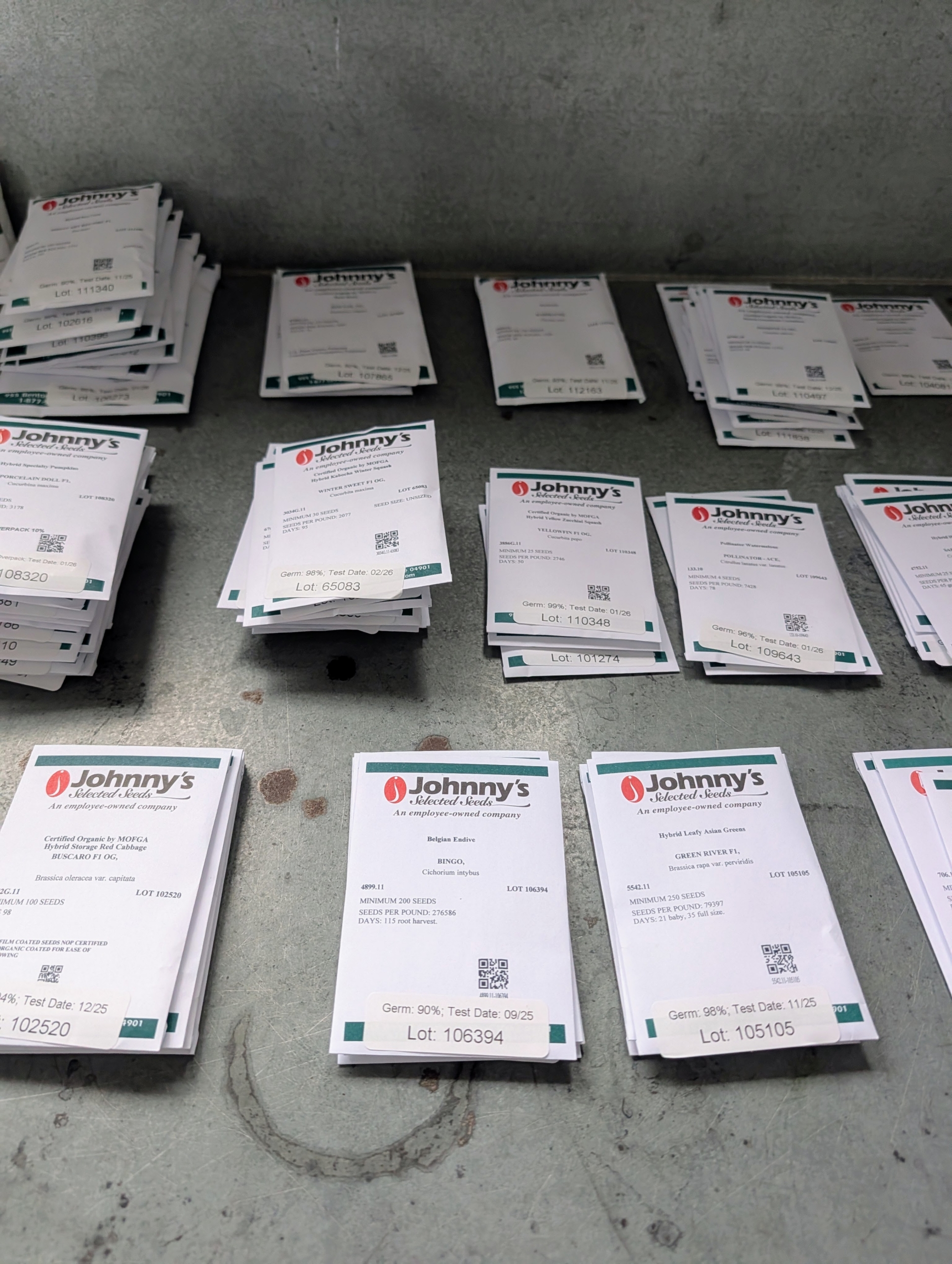
- Ryan keeps them well-organized by type, so they are easy to go through when selecting what to plant.
-
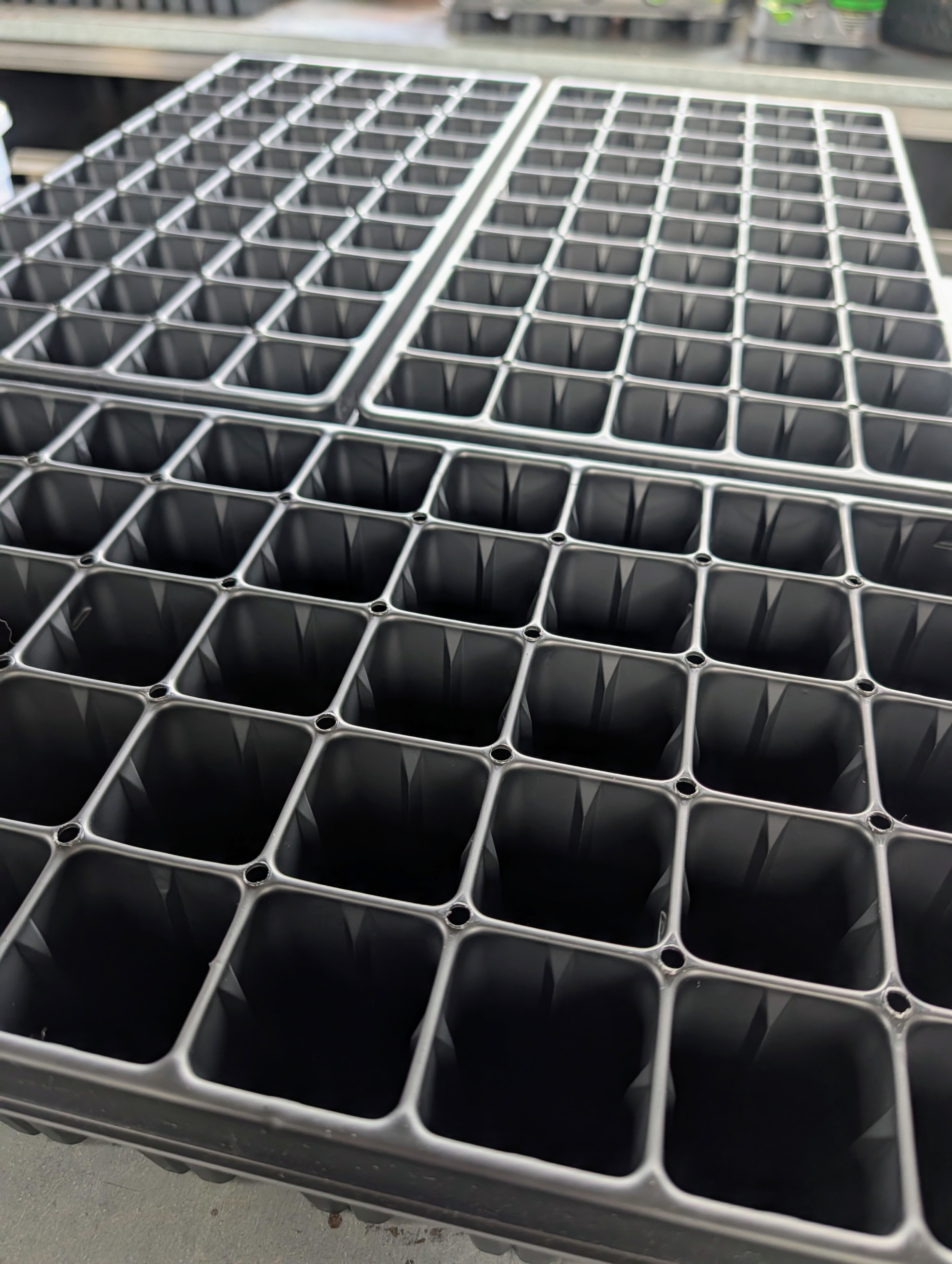
- Ryan also chooses the necessary seed starting trays. These trays from Johnny’s can be saved from year to year, so don’t throw them away after the season. Seed starting trays are available in all sizes and formations depending on seed needs.
-
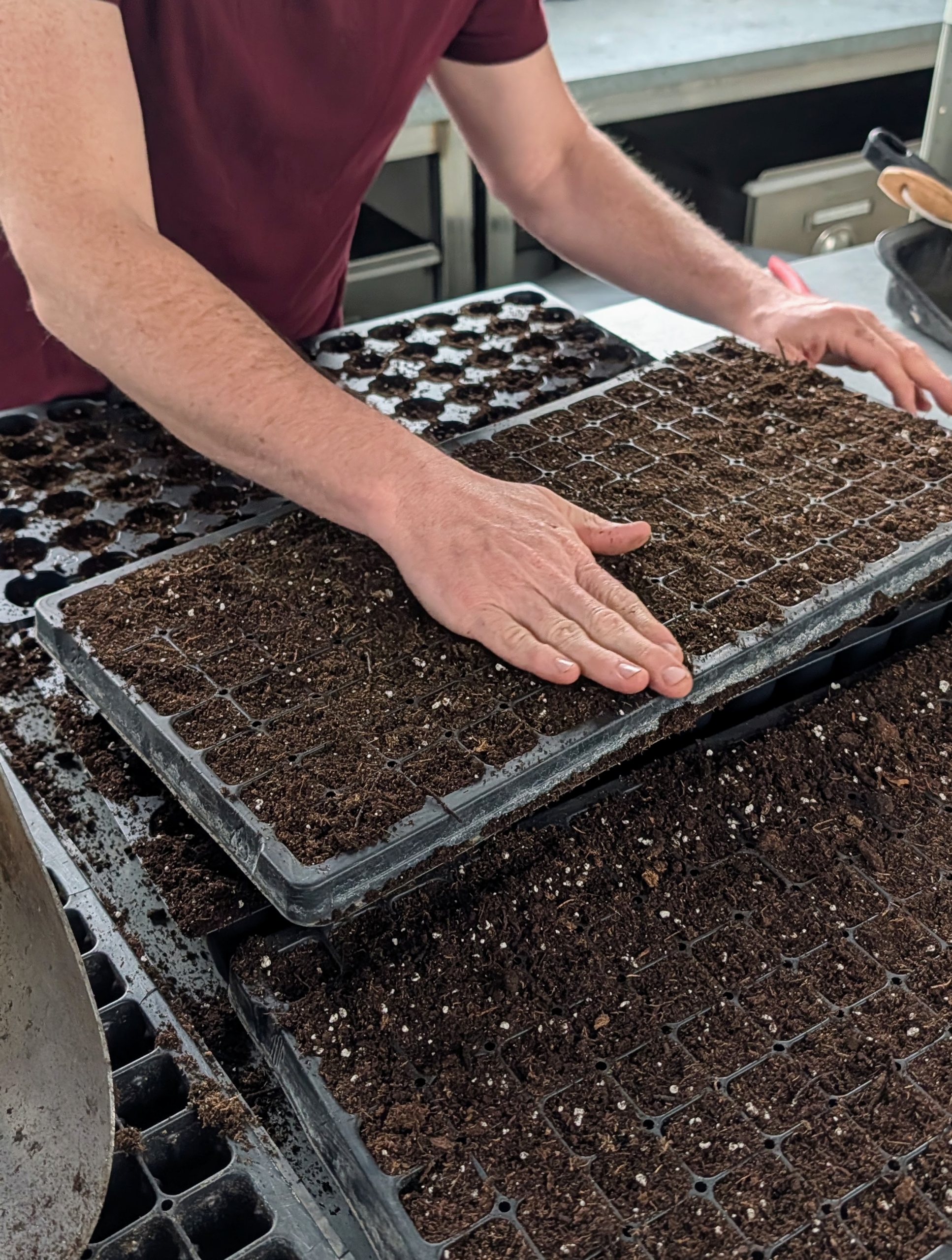
- He fills several trays with a pre-made seed starting mix. I use Miracle-Gro Seed Starting Potting Mix, which is specially formulated for fast root development.
-
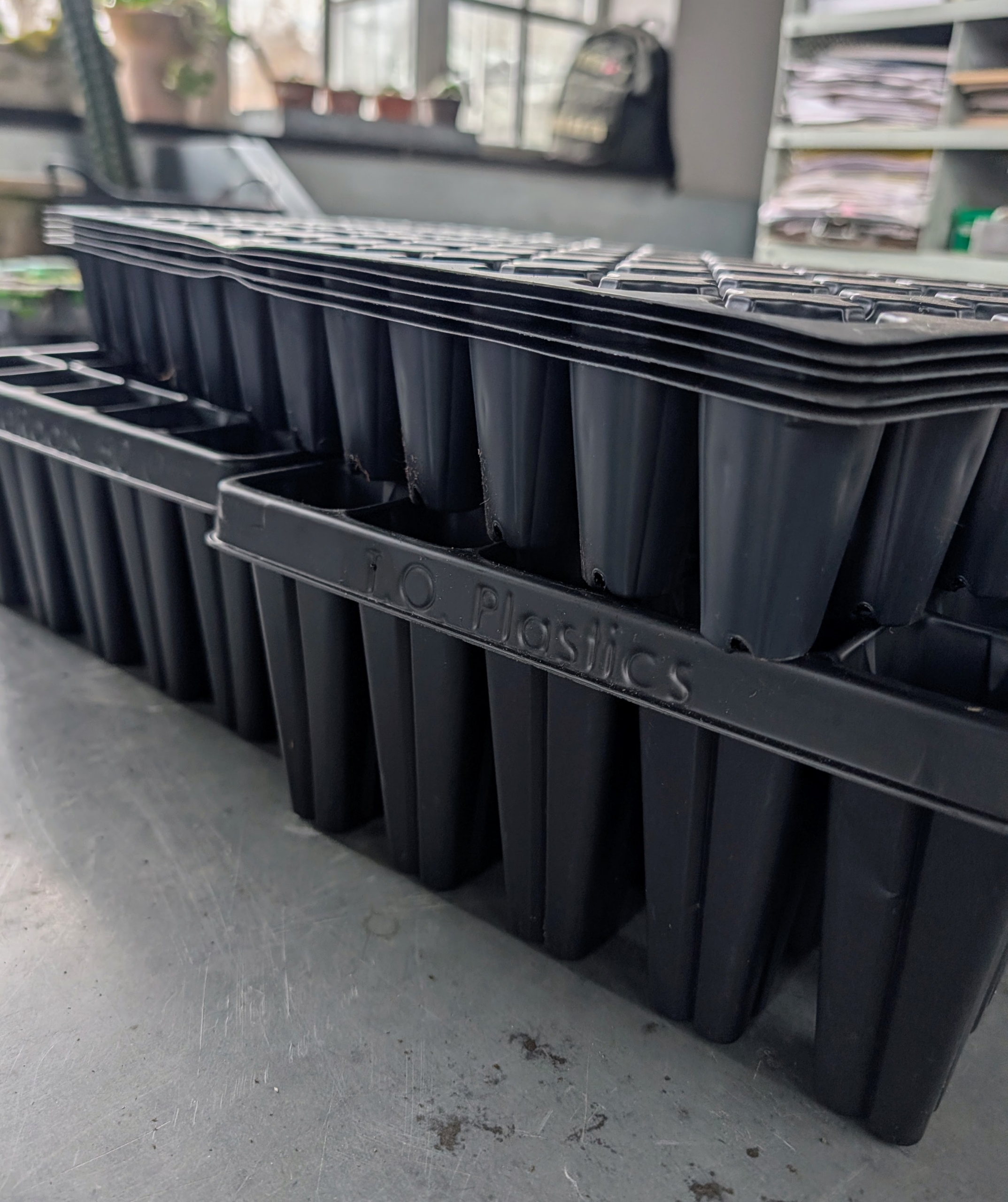
- These seeds trays have deeper cells for those plants that have tap roots or those that are sensitive to root disturbance.
-
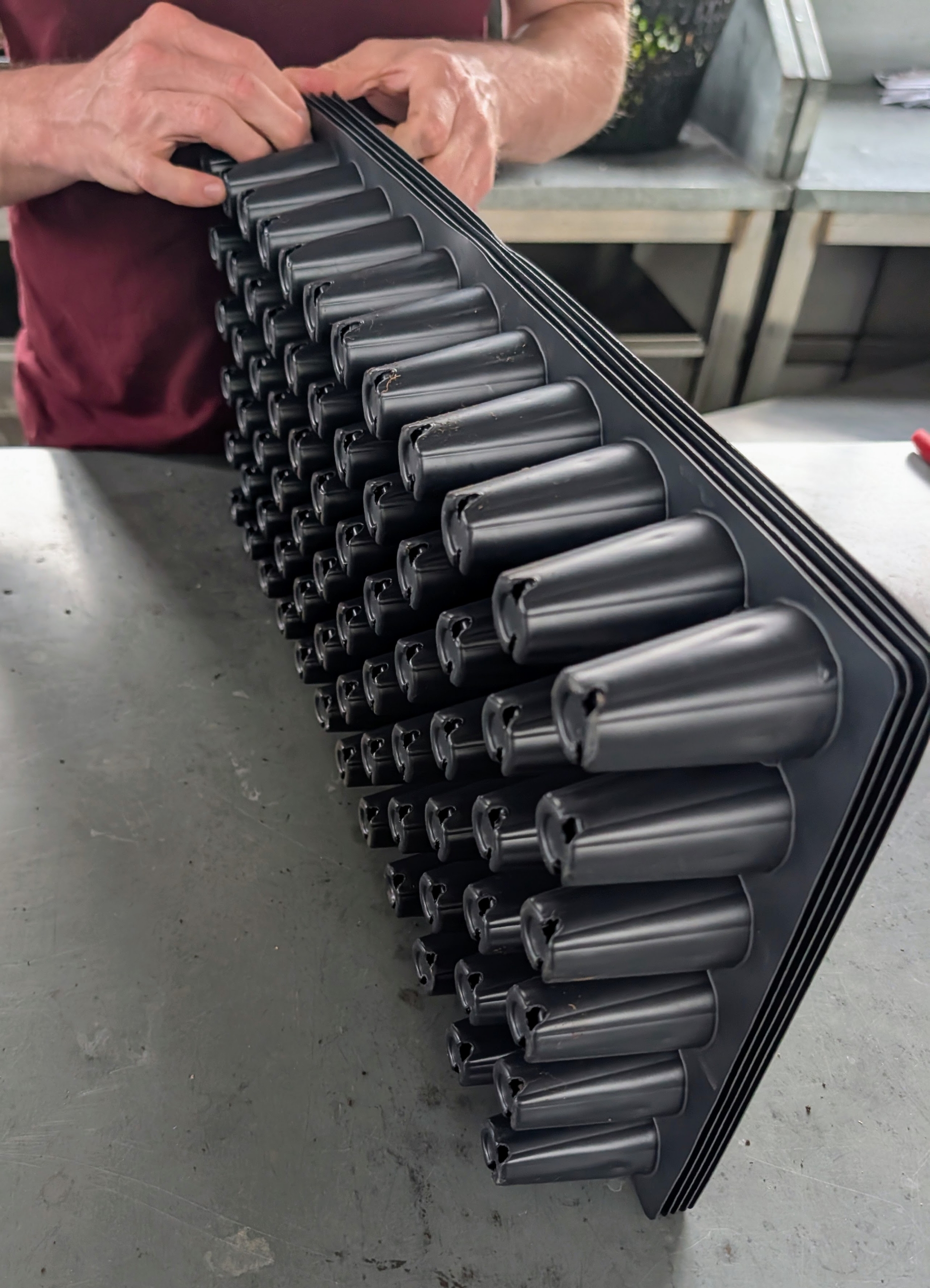
- Here it is from the bottom. Johnny’s has a large variety of seed starting trays from which to choose. Ryan fills a series of trays, so they are all ready when he plants.
-
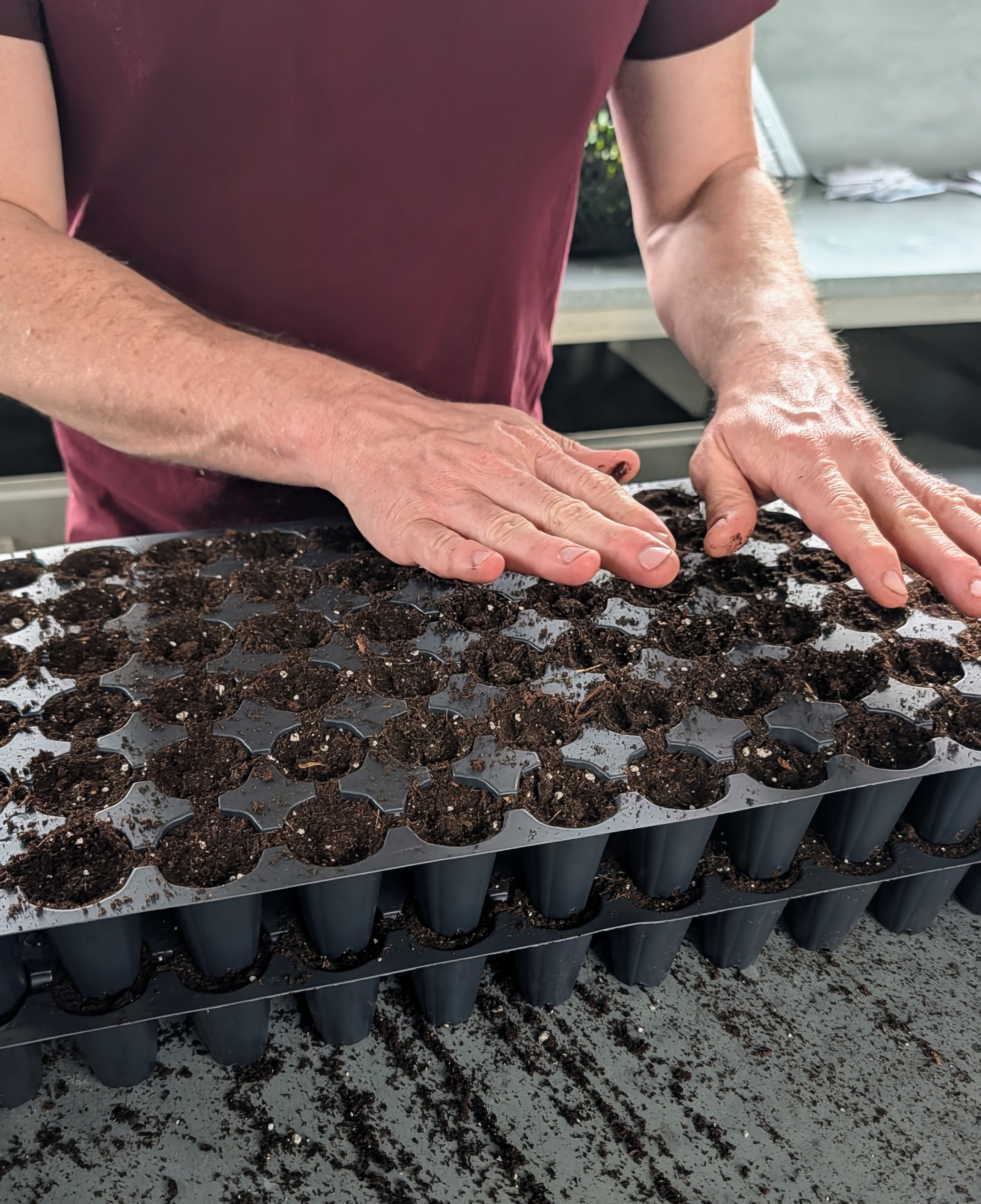
- Ryan uses the top tray to make cell indentations in the bottom tray for the seeds. The holes just needs to be big enough for the seed to be dropped in and then covered.
-
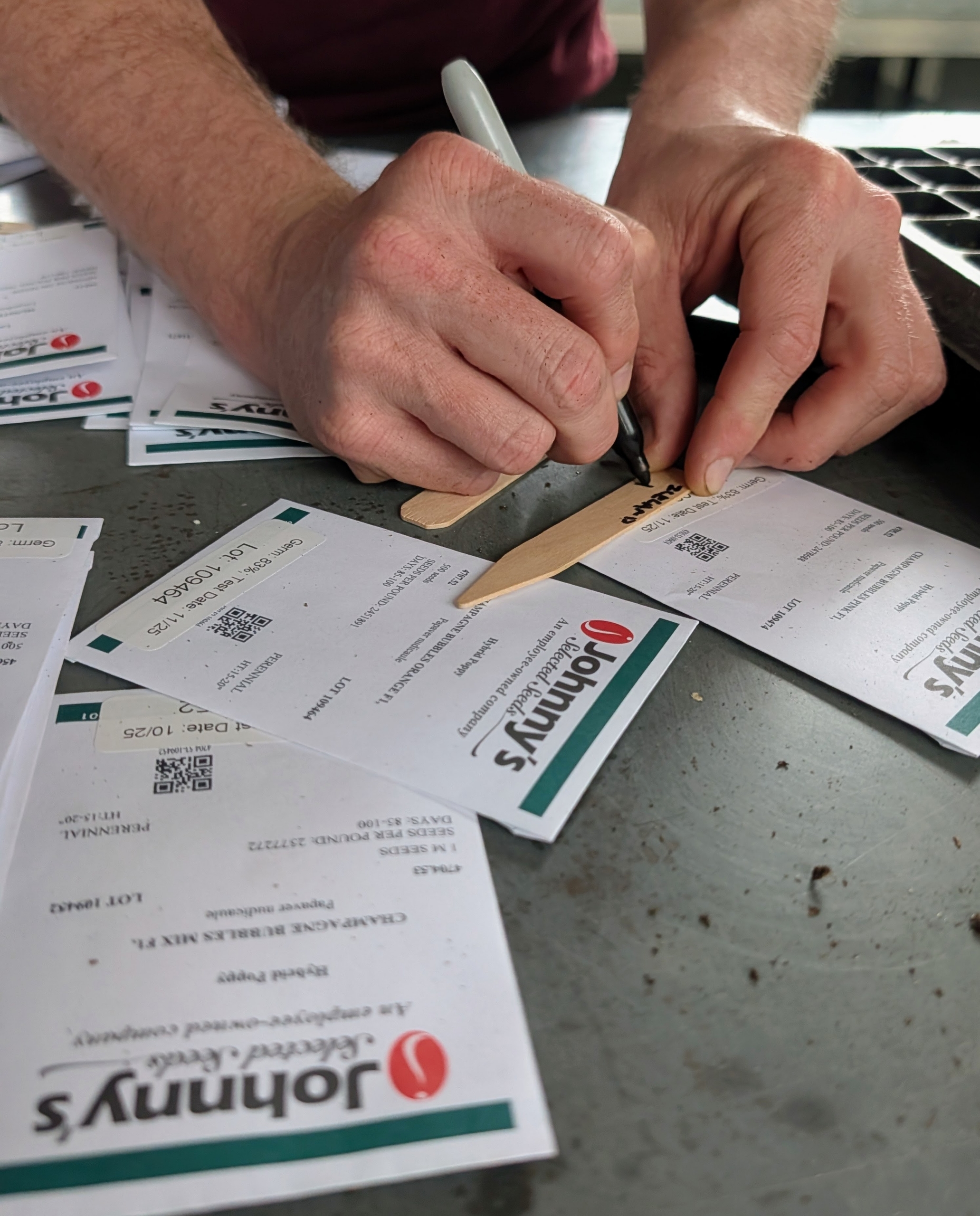
- Small wooden markers identify the specific flowers and varieties, so we can keep track of the kinds that grow best in my gardens. Ryan prepares the markers for the Icelandic poppies, writing down the flower name and variety.
-
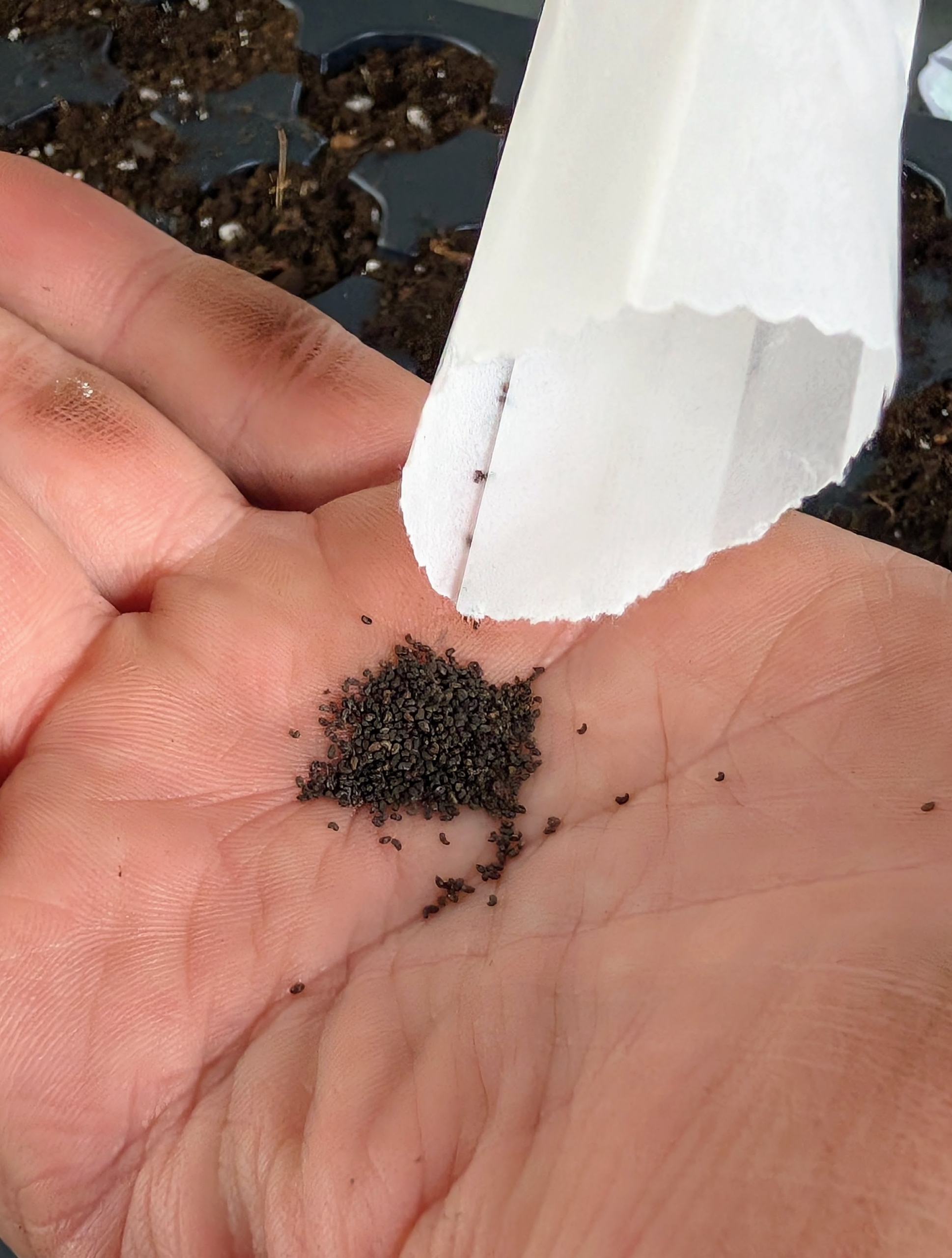
- Poppy seeds are very tiny, kidney-shaped seeds that are less than a millimeter in length and typically bluish-black in color.
-
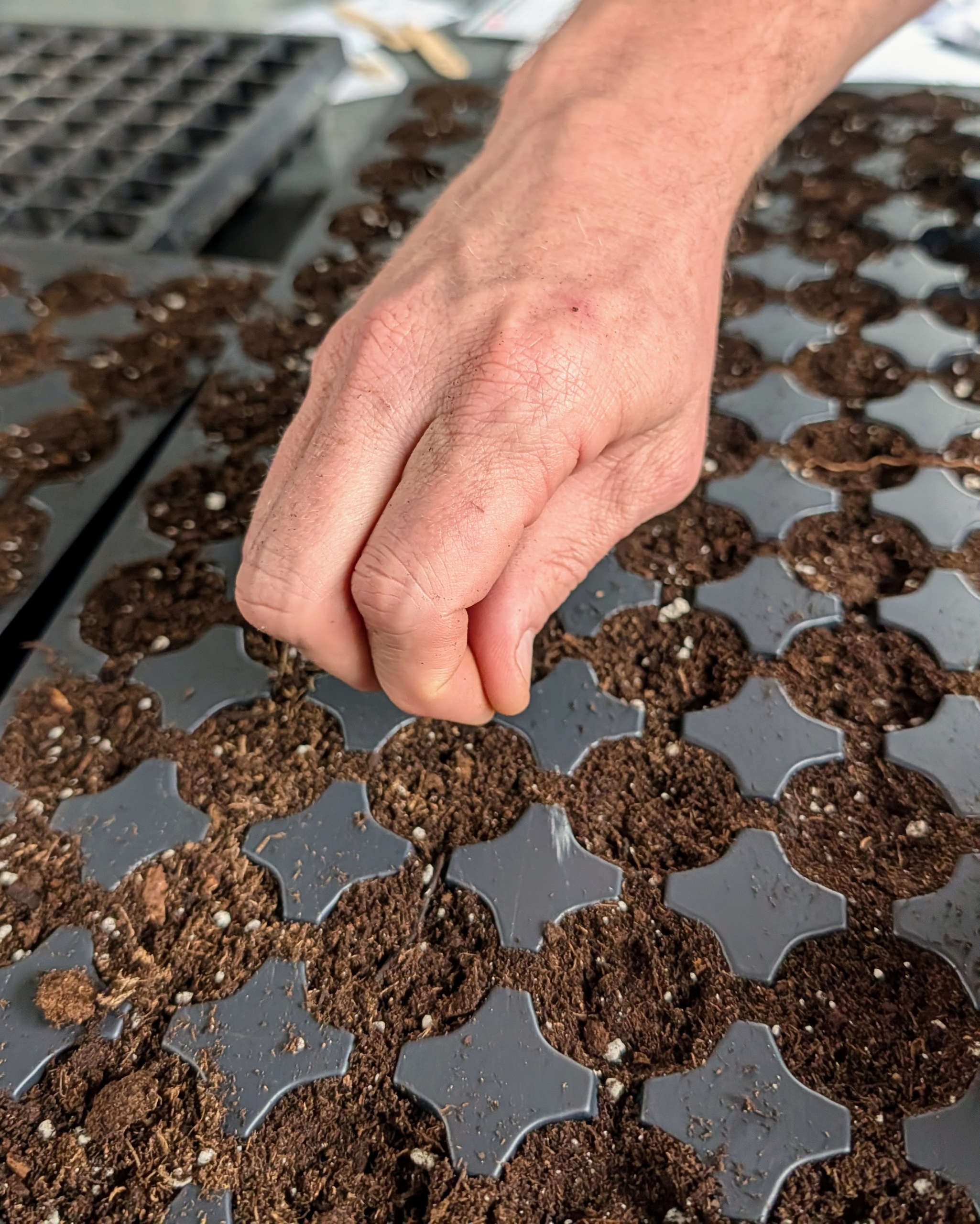
- Ryan drops the seeds into the cells by hand – about two for each cell. Germination is never guaranteed, so multiple seeds are always planted. This provides a better chance at least one will take root.
-
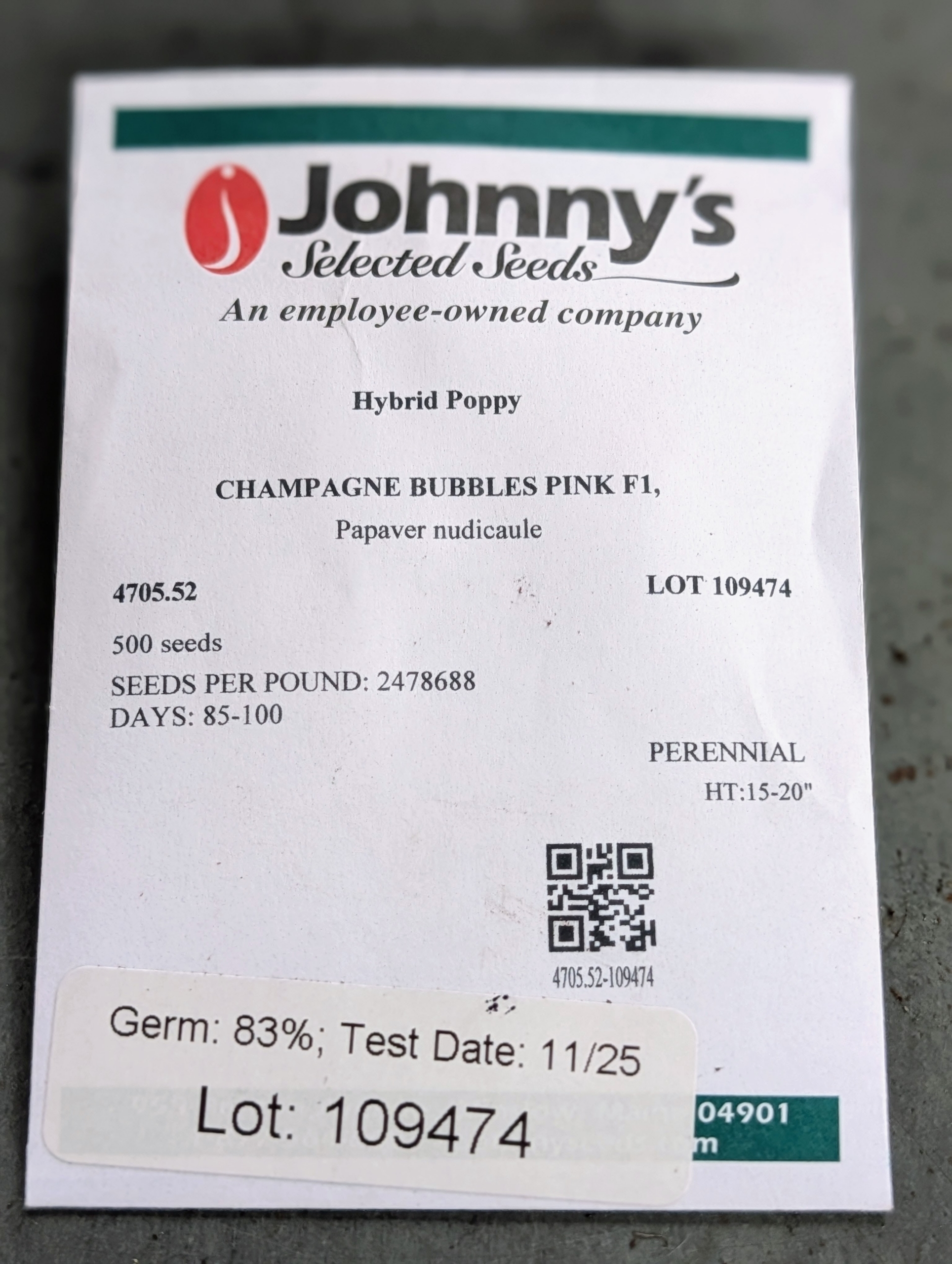
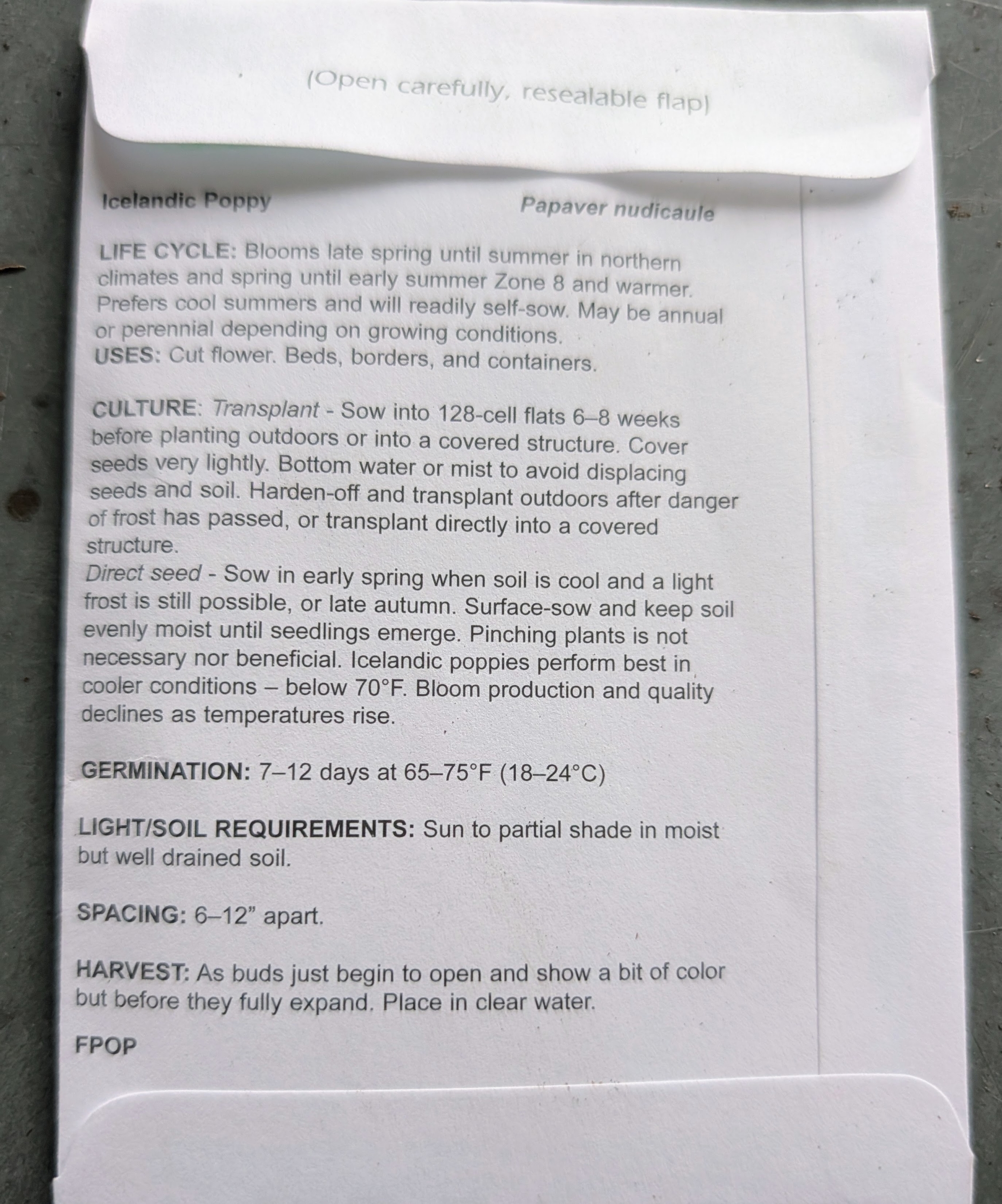
- The seed packet itself is very useful. It provides the common plant name, growing duration, and plant size.
-
- The back of Johnny’s seed packets also provides blooming information, light and soil requirements and plant spacing. It’s important to read these seed packets for valuable information and tips.
-
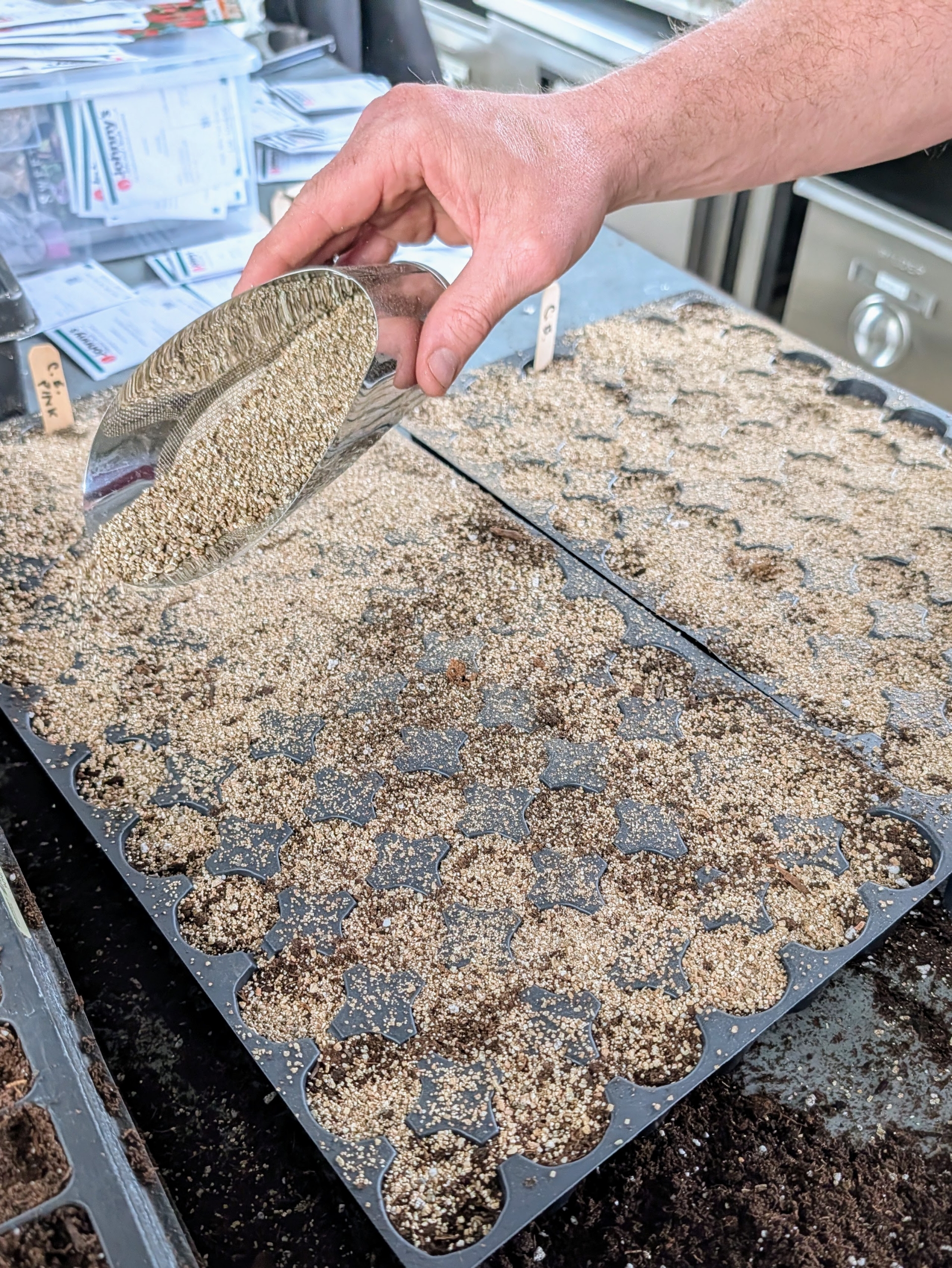
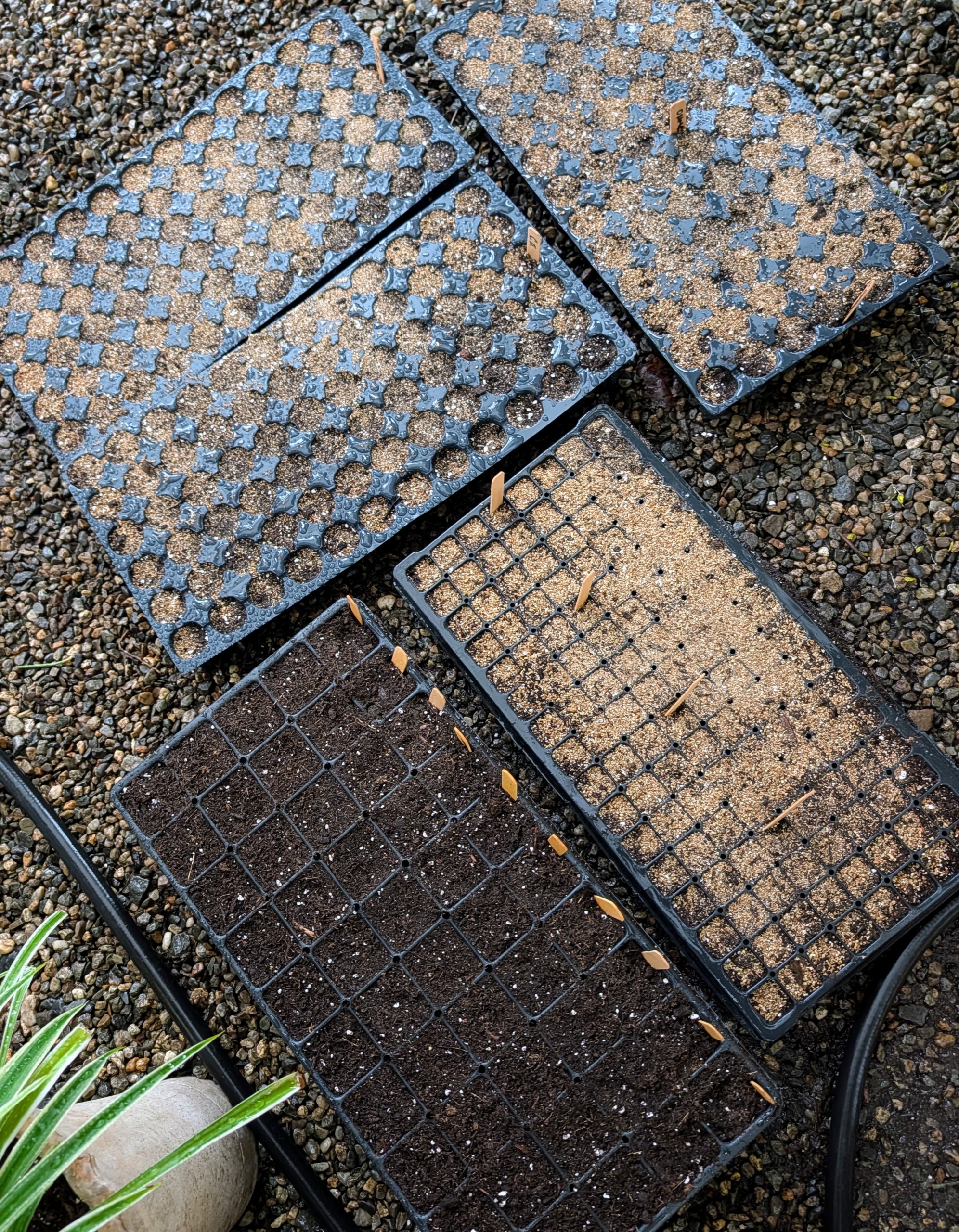
- For these seeds, Ryan covers the trays with a layer of vermiculite. Vermiculite is a mica-like mineral often used as a soil amendment. It is mined out of the ground, exfoliated, treated with high heat and pressure to force it to expand. Vermiculite absorbs and retains water, allows for proper air circulation and takes in essential nutrients for healthy seeding development.
-
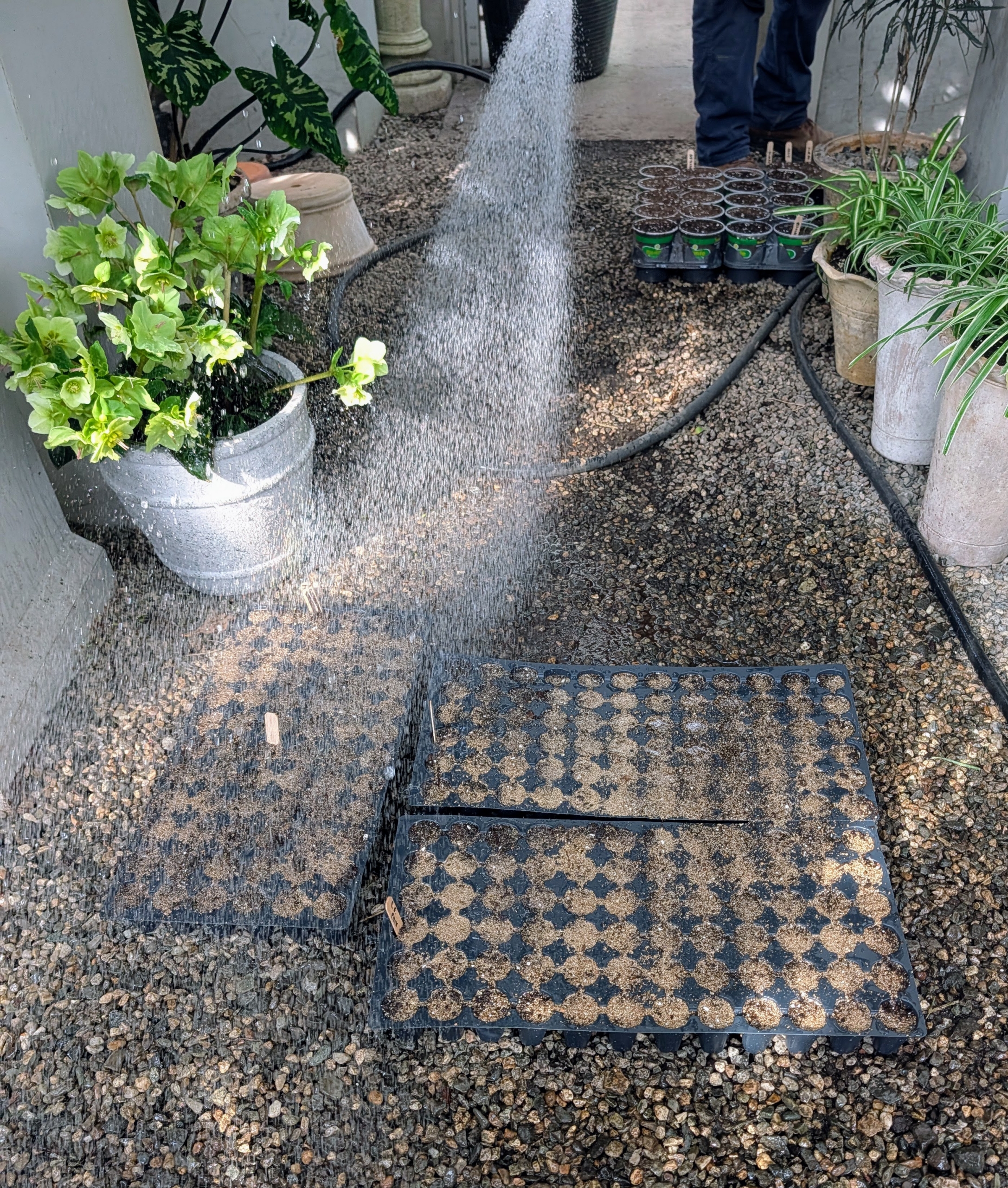
- And don’t forget the water. Ryan gives the trays a drink before placing them on the shelf. Seeds will start to grow within days in optimal temperature and lighting environments, which is 50 to 85 degrees Fahrenheit under bright light.
-
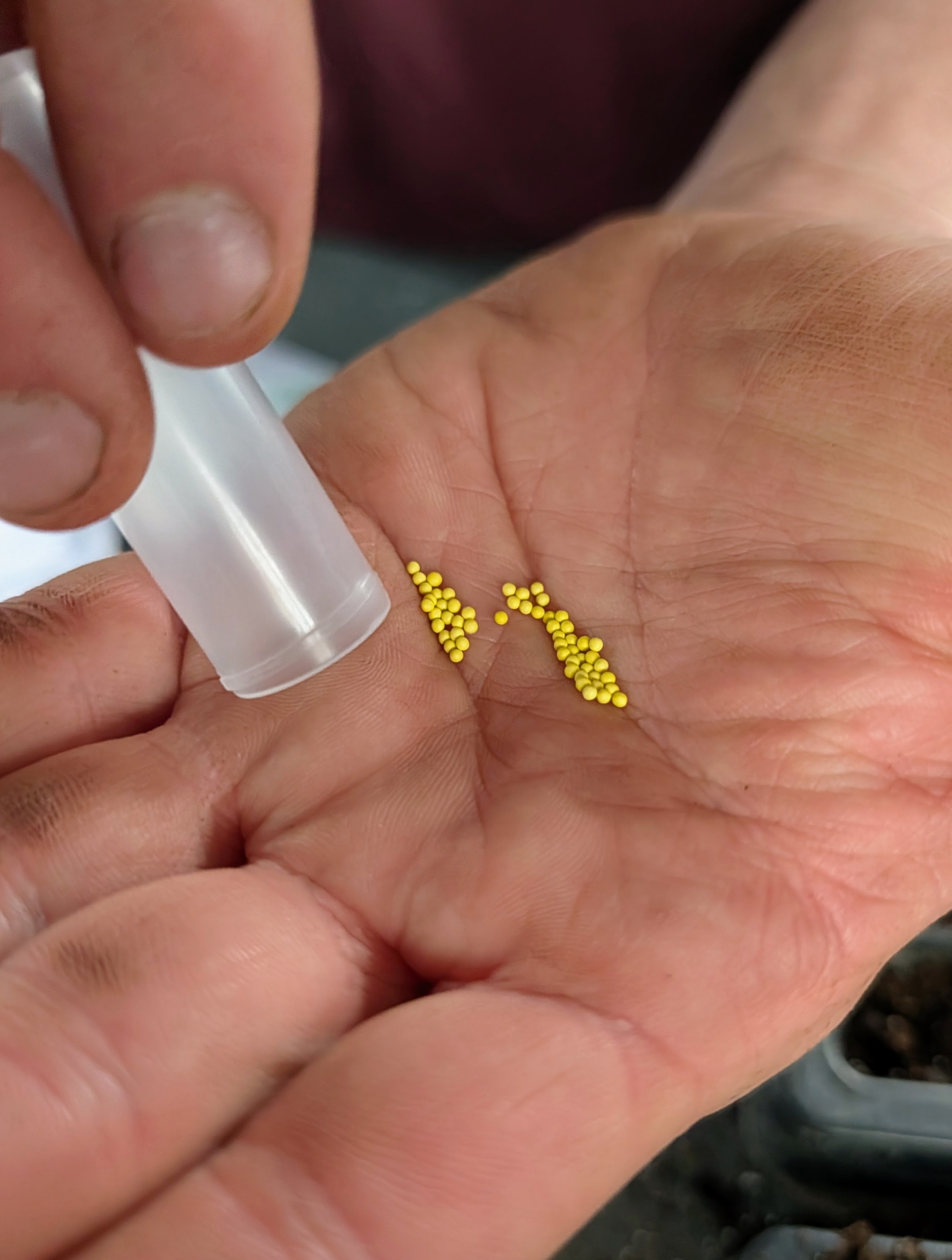
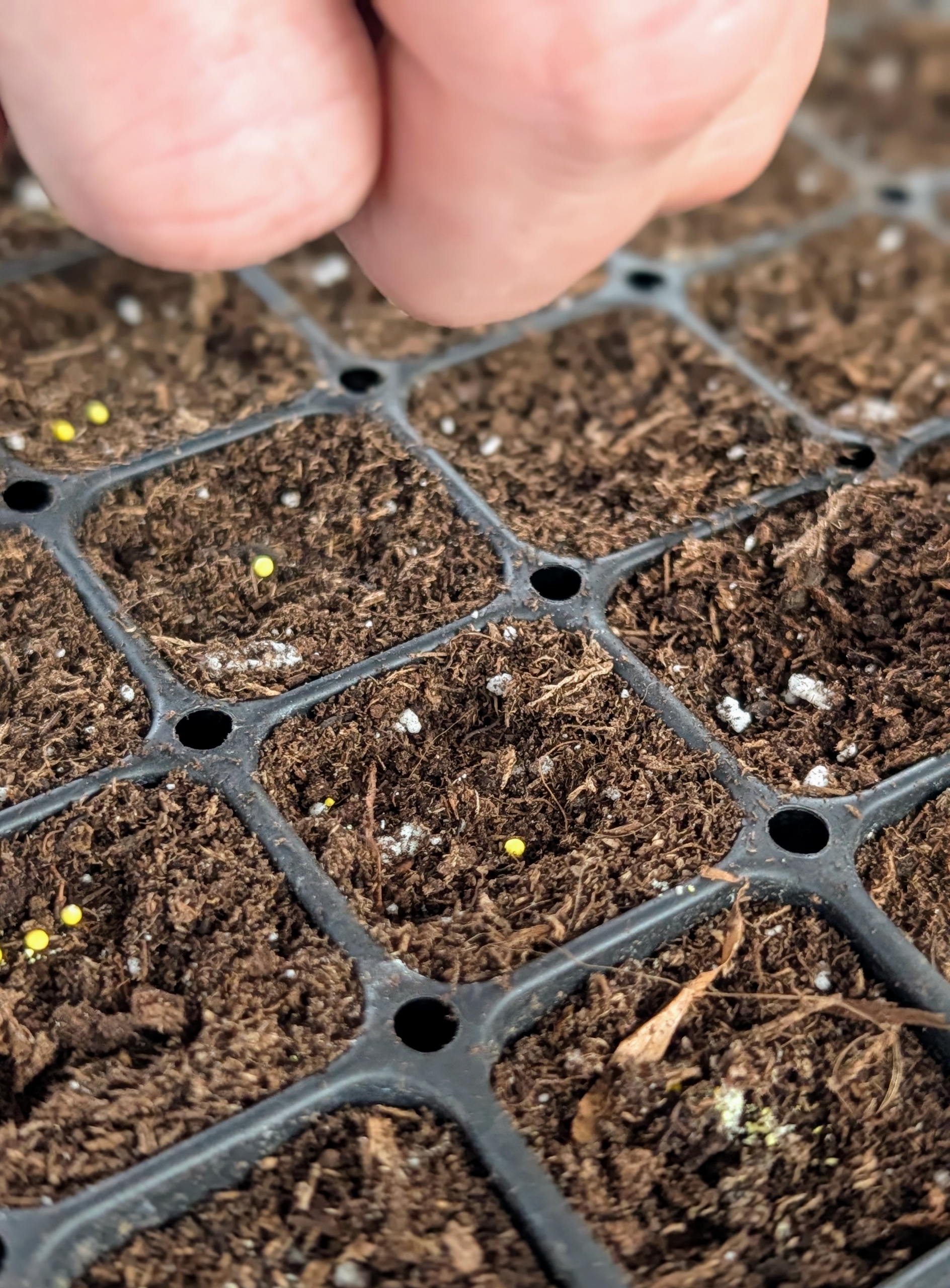
- These foxglove seeds are pelleted. Pelleting is a process where seeds are coated so they are easier to see and handle when sowing.
-
- They make it much easier for Ryan to drop into the designated cells.
-
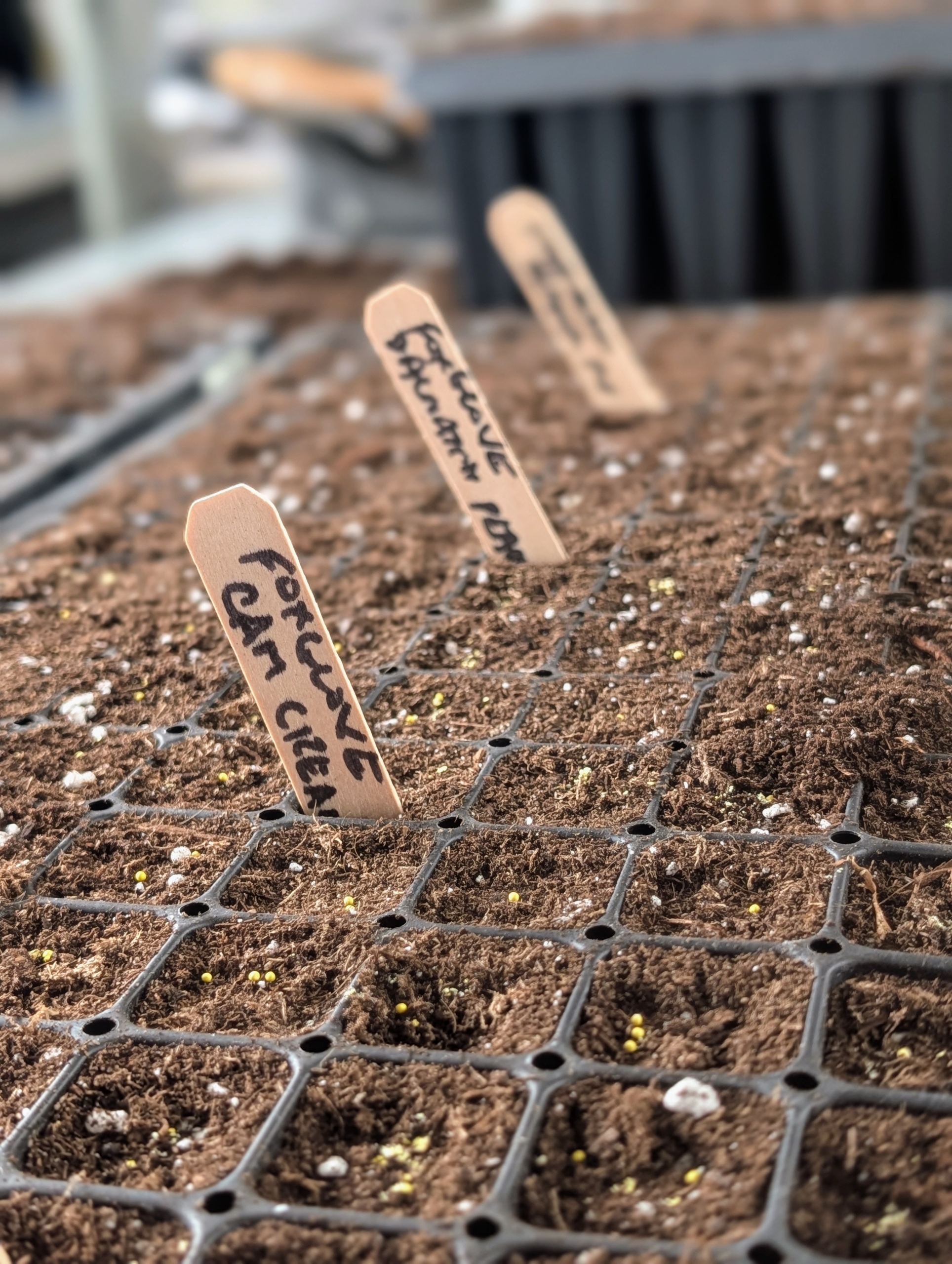
- The wooden markers are inserted into the tray where the seeds are planted.
-
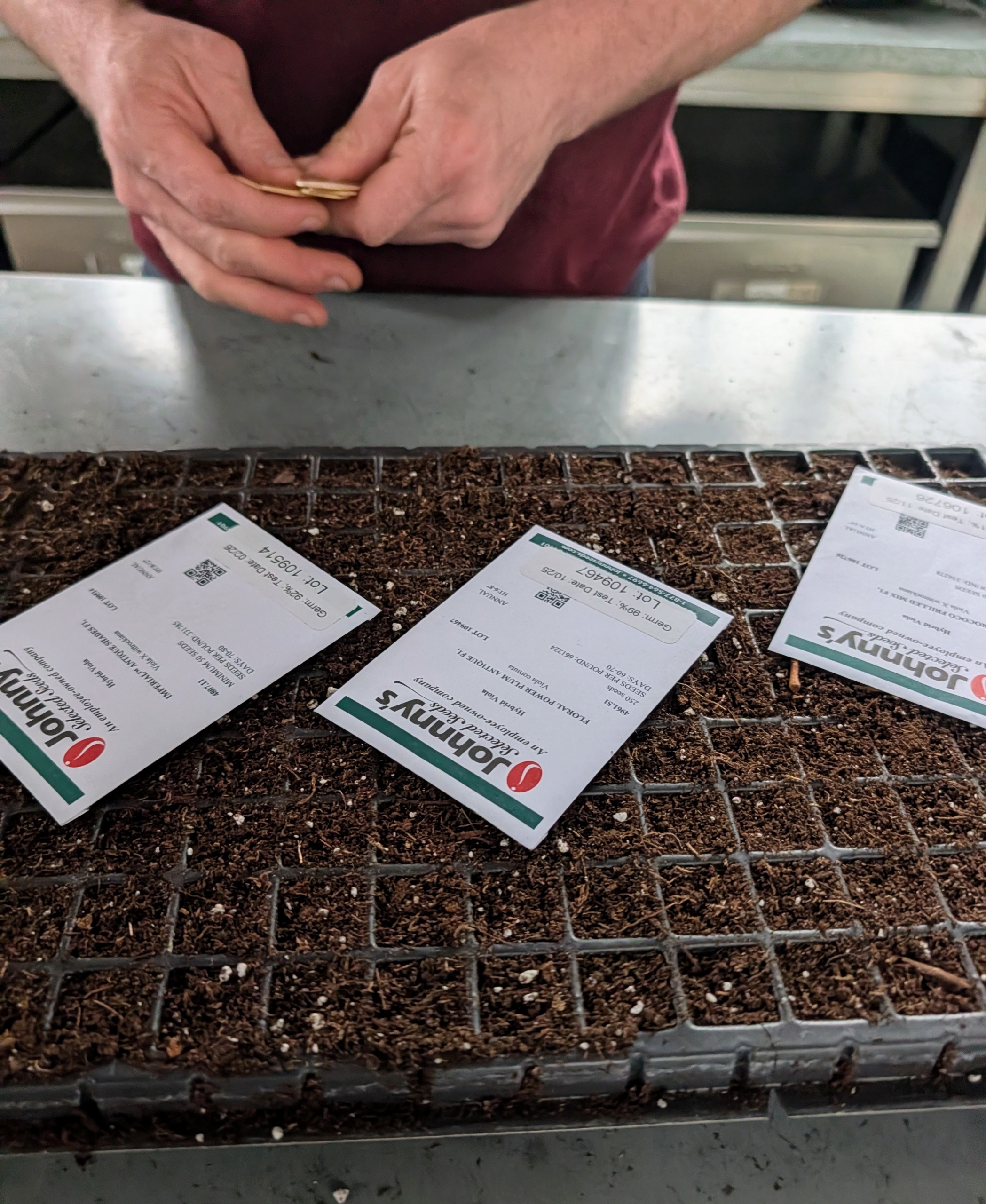
- And finally he prepares to plant some viola seeds in another tray.
-
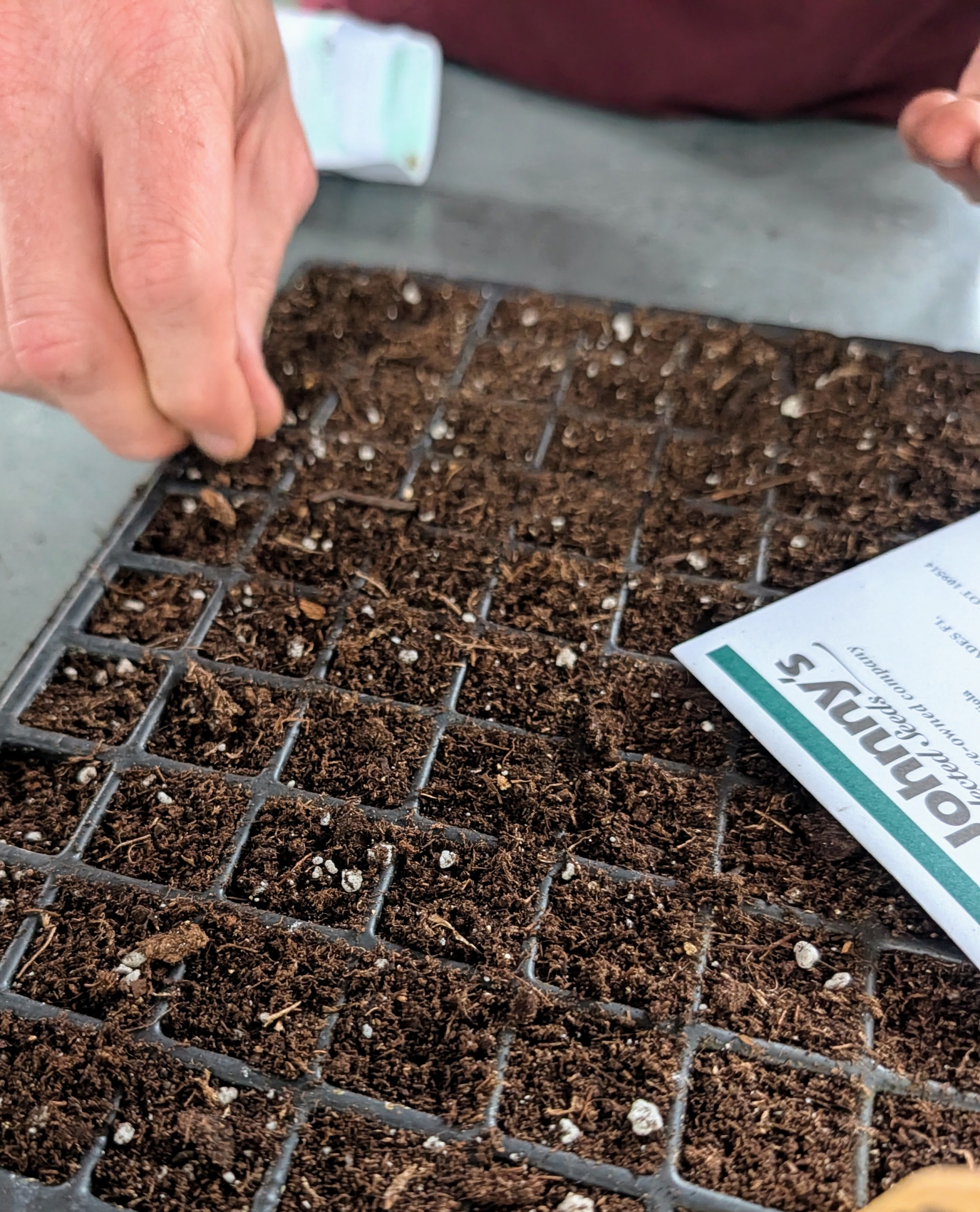
- These seeds are also extremely small. They should start to sprout within seven to 21 days depending on growing conditions. Once a few inches tall, the plants will get selectively thinned so the stronger ones are left to continue growing.
-
- We’re off to a great start for my flowers. We have many more trays to go. Seeds are usually started about two months before the last frost – we’ll be starting seeds indoors through this month.
 Martha Pins


 Martha Tweets

