
A Look at My Vegetable Garden in June
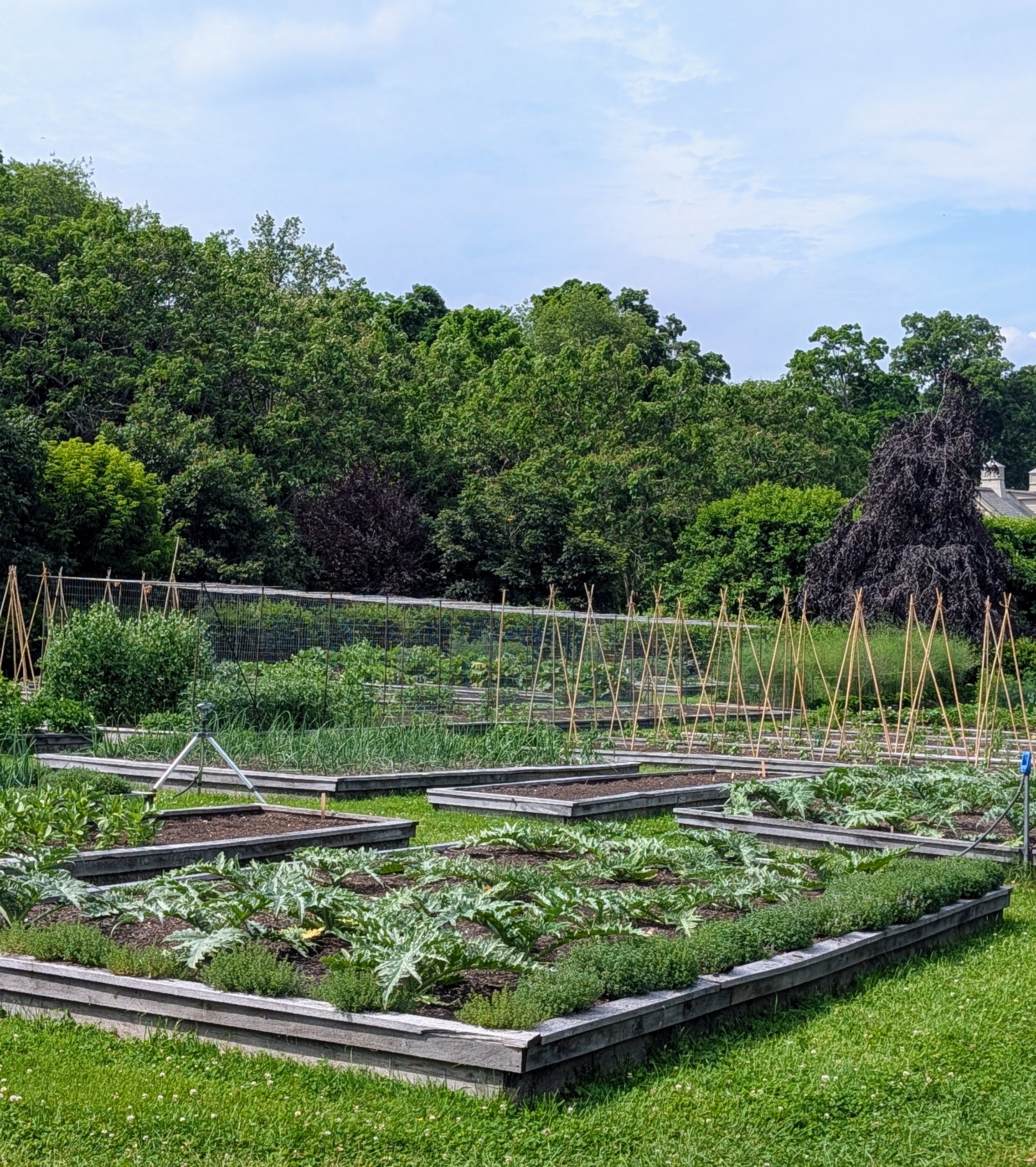
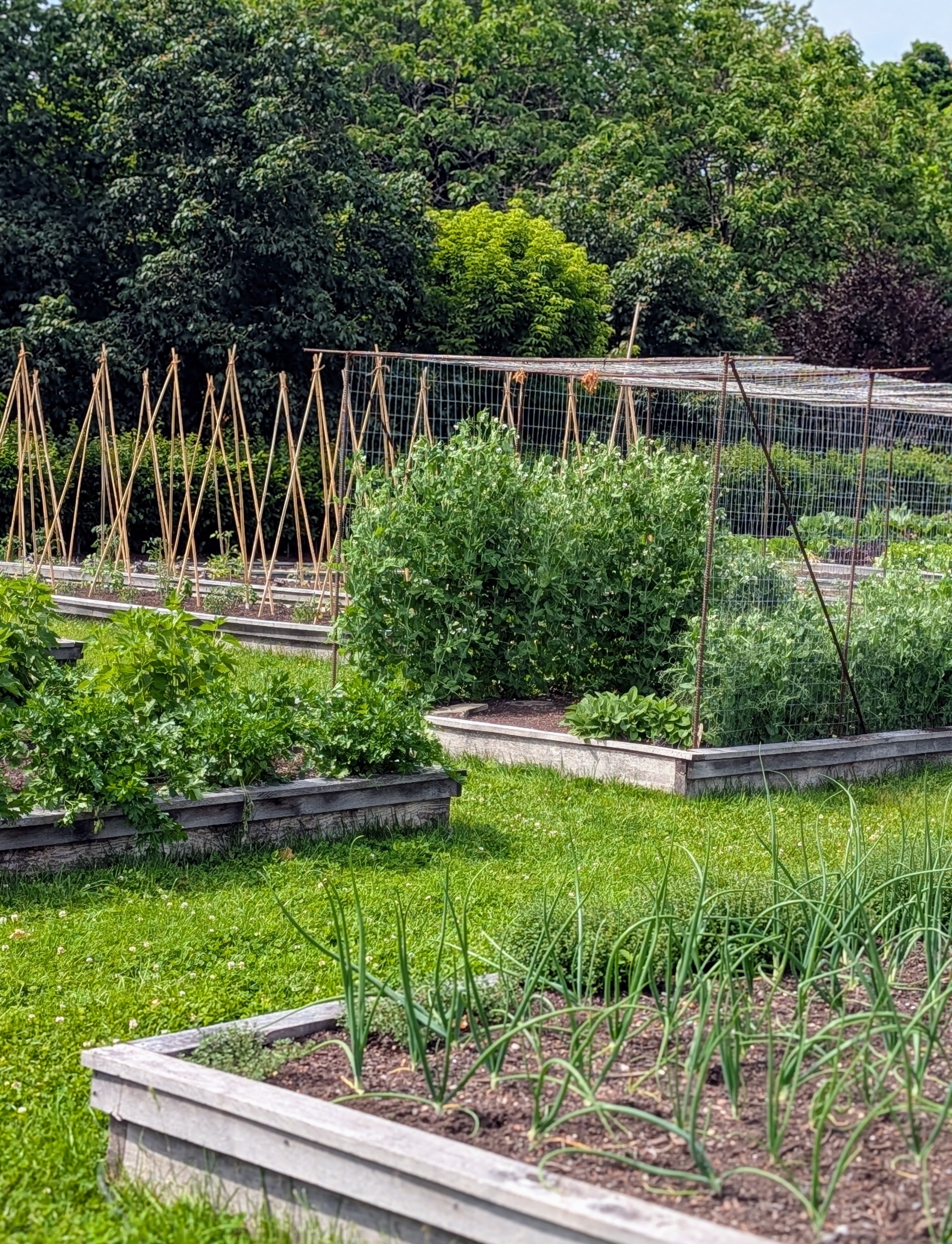
My large half-acre vegetable garden is so much fun to visit right now because of all the growing produce.
This garden, which is now in its fourth growing season, is planted with many crops - cabbage, cauliflower, kale, artichokes, fava beans, tomatoes, onions, shallots, all sorts of herbs, strawberries, and so much more. I always plant in succession, meaning I seed crops at intervals of seven to 21 days in order to maintain a consistent supply of harvestable produce throughout the season. I'm looking forward to my first big bounty.
Here are some photos, enjoy.
-

- I planned this garden close to my Winter House, so I can get to it quickly, see what is growing, and pick what is ready.
-
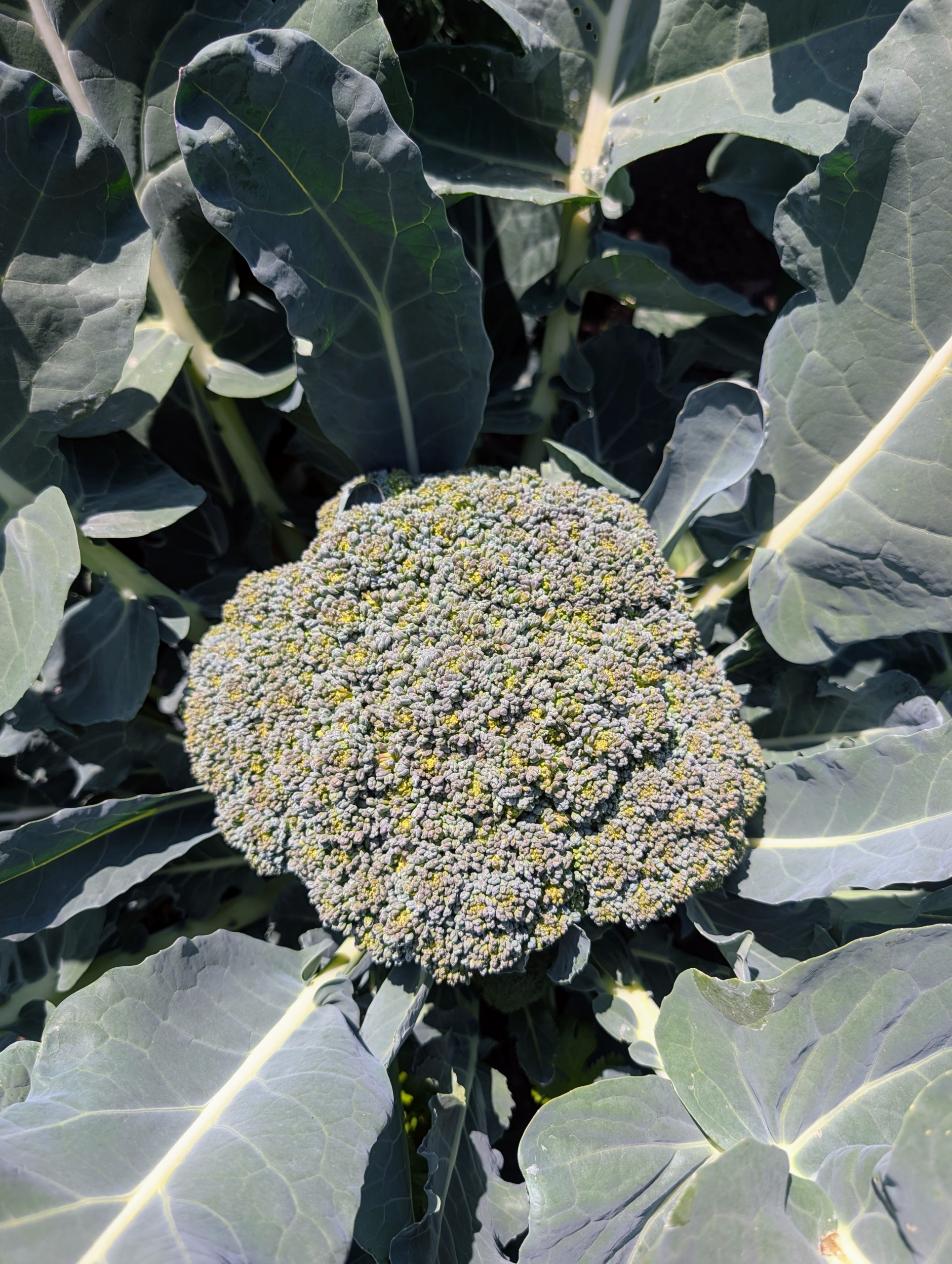
- Broccoli is a hardy vegetable of the cabbage family that is high in vitamins A and D. And, according to the National Agricultural Statistics Service, USDA, the average American eats more than four-pounds of broccoli a year. My broccoli is looking perfect.
-
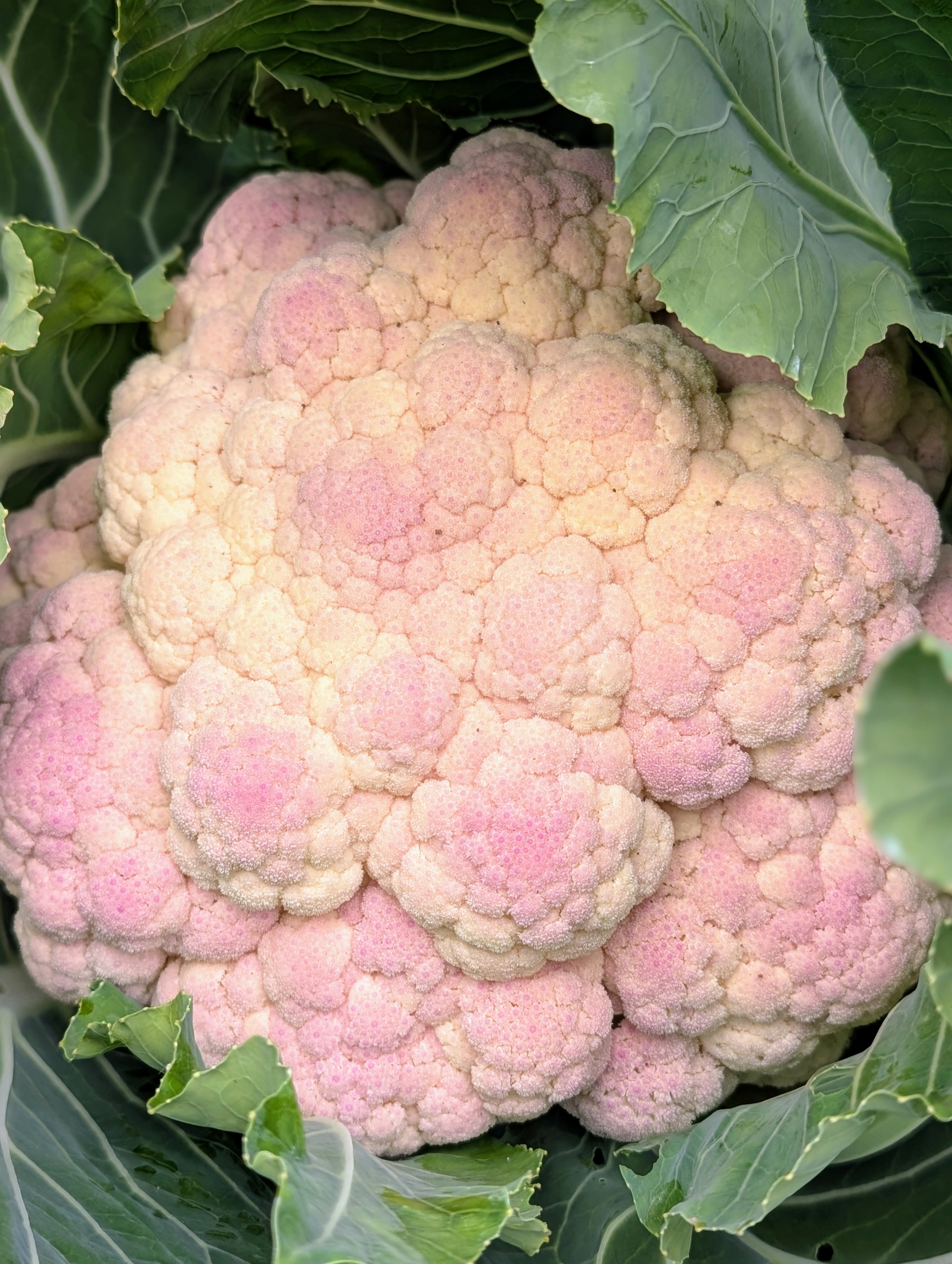
- The cauliflower is also looking amazing. Here’s a beautiful head of cauliflower. Purple cauliflower gets its color from anthocyanin, a naturally occurring phytochemical that is also found in other red, blue, or purple fruits and vegetables.
-
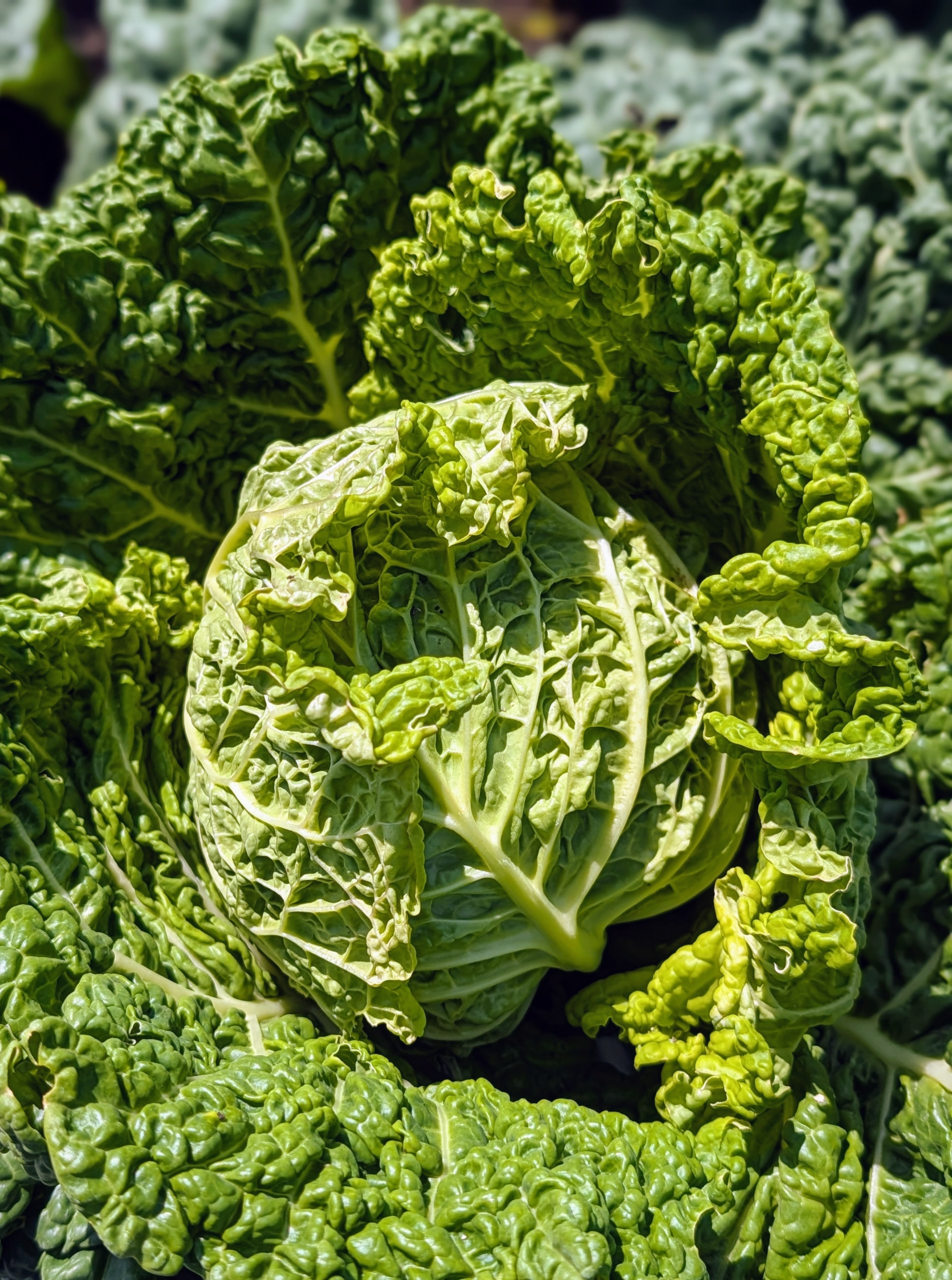
- This is one of my cabbages. To get the best health benefits from cabbage, it’s good to include all three varieties into the diet – Savoy, red, and green. Savoy cabbage leaves are ruffled and a bit yellowish in color. It has crinkled, emerald green leaves, and a mildly nutty and sweet flavor.
-
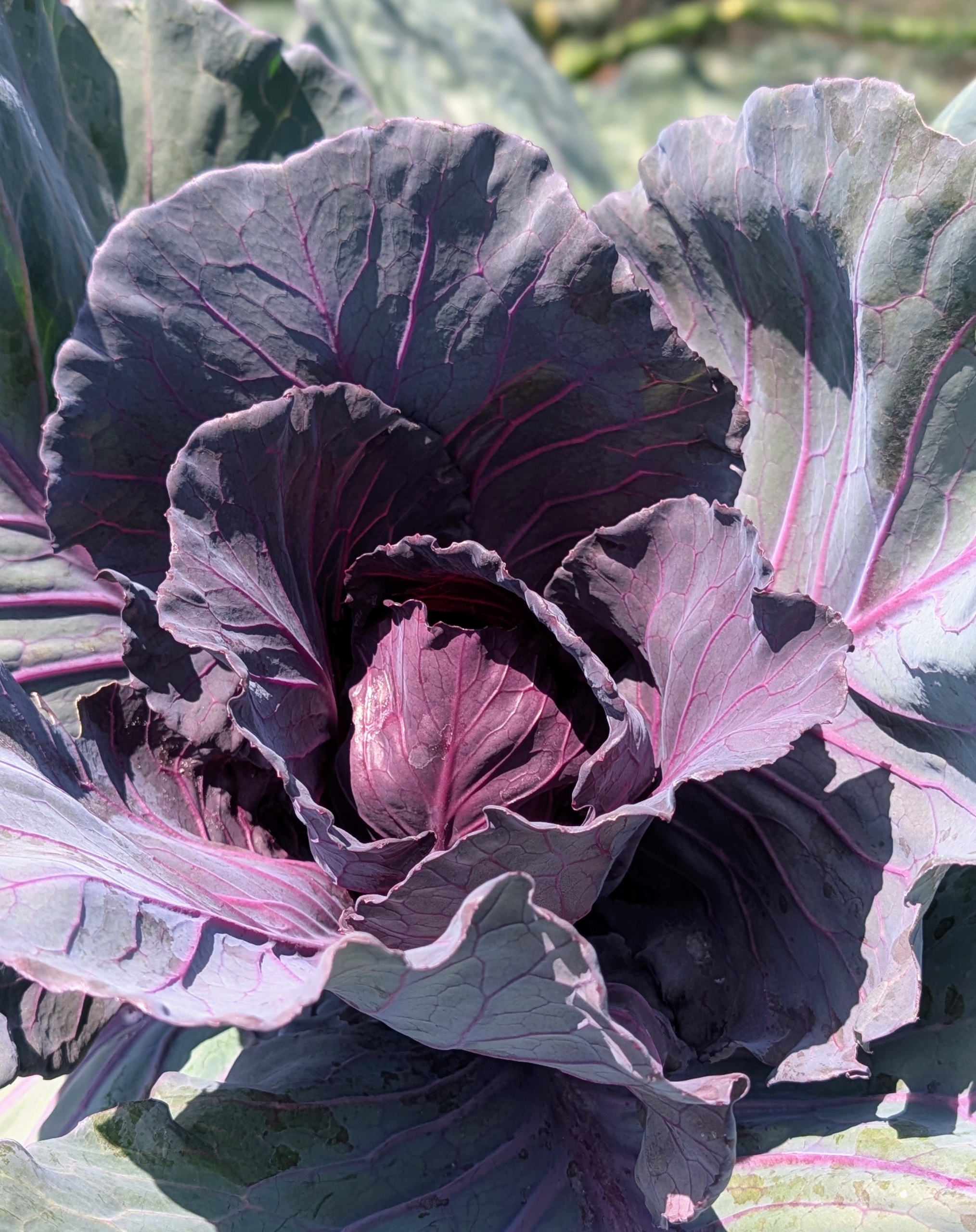
- Red, or purple, cabbage is often used raw for salads and coleslaw. It contains 10-times more vitamin-A and twice as much iron as green cabbage.
-
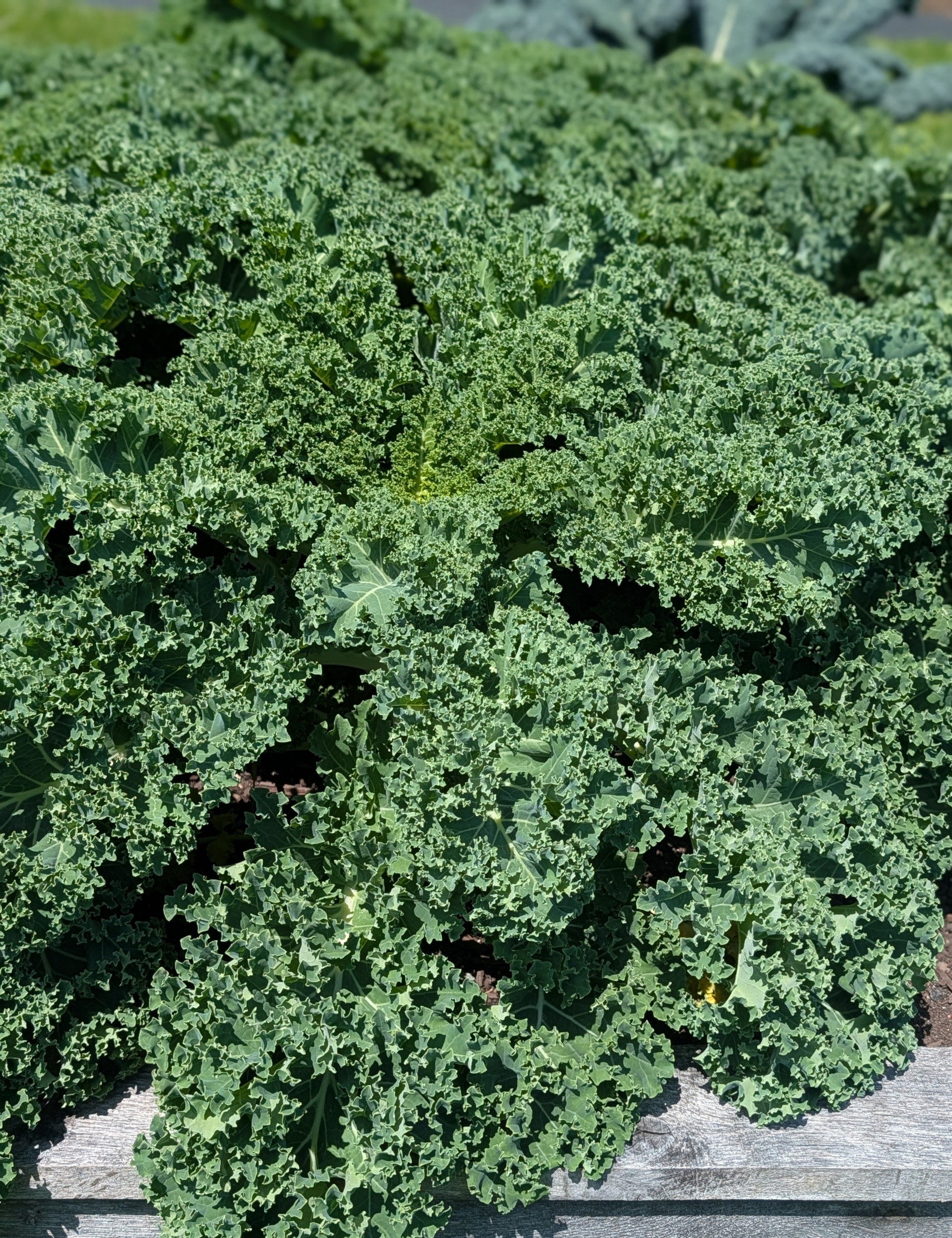
- My kale is always a big shower in the garden – look how beautiful this crop is. Kale or leaf cabbage is a group of vegetable cultivars within the plant species Brassica oleracea. They have purple or green leaves, in which the central leaves do not form a head.
-
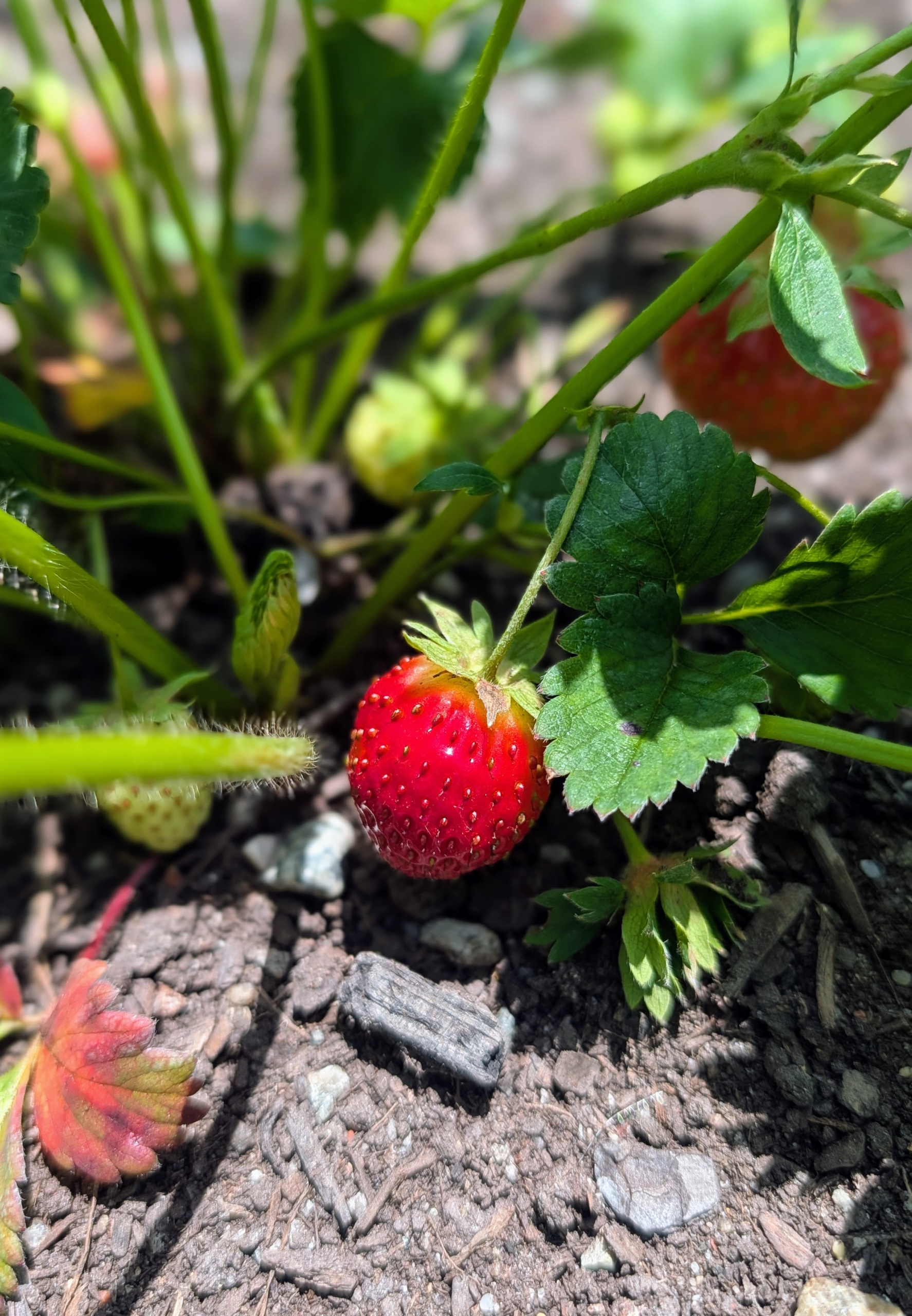
- One one side, I have three long beds of strawberries and I’m seeing more beautiful bright fruits every day. Strawberries are among the easiest berries to grow. They are cold-hardy and adaptable, and can be planted in both garden beds and containers.
-
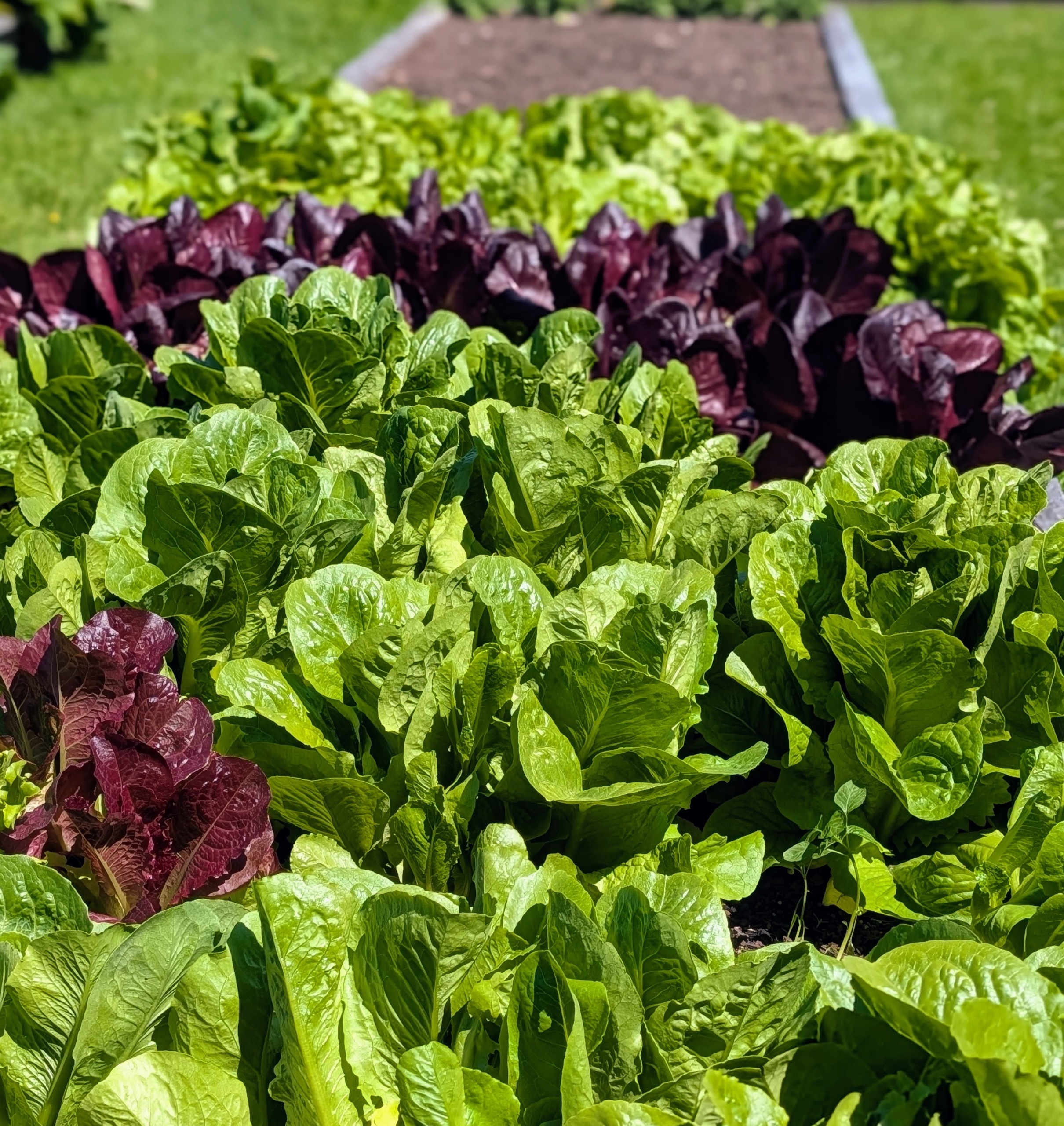
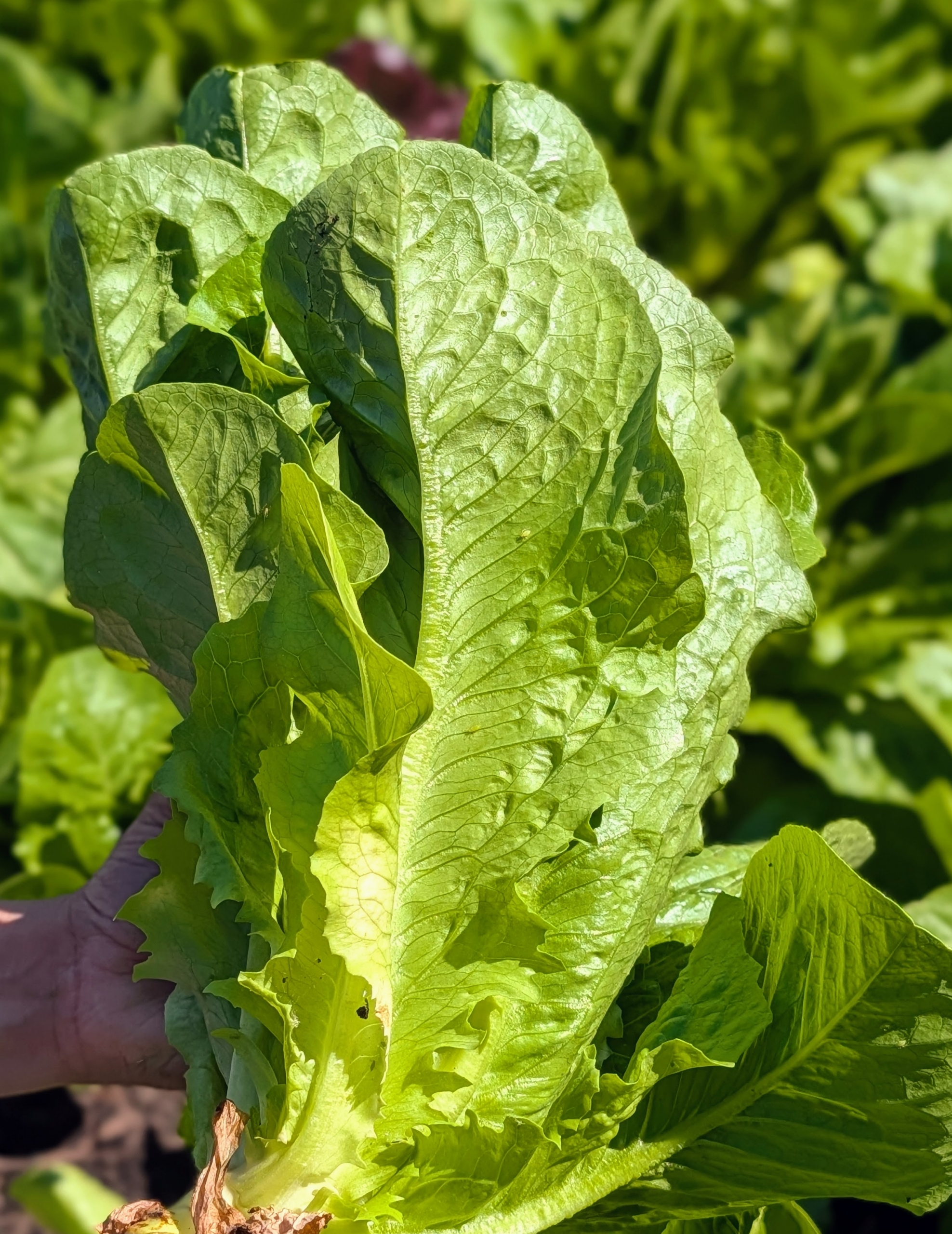
- I am always growing lettuce. Lettuce, Lactuca sativa, is a cultivated plant of the daisy family, Asteraceae. Lettuce is a fairly hardy, cool-weather vegetable that thrives when the average daily temperature is between 60 and 70-degrees Fahrenheit. I grow several varieties.
-
- This week, I harvested many heads of lettuce and shared them with everyone here at the farm.
-
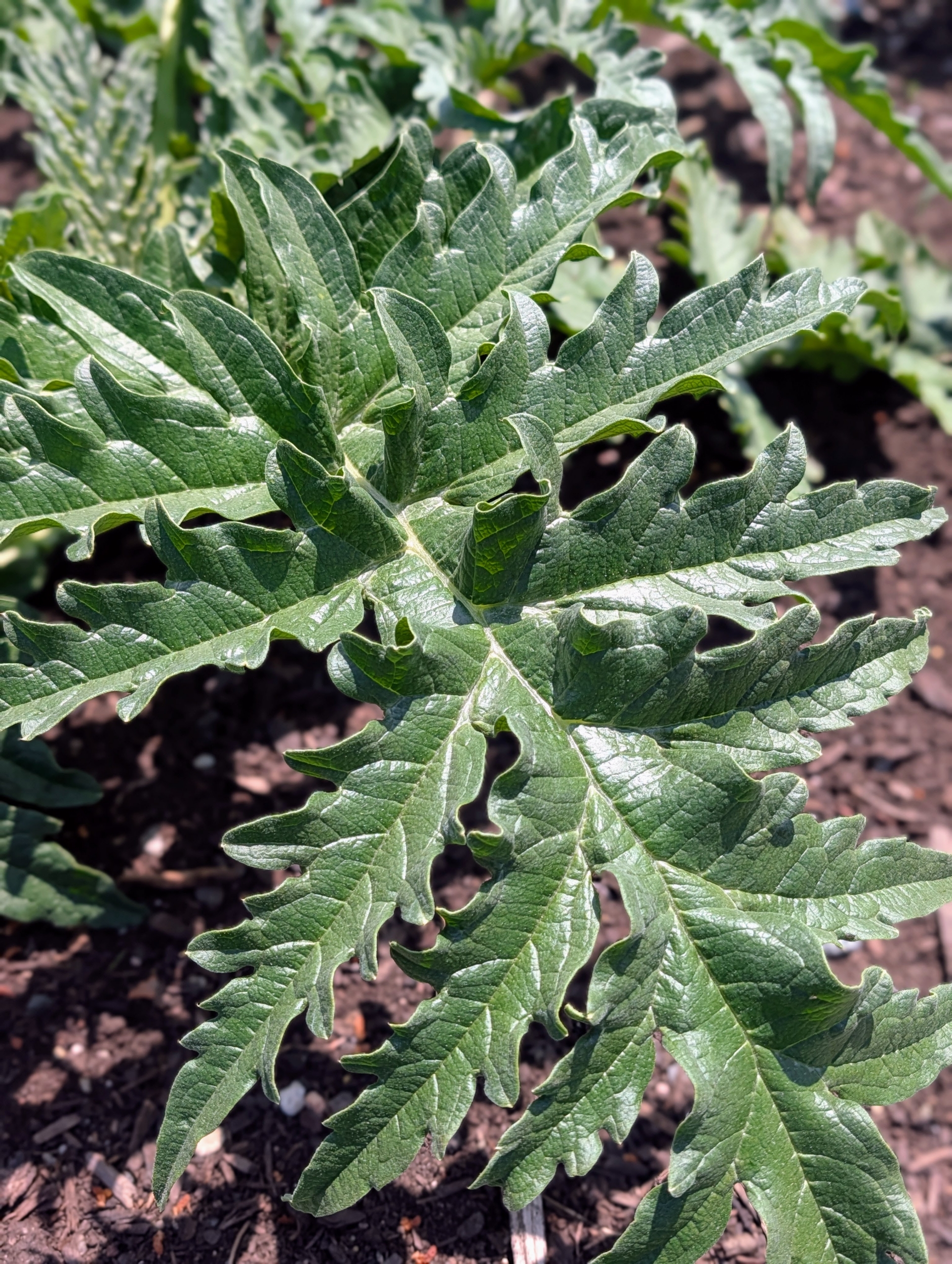
- These are the leaves of my artichokes. Globe artichokes, Cynara scolymus, are popular in both Europe and the United States. Artichokes are actually the flower buds, which will emerge from the center of the plants. Artichoke plant leaves are silvery-green in color with long, arching shapes. The plant stems are thick and fleshy.
-
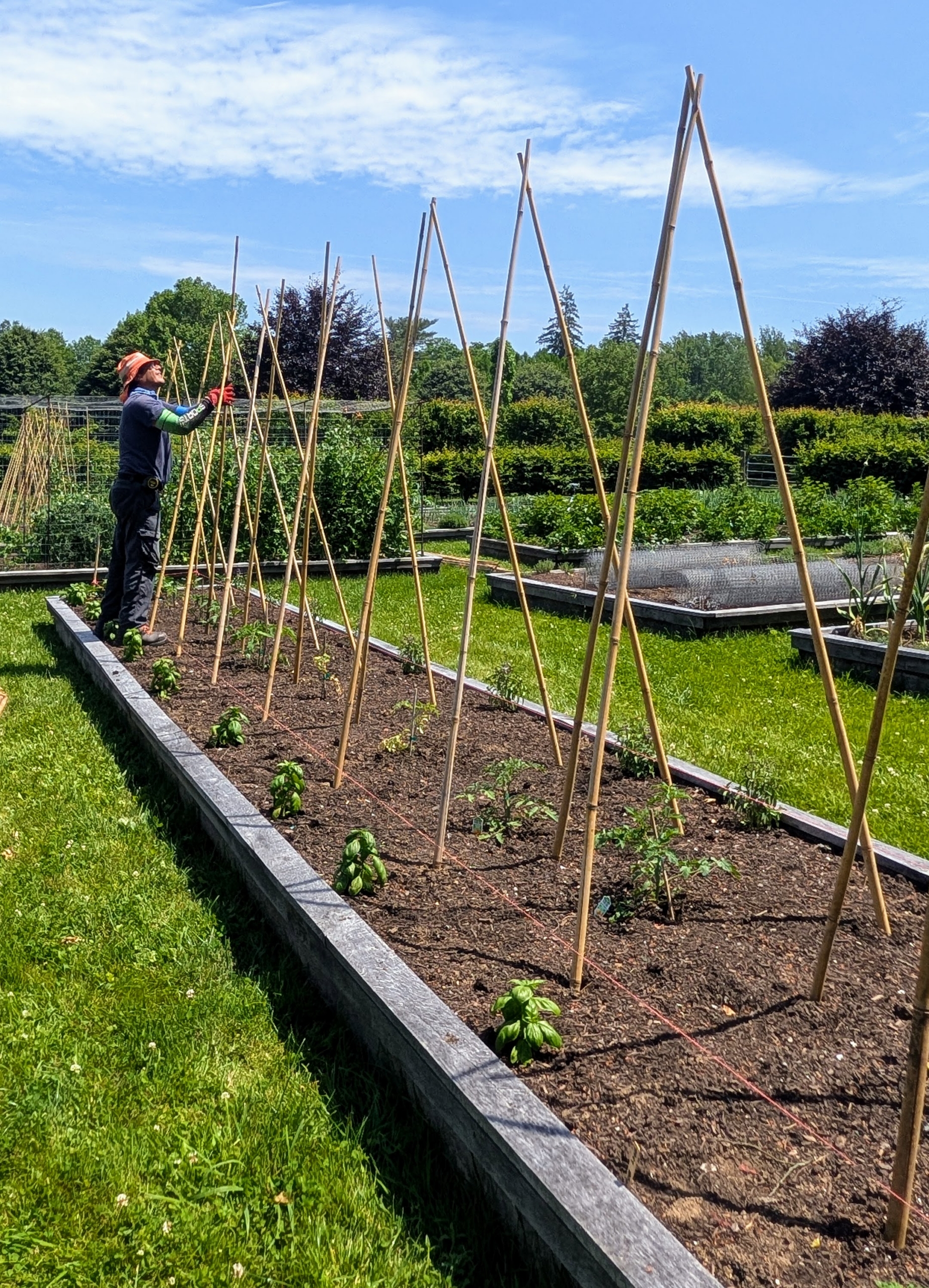
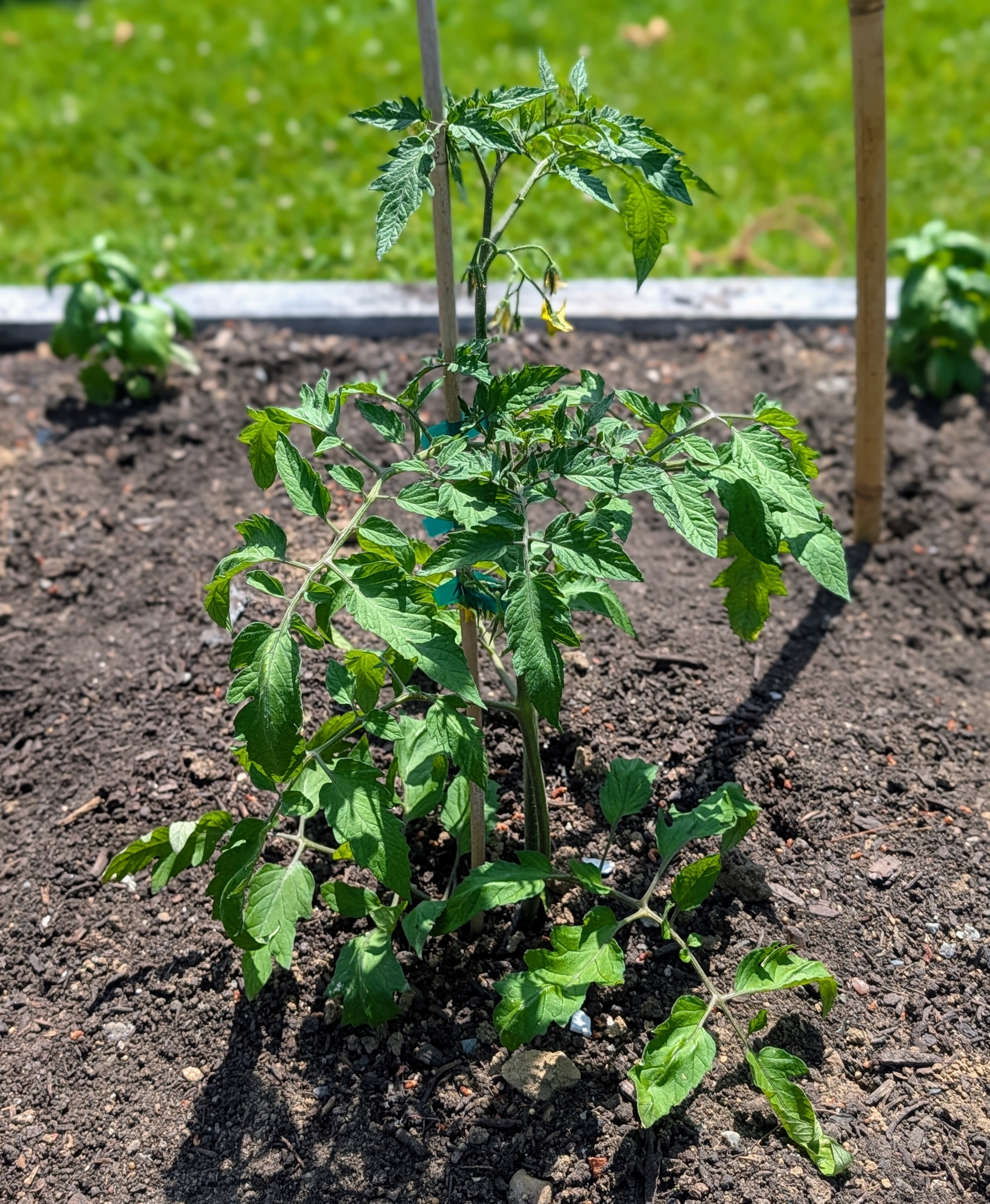
- It’s easy to spot where the tomatoes are growing by all the bamboo supports. If you’ve ever grown a vining plant, you know how important it is to provide strong structures to which the vines can cling and climb. Bamboo is strong and easy to find at garden supply stores. Here’s Cesar securing three tall bamboo stakes above each tomato plant.
-
- The vines will be secured to the bamboo as they grow. My tomatoes are grown from seed in my greenhouse every year.
-
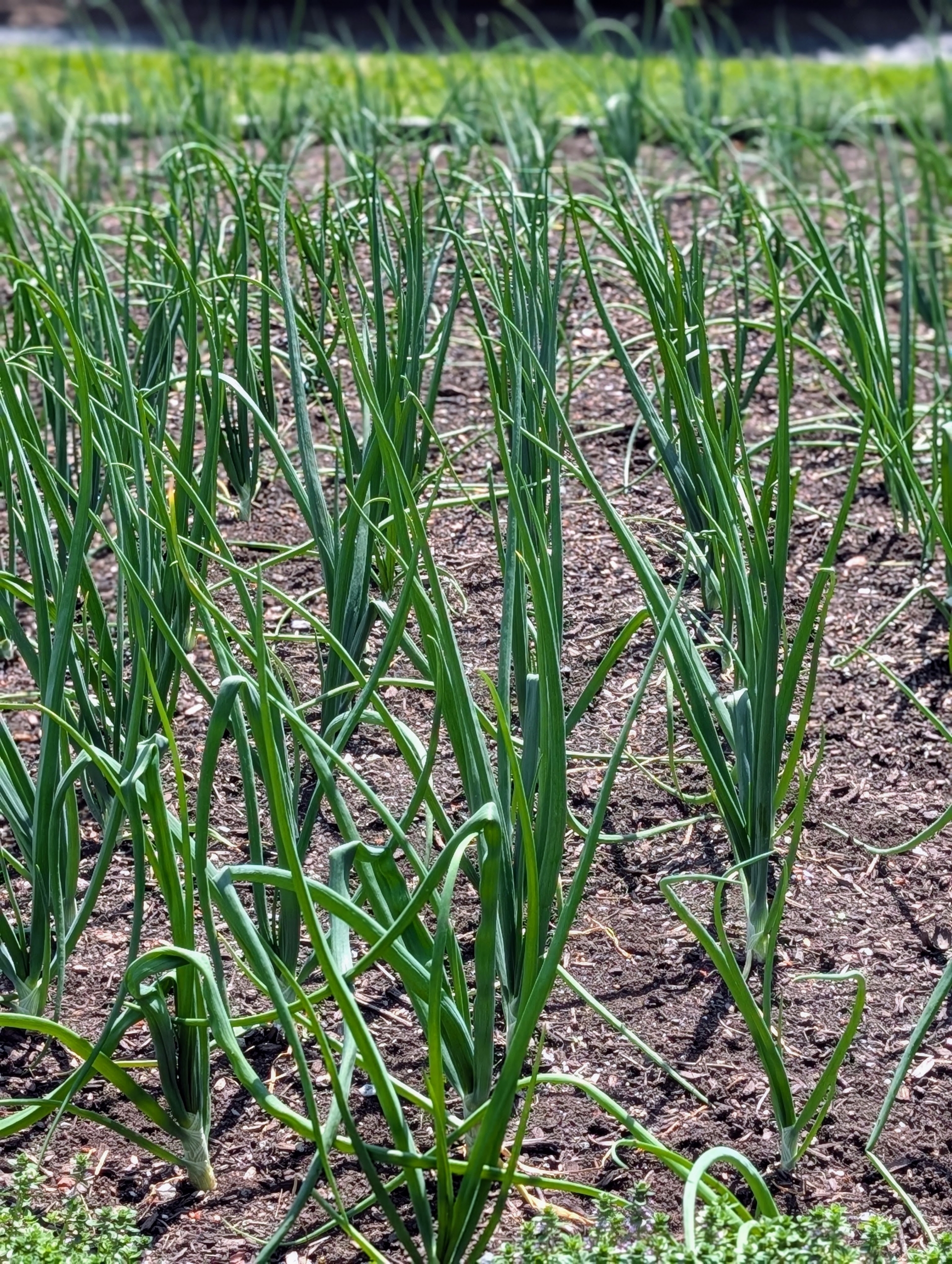
- I planted my onions in late April – look how much these onions have grown. I plant a lot of white, yellow and red onions. Onions are harvested later in the summer when the underground bulbs are mature and flavorful. I always look forward to the onion harvest!
-
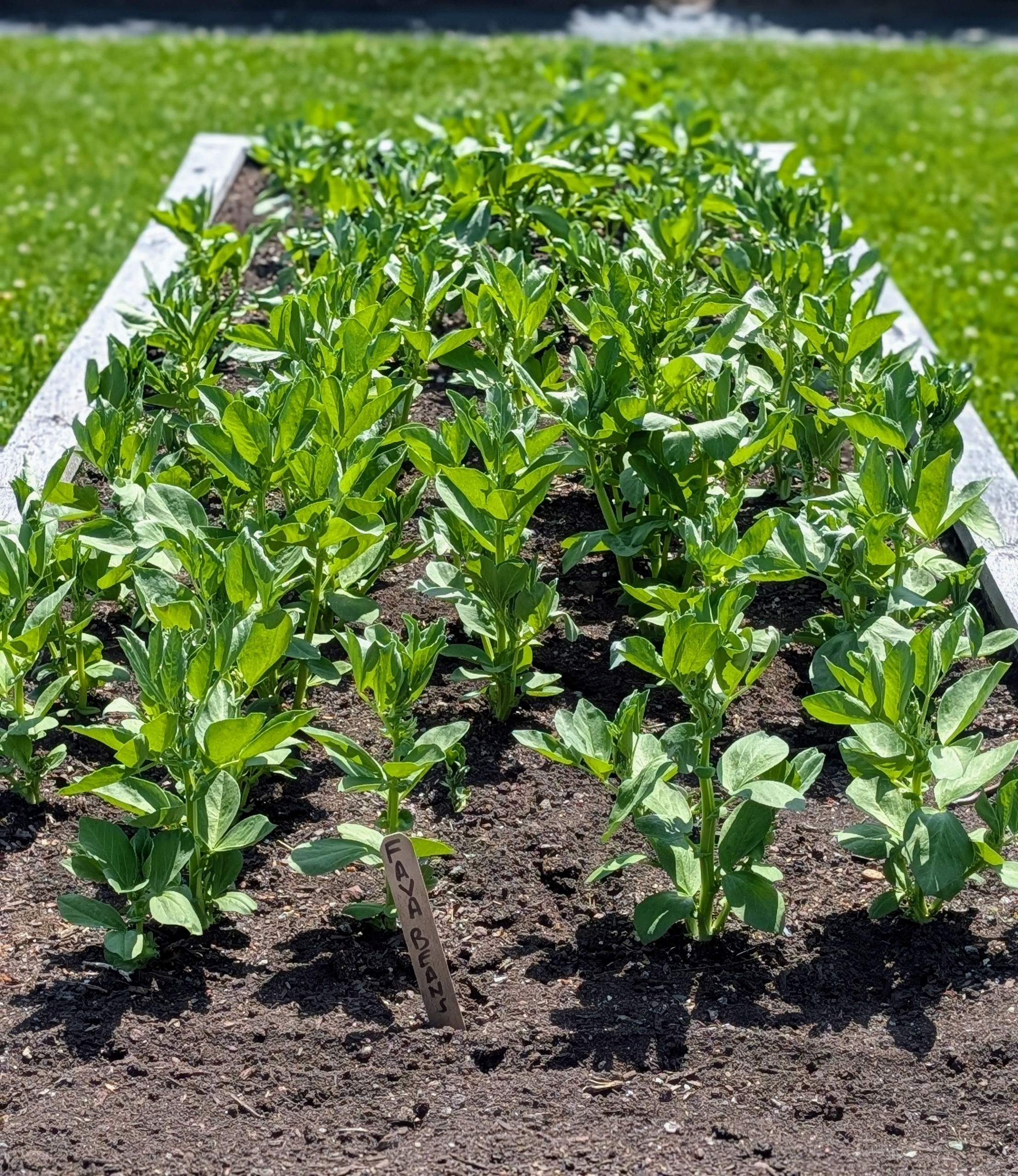
- Here are the fava beans. Vicia faba, also known as the broad bean or fava bean is an ancient member of the pea family. Fava beans have a nutty taste and buttery texture.
-
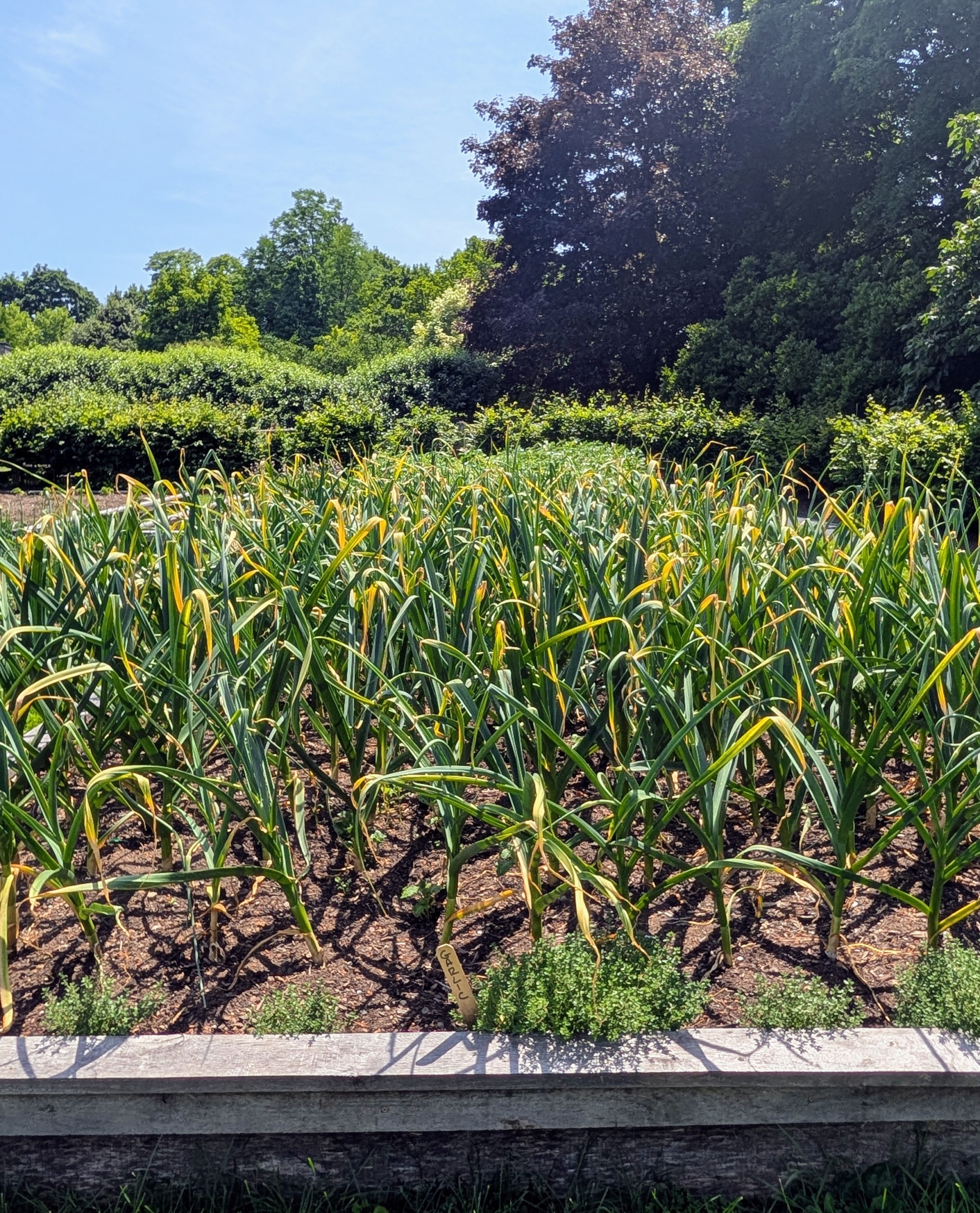
- And here’s my bed of garlic. Determining when garlic is ready to harvest can be tricky. If it’s harvested too soon, the cloves are small and underdeveloped. If harvested too late, the clove heads begin to separate, making them more vulnerable to decay. The real indicator is the plant itself – when the bottom leaves have turned brown, and the top leaves are still green. This garlic will be ready in late July.
-
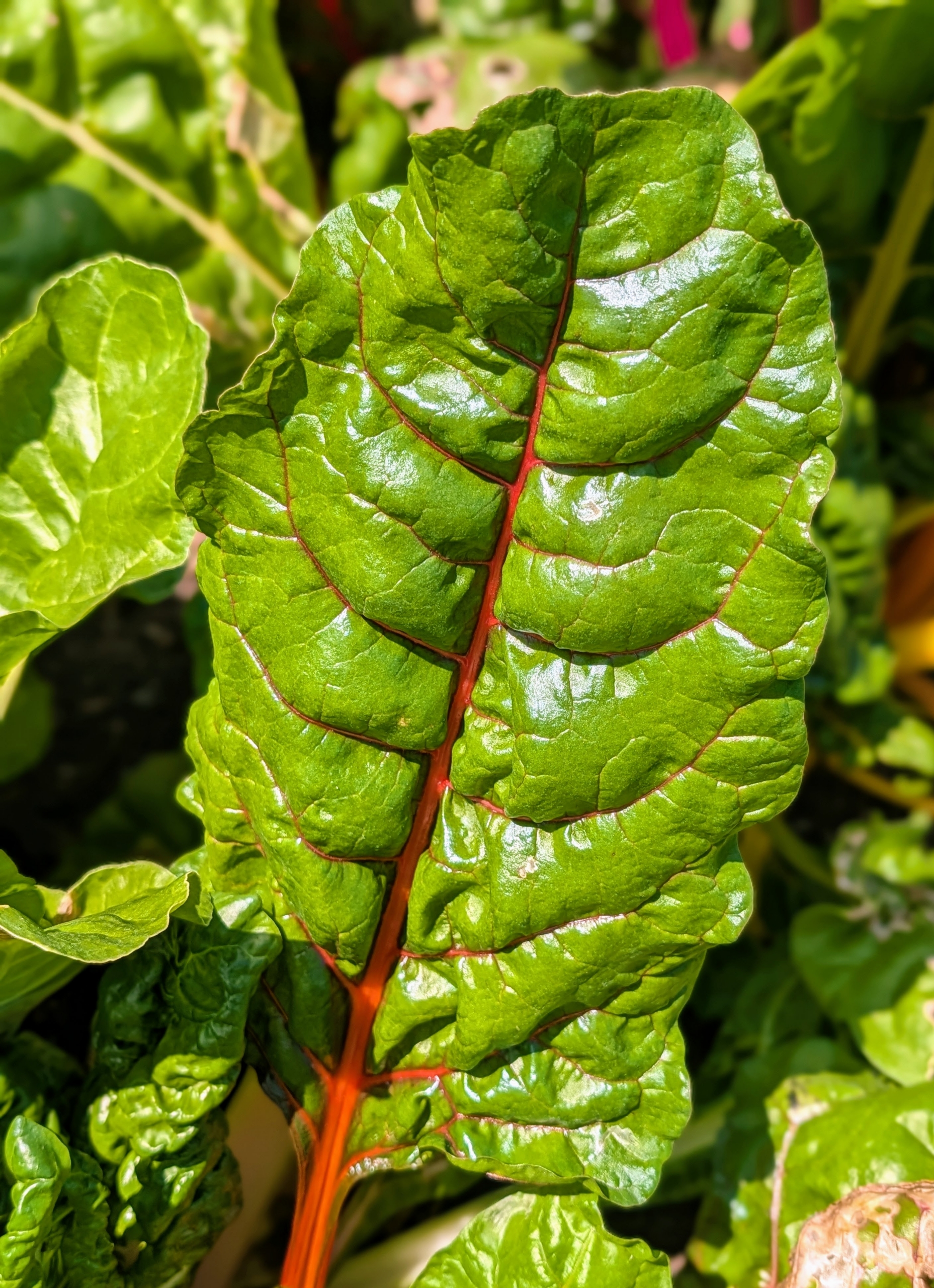
- Swiss chard is a leafy green vegetable often used in Mediterranean cooking. The leaf stalks are large and vary in color, usually white, yellow, or red. The leaf blade can be green or reddish in color.
-
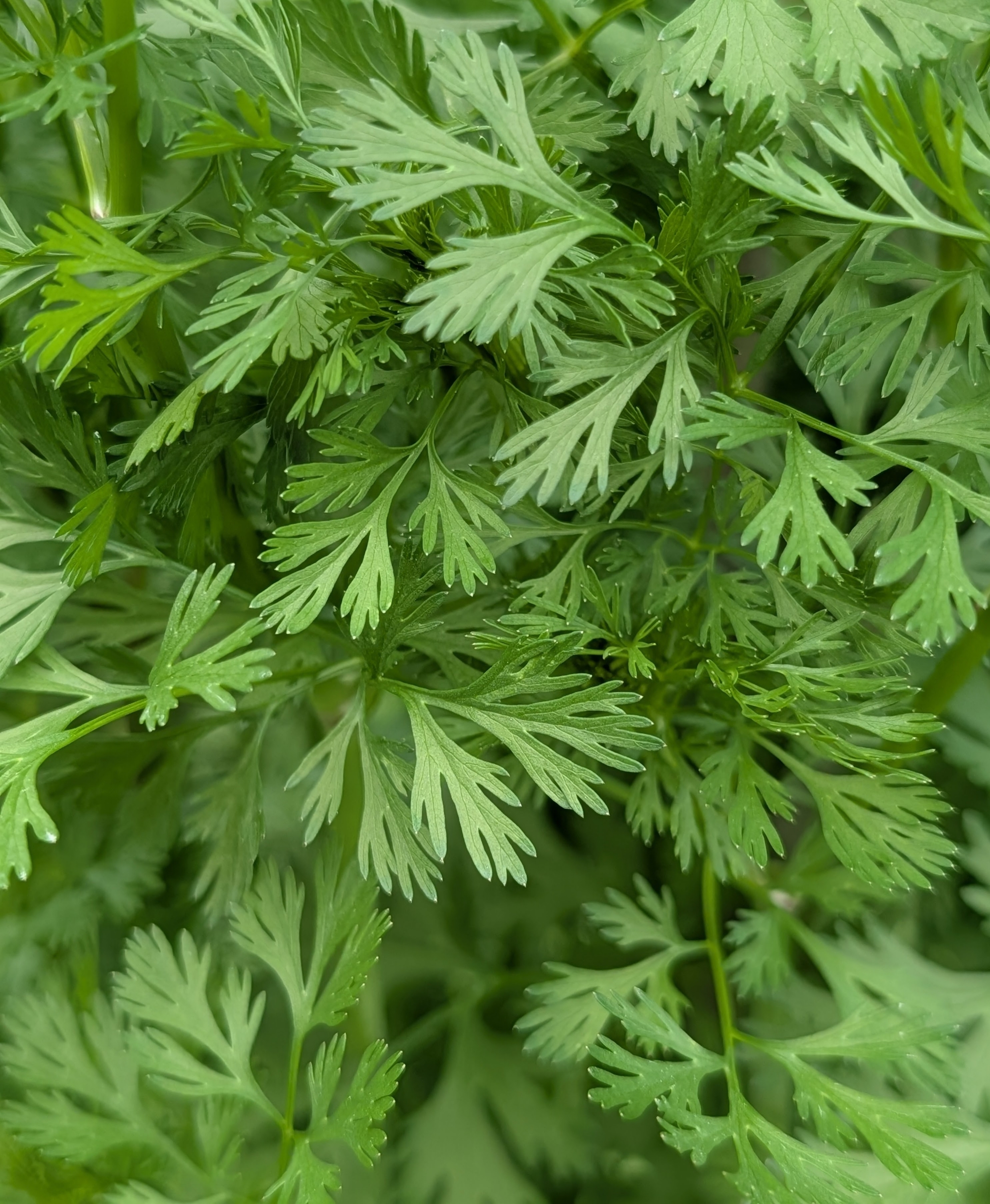
- There is also a lot of fresh and fragrant cilantro. Often known in the United Kingdom as coriander, cilantro comes from the plant Coriandrum sativum. In the United States, the leaves of the plant are referred to as cilantro and the seeds are called coriander. Cilantro is also commonly known as Chinese parsley. And those who care for it and those who don’t are split – and it’s actually genetic. Some possess a gene that makes them super-sensitive to the aldehyde component found in cilantro. Do you love cilantro, or hate it?
-
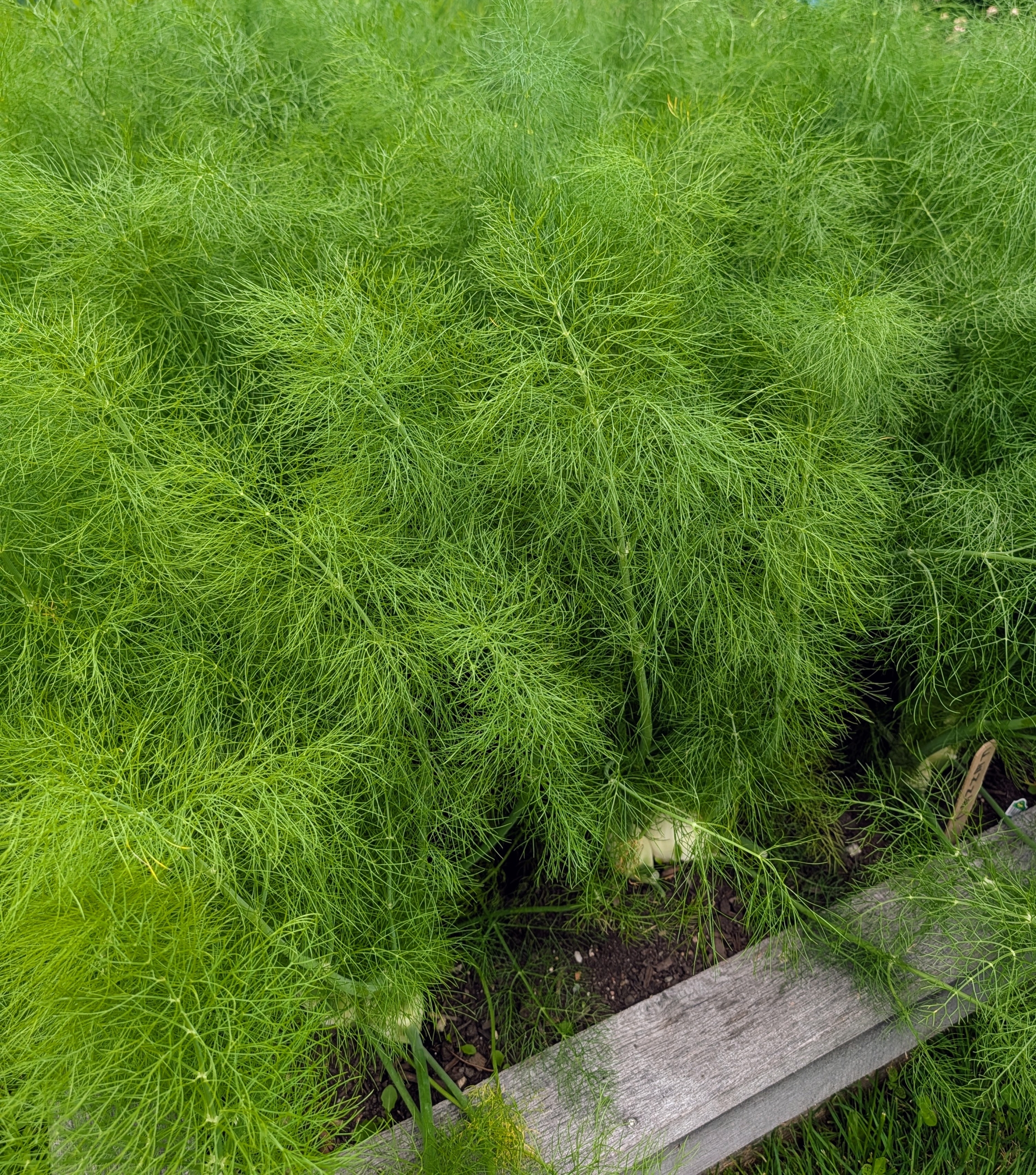
- And do you know what’s growing below the feathery, thread‑like, and bright green to bluish‑green foliage?
-
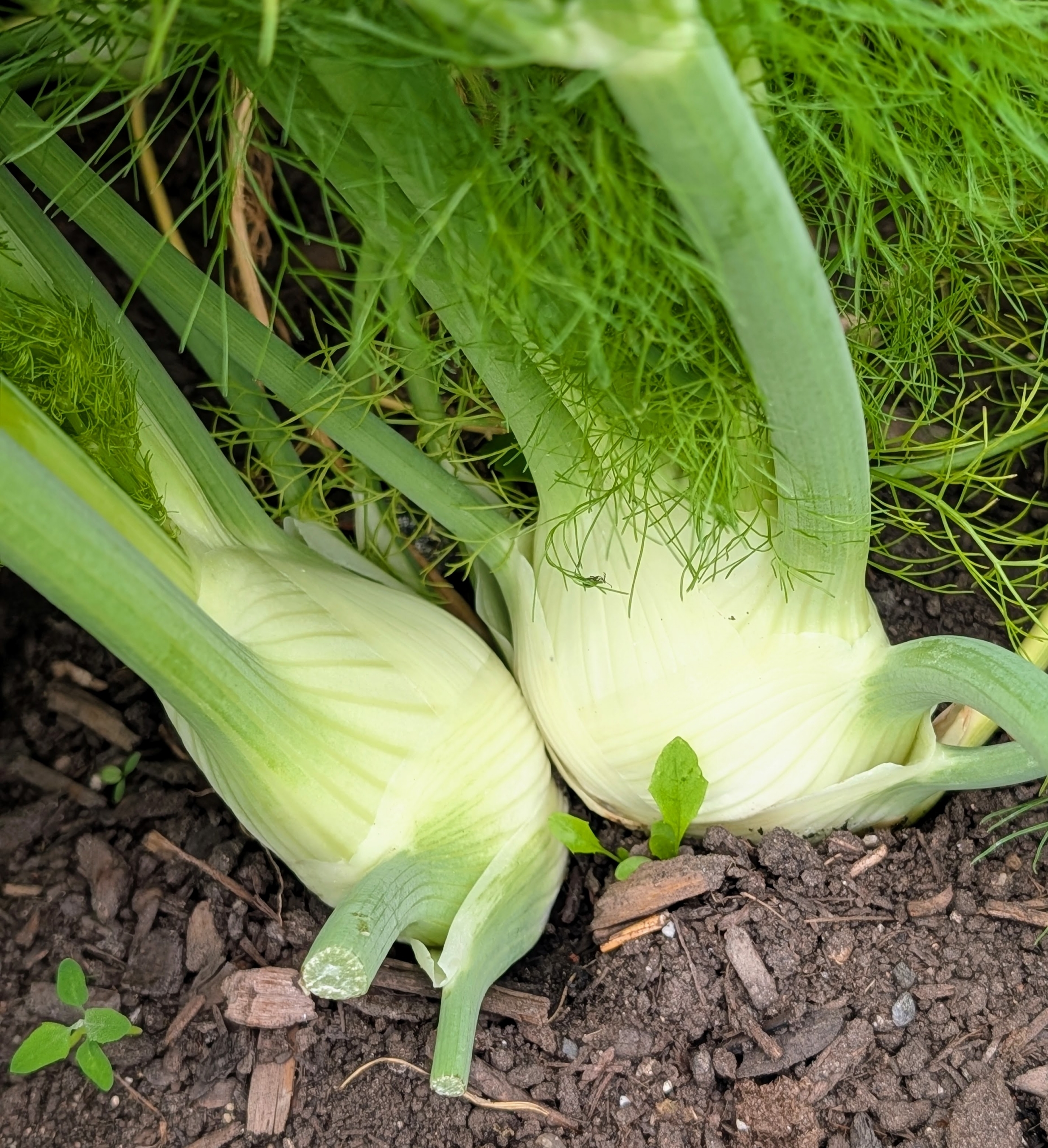
- It’s fennel – the aromatic, rounded white bulb at the base. Fennel has a crisp texture and mild licorice flavor, which becomes sweeter when roasted or sautéed.
-
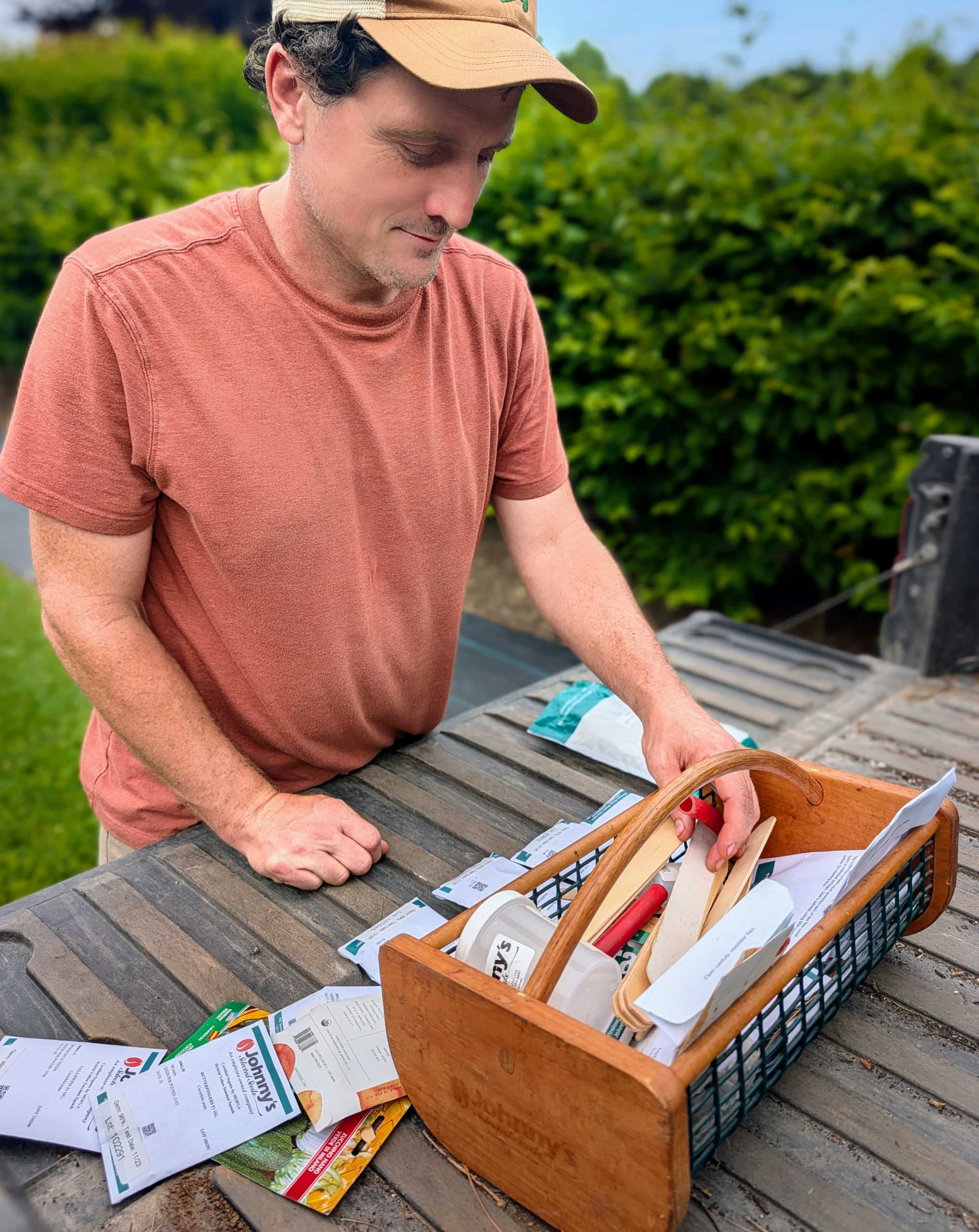
- My head gardener, Ryan McCallister, just planted more seeds, so we have a consistent supply of harvestable produce throughout the season. Many of my seeds are from Johnny’s Selected Seeds in central Maine – a company I’ve been using for quite some time. Johnny’s Selected Seeds is a privately held, employee-owned organic seed producer that offers hundreds of varieties of organic vegetable, herb, flower, fruit and farm seeds that are known to be strong, dependable growers.
-
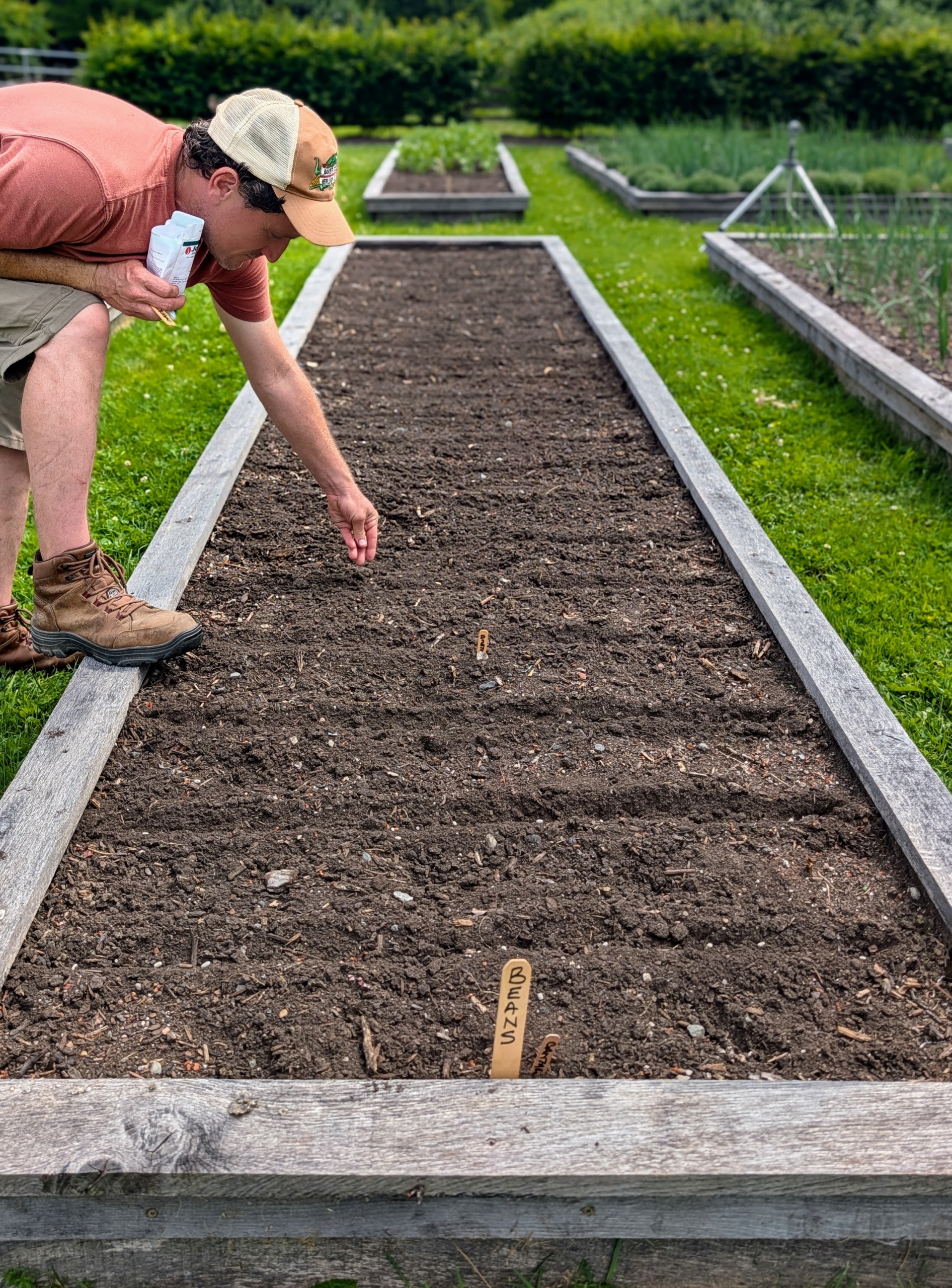
- Here Ryan plants the beans. These bean seeds are planted about an inch to an inch-and-a-half deep. Ryan plants the seeds in rows that are about a foot apart. All the beds are raised slightly and all surrounded by wood frames.
-
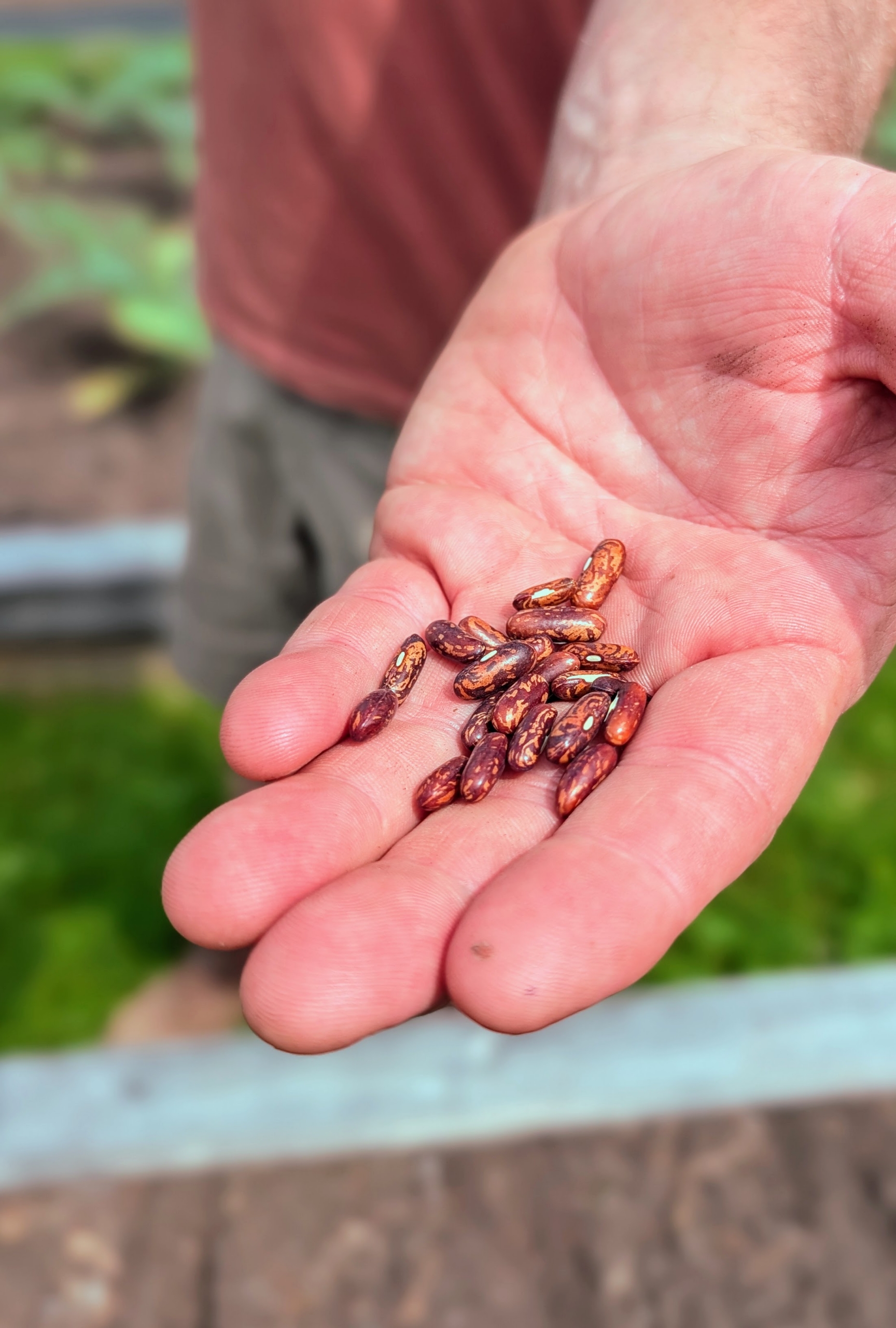
- Once the seeds are sown, the harvest of fresh beans usually begins in seven to eight weeks and lasts for around three weeks. Both bush and pole bean cultivars are members of the same species, Phaseolus vulgaris, also called “common beans.” Bush beans are one of the easiest vegetables to grow. They grow in small bushes 12 to 24 inches tall and don’t require any trellising.
-
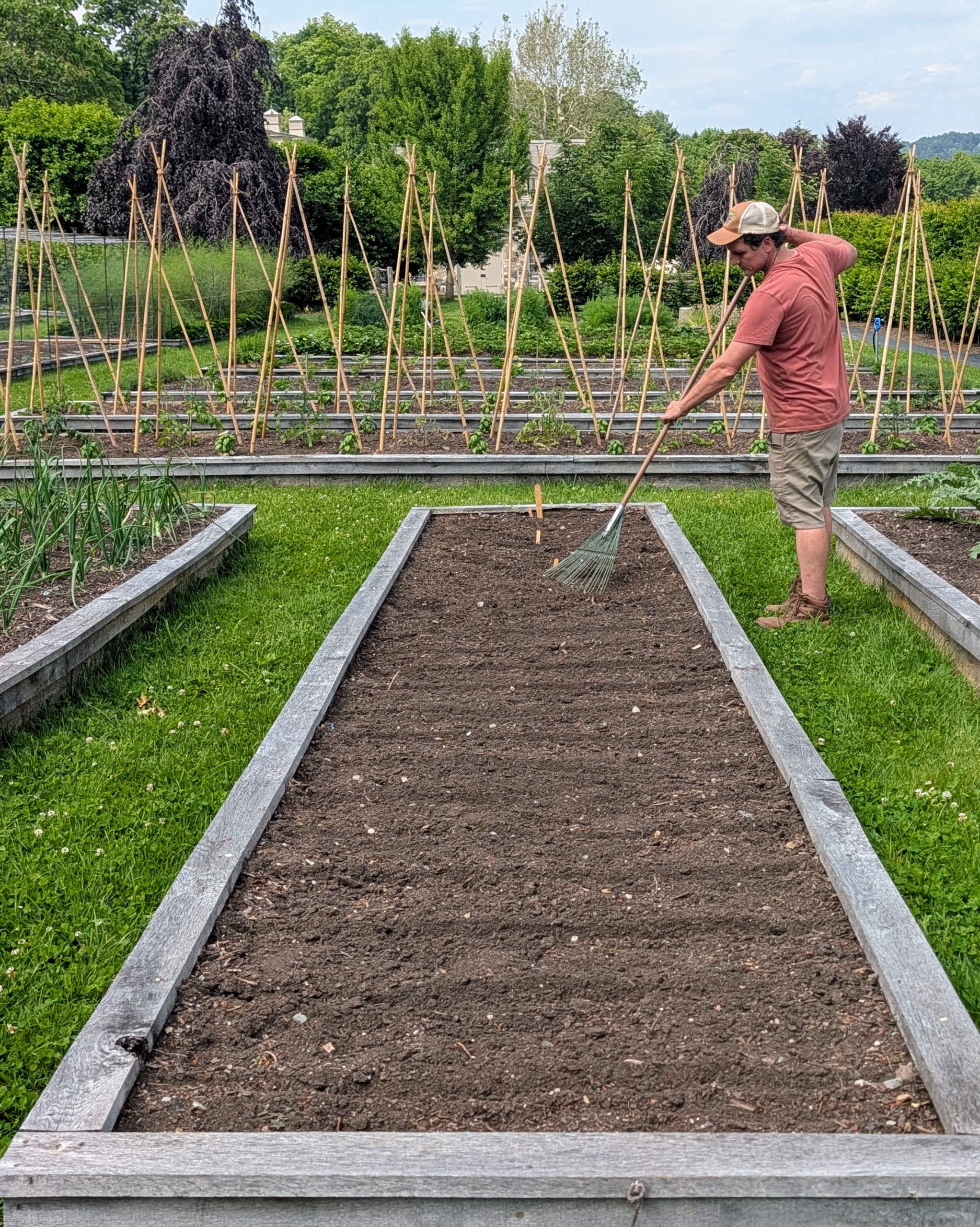
- Once planted, Ryan rakes the bed, covering all the seeds with soil.
-
- Everyone always asks what I do with all the vegetables I grow. I share them with my family, but I also love sharing the bounties with friends, colleagues, and my hardworking crew here at the farm. I also provide fruits, vegetables, and eggs for photography and video shoots. And, of course, all my birds get vegetables too. I hope your gardens are doing well this season.
 Martha Pins


 Martha Tweets

