
Planting and Growing Clematis
Clematis, often called the "Queen of Climbers," is one of the most elegant and spectacular flowering vines in the garden. It brings exceptional beauty to trellises, arbors, pergolas, and posts, covering them with an abundance of star-shaped blooms in shades of pink, white, blue, purple, red, and striking bicolors.
I have always loved clematis, and over the years I've grown many varieties of this remarkable vine. When I purchased my farm I built a long, winding pergola supported by antique granite uprights, where I could grow lots of clematis. Over time, I've continued adding new varieties. I've also planted them to climb some of the surrounding trees. Beginning in late spring, the vines burst into bloom, producing a magnificent display that continues throughout the summer.
Enjoy these photos.
-

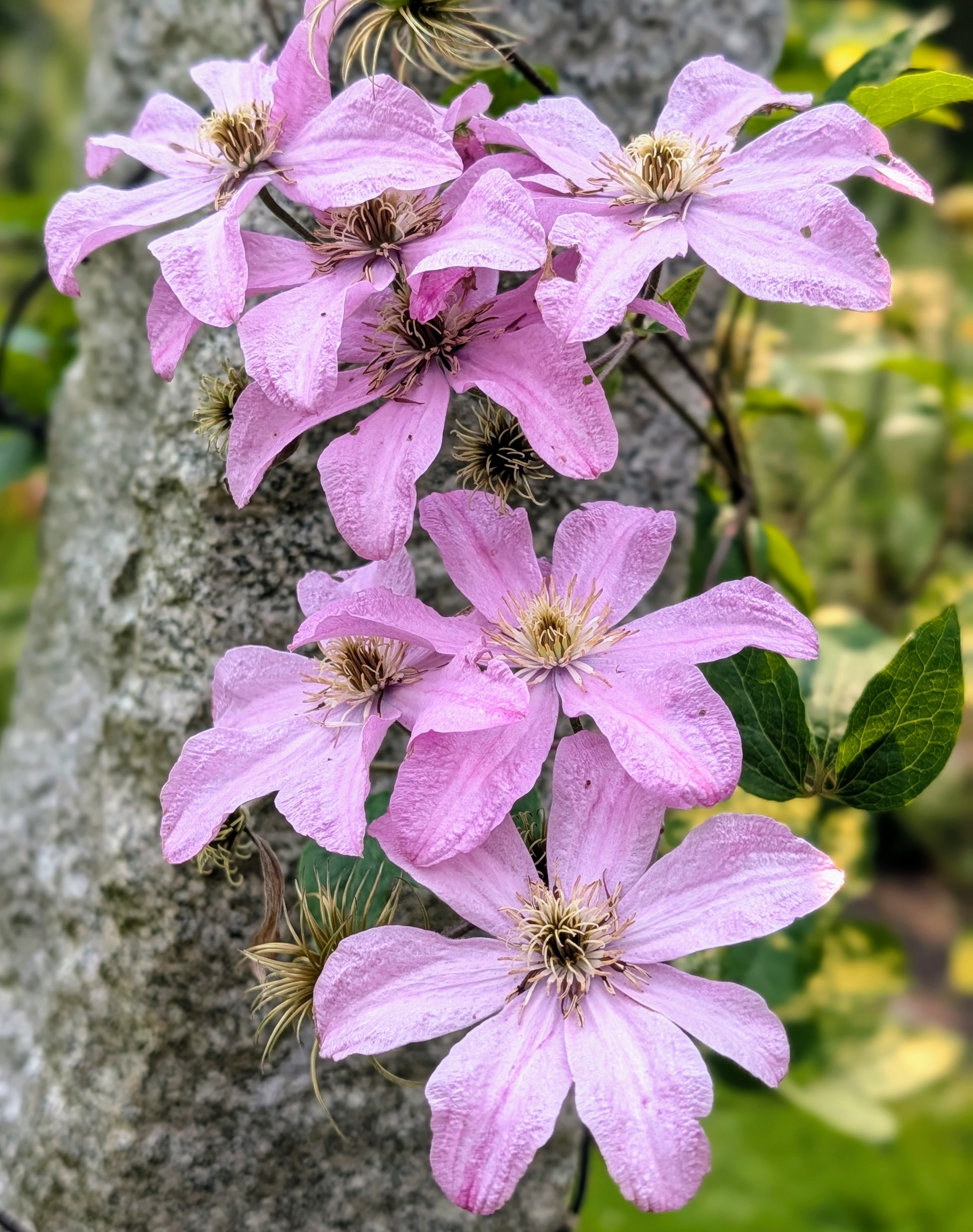
- Each pair of posts under my long pergola supports the same variety of clematis, but over the years, I’ve added others all in the same palette of colors – shades of pink, purple, white, and blue.
-
- Clematis is a genus of about 300-species within the buttercup family Ranunculaceae. The name Clematis comes from the Greek word “klematis,” meaning vine.
-
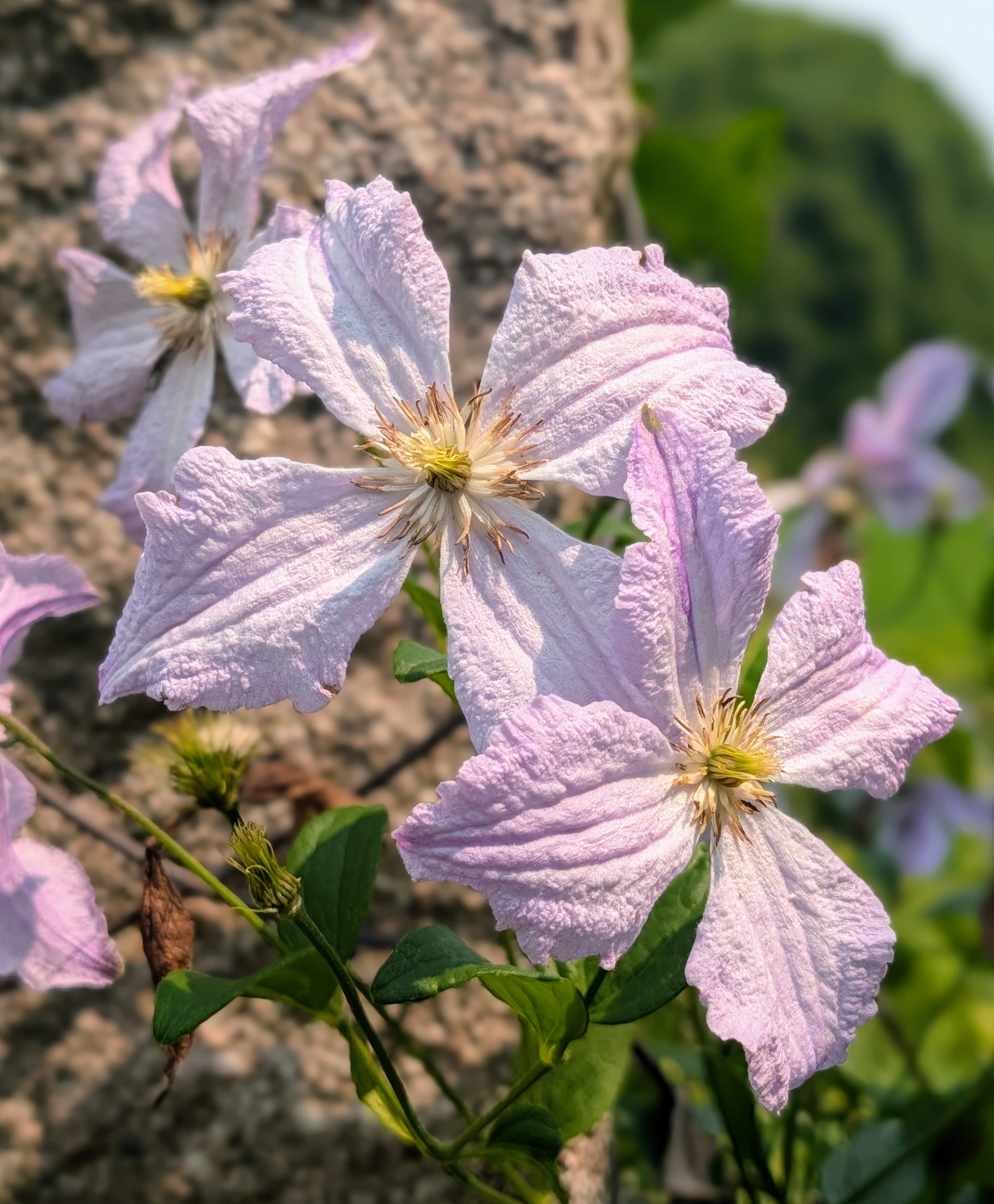
- Depending on the species, clematis can start blooming anywhere from late winter to early spring and then continue flowering through the summer and into early fall.
-
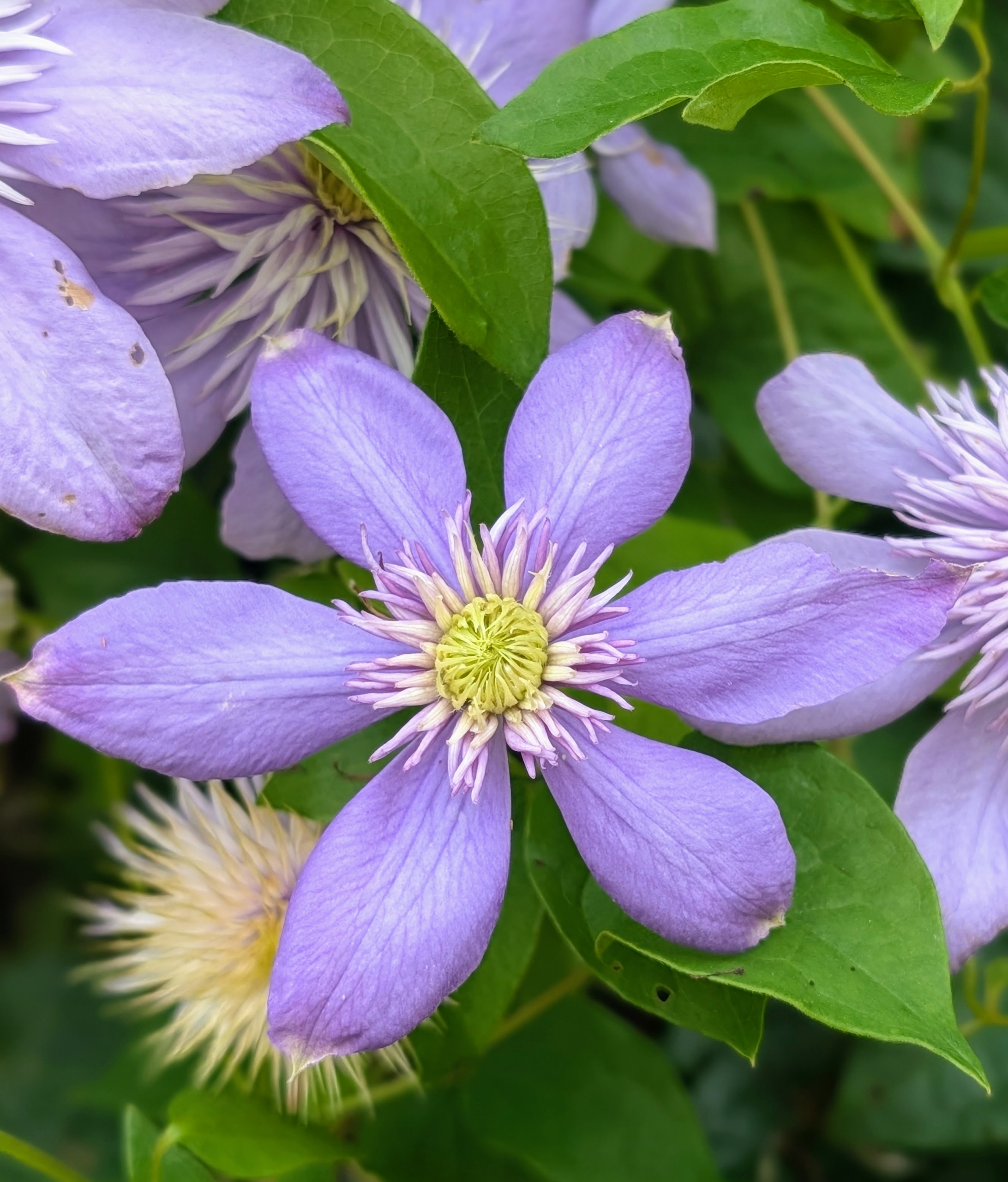
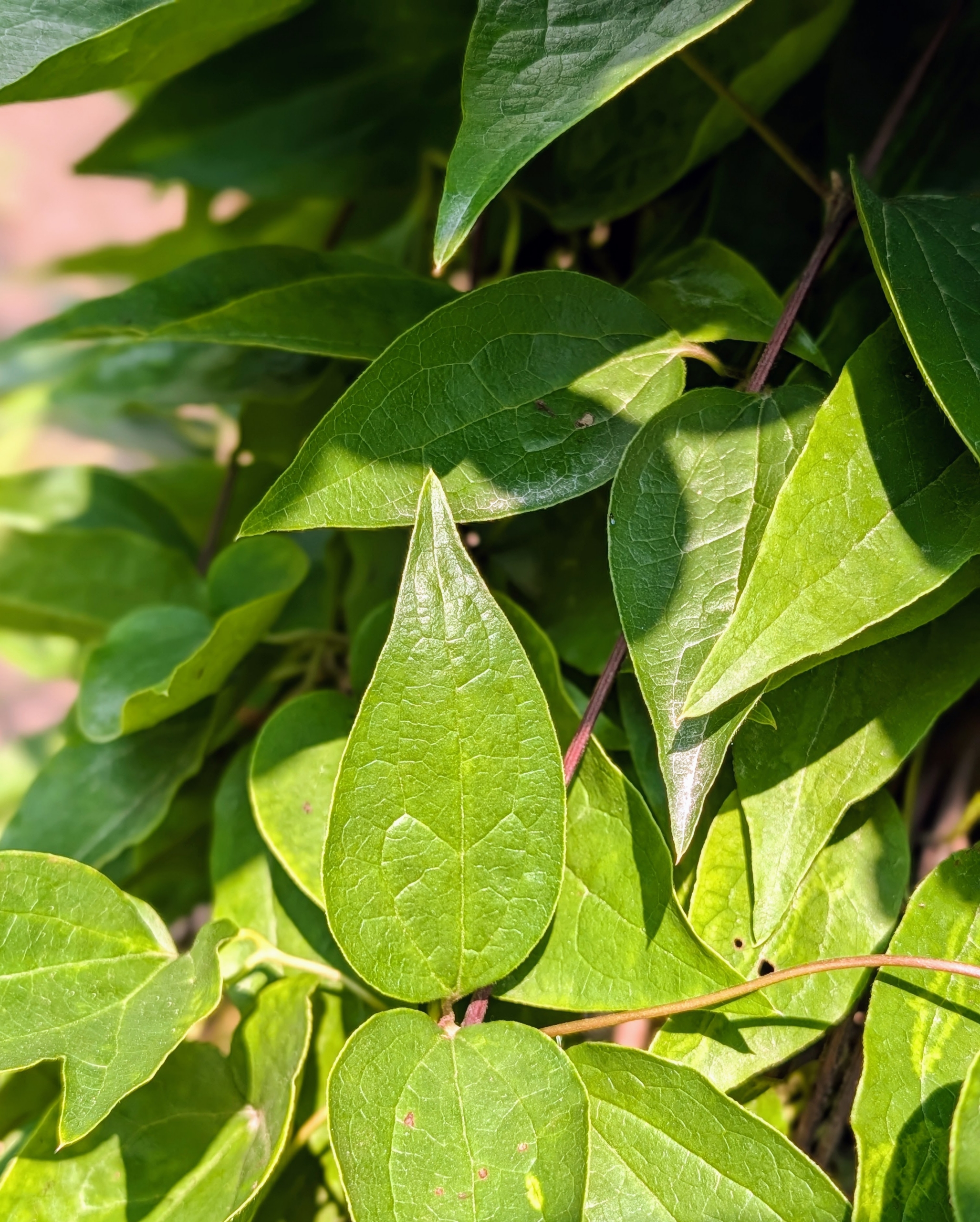
- Most clematis leaves are pinnately compound and heart-shaped with a smooth to coarsely toothed margin. They also feature a pointed tip and a shallowly lobed cleft at the petiole.
-
- Clematis is also known as traveller’s joy, virgin’s bower, leather flower, or vase vine. It’s also been called “Old Man’s Beard,” because of the long fluffy seed heads that look similar to an old man’s beard.
-
- Clematis are native to China and Japan and are known to be vigorous, woody climbers.
-
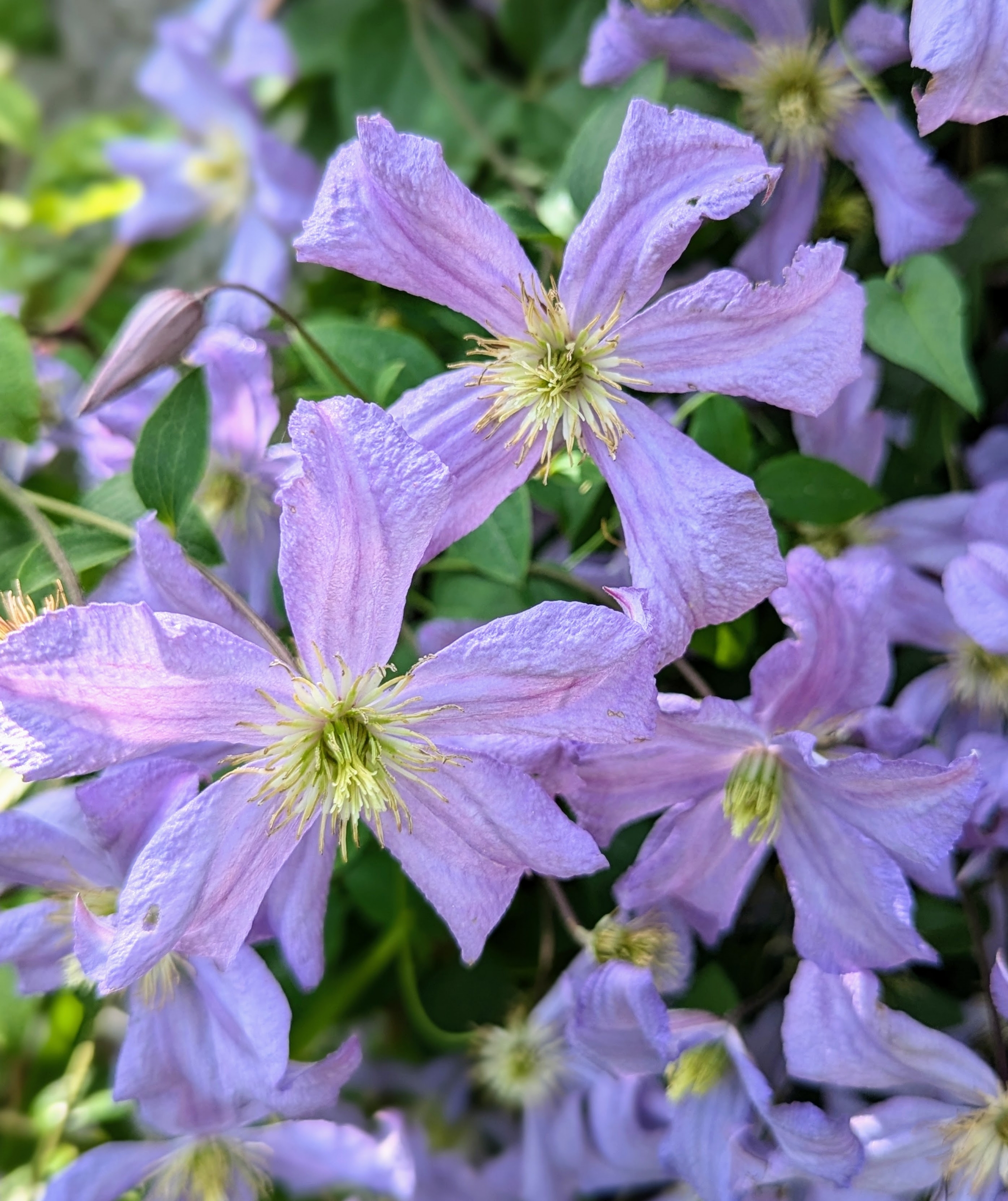
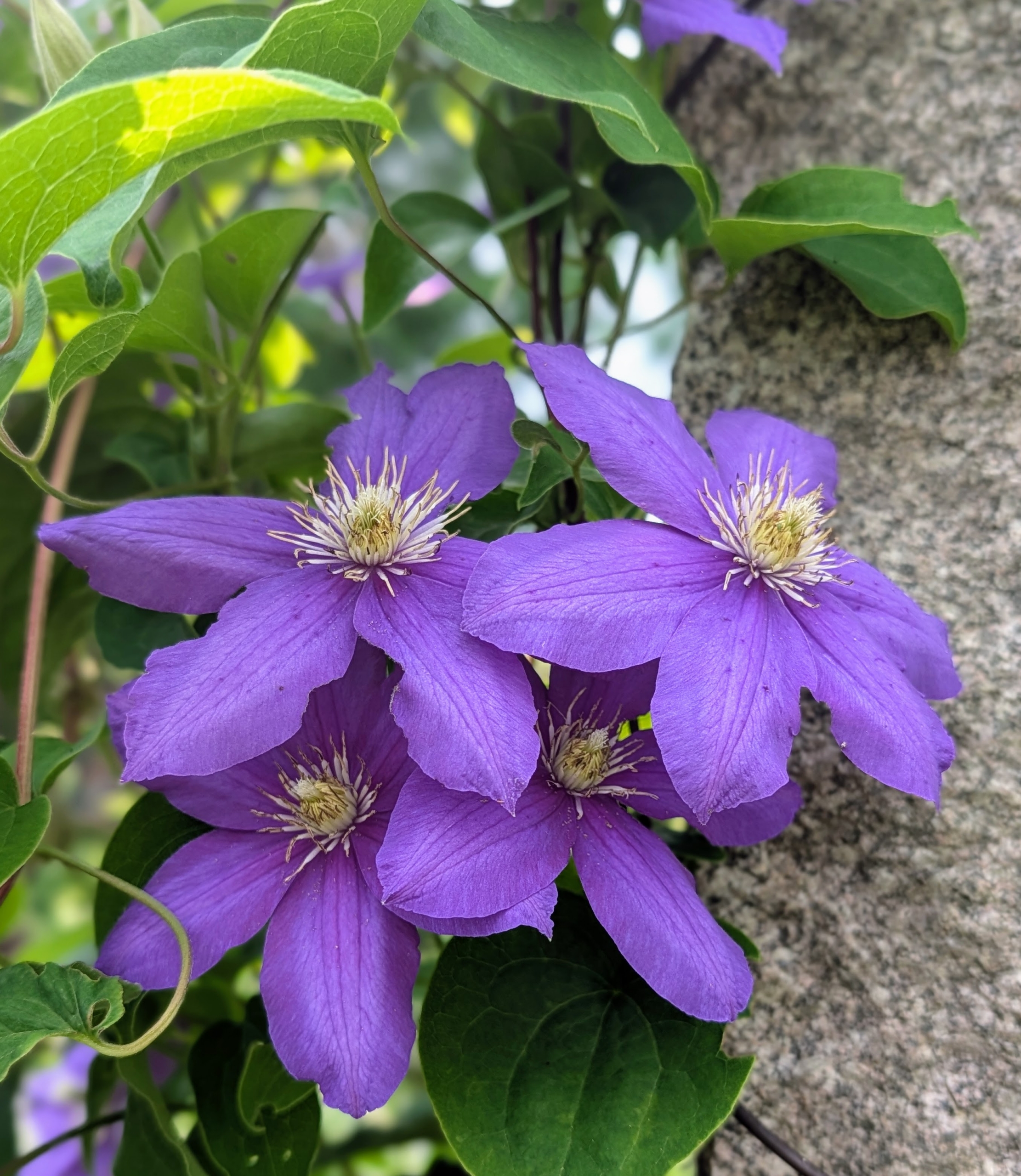
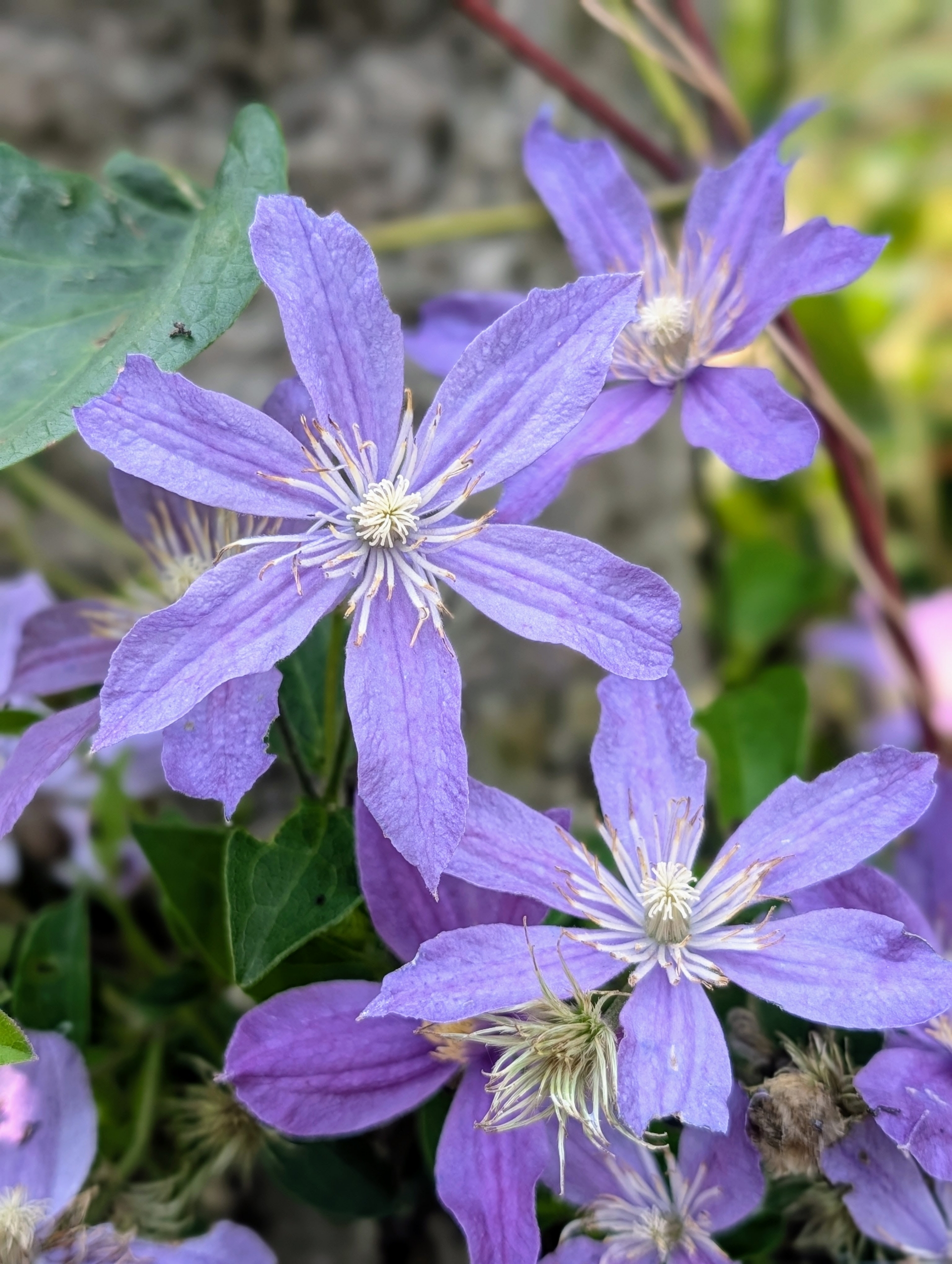
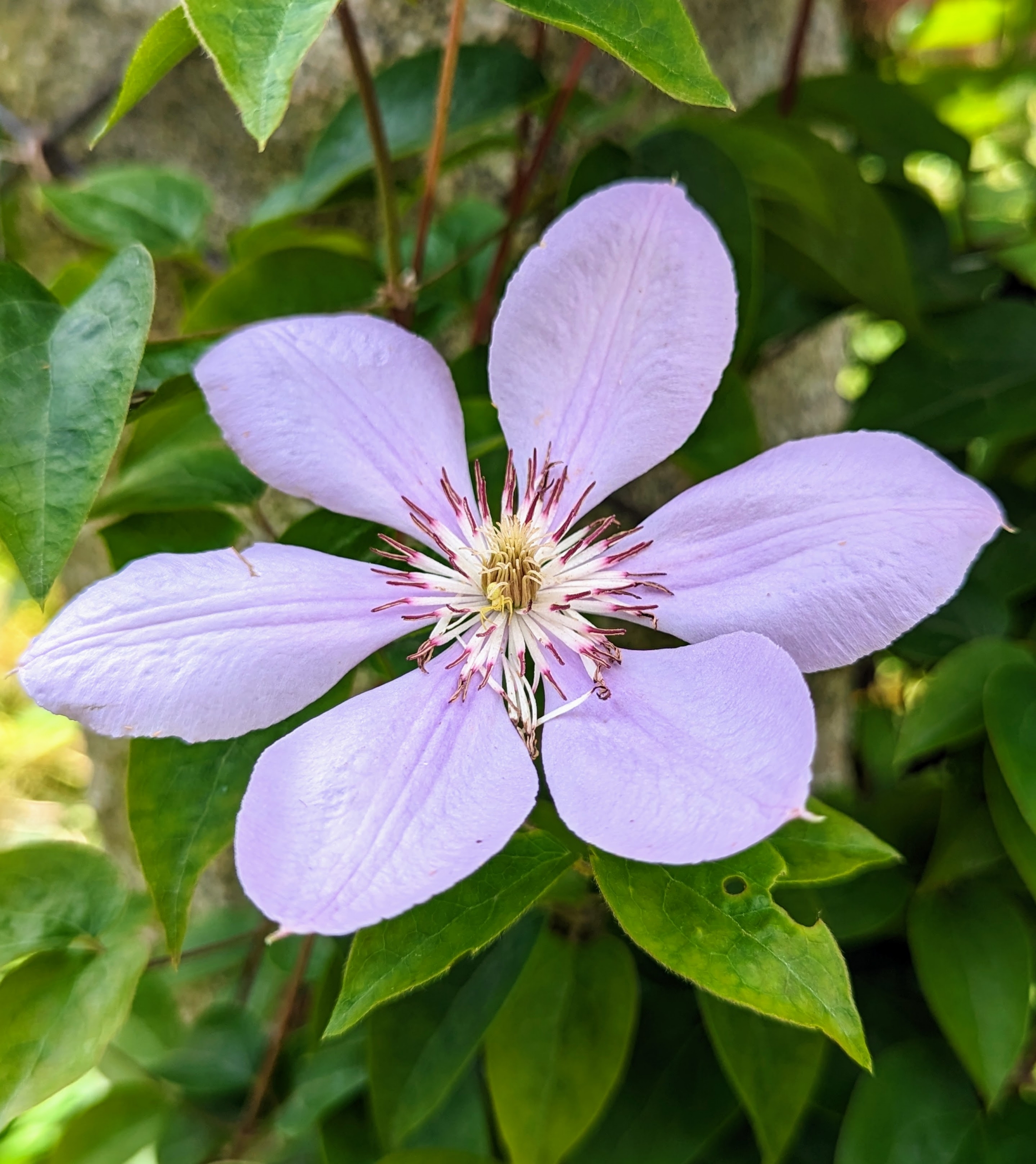
- The standard clematis flower has six or seven petals, measuring five to six inches across. Colors range from lavender to deep purple, white to wine red, and even a few in yellow.
-
- Many clematis are lightly scented. Flowers vary in shape and sizes. They can be flat, tubular or bell-shaped and can be as small as one-inch wide.
-
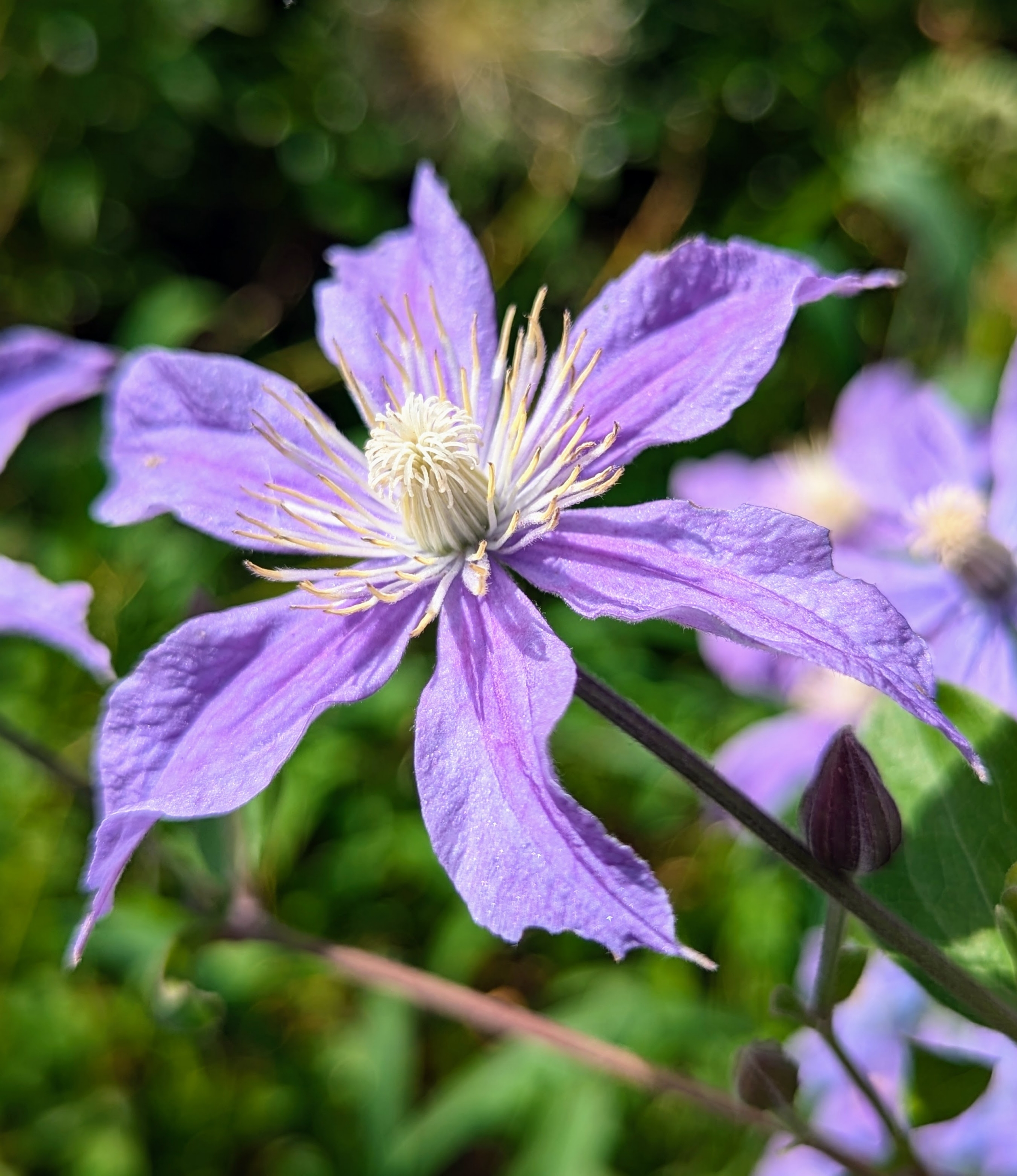
- Some clematis cultivars will bloom in partial shade, but to really thrive, they need at least six-hours of sun each day. Just think, “head in the sun, feet in the shade.” The vines like sun, but cool, moist soil.
-
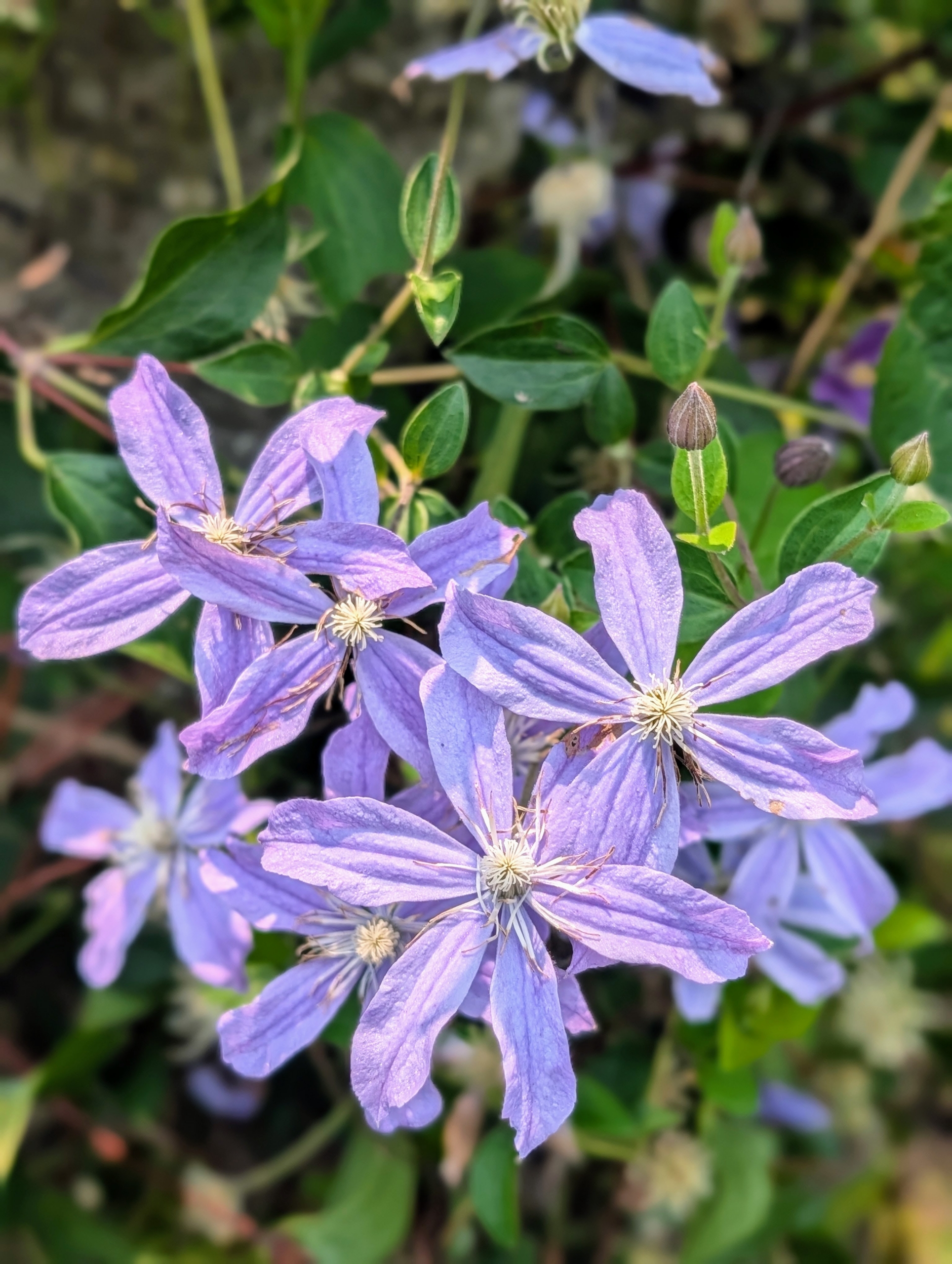
- The soil should also be loose and neutral in pH. I enrich my soil with compost regularly.
-
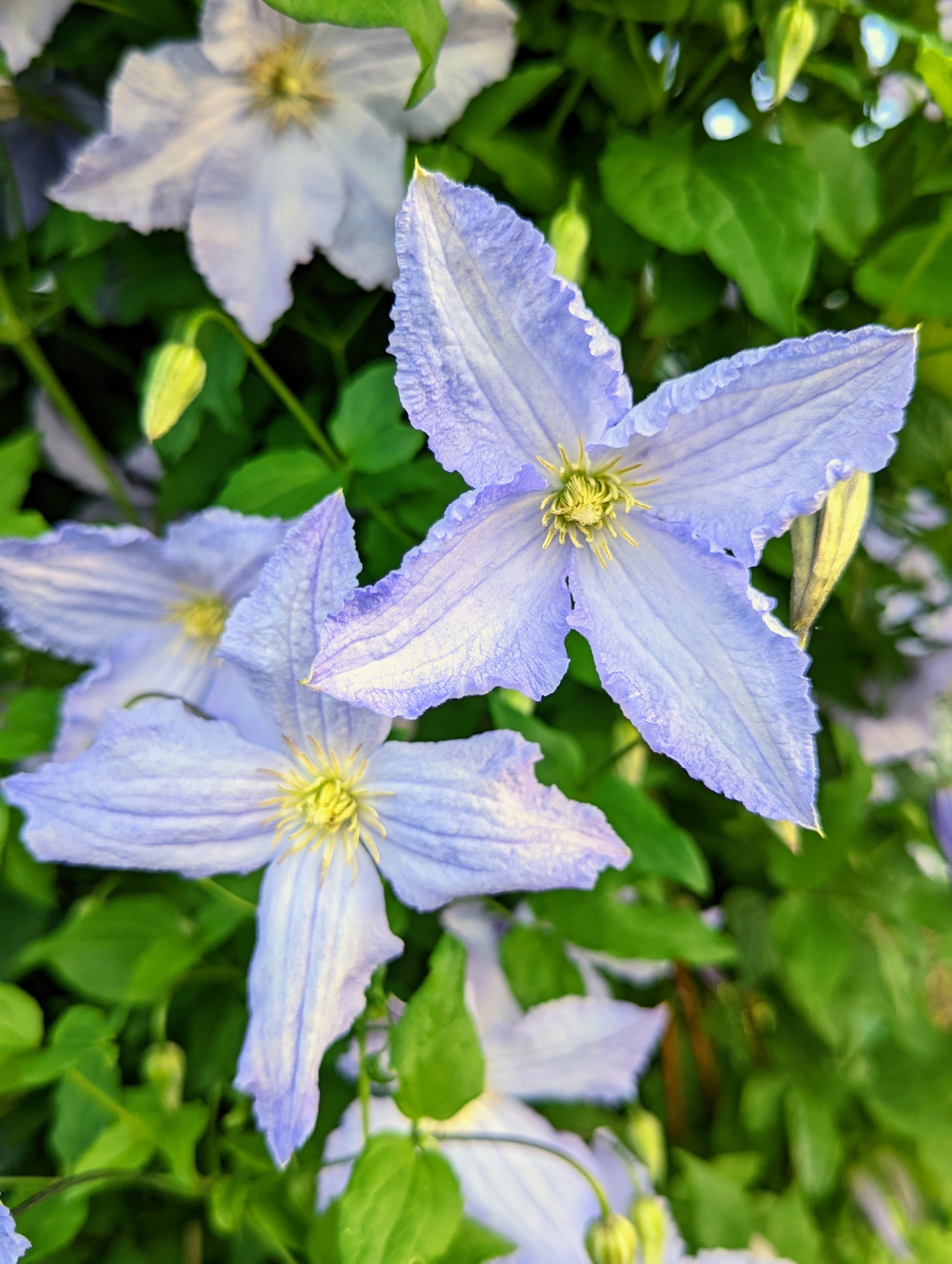
- And be mindful where it is planted. The clematis plant is toxic to people, dogs, cats, and horses and can cause skin irritation in humans.
-
- Some of the clematis varieties grown here include ‘Parisienne,’ ‘Blue Angel,’ ‘Jackmanii,’ ‘Sapphire Indigo,’ ‘Arabella,’ ‘Contessa de Bouchard,’ and ‘Eyers Gift.’
-
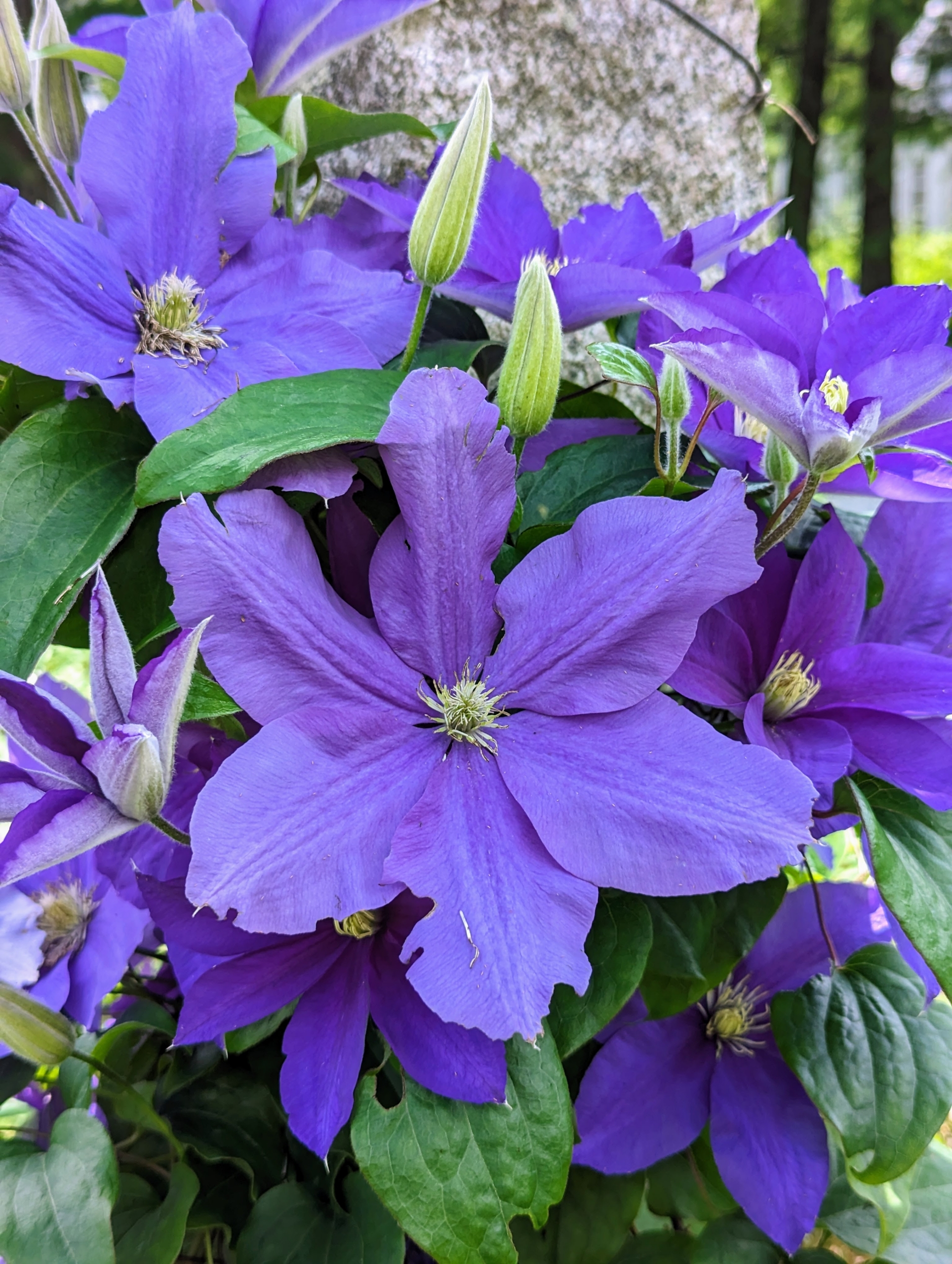
- This is Clematis viticella ‘Betty Corning’, which has slightly fragrant, bell-shaped flowers that bloom from summer to fall.
-
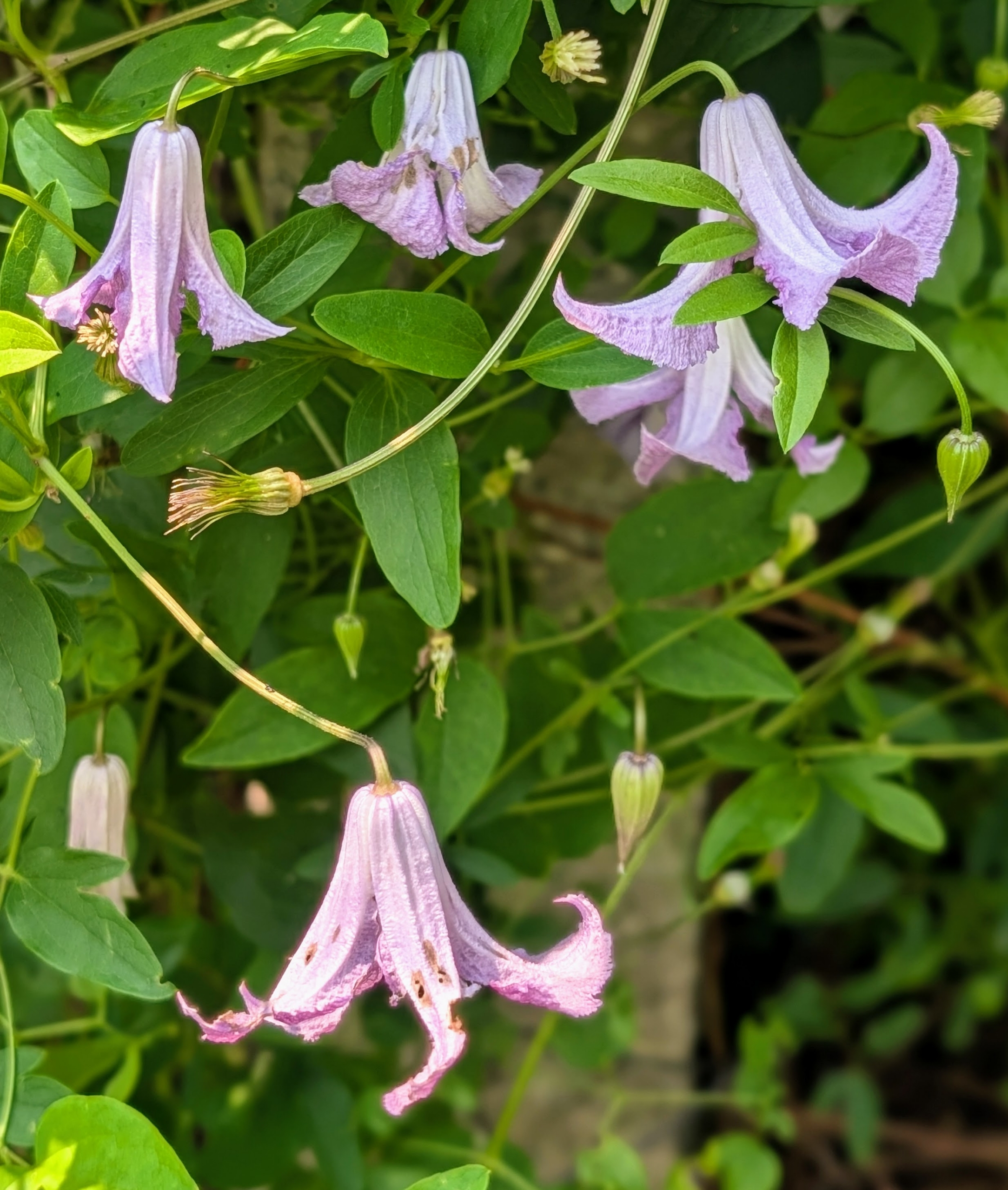
- Here is a similar variety in pinkish purple.
-
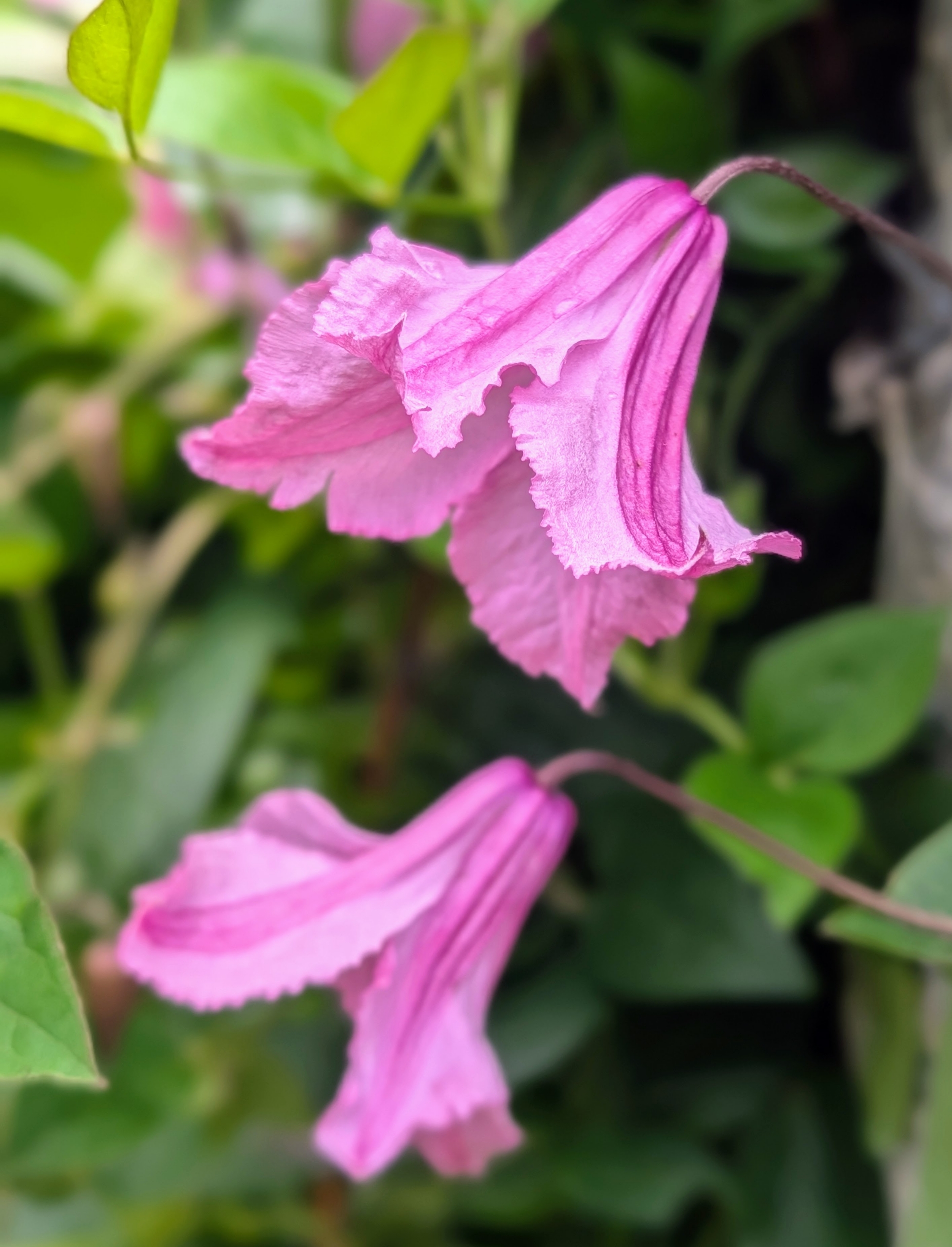
- And here’s one that’s even darker purple.
-
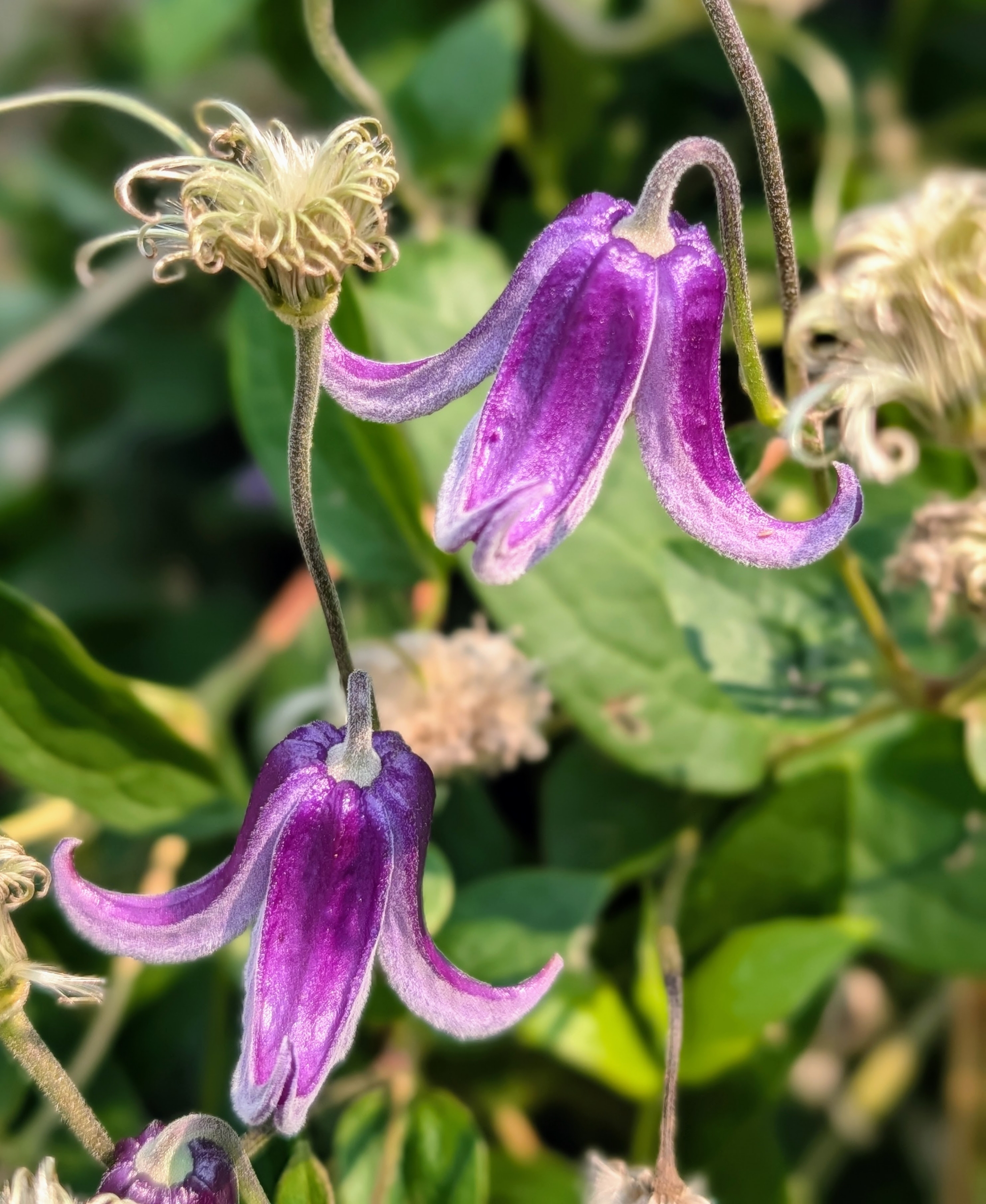
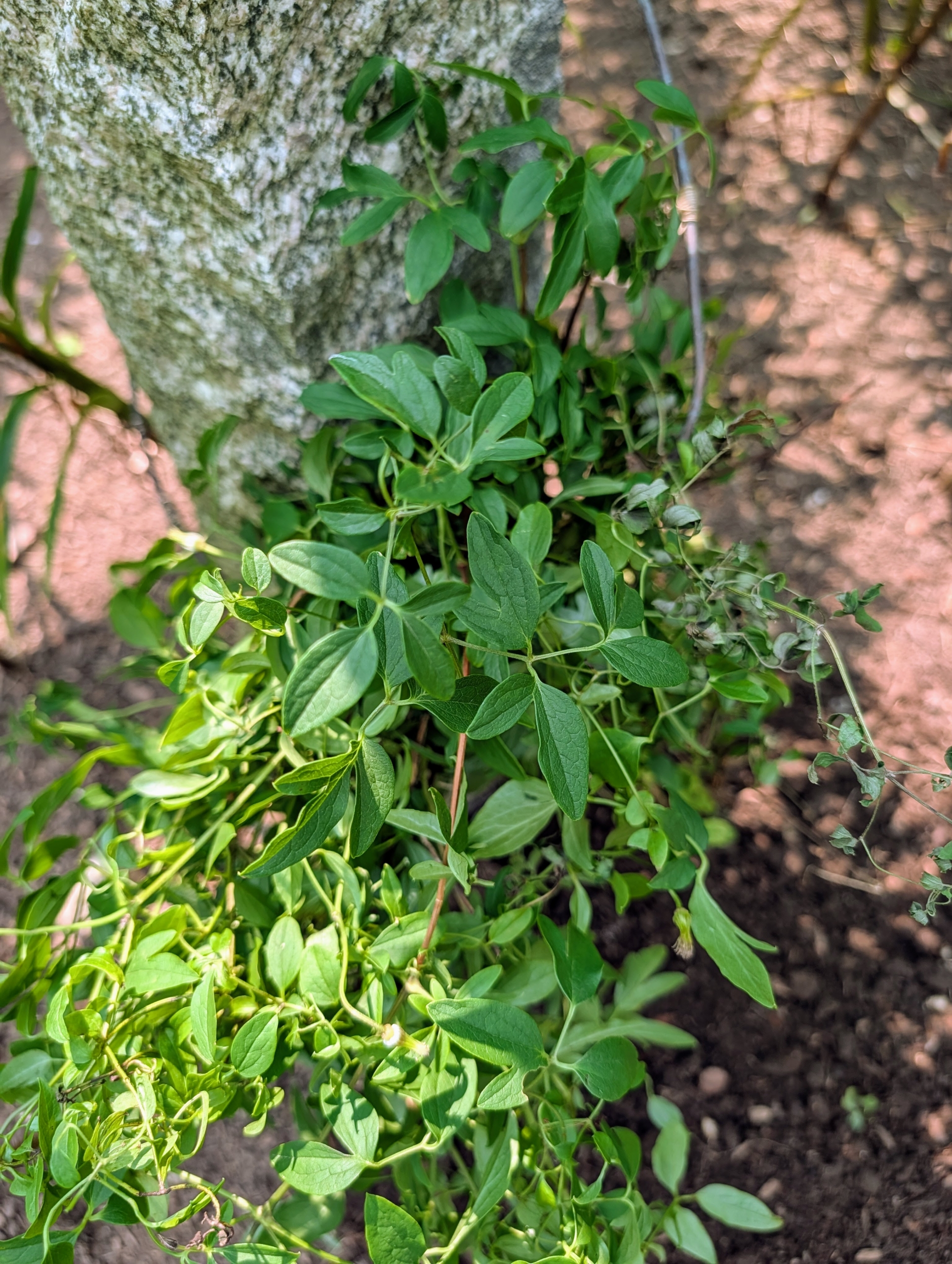
- Yesterday, I planted a couple more clematis to fill in some areas. This is another viticella ‘Betty Corning.’ This is from Glover Perennials in Cutchogue, New York – a family owned and operated wholesale nursery I’ve been going to for many years.
-
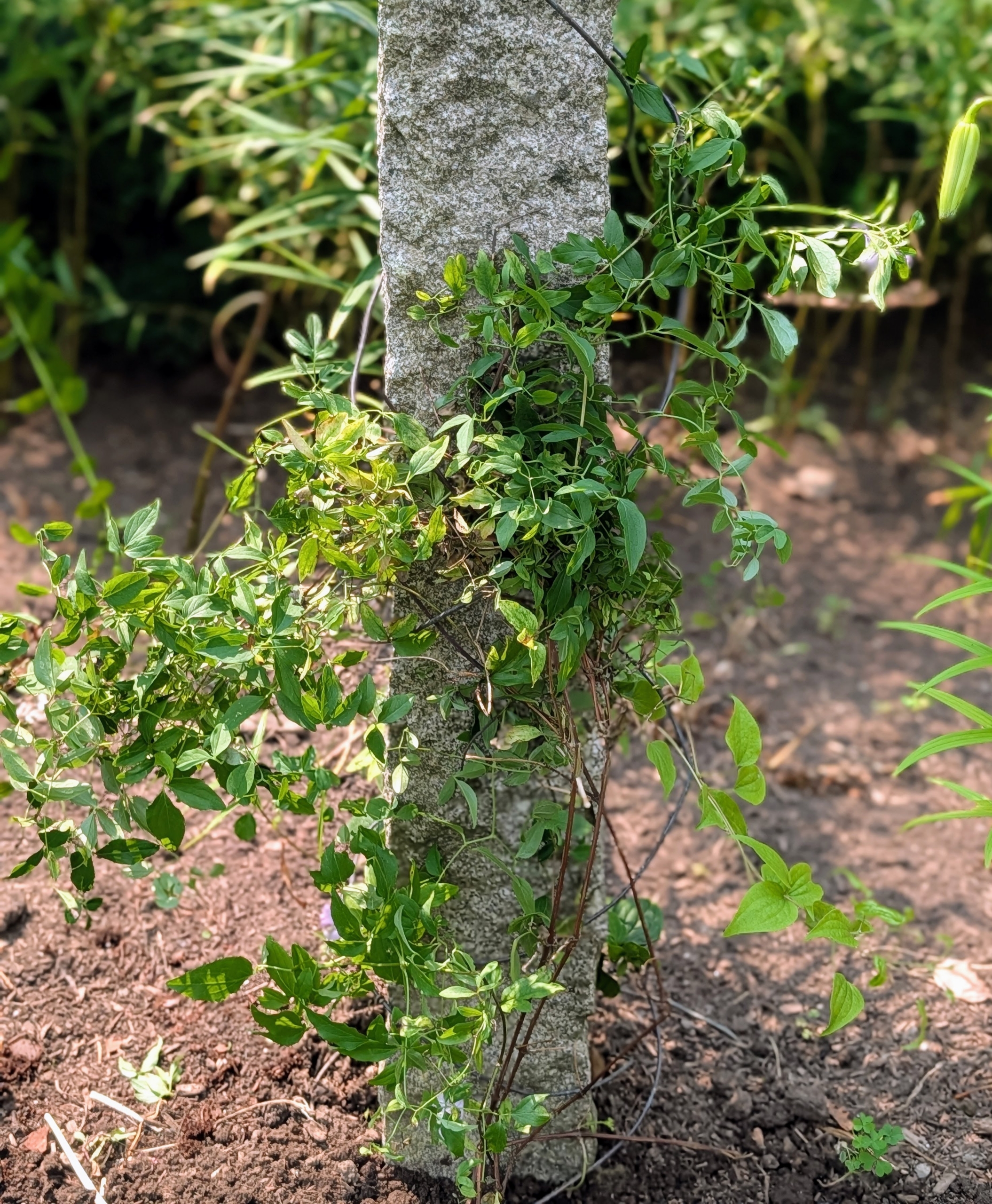
- And this is Clematis ‘Silver Moon.’ This plant is not blooming now, but it features large, silvery-lilac flowers that are six to seven inches across.
-
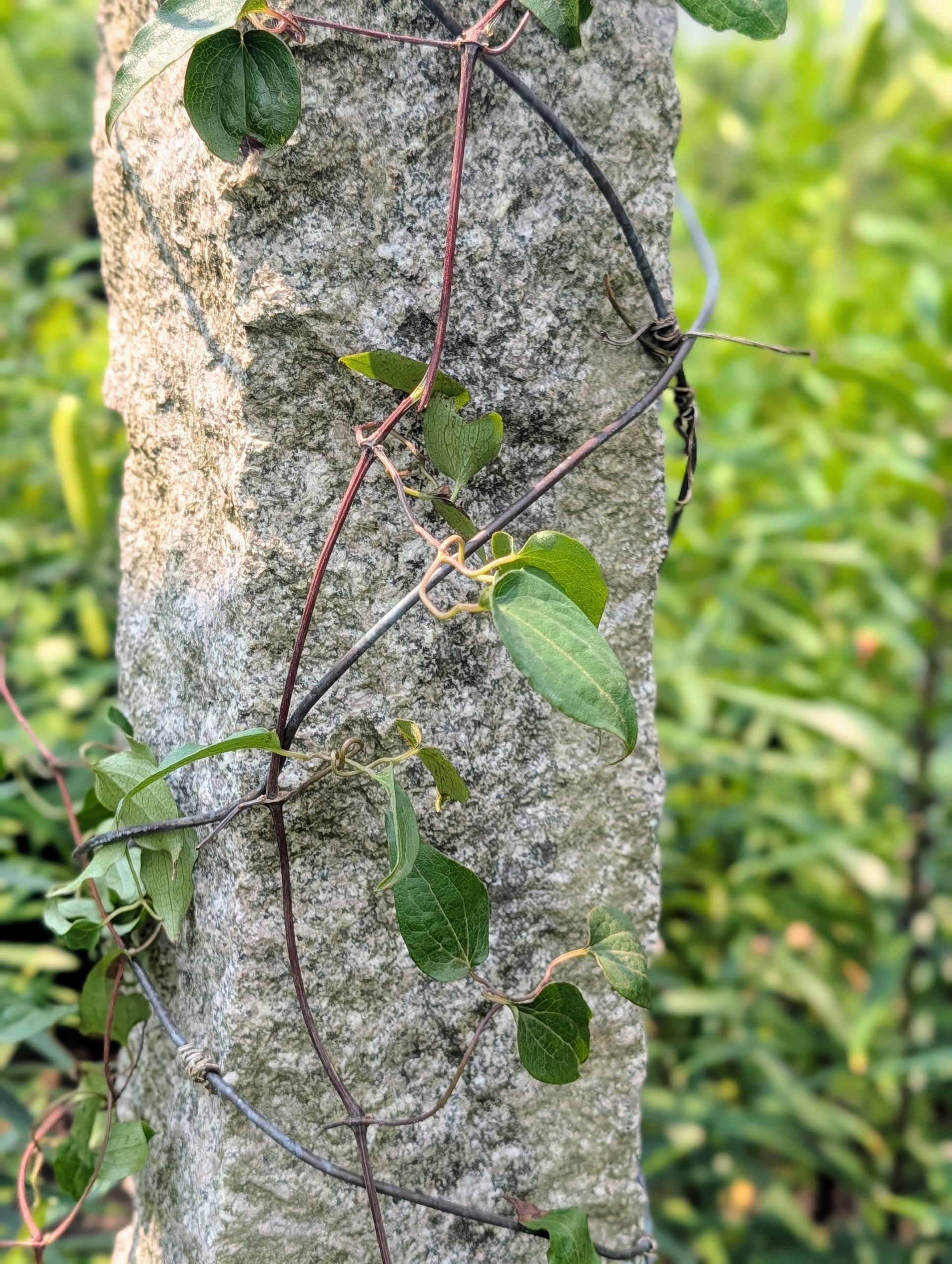
- Copper wire is wrapped around each post, so the climbing tendrils of the clematis vines could attach easily. The uprights for this pergola are antique granite posts from China originally used as grape supports. They’re perfect as posts because they don’t rot over time like wood does. A friend of mine acquired a lot of stone from this valley and I purchased a couple hundred of these posts. I only wish I had bought more of them.
-
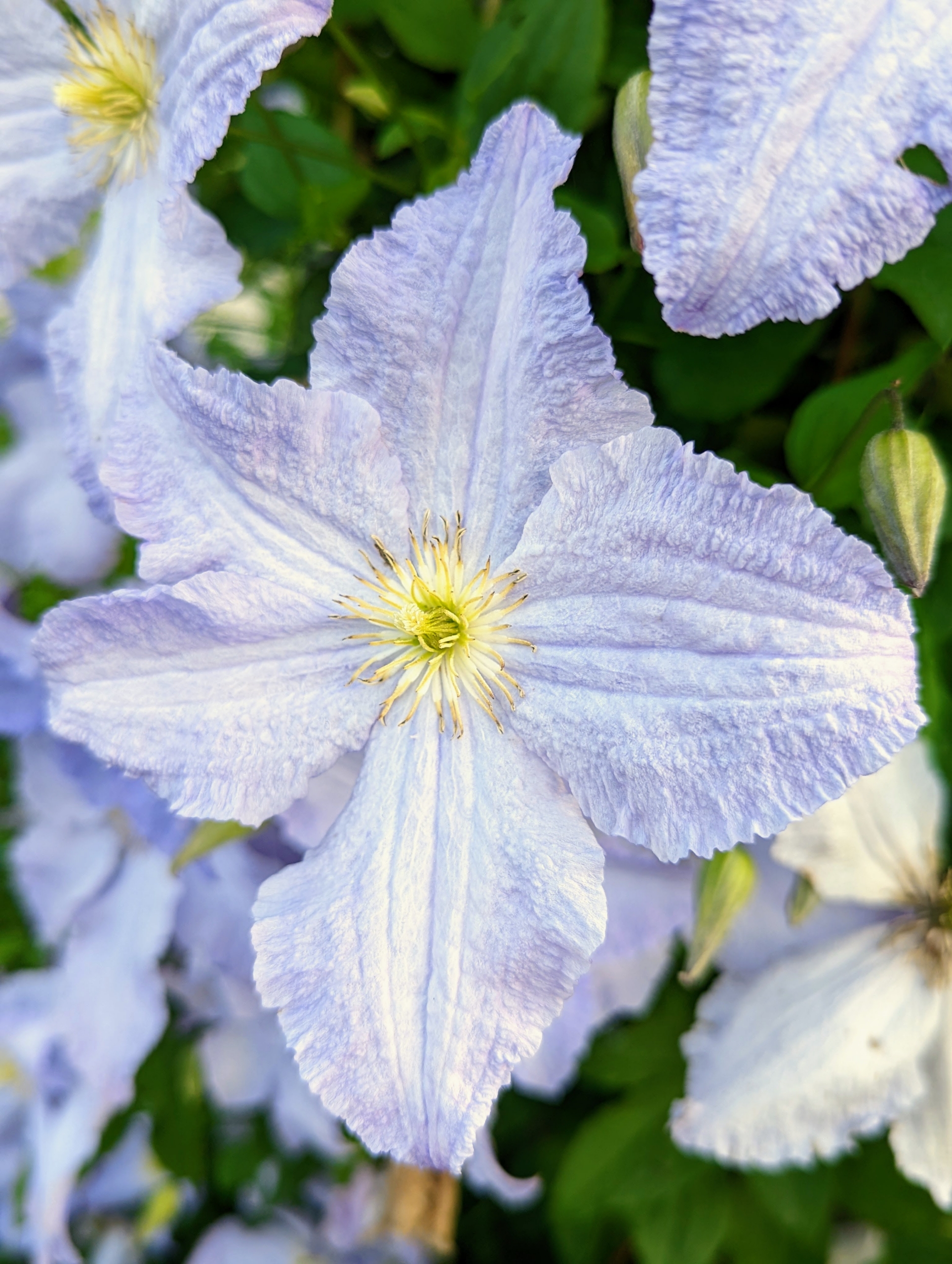
- Clematis can also be grown in containers, And they can be trained and used to cover walls and fences, providing year-round floral interest.
-
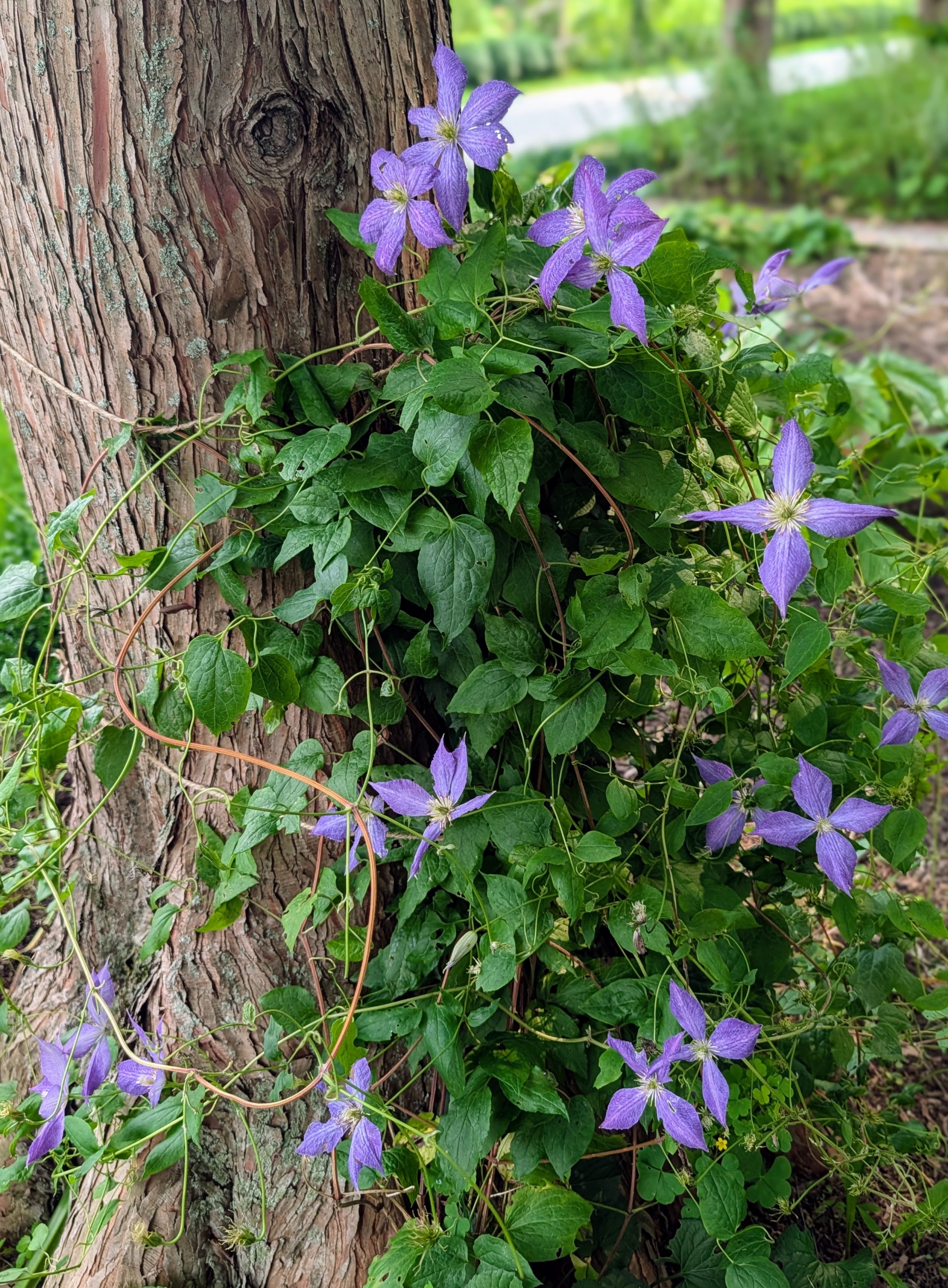
- Across the carriage road from my pergola, I also have some clematis vines planted at the base of several bald cypress trees. On these trees, I used twine to secure the climbing vines.
-
- Clematis are generally not hard to maintain. They are surprisingly tough and can cope with hard pruning. If you don’t already have clematis plants in your garden, pick one up and plant it – you’ll love it as much as I love all of mine.
 Martha Pins


 Martha Tweets

