

Spring Emergence 2026
Spring is here - and it's so exciting to see the gardens transform after such a long, cold winter.
I have blooming crocuses, snowdrops, Eranthis, hellebores, irises, and so many more. And the leaves of so many daffodils are pushing through the soil. Soon, the grounds will be covered in spring color. Here’s a glimpse of what is flowering in my gardens now.
Enjoy these photos.
-

- And just like that there are flowers popping up everywhere. Crocus is an early season flower that pops up usually in shades of purple, yellow, and white. There are about 90 different species of crocus that originate from Southern Europe, Central Asia, China, the Middle East, and Africa.
-
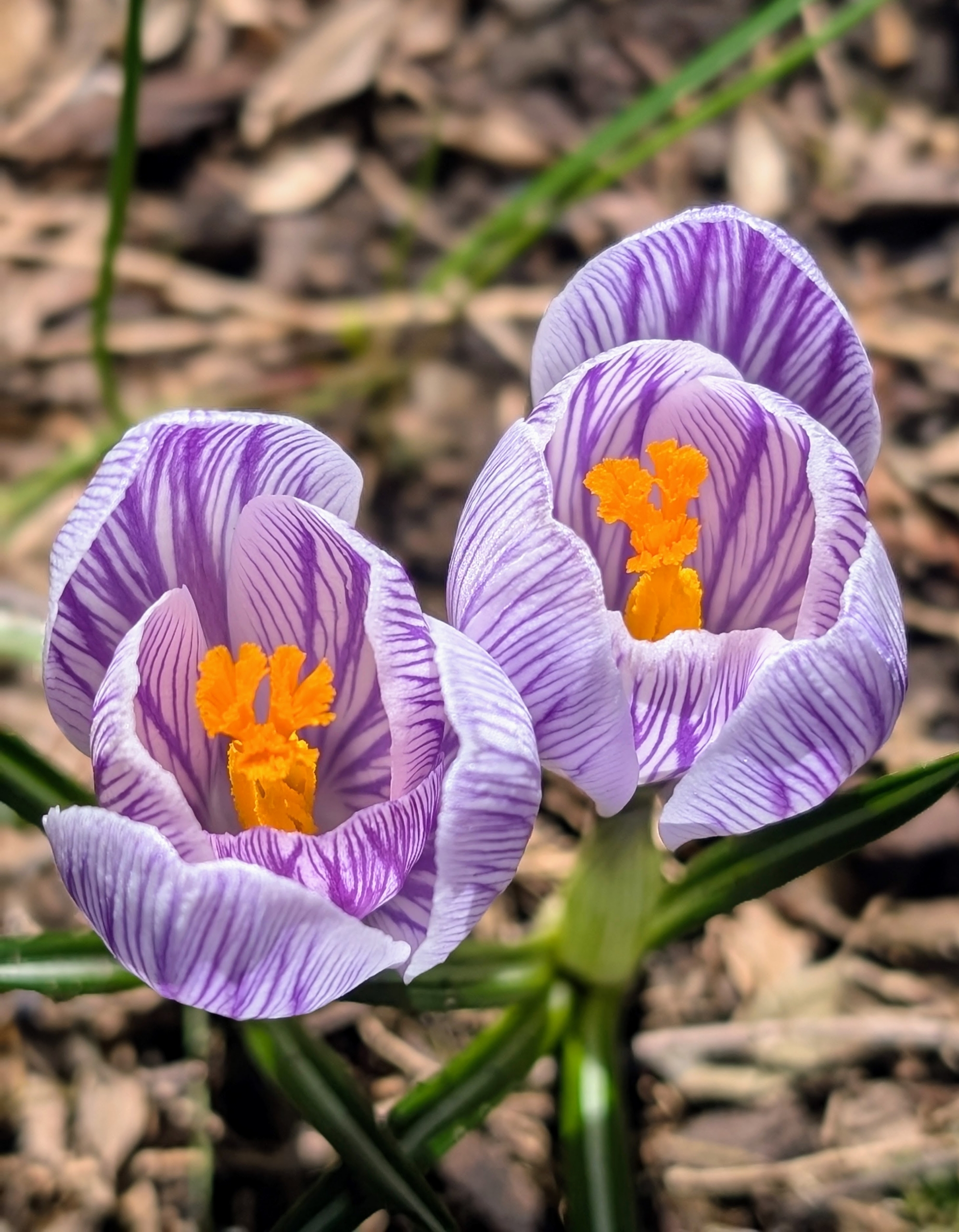
- This striped crocus flower produces several upright, cup-like, purple and white striped blooms on stems rising four to six inches above basal, grass-like leaves.
-
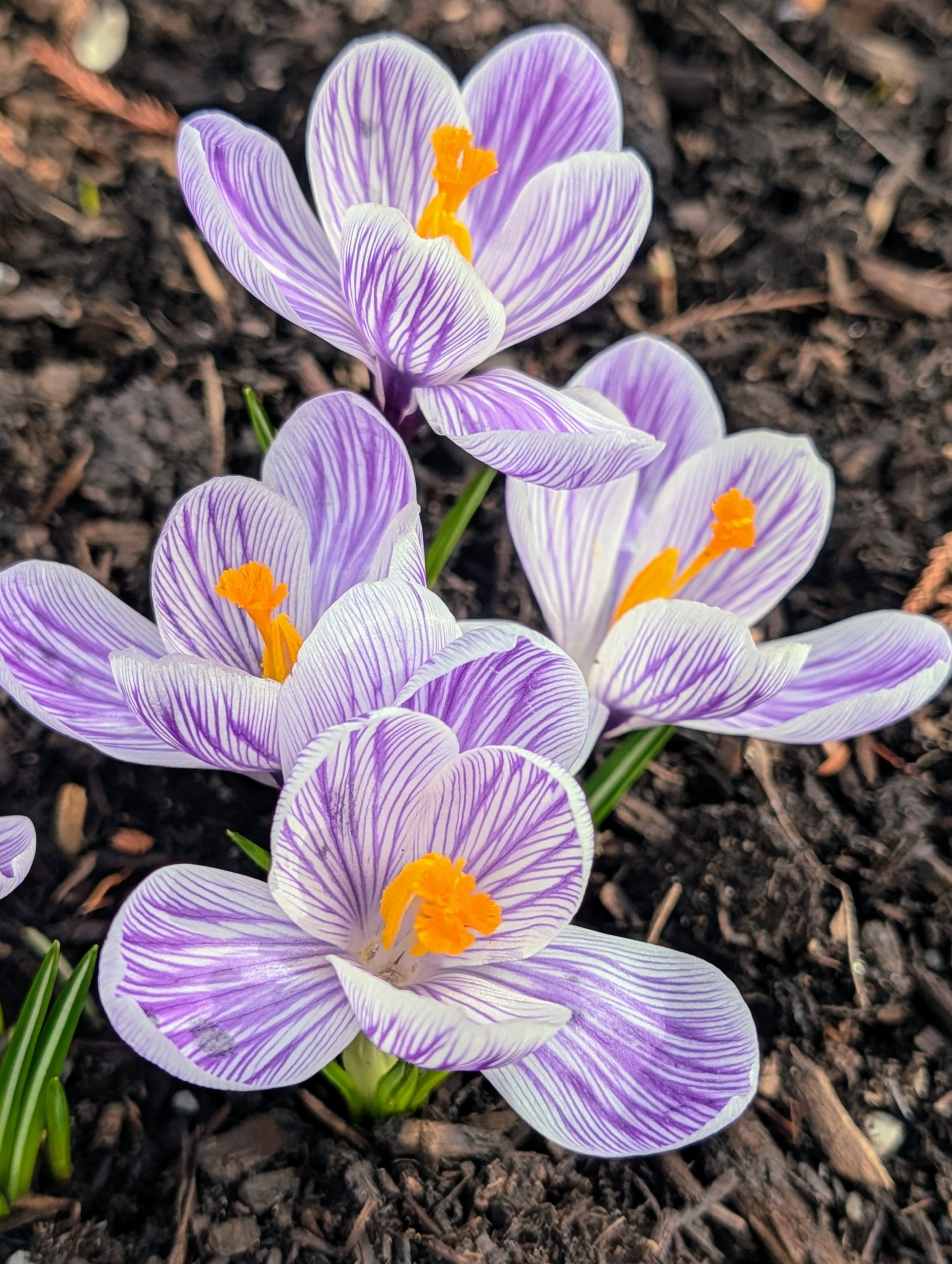
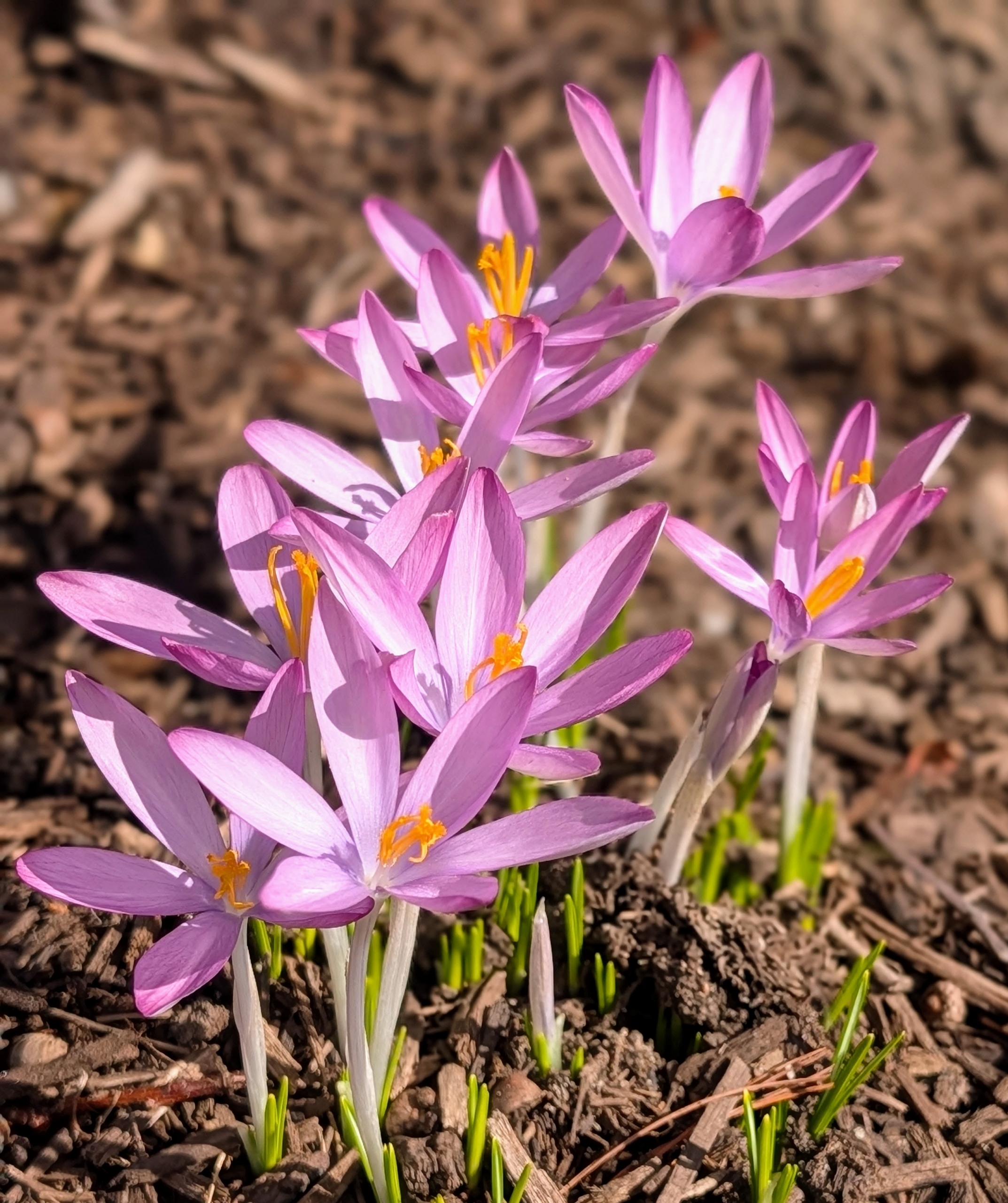
- Croci can be found in alpine meadows, rocky mountainsides, scrublands, and woodlands. I have groups of crocus blooms all around my farm.
-
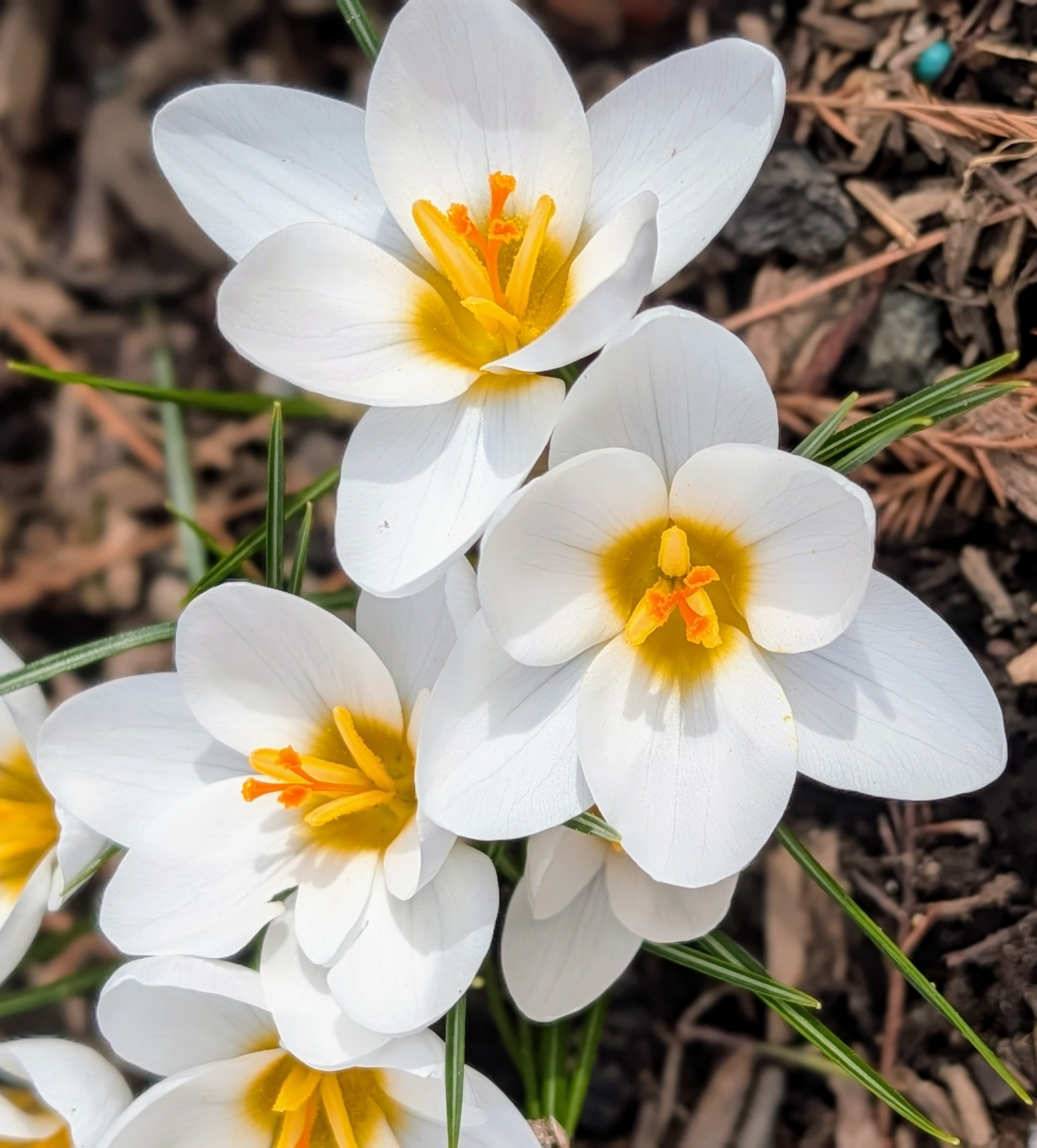
- Beneath my allée of pin oaks and in an area near my blueberry bushes, I grow white crocus. They only reach about four inches tall, but they naturalize easily, meaning they spread and come back.
-
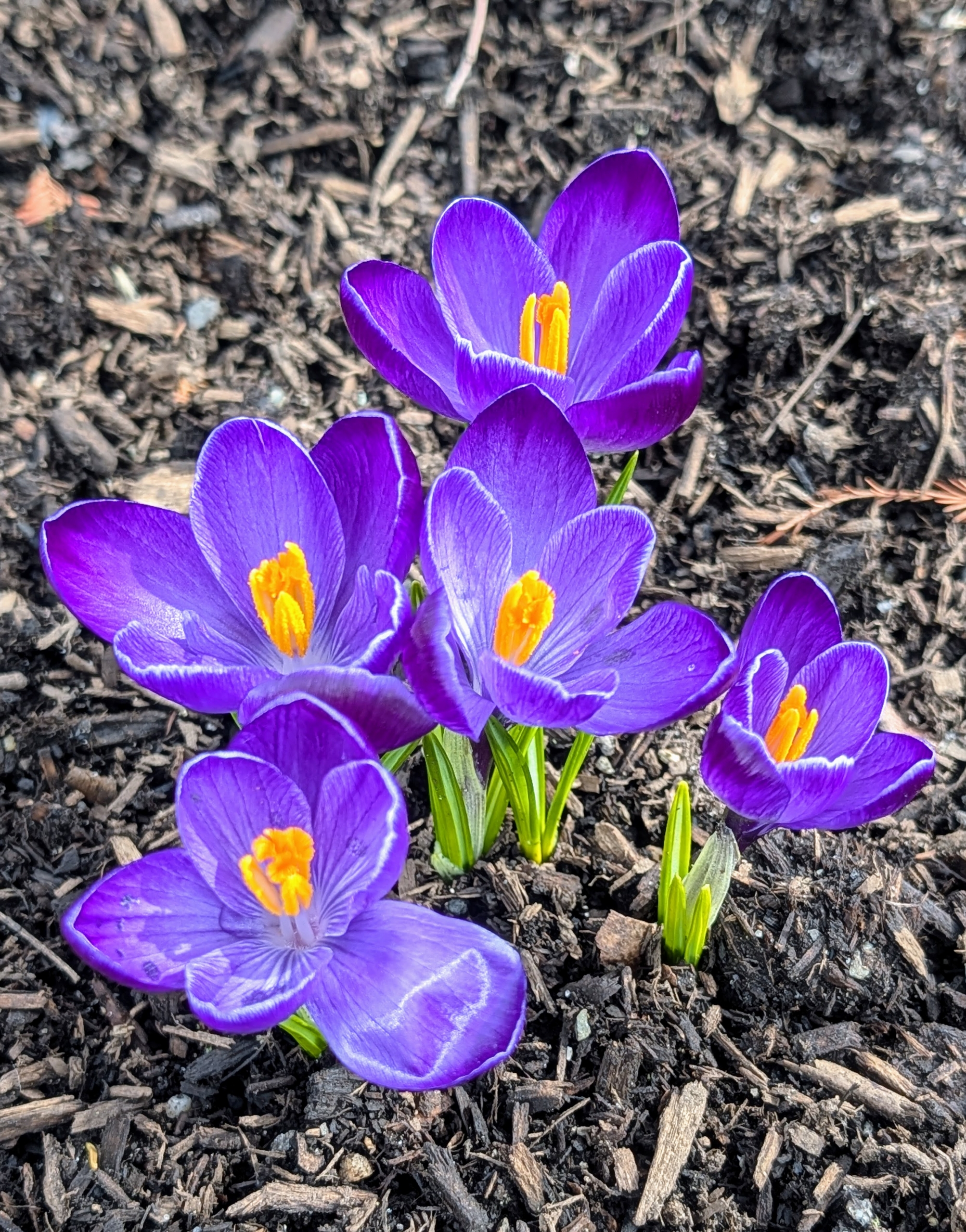
- And here are some dark purple crocus.
-
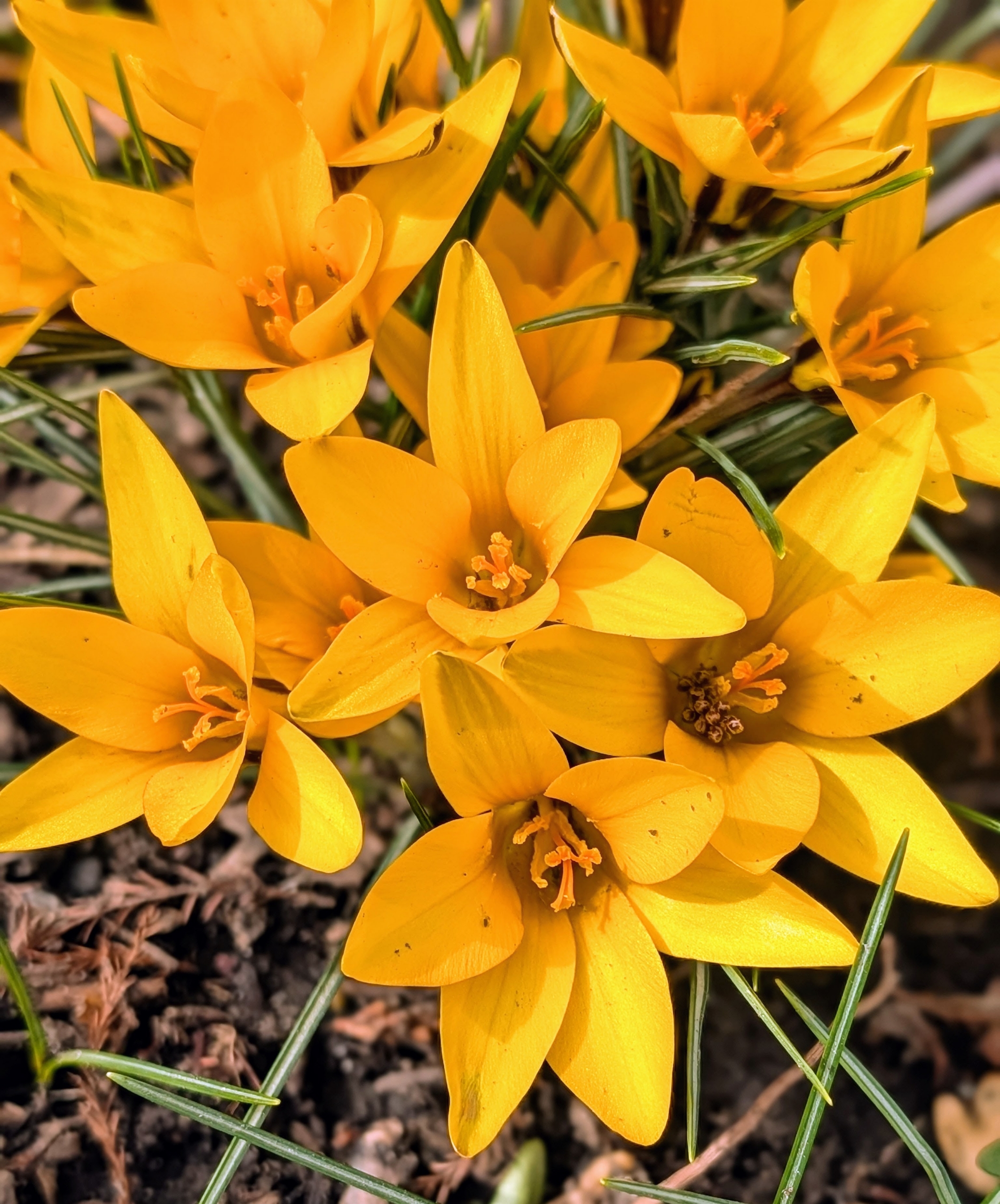
- Golden crocus bears vivid orange-yellow bowl-shaped flowers.
-
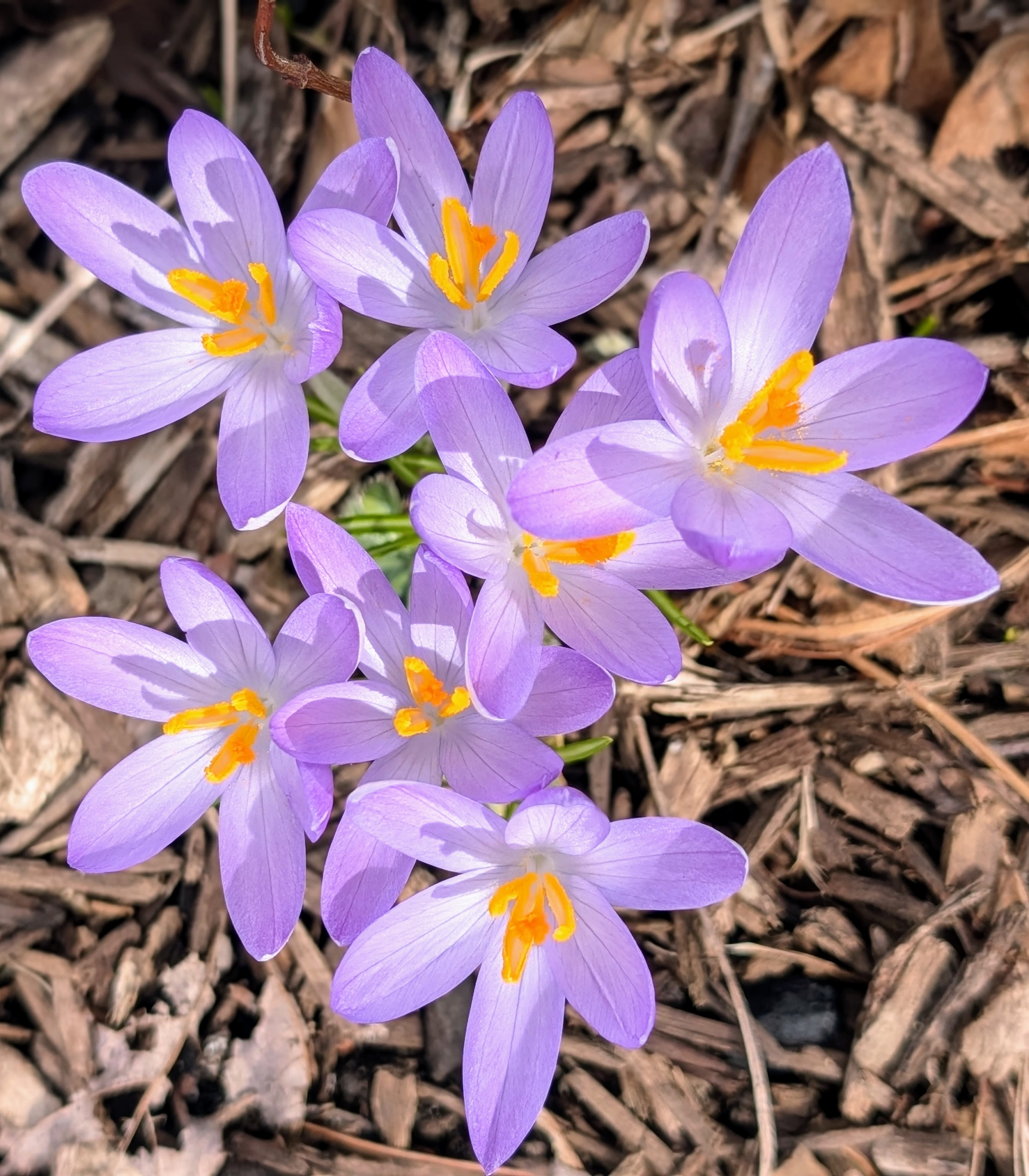
- Crocus blossoms attract winter-weary bees that are drawn to the rich, golden pollen inside each flower.
-
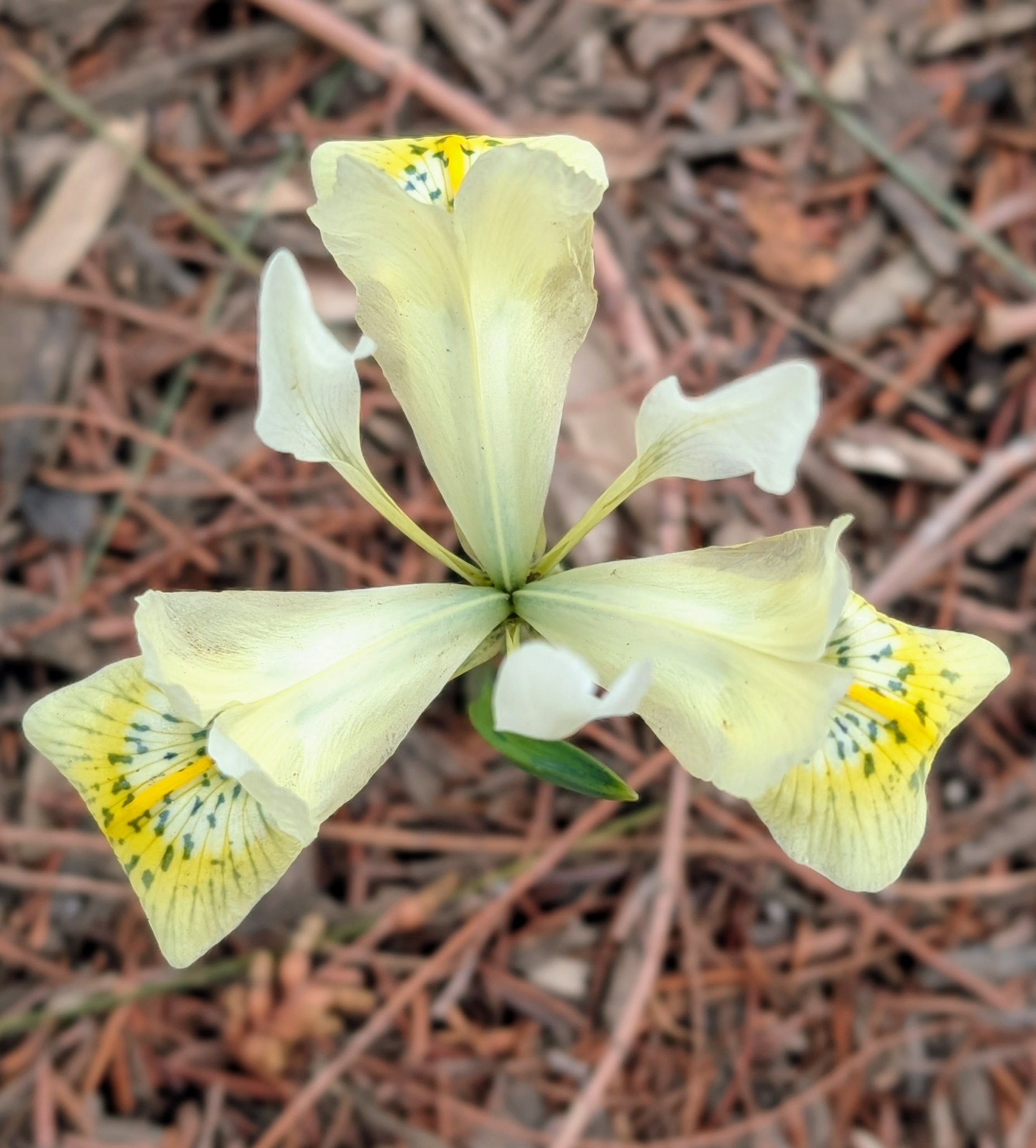
- There are also lots of irises blooming – this one in a creamy yellow. These dwarf irises are good for use in borders, along walkways, by ponds, or woodland areas in mass plantings.
-
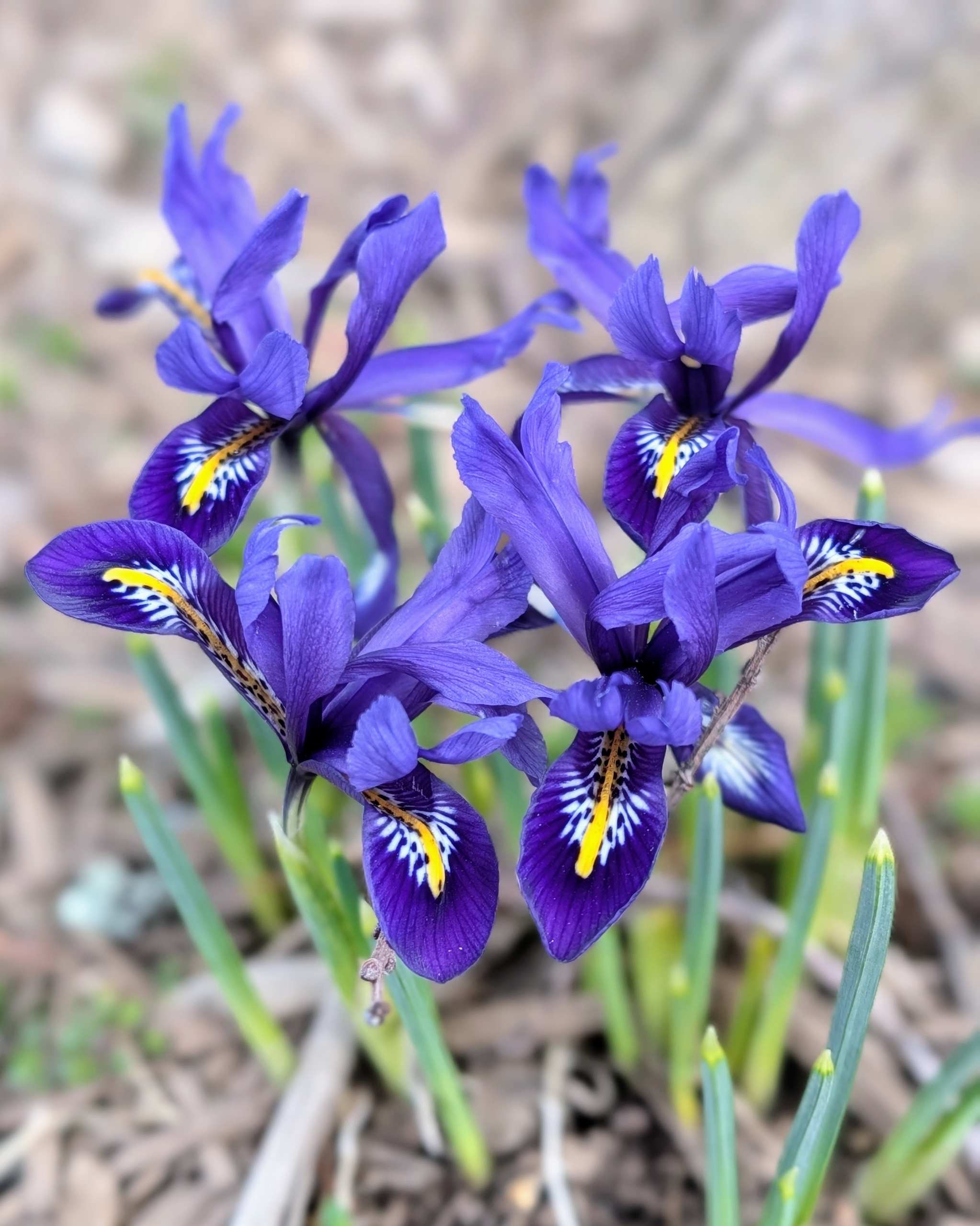
- In another area, dark purple irises. The blooms have a very light and subtle violet-like scent. Irises come from a vast genus of plants, but nearly all show the recognizable iris flower form – three standard petals and three hanging outer petals.
-
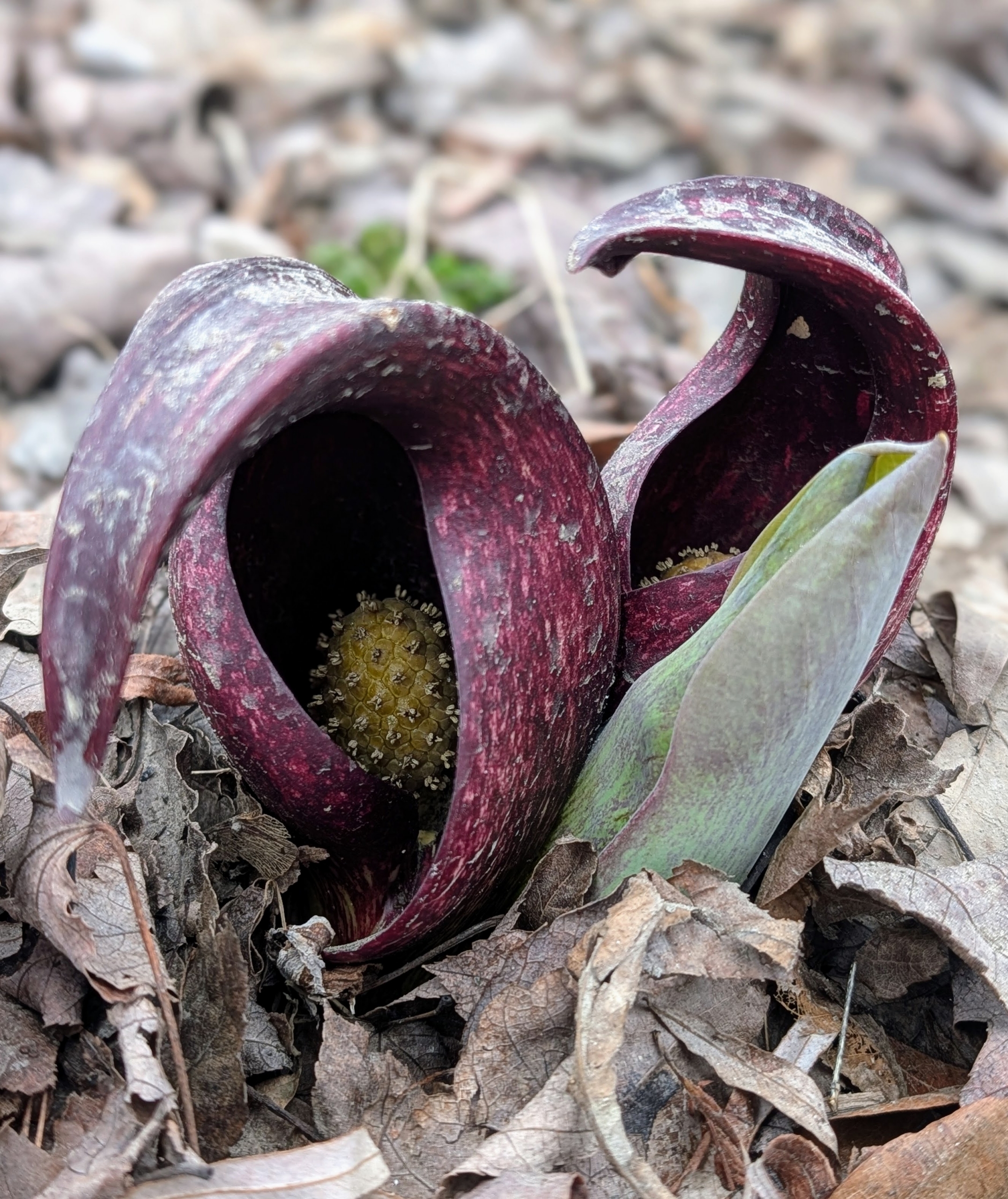
- New growth is also emerging in the woodland. Symplocarpus foetidus, commonly known as skunk cabbage or swamp cabbage, is a low growing plant that grows in wetlands and moist hill slopes of eastern North America. The flowers appear before the leaves and show a mottled maroon hoodlike leaf called a spathe, which surrounds a knob-like structure called a spadix.
-
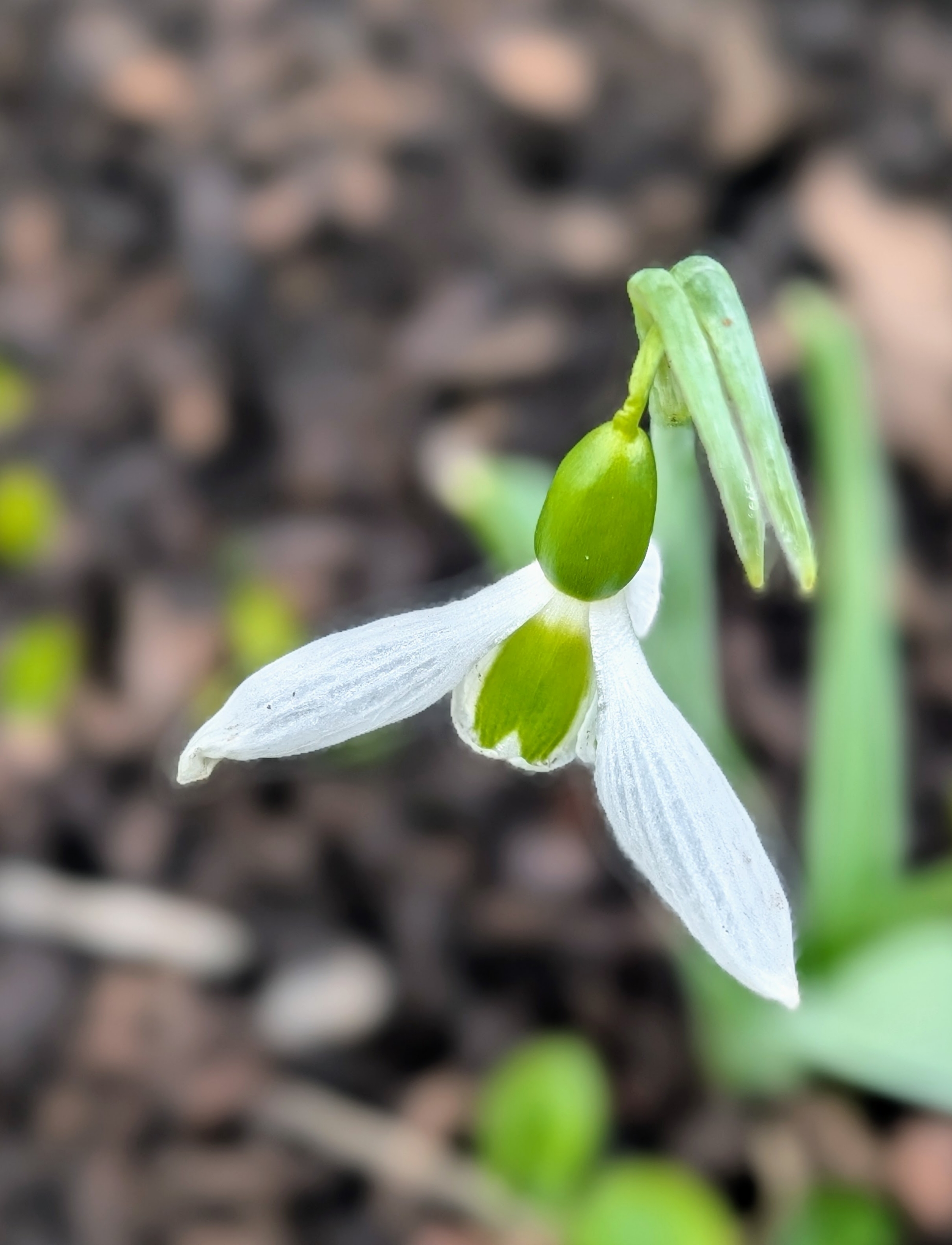
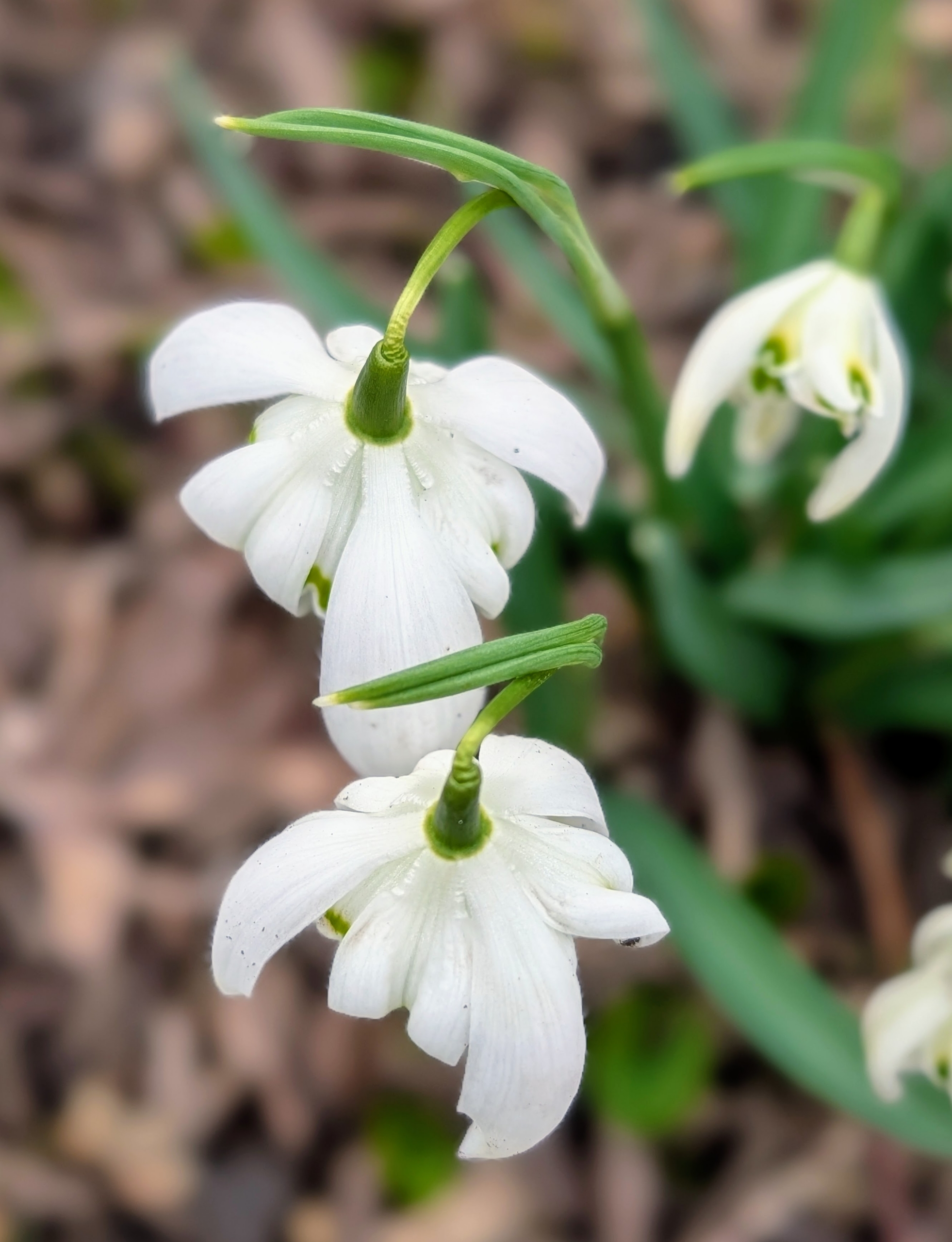
- One of my favorite spring blooms is the snowdrop, Galanthus nivalis. These beautiful white flowers are blooming all around my houses. I check on them every day. Snowdrops produce one very small pendulous bell-shaped white flower which hangs off its stalk like a “drop” before opening.
-
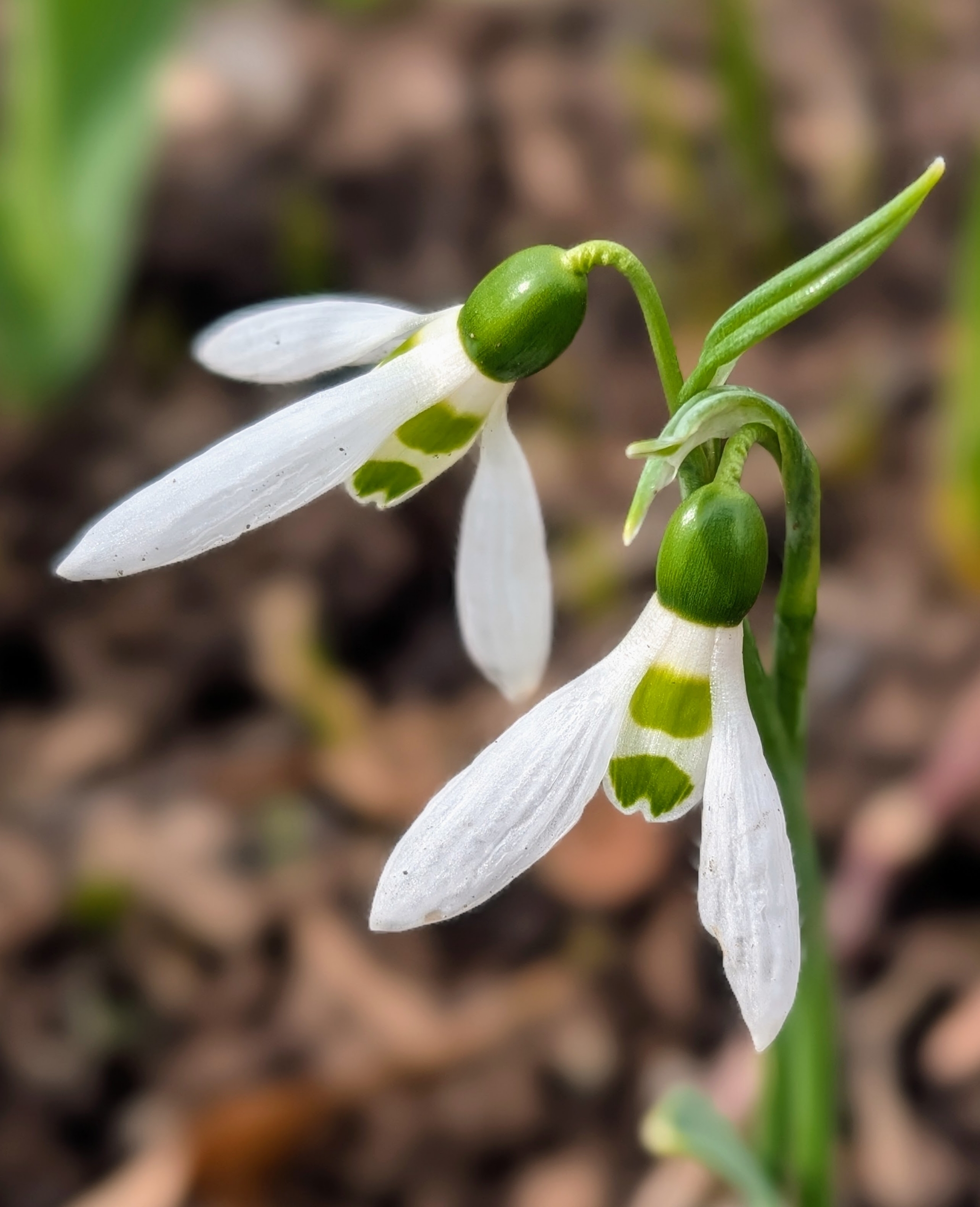
- These flower heads can be ‘single’ – one layer of petals – or ‘double’ – multiple layers of petals. And notice the inner petals – they can be blotched with green markings – different on so many varieties.
-
- This snowdrop is a double, making it even more interesting.
-
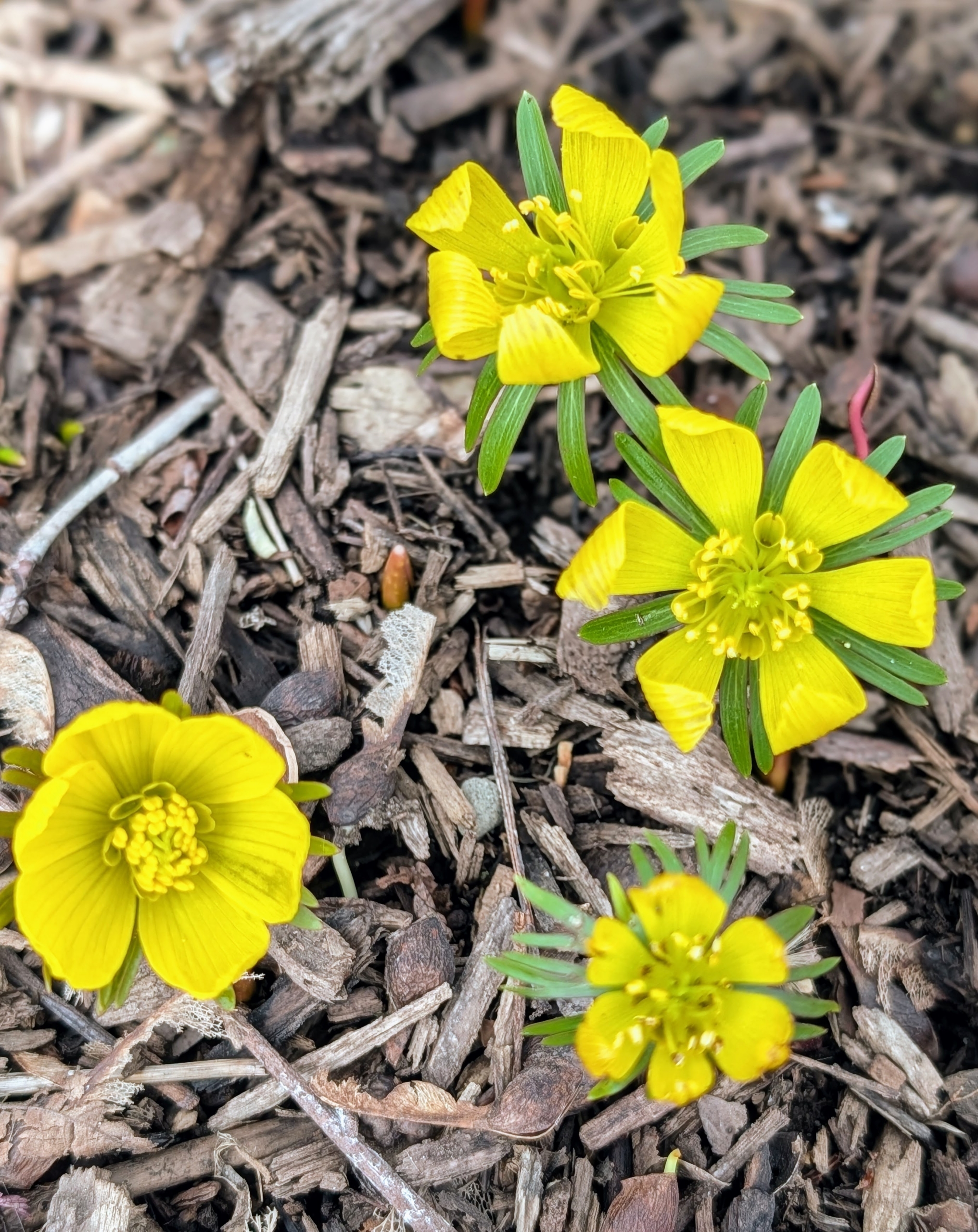
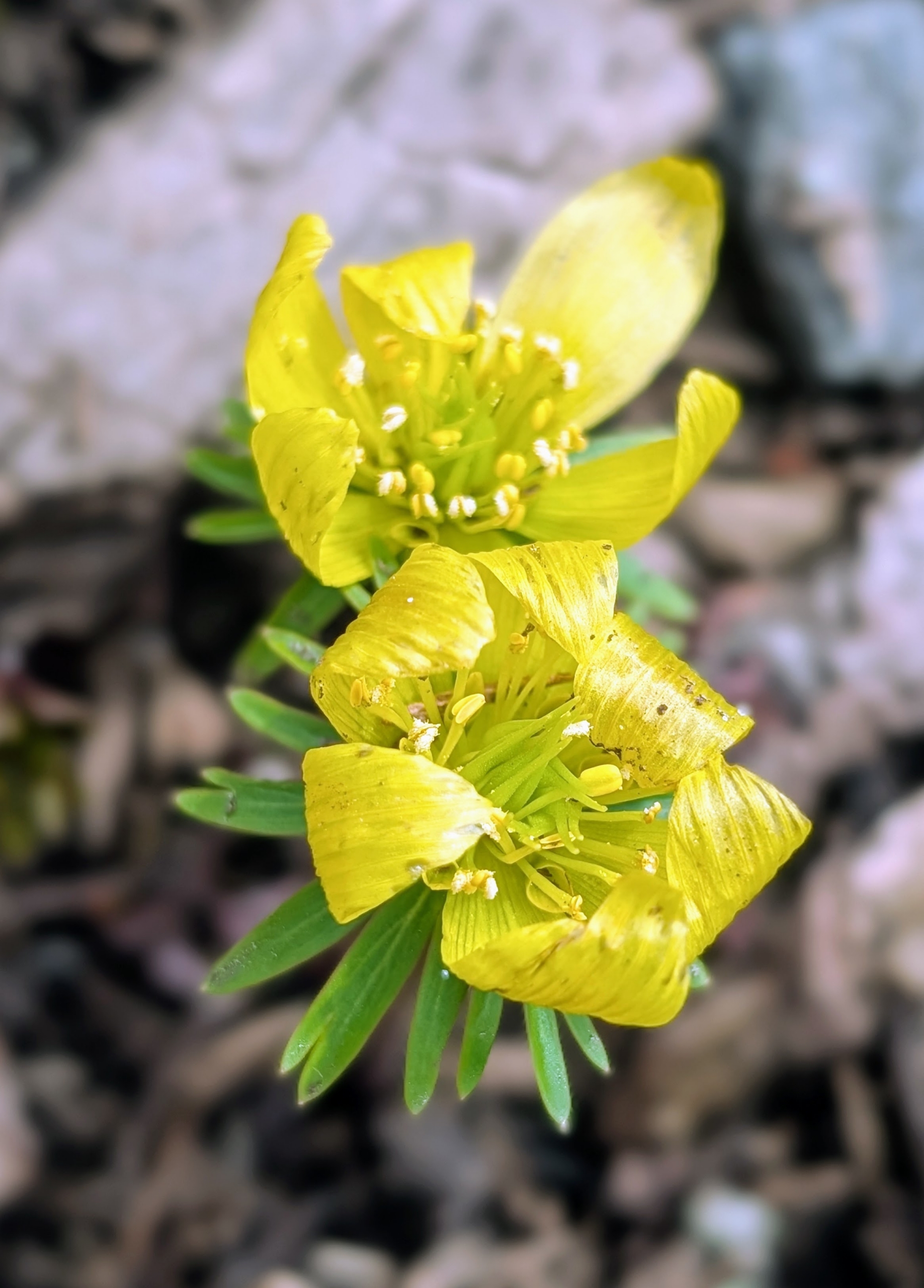
- Eranthis, or winter aconite, is a genus of eight species of flowering plants in the family Ranunculaceae – the Buttercup family. Winter aconite produces such cheerful flowers that appear in late winter or earliest spring. They are deer resistant and multiply more and more every year.
-
- The yellow flowers are small, cup-shaped, and typically yellow or white, with five to nine petal-like sepals.
-
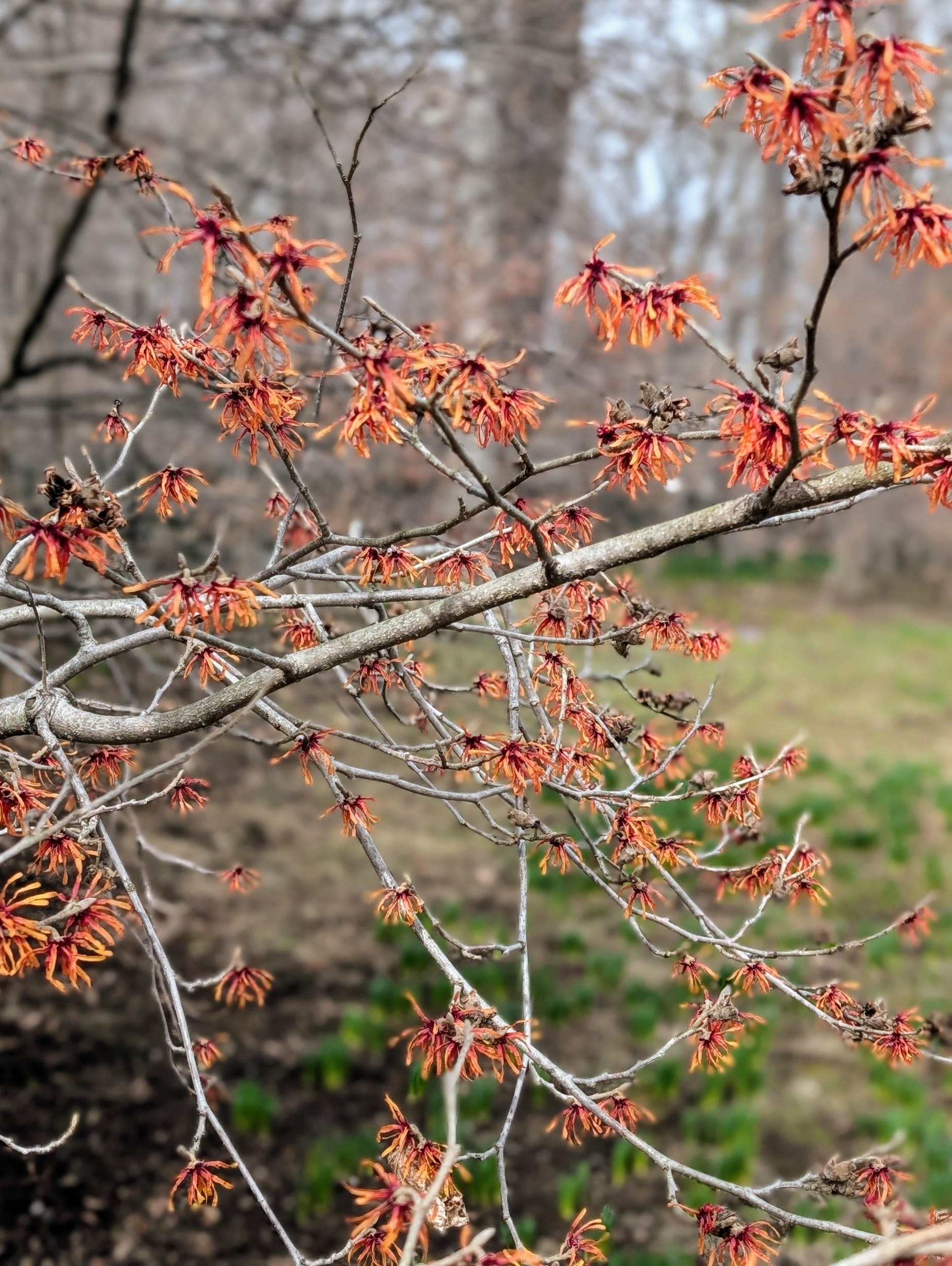
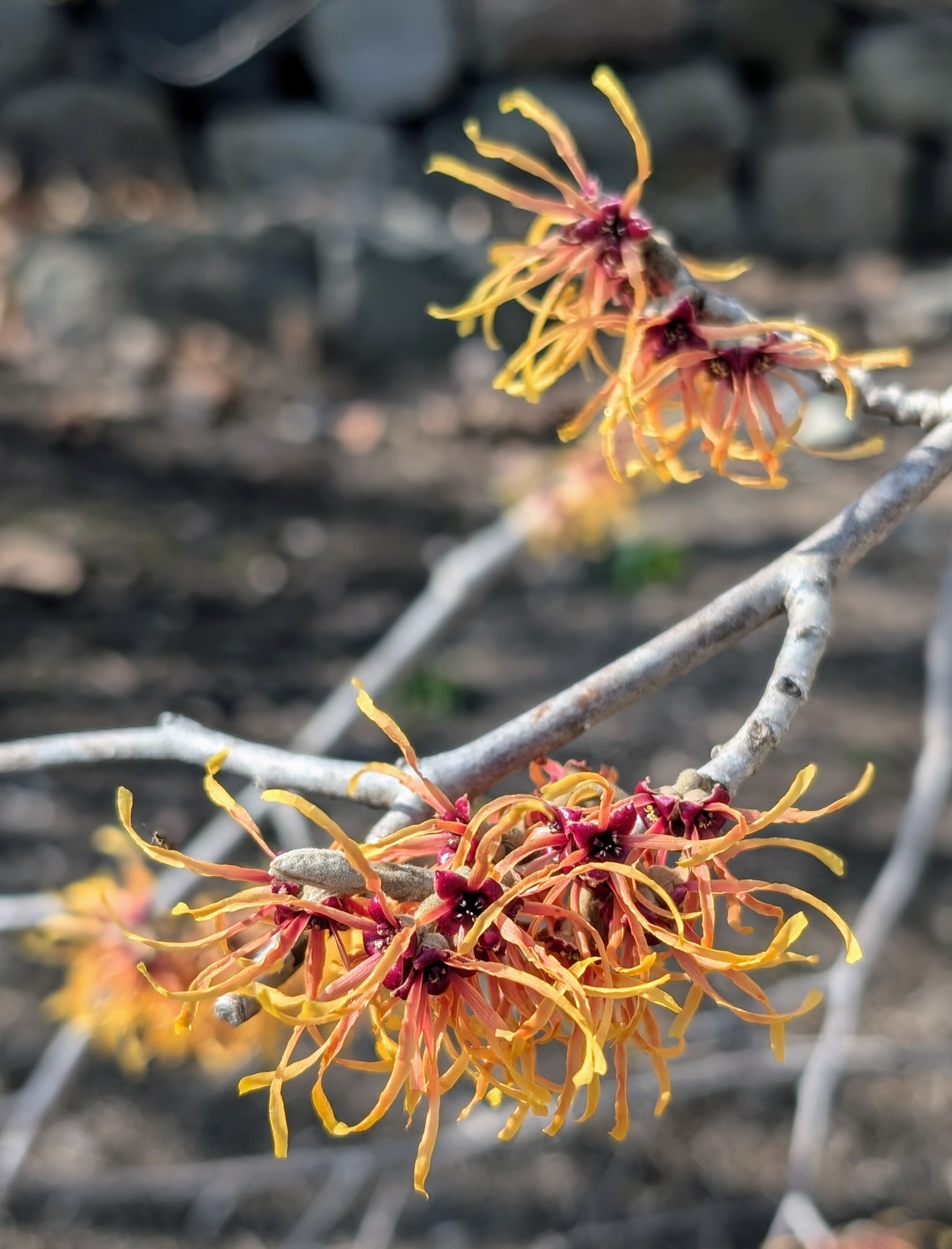
- The witch-hazel continues to bloom nicely. It grows as small trees or shrubs with clusters of rich orange-red to yellow flowers. They’re very hardy and are not prone to a lot of diseases. Most species bloom from January to March and display beautiful spidery flowers that let off a slightly spicy fragrance.
-
- Witch-hazel flowers consist of four, strap-like petals that are able to curl inward to protect the inner structures from freezing during the winter.
-
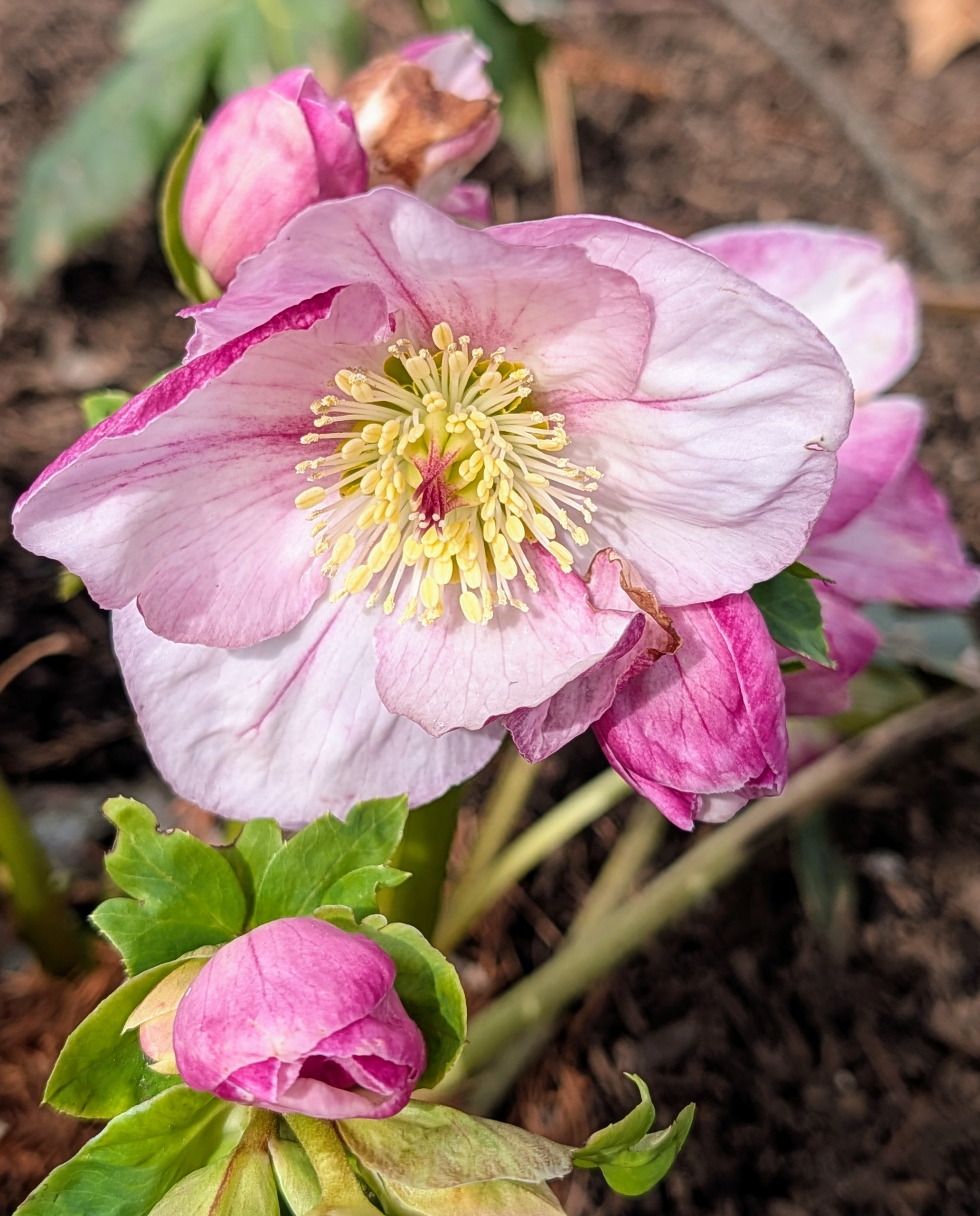
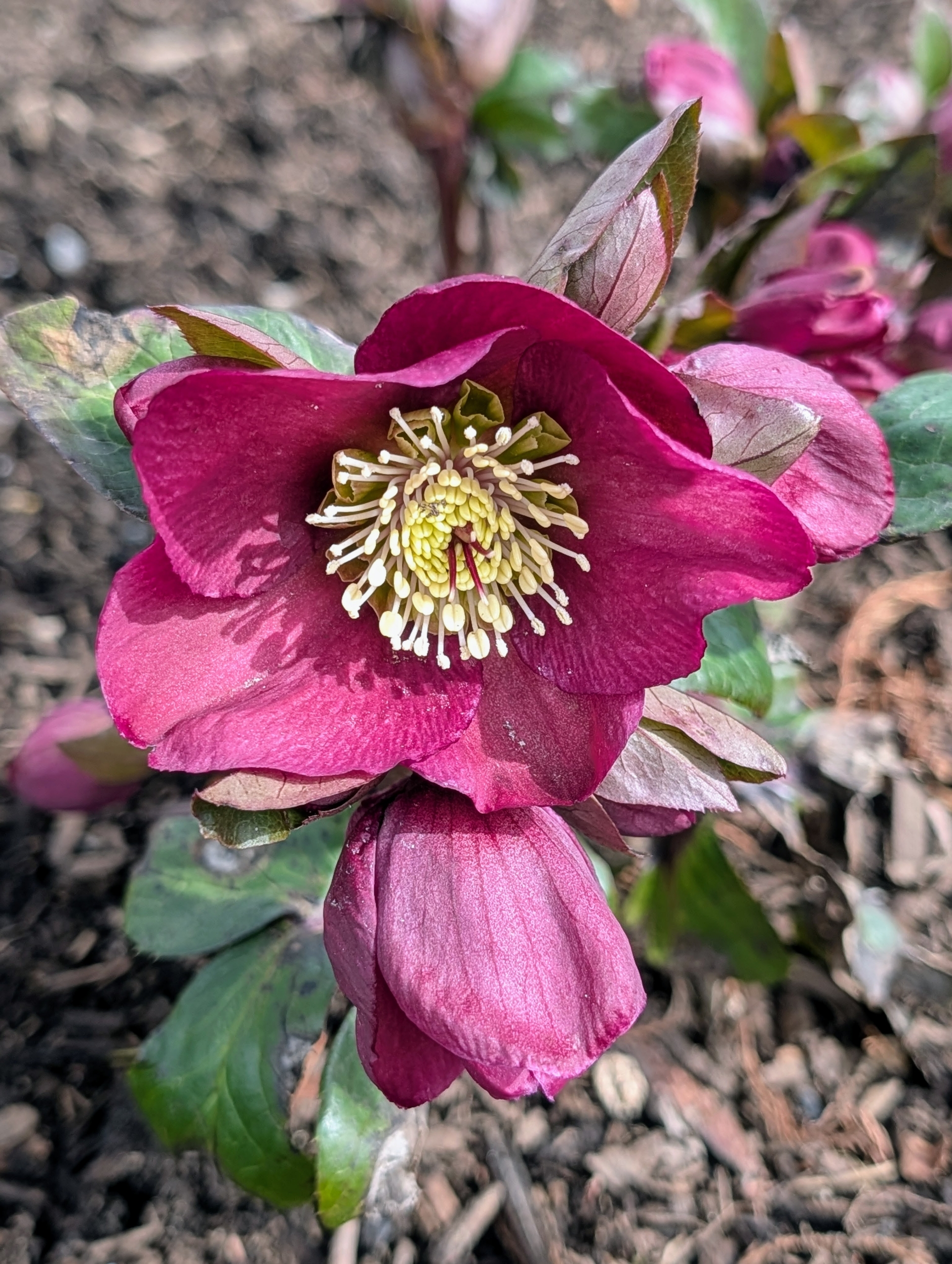
- Another favorite – the hellebores. Hellebores are members of the Eurasian genus Helleborus – about 20 species of evergreen perennial flowering plants in the family Ranunculaceae. They blossom during late winter and early spring for up to three months.
-
- Hellebores come in different colors and have rose-like blossoms. It is common to plant them on slopes or in raised beds in order to see their flowers, which tend to nod.
-
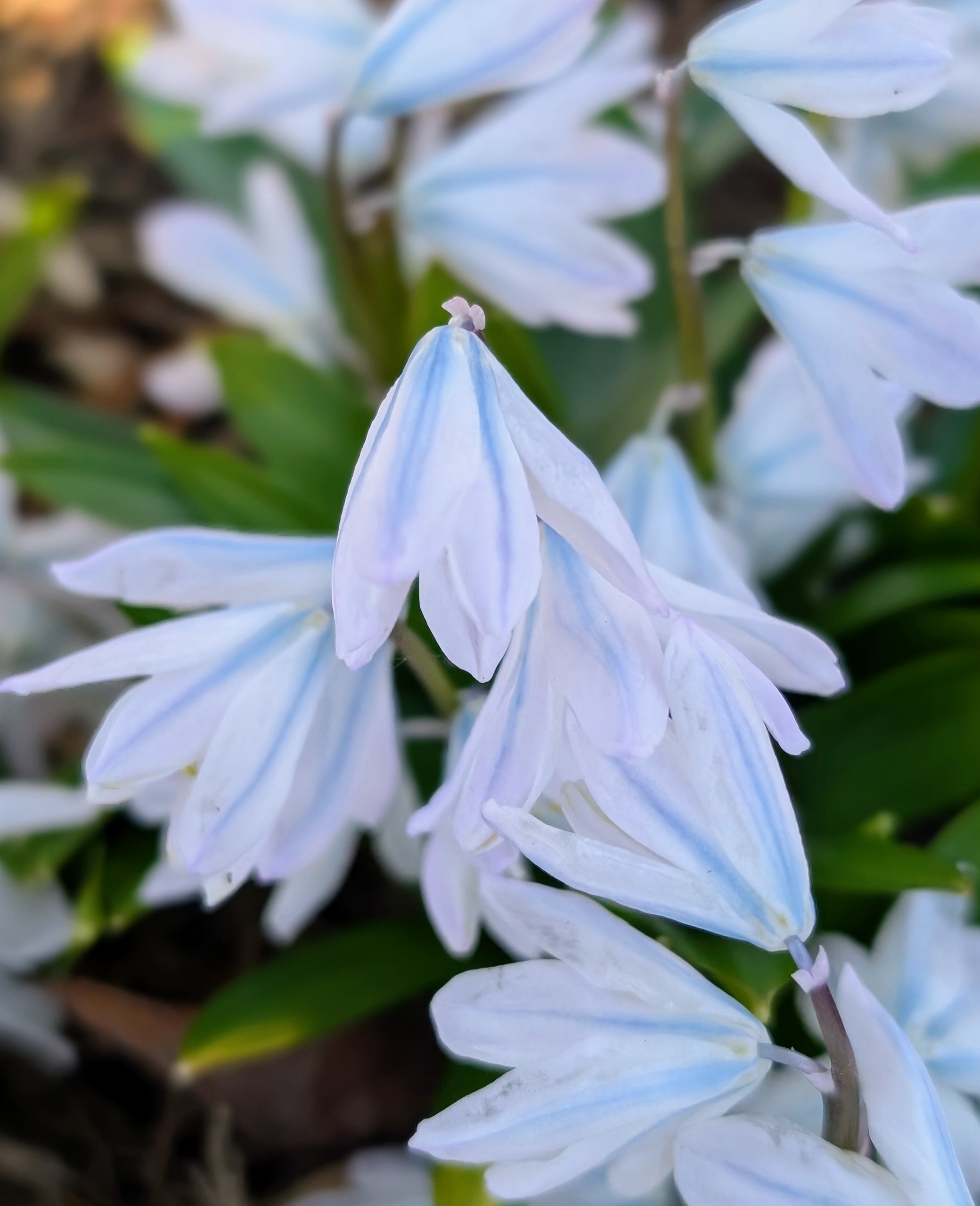
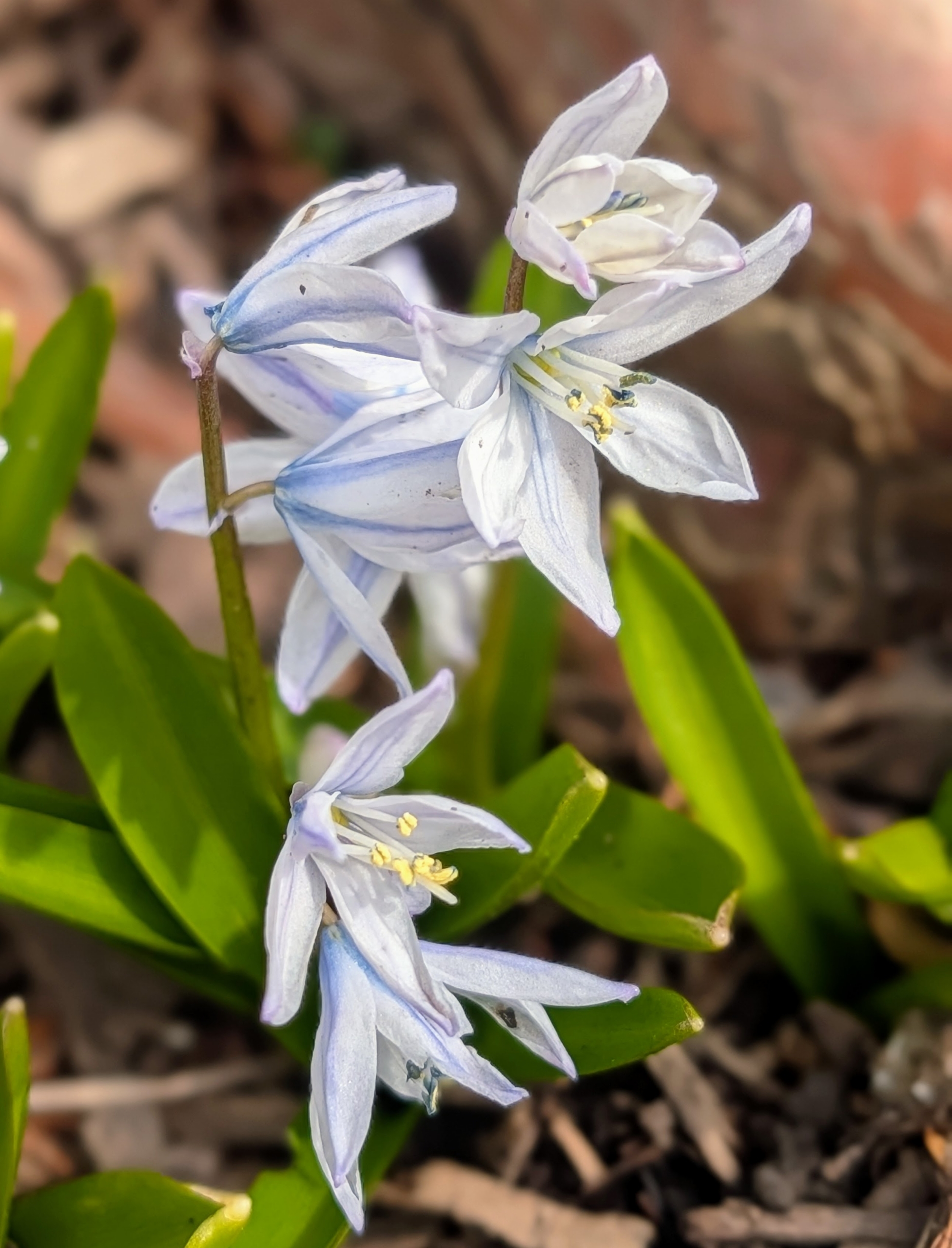
- Puschkinia is a genus of three known species of bulbous perennials in the family Asparagaceae. It is native to the Caucasus and the Middle East. The leaves are green, strap-like, and grow in pairs. Puschkinia is best grown in moist, fertile, well-draining soil in full sun to partial sunlight.
-
- The flowers open in early spring in racemes up to about 10-inches high.
-
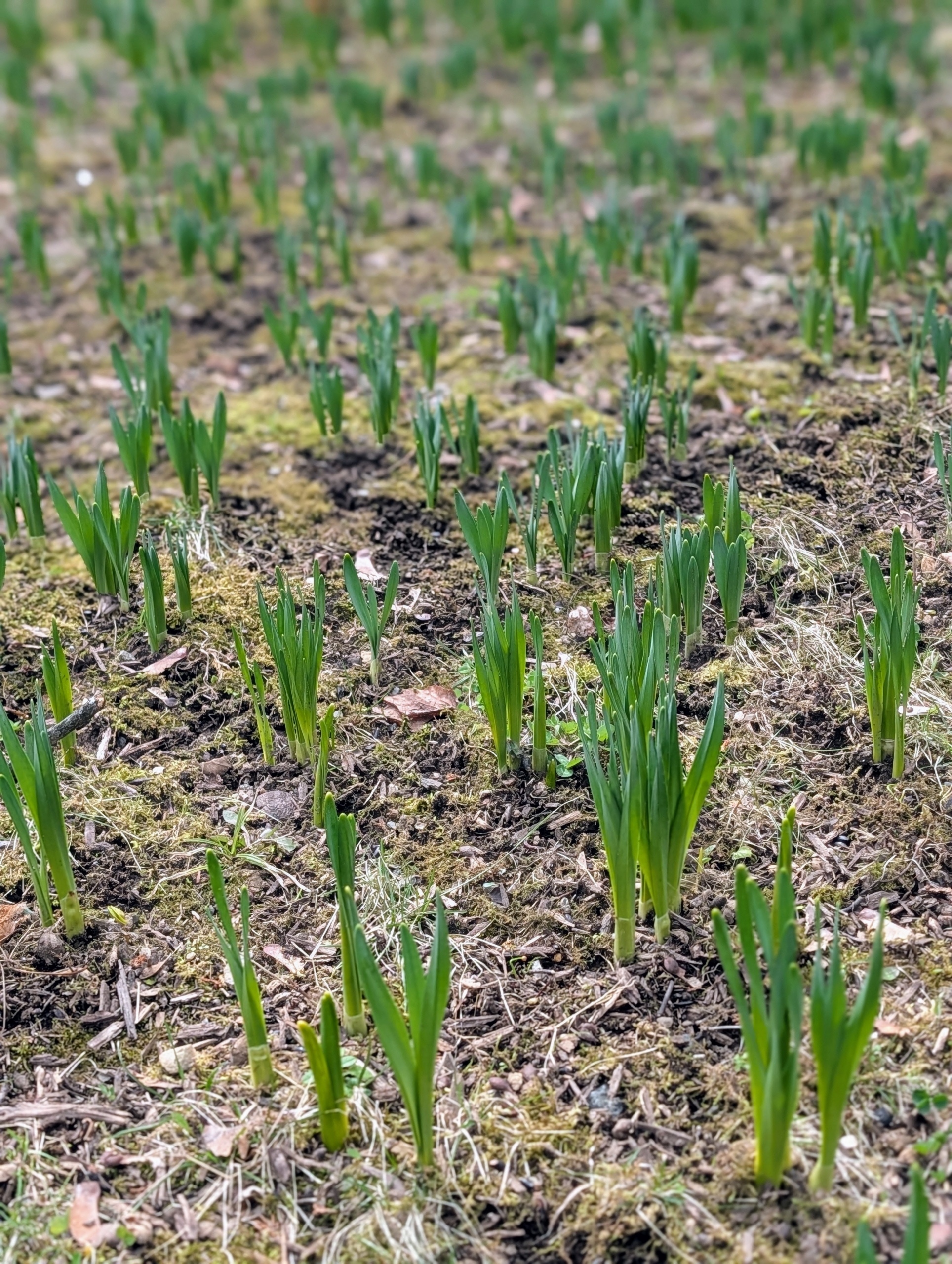
- Around the farm there are patches of daffodil foliage. I have thousands of daffodils planted in large groupings, providing a stunning swath of color when in bloom.
-
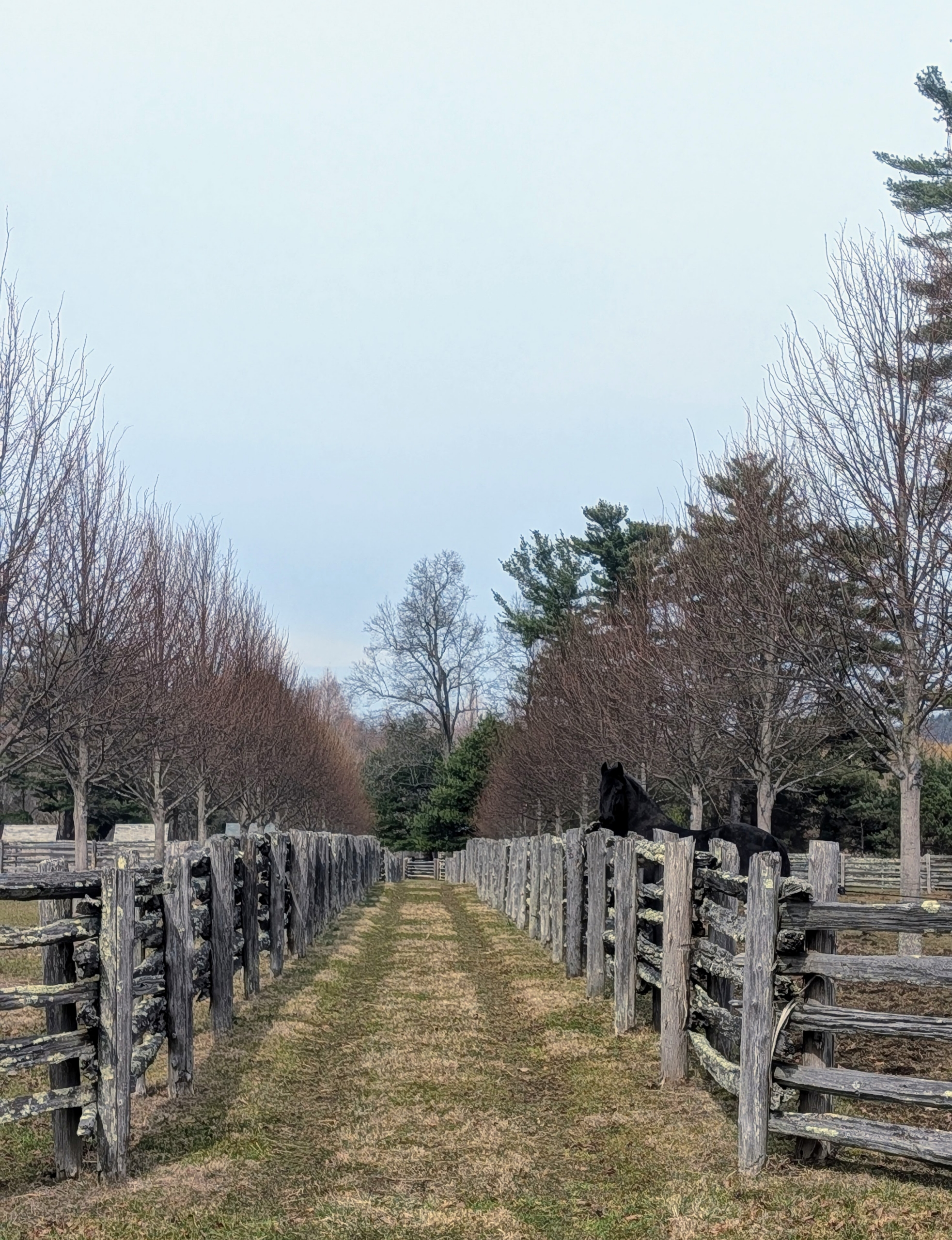
- Much of the farm still looks like winter, but not for long. Soon the trees will be filled with glorious leaves, and all the gardens will be bursting with color – just wait and see!
 Martha Pins


 Martha Tweets

