

Close to Finishing My Living Maze
I'm getting close to finishing my living maze, and it's looking better and better with the planting of each row.
This maze, which I started in the spring of 2022, is filled with lush perennials and evergreens - arborvitae, cedar, holly, juniper, yew, birch, spruce, linden, London plane, and many more. I've planted a variety of different trees, shrubs, espaliers, and hedges to add texture and interest. The area is all done according to a map of pathways - some ending abruptly at the end of a row, others leading to junctions where multiple passages meet, and only one right way to the selected finish. And as each puzzling path bed is cleared of sod, the spaces are measured and marked, the plants are carefully counted and placed, and then planted and thoroughly watered. It's been a very long four year process, but we're getting close, and I can't wait to share the completed maze with you soon. The most recent group of plants going in comes from Monrovia.
Enjoy these photos.
-

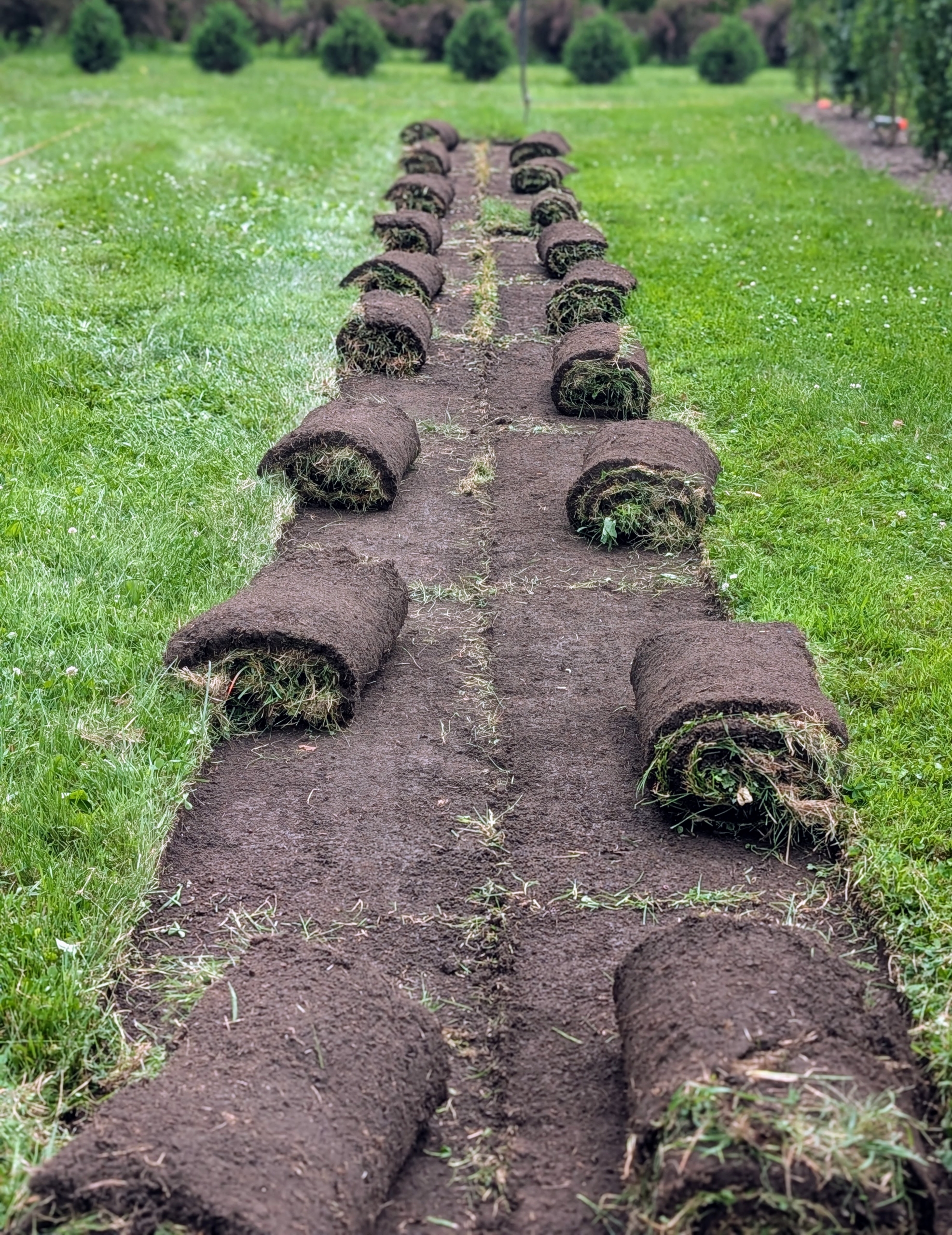
- I’ve had to be very patient and careful in planting my living maze – there is a lot to do to create this three acre course. After careful measuring, each path is cleared of sod.
-
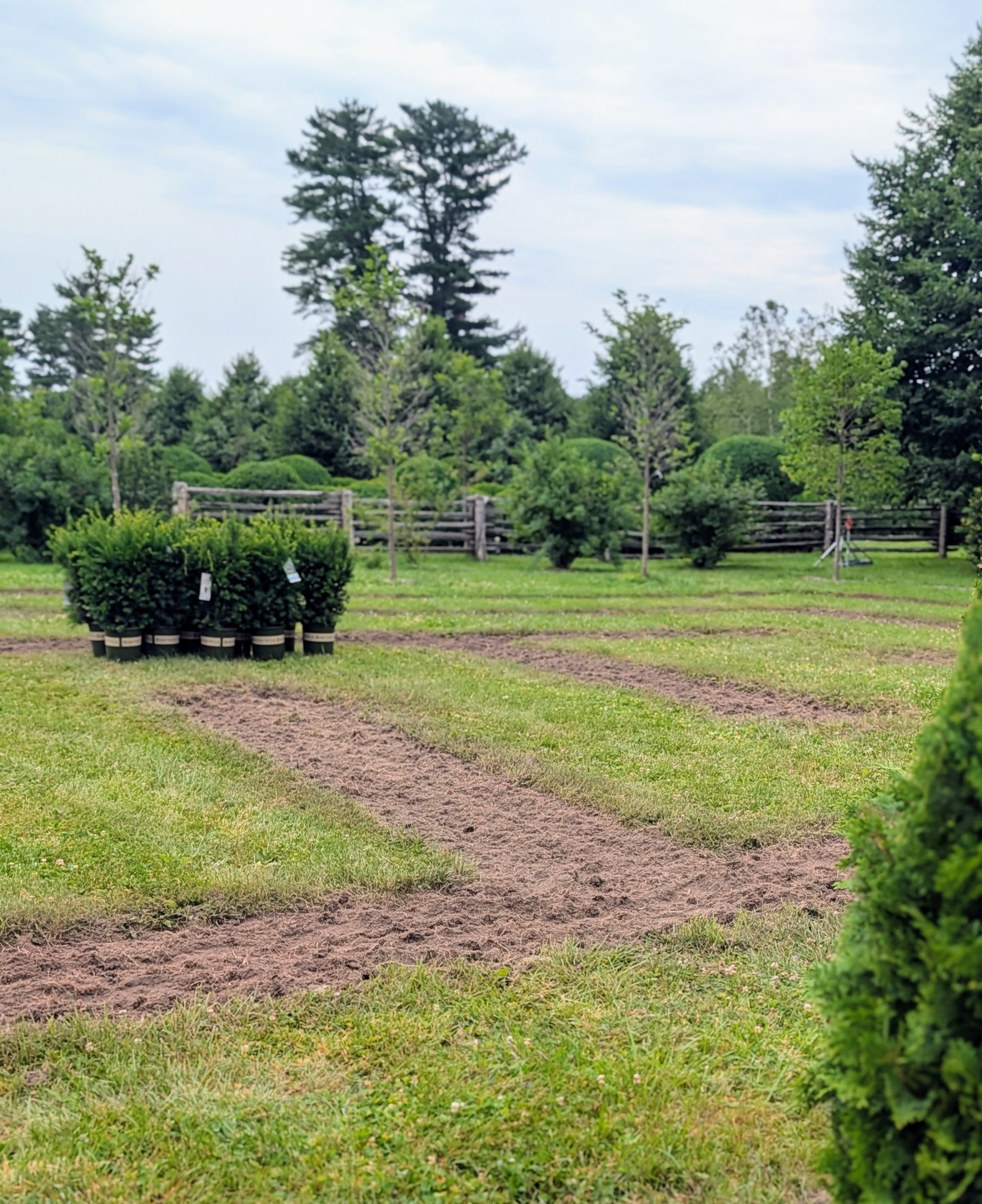
- Here is one of the last sections of the maze all cleared.
-
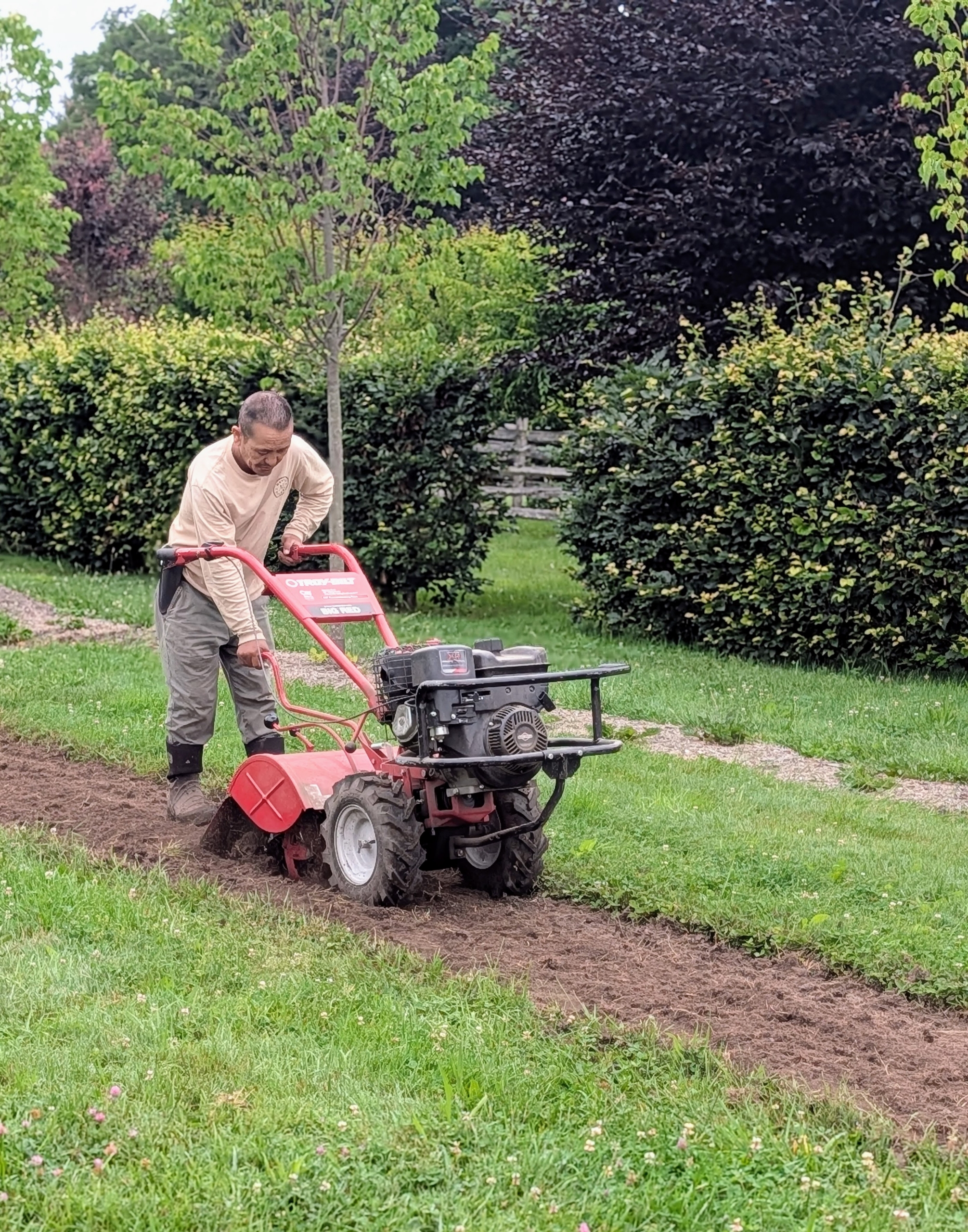
- Chhiring goes over the bed with our Troy-Bilt Pony Rear-Tine Tiller. Rototilling is one method of turning up the soil before planting. All the plants and trees do very well here at the farm, in part because of the excellent soil. I have worked very hard to ensure my soil is constantly amended and rich with nutrients. If you are unsure of your soil’s quality, have it tested. Kits are available at garden shops, online, and through your area’s cooperative extensions.
-
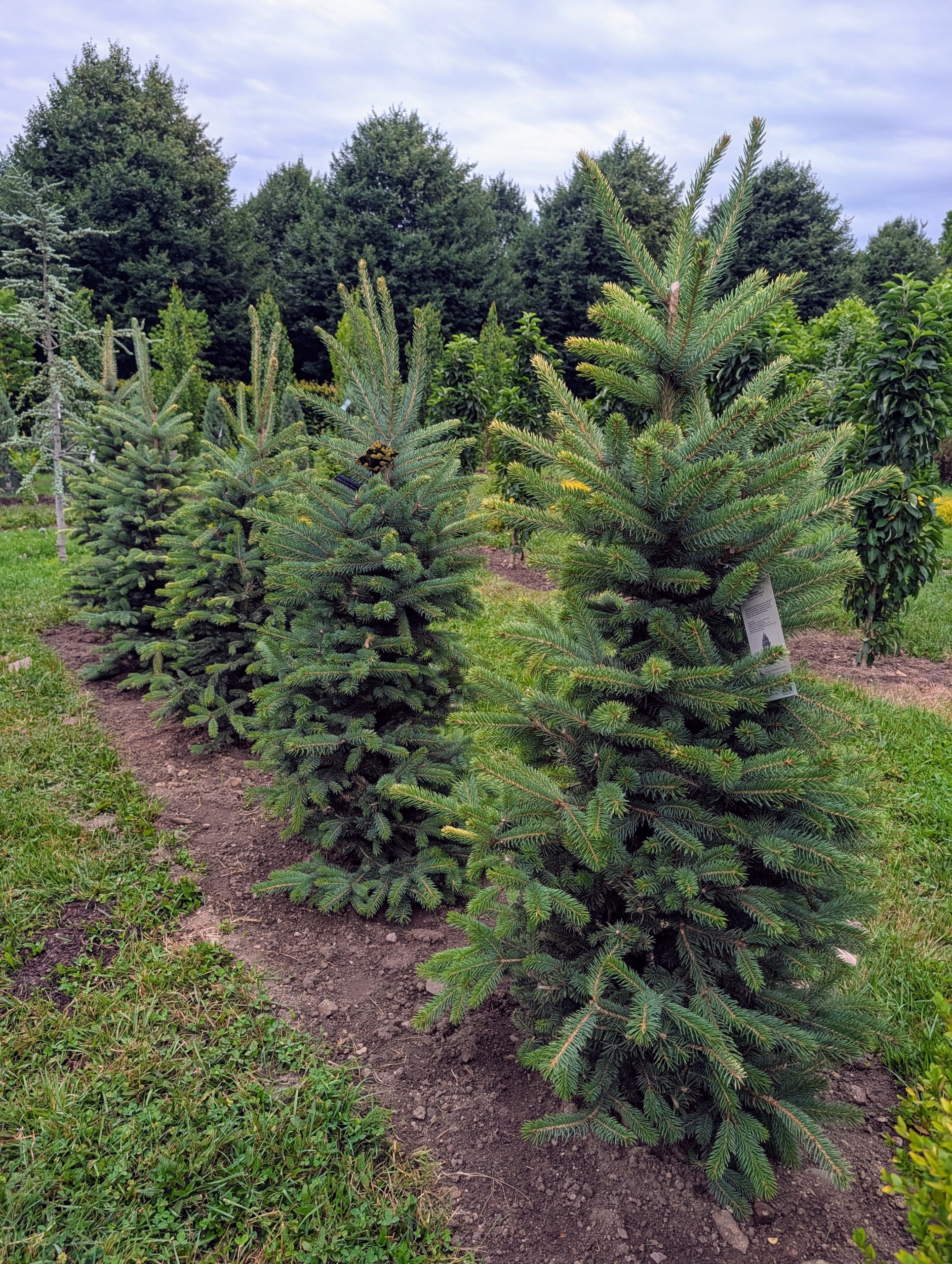
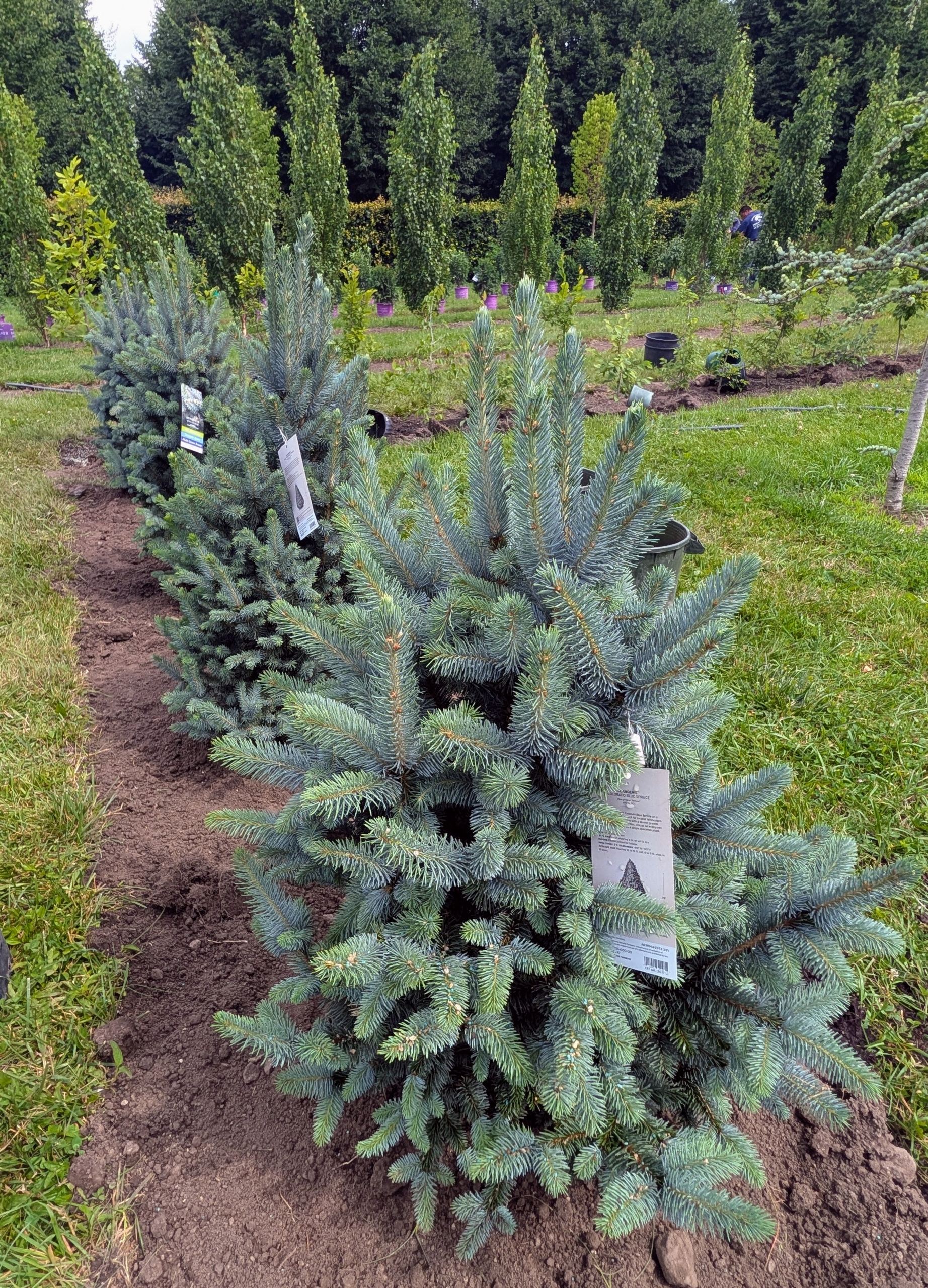
- This conifer is Sparkler® Colorado Blue Spruce Picea pungens var. glauca ‘MonWal.’ It features bright yellow-gold new growth in spring and then stunning blue-green mature foliage. Its pyramidal form is dense, slower growing and ideal for use as a windbreak or tall privacy screen.
-
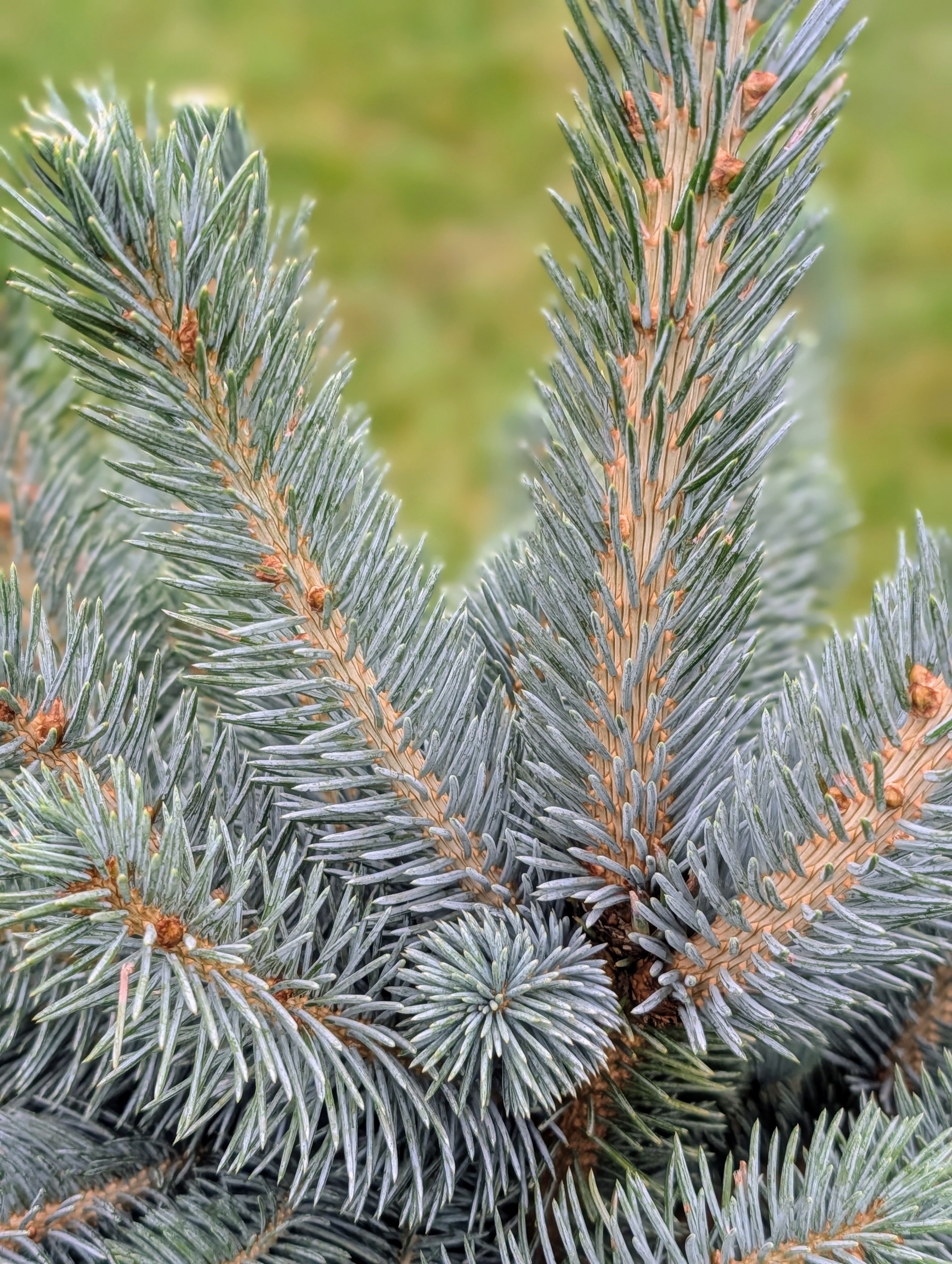
- This is JeanGenie™ Colorado Blue Spruce Picea pungens ‘Moneva’ – a classic blue spruce with pyramidal form and a dense growth habit.
-
- It shows off dramatic bright blue-green foliage and stands out among other greener specimens.
-
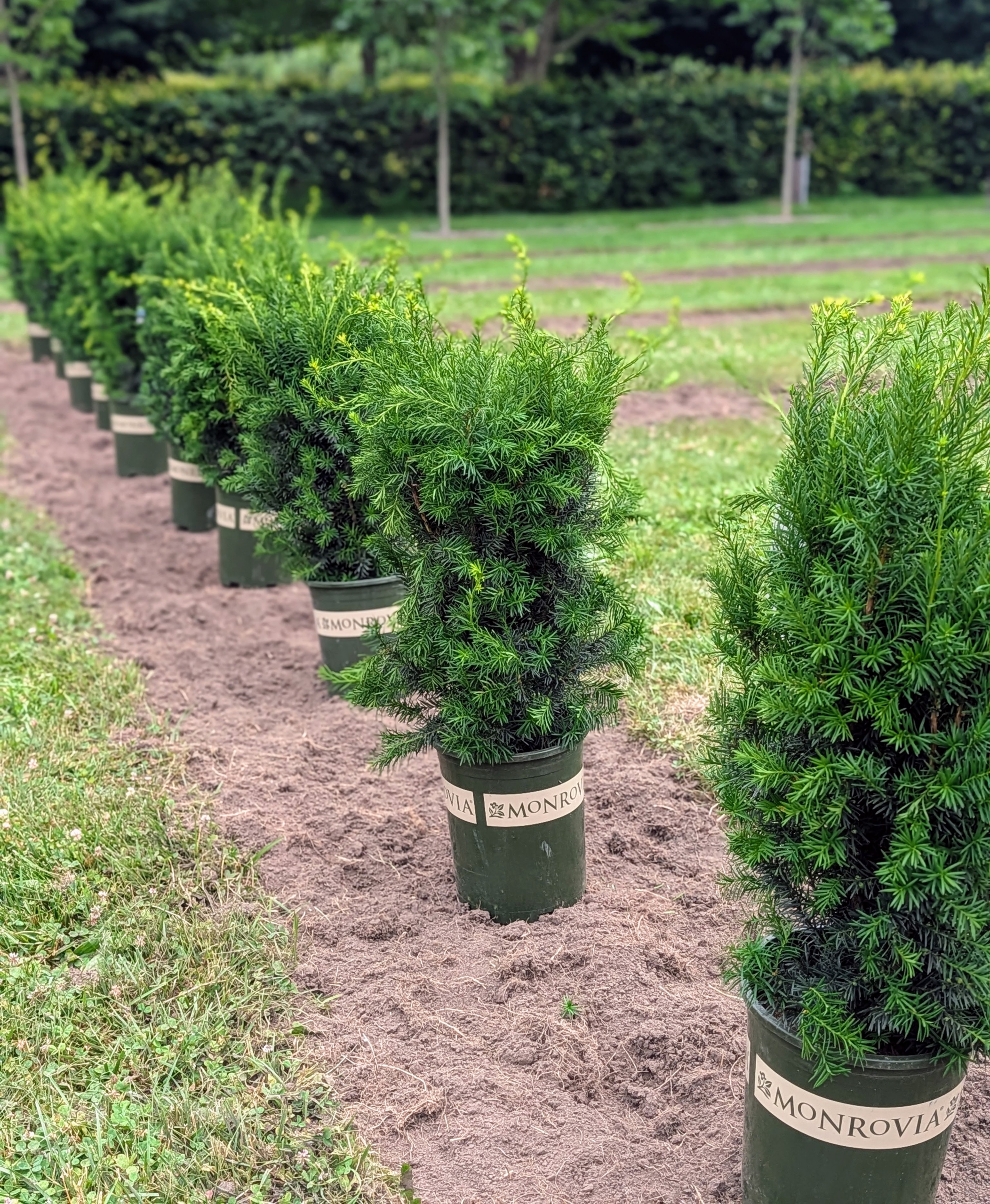
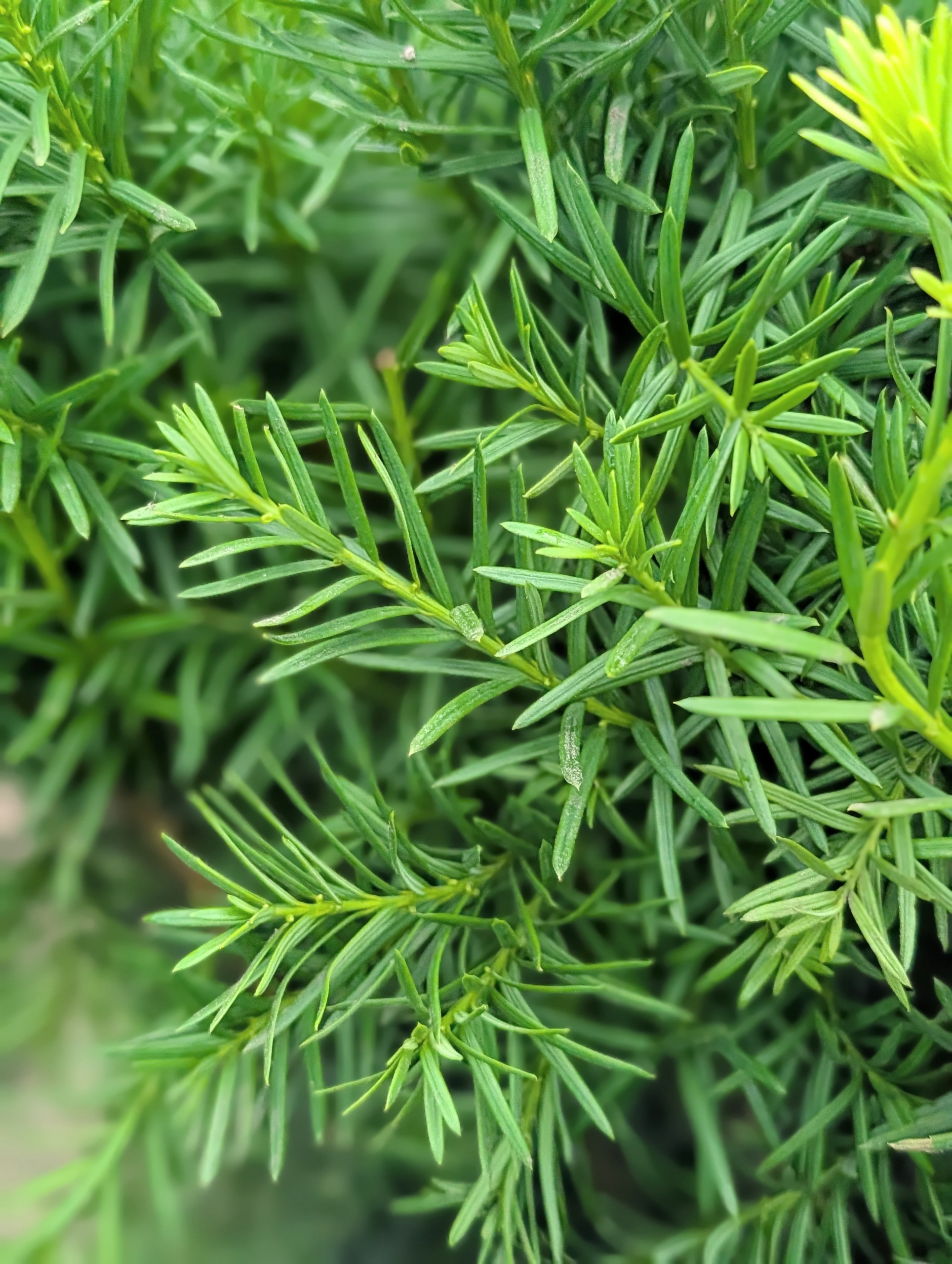
- Among the latest specimens to be planted is a group from Monrovia. Hicks Yew Taxus x media ‘Hicksii’ is an excellent evergreen shrub for hedges. I have several rows of Hicks Yew.
-
- The long, upright-growing branches with dense, glossy, dark green foliage naturally form a narrow, columnar habit that works well in my maze.
-
- Holmstrup Eastern Arborvitae Thuja occidentalis ‘Holmstrup’ thrives in full and partial sun. It is slow growing and reaches five to seven feet tall and three feet wide in 10 years.
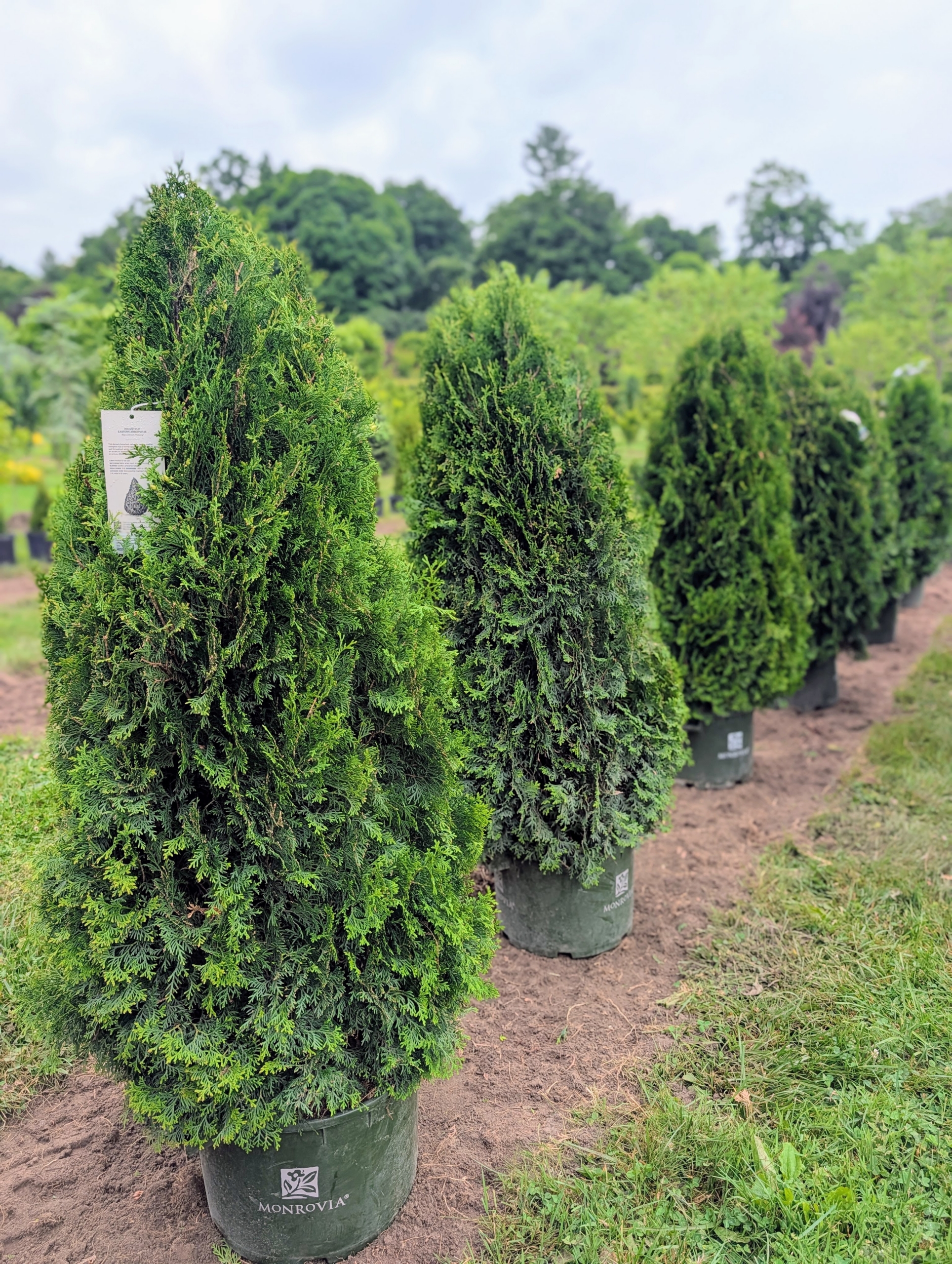
-
- It is densely branched, compact, naturally narrow, and has a neat, formal appearance.
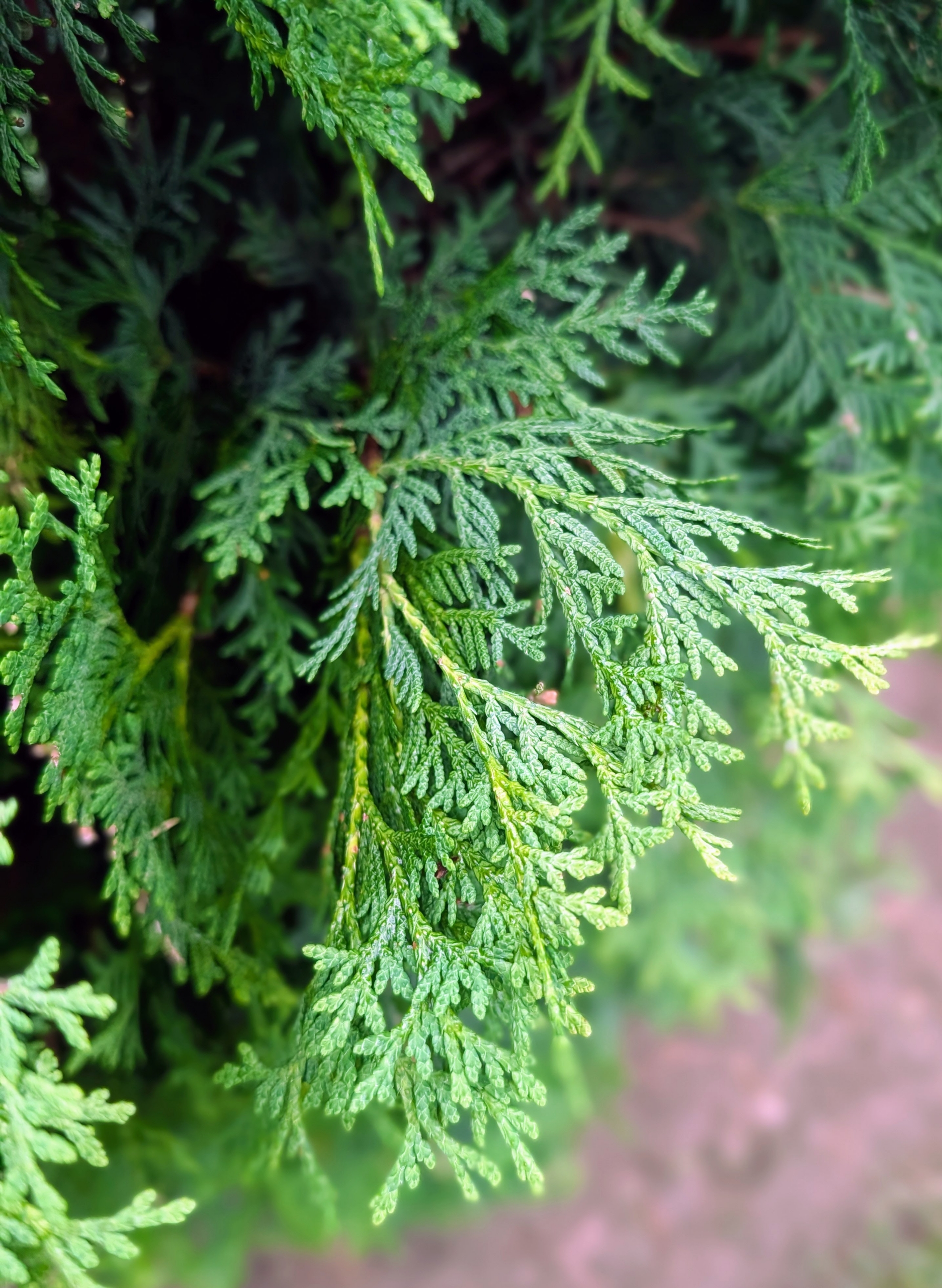
-
- And this is Feelin’ Sunny® Deodar Cedar Cedrus deodara ‘Monkinn’ – a stunning plant with bright, golden yellow foliage.
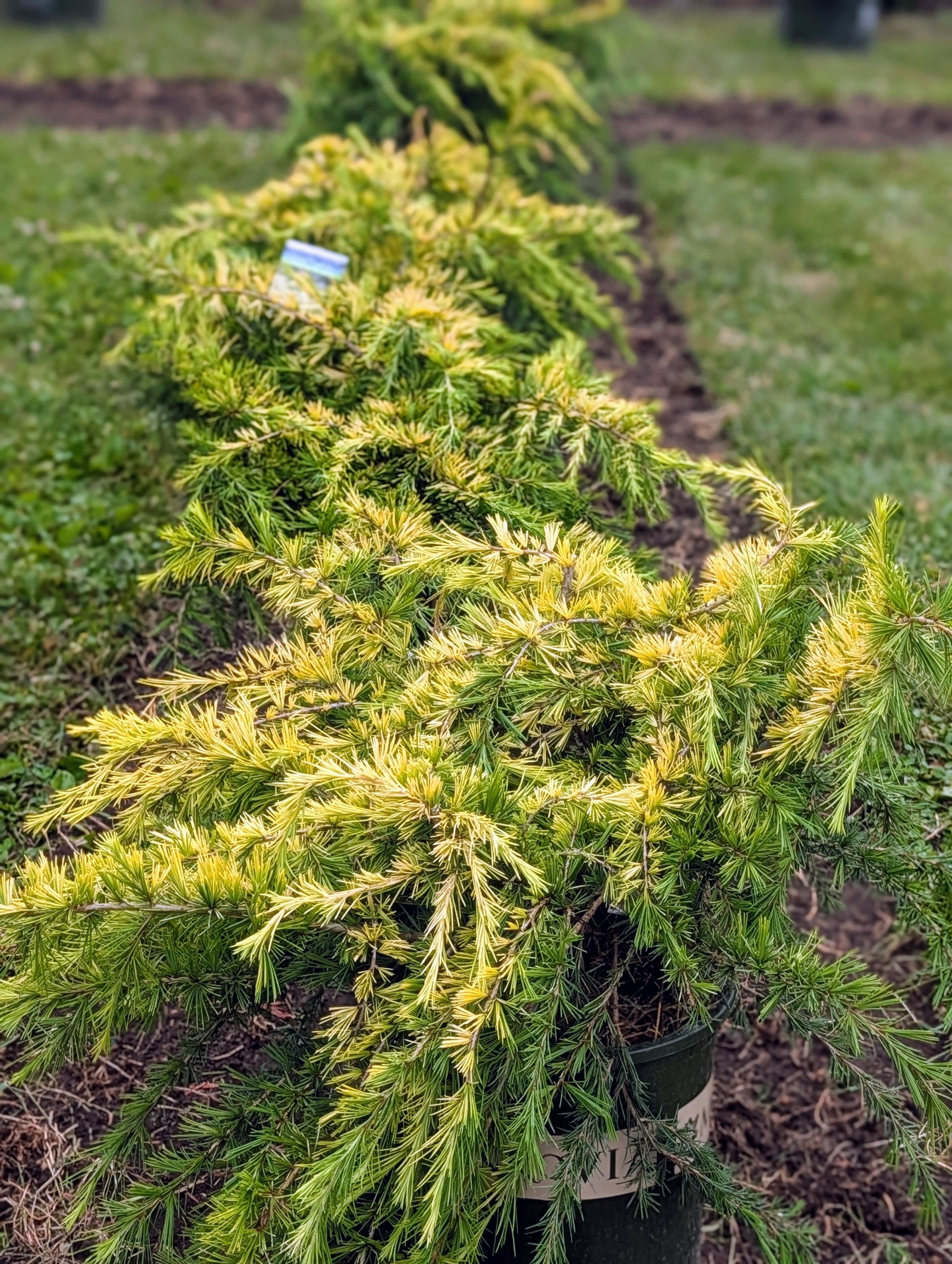
-
- My head gardener, Ryan McCallister, places each plant one by one carefully, strategically, and with thought on how it matures and how much space it needs.
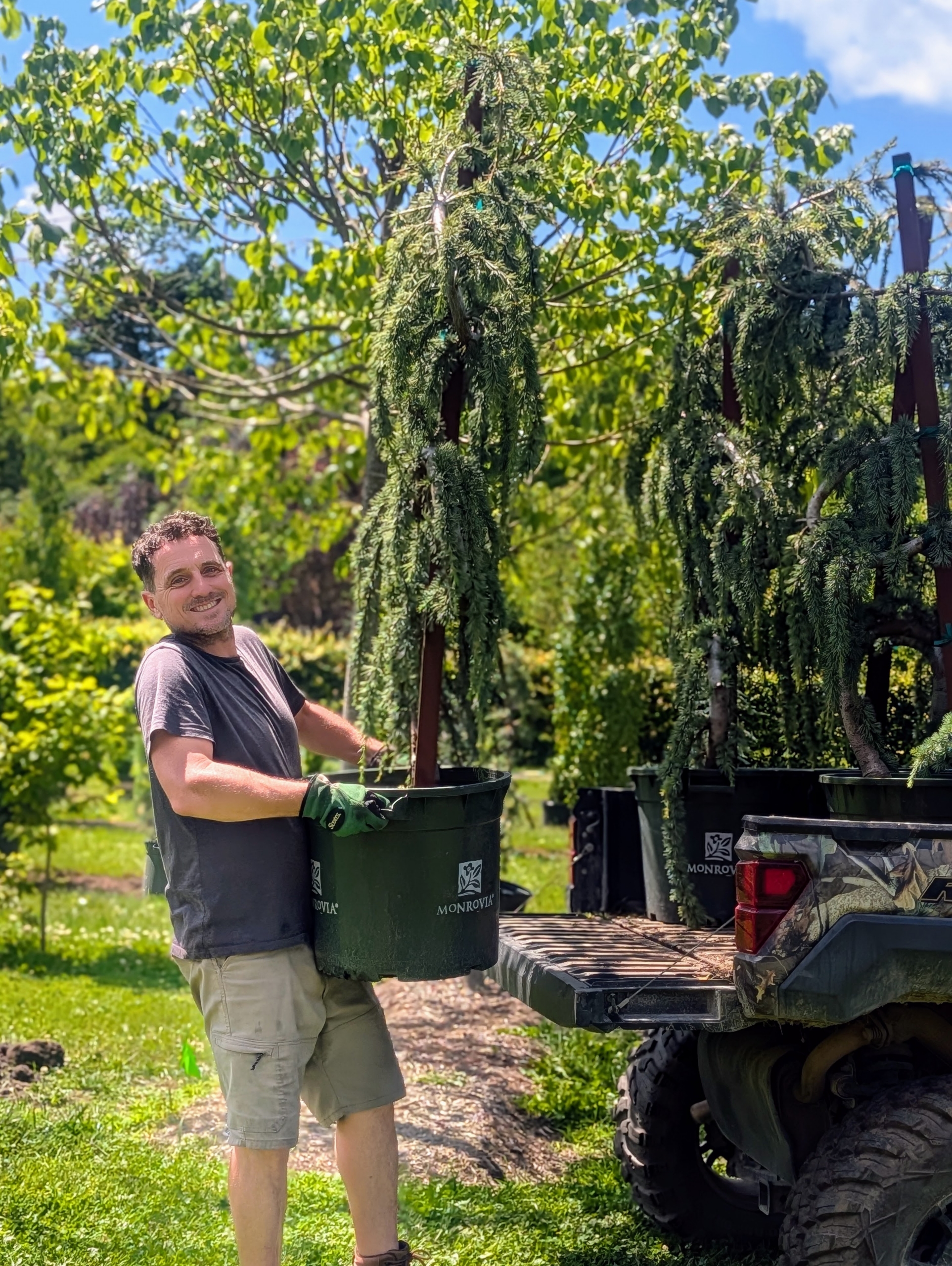
-
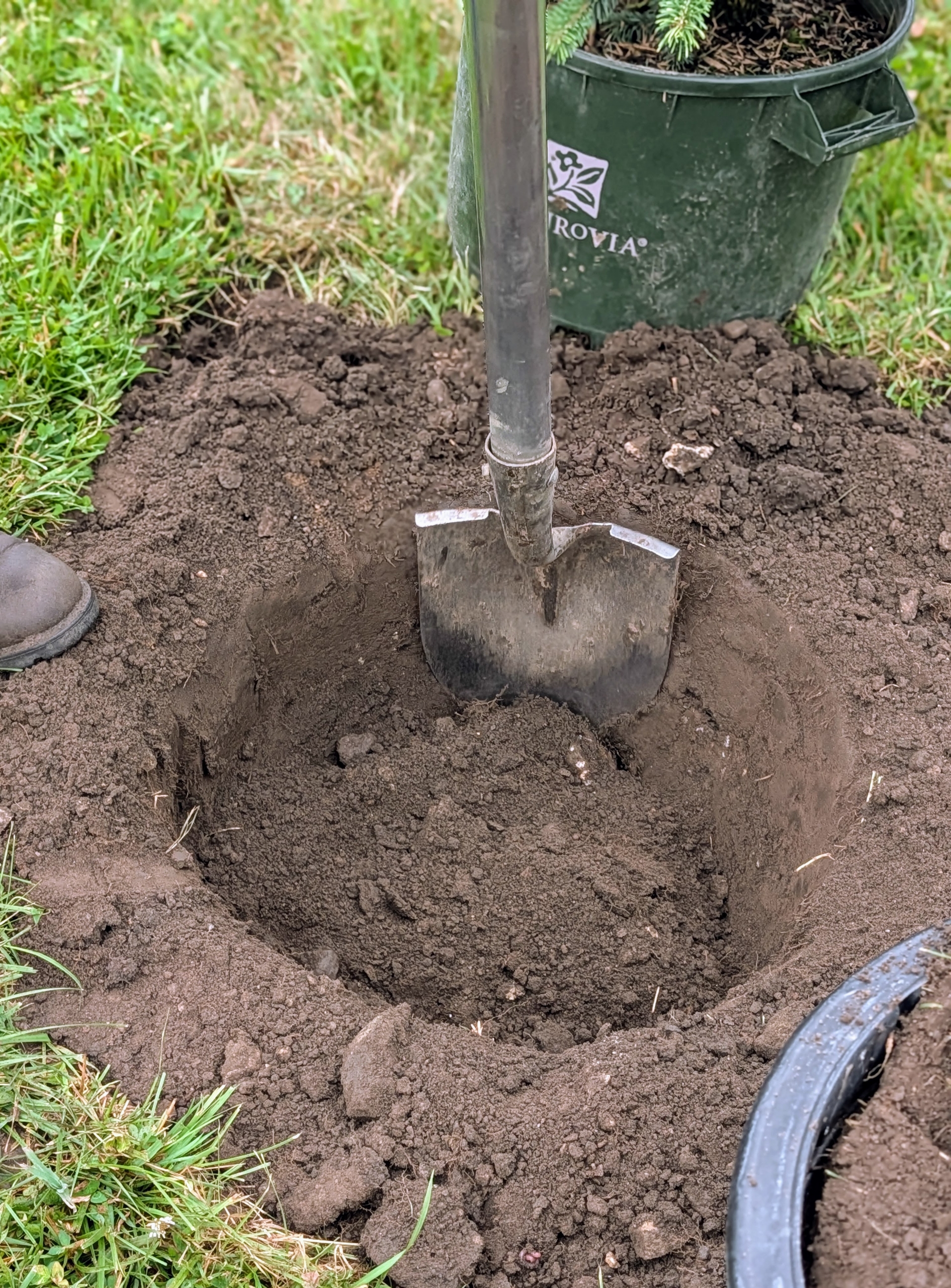
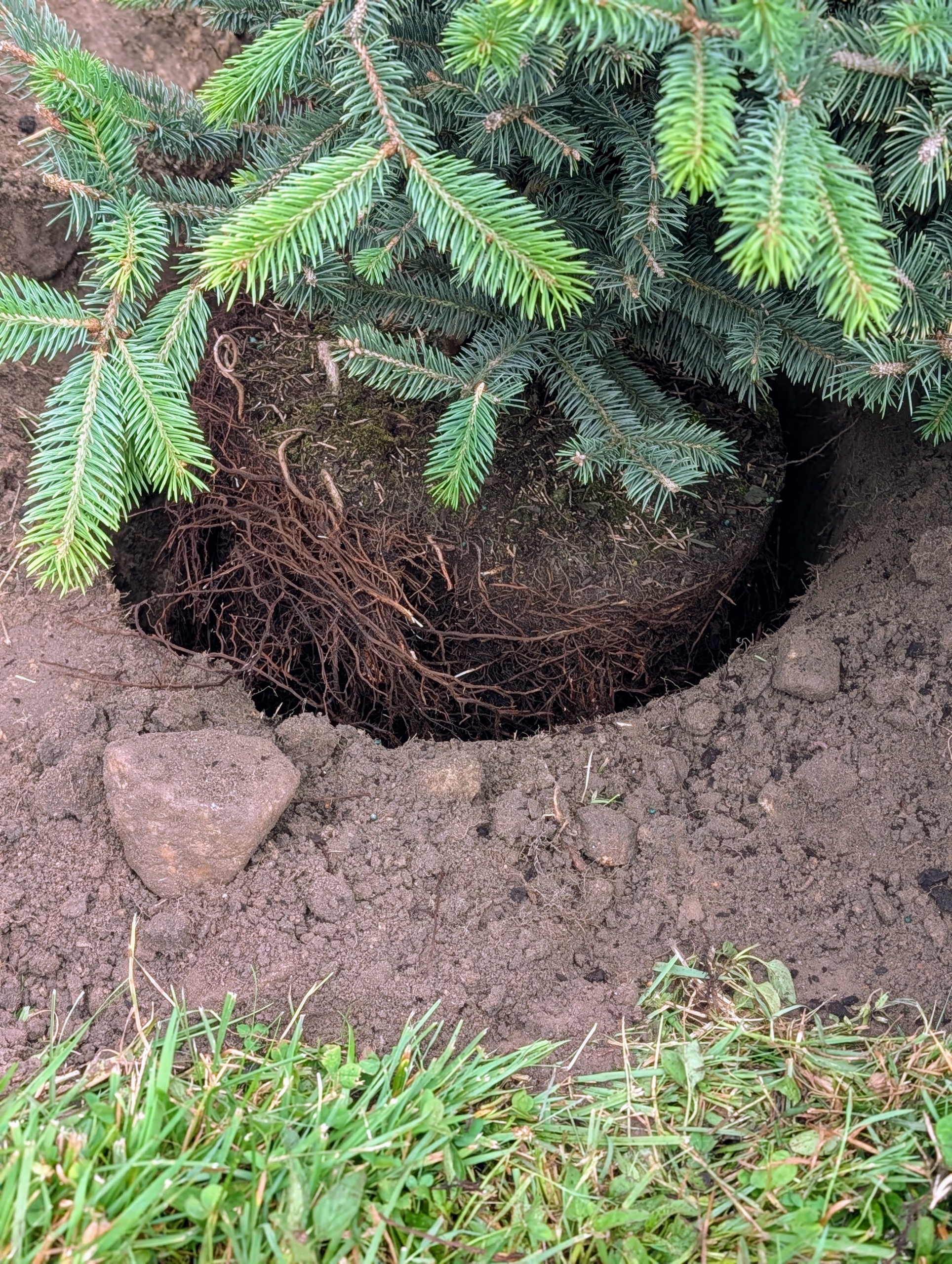
- After plats are placed, it’s time for the hole to be dug. Remember the rule of thumb for planting trees – dig a hole that is two to three times wider than the root ball, but only as deep as the height of the root ball.
-
- Here, the hole is filled with water first. I instruct the team to fill the holes first with water to give the plants a strong start, improve root establishment, reduce transplant shock, and increase survival chances.

-
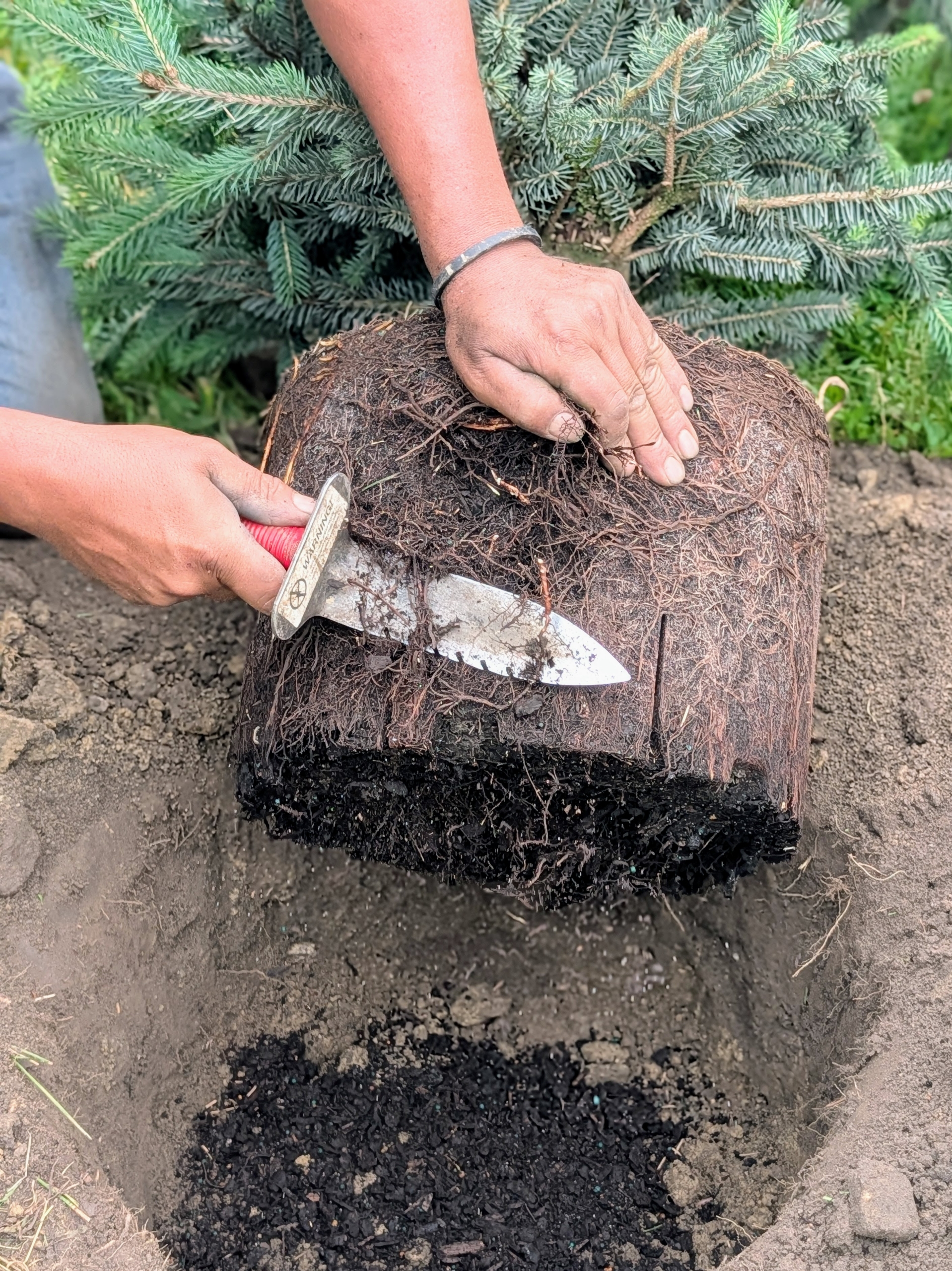
- Don’t forget to always scarify – and stimulate new roots to grow.
-
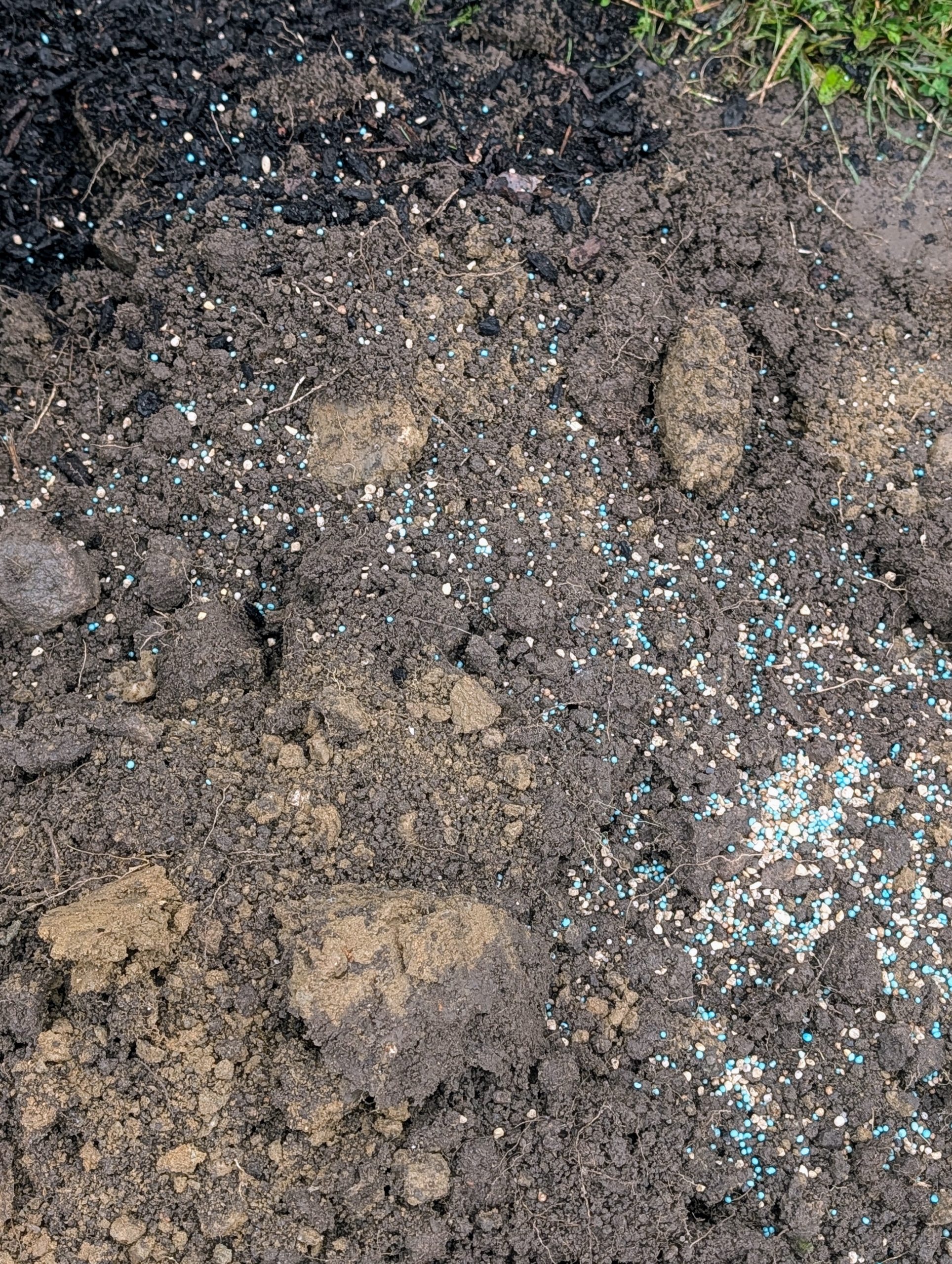
- Generous handfuls of fertilizer are dropped on the surrounding soil. Use food that promotes faster establishment, deeper roots, and good soil structure.
-
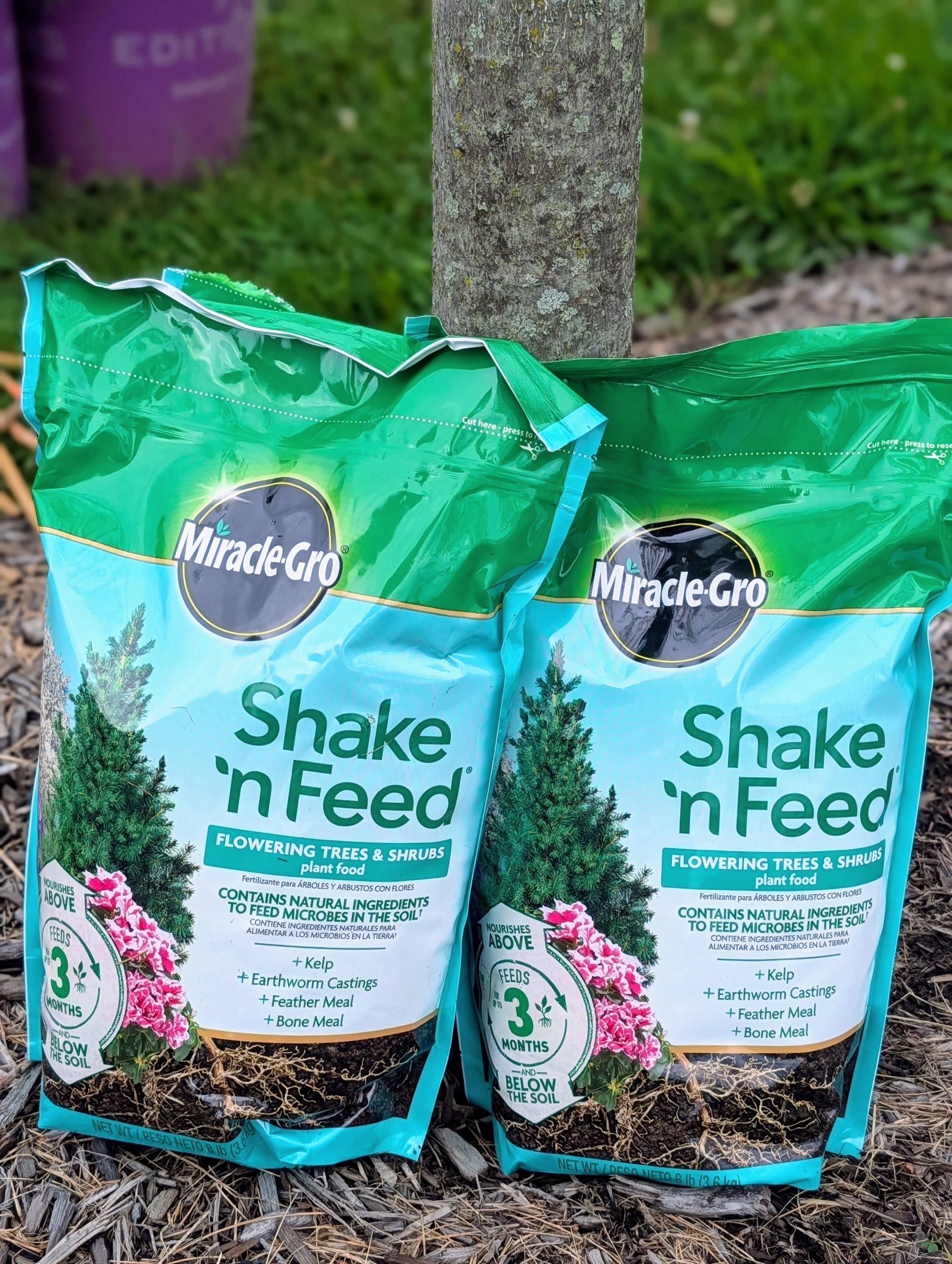
- I use Miracle-Gro Shake’n Feed Flowering Trees & Shrubs plant food which has done so well for my plants. It contains natural ingredients such as kelp, earthworm castings, bone meal, and feather meal, which will feed the plant and maintain its deep, lush green foliage throughout the season.
-
- Each tree is placed into its designated hole and then turned so its best side faces the path.
-
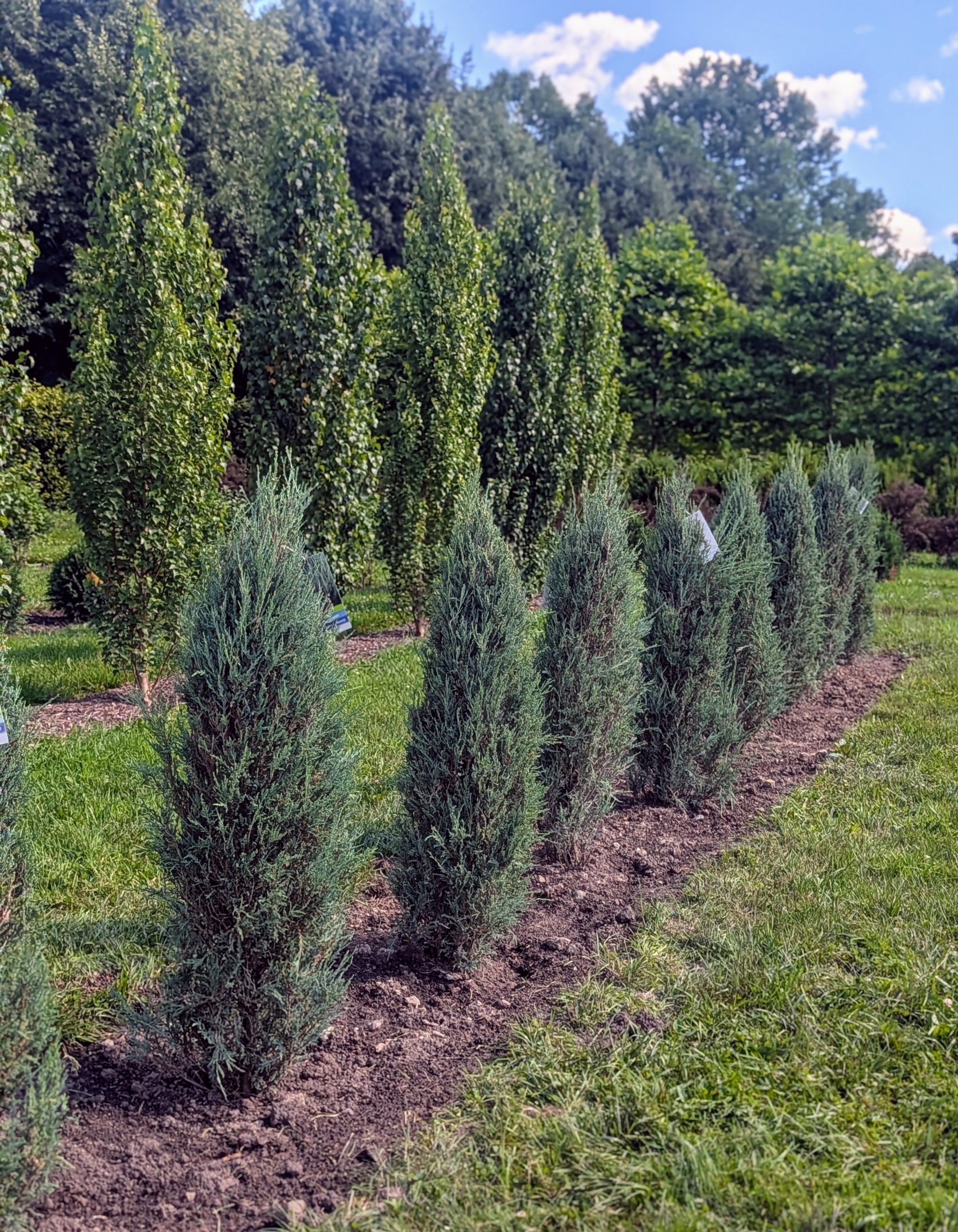
- Another rule of thumb is “bare to the flare” meaning only plant up to the flare, where the tree meets the root system. This is the row of Skyrocket Juniper Juniperus scopulorum ‘Skyrocket’ all planted.
-
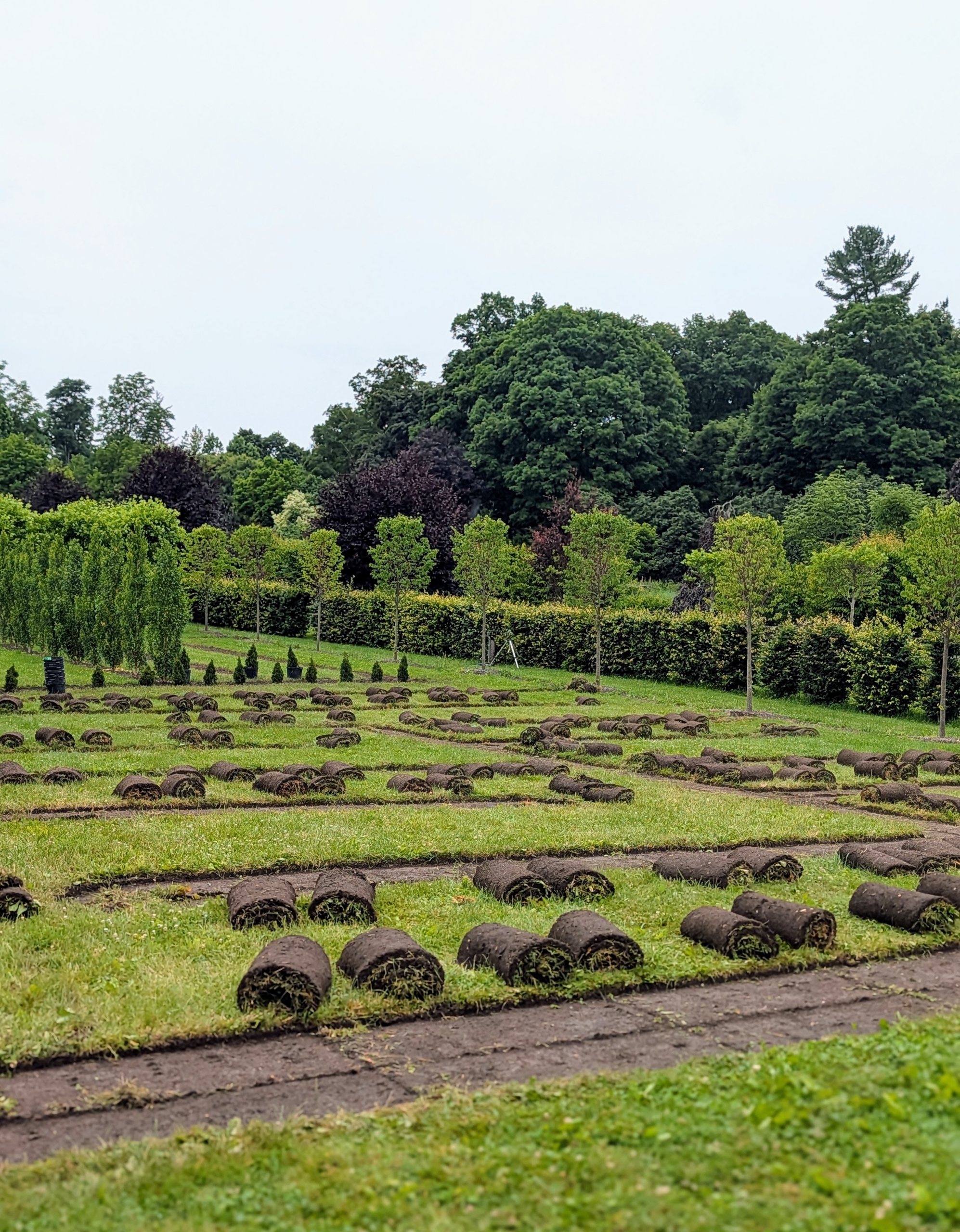
- Just a little more to go. Here is the last section ready for planting. It’s almost done. Keep following to see my finished maze!
 Martha Pins


 Martha Tweets

