

Planting Green Wall Spire Crabapples in My Maze
Right now, it's so busy in my living maze - my gardeners and outdoor grounds crew are planting the last section and it's looking fantastic.
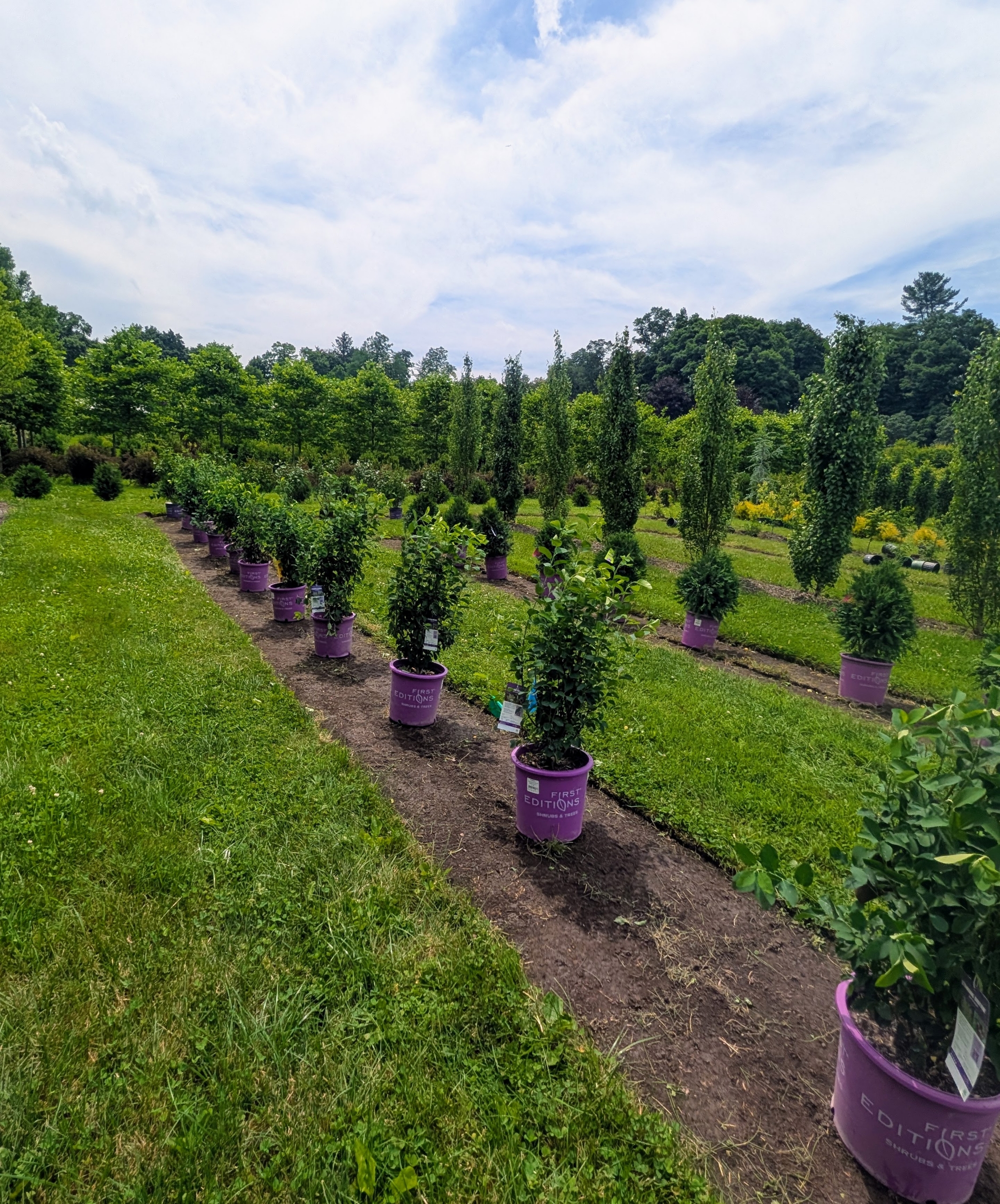
My maze is in a pasture that extends from outside my Winter House all the way down to my long Boxwood Allée. I started the three-acre course in the spring of 2022. Over the last couple of weeks, we've been working hard to mark the last rows, remove the sod, rototill the soil, select the plants, and get them into the ground. Everything is done according to a very precise map I created. Recently, the team planted some Green Wall Spire Crabapple trees, Malus x adstringens 'Jefwall,' from First Editions Shrubs and Trees.
Here are some photos.
-

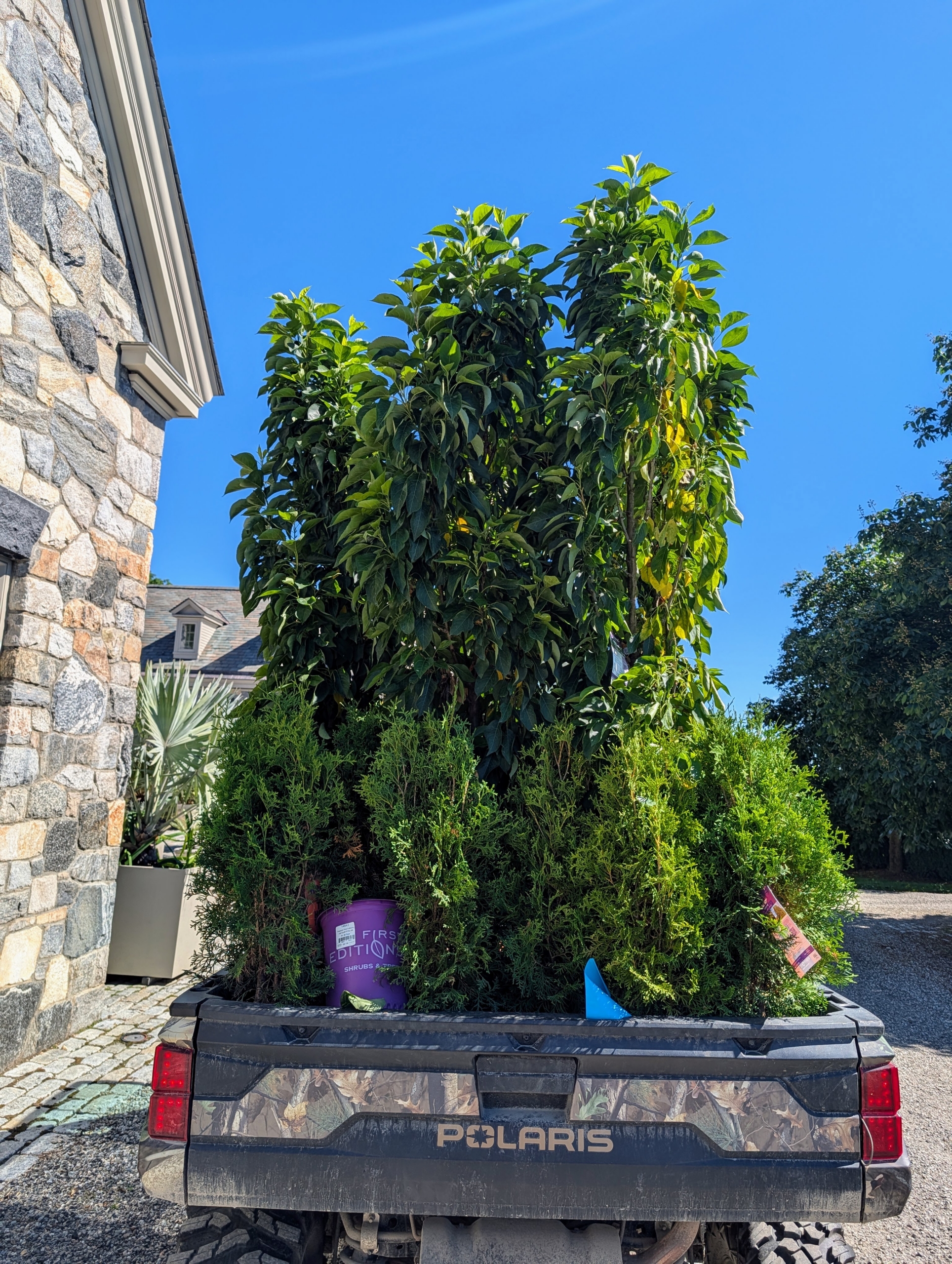
- Every day, trees and shrubs are selected and transported to the maze. This project is close to completion and my team is working very hard to finish.
-
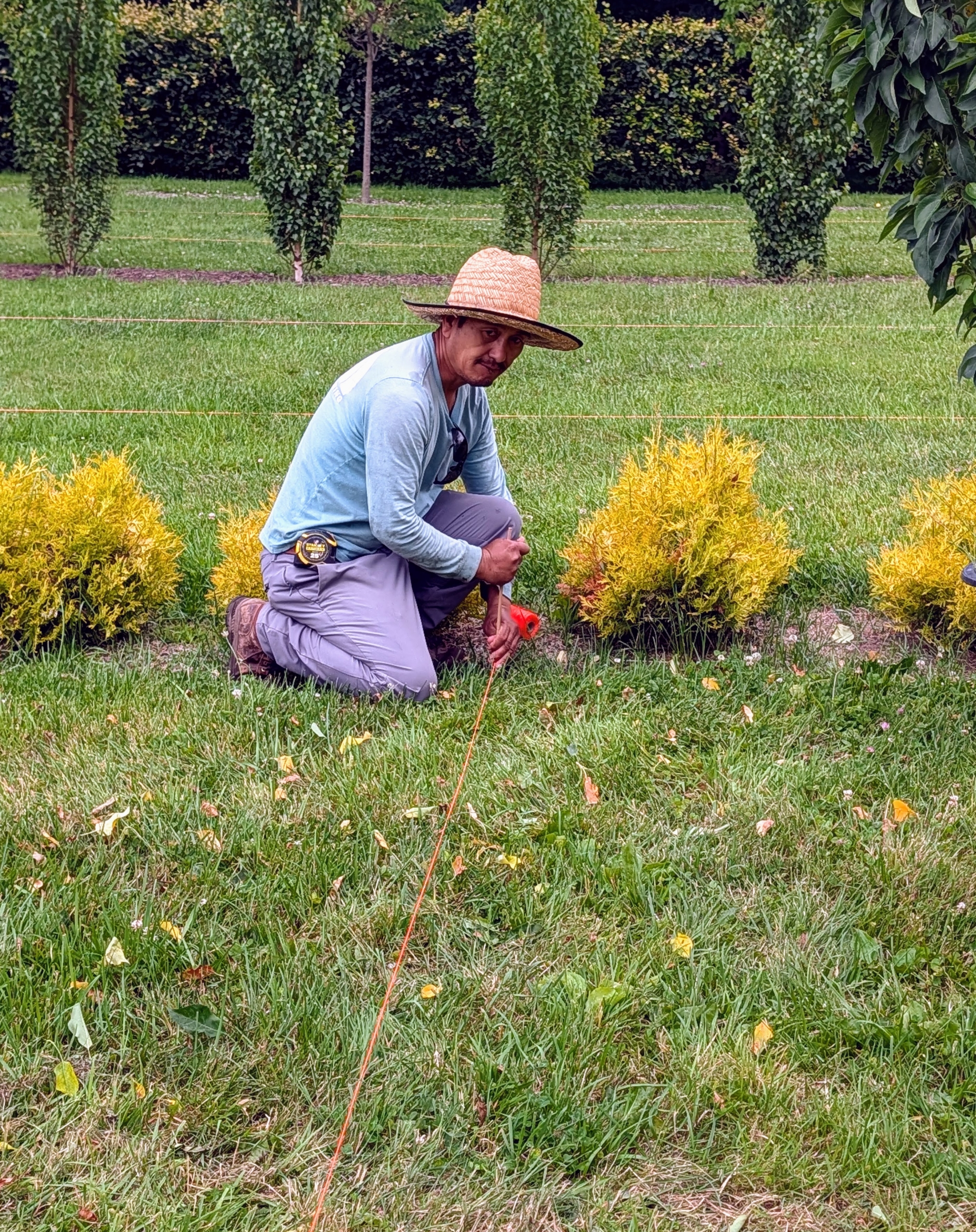
- I am very proud of how my maze is growing. And yes, like a true maze there is only one right way from the entrance to the goal location. Chhiring follows a very detailed diagram of where the rows will start and end. He measures everything multiple times, using twine to make sure everything is perfectly straight.
-
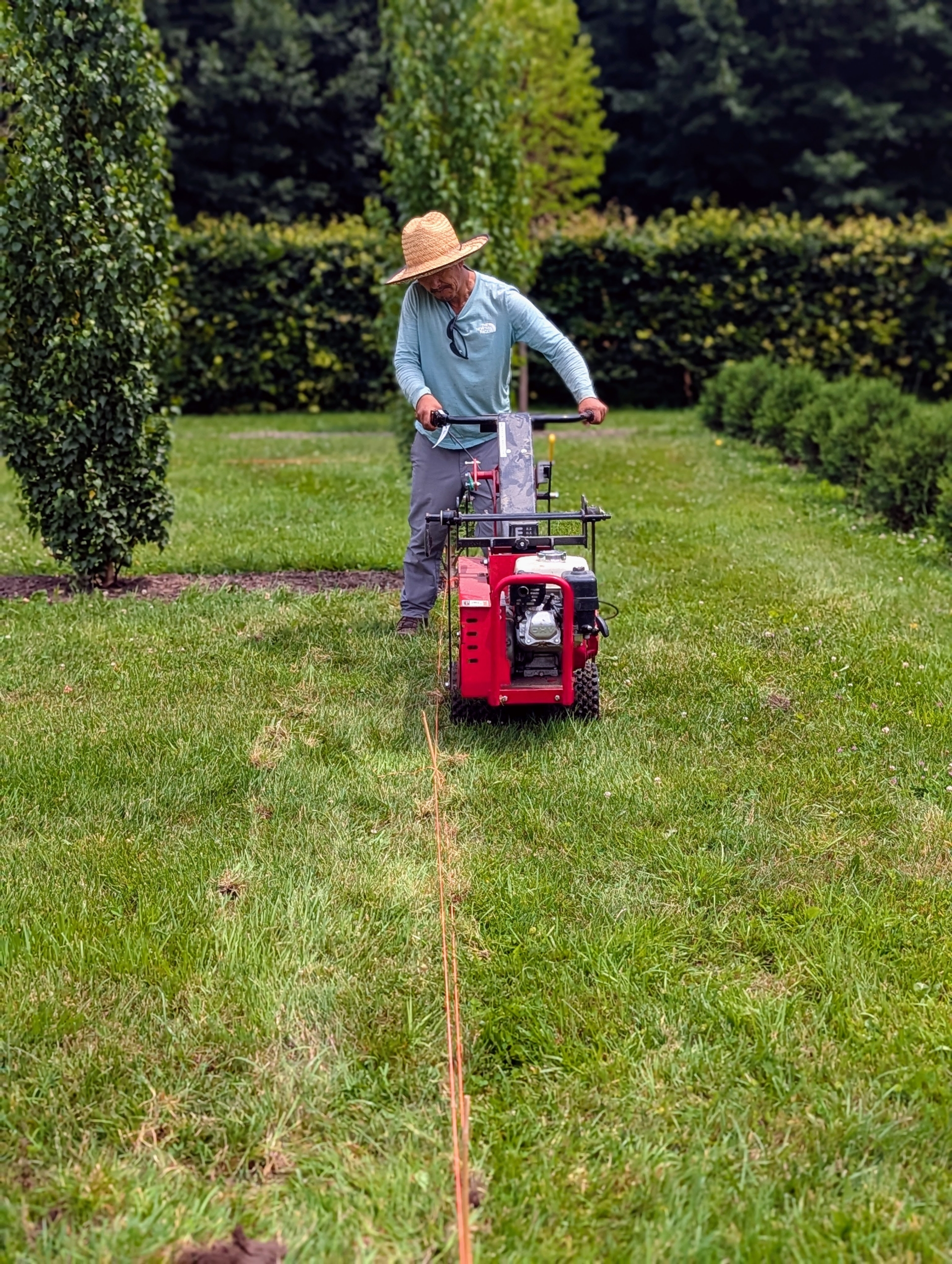
- Here Chhiring cuts the sod according to plan. The sod is reused in other areas of the farm where needed. Nothing goes to waste.
-
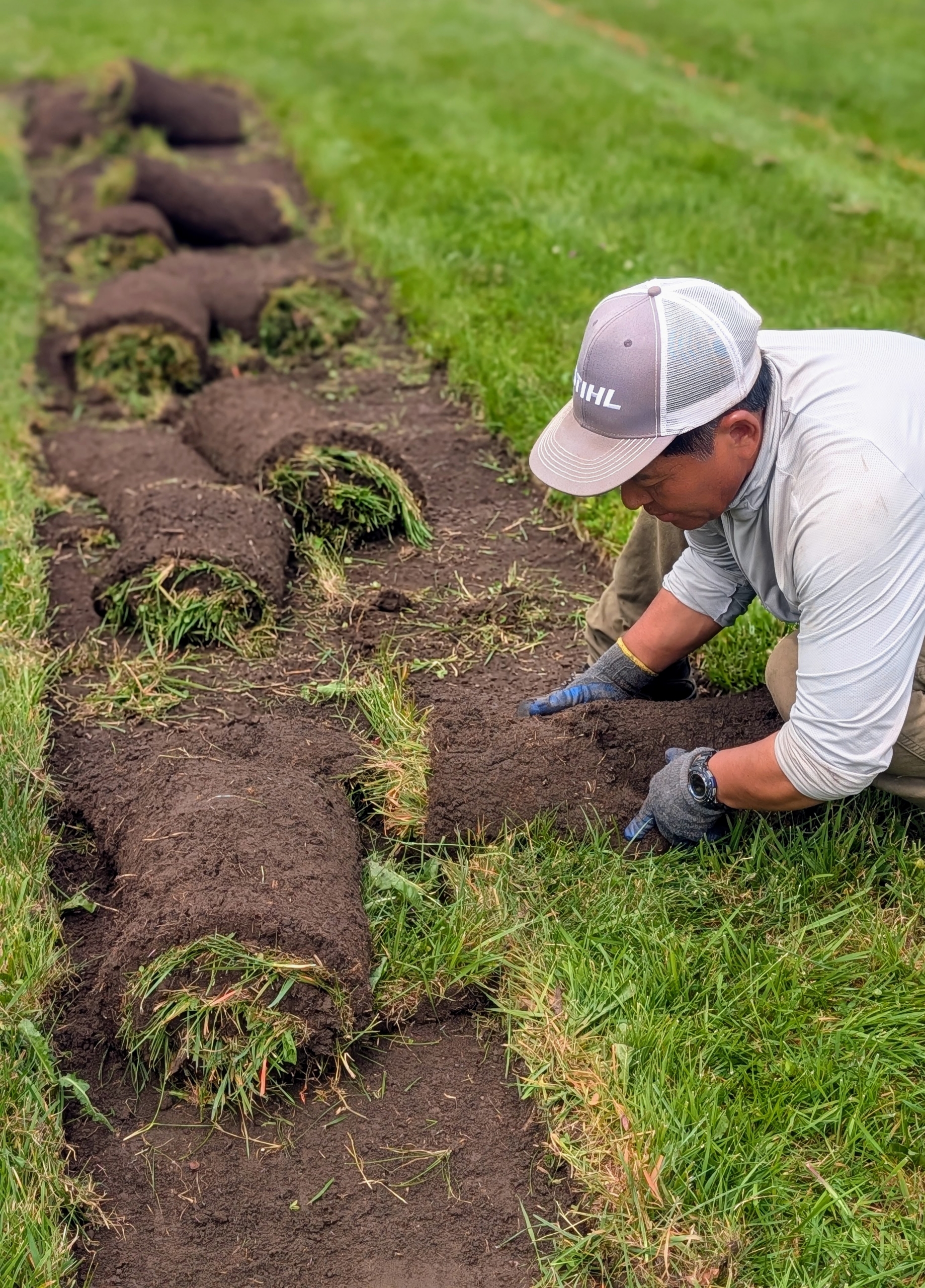
- Phurba rolls up the sod in small, manageable sections that can be lifted and moved. Sod can be very heavy. One standard roll can weigh up to 45 pounds.
-
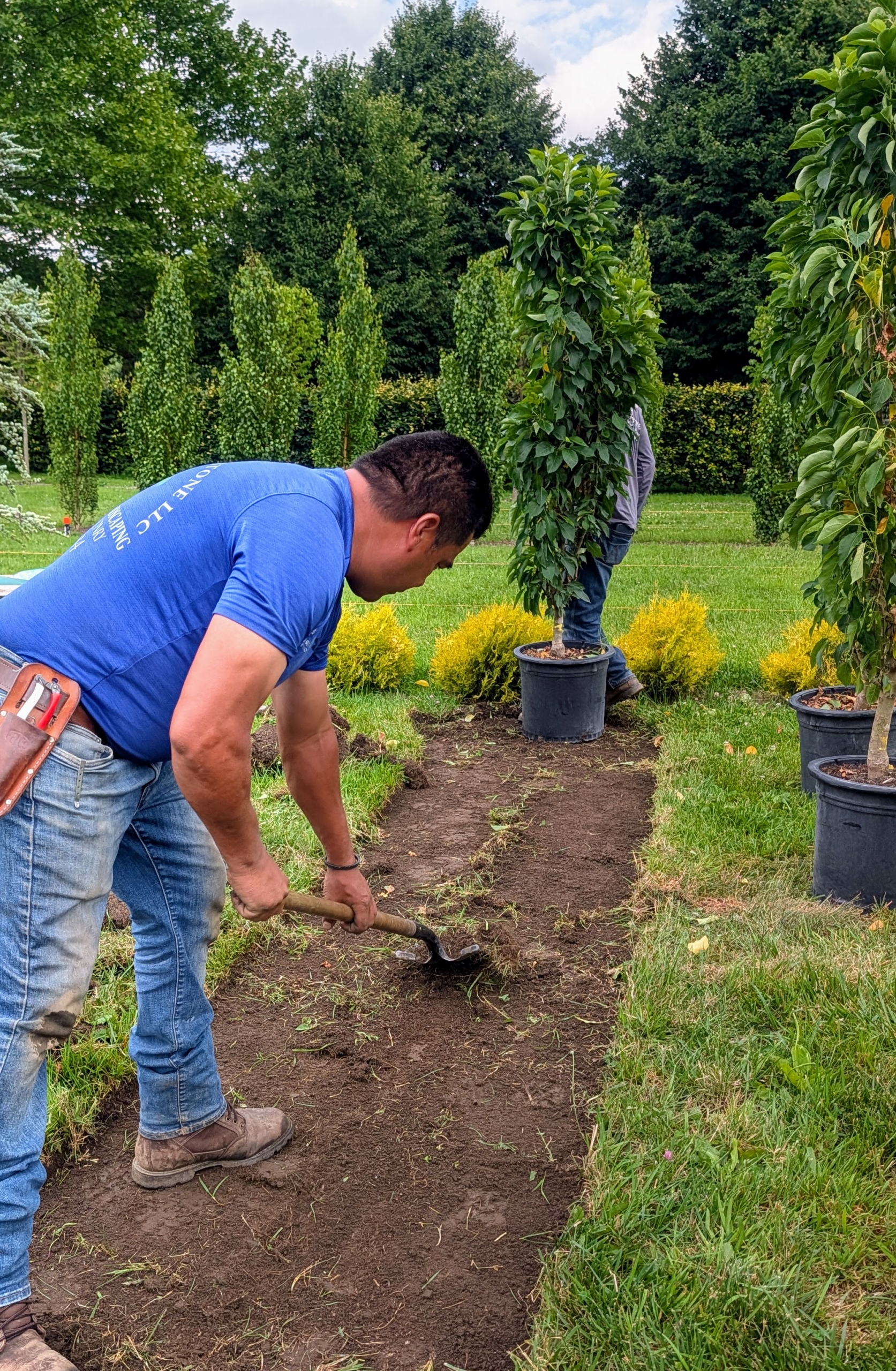
- Arnold uses a spade to scrape any leftover sod from the newly stripped area. If needed, the soil is also tilled.
-
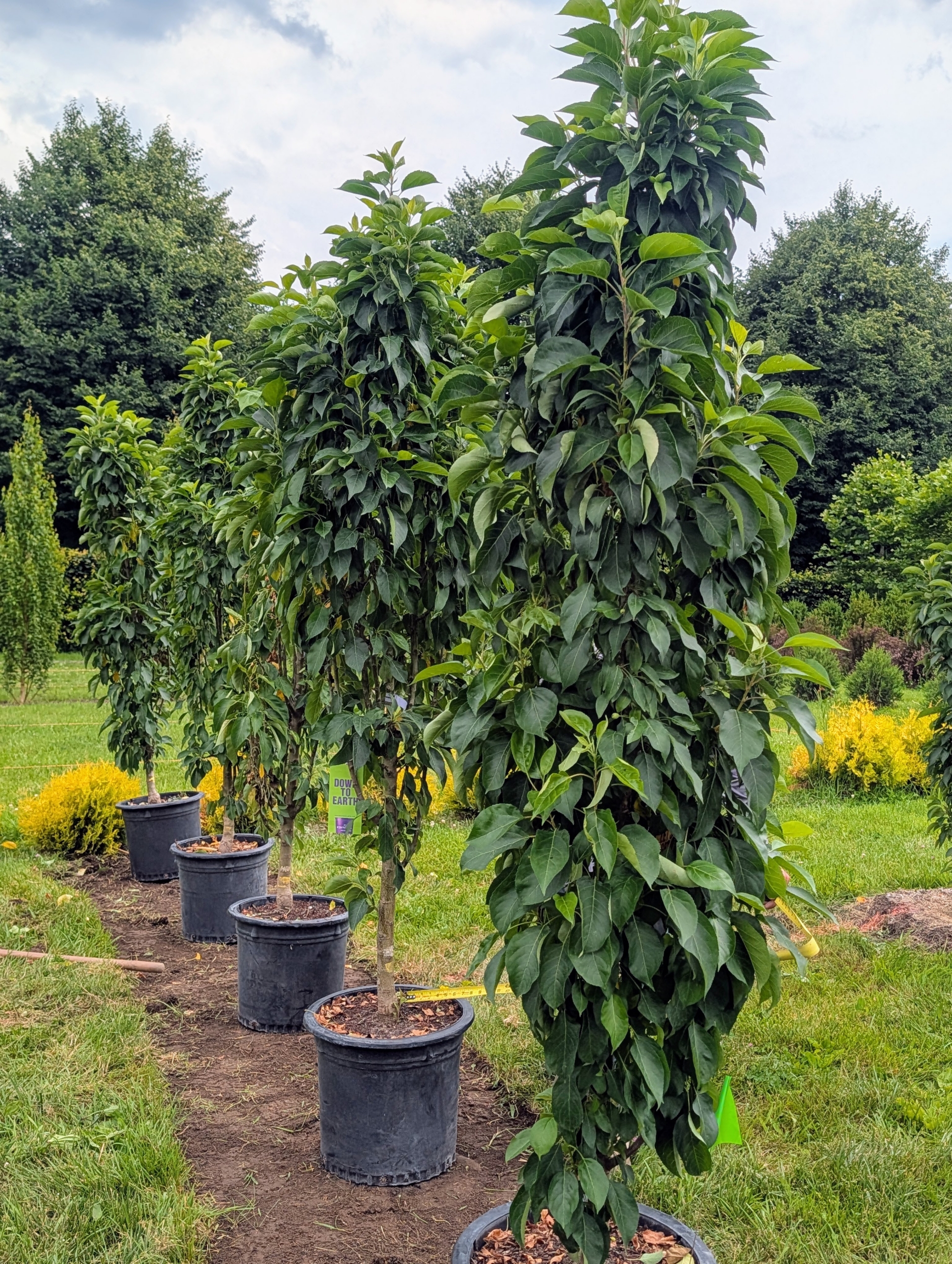
- Next to be planted are these Green Wall Spire Crabapple trees. These will grow to about 20 feet tall and five feet wide.
-
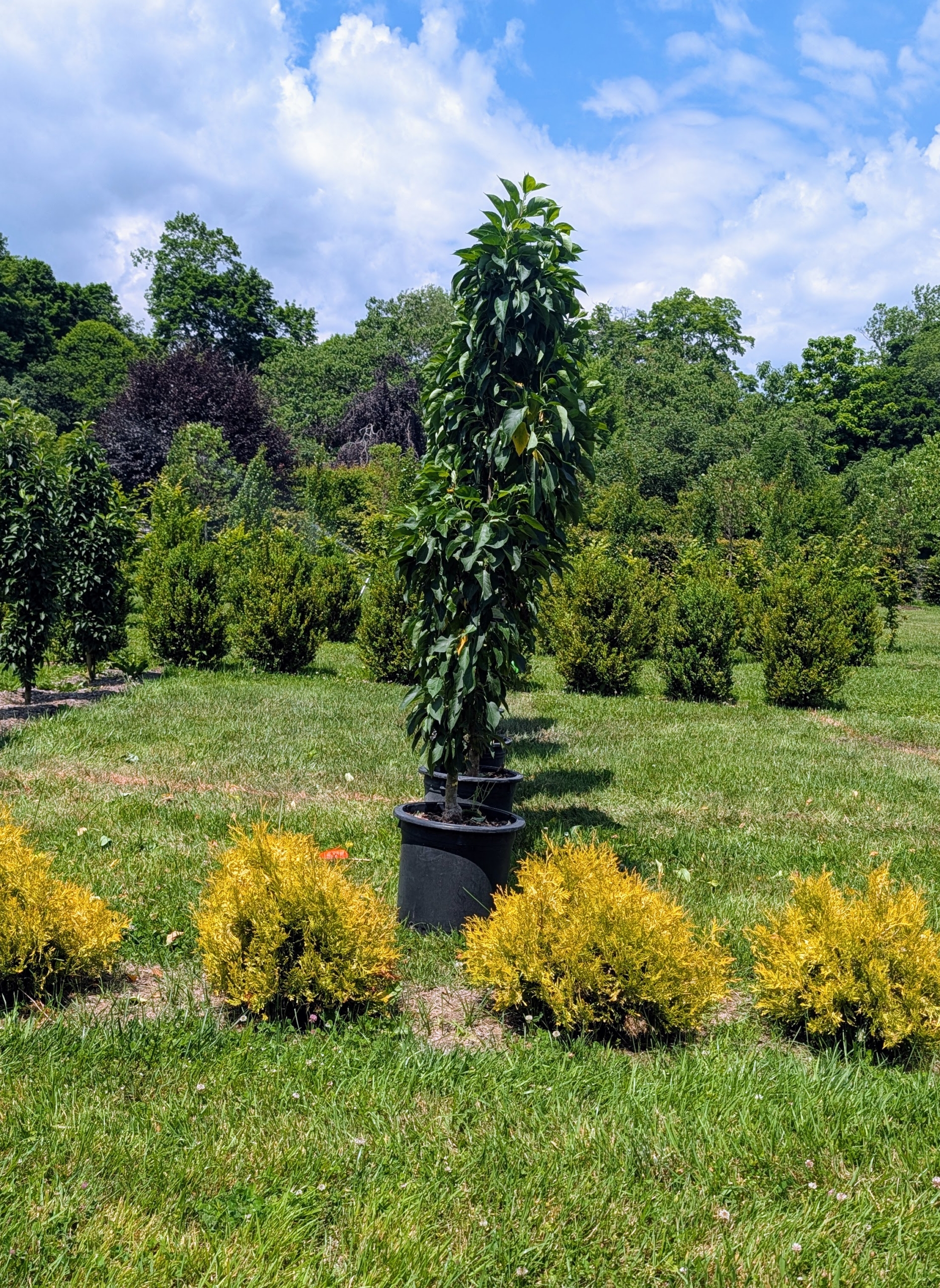
- Green Wall Spire Crabapples are narrow, columnar trees that are great options for smaller spaces. They prefer full sun and are drought tolerant.
-
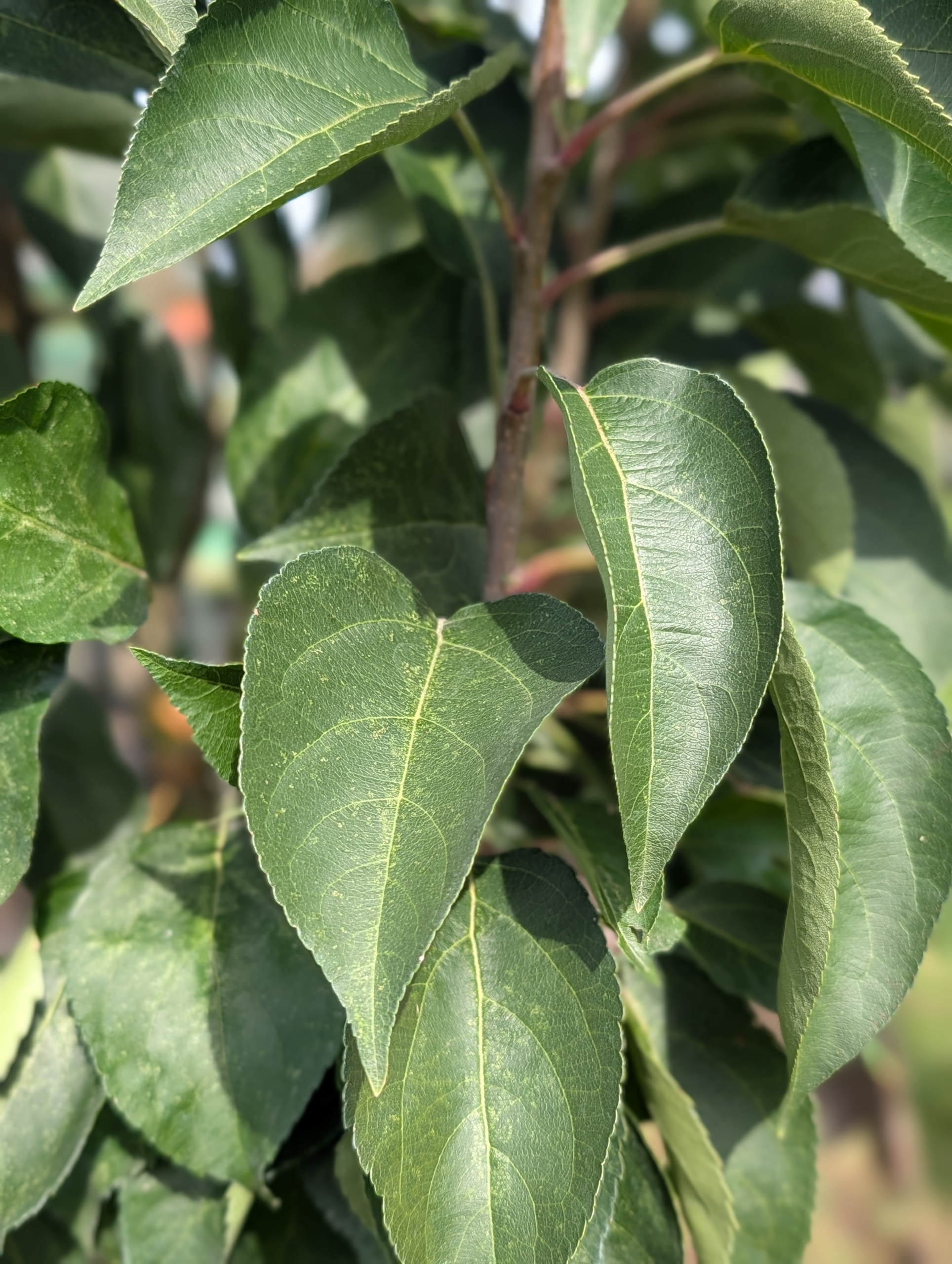
- The foliage is glossy and green in summer, bronze in fall, and in spring, the tree is covered in white flowers. I wanted the maze to be filled with a large variety of interesting specimens, so there is something different at every turn.
-
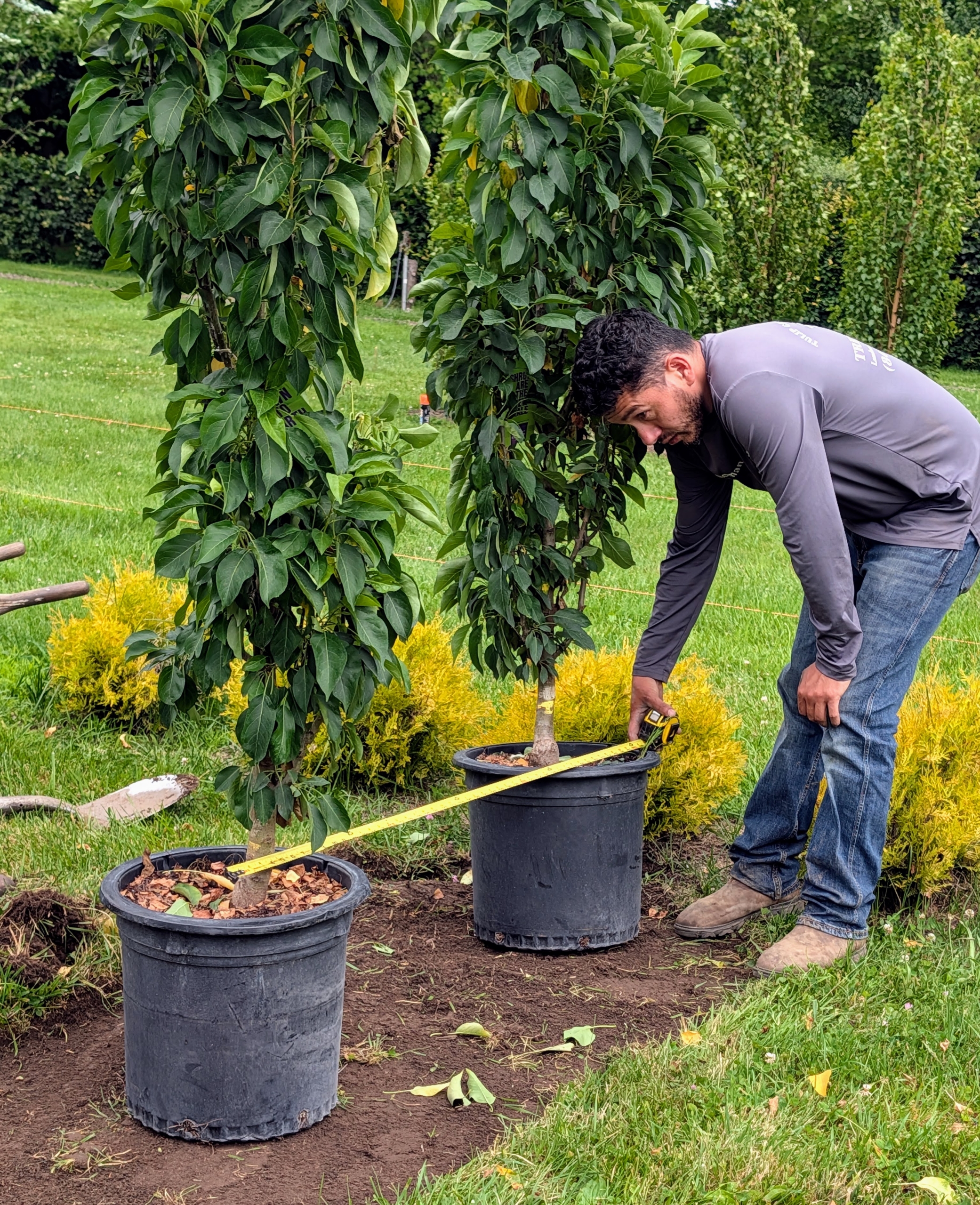
- Norman measures the distance between each crabapple trunk. He also measures the space on each side of the tree to make sure it is centered properly in the row.
-
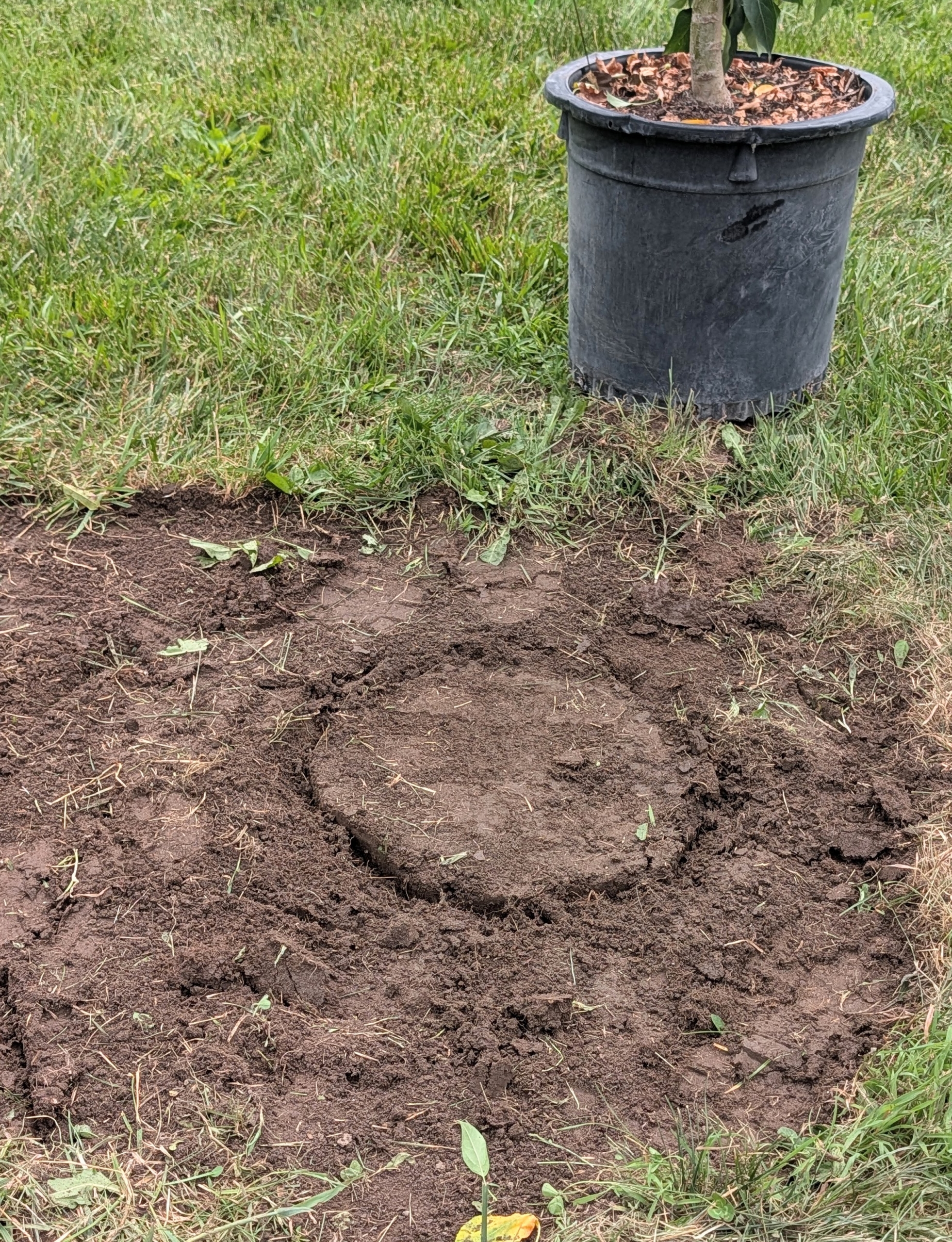
- Then, pressure is placed onto the pot to mark where the hole should be made.
-
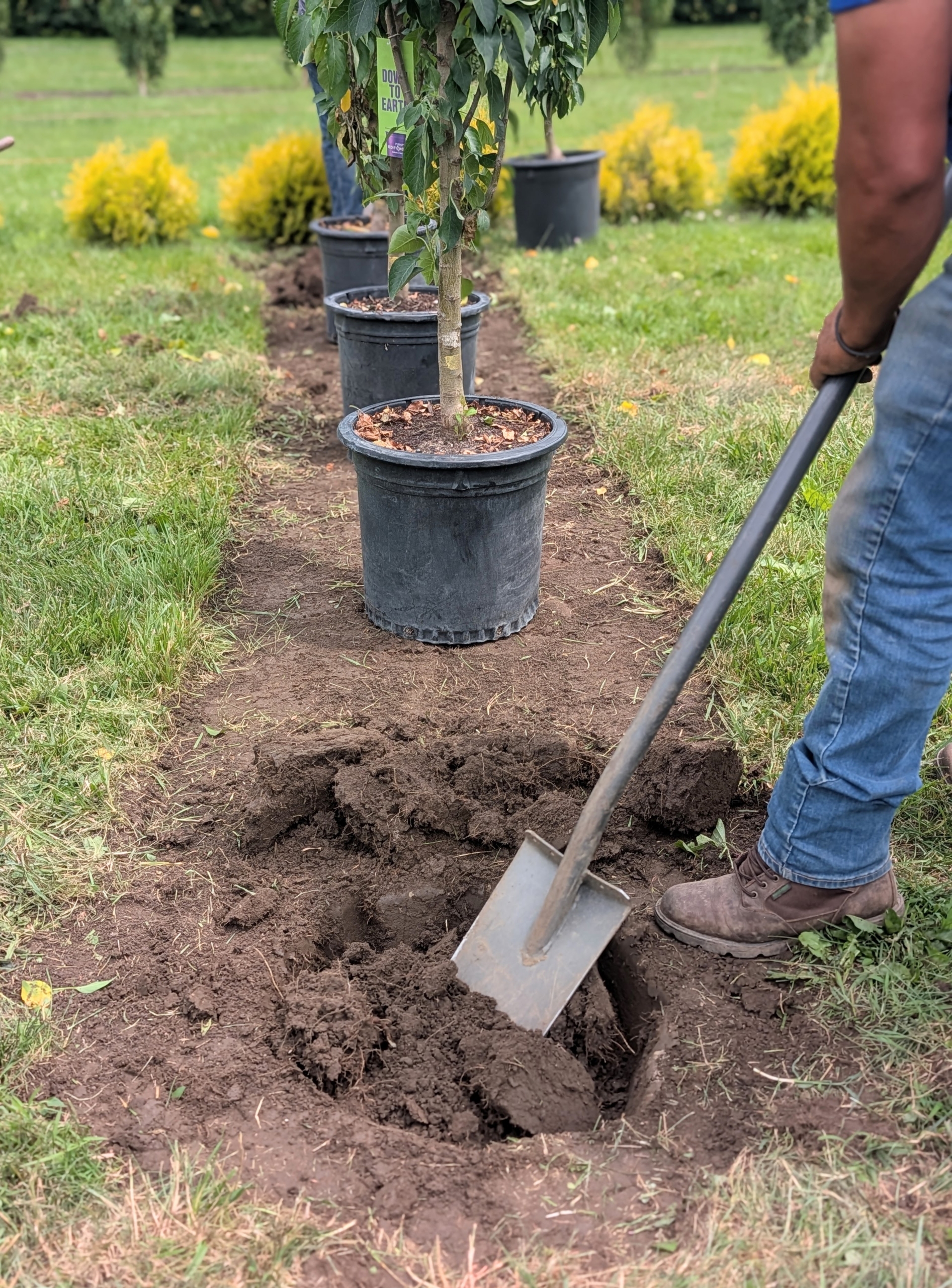
- … And the digging begins. Remember, when planting, always consider the climate zone, growth rate of the specimen, size at full maturity, and lighting needs.
-
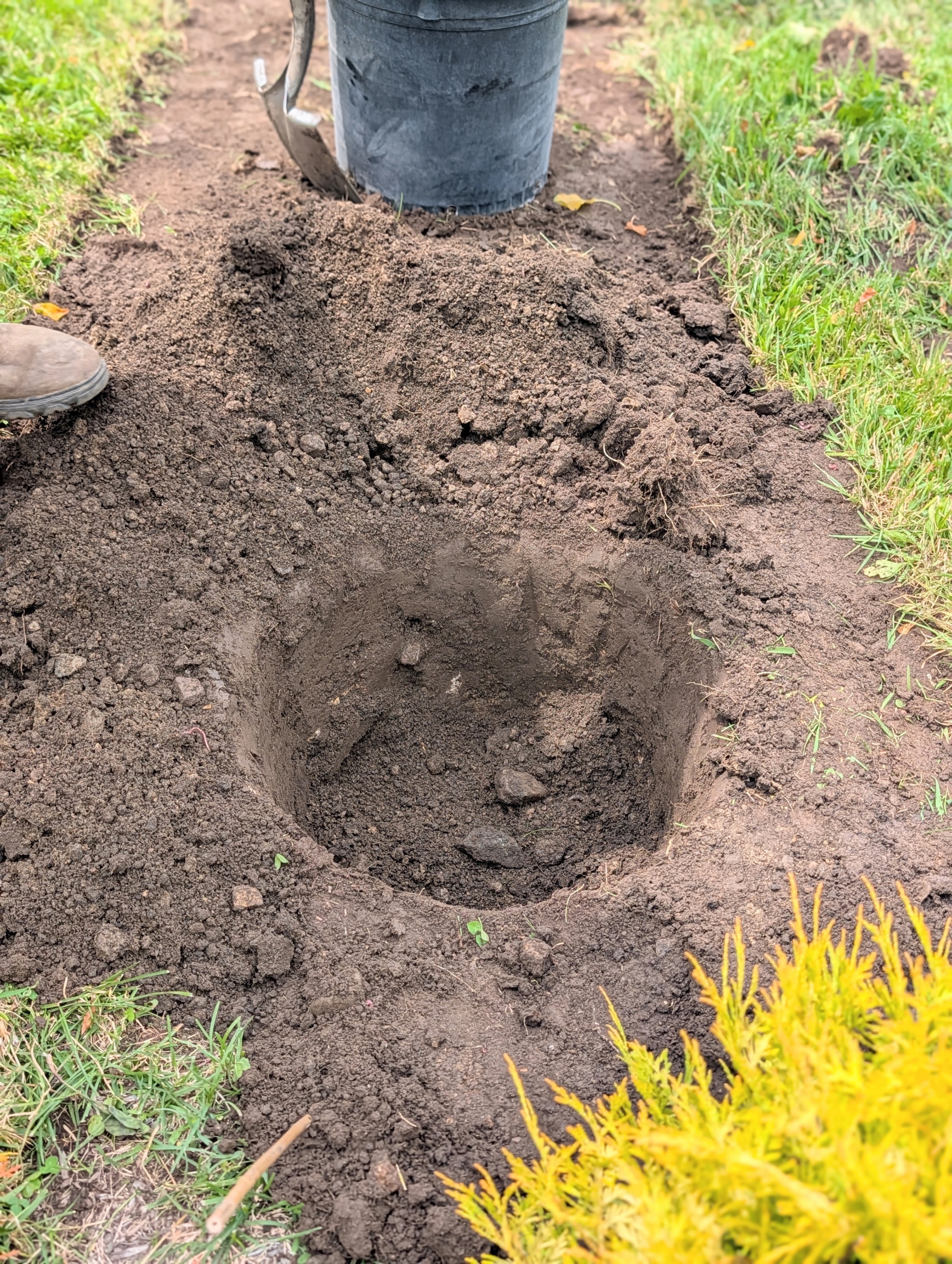
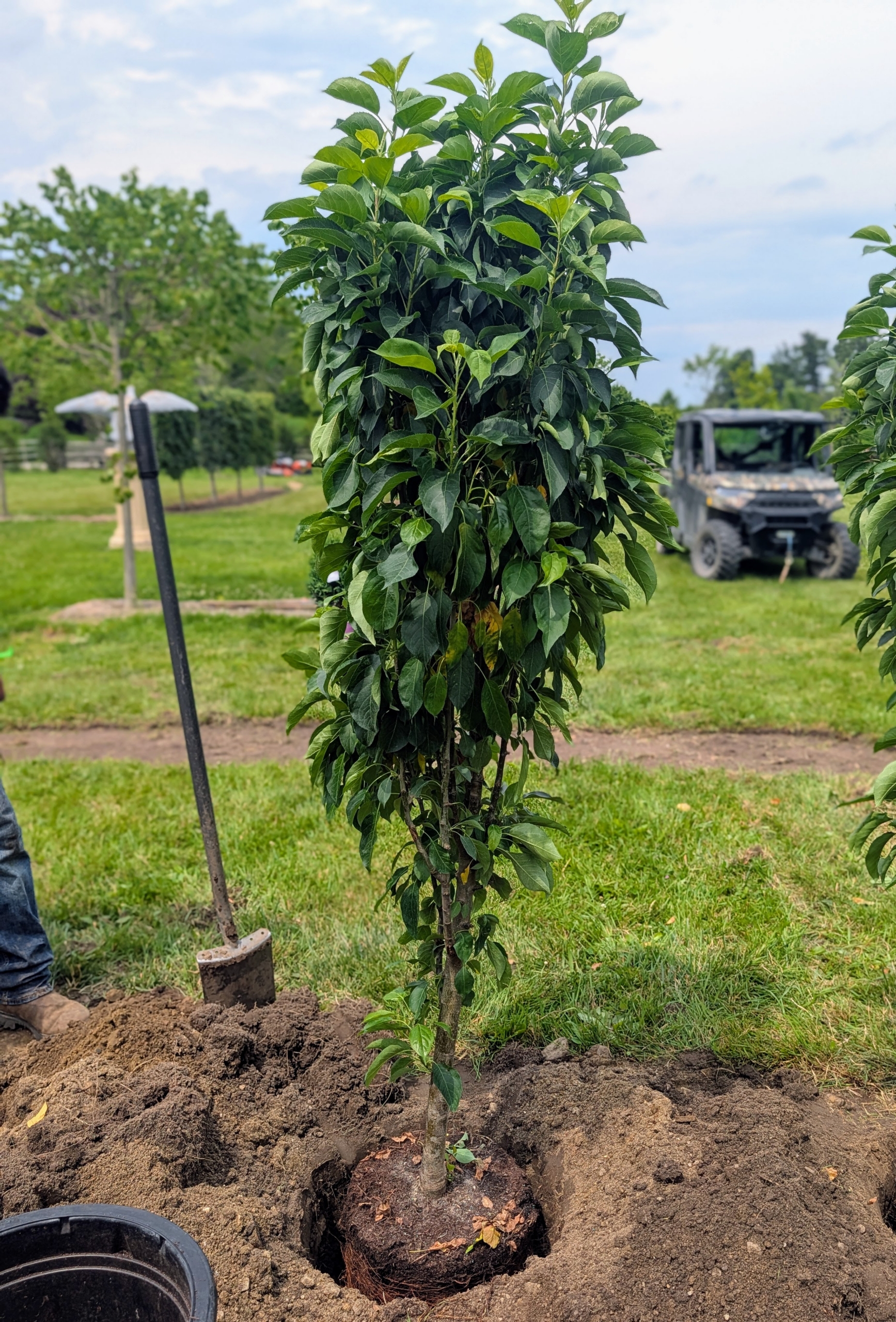
- Each hole is dug precisely, with enough room for the plant’s root ball. The rule of thumb when planting is to dig the hole two times as wide as the rootball and no deeper than the bottom of the rootball, similar to how it is in its pot.
-
- And then the crabapple is placed into the hole to make sure it sits at the right height. The top of the root ball should be level with the top of the hole.
-
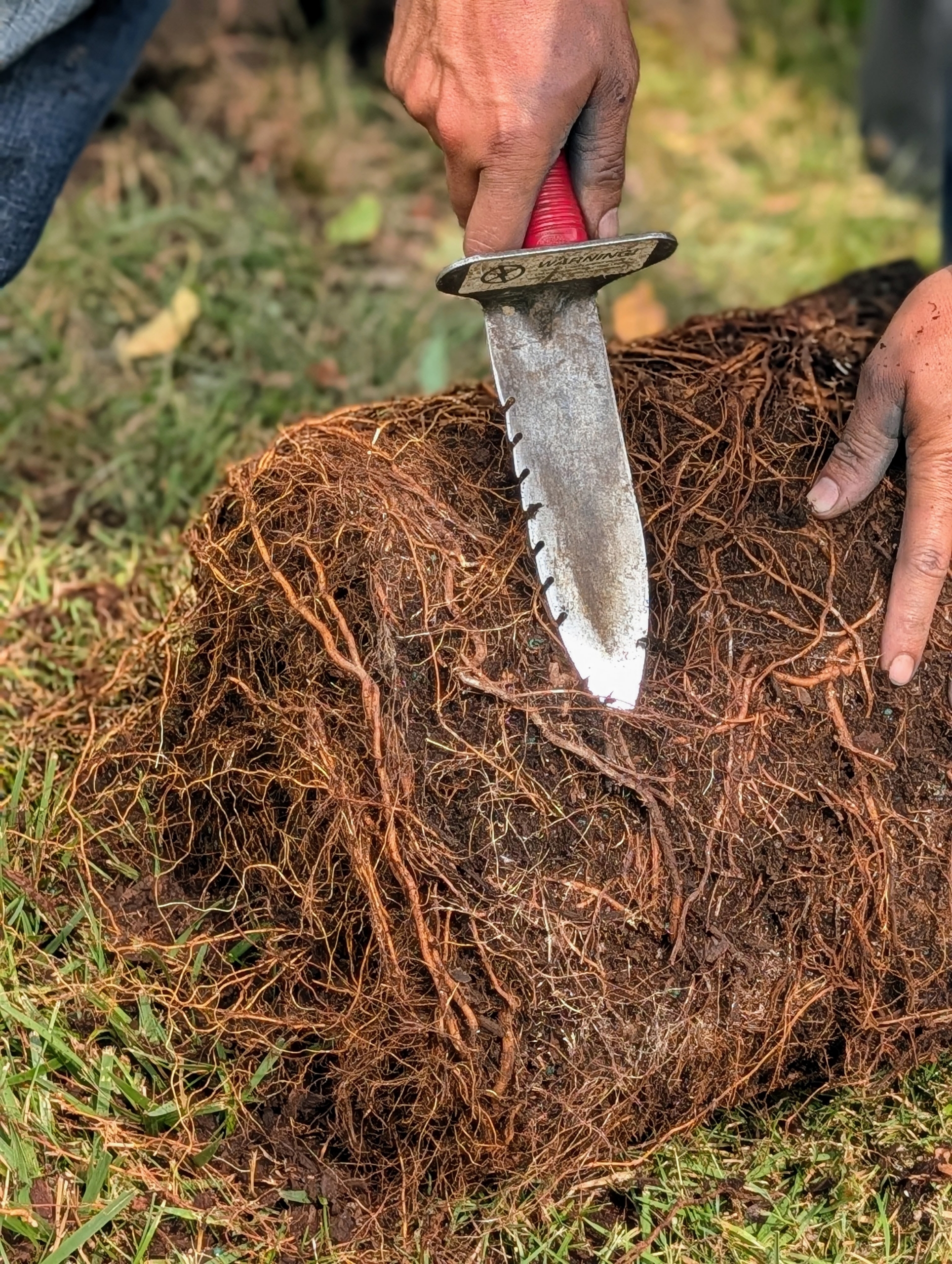
- The tree is removed from the pot and the root ball is scarified. I teach all my outdoor grounds crew members how to scarify and make intentional cuts to stimulate new growth.
-
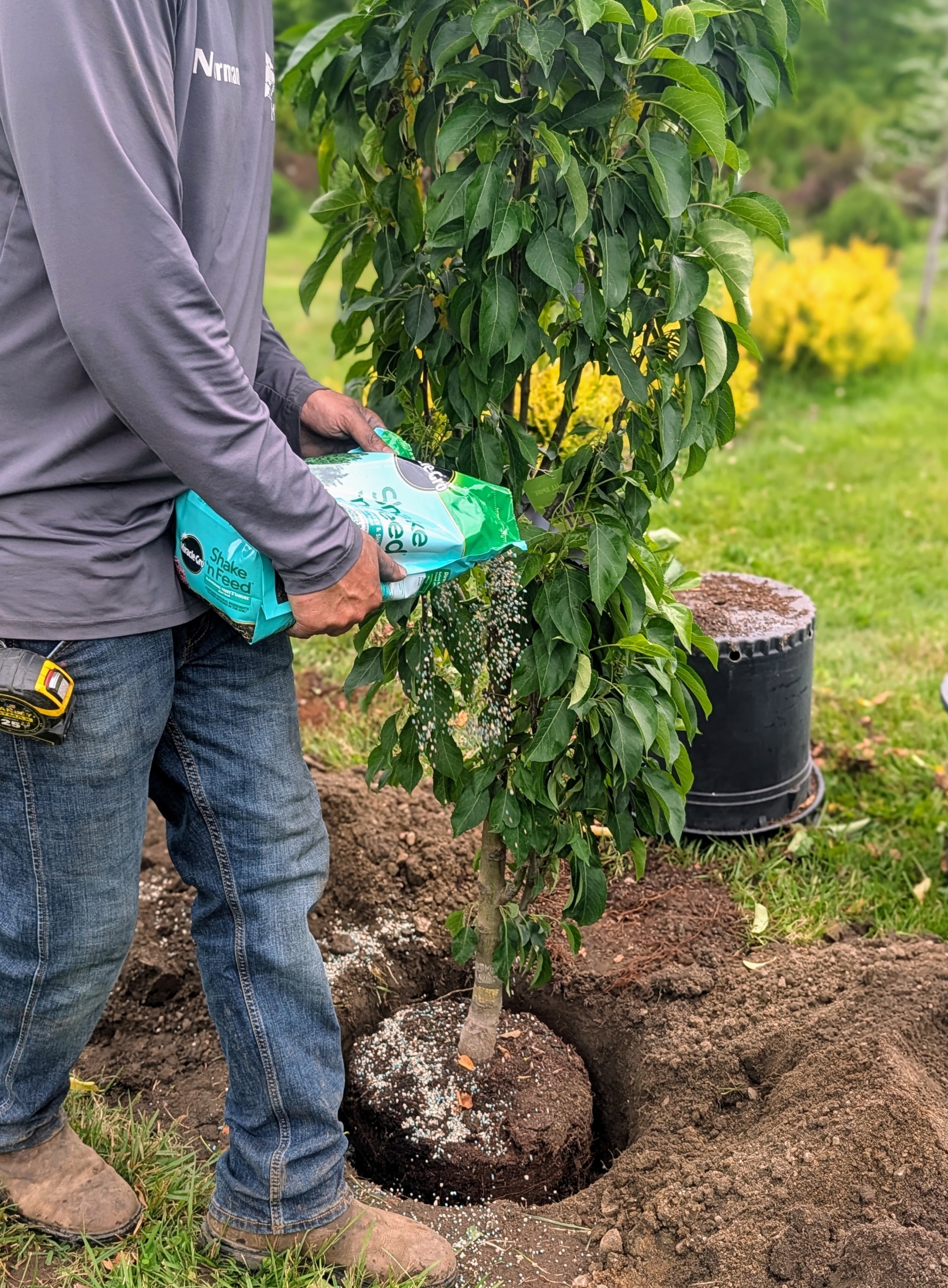
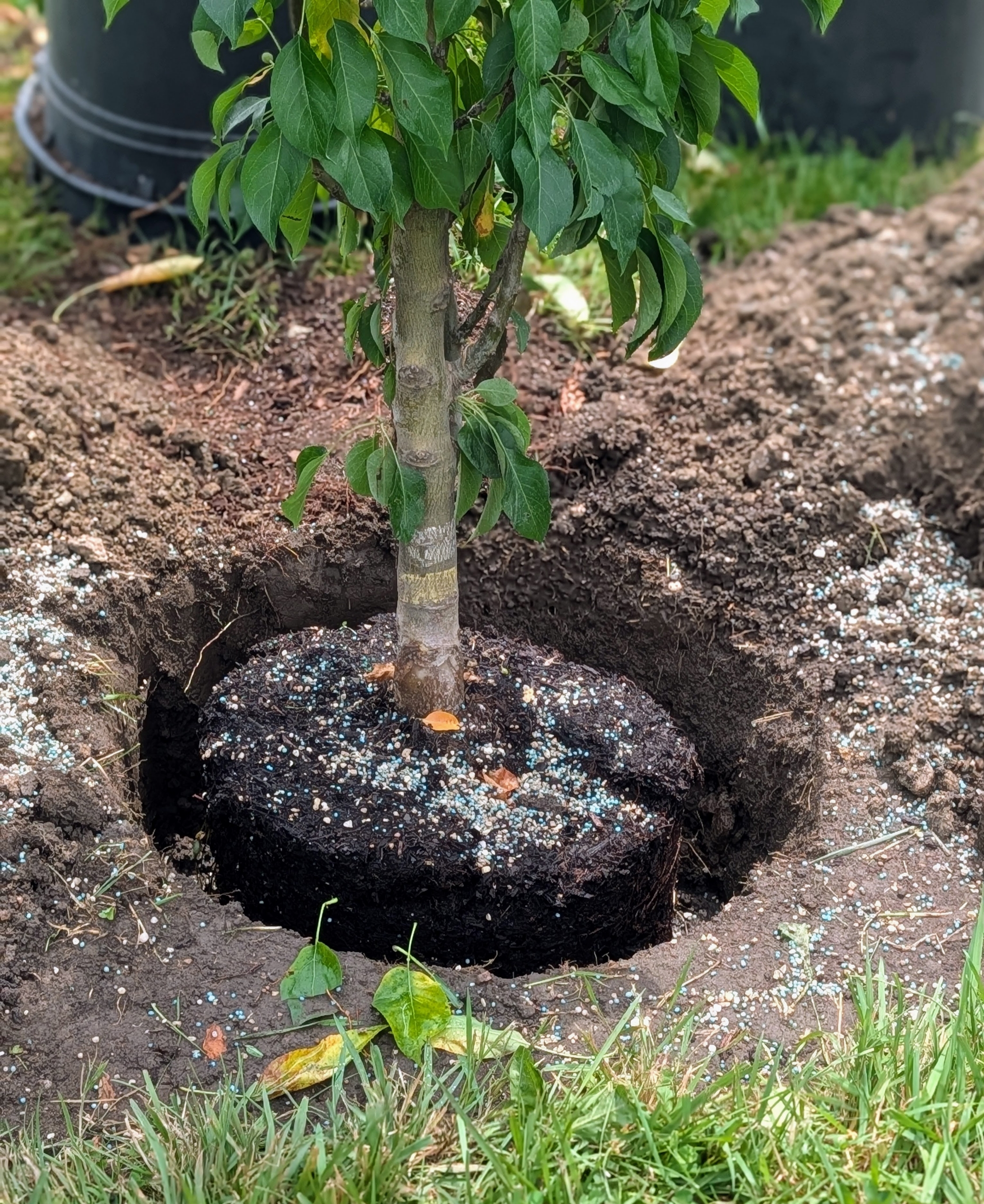
- I always say, “if you eat, so should the plants.” Norman sprinkles plant food onto the root ball and the surrounding soil.
-
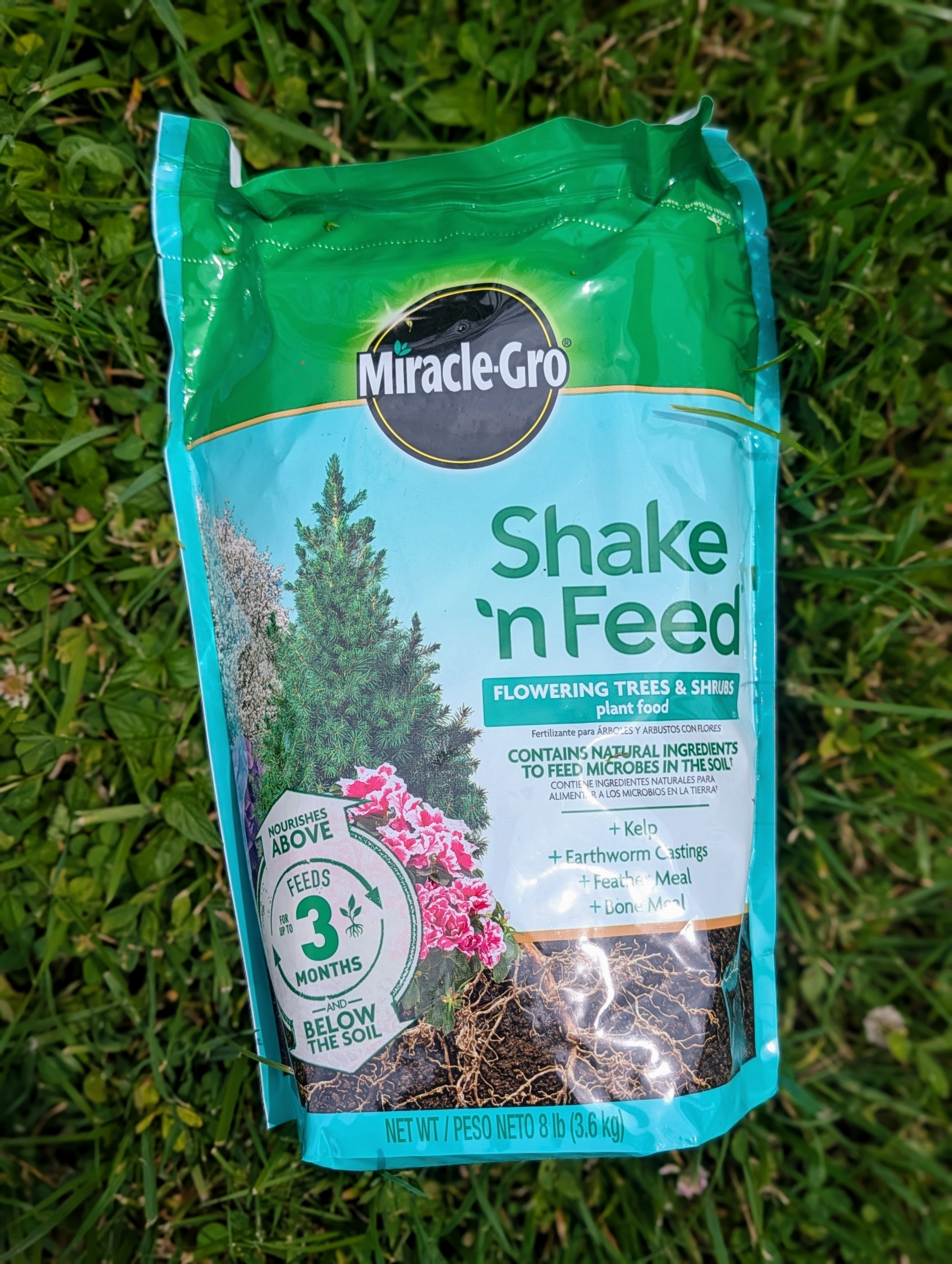
- I use Miracle-Gro Shake’n Feed Flowering Trees & Shrubs plant food which has done so well for my plants. It contains natural ingredients such as kelp, earthworm castings, bone meal, and feather meal, which will feed the plant and maintain its deep, lush green foliage throughout the season.
-
- The trees are placed into the hole and checked once again for proper placement – any adjustments can still be made.
-
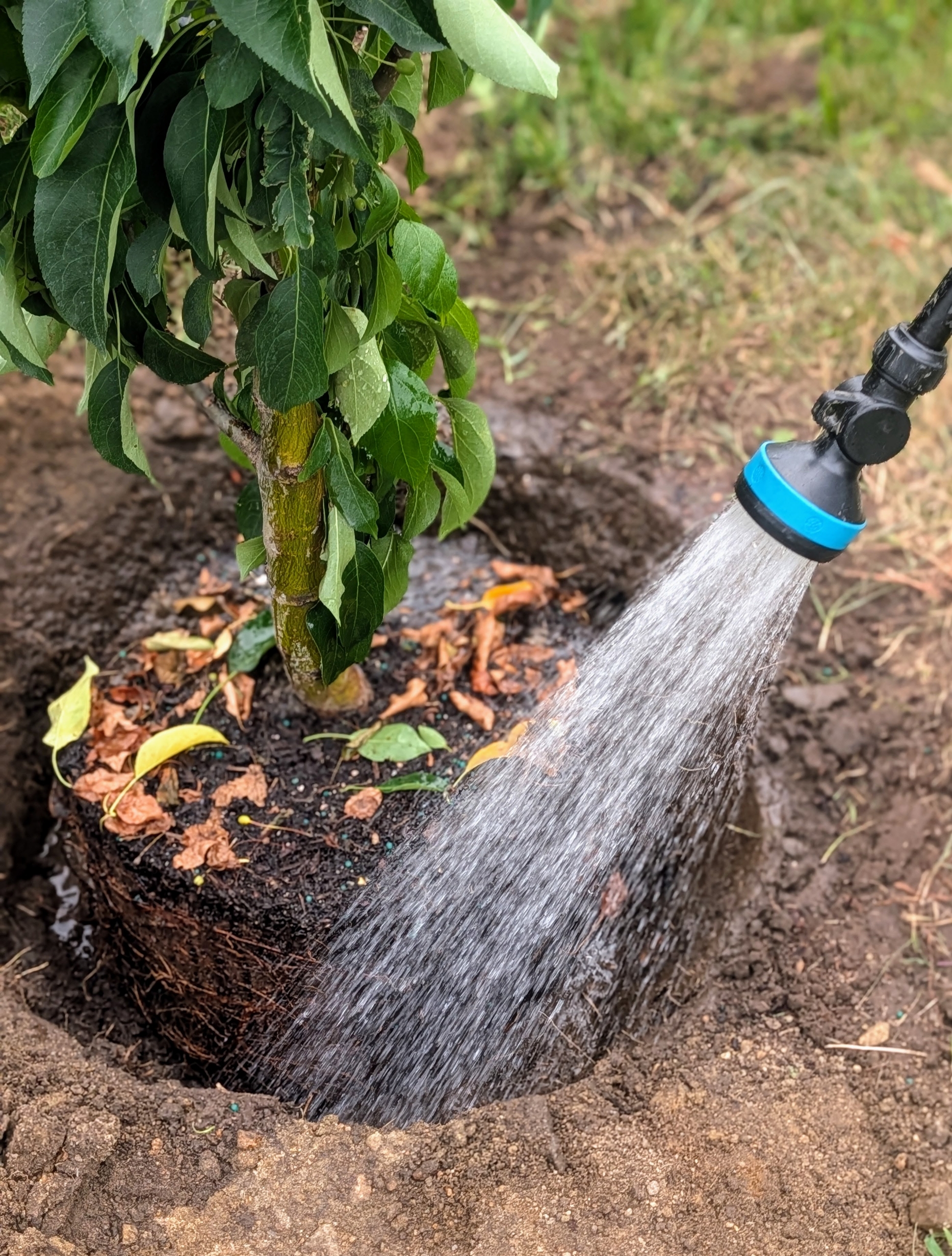
- Meanwhile, all the holes are watered. I instruct the team to fill the holes first with water before backfilling. This technique helps to improve root establishment, reduce transplant shock, and increase survival chances.
-
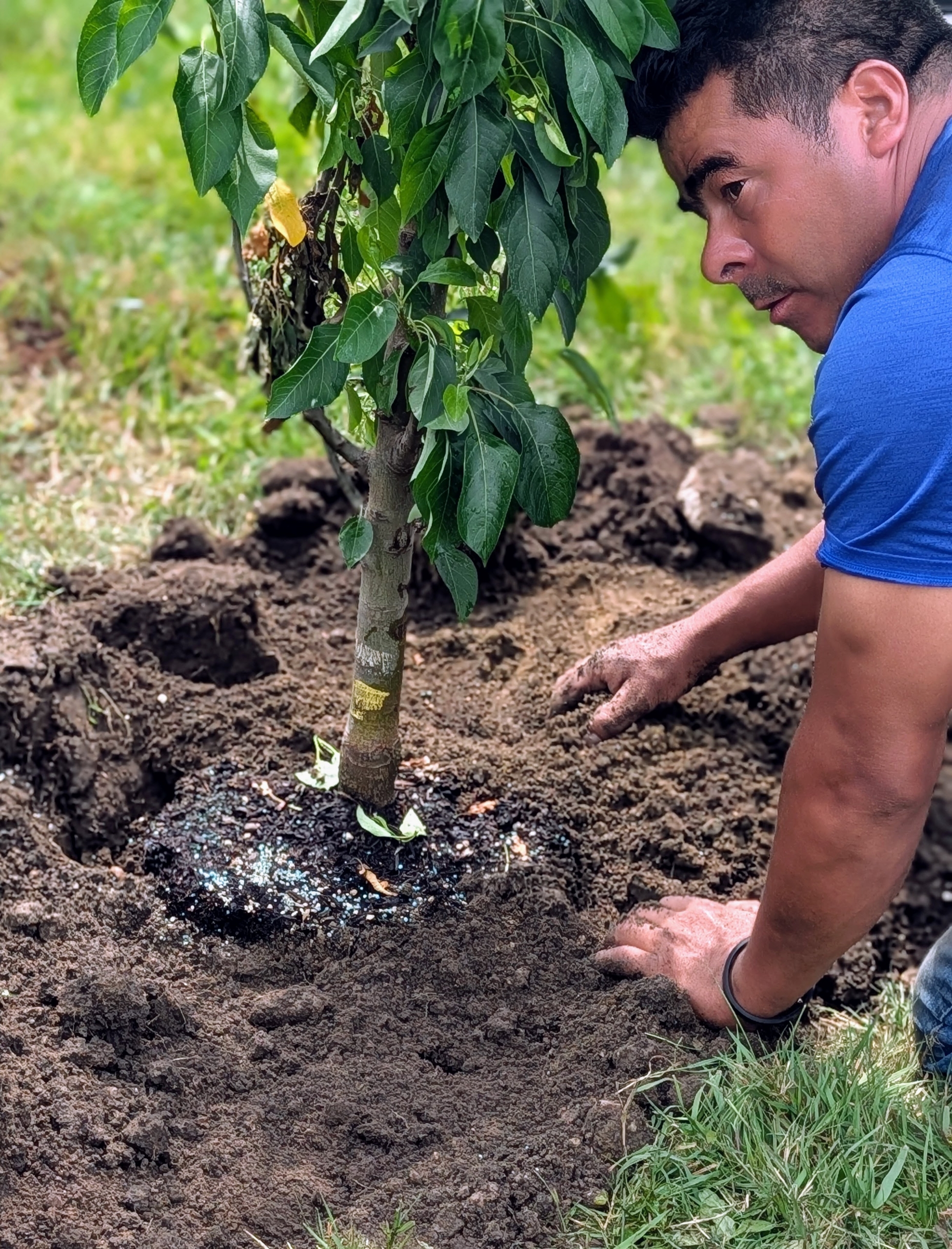
- And then backfilling begins – remember, only plant up to the flare, where the tree meets the root system. Arnold also checks to make sure the tree is in line with the others.
-
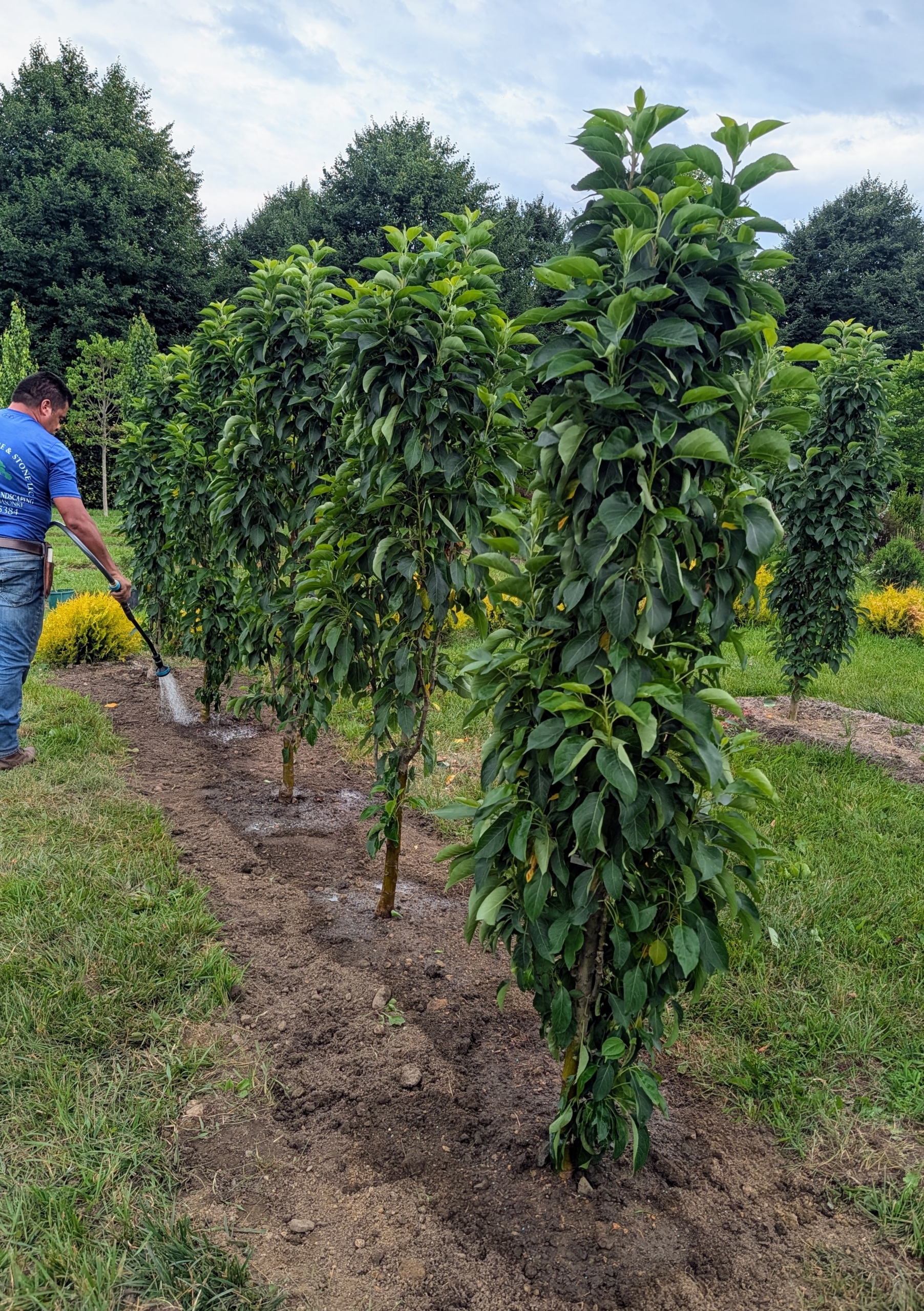
- It’s been warm and humid, so Arnold gives the plants another drink. It’s almost done, and all the trees and shrubs and other plants are thriving.
-
- But there’s still a lot of work to do. Next… some evergreens!
 Martha Pins


 Martha Tweets

