

My Striking Garden of Hostas
This time of year there's always something to admire in the gardens - right now, the striking, bold green foliage of my hostas.
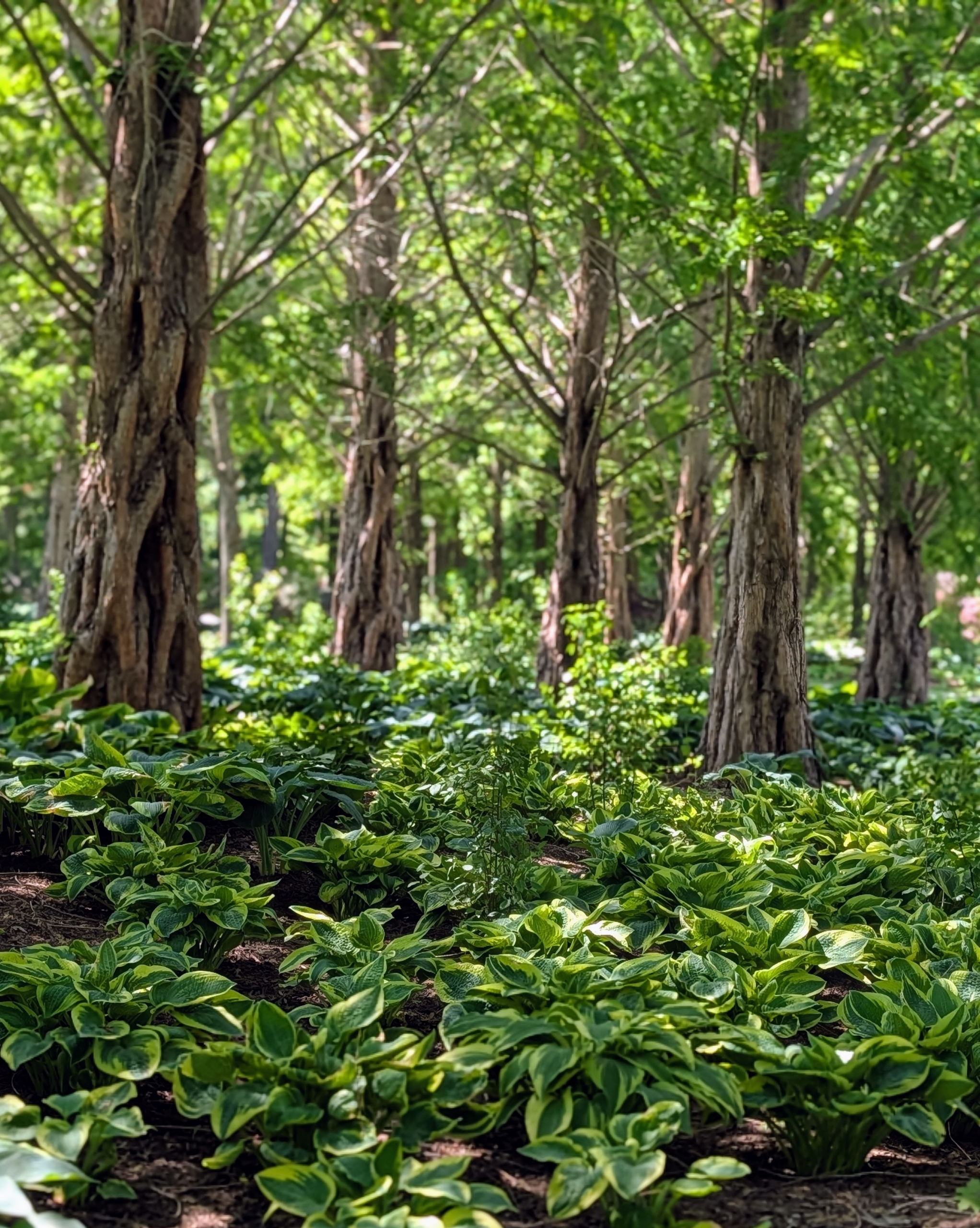
In 2020, I planted hundreds of hosta plants down behind my chicken coops under the dappled shade of my stately dawn redwoods, Metasequoia. I first got the plants as bare-root cuttings and nurtured them until they were big enough to transplant. There were more than 700 hostas in a variety of cultivars including 'Wide Brim,' 'Francee,' 'Regal Splendor,' 'Elegans,' and 'Blue Angel.' Over the years, I expanded the beds and added more plants. Now, the entire area looks better than ever.
Enjoy these photos.
-

- Right now, so many of the gardens are just brimming with color and energy. I tour my gardens on a daily basis. I check how much the plants have grown, how healthy they are, and whether they need more food or water. The diligence definitely pays off – just look.
-
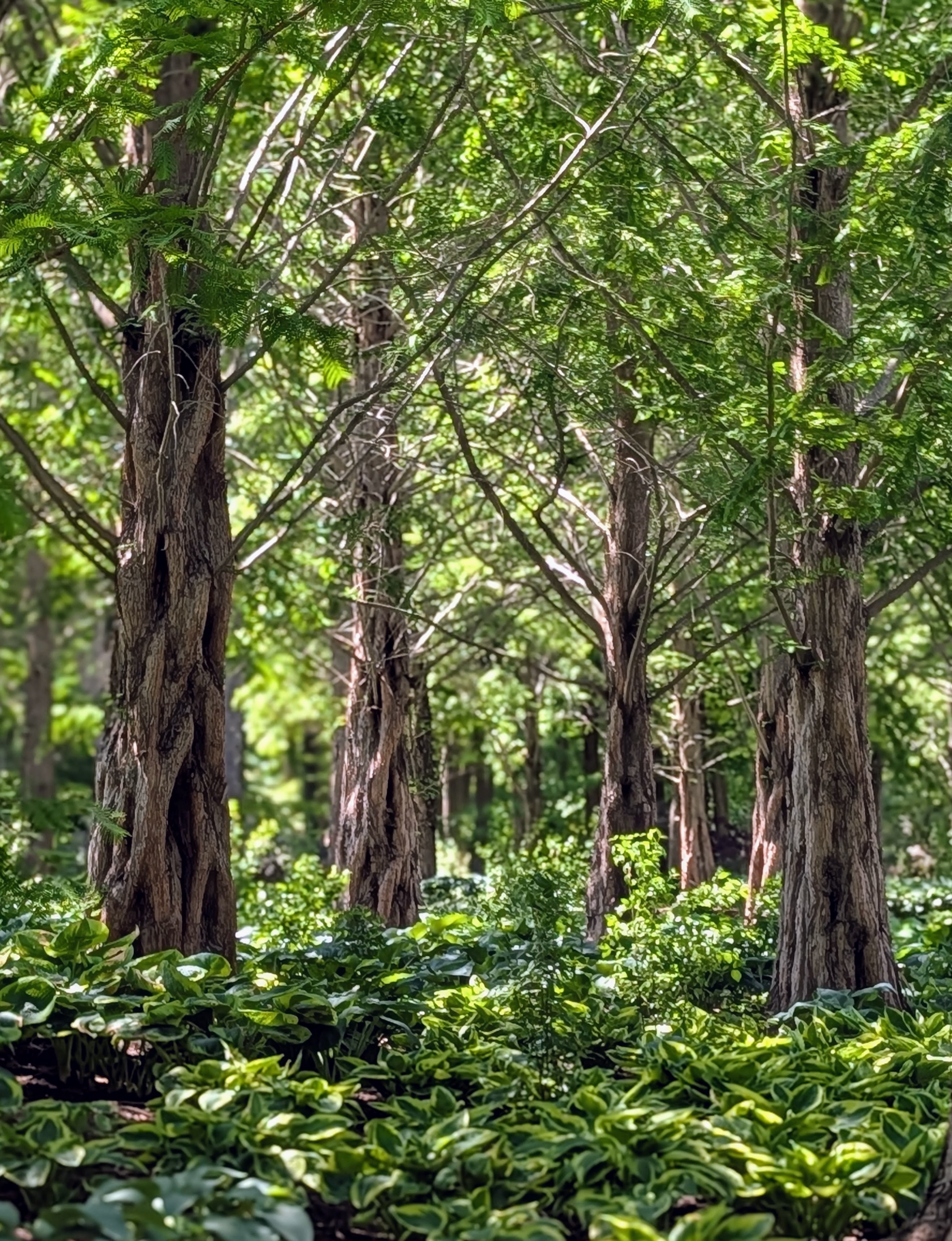
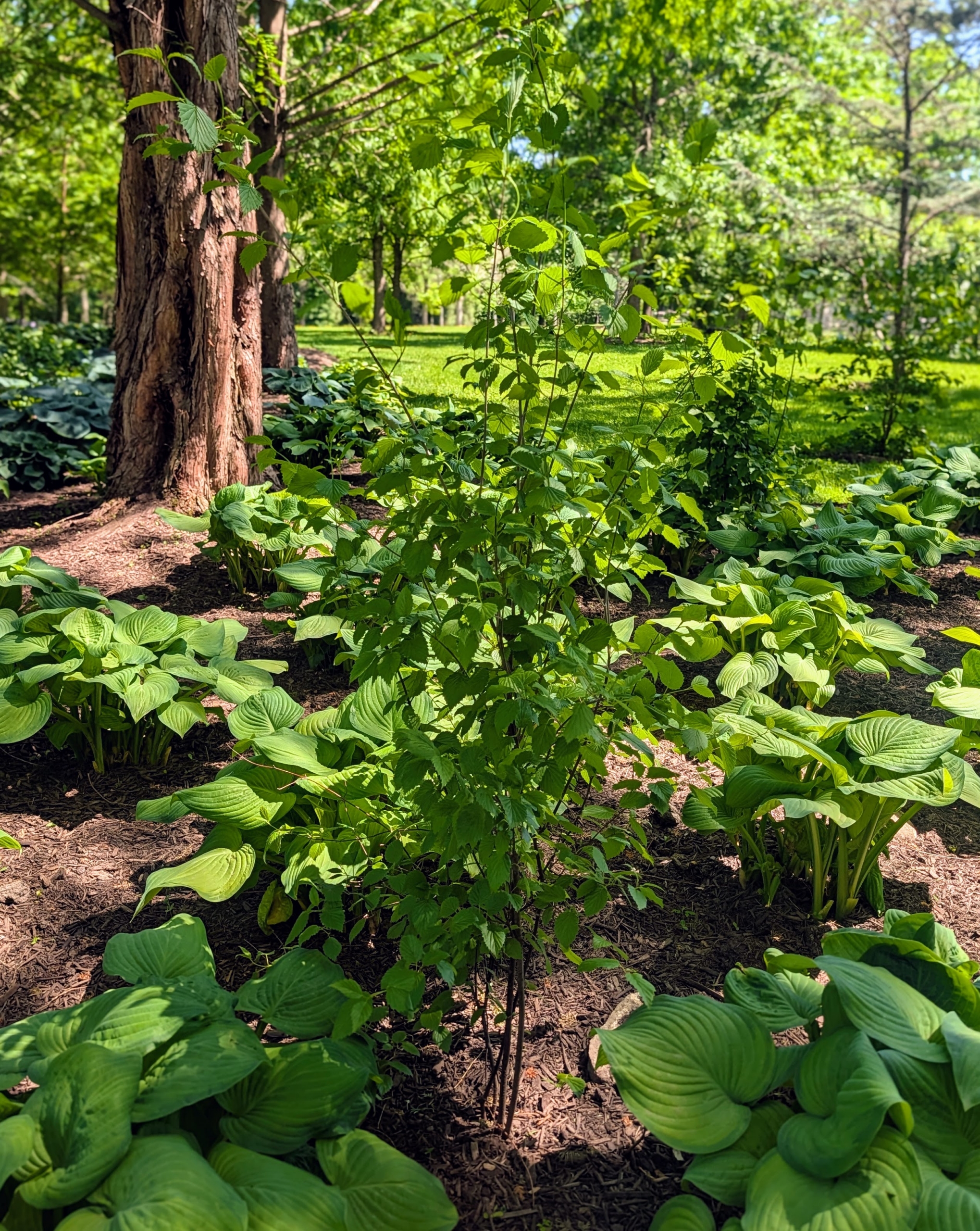
- These hostas are planted in a grove of Metasequoias. Hostas thrive best in partial shade and this area is perfect.
-
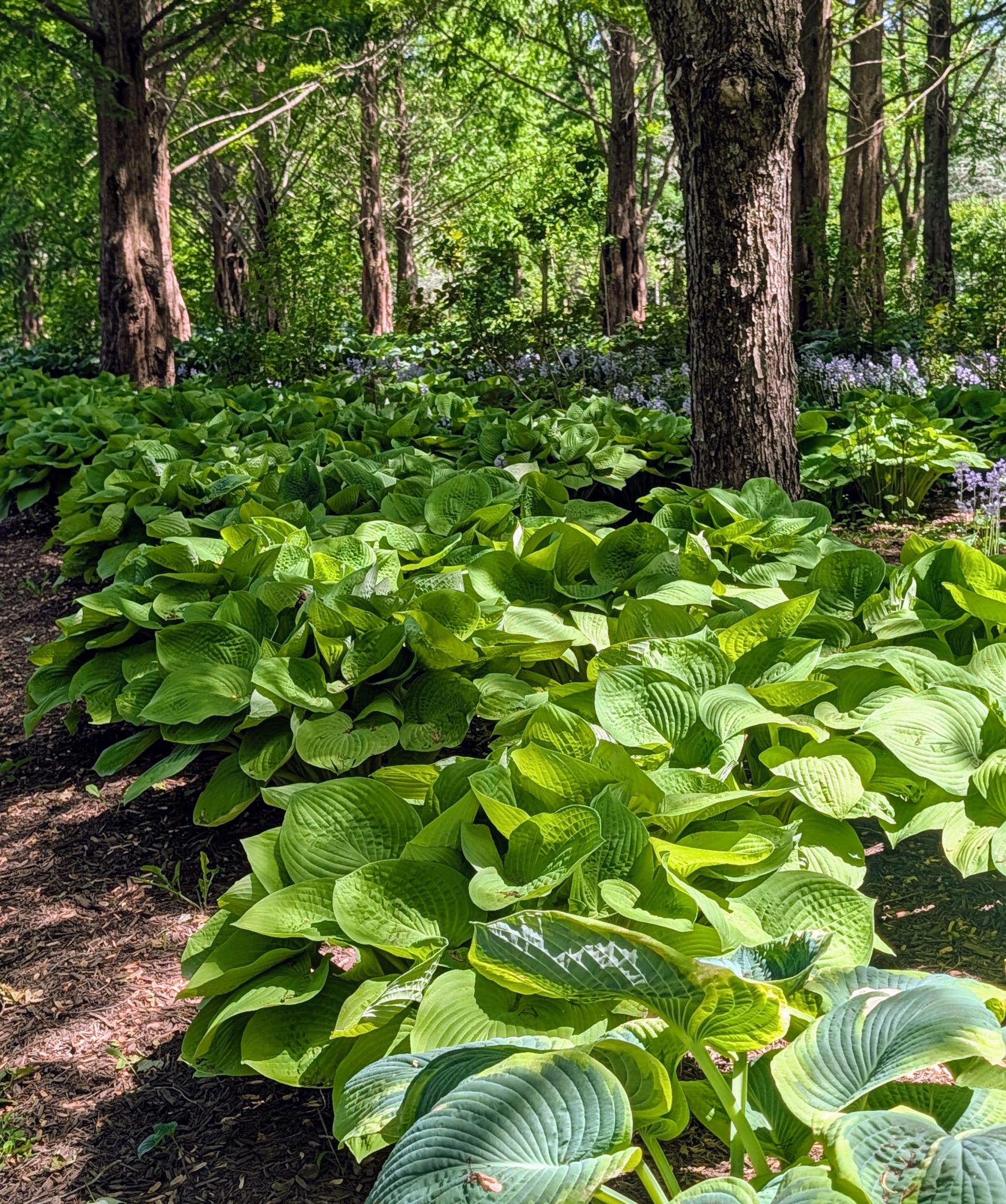
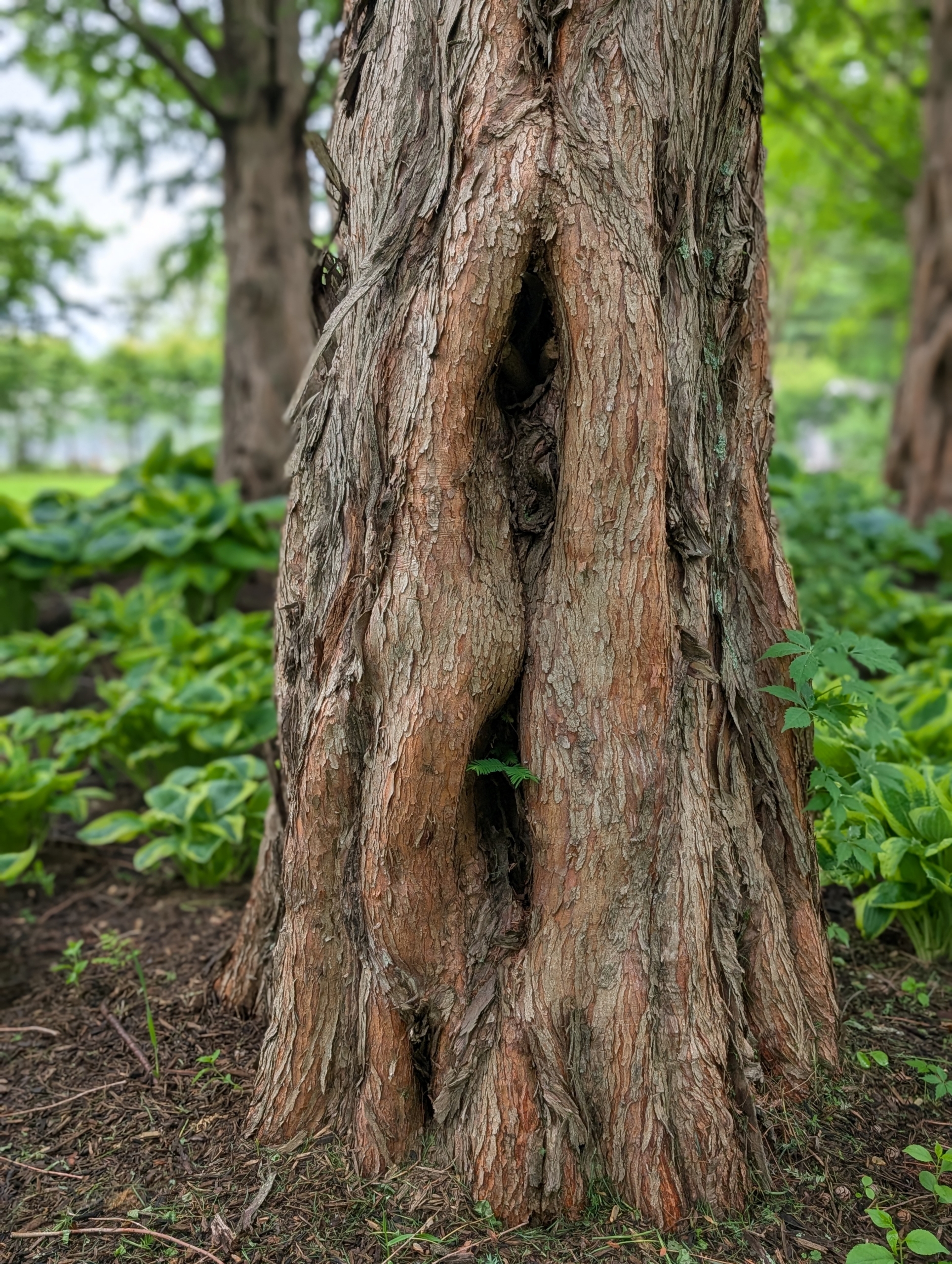
- Dawn redwood trunks are eye-catching with reddish-brown, vertical, shredding bark.
-
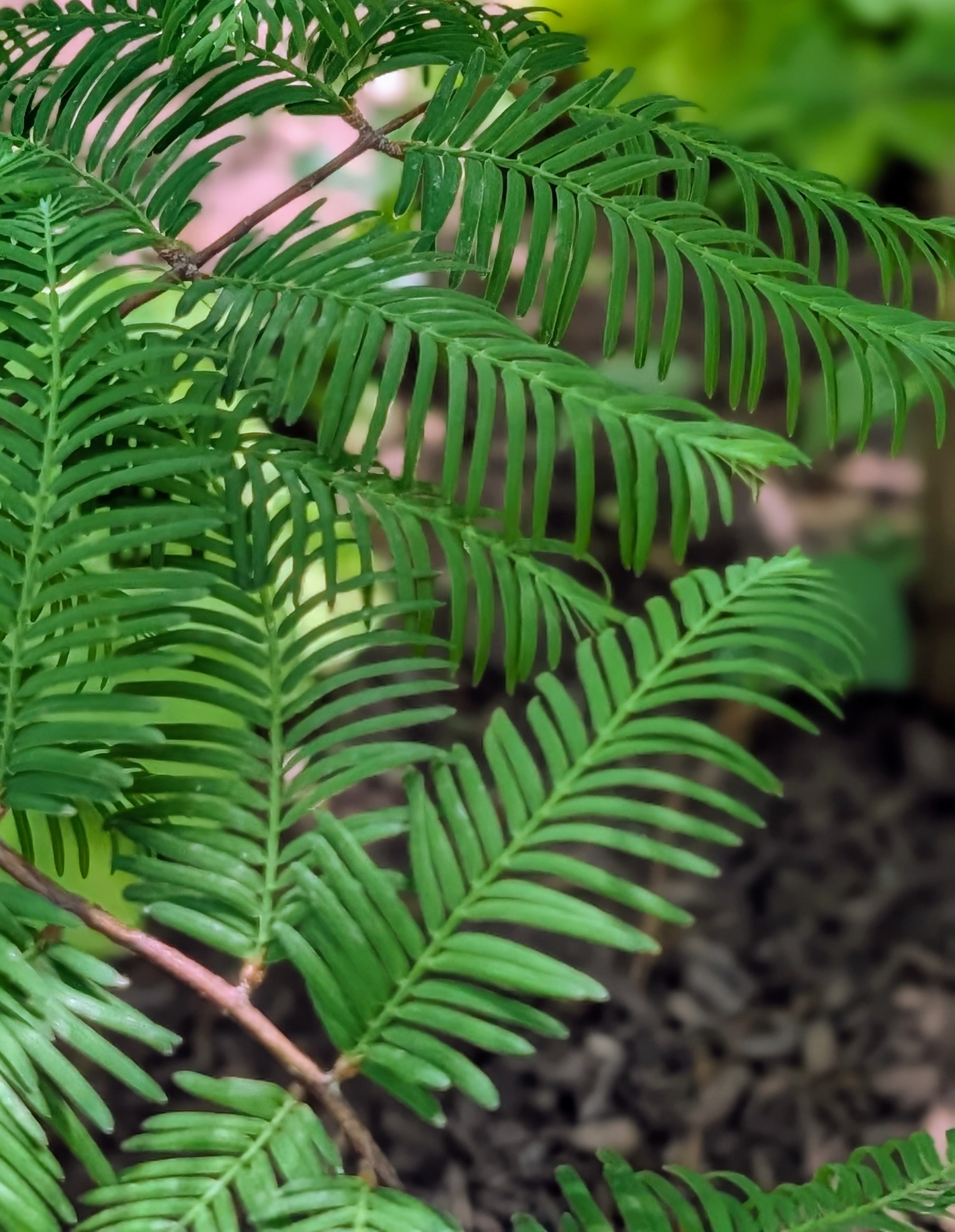
- It has feathery, fine-textured needles that are opposite each other and are approximately a half-inch long. Don’t confuse them with the bald cypress needles, which grow alternately. These dawn redwood needles will turn shades of red and brown before falling – it is one of the few deciduous conifers.
-
- I also planted viburnums here. This large group of plants consists of more than 150 species. Viburnums include deciduous and evergreen specimens as well as small trees, mostly native to North America or to Asia. The leaves of viburnum range from glossy green to a dull, dark green to foliage that is thick and leathery.
-
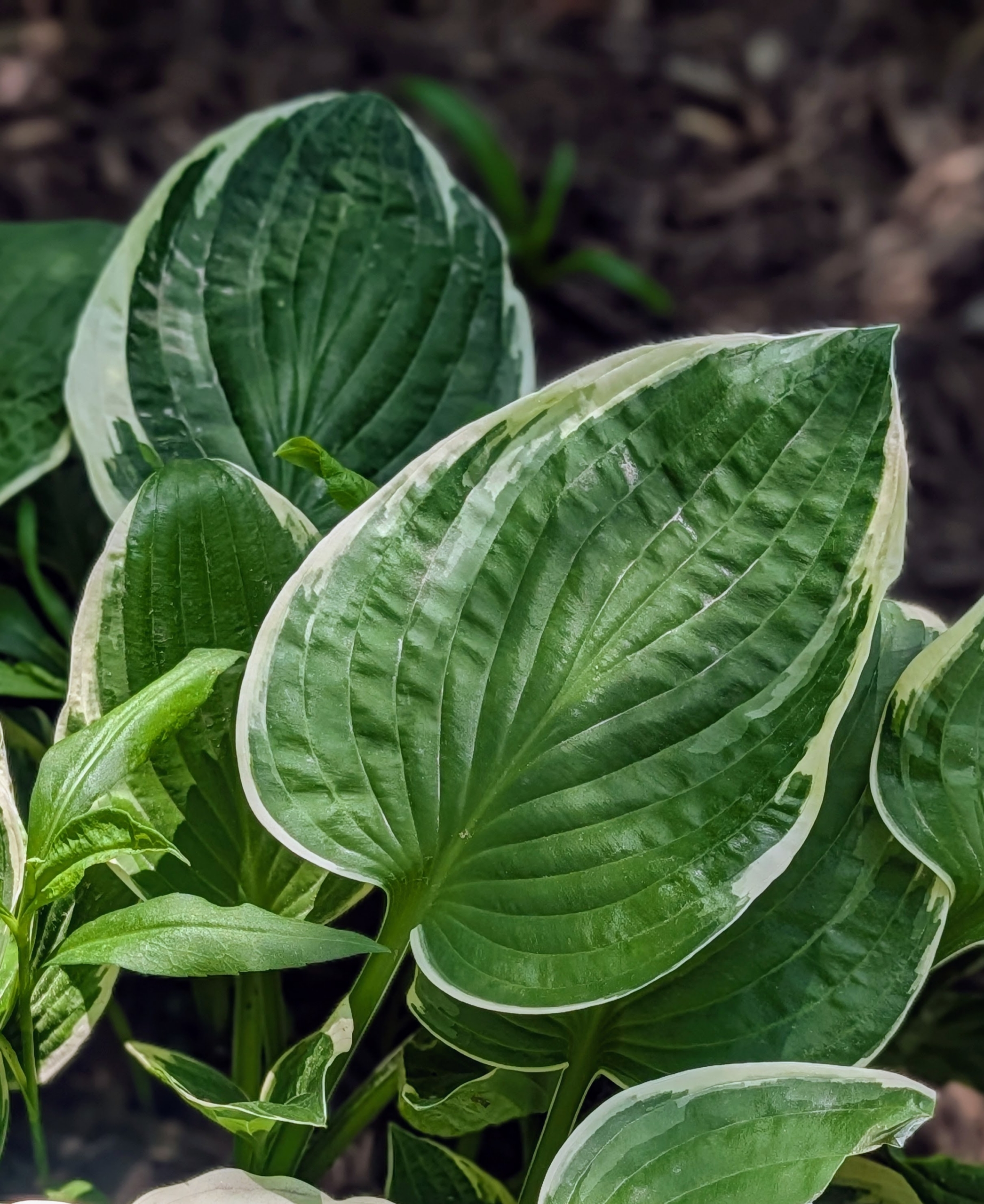
- But the main focus – these large leaf hostas. They look spectacular.
-
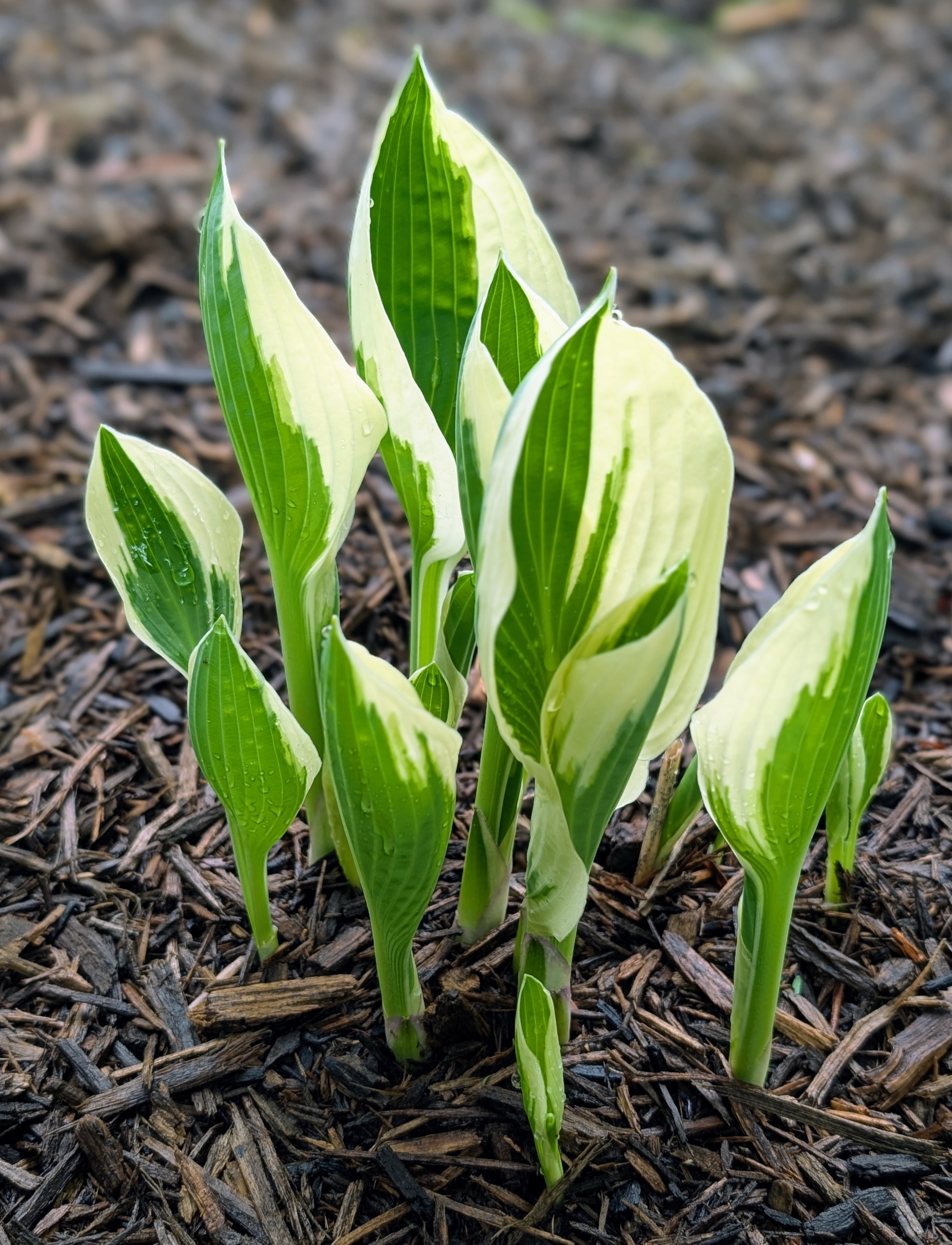
- Before they fully open, they unfurl like this one.
-
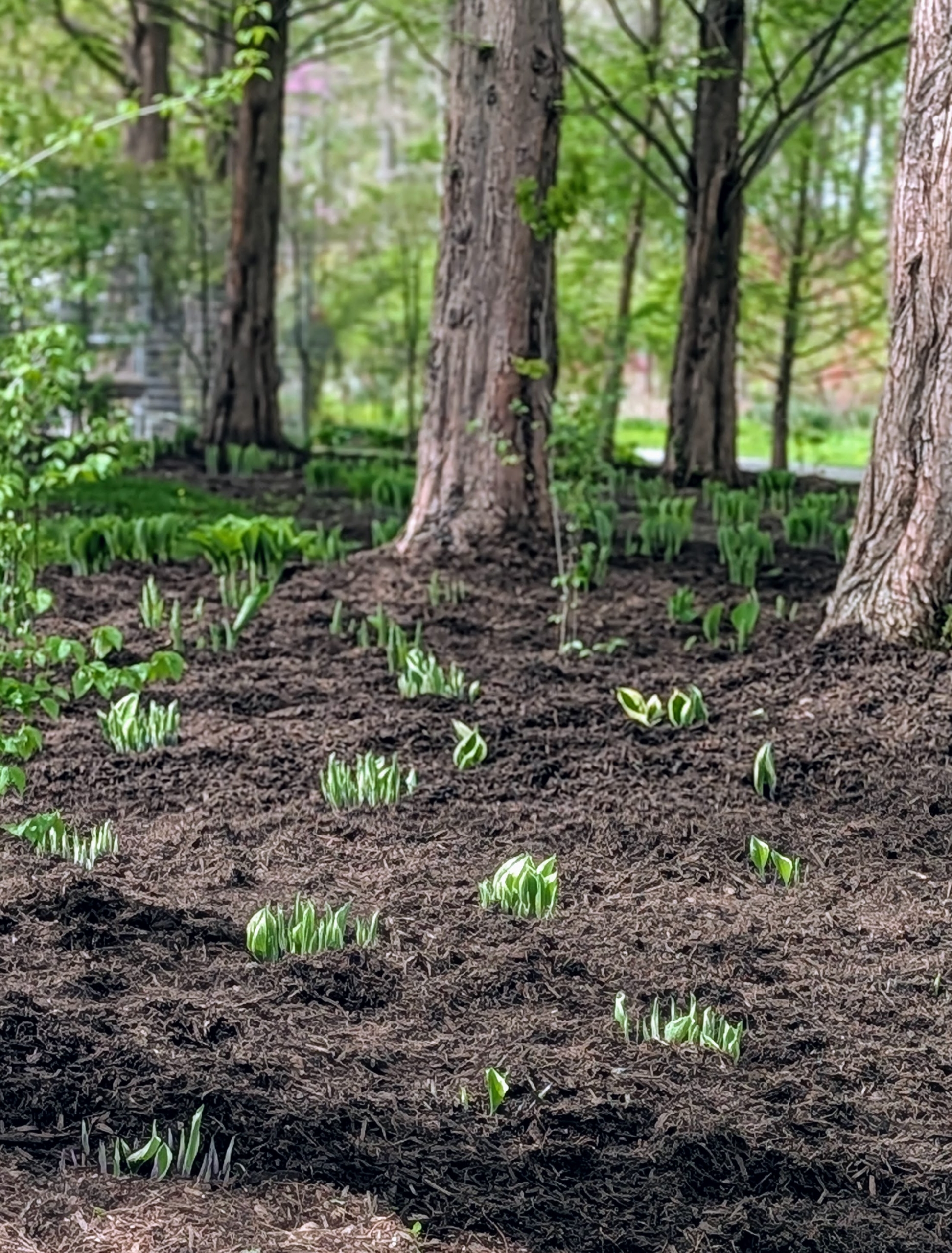
- Just a few weeks ago, the garden beds looked like this, with hundreds of young hostas emerging through the soil and a fresh layer of mulch.
-
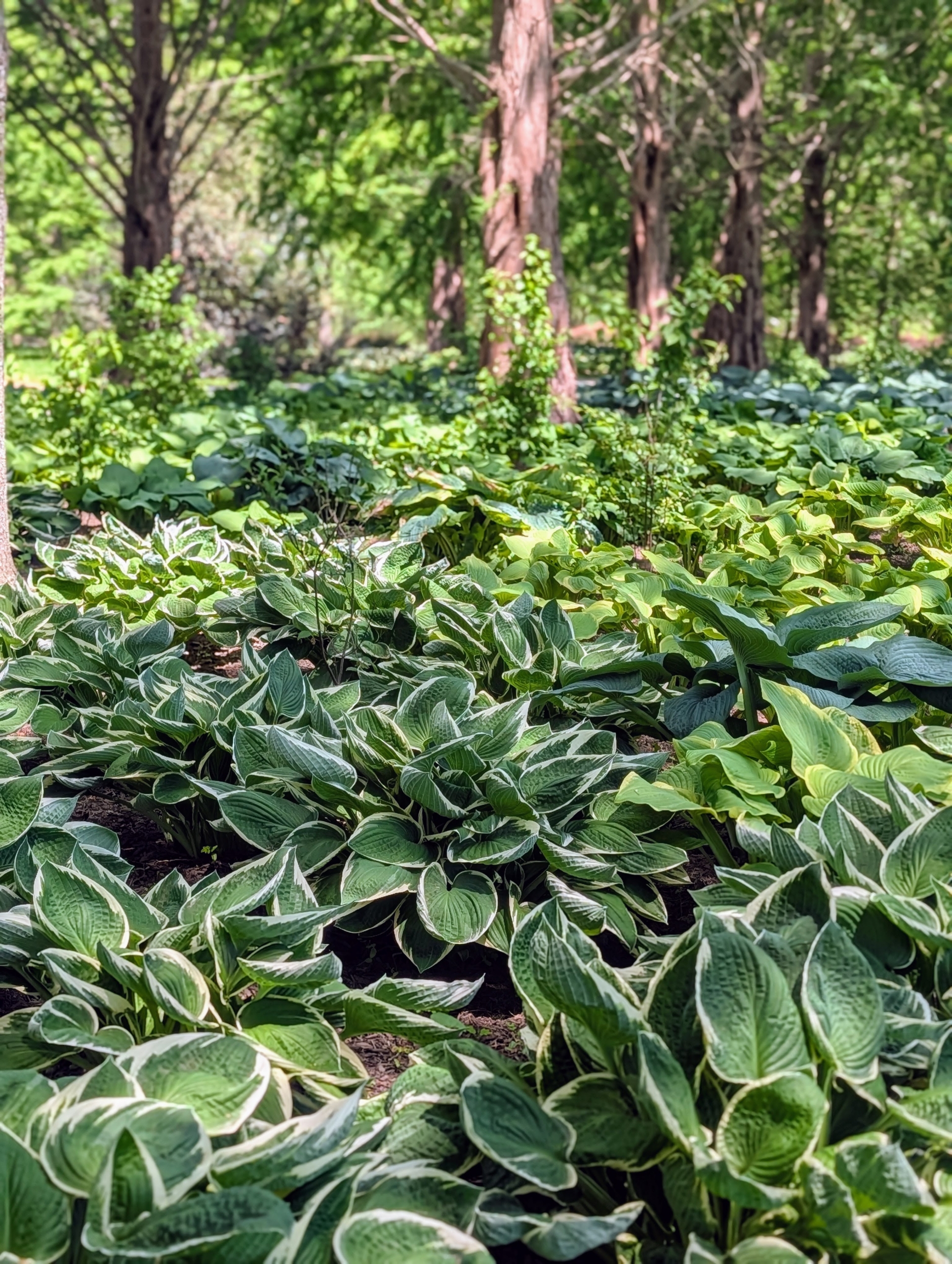
- Now they’re all showing off their large beautiful leaves. The hostas were strategically positioned and spaced, paying attention to variety, color, and growth habit.
-
- Hosta leaves rise up from a central rhizomatous crown to form a rounded to spreading mound.
-
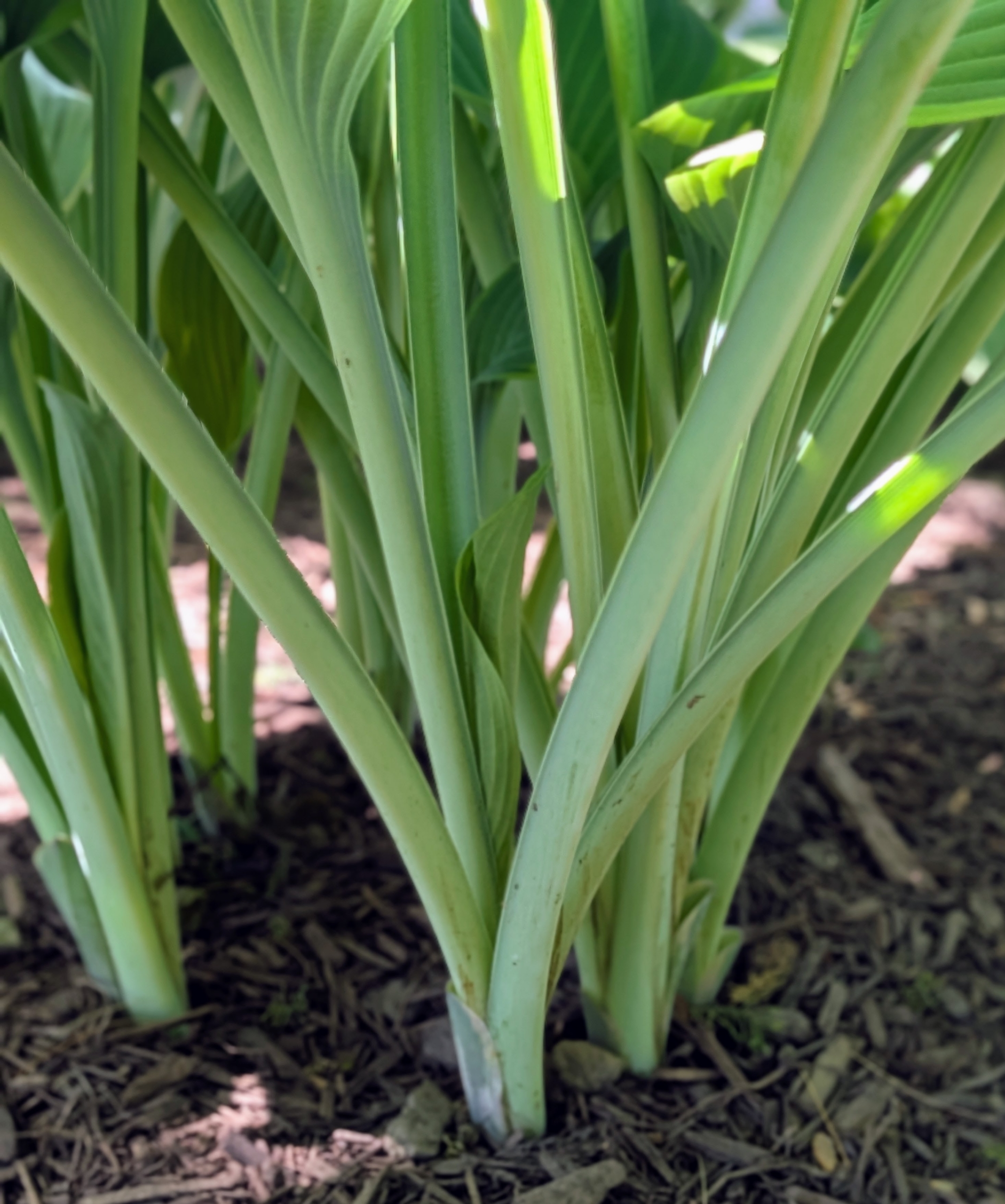
- On average, hostas mature to about two feet tall, but depending on variety, they can also range from six inches to four feet in height.
-
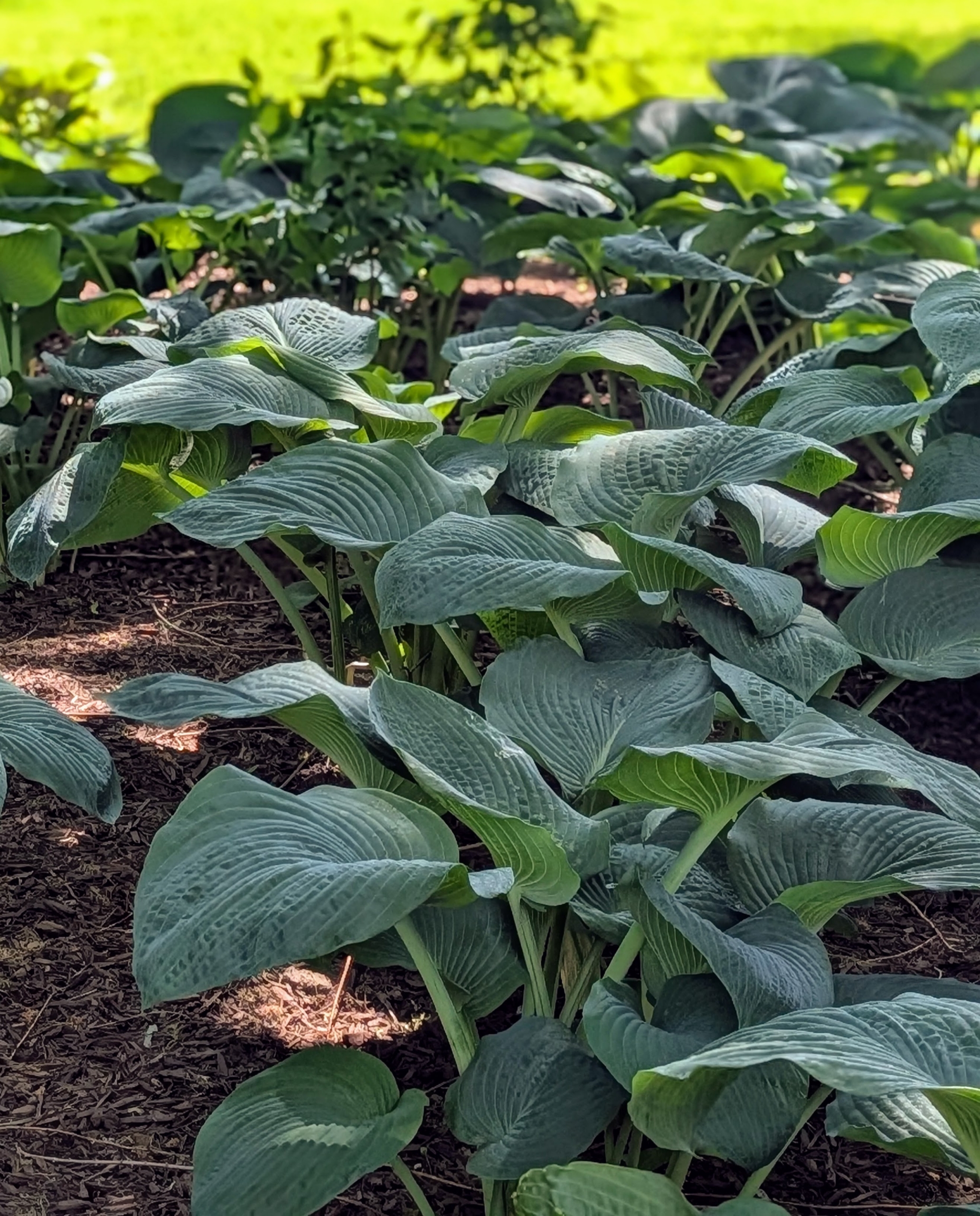
- Most varieties tend to have a spread between one and three feet.
-
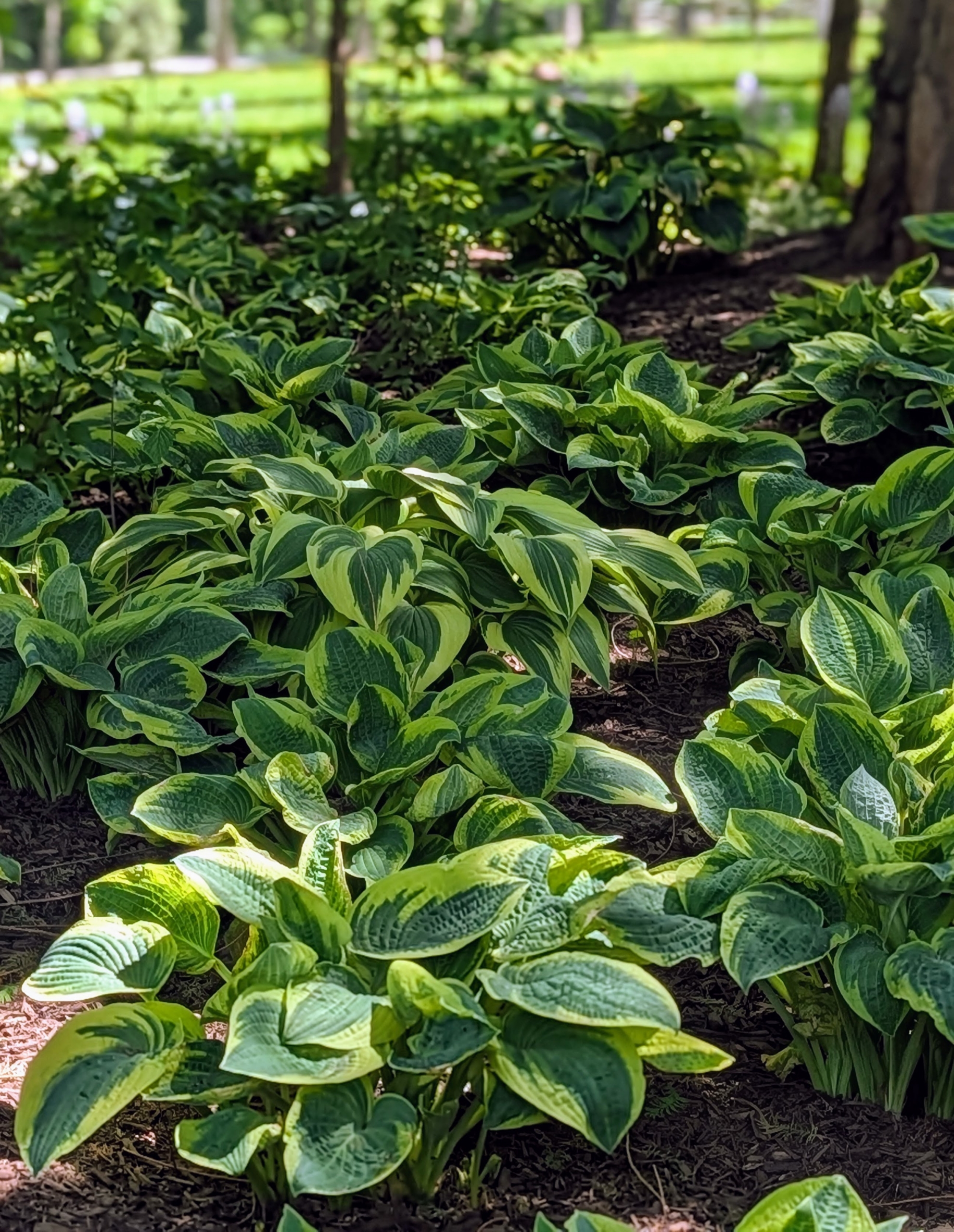
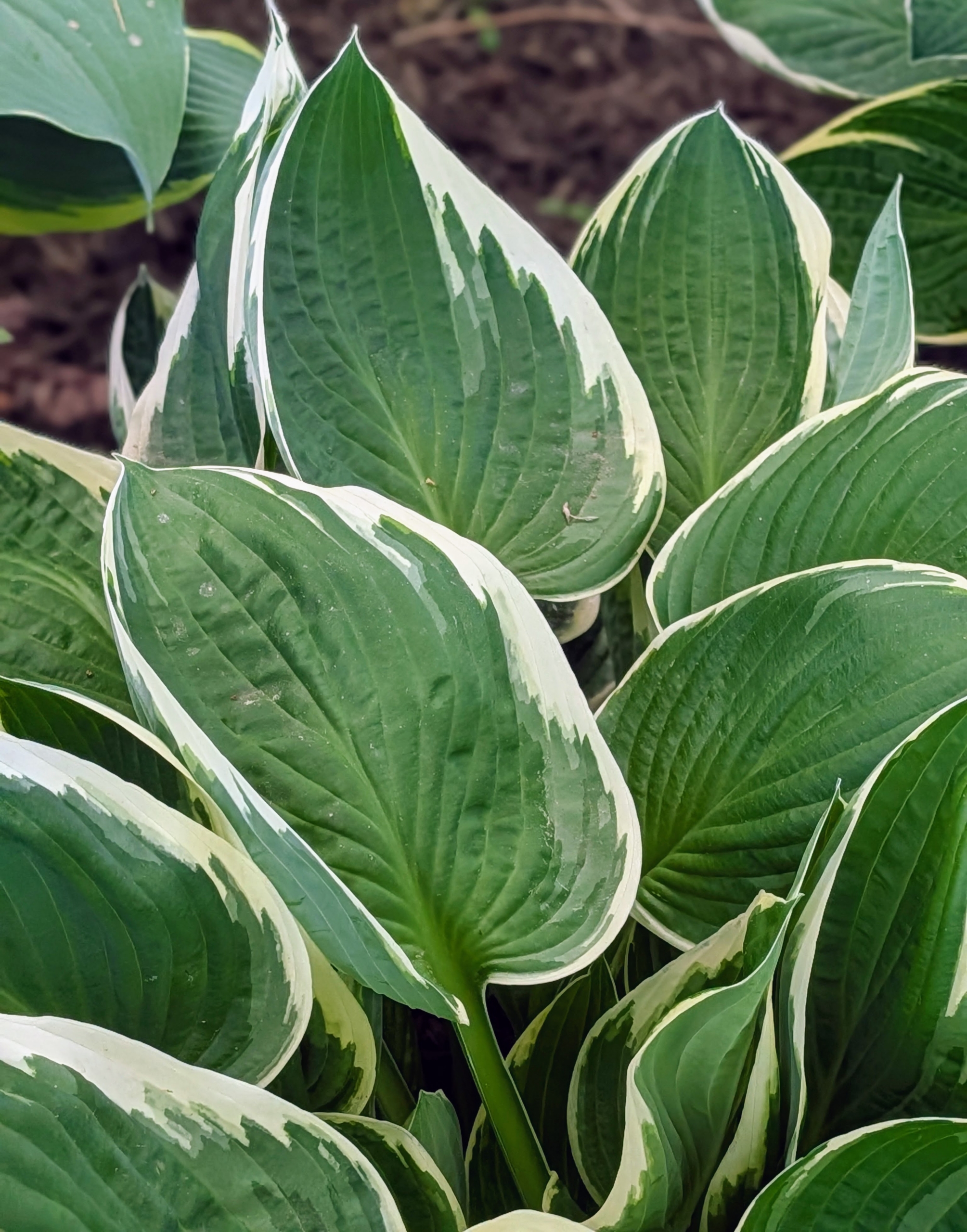
- Hosta is a genus of plants commonly known as hostas, plantain lilies, and occasionally by the Japanese name, giboshi.
-
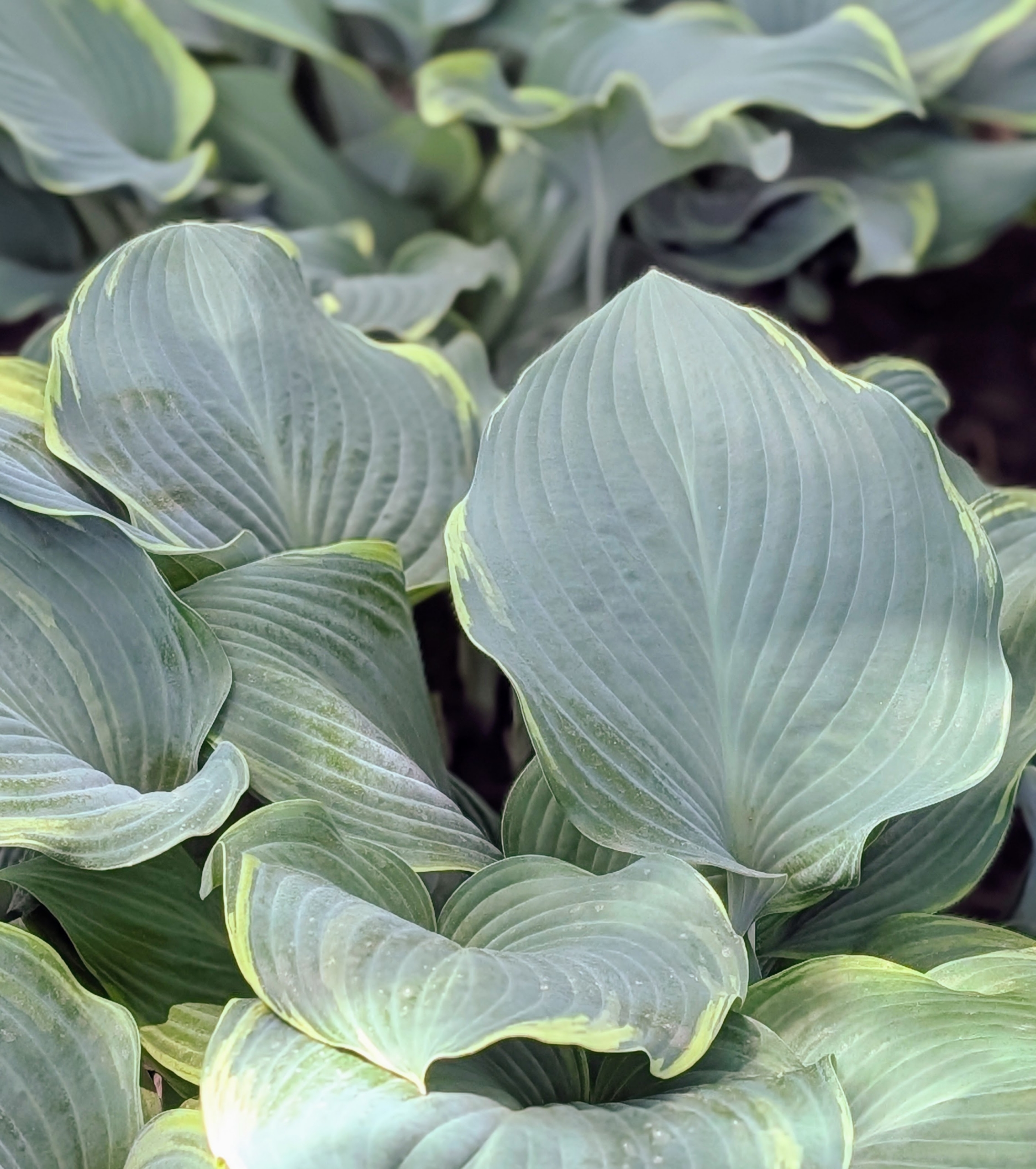
- They are native to northeast Asia and include hundreds of different cultivars.
-
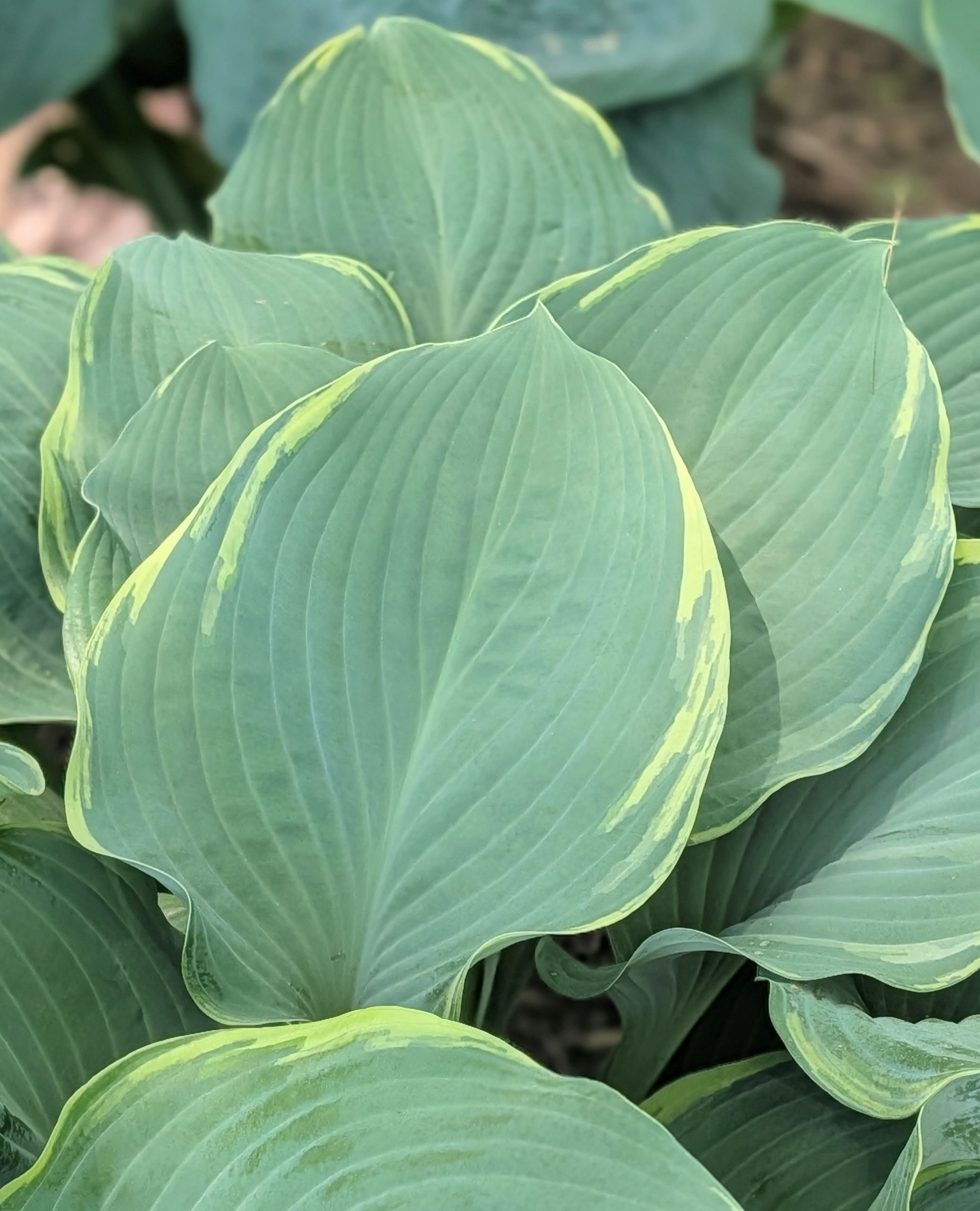
- Hosta leaf textures can be smooth, veined or puckered. Their surfaces may be matt, shiny, or waxy but are usually satiny.
-
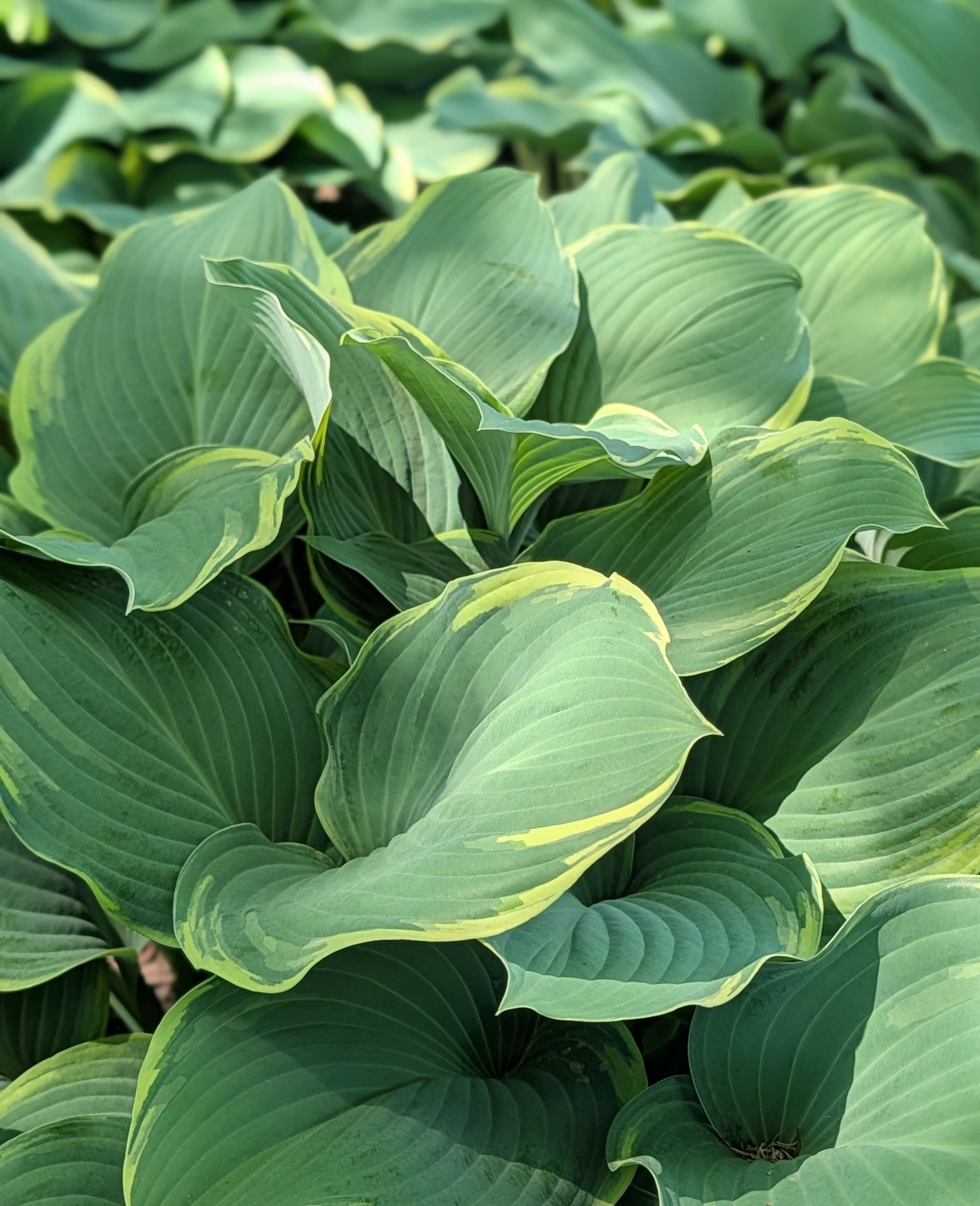
- Unlike many perennials, which must be lifted and divided every few years, hostas are happy to grow in place without much interference. In summer, blooms on long stalks extend up above the clumping hosta foliage.
-
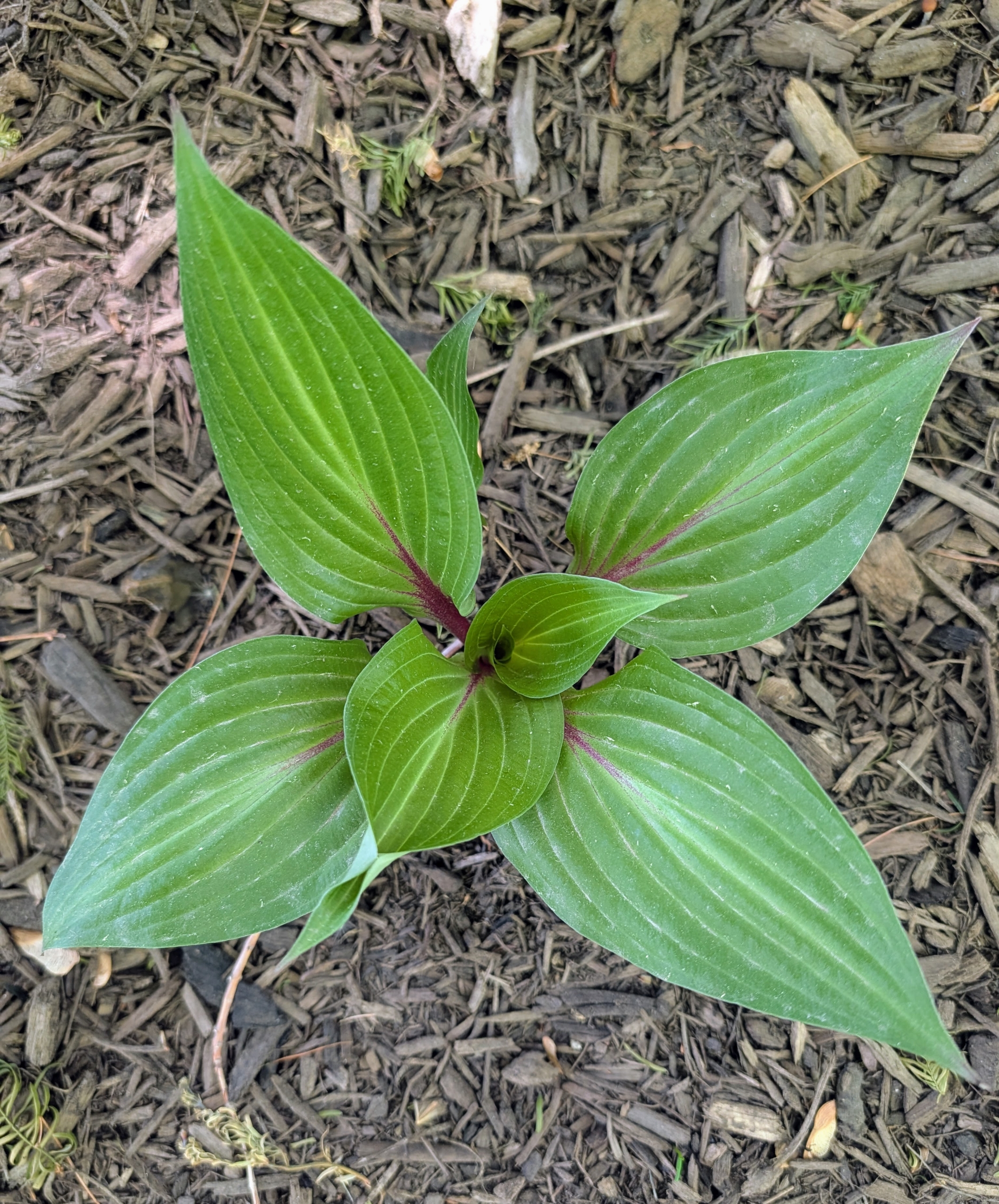
- A new variety I planted this year is Hosta ‘Red Dragon’ characterized by its shiny, bright green leaves held upright on strong red petioles. The plant features purple flowers that bloom in late summer, adding vibrant color to the garden.
-
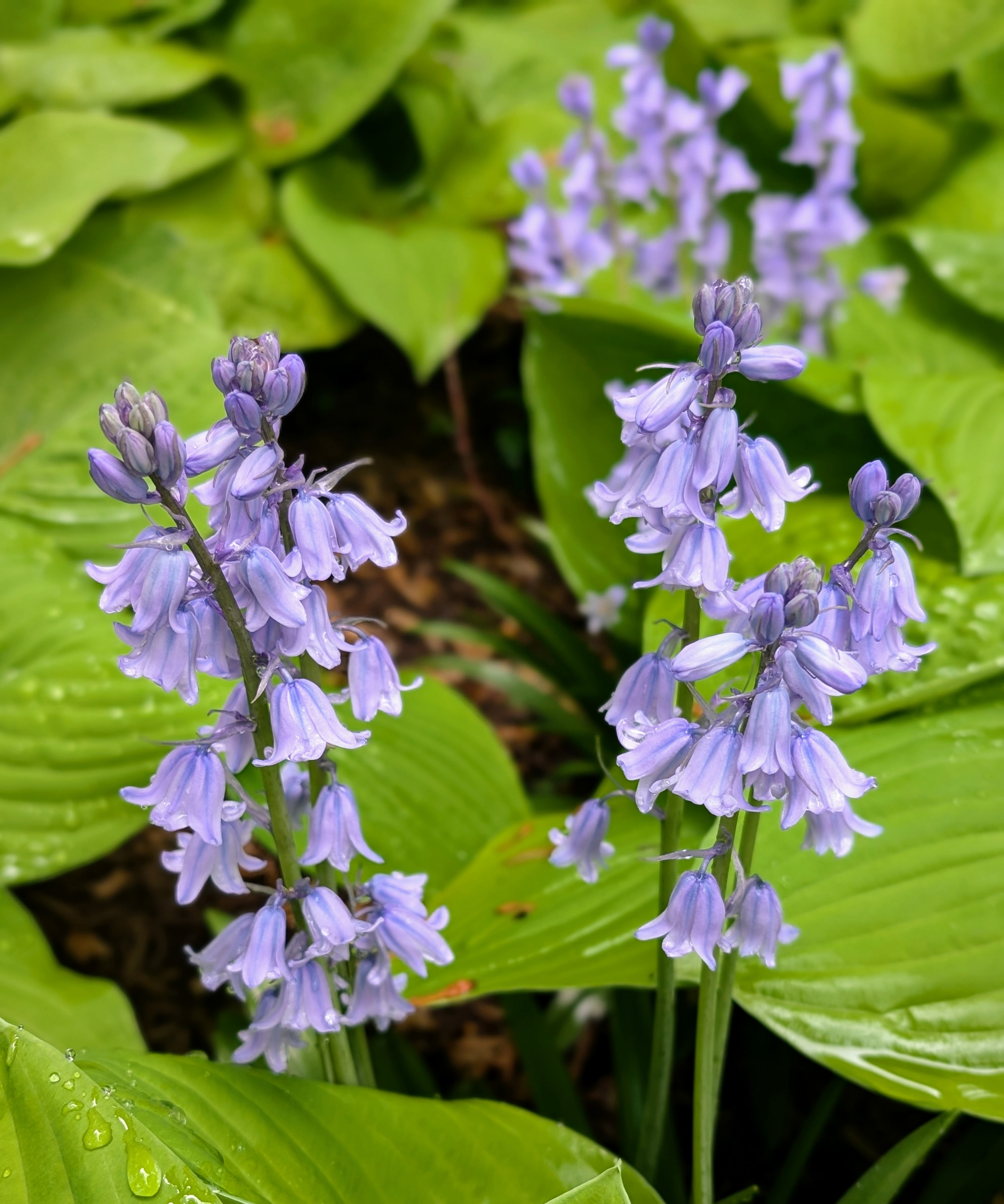
- Interspersed among the hostas is Hyacinthoides hispanica, commonly called Spanish bluebell or wood hyacinth – a bulbous perennial native to Spain, Portugal and northwest Africa. Each bulb produces a clump of two to six strap-shaped leaves from which a rigid flower stem grows, typically containing up to 12 to 15 hanging, bell-shaped, bluish-lavender flowers that rise from the center.
-
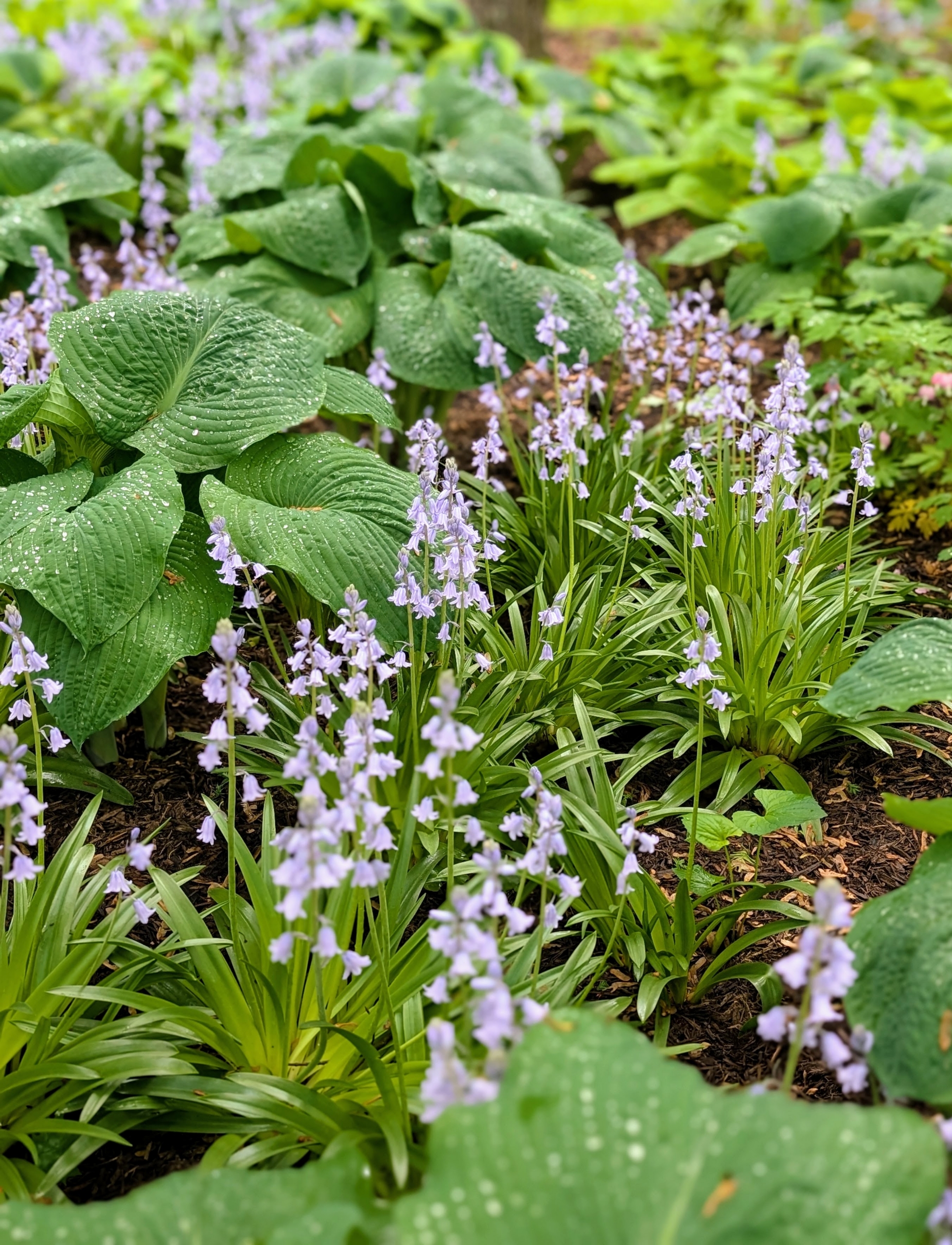
- These Spanish bluebell plants dot the garden with soft color amidst shades of green.
-
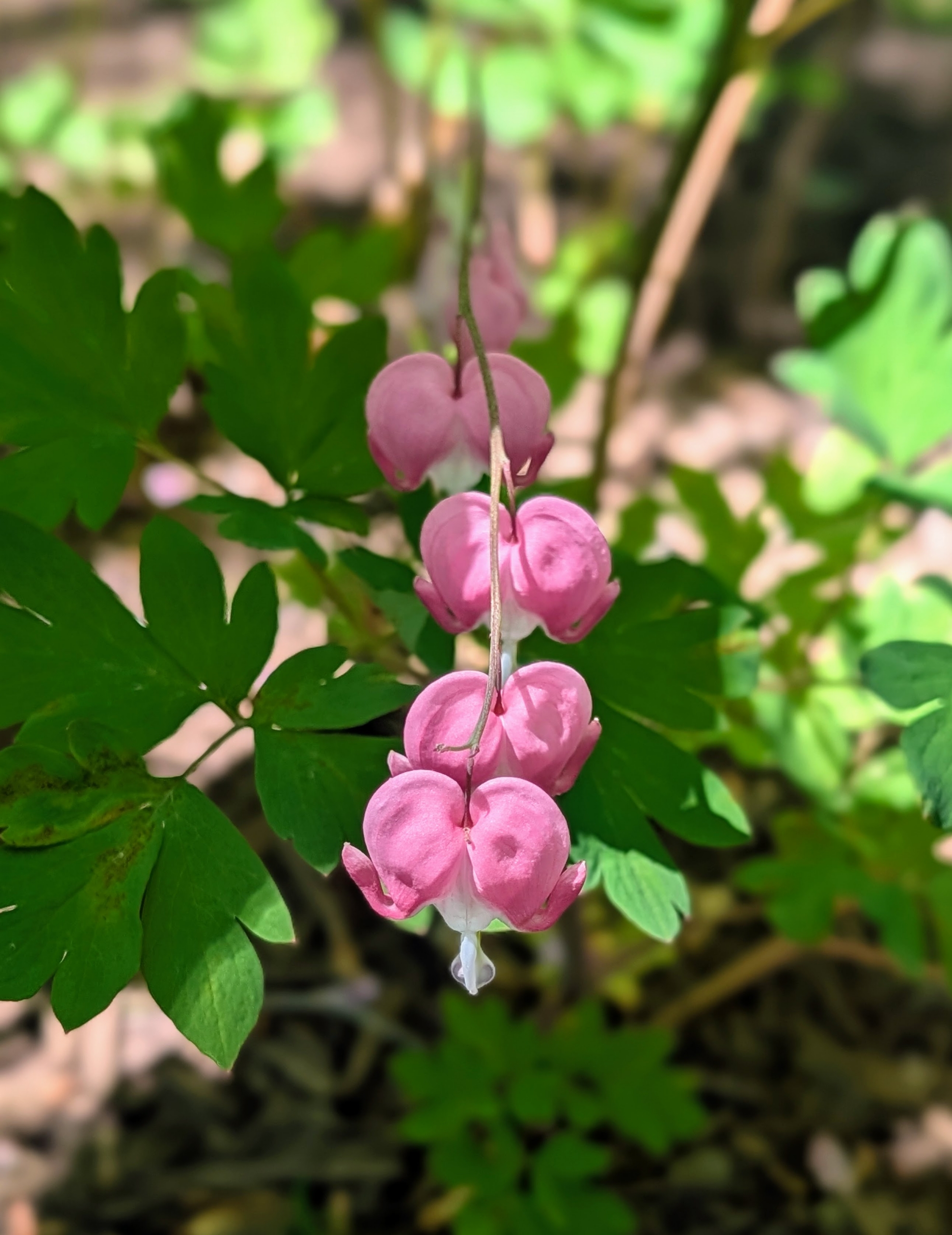
- It’s hard to miss these beautiful flowers. Dicentra is an elegant, easy-to-care-for perennial for shady gardens. More commonly known as bleeding heart, it is named for its heart-shaped blossoms that dangle from slender, arching stems. Dicentra is a great companion for other shade loving perennials such as hostas. Here it is in pink.
-
- If you have a shady area, experiment with shade-loving plants. Hostas, with their palette of different colors, textures, and sizes have tremendous landscape value and offer great interest to any garden. You’ll enjoy them.
 Martha Pins


 Martha Tweets

