Maintaining my farm is all about attention to detail—carefully tending the gardens, groves, and allées to keep them looking their best throughout the seasons.
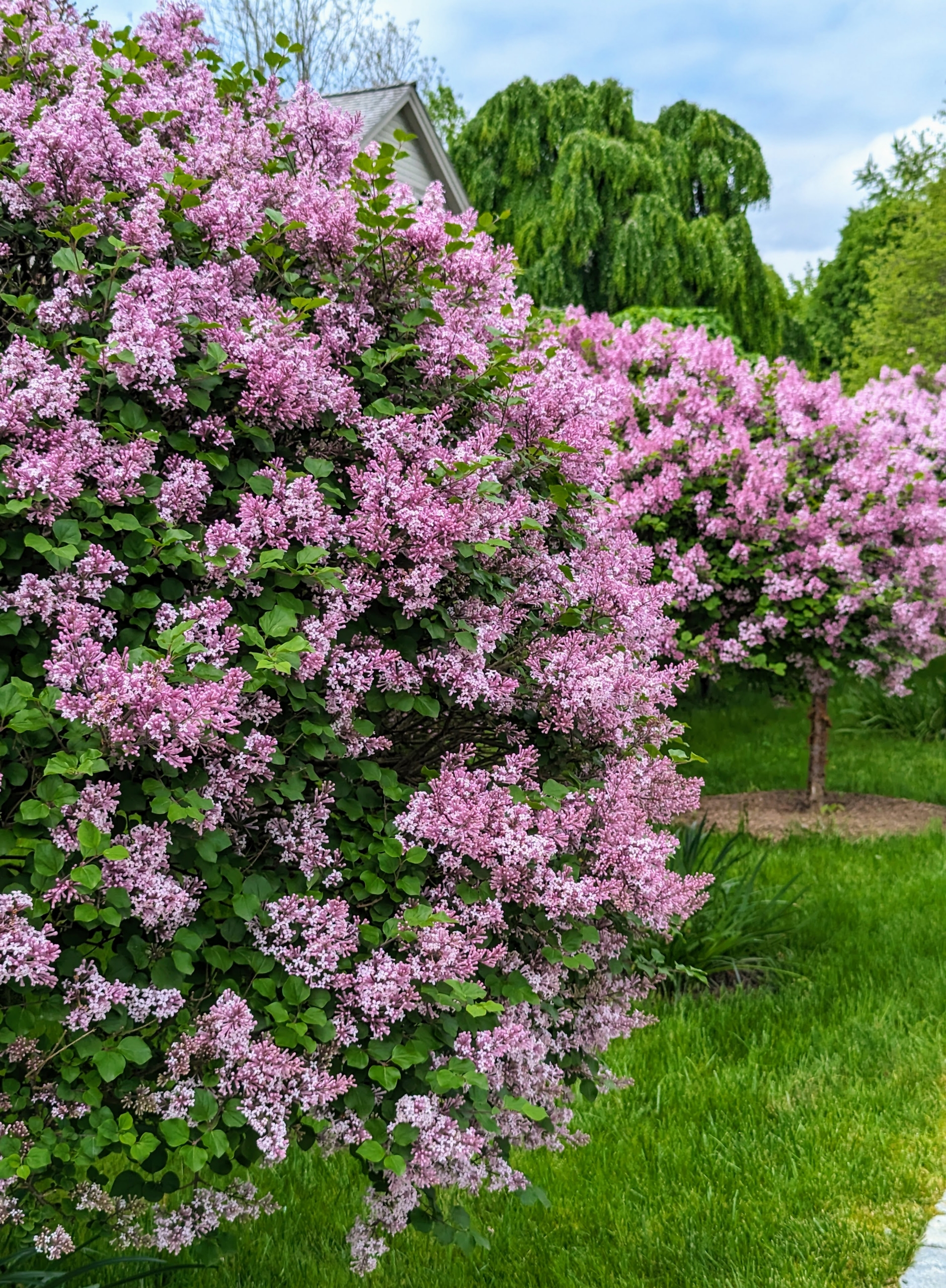
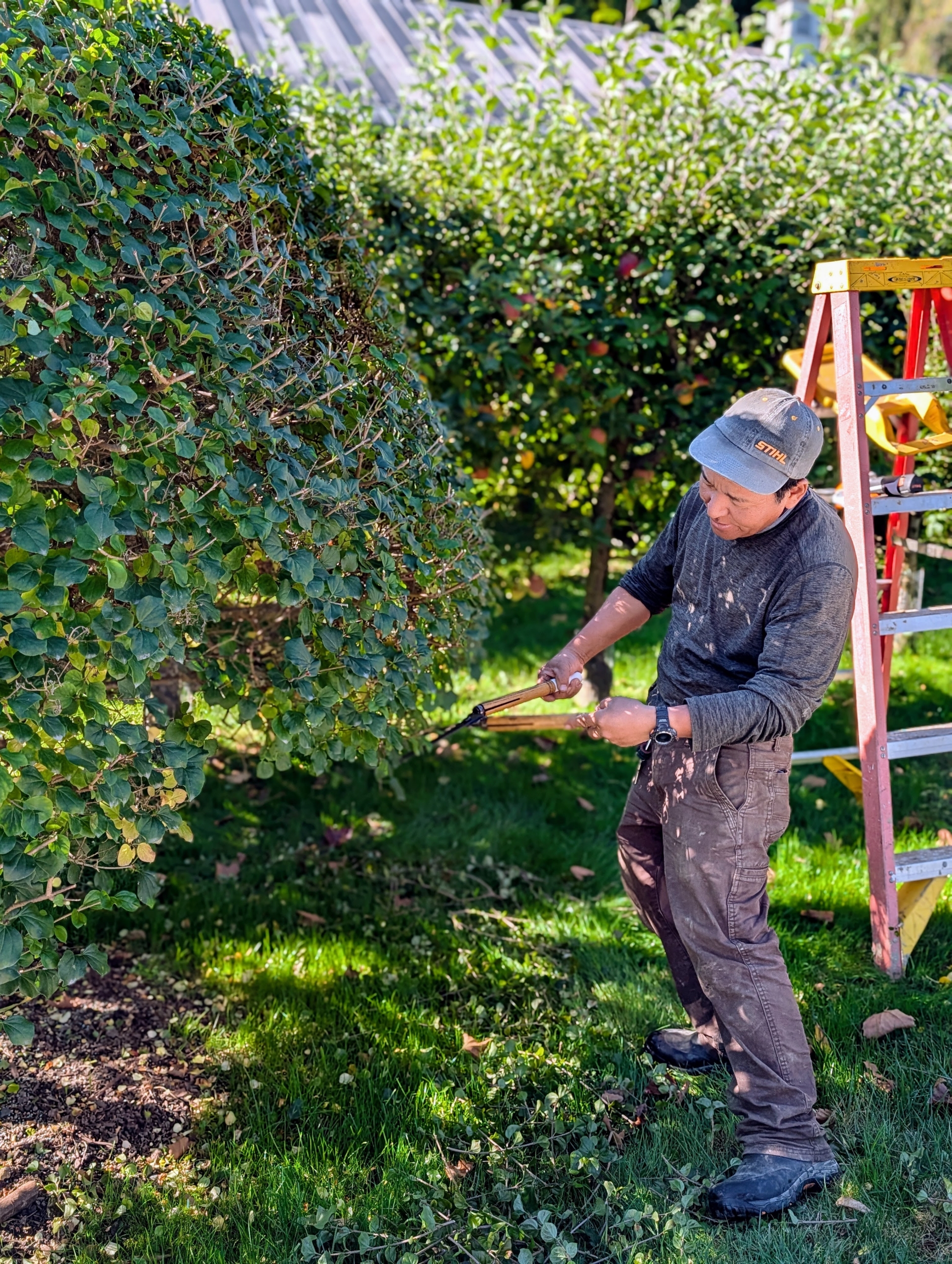
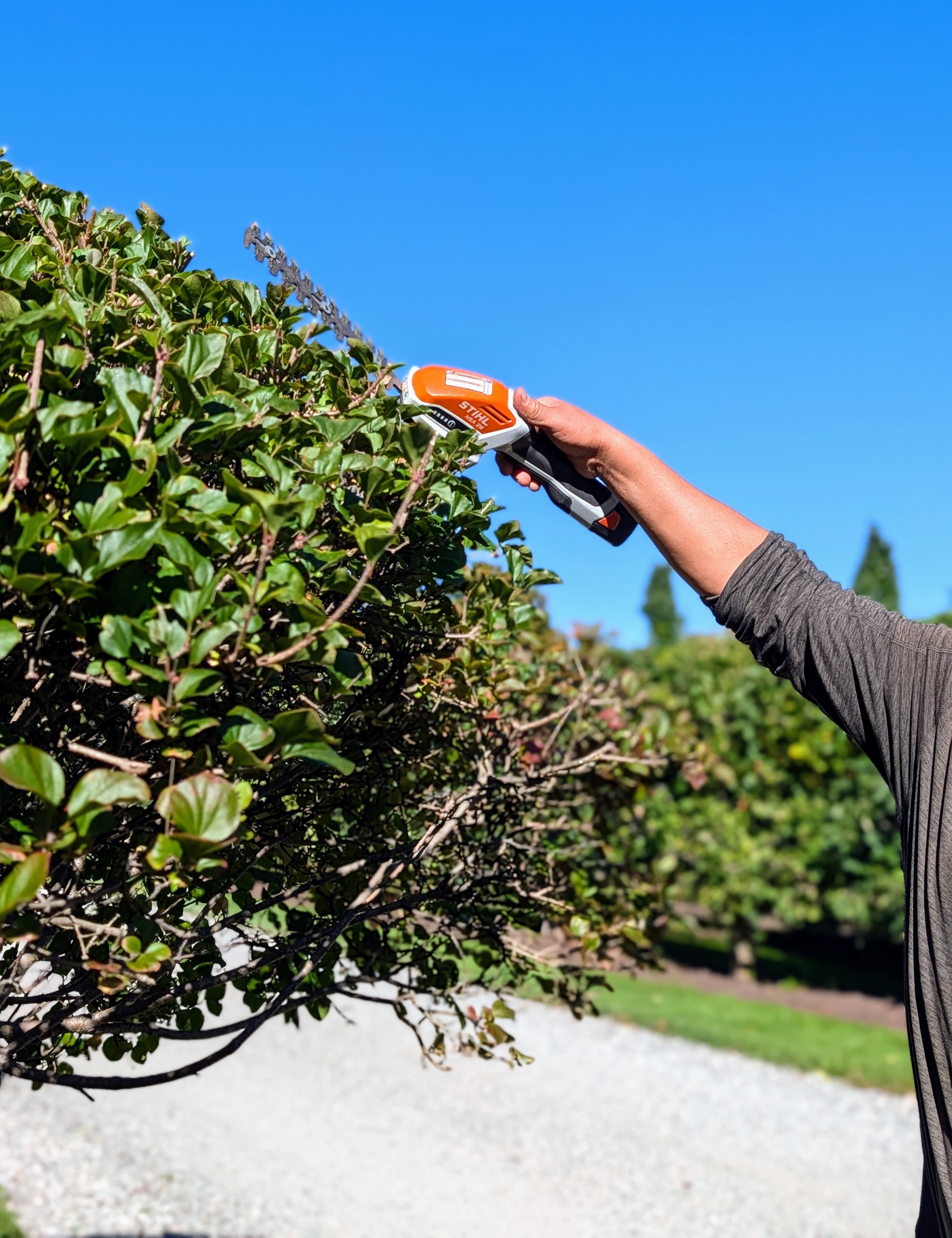
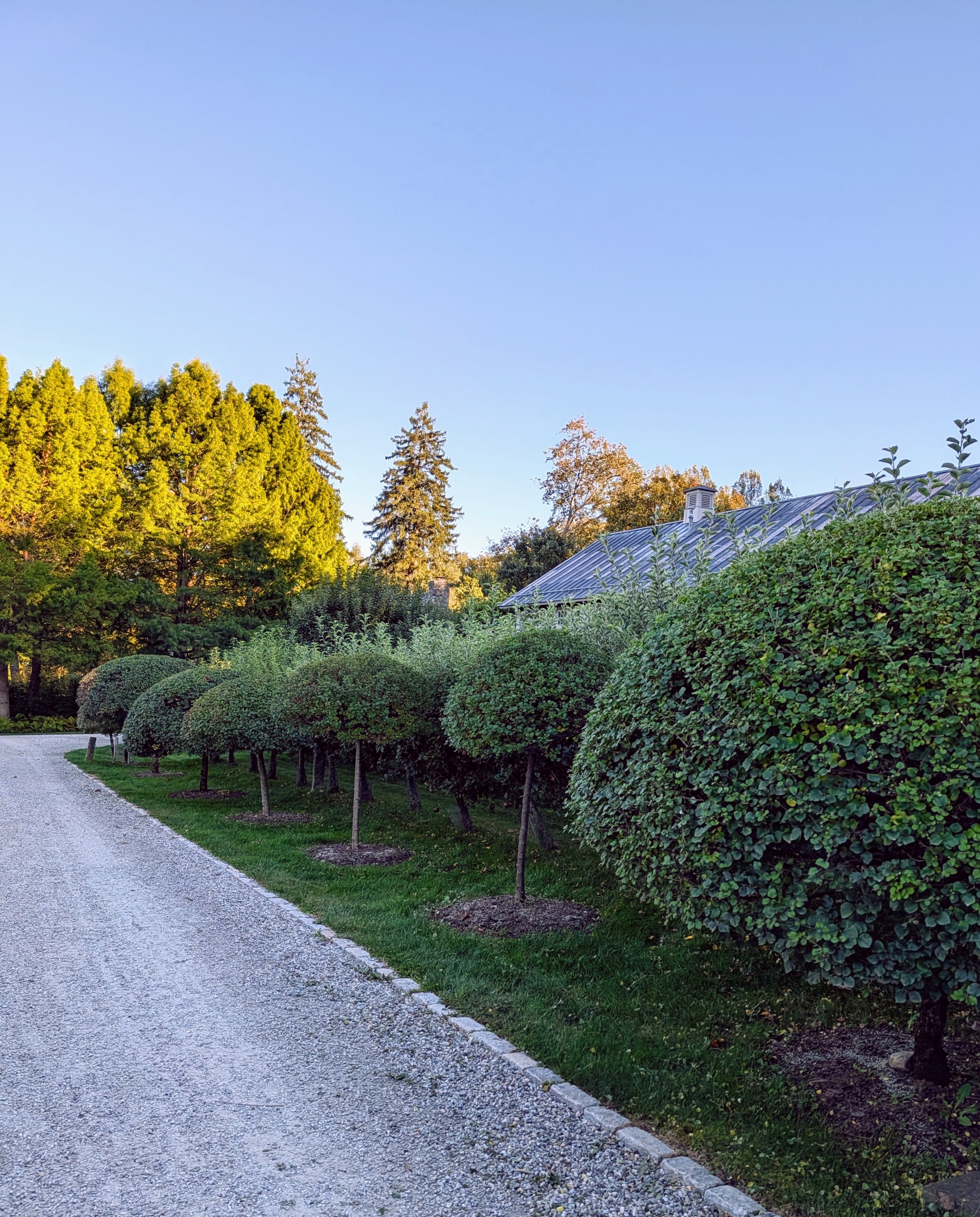
Outside my Winter House, a row of dwarf lilac trees—including ‘Palibin,' Syringa meyeri, and ‘Miss Kim,' Syringa pubescens subsp. patula, standards—lines the carriage road. In spring, these lilacs are covered with fragrant panicles of soft lavender and pink blooms that emerge from purple buds. Yesterday, Phurba Sherpa, a longtime member of my outdoor grounds crew, carefully groomed the lilacs, lightly shaping each one to preserve its natural form and keep the row looking neat and beautiful.
Enjoy these photos.
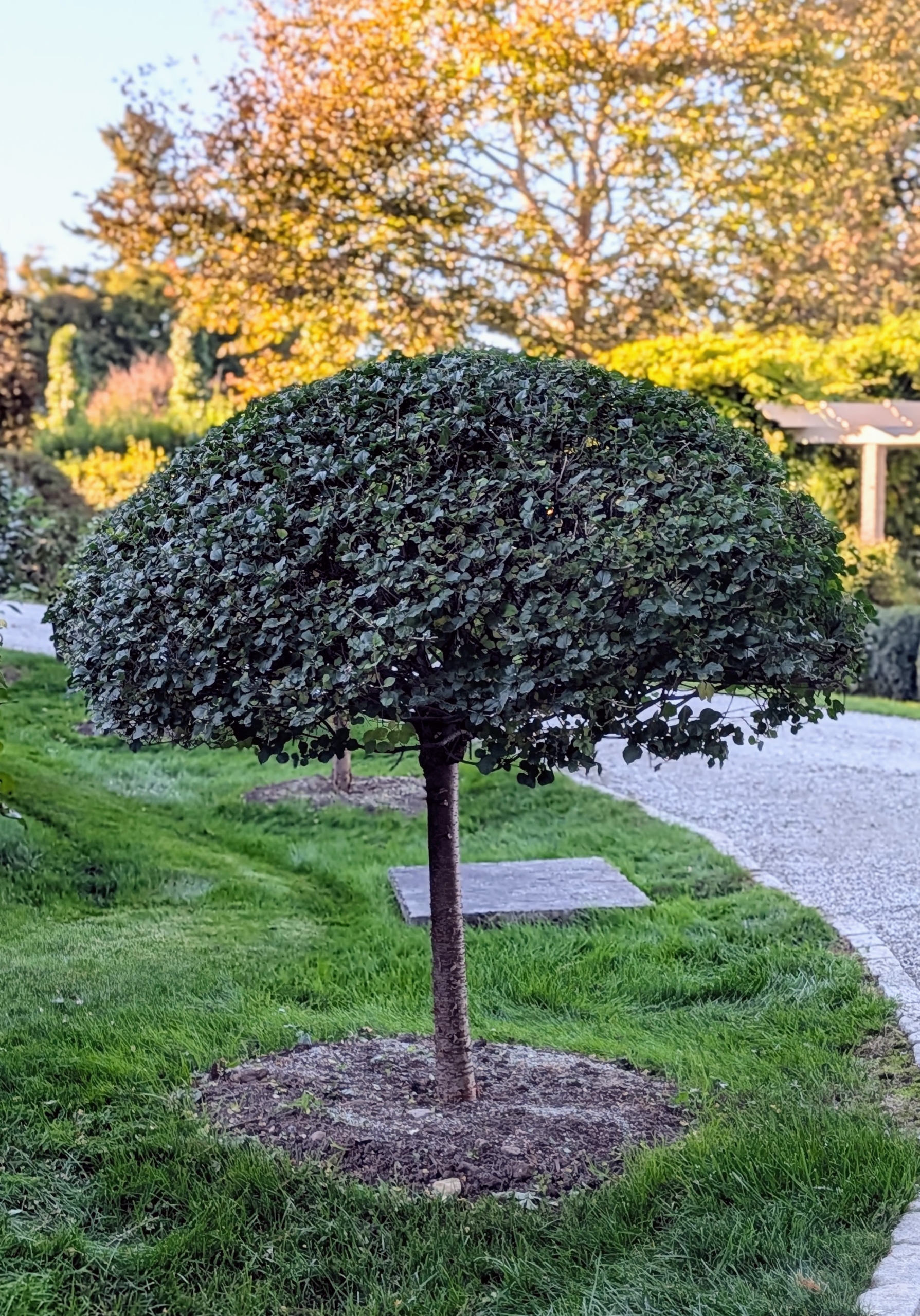
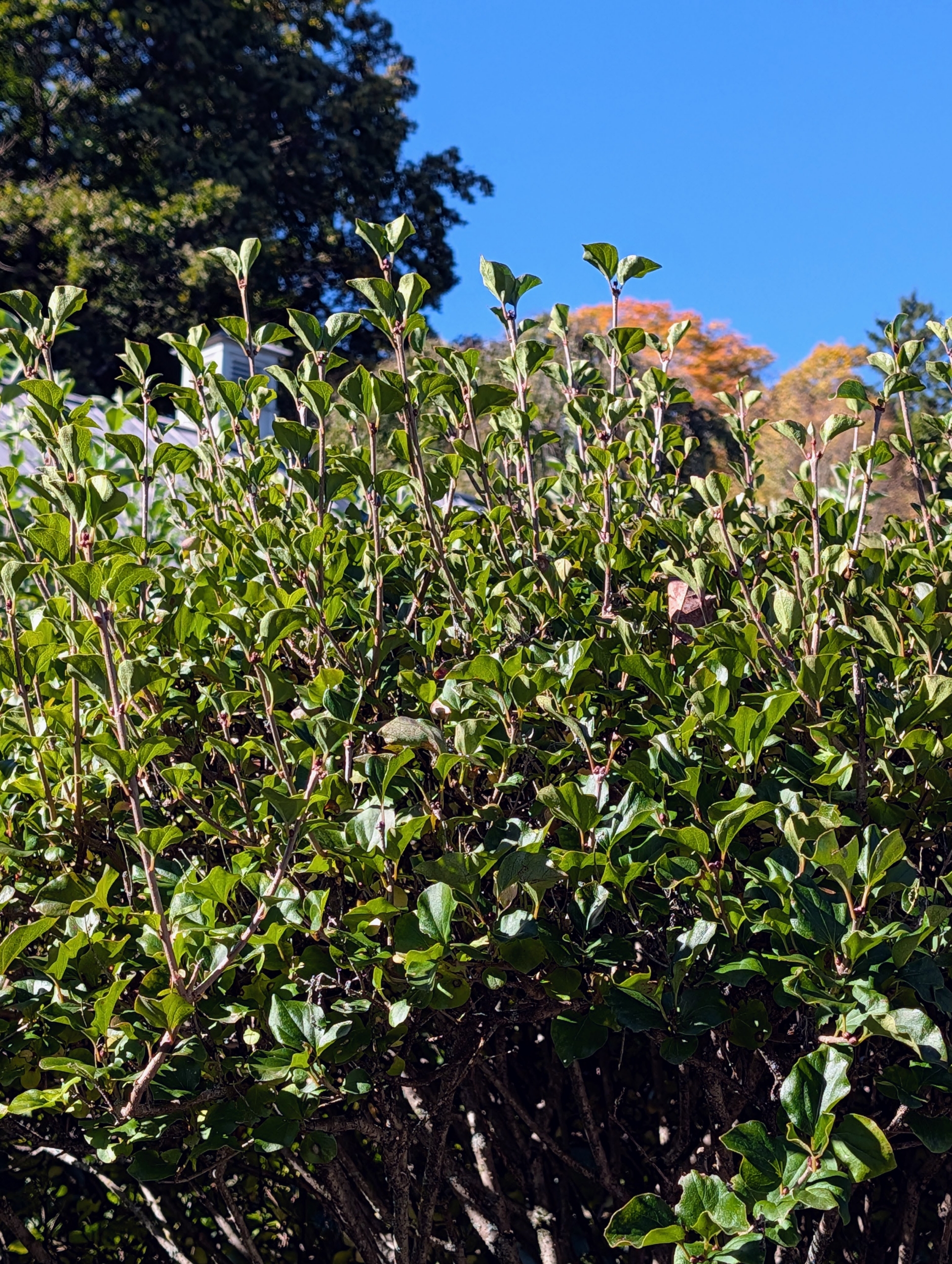
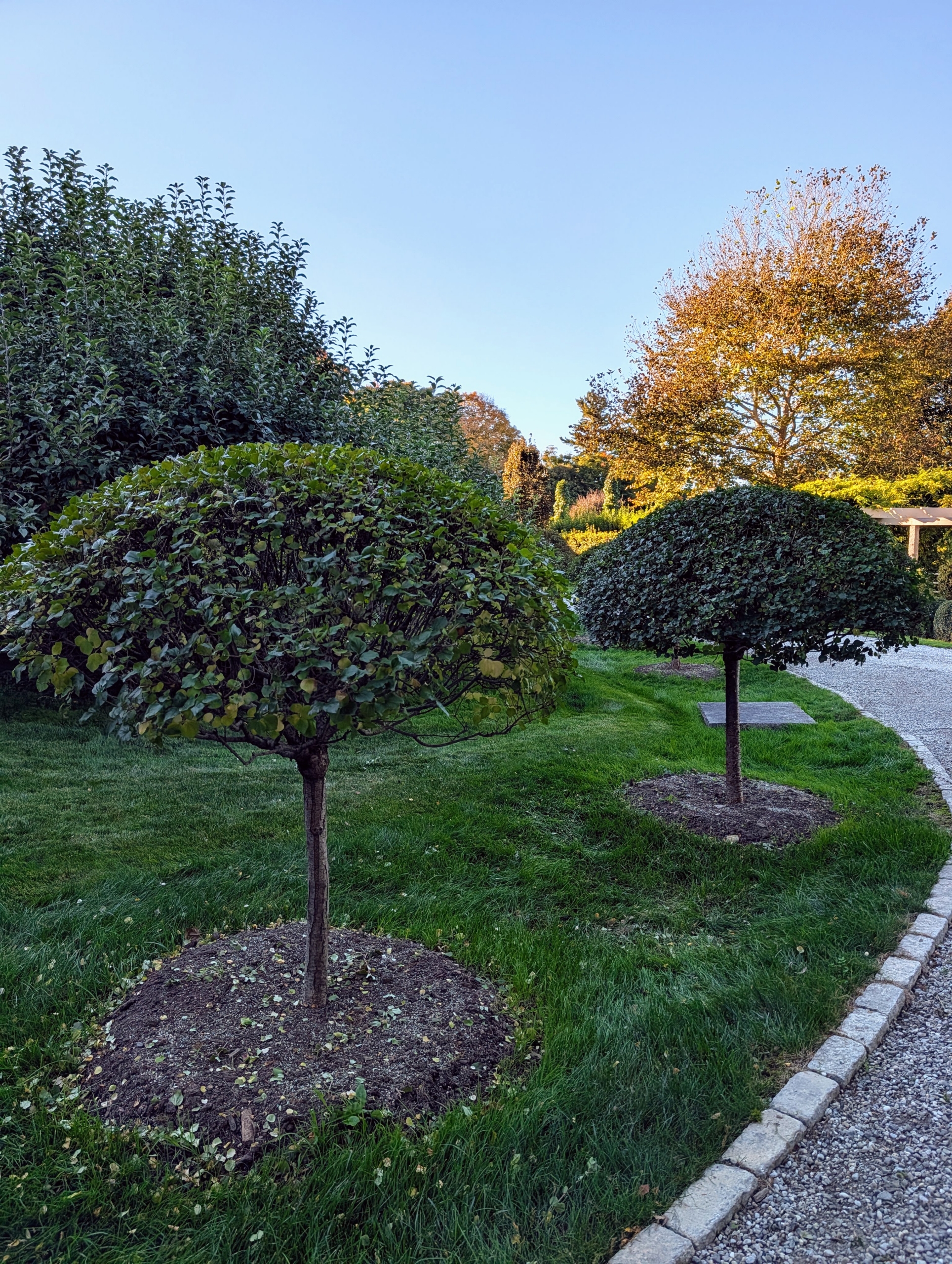
I have 16 dwarf Korean lilacs lining the edge of my carriage road. These trees are compact and typically five to six feet tall with rounded crowns.
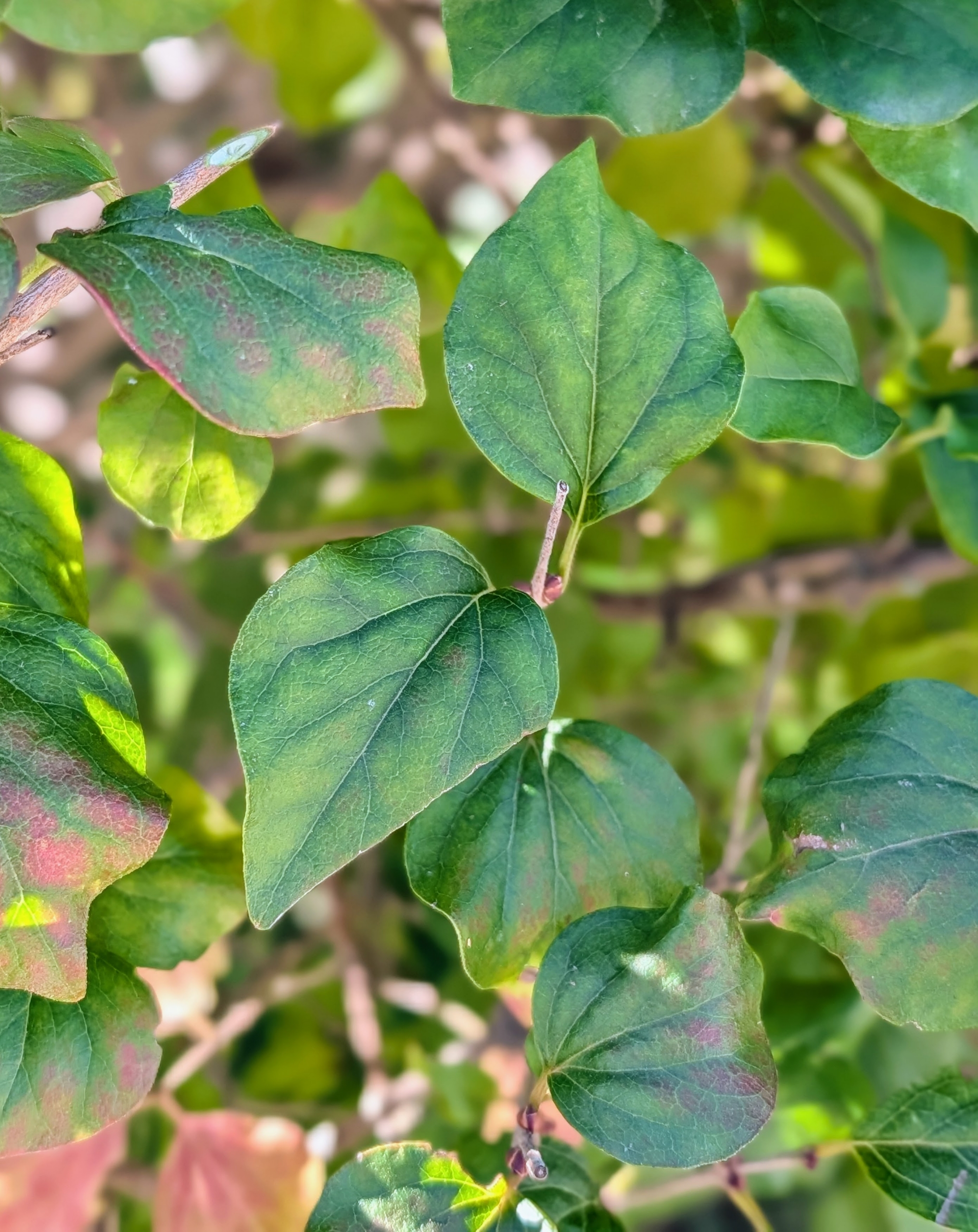
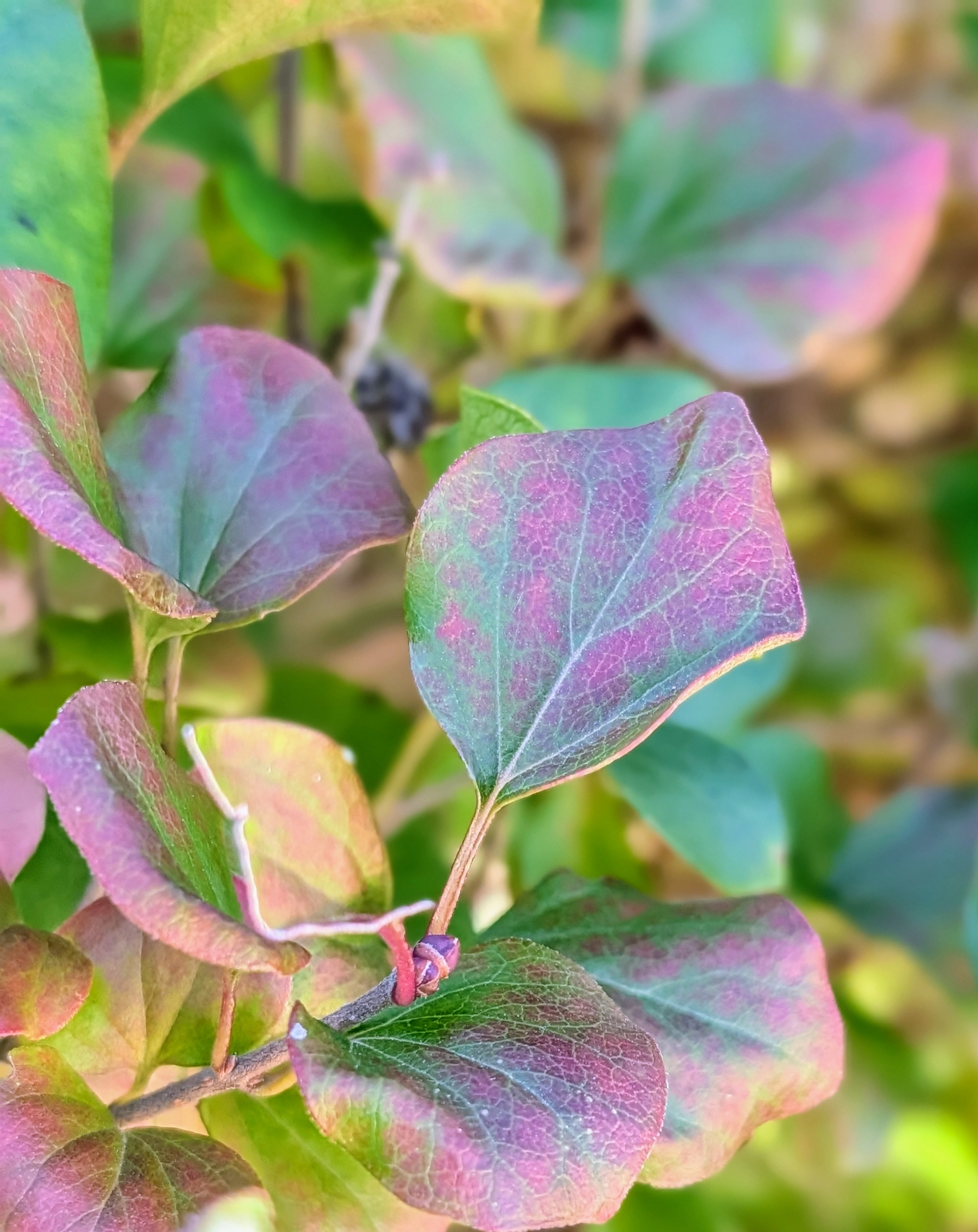
The leaves are small, slightly heart‑shaped, green in spring and summer, and turn red to burgundy in fall.
In May, these trees put on quite a show. These are “Miss Kim” Korean lilac standards in spring bloom.
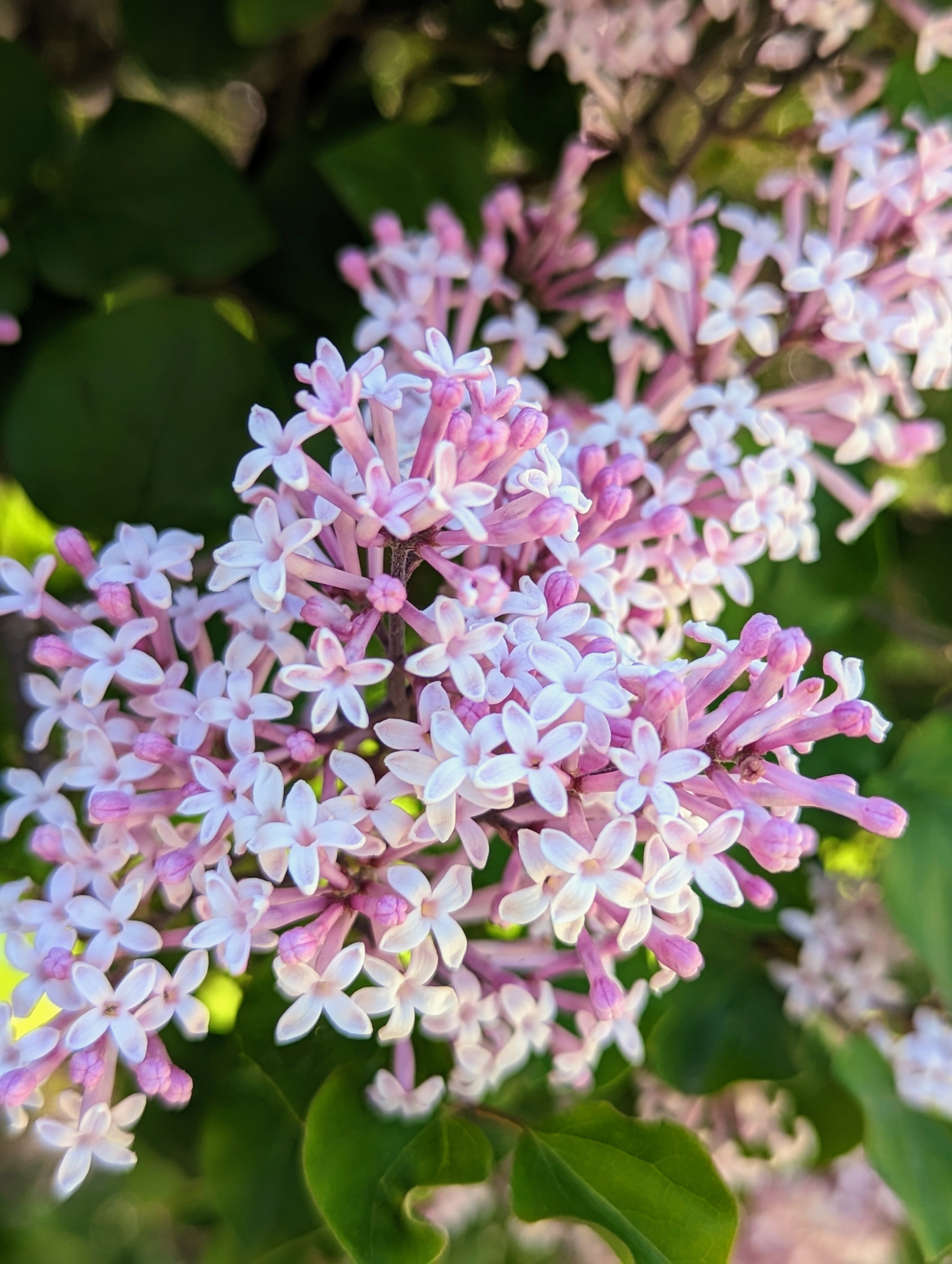
They feature long panicles of sweetly scented lavender blooms that burst from pink to purple buds.
Yesterday, I asked Phurba to groom all the lilacs. They have grown quite a bit this season.
Phurba is my resident shrub and small tree pruning expert. He has been with me for many years
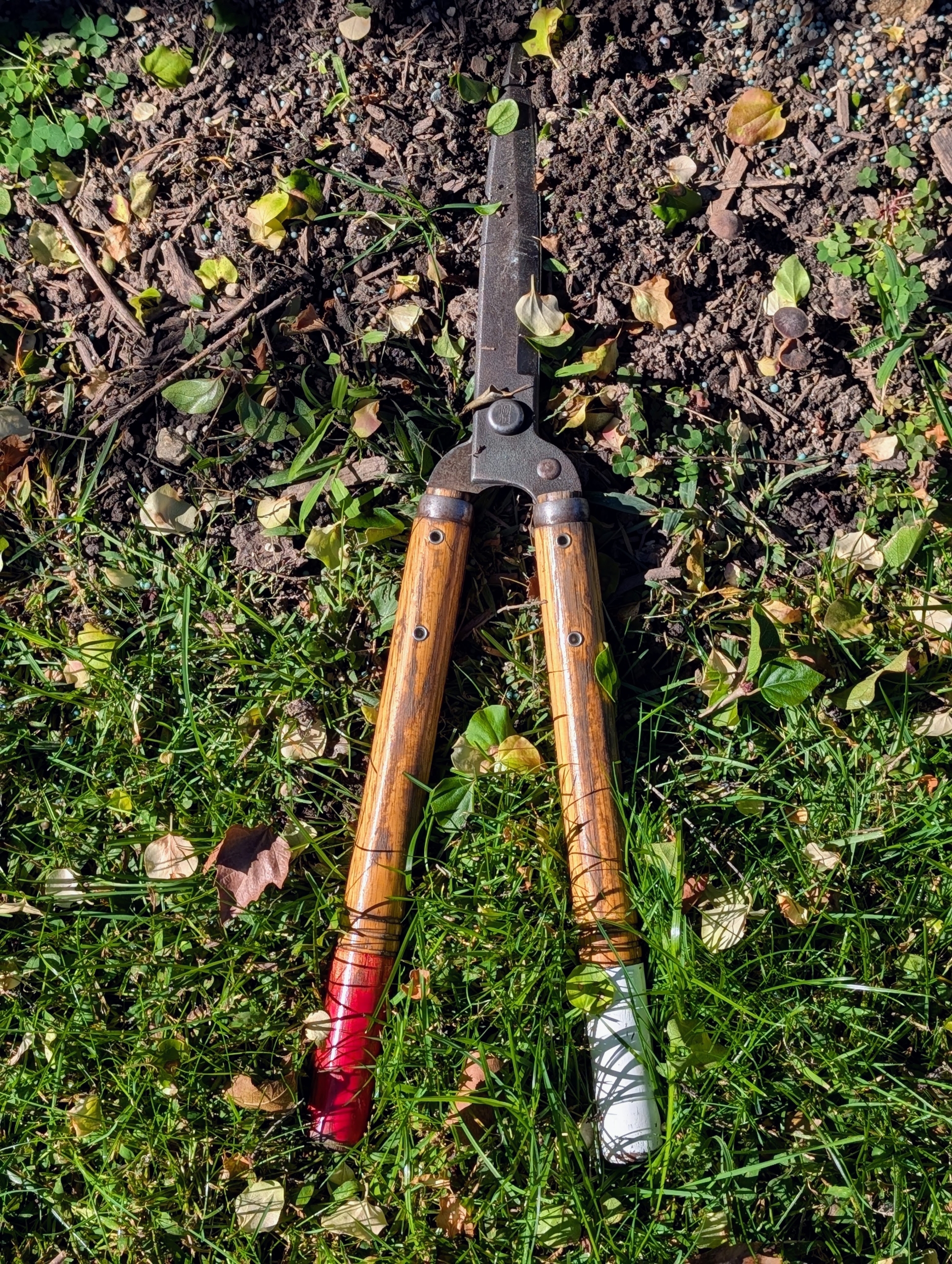
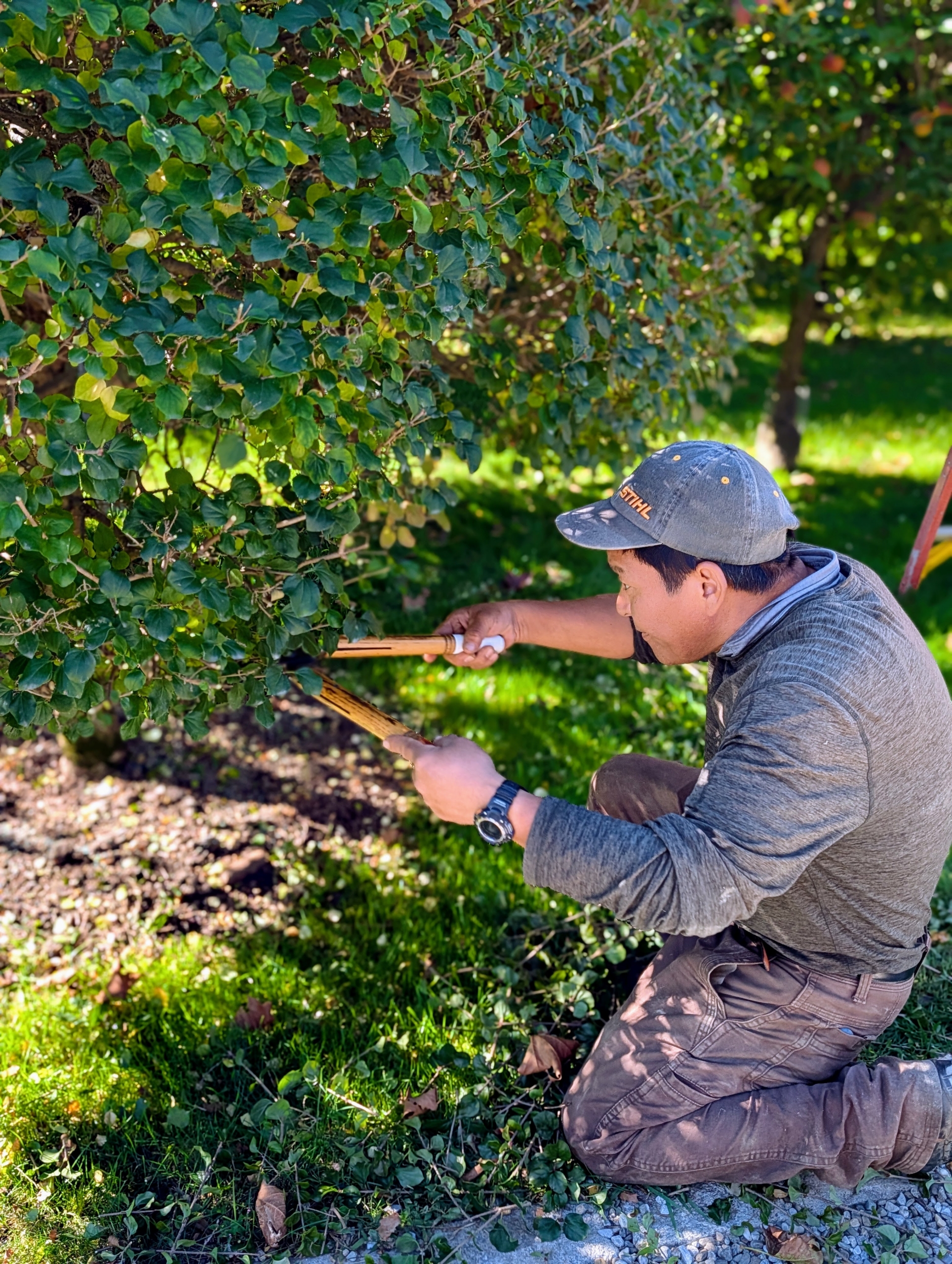
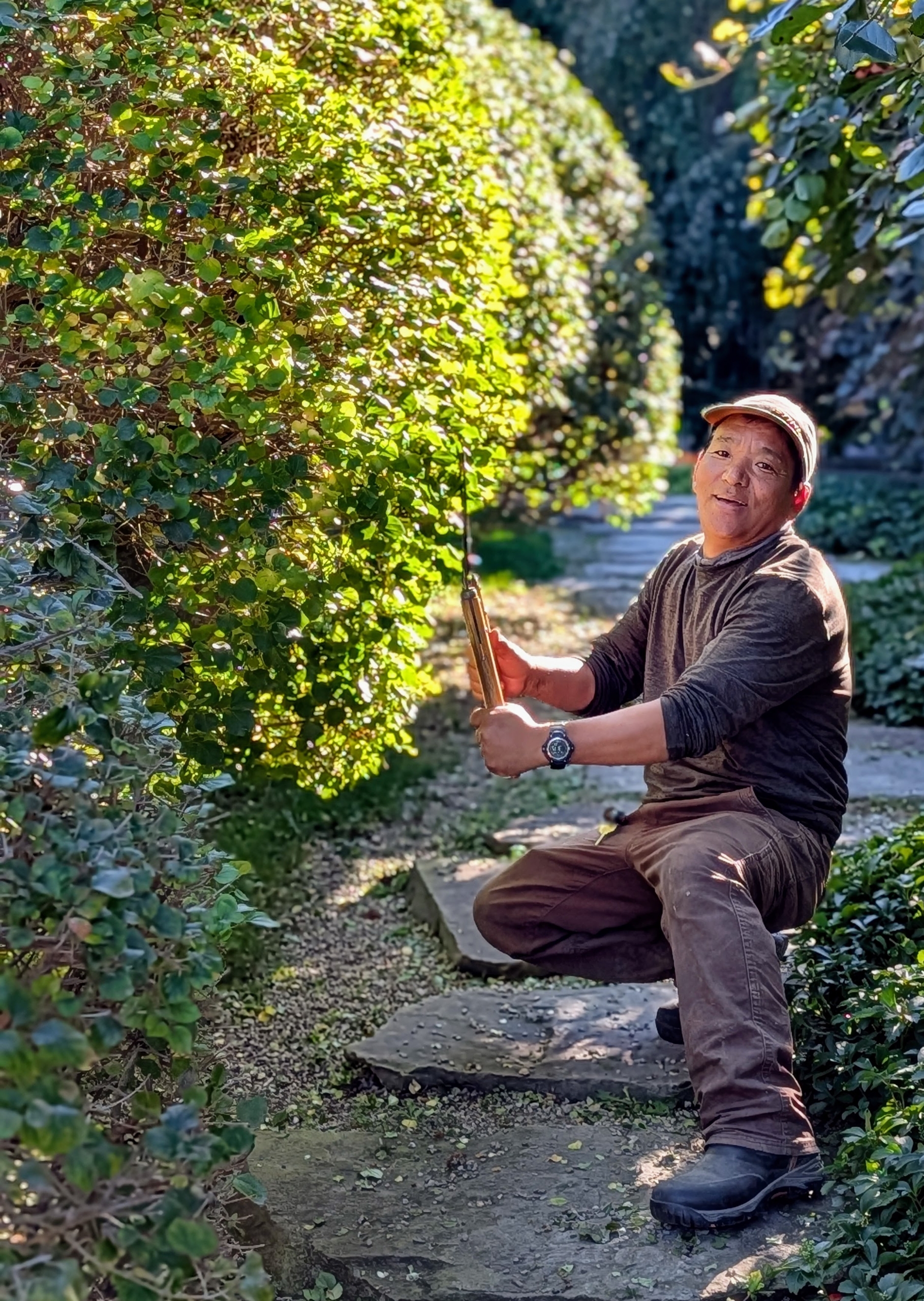
Phurba uses Japanese shears to groom the undersides of the lilacs. When possible, I prefer hand held tools – it’s a slower process, but they make cleaner, neater, more detailed cuts compared to powered versions.
Everyone on my crew uses Japanese Okatsune shears. These shears are user friendly, and come in a range of sizes.
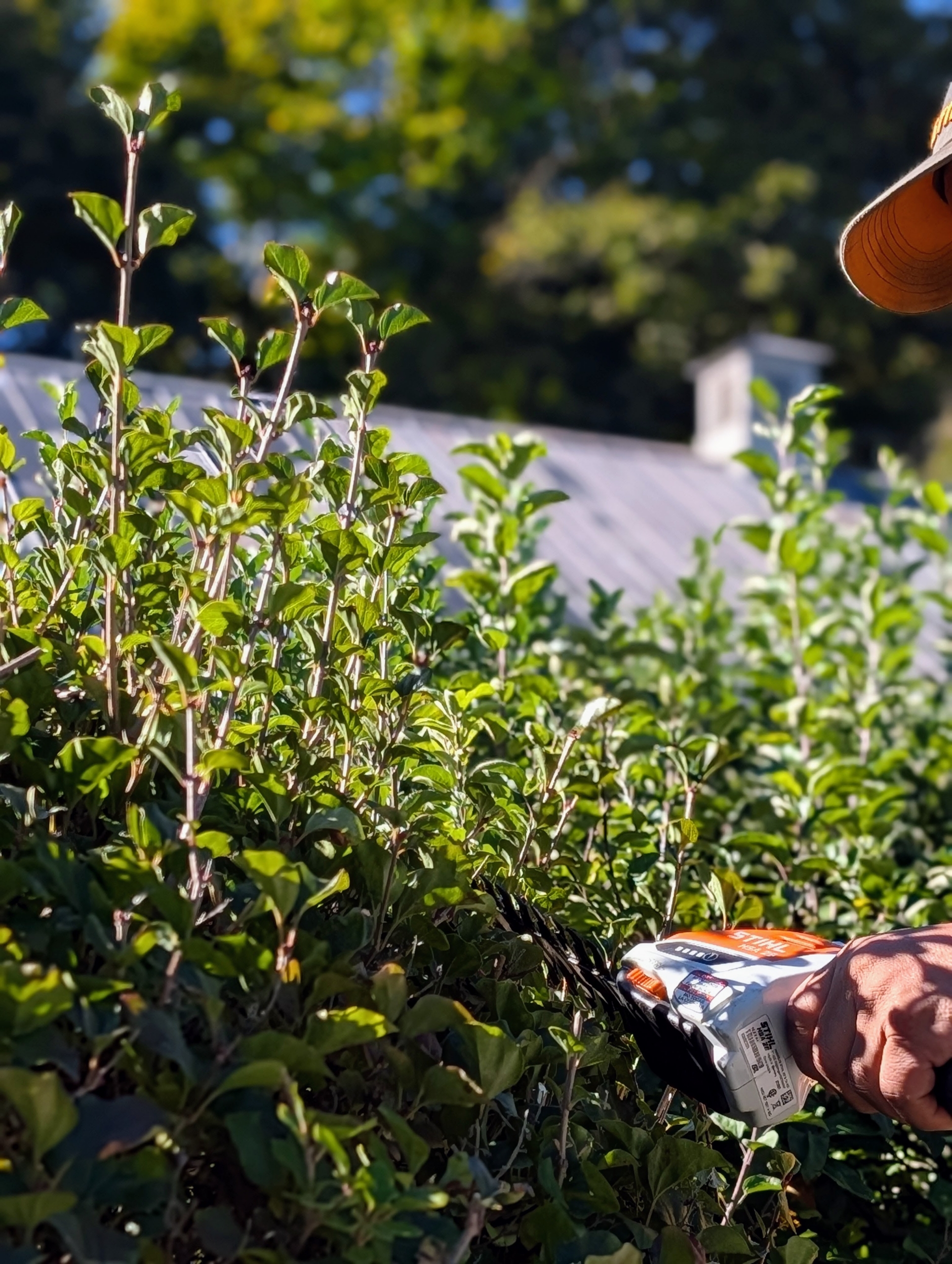
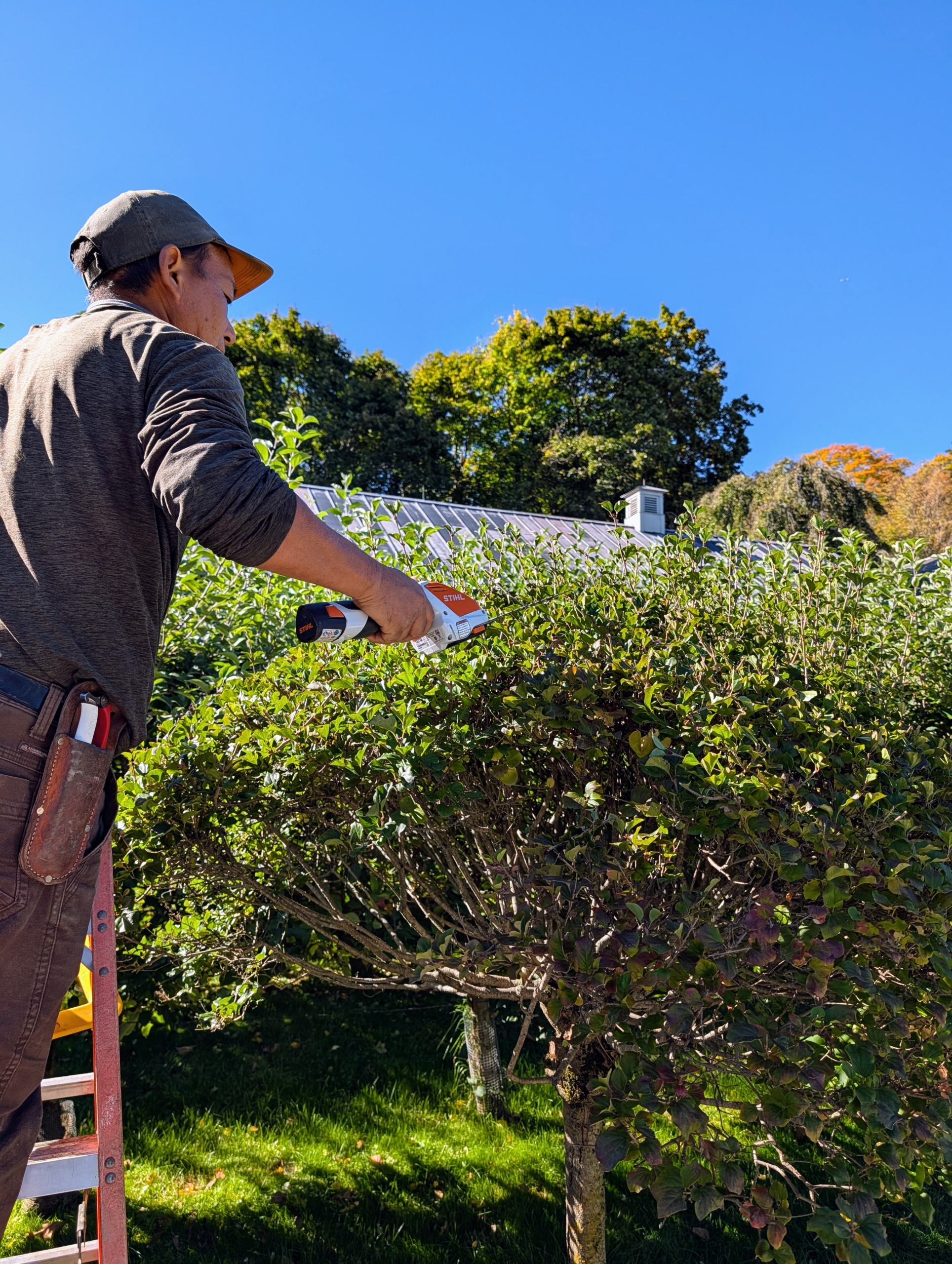
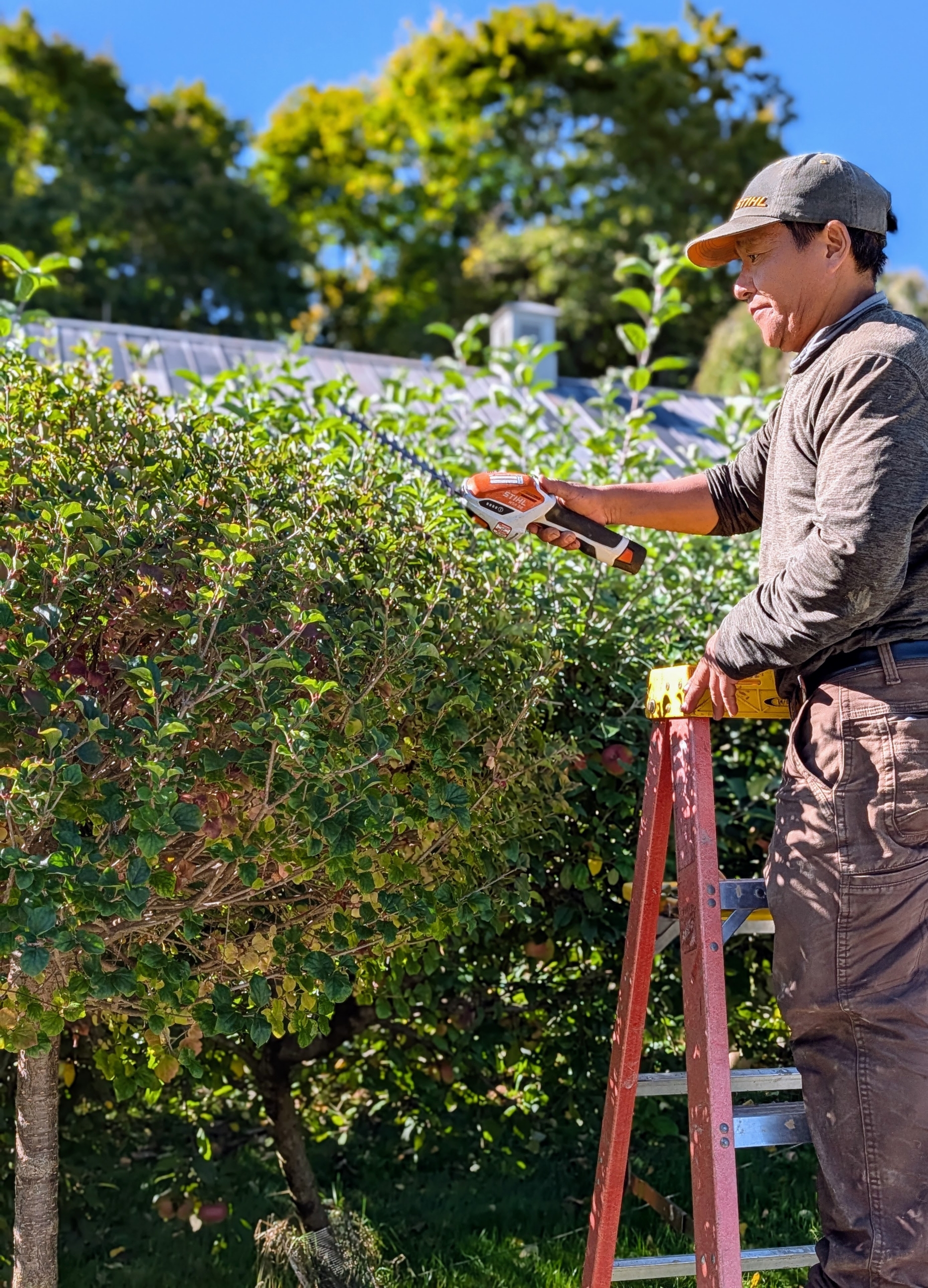
For the tops and along the sides, Phurba uses the STIHL HSA 26 Battery-Powered Hedge Trimmer. It’s one of my favorite tools to use around the farm – it’s so light and handy.
Because these lilacs bloom on old wood, it’s important to not trim too heavily at this time. Phurba focuses on shaping the lilacs, so they maintain their beautiful forms.
The precision-engineered blade creates very clean, controlled cuts that don’t damage the plants.
Here he is trimming the tops carefully, just removing the tips of branches that are sticking out.
‘Miss Kim’ is known for being very adaptable and easy-to-care-for.
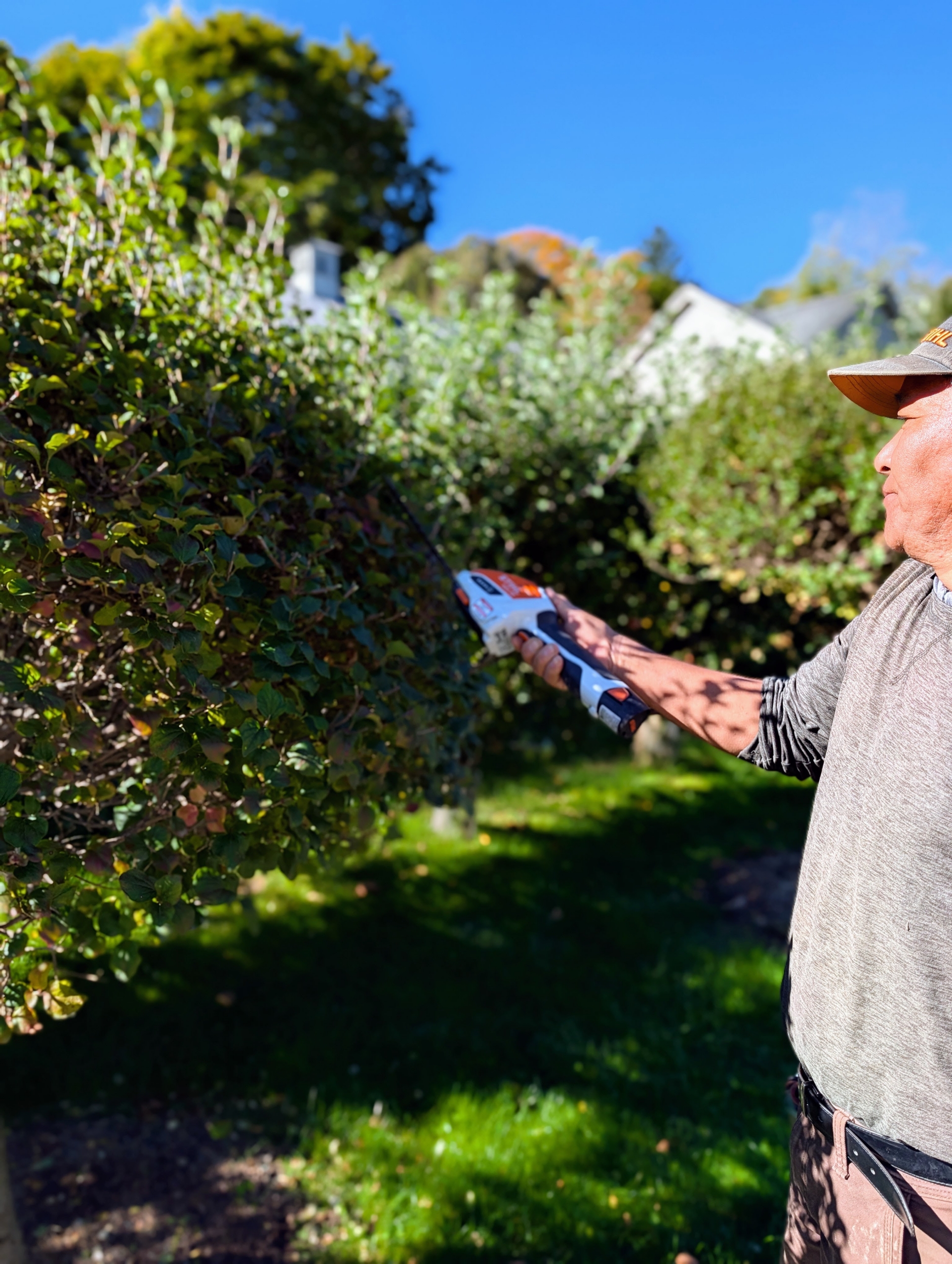
Here, Phurba trims the bottom sides of the ‘Miss Kims’ along the footpath to my Winter House terraces.
Occasionally, Phurba stops to assess his work – looking for areas the may need a little more shaping.
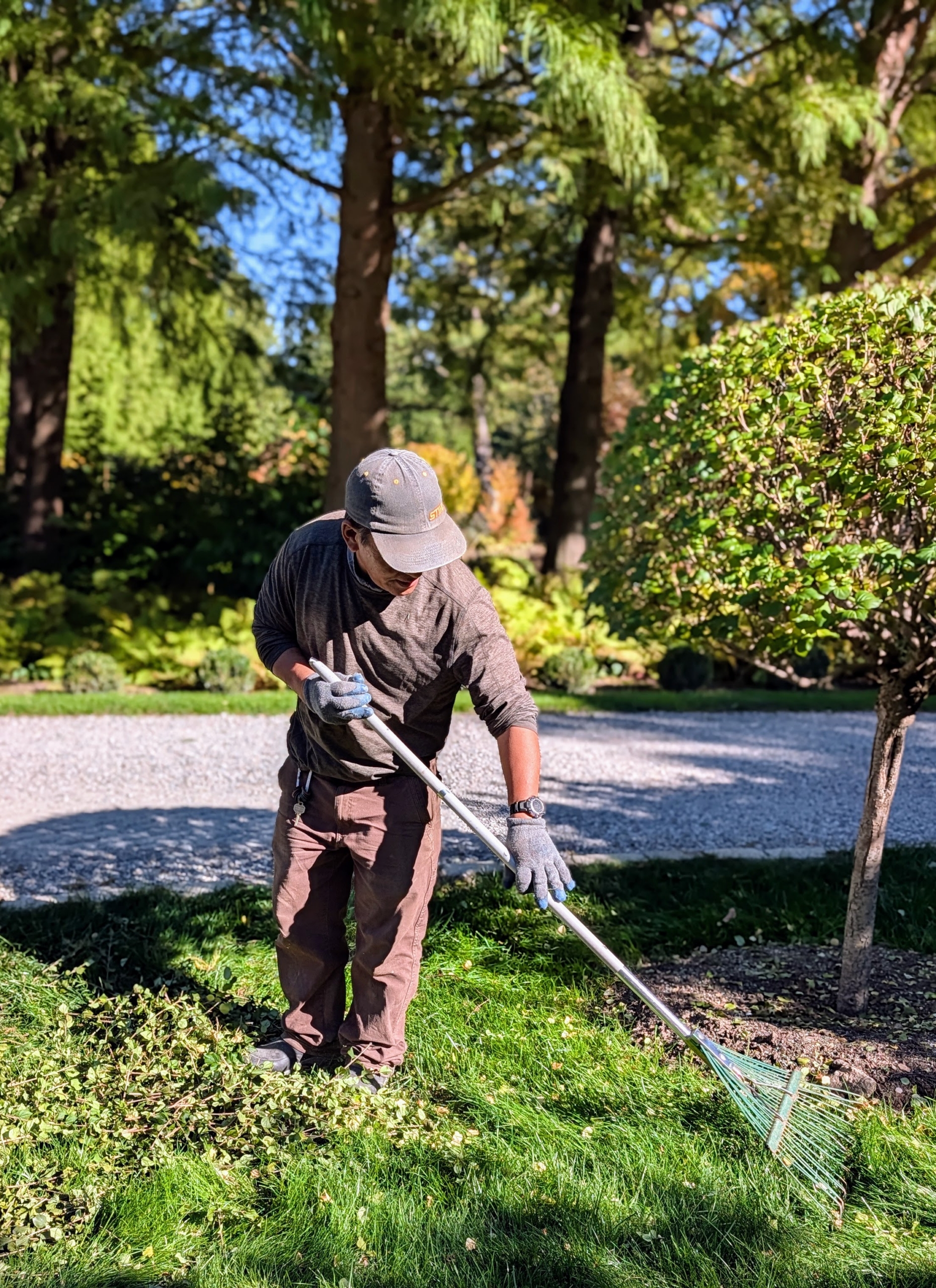
After grooming the lilacs, Phura focuses on the clean up, raking the trimmed leaves from the pits and lawn spaces below.
Phurba also uses a battery powered handheld blower from STIHL to clear any debris. This blower is less noisy and perfect for around my Winter House.
These dwarf trees are meant to have small trunks and rounded canopies, rather than sprawling shrub shapes.
Now these lilacs look well groomed and handsome for their fall color display.
In autumn, both cultivars turn deep burgundy or reddish‑purple before dropping leaves late in the season. And then next spring, we hope for gorgeous and colorful blooms once again.
Every year, I look forward to growing one of the world’s most precious spices: saffron.
Saffron comes from Crocus sativus, or saffron crocus — a beautiful, fragrant purple flower with vivid crimson-red stigmas, or threads, that are carefully harvested by hand to produce the spice. My longtime friend, Hannah Milman, founding craft editor of Martha Stewart Living, has planted thousands of saffron corms here at my farm. They're planted under my Gravenstein apple espalier, in the beds beneath my Cotinus allée, near my blueberry patch, behind my gym building, and in one of the raised beds of my vegetable garden. Saffron is planted in summer and then in October and early November, the delicate flowers emerge and are picked. This year, some are ready to pick a little early.
Here are some photos, enjoy.
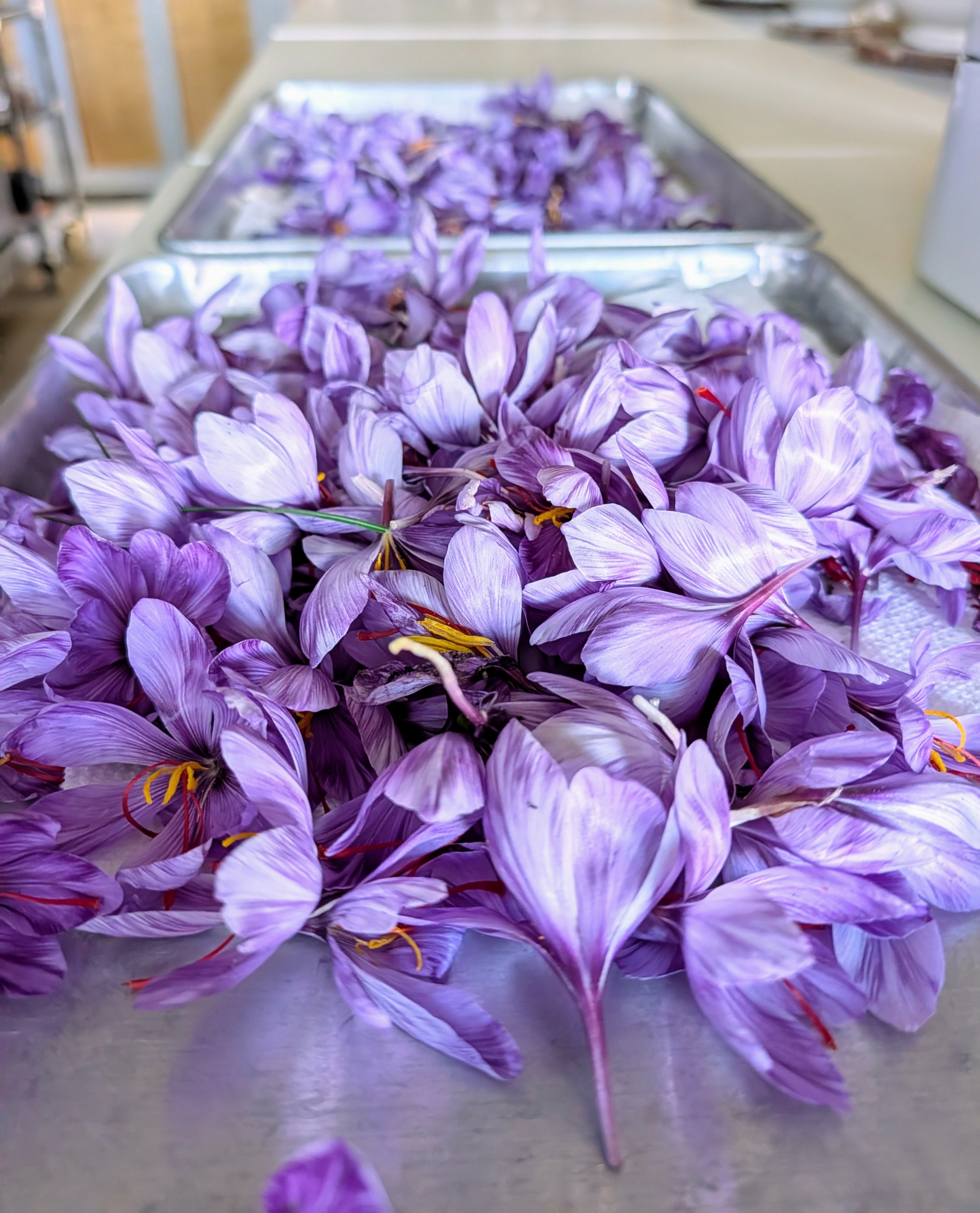
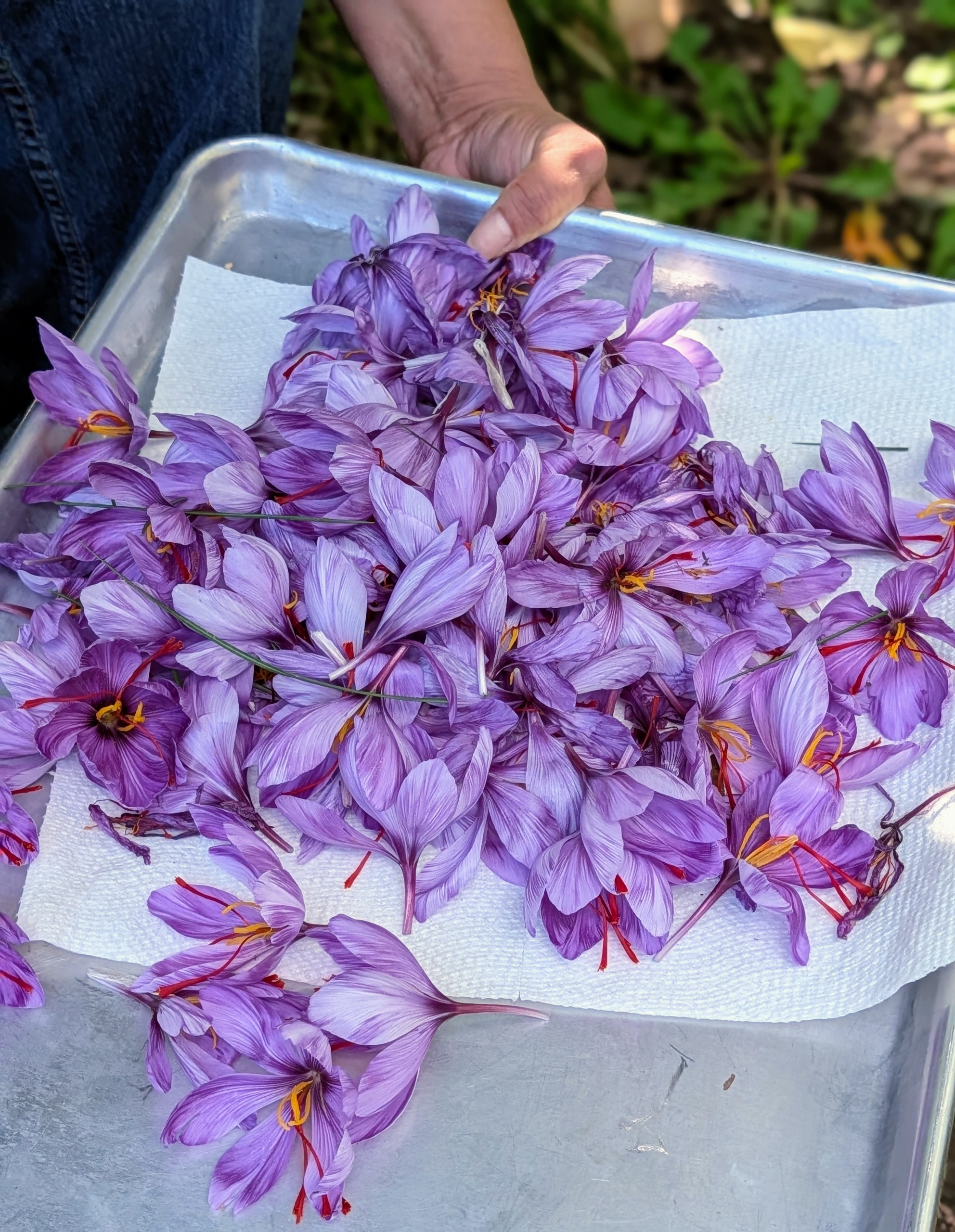
Saffron harvest season at my farm has begun a couple weeks ahead of schedule. I’ve already filled two trays of flowers and their beautiful red-gold stigmas.
Hannah first started planting saffron at my farm in 2020 and has planted a generous amount of saffron corms every year since.
Saffron, Crocus sativus, is planted in late summer. It is a sun-a worshipping plant so it loves to be planted in dry open areas rather than in the shade. Saffron does best with at least six hours of direct sunlight a day and well-drained soil.
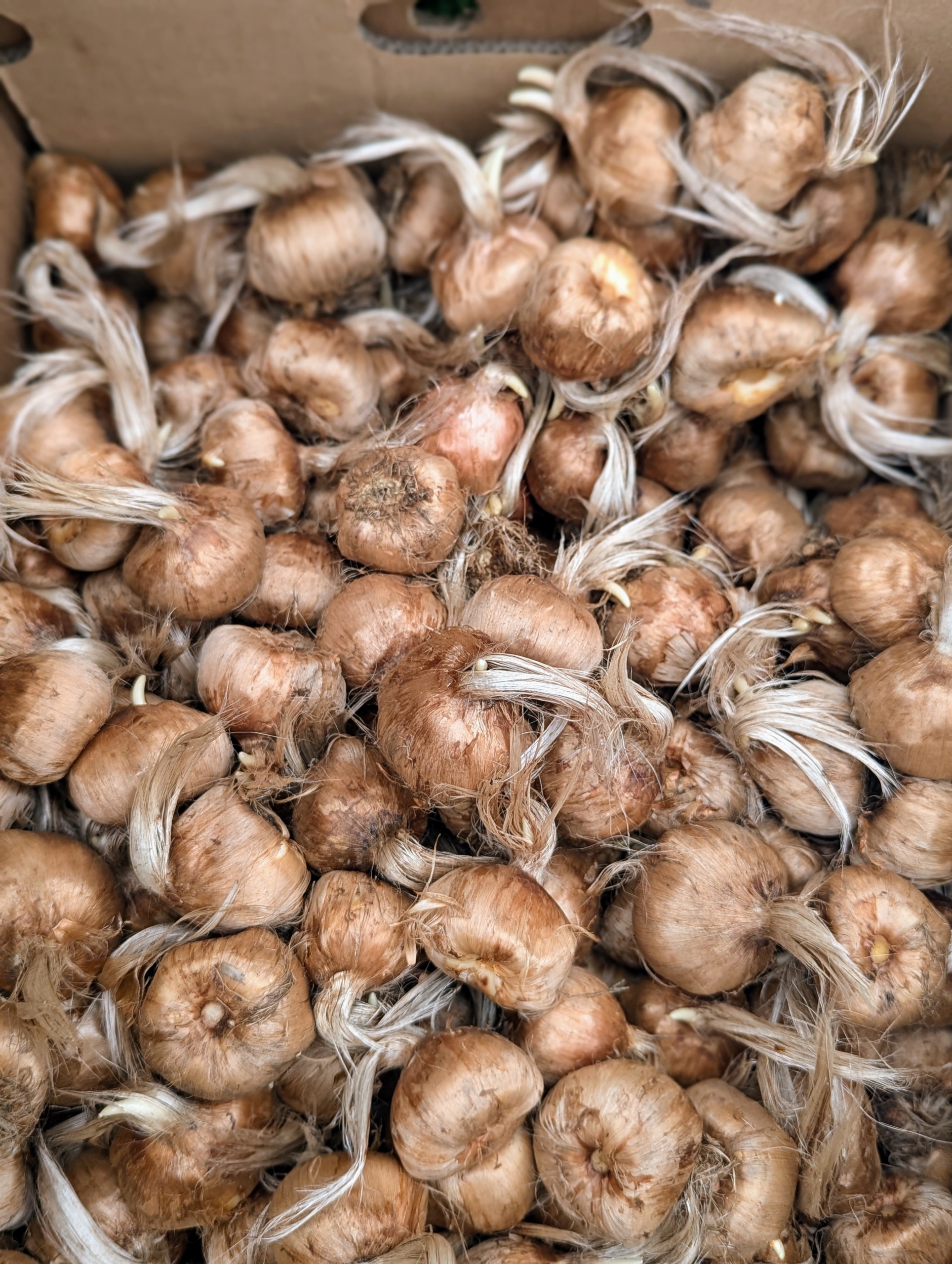
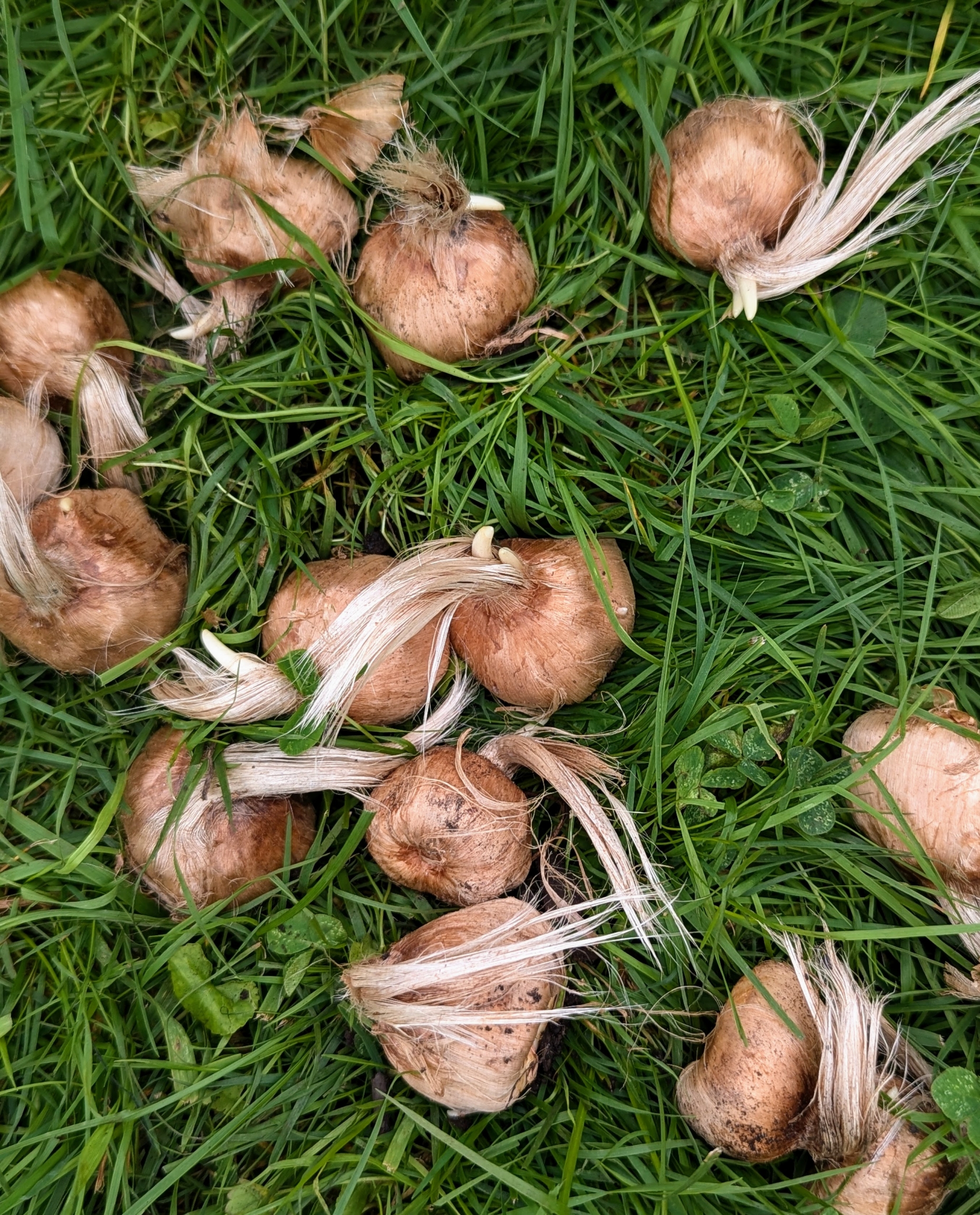
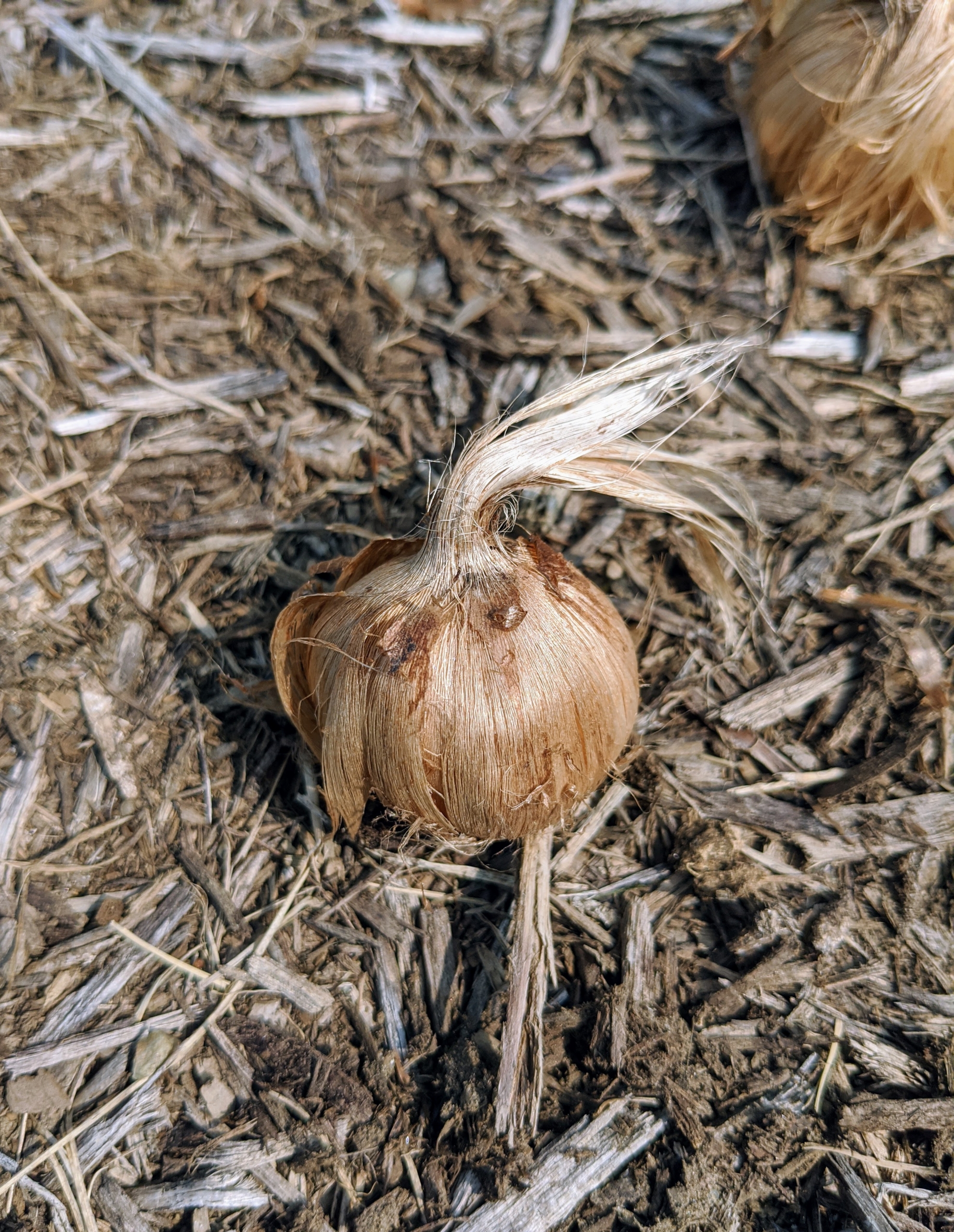
The compact corms are small, brown globules that can measure as large as two-inches in diameter, have a flat base, and are shrouded in a dense mat of parallel fibers referred to as the “corm tunic”.
Do you know the difference between a corm and a bulb? Both corms and bulbs are parts of the plant that store food to help it grow and bloom. A bulb is a plant stem and leaf that grows underground in layers. A tiny version of the flower is at the center of the bulb. Tulips, lilies, iris, daffodils and onions are examples of bulbs. A corm is an underground stem that serves as the base for the flower stem and is solid, not layered.
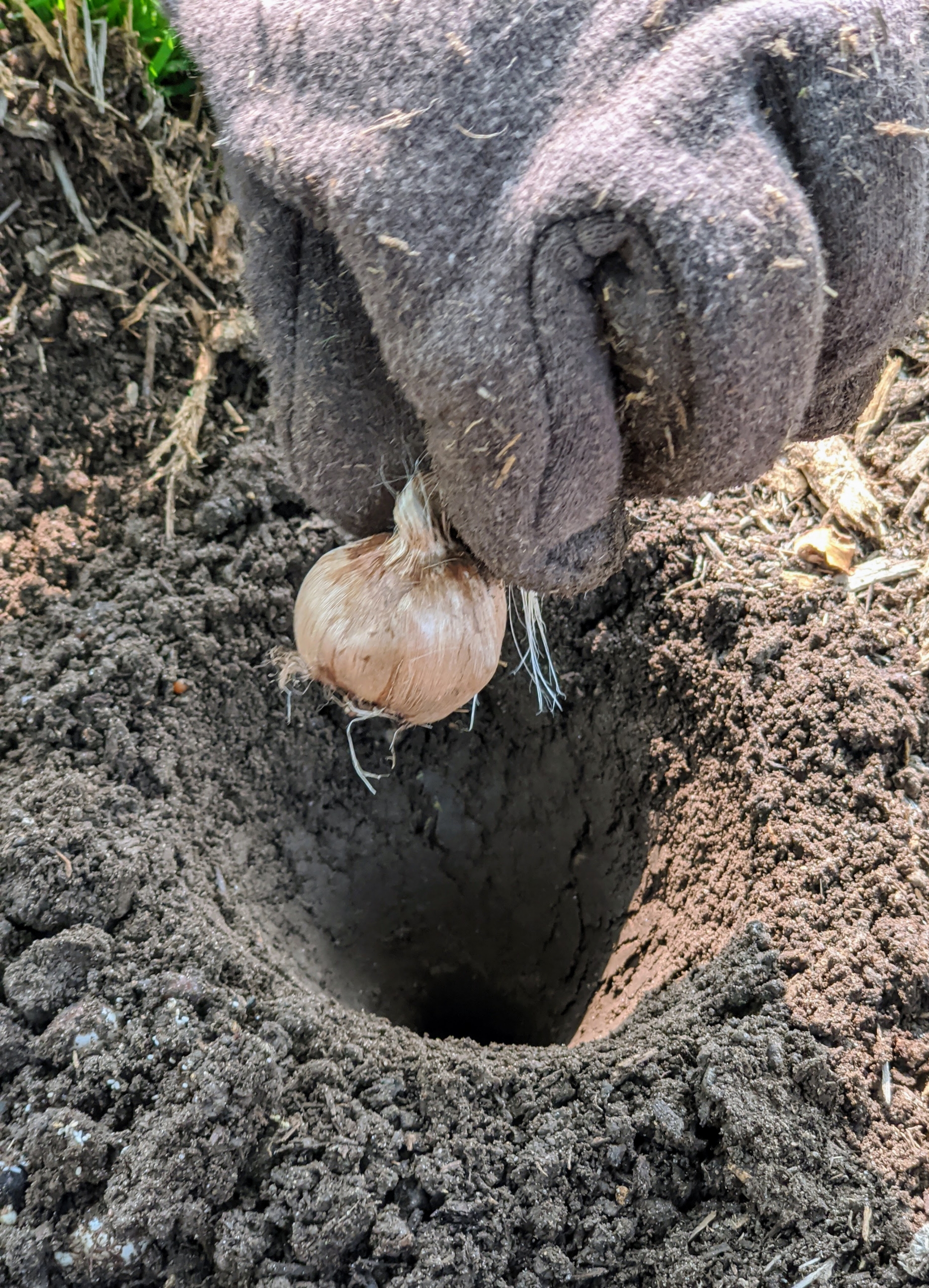
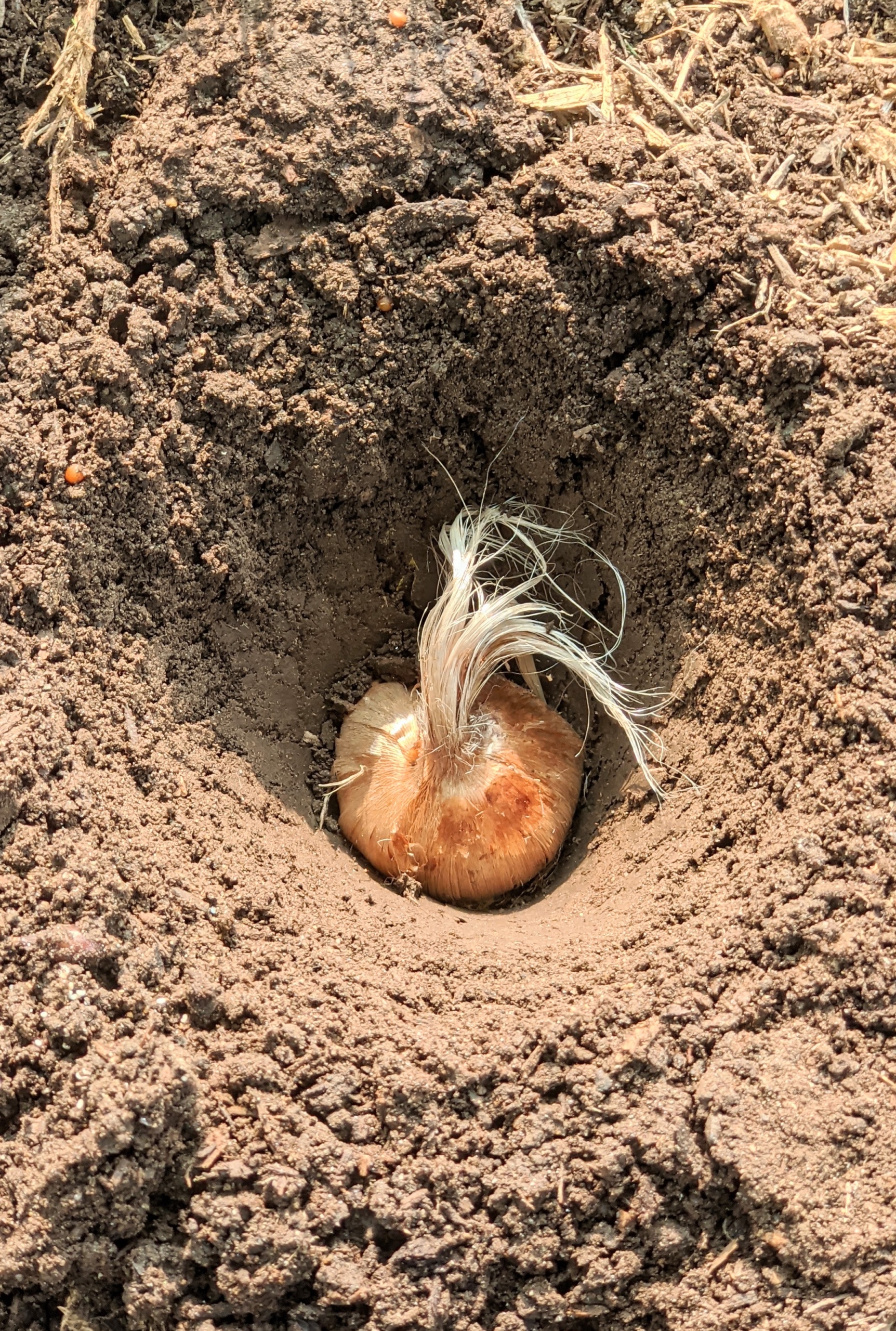
When planted, each saffron corm is carefully placed in a hole, with the pointed end faced up, or root end faced down. This is very important, so the plant grows properly. When purchasing bulbs and corms, always look for those that are plump and firm, and avoid those that are soft.
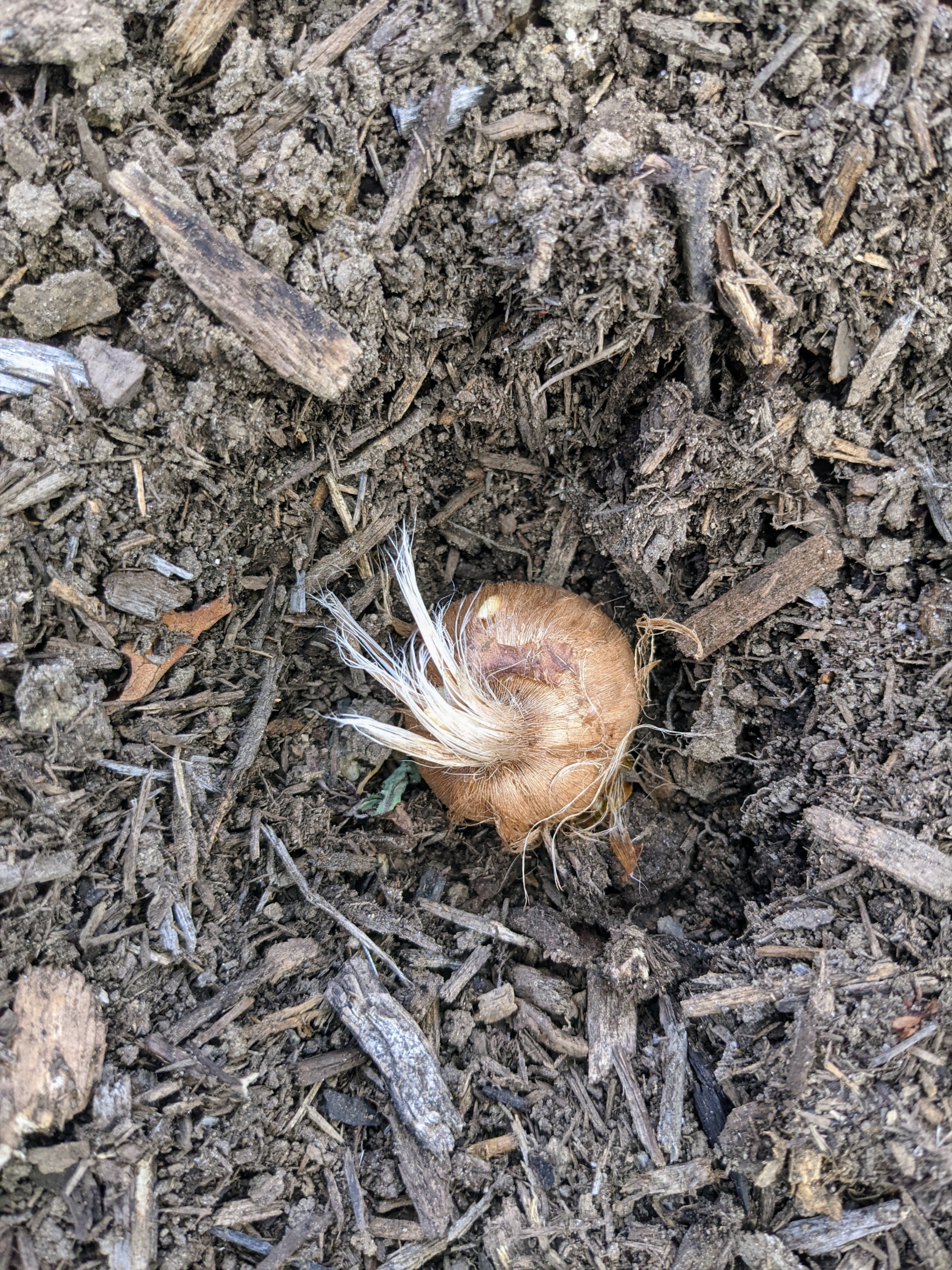
Here is the saffron corm just at the top of the hole before it is pushed in more deeply and backfilled – see how it is faced up. Under optimal conditions, saffron typically takes about five to eight weeks from planting to first bloom, with leaves emerging in four to six weeks and flowers following within another two to four weeks.
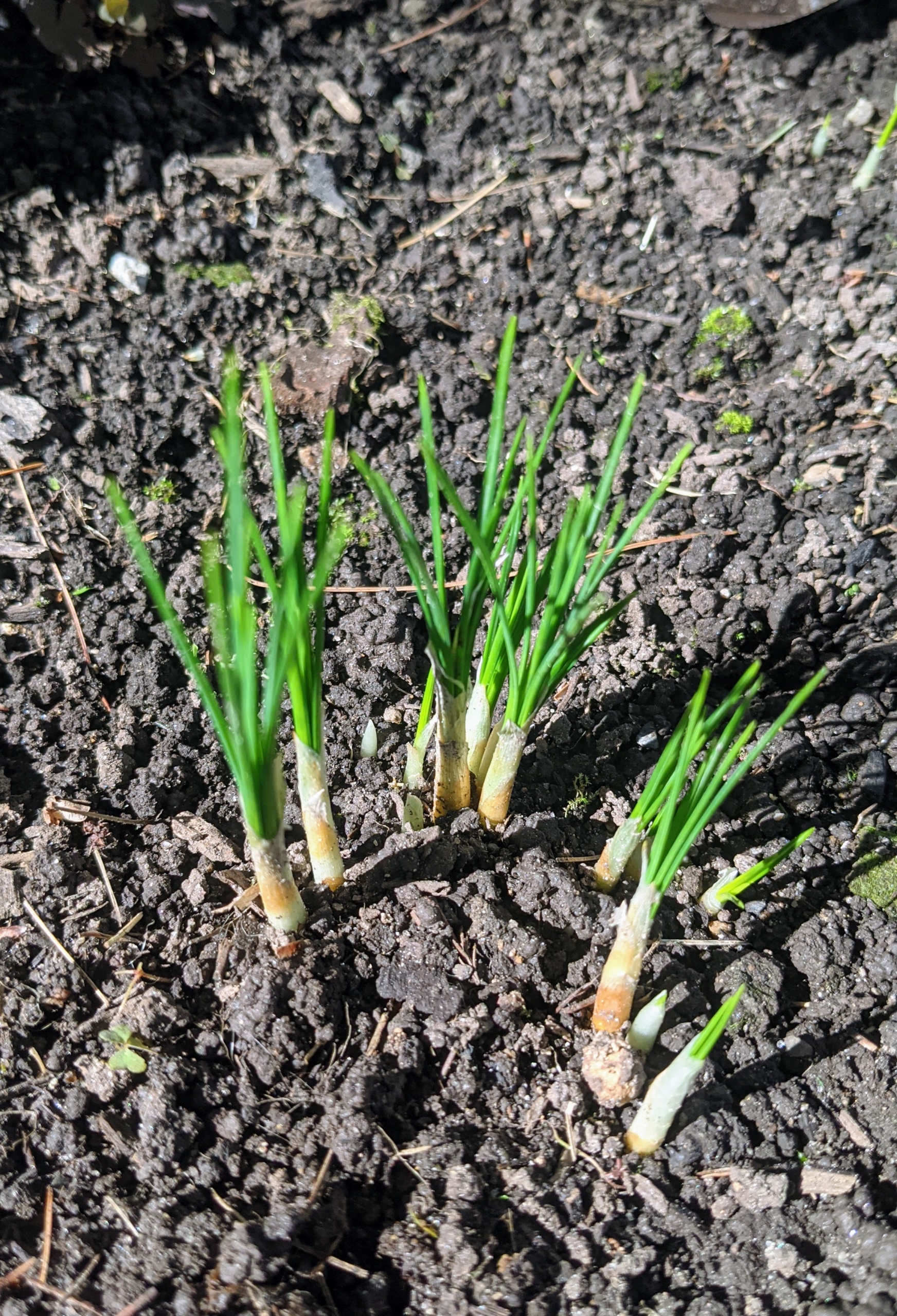
By early October, or in this year’s case a little sooner, the saffron sprouts are visible. They emerge with thin, straight, and blade-like green foliage leaves, which expand after the flowers have opened. Saffron is a perennial plant, meaning it lives for more than two growing seasons and returns year after year from its underground corms without needing replanting.
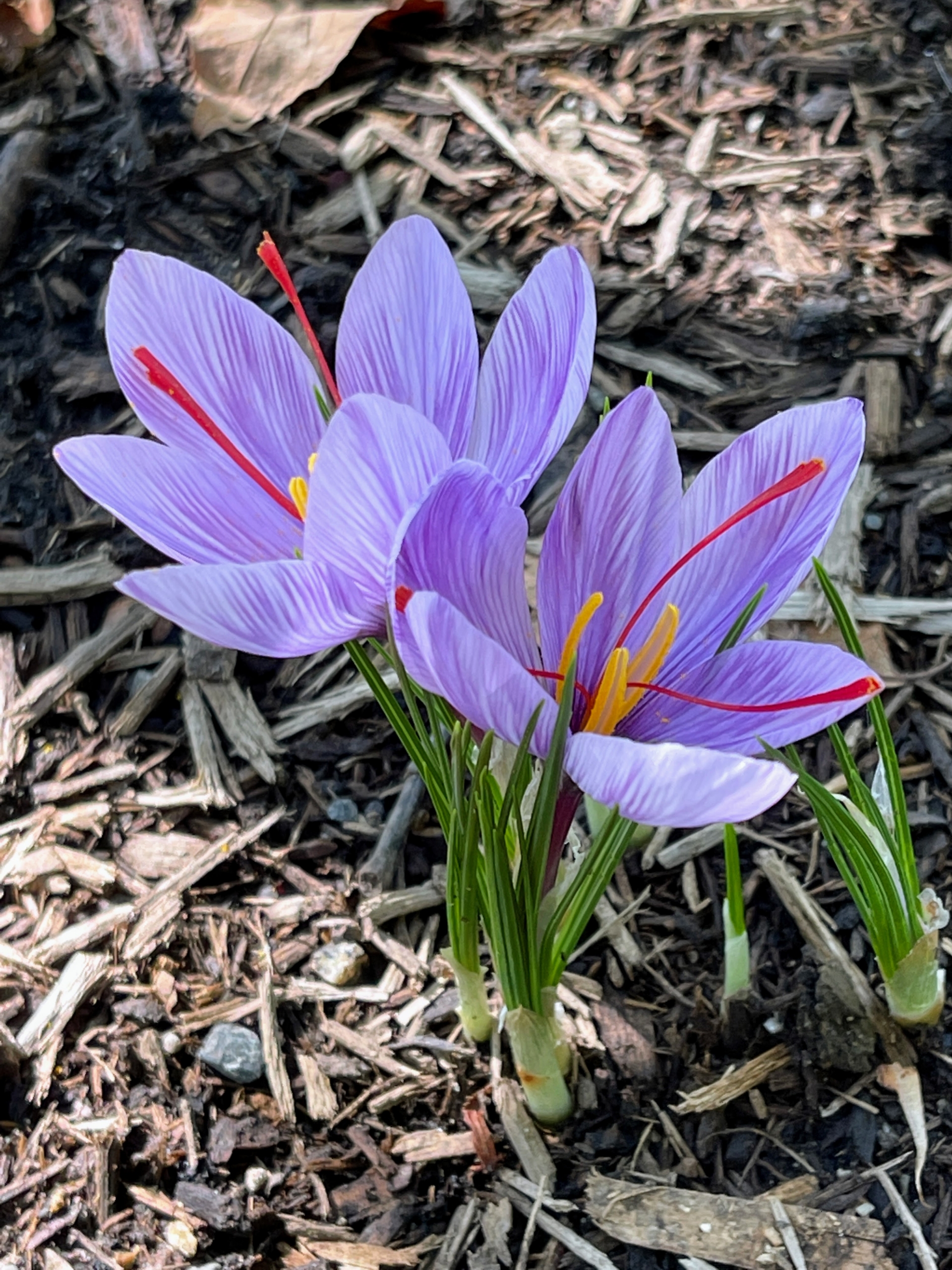
The lilac-colored flower appears next. The blooms last about three weeks, so I asked my housekeepers to check them often and pick what’s ready.
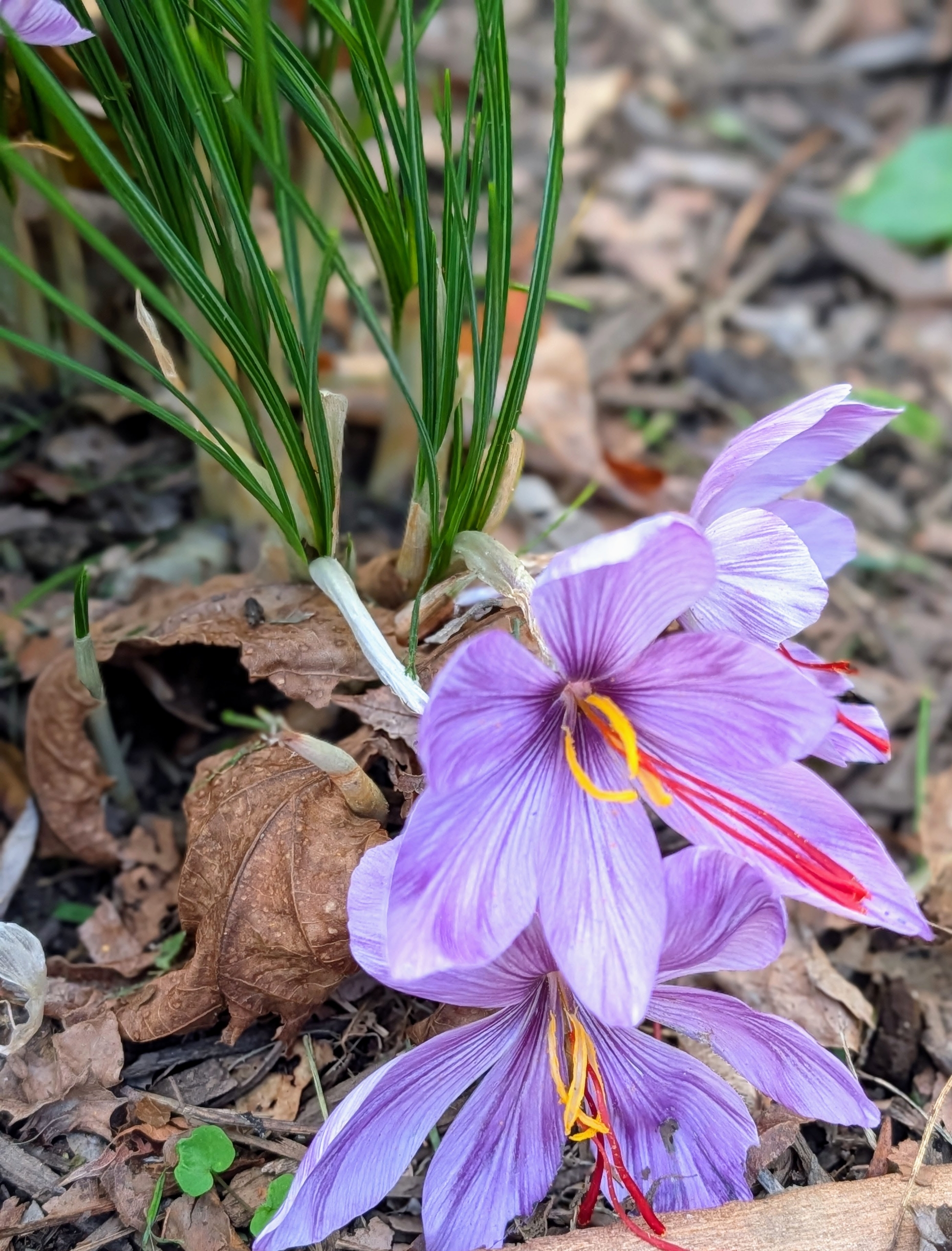
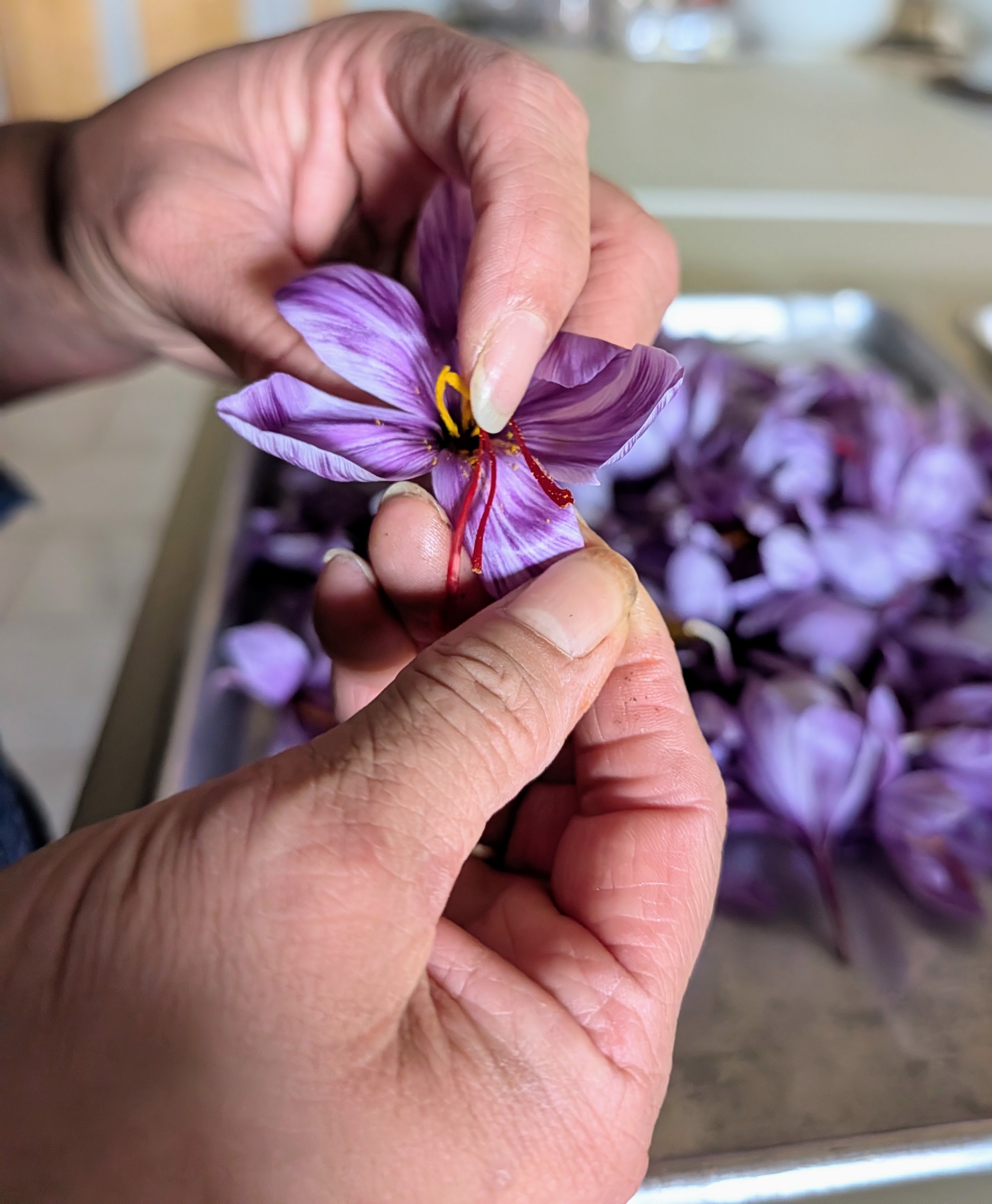
It is the bright red-orange threads of saffron, the stigmas, or female portion, of the saffron crocus flowers that make up the spice.
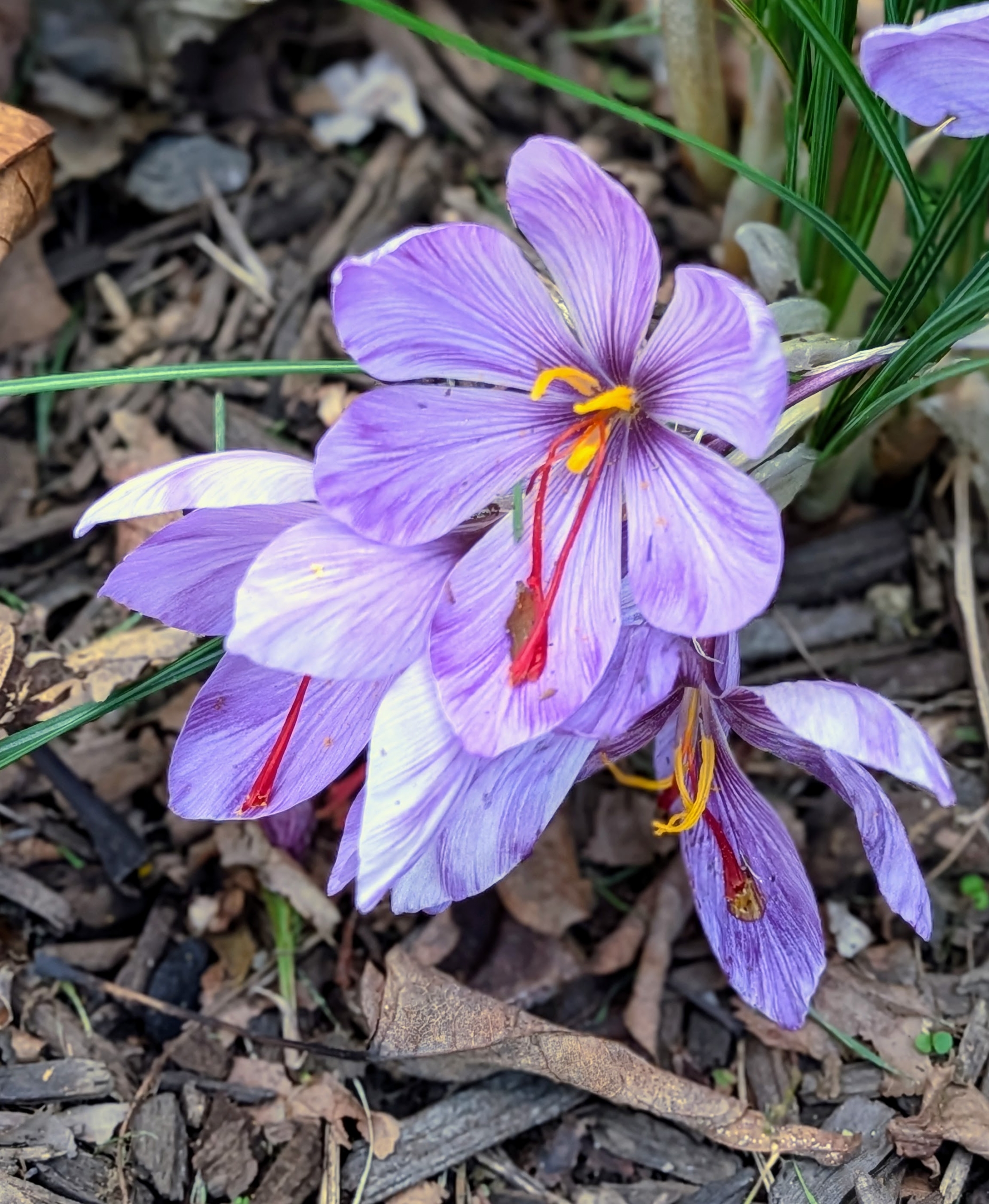
Three stigmas are borne in the center of each cup-shaped bloom. The best time to harvest the stigmas is mid-morning on a sunny day when the flowers have fully opened and are still fresh. The stigmas on this flower are ready to harvest. And don’t confuse them with autumn crocus, which I also grow at my farm. Autumn crocus belongs to a different plant family, and is highly toxic. Look for the key features of saffron – three long, vivid red stigmas and three yellow stamens.
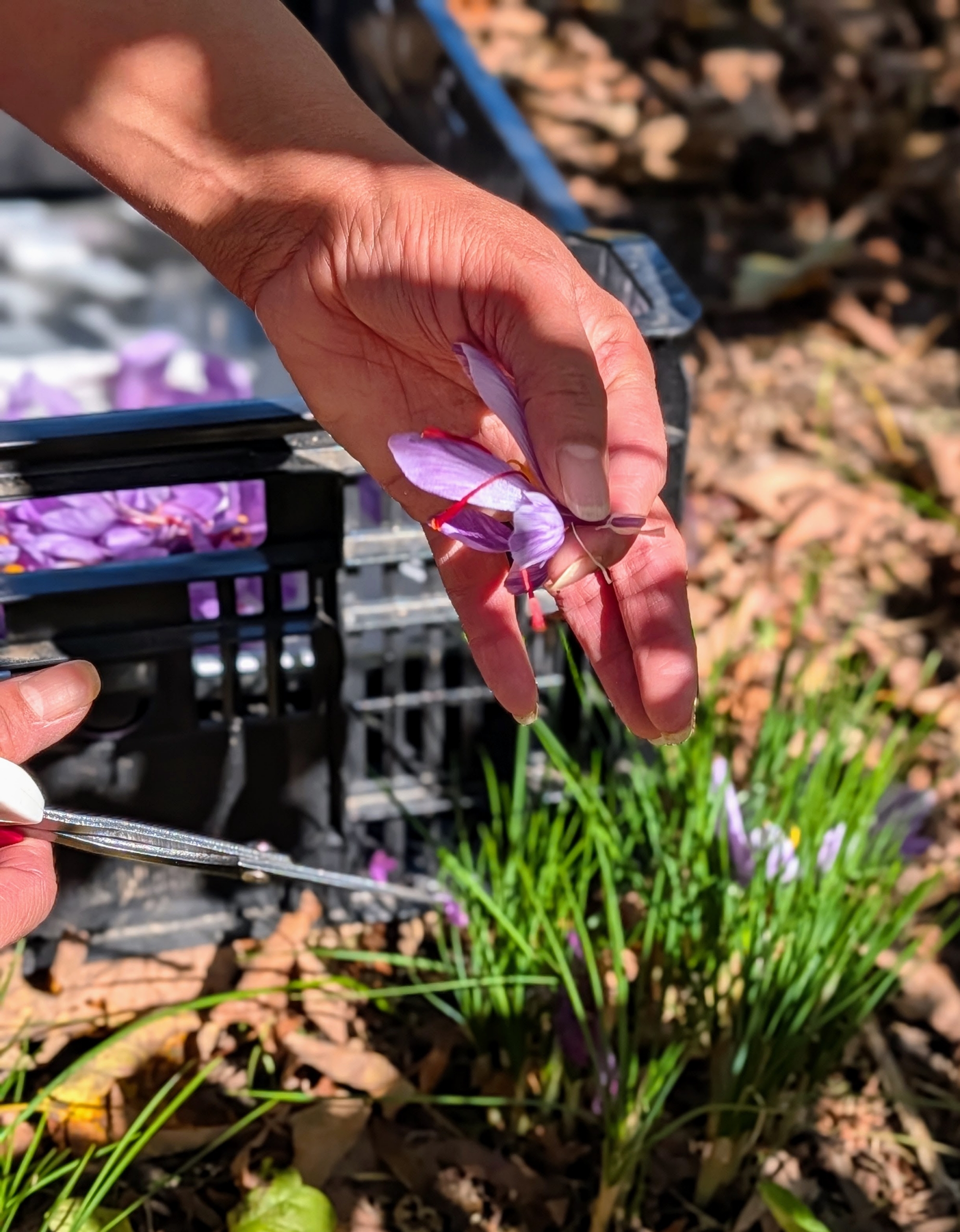
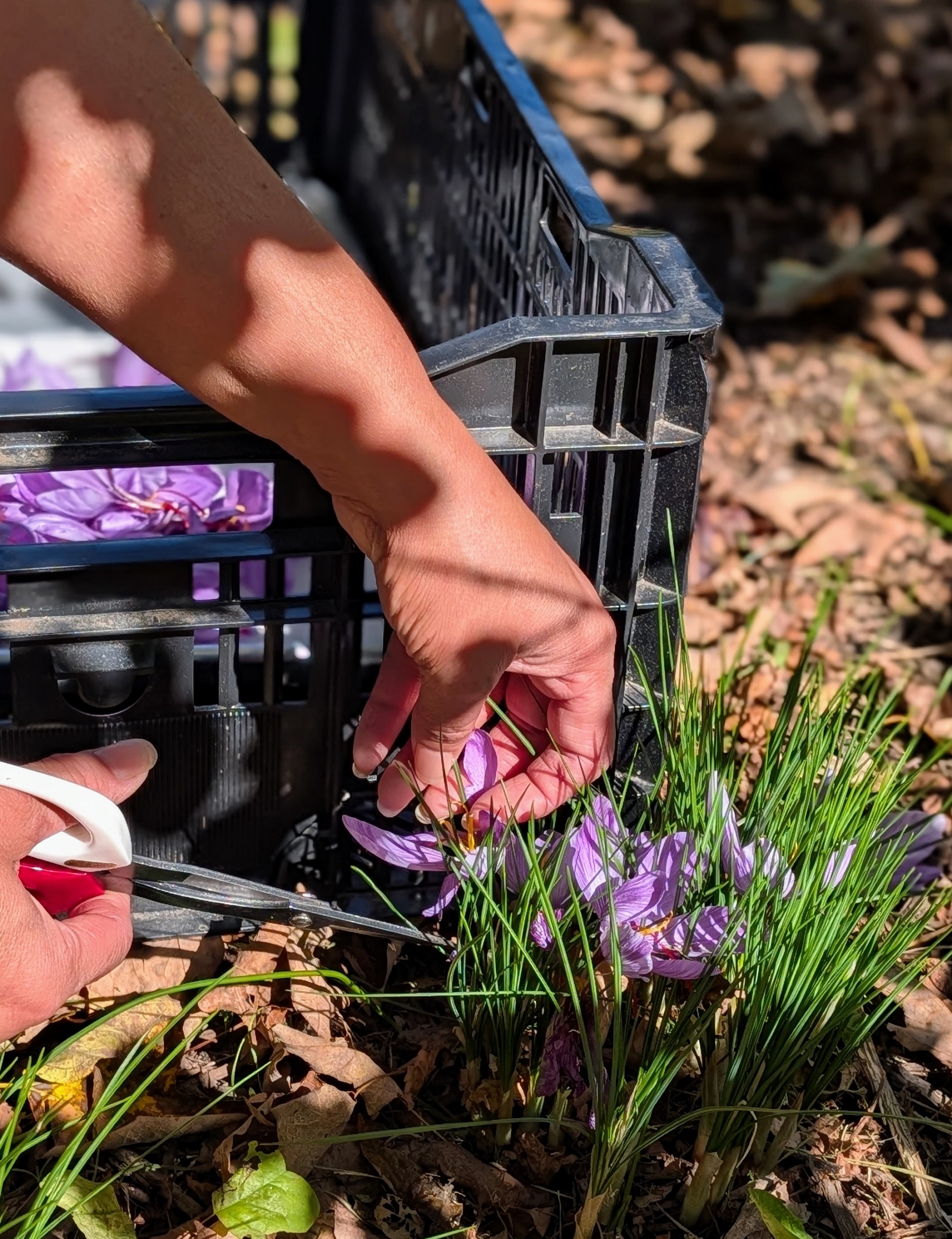
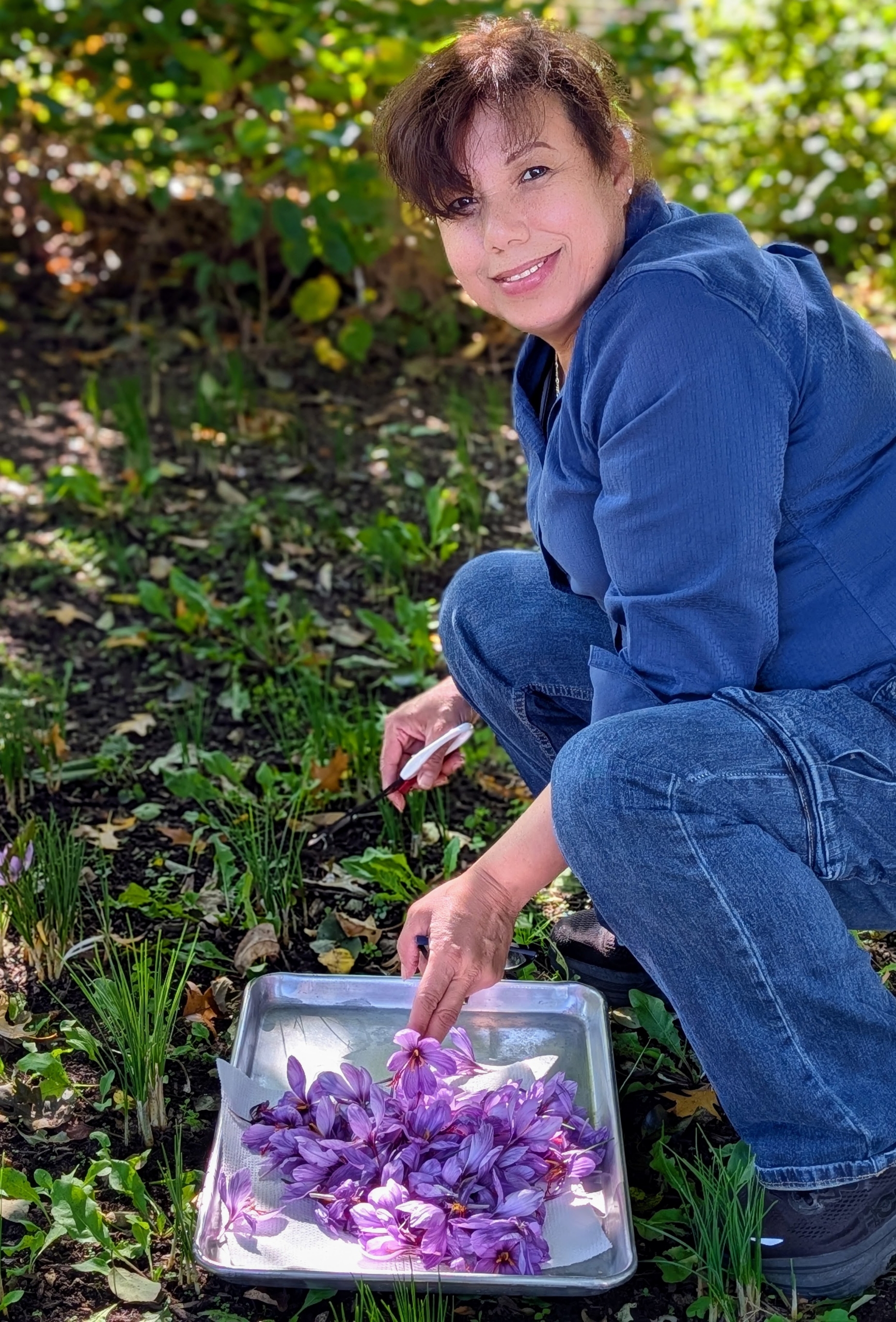
Elvira harvests the blooms and places them gently on a baking sheet tray. They smell wonderful – a sweet, honey-like fragrance. The leaves of the saffron will persist for eight to 12 weeks, then wither and vanish, leaving no trace of the corms below until the flowers appear again next fall.
I instructed Elvira to cut carefully, but the blooms can also be pinched off at the base using one’s thumbnail and index finger.
It doesn’t take Elvira long to harvest a good amount of saffron. But one must pay close attention to the crop. Saffron crocus blooms at dawn and must be harvested the same day, because the flower withers within hours.
Here is the harvest from just one day. The saffron harvest window is typically only about two to three weeks.
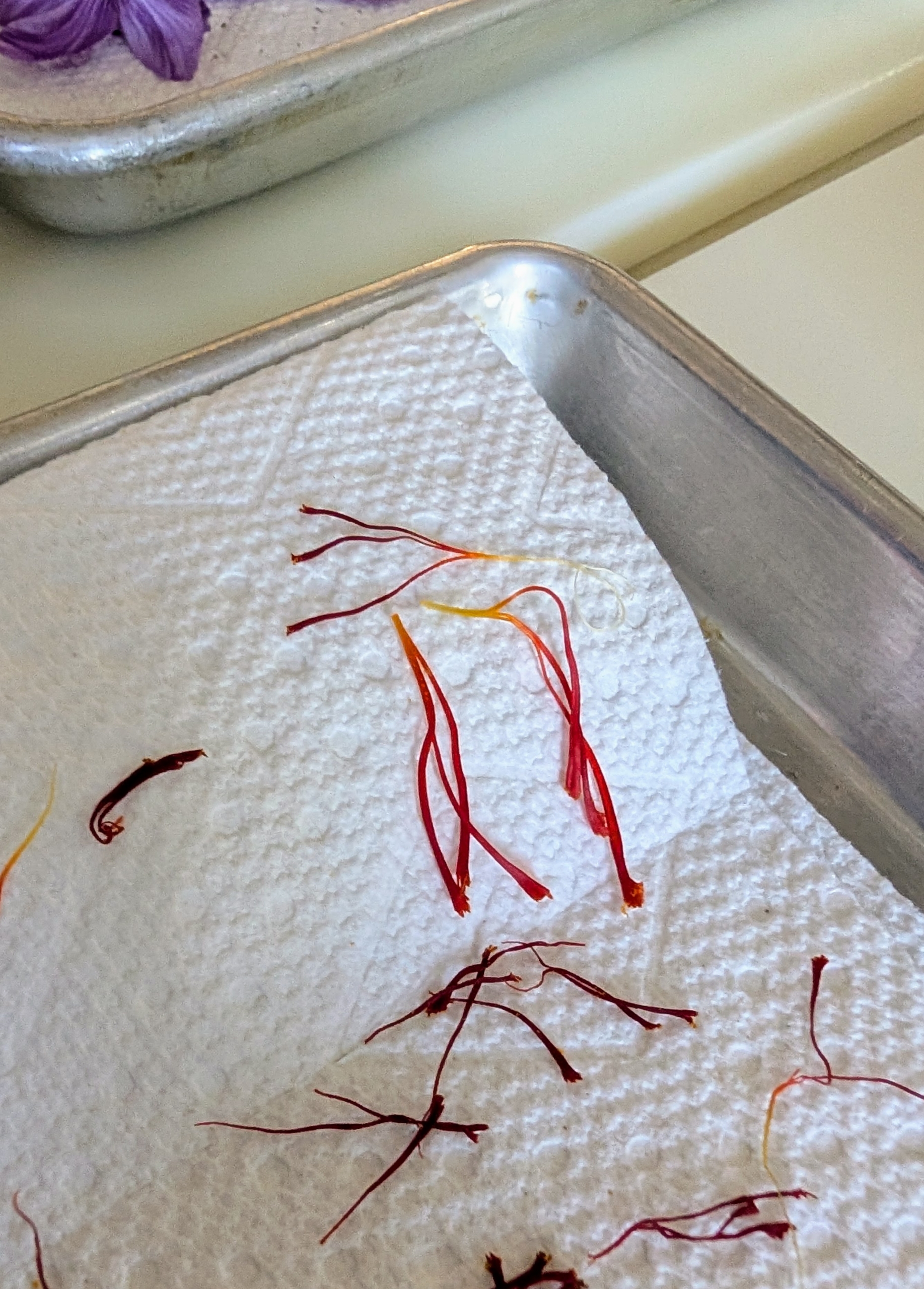
Elvira brings them all to my Winter House kitchen. These are the red stigmas that make up the spice. It takes hundreds of flowers to produce a commercially useful amount, and lots of labor, which explains why saffron has long been the world’s most costly spice by weight.
Elvira carefully pulls off the saffron stigmas, separating them from the flowers and setting all of them on a paper towel lined baking sheet to dry.
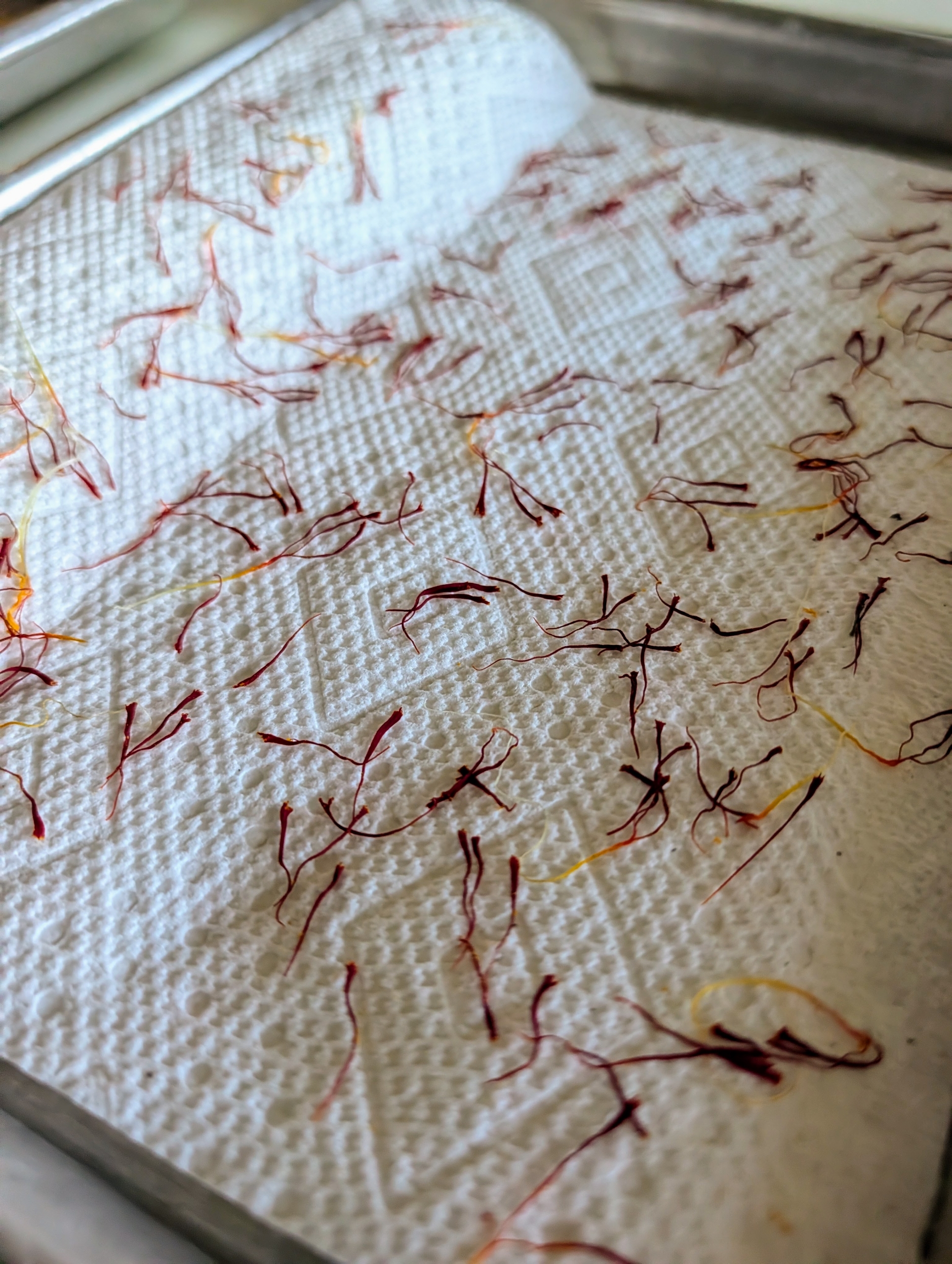
These were picked over the weekend. They will all be left to air dry for several days.
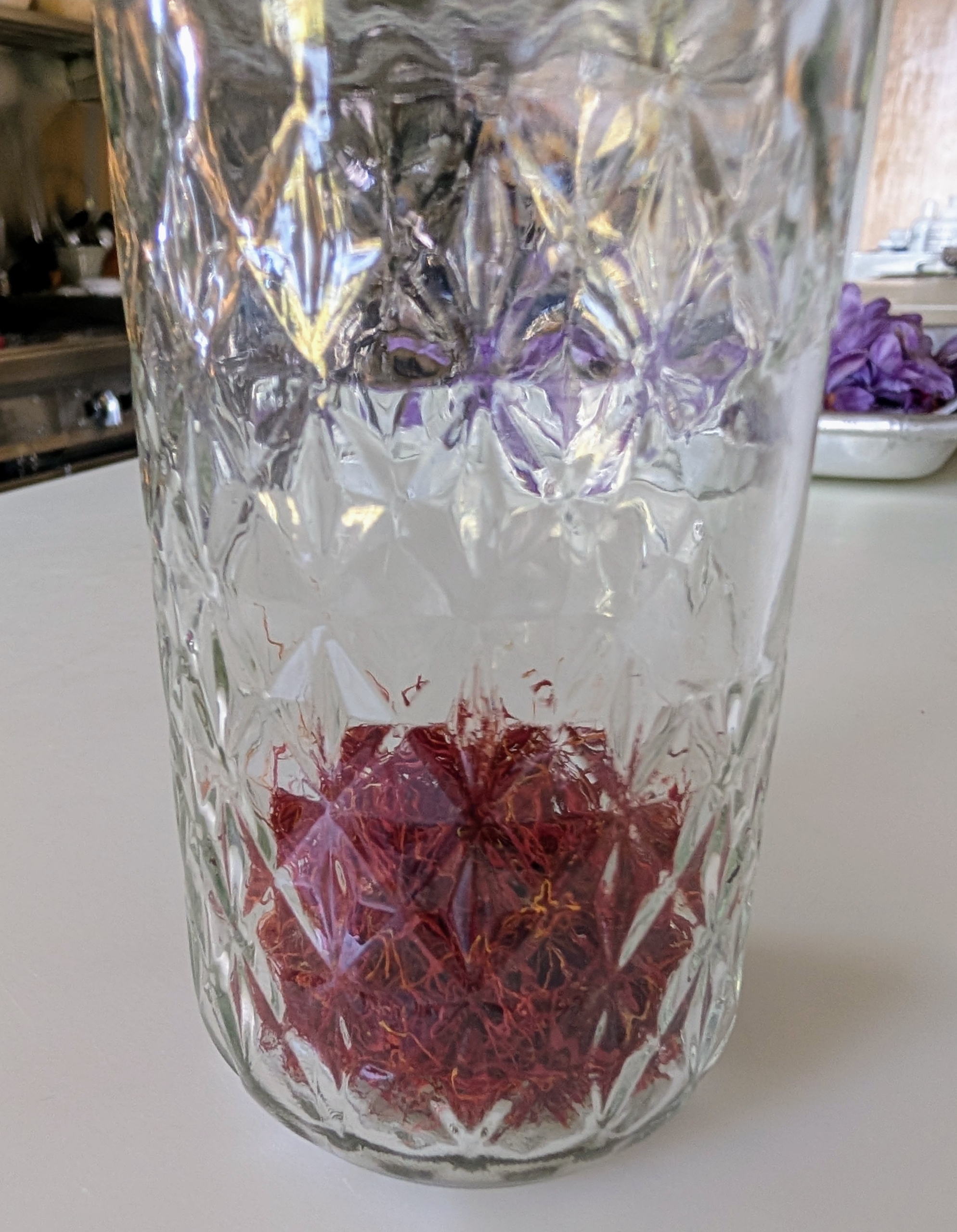
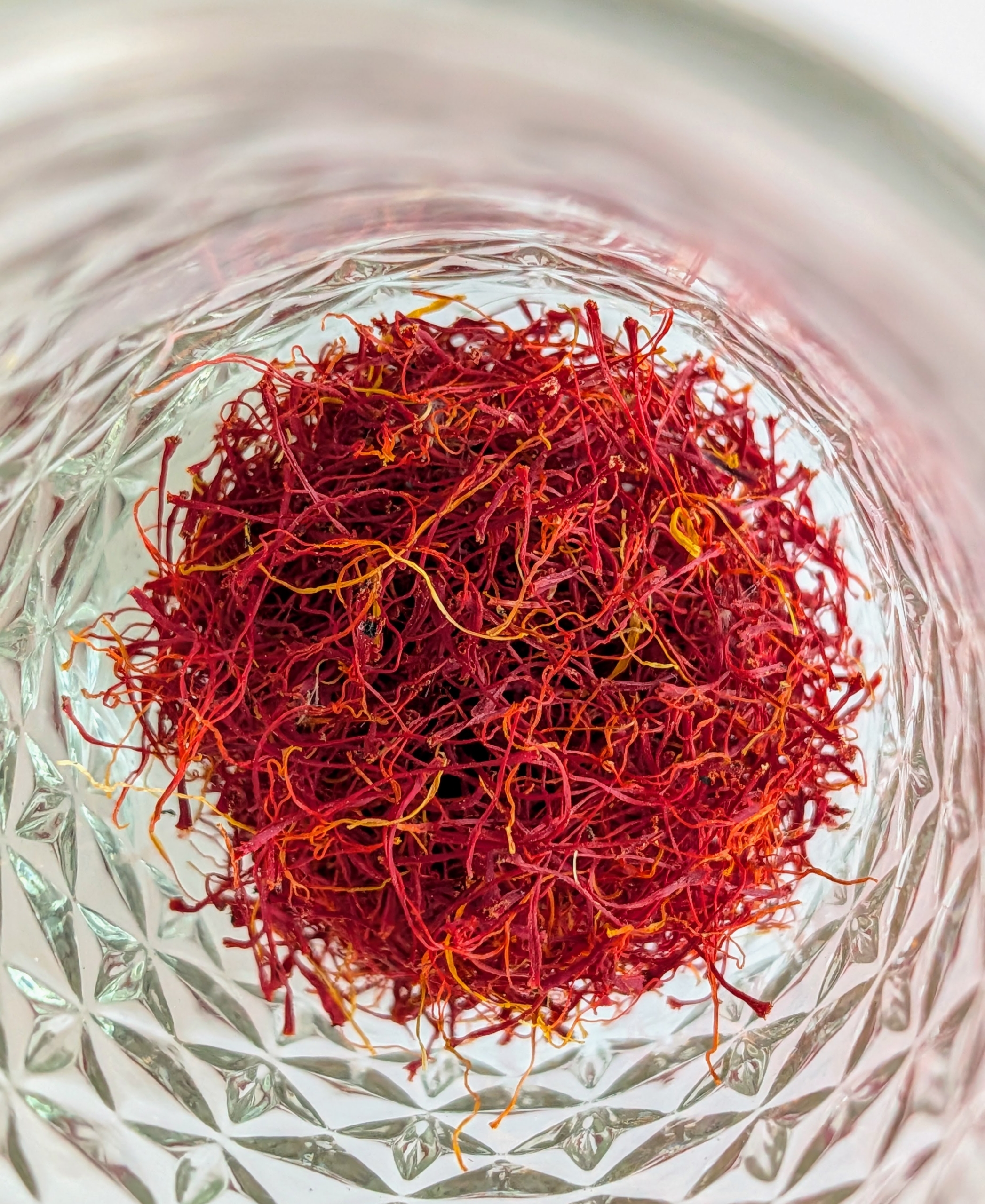
Once dried, they can be stored in a jar until used. Here is some of the dried saffron from last year’s harvest. I am so excited to be able to grow this precious spice right here at my farm.
Fine quality saffron is is deep crimson with a vivid, almost glowing red tone that darkens to maroon at the tips. Do you cook with saffron? Learn more about this wonderful spice on Hannah’s Instagram page @hannahcmilman.
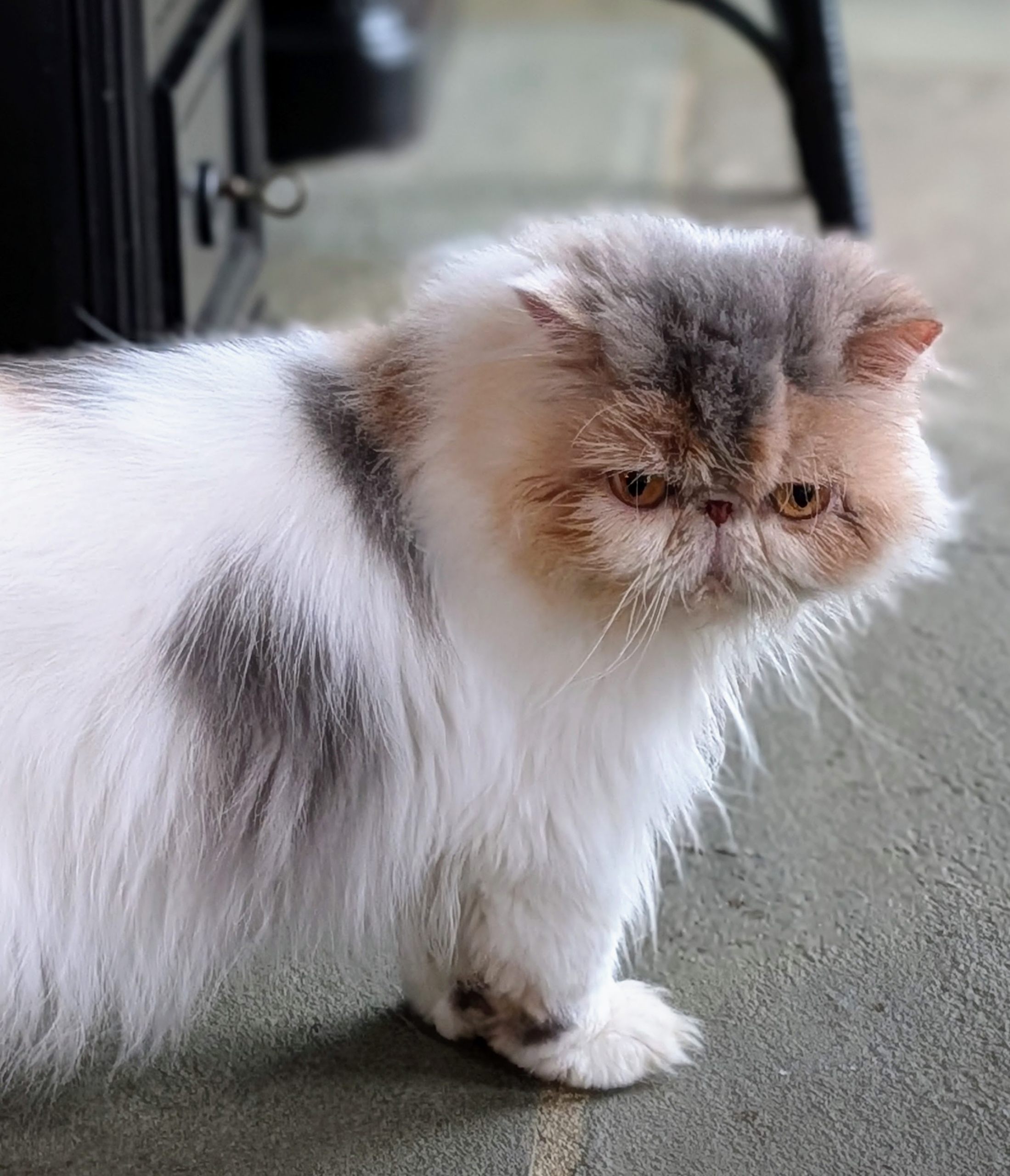
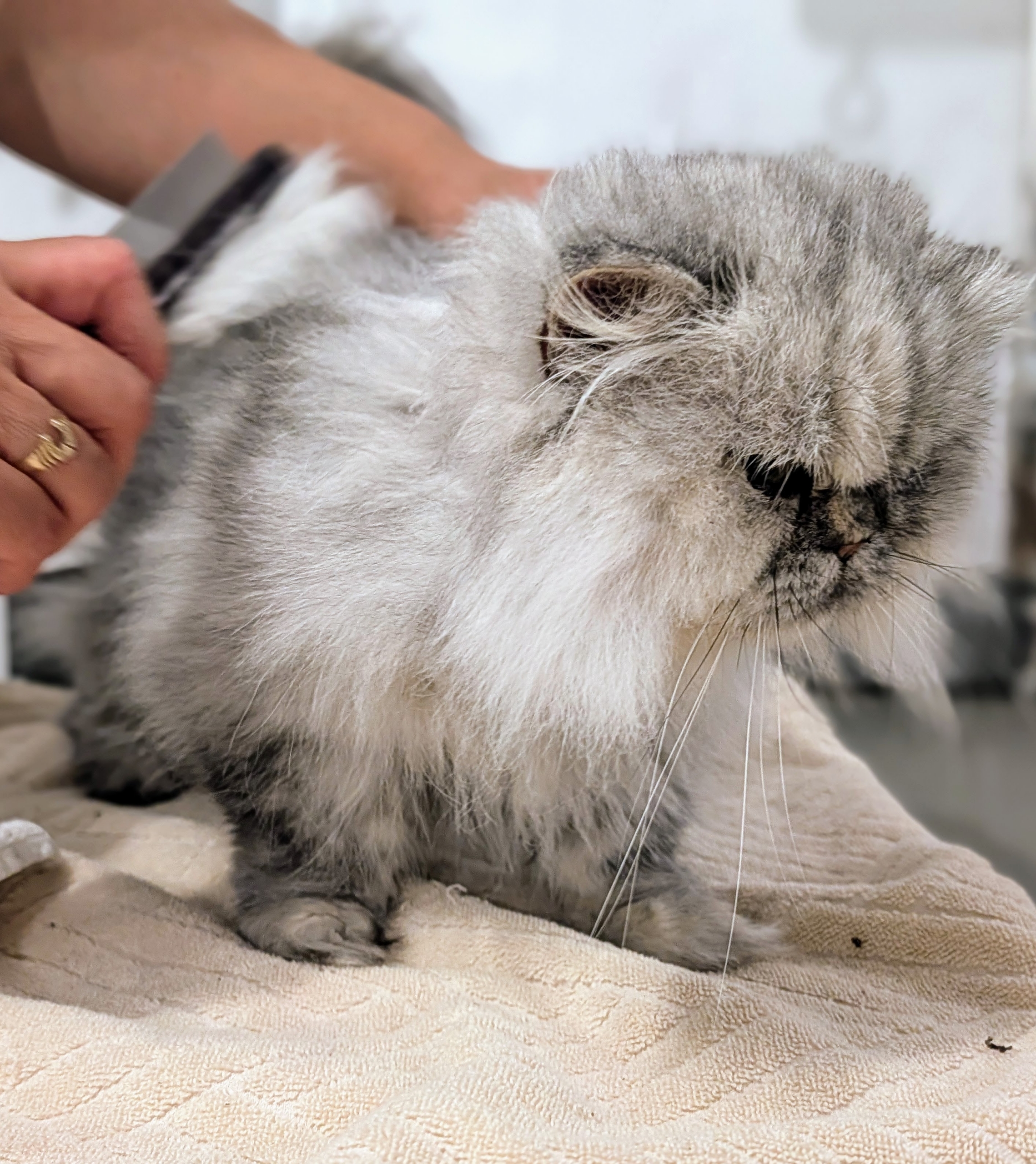
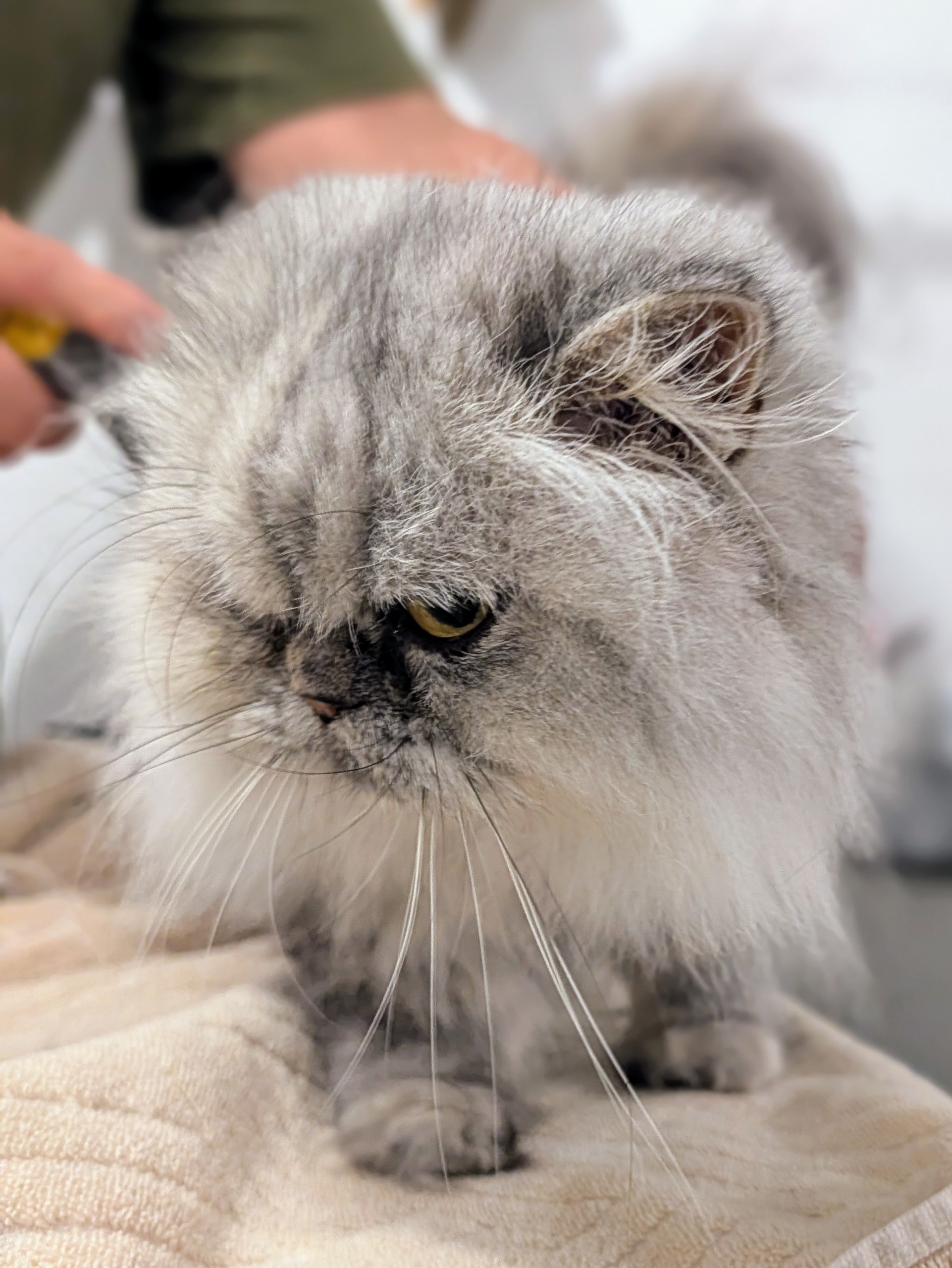
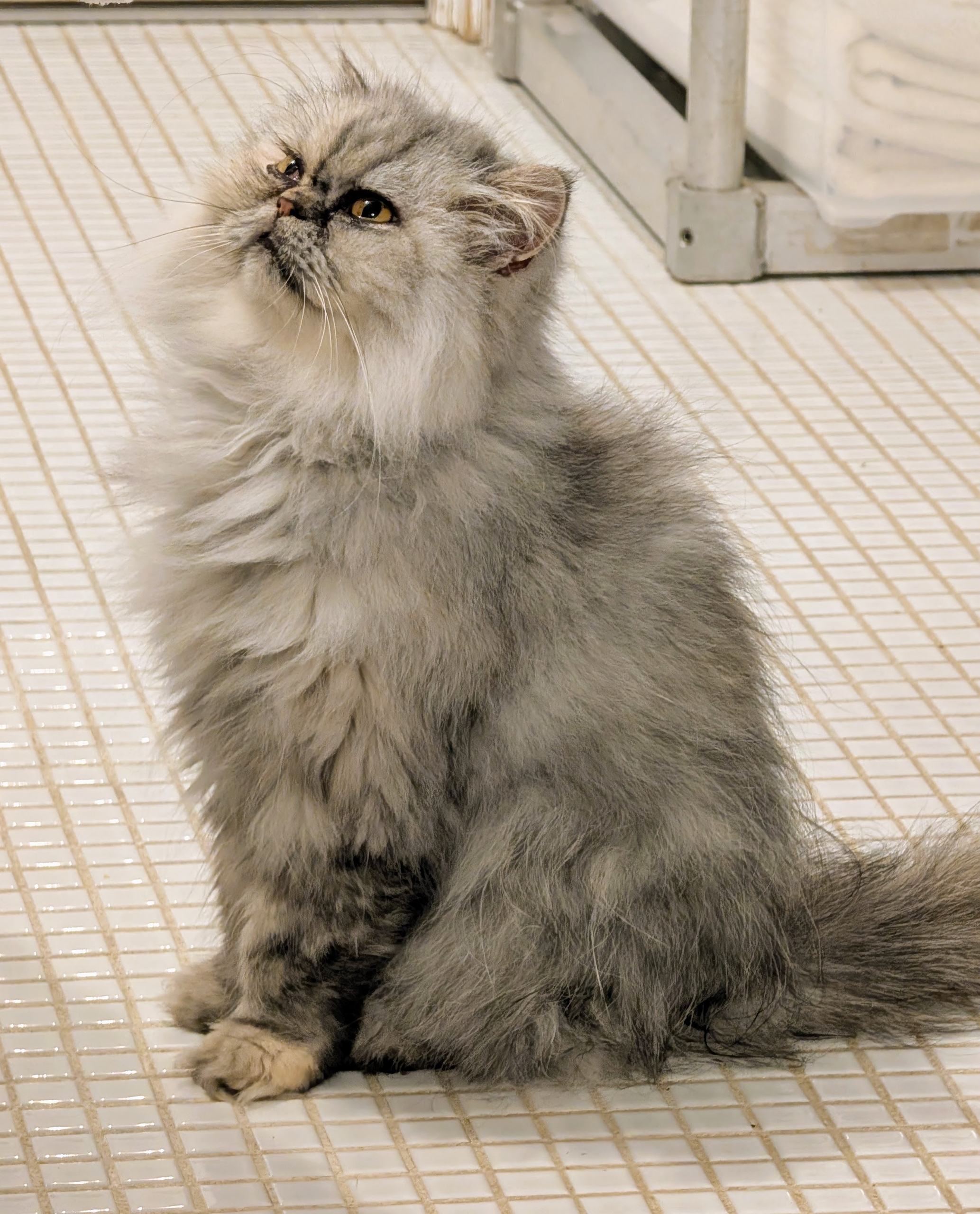
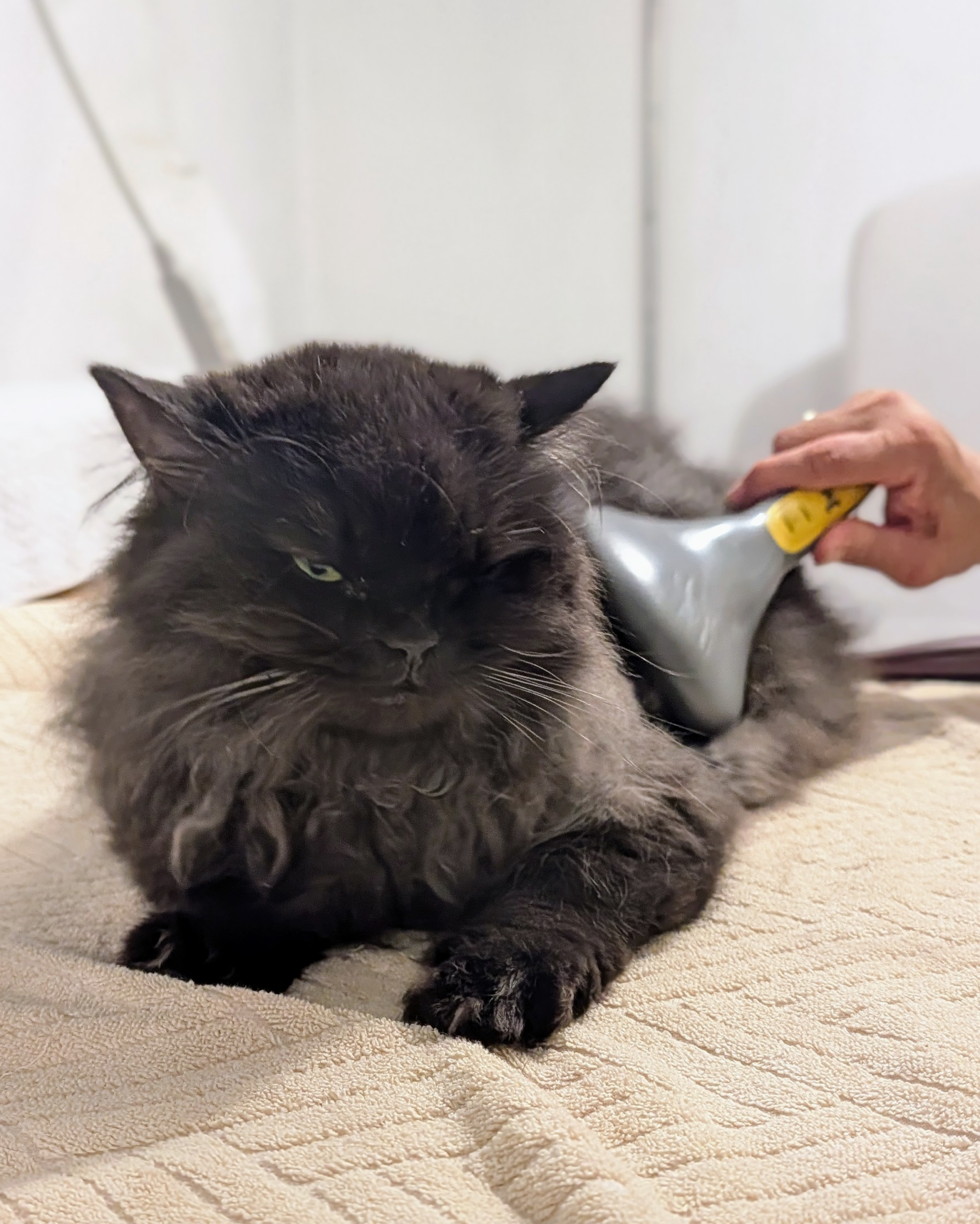
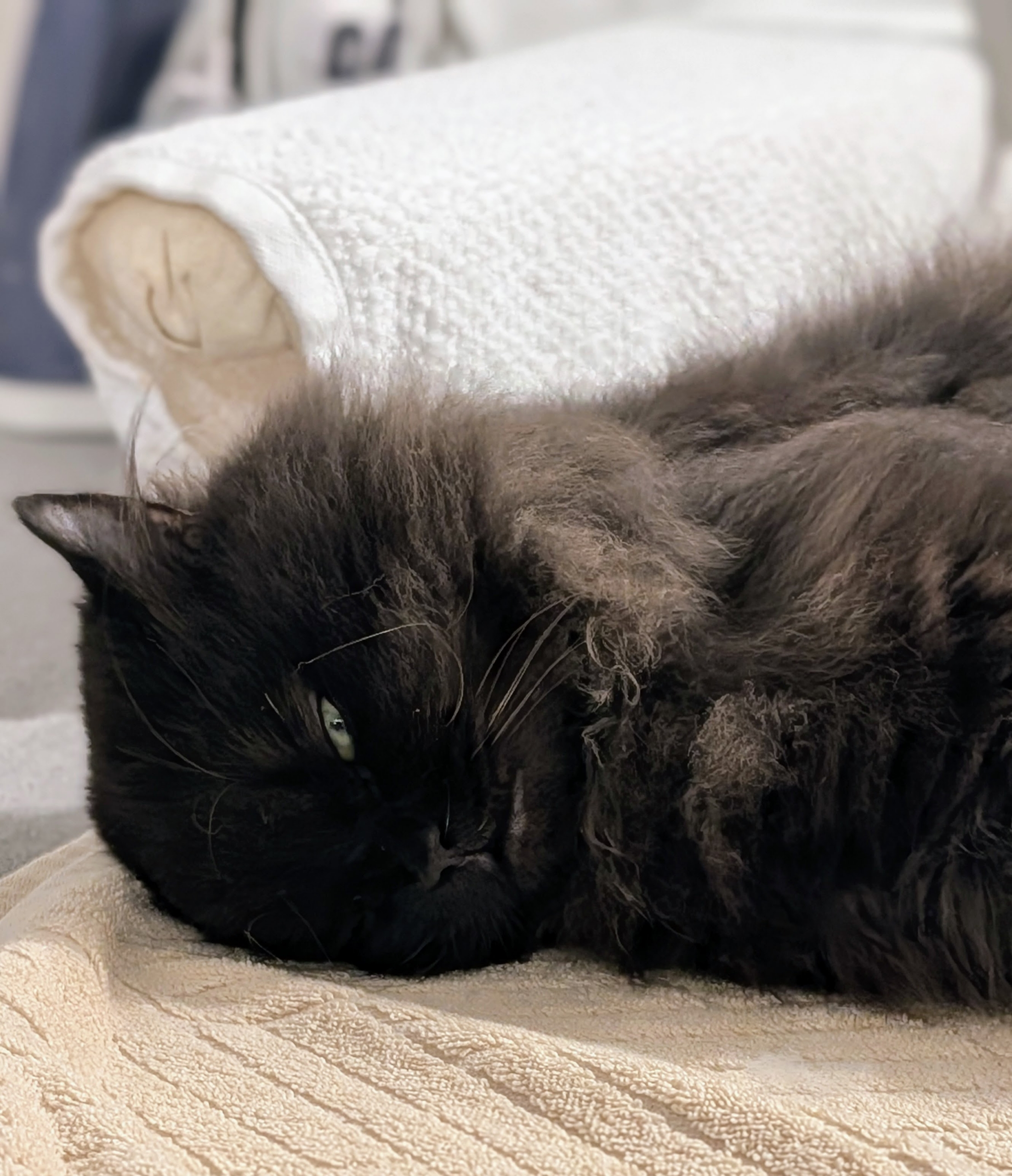
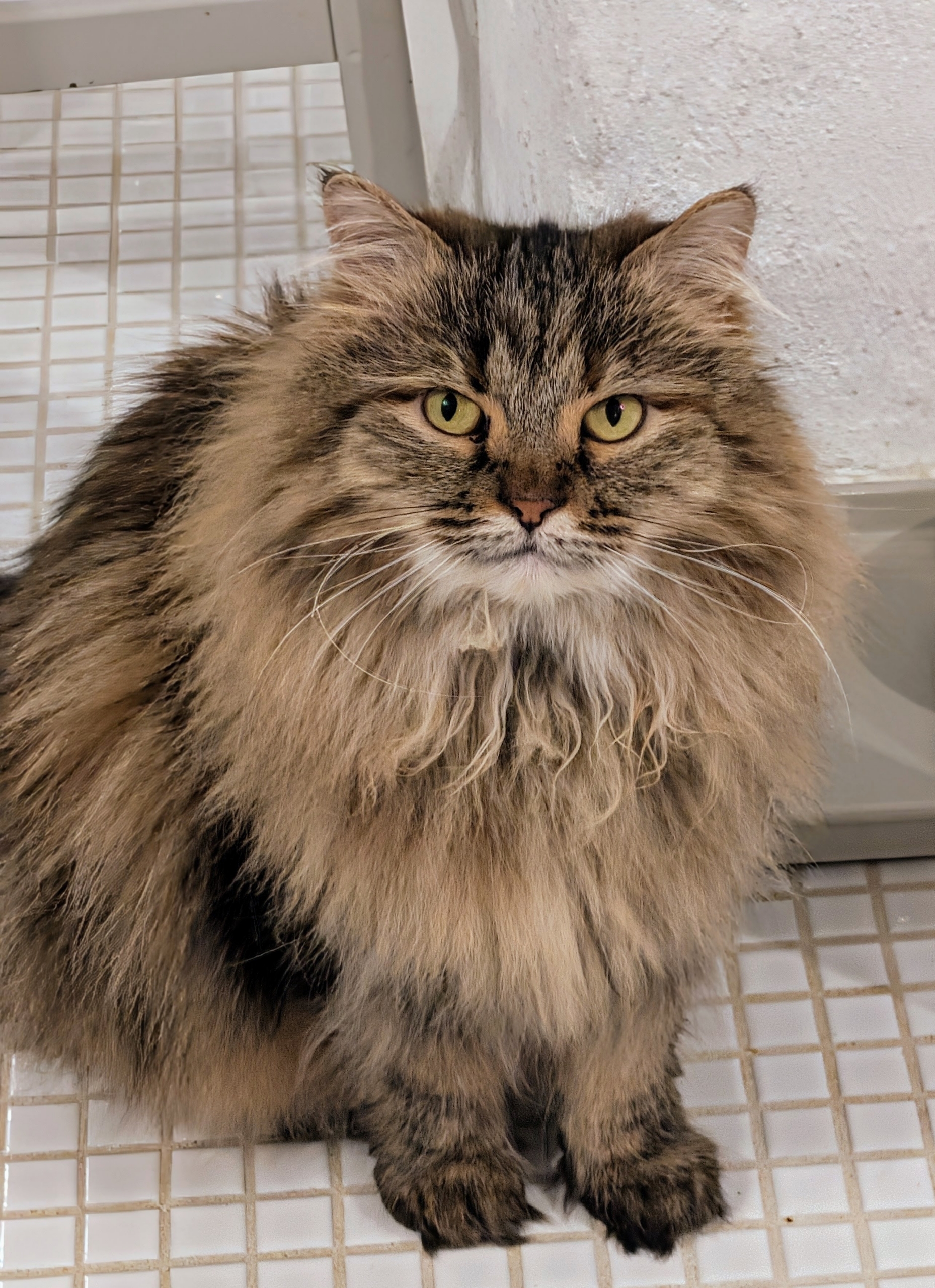
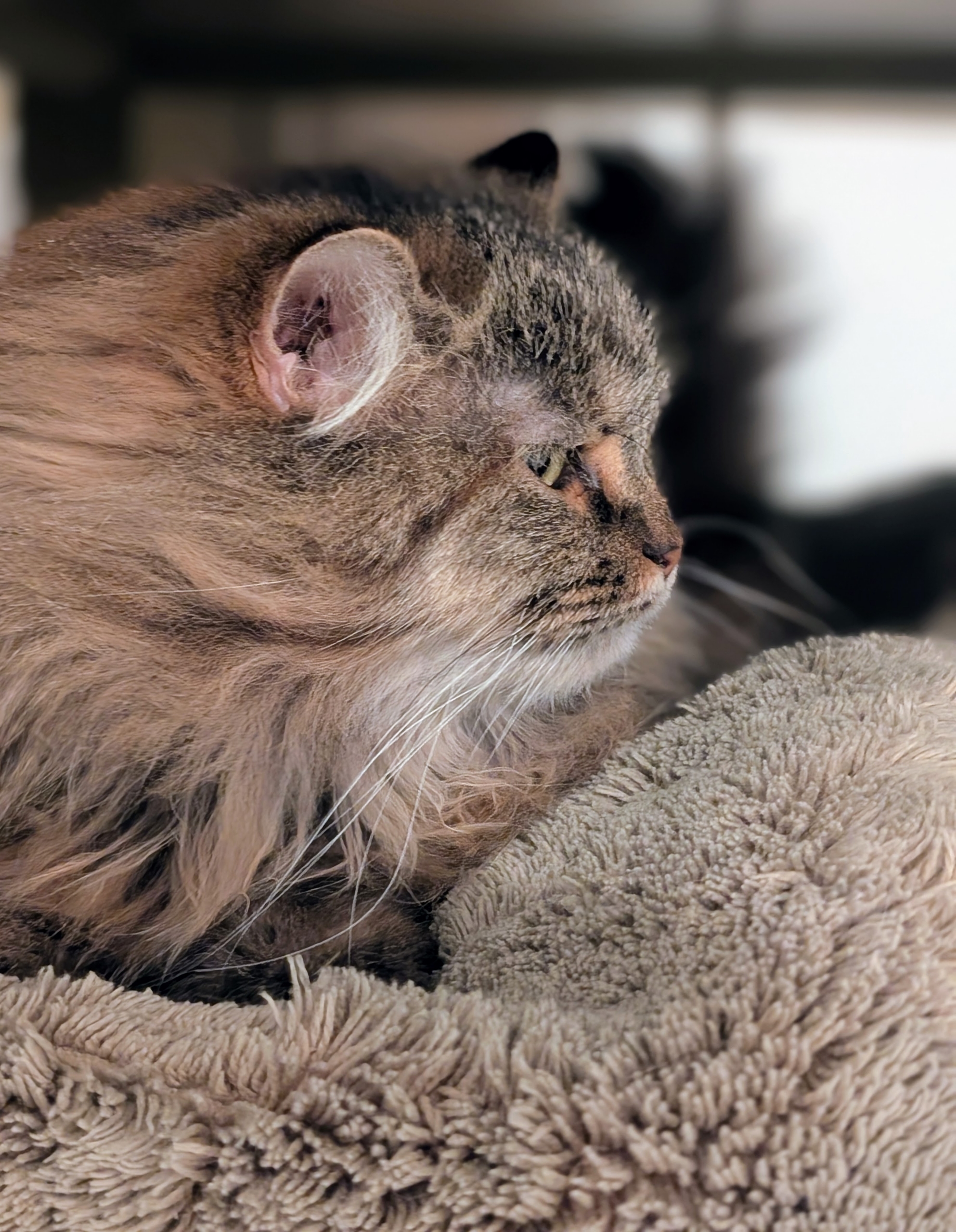
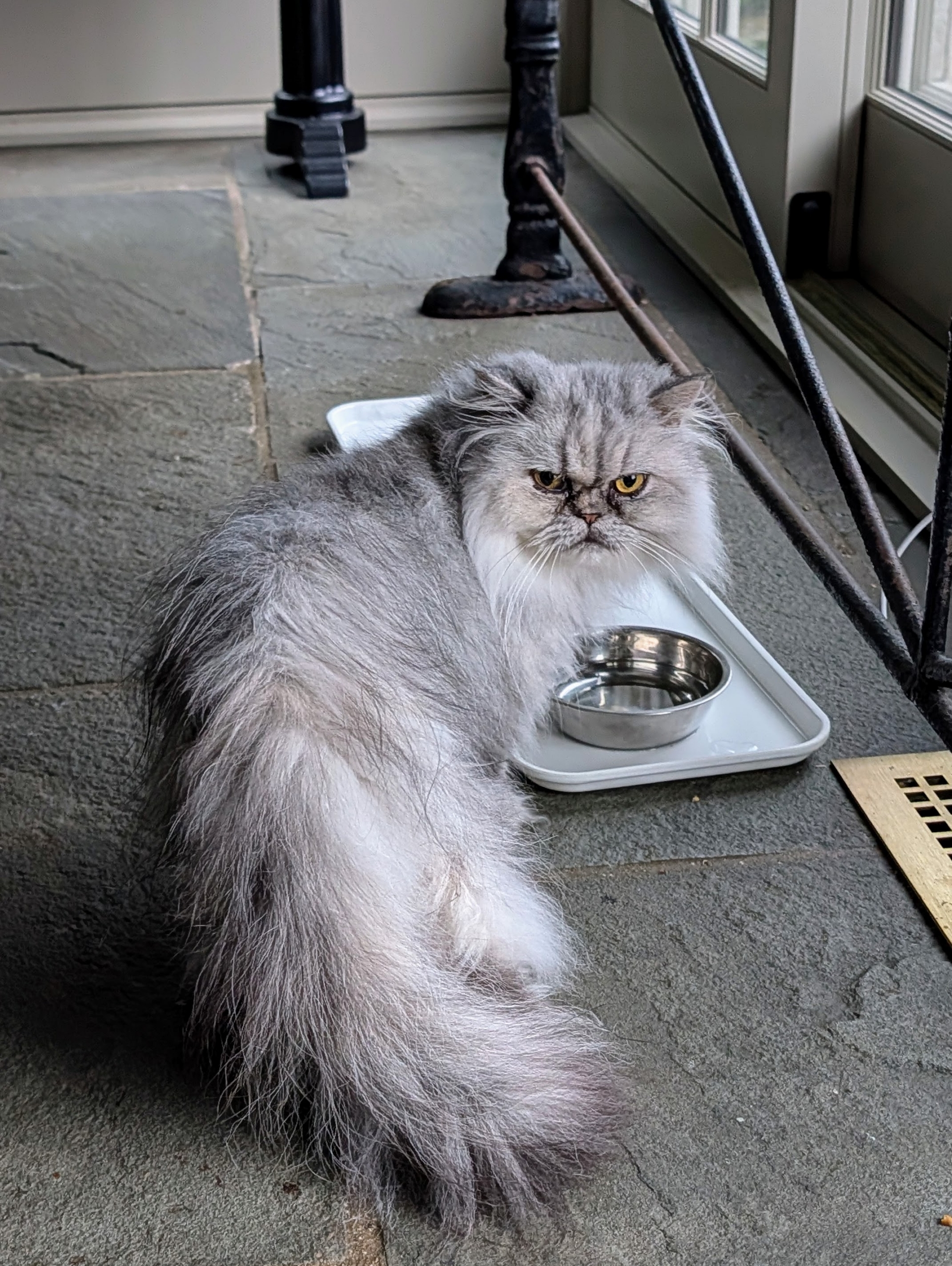
Although cats are naturally meticulous about keeping themselves clean, I’ve always believed that regular brushing, combing, and bathing are important parts of keeping them healthy, comfortable, and looking their best. Four of my seven cats are long-haired and live in my Winter House: Magnolia, my silver-shaded Persian; Dahlia, my dilute-calico Persian; Lilium, my brown Persian longhair; and Chrysanthemum, my chocolate Persian. Every afternoon, each cat is groomed - faces and ears are gently cleaned, nails are checked and trimmed when necessary, and coats are carefully combed.
Enjoy these photos!
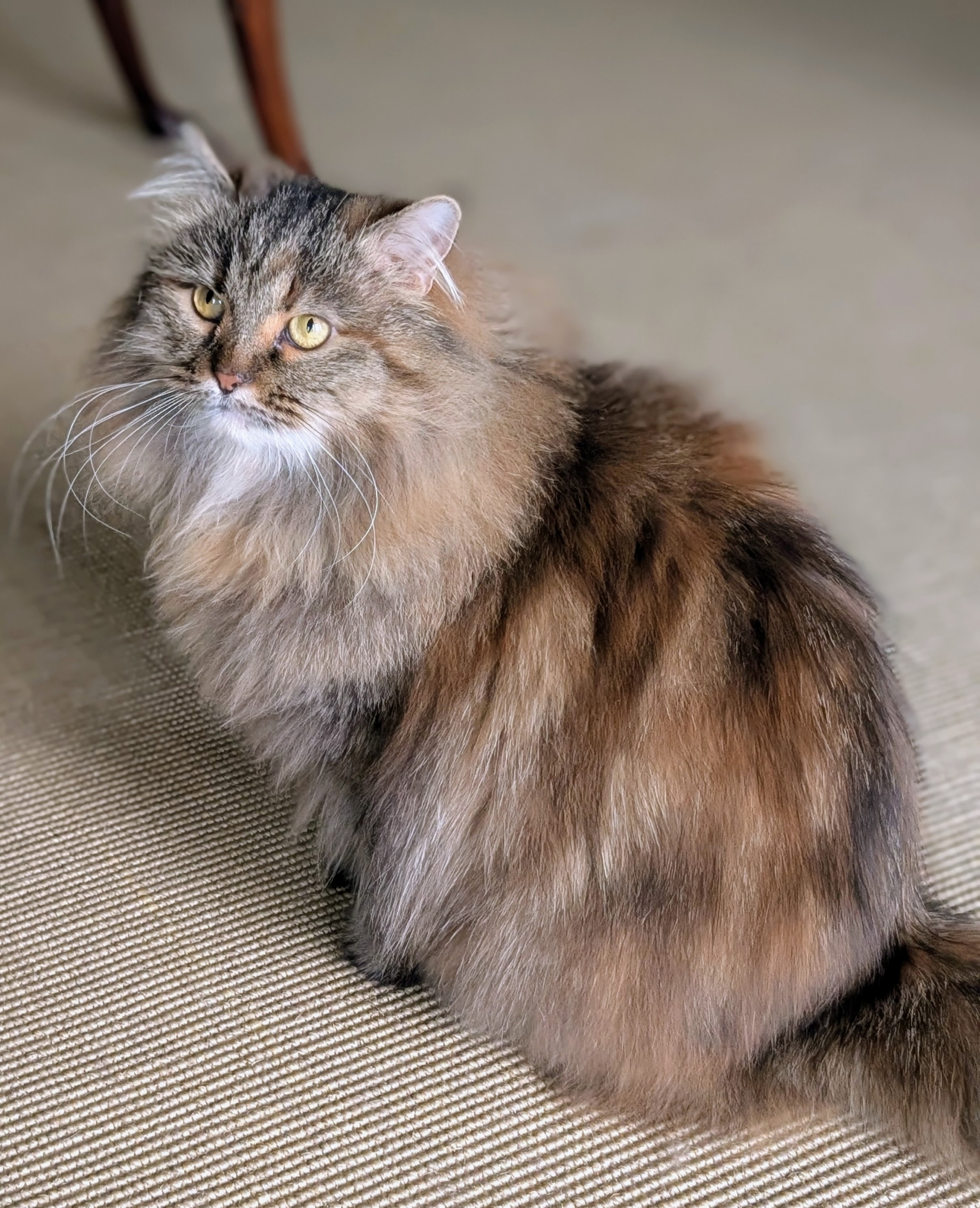
This is Lilium – very friendly and always ready for a good rub. The cats know when it is grooming time. Sometimes they go downstairs to their grooming station in the basement on their own. Sometimes it’s a little more challenging to find them.
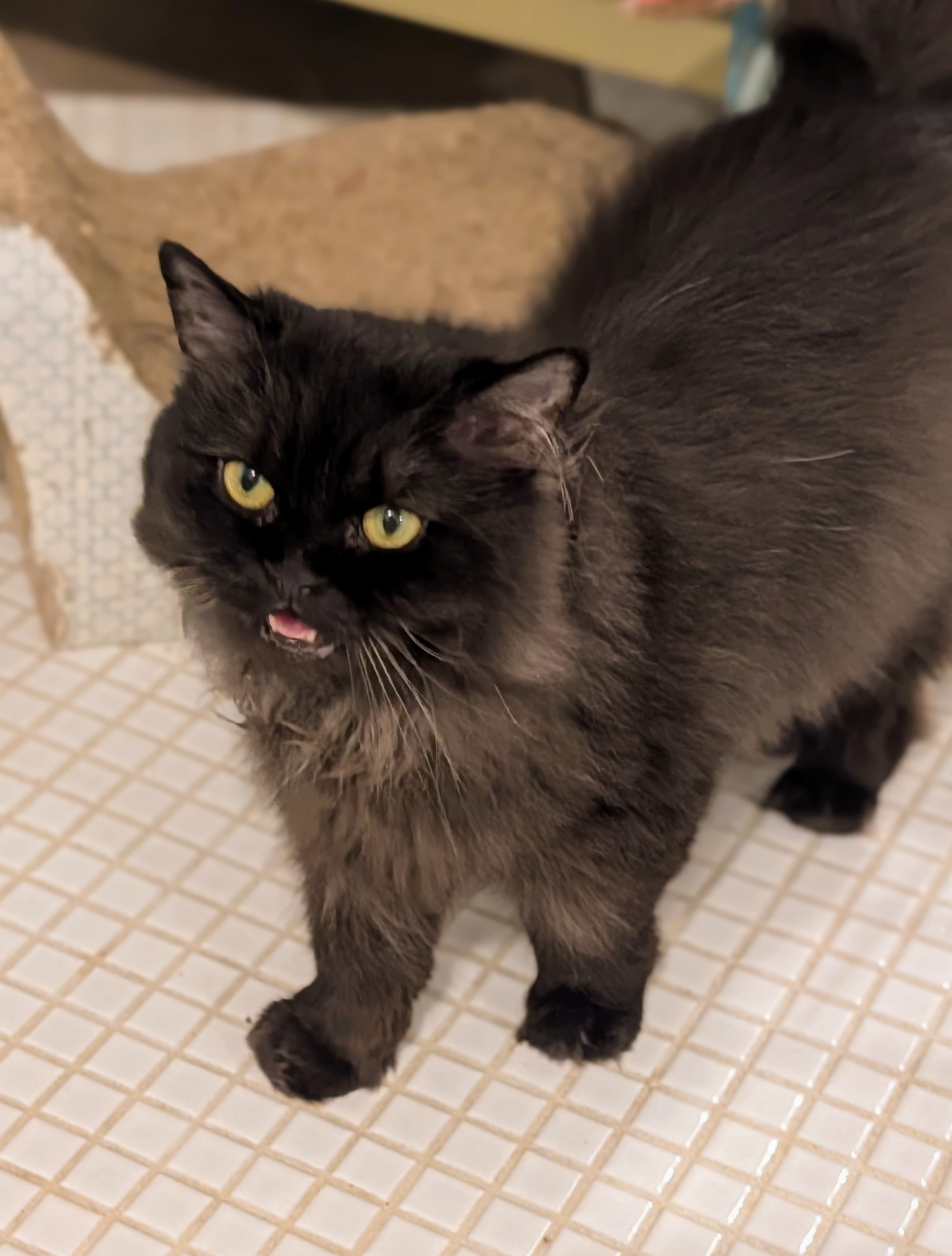
This is Chrysanthemum, the latest Persian to join my clowder. Here she is in the enclosed porch where the “kitty buffet” is served for all the cats in my Winter House.
This is Dahlia, the youngest of my Winter house cats. On this afternoon, it was pouring outside, so the cats were watching the rain from my enclosed porch.
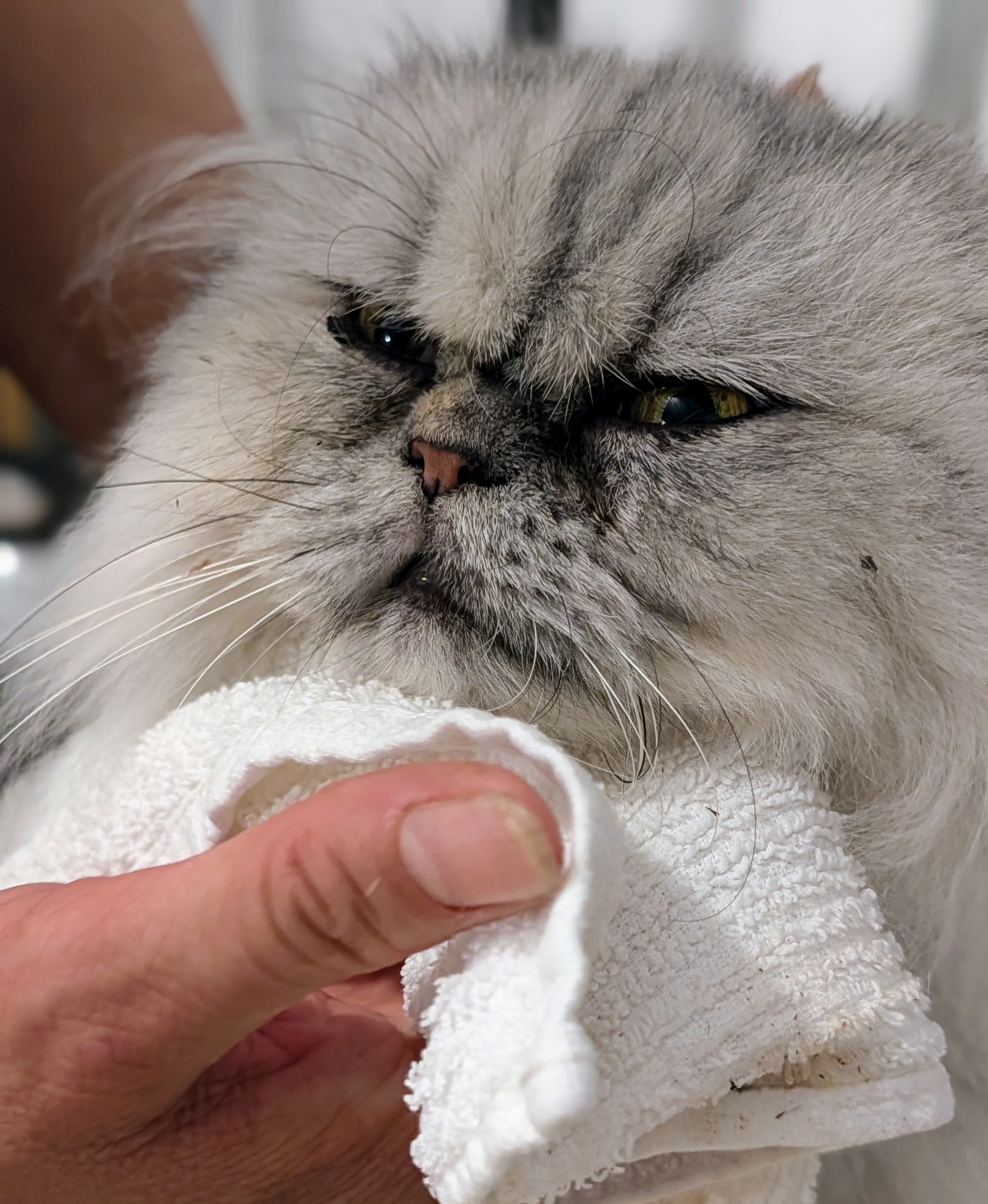
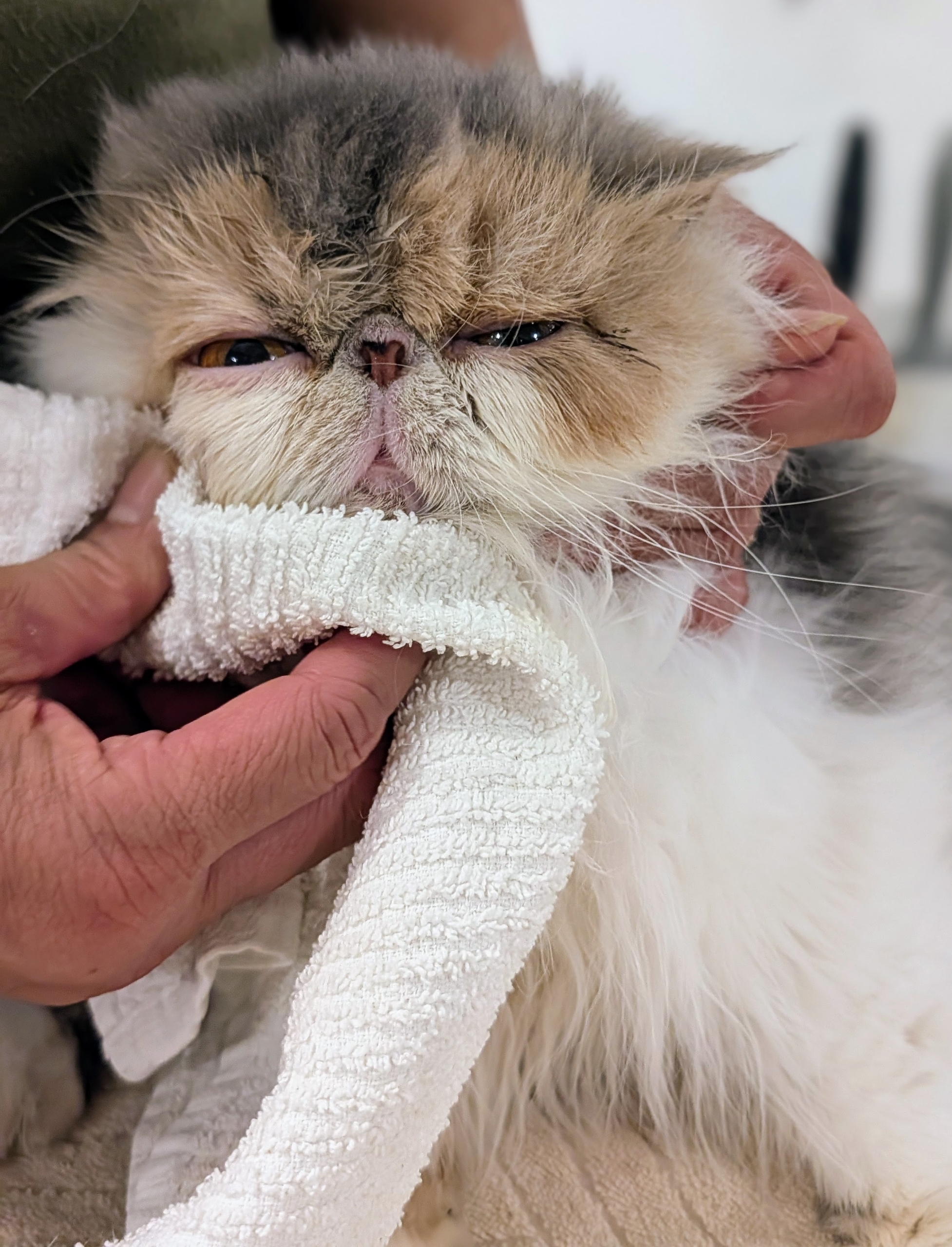
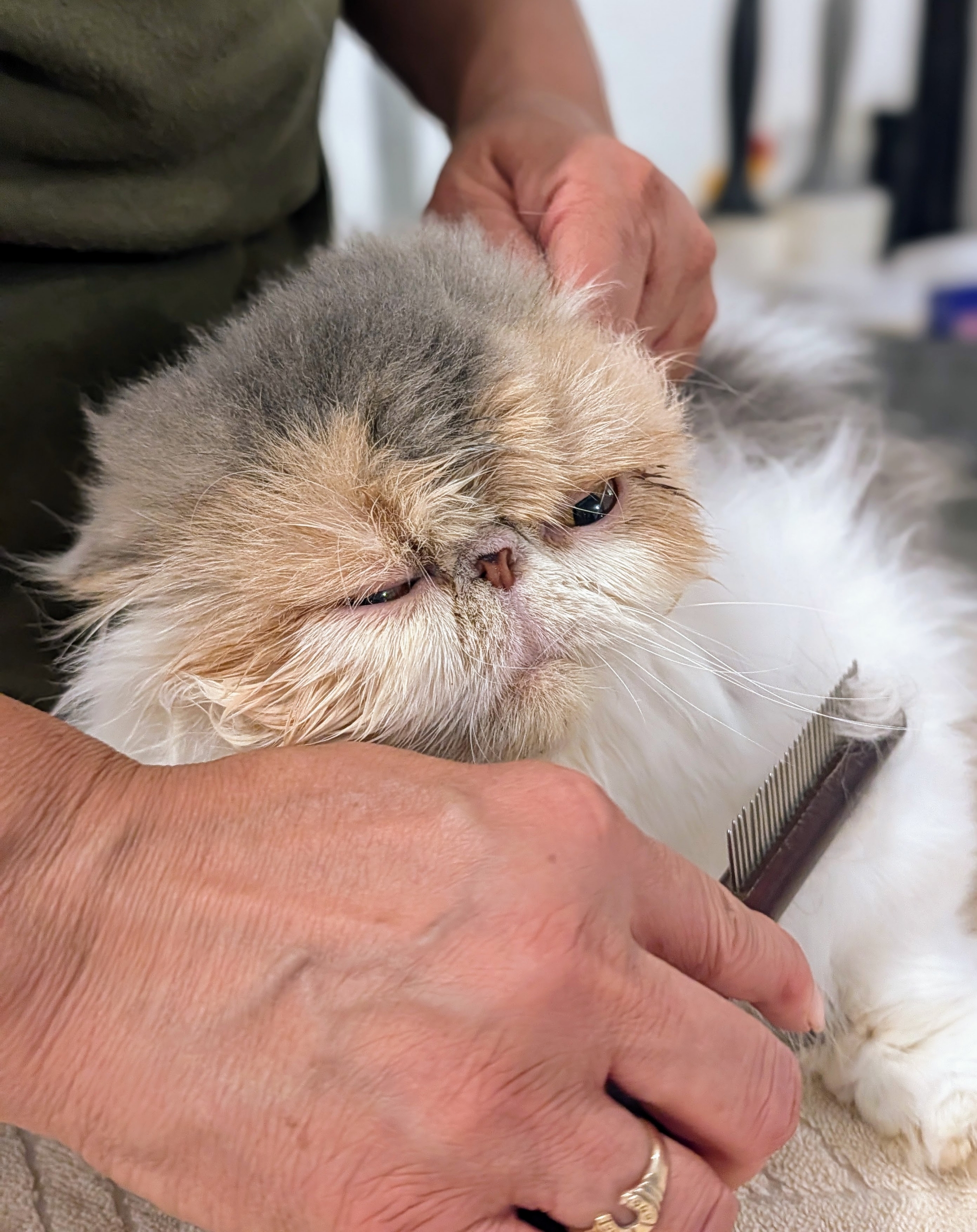
But first up for grooming is Magnolia. Magnolia’s face is gently cleaned with a cloth to help remove dirt and any stains.
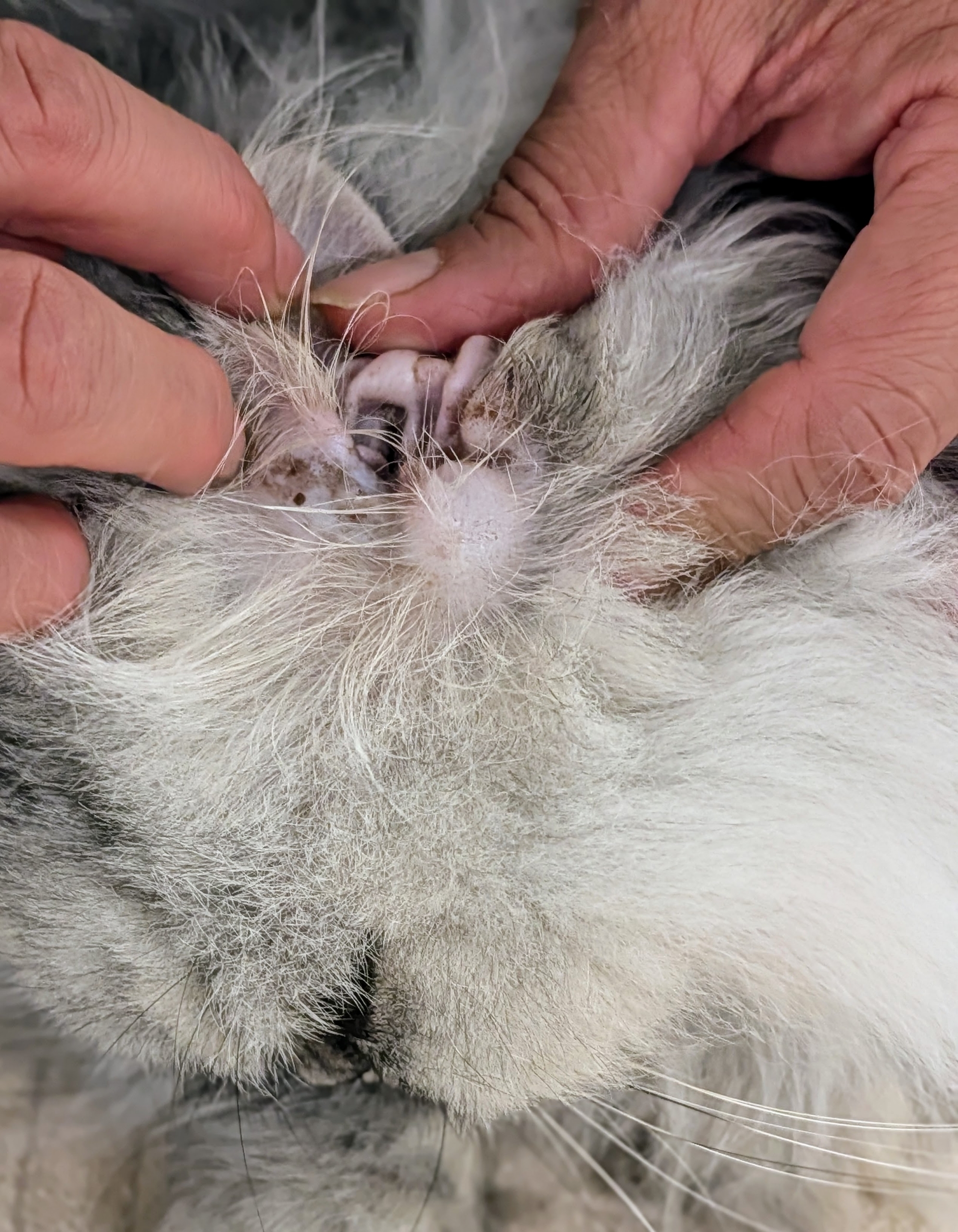
Her ears are also carefully inspected for any abnormalities. Regularly checking a cat’s ears, eyes, and skin helps detect problems early, prevent infections, and catch underlying health issues before they worsen. My cats are very healthy and have no issues whatsoever.
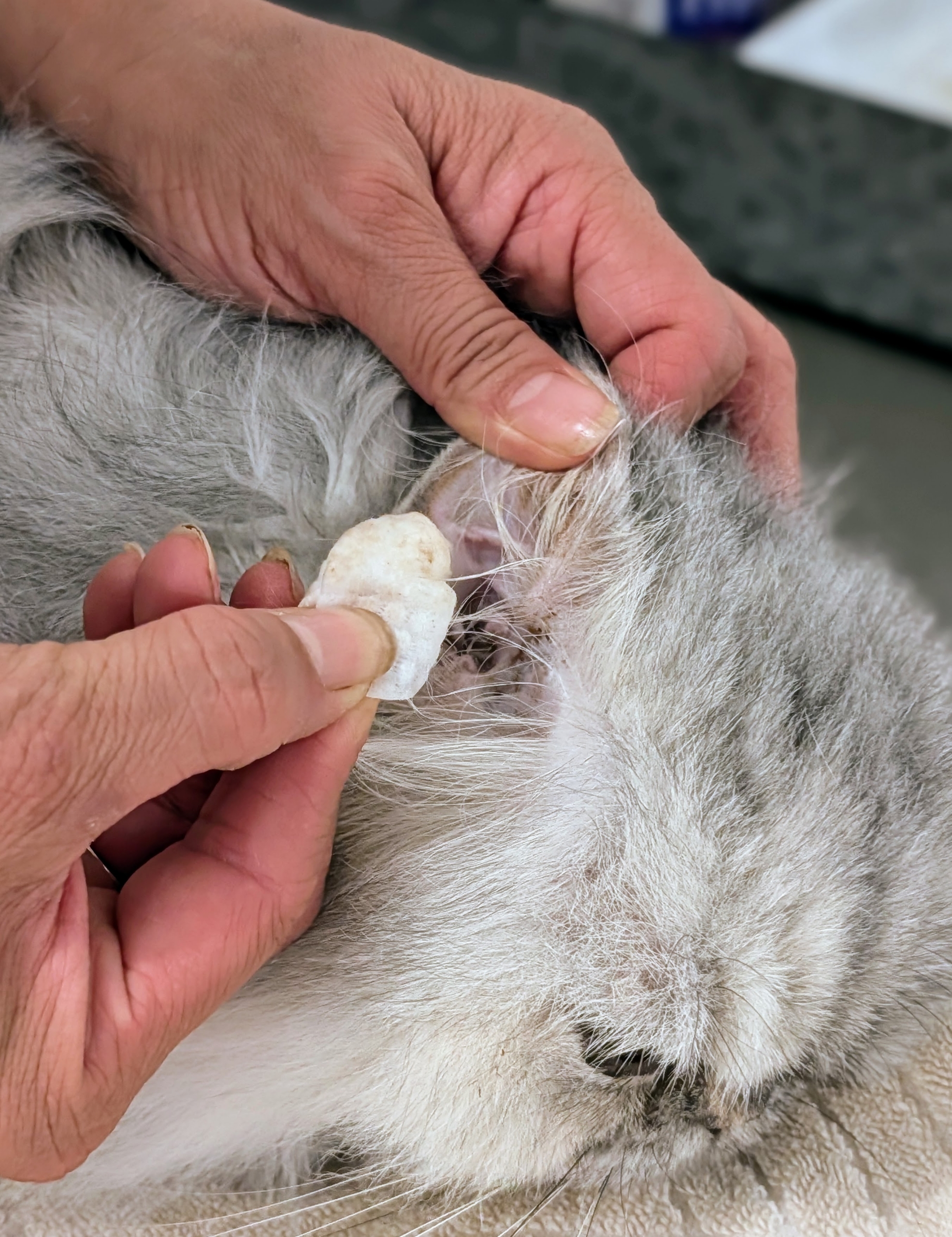
I use ear wipes specifically made for veterinary use to carefully clean around the outside of the ear canal – never inside. Since this is done regularly, there is little dirt, but it is also good practice, so the cats are comfortable being handled.
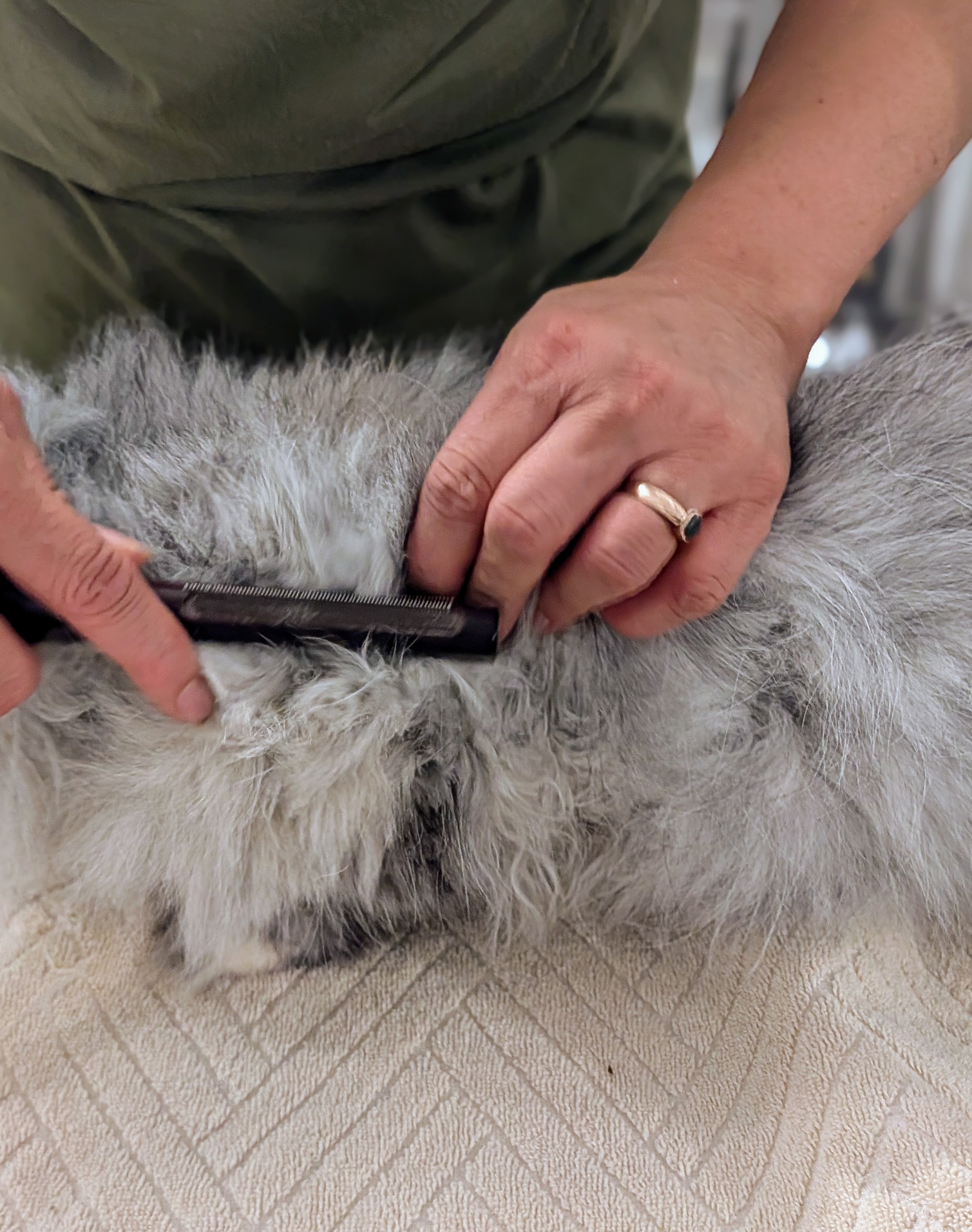
Elvira combs with one hand and uses the other to hold the fur down where she is combing – this prevents pulling, which could be uncomfortable.
This time of year, as the seasons change, most cats, especially long‑haired, double‑coated, or outdoor cats, tend to shed a little more. This is a normal biological response to shorter daylight hours, and cooler temperatures.
Magnolia doesn’t seem to mind the daily grooming session and stays pretty still the entire time.
Next up is Dahlia. She is the youngest of my felines, but is also very well-behaved on the grooming table.
It’s always good to look for and remove any matted fur. This is important because collected mats can cause irritation and hairballs. My cats are brushed every day to keep their coats as tangle-free as possible. Baths are done only when needed.
Always be sure to introduce a cat to new tools before using them, so they never shy away from grooming time.
Magnolia watches from below – maybe she wants a second turn.
Adult cats primarily meow to humans, not to other cats. I wonder if Chrysanthemum is asking to be groomed next.
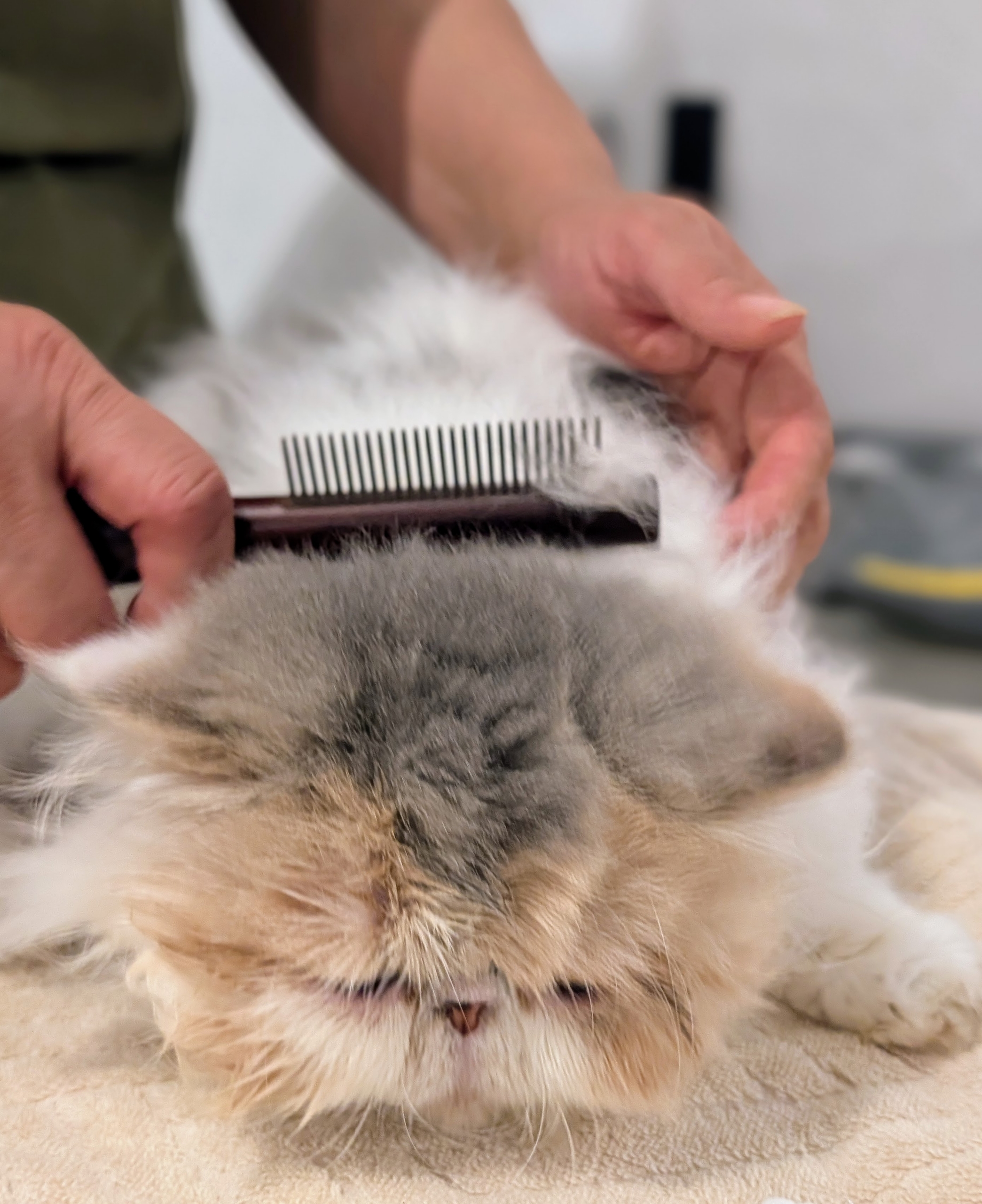
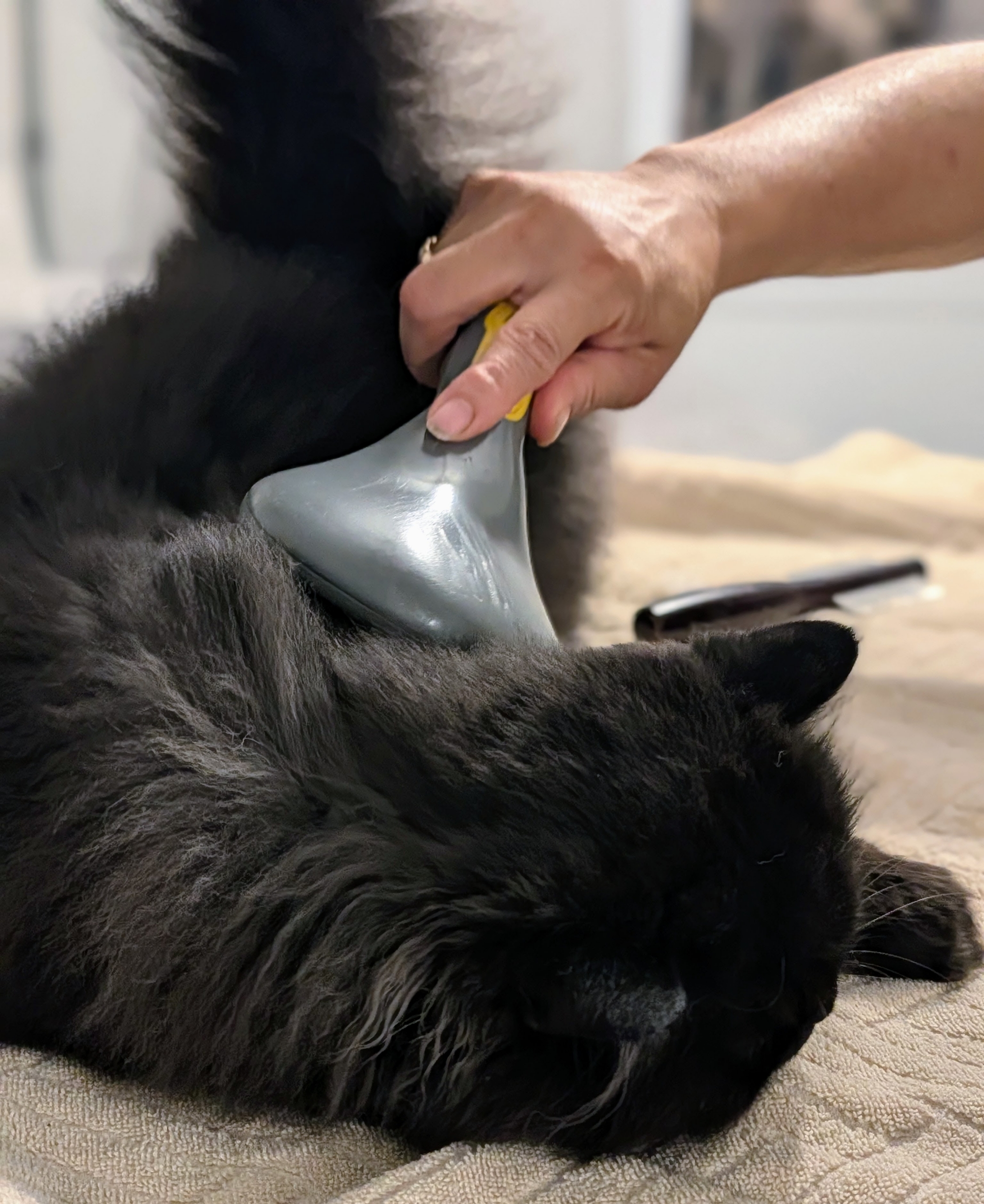
Chrysanthemum lies down for her grooming – almost falling asleep.
She does not even need extra support during her grooming time – she enjoys a good brushing.
Afterward, Chrysanthemum is quite content just napping on the grooming table.
The biggest of the four is Lilium. On this day, she needed a little more coaxing to get brushed.
Lilium prefers to watch the other cats get groomed first before her turn.
Soon after grooming, it’s upstairs for Magnolia to get a little drink and snack.
And for Chrysanthemum, a little rest and nap. Grooming cats often and regularly… it’s a good thing.







 Martha Pins


 Martha Tweets

